A2 Ghee: Calories, Nutrition and Health Benefits
 ChatGPT
  Claude
  AI Mode
  Perplexity
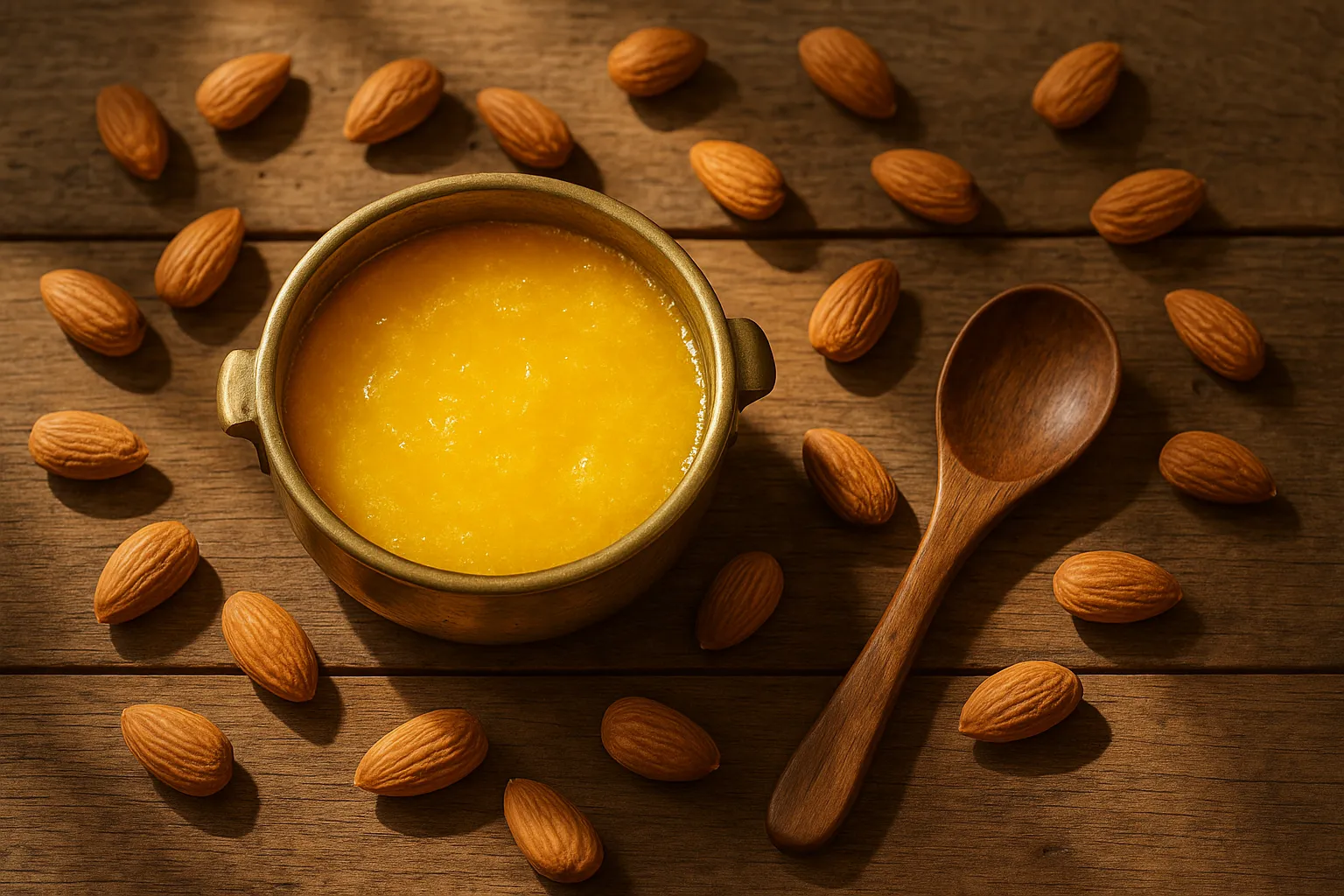
 A2 Ghee: 126 calories, 0 g carbs, 0 g protein and 14 g fat per 1 Tablespoon (14g).
Quick Nutrition Facts
Per 1 Tablespoon (14g)
| Nutrient | Amount |
|---|---|
| Calories | 126 kcal |
| Protein | 0g |
| Carbohydrates | 0g |
| Fiber | 0g |
| Sugars | 0g |
| Fat | 14g |
| Saturated Fat | 9g |
| Monounsaturated | 4g |
| Polyunsaturated | 0.5g |
| Vitamin A | 108mcg |
| Vitamin E | 0.4mg |
| Butyric Acid | 3-4% |
| CLA | ~0.5g |
Macronutrient Breakdown

NUTRITIONIST INSIGHT
A2 ghee is lactose-free and casein-free, making it suitable for most people with dairy sensitivities. The butyric acid (3-4% of total fat) acts as a potent anti-inflammatory and supports gut health by nourishing intestinal cells.
Myth Busters
MYTH #1: Ghee Causes Weight Gain
TRUTH: Ghee doesn't cause weight gain when used in moderation. The medium-chain fatty acids in ghee may actually boost metabolism, and CLA (conjugated linoleic acid) supports fat loss. The key is portion control: 1-2 tablespoons (126-252 calories) as a replacement for other fats.
MYTH #2: Ghee Raises Cholesterol
TRUTH: High-quality ghee from grass-fed cows may improve cholesterol profiles by increasing HDL (good cholesterol) and improving the LDL/HDL ratio. The vitamin K2 in ghee helps direct calcium to bones rather than arteries.
MYTH #3: Diabetics Should Avoid Ghee
TRUTH: Ghee has zero carbohydrates and may improve insulin sensitivity. The butyric acid and CLA support metabolic health. Diabetics can safely consume 1-2 tablespoons daily as part of their healthy fat intake.
MYTH #4: A2 Ghee Is Just Marketing Hype
TRUTH: A2 ghee from indigenous cow breeds (Gir, Sahiwal, Red Sindhi) contains A2 beta-casein protein that's easier to digest than the A1 protein in regular dairy. Many people who experience digestive issues with regular dairy tolerate A2 ghee well.
MYTH #5: Ghee Has No Nutritional Value
TRUTH: Ghee is rich in fat-soluble vitamins A, D, E, K that support immunity, bone health, and skin. It contains omega-3 and omega-9 fatty acids, CLA for fat metabolism, and butyric acid for gut health. It's a nutrient-dense superfood, not empty calories.
MYTH #6: You Shouldn't Cook with Ghee at High Heat
TRUTH: Ghee has one of the highest smoke points (485°F/252°C), making it excellent for high-heat cooking, sautéing, and frying. Unlike butter or many oils, ghee remains stable at high temperatures without producing harmful free radicals.
NutriScore by Health Goals
| Health Goal | NutriScore | Why This Score? |
|---|---|---|
| Weight Loss |  | MCTs boost metabolism, CLA supports fat loss. Limit to 1 tablespoon daily (126 calories), use as fat replacement. |
| Muscle Gain |  | Excellent calorie-dense food (126 per tbsp), supports hormone production, aids nutrient absorption. Use 2-3 tablespoons daily. |
| Diabetes Management | | Zero carbs, may improve insulin sensitivity, stabilizes blood sugar. Use 1-2 tablespoons as cooking fat. |
| PCOS Management | | Supports hormone balance, reduces inflammation, zero carbs. Limit to 1-1.5 tablespoons daily as part of anti-inflammatory diet. |
| Pregnancy Nutrition | | Rich in vitamins A, D, E, K for fetal development, supports brain growth, aids calcium absorption. Use 1-2 tablespoons daily. |
| Viral/Flu Recovery | | Butyric acid boosts immunity, vitamin A supports immune cells, easy to digest, anti-inflammatory properties. |
PERSONALIZED NUTRITION
Track your meals with NutriScan for personalized NutriScores based on your specific health goals!
Blood Sugar Response to A2 Ghee
Understanding how pure fats like A2 ghee affect your blood glucose levels.
Typical Glucose Response Curve
This chart shows typical blood glucose response for general healthy individuals. Individual responses may vary. Not medical advice.
How Ghee Stabilizes Blood Sugar
Adding A2 ghee to carbohydrate-rich meals slows glucose absorption and reduces blood sugar spikes:
- 🍚 Ghee on rice or roti - Slows carb digestion, extends energy release
- 🥔 Ghee-roasted vegetables - Improves nutrient absorption, stabilizes glucose
- 🥣 Ghee in dal or khichdi - Adds healthy fats, reduces glycemic impact
- ☕ Ghee in bulletproof coffee - Provides sustained energy without sugar crash
This fat-protein-carb combination not only stabilizes blood sugar but also enhances satiety and nutrient absorption.
Cultural Significance
A2 ghee has been revered in Indian culture and Ayurvedic medicine for over 5,000 years.
In India & Ayurveda:
- Made from milk of indigenous breeds: Gir, Sahiwal, Red Sindhi, Rathi, Tharparkar
- Considered "liquid gold" in Ayurveda - balances all three doshas (Vata, Pitta, Kapha)
- Used in sacred ceremonies, yajnas, and offered to deities
- Traditional bilona method: curd is hand-churned, butter extracted, then heated to make ghee
- Ayurvedic medicine uses ghee as a carrier for herbs and for detoxification (Panchakarma)
Global Adoption:
- Increasingly popular in paleo, keto, and Whole30 diets worldwide
- Recognized as superior cooking fat with high smoke point
- Used in bulletproof coffee trend for sustained energy
- Growing scientific research on A2 milk proteins and gut health
Compare & Substitute
A2 Ghee vs Similar Cooking Fats (Per 100g)
| Nutrient | 🥄 A2 Ghee | 🧈 Butter | 🥥 Coconut Oil | 🫒 Olive Oil |
|---|---|---|---|---|
| Calories | 900 kcal | 717 kcal | 862 kcal | 884 kcal |
| Fat | 99.8g | 81g | 99.9g | 100g |
| Saturated Fat | 62g | 51g | 87g | 14g |
| Protein | 0g | 0.9g | 0g | 0g |
| Carbs | 0g | 0.1g | 0g | 0g |
| Vitamin A | 840mcg | 684mcg | 0mcg | 0mcg |
| Smoke Point | 485°F (252°C) | 350°F (177°C) | 350°F (177°C) | 375°F (191°C) |
| Lactose/Casein | None (removed during cooking) | Contains lactose and casein | None | None |
| Best For | High-heat cooking, Ayurveda | Baking, low-heat cooking | Medium-heat, MCT fans | Salads, low-heat |
Frequently Asked Questions
Is A2 ghee good for weight loss?
A2 ghee can support weight loss when used strategically. Contains medium-chain fatty acids (MCTs) that may boost metabolism by 3-5% and CLA (conjugated linoleic acid) that supports fat loss.
Best practices: Limit to 1-2 tablespoons daily (126-252 calories); use as a replacement for other fats, not in addition; pair with high-protein, low-carb meals; consume in morning for better fat burning.
Can diabetics eat A2 ghee?
Yes, diabetics can safely consume A2 ghee. It has zero carbohydrates and won't spike blood sugar. Research suggests it may improve insulin sensitivity and support metabolic health.
Tips for diabetics: Use 1-2 tablespoons daily as cooking fat; add to vegetables, dal, or roti; helps slow glucose absorption when paired with carbs; count toward total daily fat intake (20-35% of calories).
What is the difference between A2 ghee and regular ghee?
A2 Ghee: Made from milk of indigenous cow breeds (Gir, Sahiwal, Red Sindhi) that produce only A2 beta-casein protein; easier to digest; may reduce inflammation and digestive discomfort; traditional bilona method often used.
Regular Ghee: Made from hybrid or foreign breeds (Holstein, Jersey) that produce both A1 and A2 proteins; A1 protein linked to digestive issues and inflammation in some people; mass-produced methods common.
Both are lactose-free and casein-free after clarification, but A2 ghee may be better tolerated by sensitive individuals.
What are the main health benefits of A2 ghee?
Key Benefits:
- Gut Health: Butyric acid (3-4% of fat) nourishes intestinal cells, reduces inflammation
- Immunity: Vitamins A, D, E, K support immune function and bone health
- Heart Health: May improve cholesterol ratio, provides omega-3 fatty acids
- Metabolism: MCTs and CLA support fat burning and metabolic health
- Nutrient Absorption: Enhances absorption of fat-soluble vitamins and minerals
- Brain Function: Healthy fats support cognitive health and hormone production
How much A2 ghee should I consume daily?
General Guidelines:
- 1-2 tablespoons daily - General health, balanced diet
- 1 tablespoon daily - Weight loss (126 calories)
- 2-3 tablespoons daily - Muscle gain, high activity, pregnancy
- 1-1.5 tablespoons daily - Diabetes, PCOS (as replacement for other fats)
Important: Count ghee toward your total daily fat intake (20-35% of total calories). Excess consumption can add unnecessary calories.
Is A2 ghee better than coconut oil or olive oil?
Each has unique benefits - choose based on use:
A2 Ghee wins for: High-heat cooking (smoke point 485°F); Ayurvedic benefits; butyric acid for gut health; vitamins A, D, E, K; traditional Indian cooking; keto/paleo diets.
Coconut Oil wins for: Quick energy from MCTs; plant-based option; antimicrobial properties; medium-heat cooking.
Olive Oil wins for: Heart-healthy monounsaturated fats; antioxidants; Mediterranean diet; salad dressings; low-heat cooking.
Best approach: Use all three strategically based on cooking method and health goals.
Can I use A2 ghee if I'm lactose intolerant?
Yes, A2 ghee is generally safe for lactose-intolerant individuals. The clarification process removes milk solids containing lactose and casein proteins.
Why it works: During ghee production, butter is simmered to evaporate water and separate milk solids; the clear golden fat (ghee) contains virtually no lactose or casein.
Caution: If you have severe dairy allergy or sensitivity, start with a small amount and monitor your response. Choose high-quality, properly clarified ghee.
What is the best time to consume A2 ghee?
Depends on your goal:
- Weight Loss: Morning (in coffee or with breakfast) for better fat oxidation; avoid late night.
- Muscle Gain: Any time - use liberally in cooking to meet calorie needs.
- Diabetes: Any time as cooking fat; helps stabilize blood sugar when paired with carbs.
- Digestion/Gut Health: Morning on empty stomach (Ayurvedic practice) or with meals.
Ayurvedic wisdom: Small amounts of ghee in the morning kindle digestive fire (Agni) and support detoxification.




Similar Nutritious Foods
4505 Chicharrones Classic Chili Salt
7 Eleven Japan Crispy Corn Cheese
Explore More Nutrition Tools & Resources
AI Calorie Counter App - Snap a Photo, Get Macros
AI Nutritionist App That Reads Your Logged Meals
Best Protein Supplements for Women
Bulking Meal Plan App That Sets Your Surplus
ChatGPT Calorie Counter Alternative That Keeps the Total
ChatGPT Diet Plan Alternative That Tracks What You Eat
ChatGPT Weight Loss Coach Alternative With a Food Log
Fast Food Calorie Counter App That Reads the Tray
Free Calorie Tracker App with AI Photo Scans | NutriScan
Indian Diet Plan App With Veg and Non Veg Meals
Indian Food Calorie Calculator - Get Instant Nutrition Facts for Desi Meals — 2026
Intermittent Fasting for Women, Timer and Meal Log App
Intermittent Fasting Tracker App - Free Fasting Timer
Macro Tracker App That Fills the Numbers From a Photo
Mediterranean Diet Meal Plan App That Counts the Oil
Micronutrient Tracker App for Vitamins and Minerals
MyFitnessPal Alternative That Stays Free | NutriScan
NutriScore App: A Free Grade on Every Meal | NutriScan
Nutrition Label Scanner App for the Amount You Ate
Second Trimester Protein Guide
Vegetarian Meal Plan App With a Protein Target
Voice Calorie Counter - Speak to Track Meals Hands-Free
Water and Calorie Tracker App - Free Water Log