Acai Bowl Calories & Nutrition Facts
 ChatGPT
  Claude
  AI Mode
  Perplexity
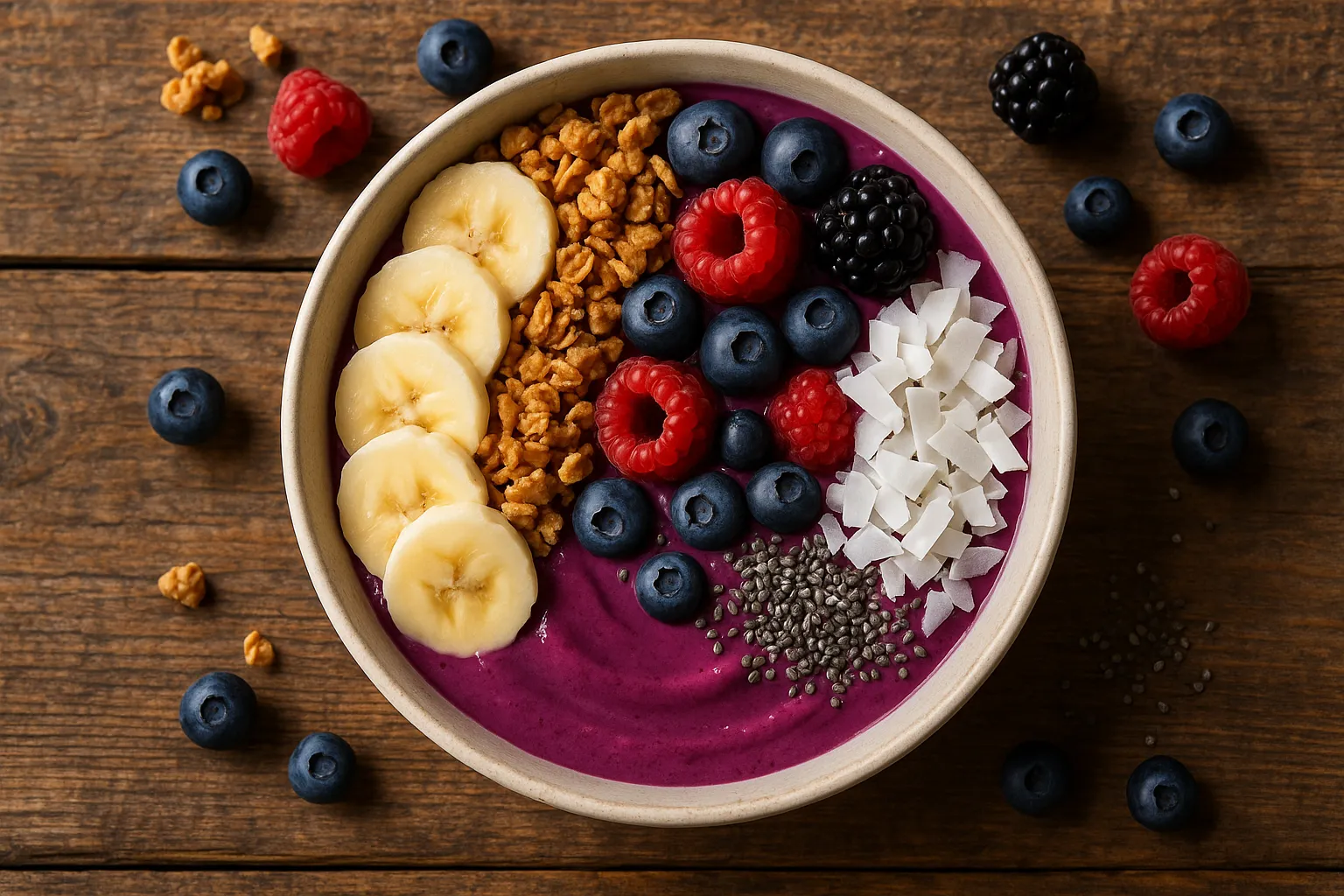
 A nutrient-dense superfood bowl from the Brazilian Amazon, packed with antioxidants—but watch the toppings.
Quick Nutrition Facts
Per 1 Bowl (350g / 12.3 oz) typical restaurant/café serving
| Nutrient | Amount |
|---|---|
| Calories | 388 |
| Protein | 8 g |
| Total Fat | 12 g |
| Saturated Fat | 3.5 g |
| Trans Fat | 0 g |
| Total Carbohydrate | 62 g |
| Dietary Fiber | 9 g |
| Total Sugars | 38 g |
| Added Sugars | 15 g |
| Cholesterol | 0 mg |
| Sodium | 75 mg |
| Potassium | 485 mg |
| Vitamin A | 145 mcg RAE |
| Vitamin C | 42 mg |
| Calcium | 165 mg |
| Iron | 2.8 mg |
| Magnesium | 68 mg |
Macronutrient Breakdown

⚠️ Important Note: Acai bowl nutrition varies dramatically by preparation. A small homemade bowl (250g) with minimal toppings may contain 200-250 calories, while large restaurant bowls (500g+) with generous granola, honey, and nut butter can exceed 800-1000 calories and 75g sugar.
NUTRITIONIST INSIGHT
Acai bowls can be nutritious when portion-controlled, but many commercial versions contain more sugar than a dessert. Stick to 250-300g servings, skip added sweeteners, and prioritize protein-rich toppings like nuts and seeds over granola.
Acai Bowl Calories by Portion Size
Acai bowl calories swing between roughly 200 and 1,000 for one bowl, and the açaí itself is the small part of that bill. Portion size and the topping layer do most of the work.
| Portion | Calories | Sugar |
|---|---|---|
| 100 g blended açaí base | 111 | 10.9 g |
| Small homemade bowl (250 g, fruit toppings only) | 200-250 | 20-25 g |
| Typical café bowl (350 g, our reference serving) | 388 | 38 g |
| Large café bowl (500 g+, granola, honey, nut butter) | 800-1,000 | up to 75 g |
Two things drive the number. First, unsweetened açaí pulp is fatty rather than sugary, so a plain base sits near 111 calories per 100 g and barely moves; the sugar arrives with the fruit, the honey drizzle and the sweetened pulp packs most cafés use. Second, the topping layer scales fast: dropping the granola alone saves about 200 calories, which is the difference between a breakfast and a dessert at the same bowl size.
If you want to compare the parts, granola is usually the single heaviest topping in the bowl, and a blended smoothie at the same calorie count often keeps you fuller because it is easier to load with protein. Order a small size, ask for unsweetened pulp, and swap granola for a spoon of seeds if you want the bowl to stay under 300 calories.
Myth Busters
MYTH #1: Acai bowls are a healthy low-calorie breakfast
TRUTH: Commercial acai bowls often pack 600-1000 calories and 60-75g sugar—more than a McDonald's milkshake. While pure açaí pulp offers antioxidant benefits, commercial preparations dilute these with excessive added sugars. A small homemade bowl (250g, 300-350 calories, minimal granola) is reasonable; large commercial bowls are desserts, not snacks.
MYTH #2: Acai bowls help you lose weight
TRUTH: Research shows açaí supplementation provides no additional weight loss benefits beyond calorie restriction alone. A 600-calorie breakfast bowl limits room for other meals in a deficit. They can fit weight loss plans if portion-controlled, but high calorie density makes overconsumption easy.
MYTH #3: All acai bowls are equally nutritious
TRUTH: Nutritional value varies wildly. Processing methods significantly affect nutrient retention—anthocyanins are sensitive to heat, pH, and oxygen. Commercial blends (with guarana syrup/apple juice) contain less antioxidants than pure pulp. Best: homemade with 100% frozen açaí, fresh fruit, minimal granola. Worst: "bases" (mostly banana/juice), candy toppings, excessive granola/honey.
MYTH #4: The açaí berry is the key to health benefits
TRUTH: Toppings often contribute more nutritional value than açaí itself. Fresh berries provide comparable anthocyanin levels, nuts add vitamin E and healthy fats, oats/chia provide fiber. The combination matters more than any single ingredient. A Greek yogurt parfait with similar toppings offers comparable nutrition at lower cost.
MYTH #5: Acai bowls provide sustained energy
TRUTH: Most bowls cause blood sugar spikes within 2-3 hours due to 35-55g sugar and only 6-10g protein. The fiber (7-9g) can't offset this glycemic load—similar to 1.5 cups orange juice. Improve satiety: add Greek yogurt/protein powder (20g+ protein), reduce fruit, skip liquid sweeteners, portion control (250-300g).
MYTH #6: Frozen acai is inferior to fresh
TRUTH: Frozen is actually superior for most consumers. Research shows frozen açaí maintains over 85% anthocyanin content after 6 months at -18°C. Fresh açaí degrades within 24-36 hours, making transport impractical. Flash-frozen açaí (processed within hours of harvest) locks in nutrients effectively. Choose 100% pure açaí pulp (unsweetened), avoid blends with added juice/sugars.
NutriScore by Health Goals
The healthfulness of acai bowls varies dramatically based on preparation. Below are ratings for different health objectives:
| Health Goal | NutriScore | Rationale |
|---|---|---|
| Weight Loss |  | High-calorie density (1.1 calories/g) makes portion control difficult. Many bowls contain 600-800 calories—reasonable as a meal replacement, but problematic as a snack. Can work for weight loss if homemade (small portions, no added sugar, moderate toppings). Research shows açaí doesn't enhance weight loss beyond calorie restriction alone. |
| Heart Health |  | Excellent source of anthocyanins and monounsaturated fats (from açaí and nuts), which support cardiovascular health. Studies indicate açaí consumption improves cholesterol profiles. However, added sugars (15-30g) in commercial bowls reduce the heart-health score. Best when made with minimal sweeteners. |
| Muscle Gain | | Insufficient protein (6-10g) for optimal muscle protein synthesis. The high carbohydrate content (60-80g) provides energy for workouts, but the 8:1 carb-to-protein ratio is suboptimal. Improvement needed: Add Greek yogurt (15g protein), protein powder (20-25g), or hemp seeds (3g per tbsp) to reach 20-25g protein per serving. |
| Diabetes Management | | High glycemic load from 35-55g sugar causes significant blood sugar spikes. While research suggests açaí may improve fasting glucose over time, the acute impact of a high-sugar bowl is problematic for blood sugar control. Better for diabetics: Small portions (200-250g), paired with protein/fat, no added sweeteners, choose low-GI toppings (nuts, chia seeds). Monitor blood glucose response. |
| Athletic Performance | | High carbohydrate content (60-80g) makes açaí bowls excellent for pre- or post-workout glycogen replenishment. Research on antioxidant effects suggests açaí may reduce exercise-induced oxidative stress. Best consumed 1-2 hours before endurance activity or within 30 minutes post-workout. Optimize: Add protein powder for post-workout recovery. |
| Gut Health | | Excellent fiber content (7-12g from açaí, berries, granola, chia seeds) supports digestive health. Research highlights açaí's prebiotic potential and gut microbiome benefits. Fresh berries add additional fiber and polyphenols. Caution: Excessive granola/added sugars can promote dysbiosis. Best with whole-food toppings (fresh fruit, nuts, seeds, oats). |
Blood Sugar Response to Acai Bowl
Understanding how acai bowls affect your blood glucose can help you make informed decisions about portion sizes and toppings.
Typical Glucose Response Curve
This chart shows typical blood glucose response for general healthy individuals. Individual responses may vary. Not medical advice.
How to Flatten the Spike
Despite açaí's low GI (~45), the total carbohydrate load (35-55g sugar) drives blood sugar response. Pairing with protein or healthy fat slows glucose absorption:
- 🥄 Greek yogurt (15g protein) - Adds protein and probiotics
- 🥜 Protein powder (20-25g protein) - Boosts satiety
- 🌰 Hemp seeds (3g protein per tbsp) - Healthy fats and fiber
- 🥥 Unsweetened coconut - Healthy fats without sugar
Strategies to Lower Impact: Reduce fruit (½ small banana vs 1-1.5 large); add protein/fat; skip liquid sweeteners; choose nuts/seeds over granola; small portions (250g vs 500g).
For Diabetes: Monitor blood sugar 1-2 hours after; pair with protein/fat; better post-workout; use unsweetened açaí, ½ cup berries, no granola/sweeteners, add avocado.
Cultural & Culinary Significance
From Brazilian Staple to Global Superfood Trend
Origins: Açaí (pronounced "ah-sigh-EE") has been a dietary staple in the Brazilian Amazon for centuries. Indigenous communities traditionally consumed açaí berries as a savory dish—blended into a thick, unsweetened pulp and served with fish, cassava flour (farinha), or tapioca. The berry provided crucial calories and nutrients in a challenging environment.
Traditional vs. Modern: The açaí bowl as we know it today emerged in Brazil during the 1980s-1990s, when surfers and beachgoers in Rio de Janeiro began blending frozen açaí with guarana syrup and serving it with granola and banana. This sweet adaptation transformed açaí from a savory staple into a refreshing post-workout treat, perfectly suited for Brazil's tropical climate.
Global Popularization (2000s-Present): Açaí bowls entered the U.S. market in the early 2000s, driven by:
- California surf culture: Beach communities in Southern California embraced the açaí bowl as a "healthy fast food"
- Superfood marketing: Claims of antioxidants, anti-aging properties, and weight loss fueled demand
- Instagram aesthetics: Photogenic purple bowls with colorful toppings became social media sensations
- Health food trend: Açaí fit perfectly into the smoothie bowl and "clean eating" movements
By 2010, açaí bowls had become a $1+ billion global industry, with dedicated açaí bowl chains (Juice Generation, Nekter, Vitality Bowls) opening across North America, Europe, and Asia.
Nutritional Evolution—Or Dilution? As açaí bowls spread globally, their nutritional profile changed dramatically:
- Traditional: Unsweetened açaí pulp (~70 calories per 100g), minimal toppings
- Modern Commercial: Açaí "blend" with added sugars (150-200 calories per 100g), generous granola/honey/nut butter (additional 200-400 calories)
The result: What began as a nutrient-dense, relatively low-calorie food became a high-calorie dessert—often consumed as a "health food" by people unaware of the dramatic transformation.
Environmental Impact: Growing demand for açaí has created both opportunities and challenges:
- Economic benefits: Açaí harvesting provides income for Amazon communities (~200,000 people depend on açaí trade)
- Sustainability concerns: Increased demand has led to monoculture açaí plantations (replacing diverse rainforest), overharvesting, and exploitation of workers
- Carbon footprint: Açaí is shipped frozen from Brazil worldwide, contributing to high-carbon supply chains
Regional Variations Today:
- Brazil: Still commonly served savory (with cassava flour, shrimp) in Amazon regions; sweet versions dominant in urban areas
- United States: Sweet bowls with granola, fruit, nut butter, honey; often served in large portions (400-600g)
- Australia: "Acai bowls" popular in Sydney/Melbourne, often with native fruits (Davidson plum, finger lime)
- Europe: Smaller portions (200-300g), focus on "clean" ingredients, less added sugar than U.S. versions
Cultural Debate: Nutritionists and food writers increasingly critique the "superfood" narrative, arguing that açaí bowls have been transformed from a nutritious traditional food into dessert disguised as health food. The tension between açaí's cultural origins (sustenance for indigenous communities) and its modern incarnation (Instagrammable $12-15 bowls in wealthy Western cities) highlights broader questions about food appropriation, authenticity, and nutrition marketing.
Bottom Line: Açaí itself remains a nutrient-rich fruit with legitimate health benefits. The context of consumption—portion size, added ingredients, cultural understanding—determines whether an açaí bowl is a healthful choice or an indulgent treat.
Compare & Substitute
Understanding how acai bowls stack up against similar options helps you make informed choices based on your nutrition goals:
| Food Item | Calories (per serving) | Protein | Carbs | Sugar | Fiber | Key Nutritional Differences |
|---|---|---|---|---|---|---|
| Acai Bowl (350g) | 388 | 8g | 62g | 38g | 9g | High antioxidants (anthocyanins), variable nutrition depending on toppings. Most calories from toppings rather than açaí itself. Contains healthy fats from açaí pulp (omega-3, omega-6). Best for: Post-workout glycogen replenishment, antioxidant boost. |
| Smoothie Bowl (350g, mixed berry) | 320 | 12g | 58g | 35g | 8g | Similar to açaí bowl but typically includes Greek yogurt (boosting protein to 12-15g). Comparable antioxidants from berries. Lower cost (no need for specialty açaí). Best for: Similar benefits to açaí bowl with more protein, better for satiety. |
| Greek Yogurt Parfait (300g) | 280 | 20g | 38g | 28g | 4g | Significantly higher protein (20g), better for muscle synthesis and satiety. Lower carbs and sugar. Rich in probiotics for gut health. Contains calcium (300mg, 23% DV). Best for: Weight loss, muscle gain, gut health. |
| Oatmeal Bowl (350g, with toppings) | 340 | 12g | 58g | 18g | 10g | Higher fiber (10g), lower sugar (18g natural), excellent for sustained energy. Contains beta-glucan (cholesterol-lowering fiber). Best for: Heart health, diabetes management, sustained energy without blood sugar spikes. |
| Chia Pudding (300g) | 320 | 10g | 42g | 20g | 14g | Highest fiber (14g from chia seeds), rich in omega-3 fatty acids (ALA). Lower glycemic impact despite similar carbs. Contains calcium (230mg) and magnesium (95mg). Best for: Gut health, heart health, anti-inflammatory benefits. |
Frequently Asked Questions
Are acai bowls actually healthy, or just dessert disguised as health food?
Depends on preparation. Homemade bowls (250-300g, unsweetened açaí, berries, nuts, 1-2 tbsp granola, added protein) at 300-400 cal with 20-30g sugar are nutritious. Commercial bowls (500g+, excessive granola, multiple sweeteners) at 600-1000 cal with 60-75g sugar are desserts. Research shows açaí benefits exist but are negated by excess sugars.
Can I eat acai bowls every day and lose weight?
No, açaí has no inherent fat-burning properties. Studies show no weight loss difference between açaí and control groups—both lost weight from calorie deficits alone. Small portions (300-350 cal) as meal replacement work; large bowls (600-1000 cal) sabotage efforts. Better strategy: track calories; prioritize protein (20-25g); limit added sugars. Greek yogurt parfait (280 cal, 20g protein) offers superior satiety.
How much sugar is in a typical acai bowl?
35-55g total—comparable to Coca-Cola (39g). Breakdown: natural fruit sugars (20-28g) + added sugars (15-27g). "Natural" sugar isn't metabolically different; excessive total sugar triggers insulin spikes and triglyceride production regardless of source. Target: 25-30g total sugar per bowl, limit added sugars to 5-10g. Diabetics: avoid 40-50g sugar bowls (high glycemic load).
What's the difference between açaí and other superfoods like blueberries?
Açaí has higher ORAC scores (~102,700 vs blueberries ~13,427), but ORAC doesn't reliably predict health benefits—USDA discontinued database in 2012. Typical bowls use açaí pulp (not freeze-dried), providing comparable benefits to blueberries at higher cost ($8-12/lb vs $6-8/lb). Variety matters more: rotate berries (açaí, blueberries, strawberries) for broad phytochemical spectrum. "Superfood" is marketing.
Should I choose a small açaí bowl or large smoothie? Which is more filling?
For equivalent calories (350-400), smoothies are typically more filling due to liquid volume and protein content. Protein (20-30g) is the biggest satiety predictor. Smoothie with Greek yogurt/protein powder (20-25g protein) sustains fullness 3-4 hours; standard açaí bowl (6-10g protein) causes hunger within 2 hours. Optimize both: add yogurt or protein powder to reach 20g+ protein. Choose smoothie for convenience; bowl for chewing satisfaction.
Are there downsides to eating açaí bowls regularly?
Yes. Calorie creep (large bowls = weight gain); blood sugar dysregulation (frequent high-sugar meals promote insulin resistance); heavy metals (Brazilian açaí may contain elevated manganese/lead—buy tested brands); cost (daily $10-15 bowls = $300-450/month); nutritional monotony (limits dietary diversity); dental health (dark pigments stain teeth, sugar feeds bacteria). Best practice: eat 2-3 times weekly with controlled portions; rotate with other berries.
Why do acai bowl calories vary so much between cafes?
Because acai bowl calories are set by portion size and toppings, not by the acai. A blended acai base is about 111 calories per 100 g, so a 250 g bowl with fruit only lands near 200 to 250 calories while a 500 g bowl with granola, honey and nut butter reaches 800 to 1,000. Granola alone accounts for roughly 200 of those calories, and most cafes blend sweetened pulp rather than unsweetened.




Similar Nutrition Guides
4505 Chicharrones Classic Chili Salt
7 Eleven Japan Crispy Corn Cheese
Explore More Nutrition Tools & Resources
AI Calorie Counter App - Snap a Photo, Get Macros
AI Nutritionist App That Reads Your Logged Meals
Best Protein Supplements for Women
Bulking Meal Plan App That Sets Your Surplus
ChatGPT Calorie Counter Alternative That Keeps the Total
ChatGPT Diet Plan Alternative That Tracks What You Eat
ChatGPT Weight Loss Coach Alternative With a Food Log
Fast Food Calorie Counter App That Reads the Tray
Free Calorie Tracker App with AI Photo Scans | NutriScan
Indian Diet Plan App With Veg and Non Veg Meals
Indian Food Calorie Calculator - Get Instant Nutrition Facts for Desi Meals — 2026
Intermittent Fasting for Women, Timer and Meal Log App
Intermittent Fasting Tracker App - Free Fasting Timer
Macro Tracker App That Fills the Numbers From a Photo
Mediterranean Diet Meal Plan App That Counts the Oil
Micronutrient Tracker App for Vitamins and Minerals
MyFitnessPal Alternative That Stays Free | NutriScan
NutriScore App: A Free Grade on Every Meal | NutriScan
Nutrition Label Scanner App for the Amount You Ate
Second Trimester Protein Guide
Vegetarian Meal Plan App With a Protein Target
Voice Calorie Counter - Speak to Track Meals Hands-Free
Water and Calorie Tracker App - Free Water Log