Chak-Chak: Calories, Nutrition and Health Benefits
A traditional Tatar honey dessert of golden fried dough pieces bound together with fragrant honey, enjoyed during celebrations and festivals.
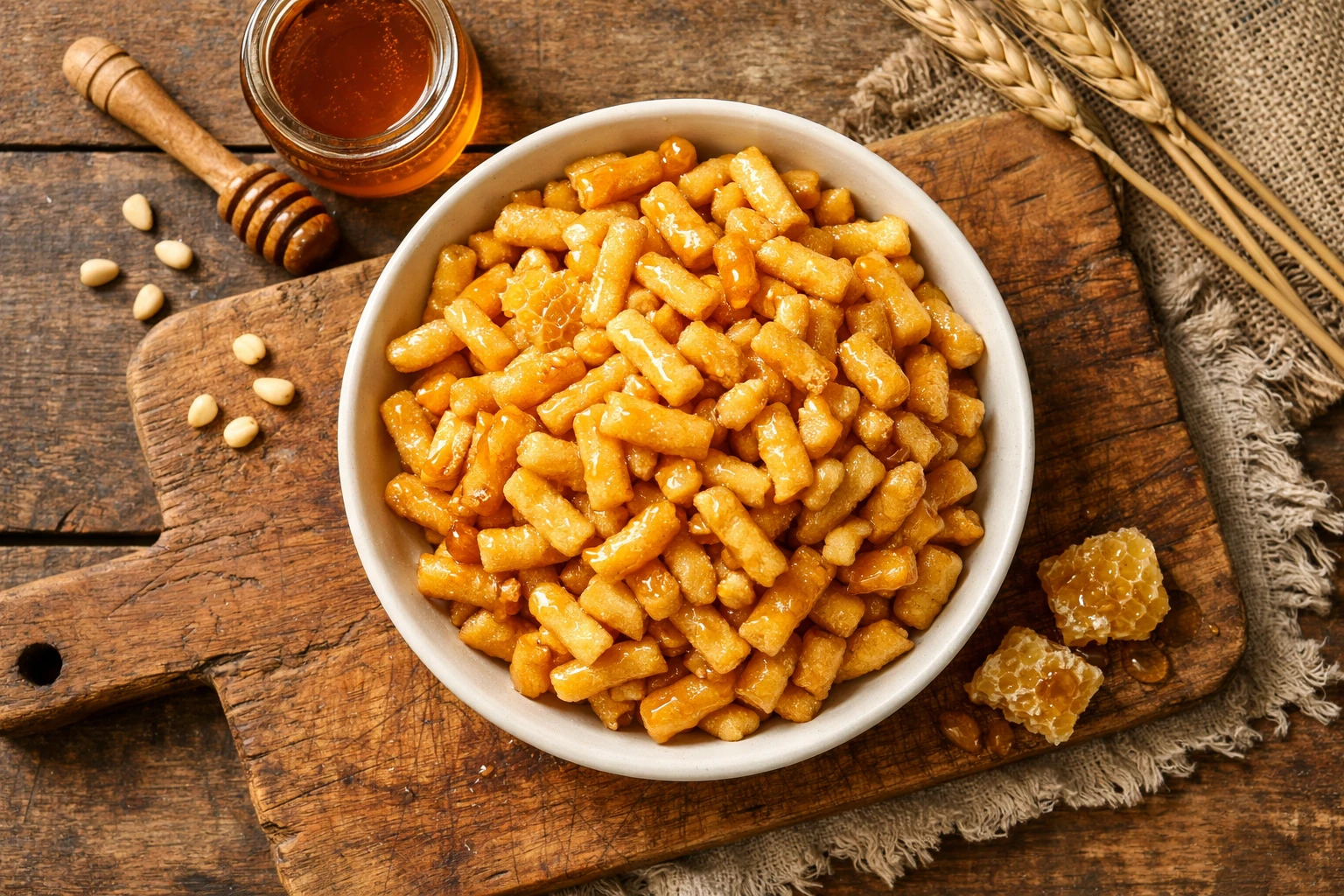
Quick Nutrition Facts
Per 100g Serving
| Nutrient | Amount |
|---|---|
| Calories | 420 kcal |
| Protein | 6g |
| Carbohydrates | 58g |
| Fiber | 1g |
| Sugars | 48g |
| Fat | 18g |
| Saturated Fat | 5g |
| Sodium | 200mg |
| Calcium | 10mg |
| Iron | 0.5mg |
Macronutrient Breakdown
 ChatGPT
  Claude
  AI Mode
  Perplexity
NUTRITIONIST INSIGHT
Chak-chak is a high-energy celebratory dessert best reserved for special occasions. At 420 calories per 100g with 48g sugar, portion control is essential. The honey provides trace antioxidants, but this remains a treat, not a health food.
Myth Busters
MYTH #1: Chak-Chak Is Healthy Because It Contains Honey
TRUTH: While honey offers trace antioxidants and minerals, chak-chak's high sugar content (48g per 100g) makes it a high-calorie dessert. The deep-frying adds significant fat. Enjoy as an occasional treat, not a health food.
MYTH #2: Homemade Chak-Chak Is Low in Calories
TRUTH: Homemade versions use the same ingredients—flour, eggs, butter, and honey. The frying process adds 15-20g fat per 100g regardless of where it's made. Homemade may have better quality ingredients but similar calorie content.
MYTH #3: You Can Eat Unlimited Chak-Chak at Celebrations
TRUTH: A typical celebratory portion (50g) provides 210 calories and 24g sugar. High sugar intake is linked to obesity and metabolic issues. Even at celebrations, moderation matters for long-term health.
MYTH #4: Chak-Chak Provides Good Energy for Athletes
TRUTH: While the high carbs provide quick energy, the lack of protein (6g) and fiber (1g) means short-lived energy followed by a blood sugar crash. Athletes benefit more from complex carbs with protein.
NutriScore by Health Goals
| Health Goal | NutriScore | Why This Score? |
|---|---|---|
| Weight Loss |  | 420 calories per 100g with high fat (18g) and sugar (48g). Avoid during active weight loss; if eating, limit to 25g portions. |
| Muscle Gain |  | Only 6g protein per 100g with high sugar. Poor protein-to-calorie ratio for muscle building. Better options exist for post-workout. |
| Diabetes Management | | High glycemic index from refined flour and honey causes rapid blood sugar spikes. Limit to 25-30g if eating; pair with protein. |
| PCOS Management | | High sugar content negatively impacts insulin sensitivity. Avoid or limit to rare, small portions during hormonal management. |
| Pregnancy Nutrition | | Limit high-sugar desserts during pregnancy to reduce gestational diabetes risk. Occasional small portions acceptable. |
| Viral/Flu Recovery |  | Quick energy from carbs and honey's natural soothing properties may help. Small amounts acceptable when appetite is low. |
PERSONALIZED NUTRITION
Track your meals with NutriScan for personalized NutriScores based on your specific health goals!
Blood Sugar Response to Chak-Chak
Understanding how chak-chak affects your blood glucose can help you make informed decisions about when and how much to eat.
Typical Glucose Response Curve
This chart shows typical blood glucose response for general healthy individuals. Individual responses may vary. Not medical advice.
How to Flatten the Spike
Pairing high-glycemic foods with protein or healthy fat slows glucose absorption and reduces the peak blood sugar level:
- 🥛 Drink with unsweetened yogurt or kefir - Adds protein to slow absorption
- 🥜 Eat a handful of nuts alongside - Healthy fats reduce glycemic impact
- 🫖 Pair with unsweetened green tea - Antioxidants support glucose metabolism
- ⏰ Eat after a protein-rich meal - Never on an empty stomach
This combination not only reduces the glucose spike but also extends energy release, keeping you satisfied longer.
Cultural Significance
Chak-chak is the national sweet of Tatarstan, deeply woven into Tatar culture and identity for centuries.
In Tatar Culture:
- Essential at weddings—presented to the newlyweds by the bride's family
- Symbol of hospitality and celebration at all major holidays
- Made with mountain linden honey for authentic flavor
- UNESCO recognized as part of Tatar intangible cultural heritage
Historical Significance:
- Origins traced to ancient Bulgar Kingdom (7th-13th century)
- Originally made by Tatar nomads as portable, long-lasting food
- Spread through trade routes across Central Asia and Russia
- Each family preserves generational recipes with unique touches
Global Reach:
- Popular throughout Russia, Kazakhstan, and Central Asia
- Featured in Russian and Middle Eastern bakeries worldwide
- Often called "Tatar honey cake" internationally
- Similar desserts exist in Turkish (çek-çek) and Kazakh cuisines
Compare & Substitute
Chak-Chak vs Similar Desserts (Per 100g)
| Nutrient | 🍯 Chak-Chak | 🥨 Churros | 🍩 Baklava | 🥮 Loukoumades |
|---|---|---|---|---|
| Calories | 420 kcal | 380 kcal | 428 kcal | 350 kcal |
| Carbs | 58g | 42g | 46g | 45g |
| Fiber | 1g | 1.5g | 2g | 1g |
| Protein | 6g | 4g | 6g | 5g |
| Fat | 18g | 22g | 25g | 17g |
| Sugar | 48g | 15g | 32g | 30g |
| Best For | Cultural celebrations | Quick fried dessert | Nutty, layered dessert | Greek honey dessert |
Frequently Asked Questions
How many calories are in chak-chak?
100g of chak-chak contains approximately 420 calories. A typical small portion (50g) provides 210 calories, primarily from carbohydrates (58g per 100g) and fats (18g per 100g).
Portion guidance: 30-50g is a reasonable treat portion, providing 125-210 calories.
Is chak-chak healthy?
Chak-chak is a traditional celebratory dessert, not a health food. The high calorie density (420 kcal/100g), sugar content (48g), and fat from deep-frying make it best suited for occasional enjoyment.
Benefits: Honey provides trace antioxidants and antimicrobial properties. The treat provides quick energy and cultural connection.
Can diabetics eat chak-chak?
Diabetics should limit chak-chak due to high glycemic index from refined flour and honey. If eating:
- Limit to 25-30g maximum (around 105-125 calories)
- Eat after a protein-rich meal, never on empty stomach
- Monitor blood sugar 2 hours after consumption
- Choose less frequently than other dessert options
What is chak-chak made of?
Traditional chak-chak contains:
- Flour (450g) - provides structure
- Eggs (5-6) - binds dough together
- Butter or oil (50g) - adds richness
- Honey (250g) - binds fried pieces
- Sugar (optional, some recipes)
- Salt (pinch) - enhances flavor
The dough is cut into small pieces, deep-fried, then coated in hot honey syrup and shaped.
Is chak-chak safe during pregnancy?
Chak-chak can be eaten occasionally during pregnancy in small amounts (25-50g). However, limit consumption due to:
- High sugar content affecting blood glucose
- High calorie density contributing to excess weight gain
- Fried foods may cause digestive discomfort
Choose homemade versions when possible for ingredient control. Consult your healthcare provider about dessert limits.
How long does chak-chak last?
Properly stored chak-chak lasts 2-3 weeks at room temperature in an airtight container. The honey coating acts as a natural preservative.
Storage tips:
- Keep in airtight container away from humidity
- Don't refrigerate—moisture makes it soggy
- Can freeze for up to 3 months
- Best enjoyed within first week for optimal texture


Similar Nutritious Foods
4505 Chicharrones Classic Chili Salt
7 Eleven Japan Crispy Corn Cheese
Explore More Nutrition Tools & Resources
AI Calorie Counter App - Snap a Photo, Get Macros
AI Nutritionist App That Reads Your Logged Meals
Best Protein Supplements for Women
Bulking Meal Plan App That Sets Your Surplus
ChatGPT Calorie Counter Alternative That Keeps the Total
ChatGPT Diet Plan Alternative That Tracks What You Eat
ChatGPT Weight Loss Coach Alternative With a Food Log
Fast Food Calorie Counter App That Reads the Tray
Free Calorie Tracker App with AI Photo Scans | NutriScan
Indian Diet Plan App With Veg and Non Veg Meals
Indian Food Calorie Calculator - Get Instant Nutrition Facts for Desi Meals — 2026
Intermittent Fasting for Women, Timer and Meal Log App
Intermittent Fasting Tracker App - Free Fasting Timer
Macro Tracker App That Fills the Numbers From a Photo
Mediterranean Diet Meal Plan App That Counts the Oil
Micronutrient Tracker App for Vitamins and Minerals
MyFitnessPal Alternative That Stays Free | NutriScan
NutriScore App: A Free Grade on Every Meal | NutriScan
Nutrition Label Scanner App for the Amount You Ate
Second Trimester Protein Guide
Vegetarian Meal Plan App With a Protein Target
Voice Calorie Counter - Speak to Track Meals Hands-Free
Water and Calorie Tracker App - Free Water Log