Cheese: Calories, Nutrition & Health Facts (2026 Guide)
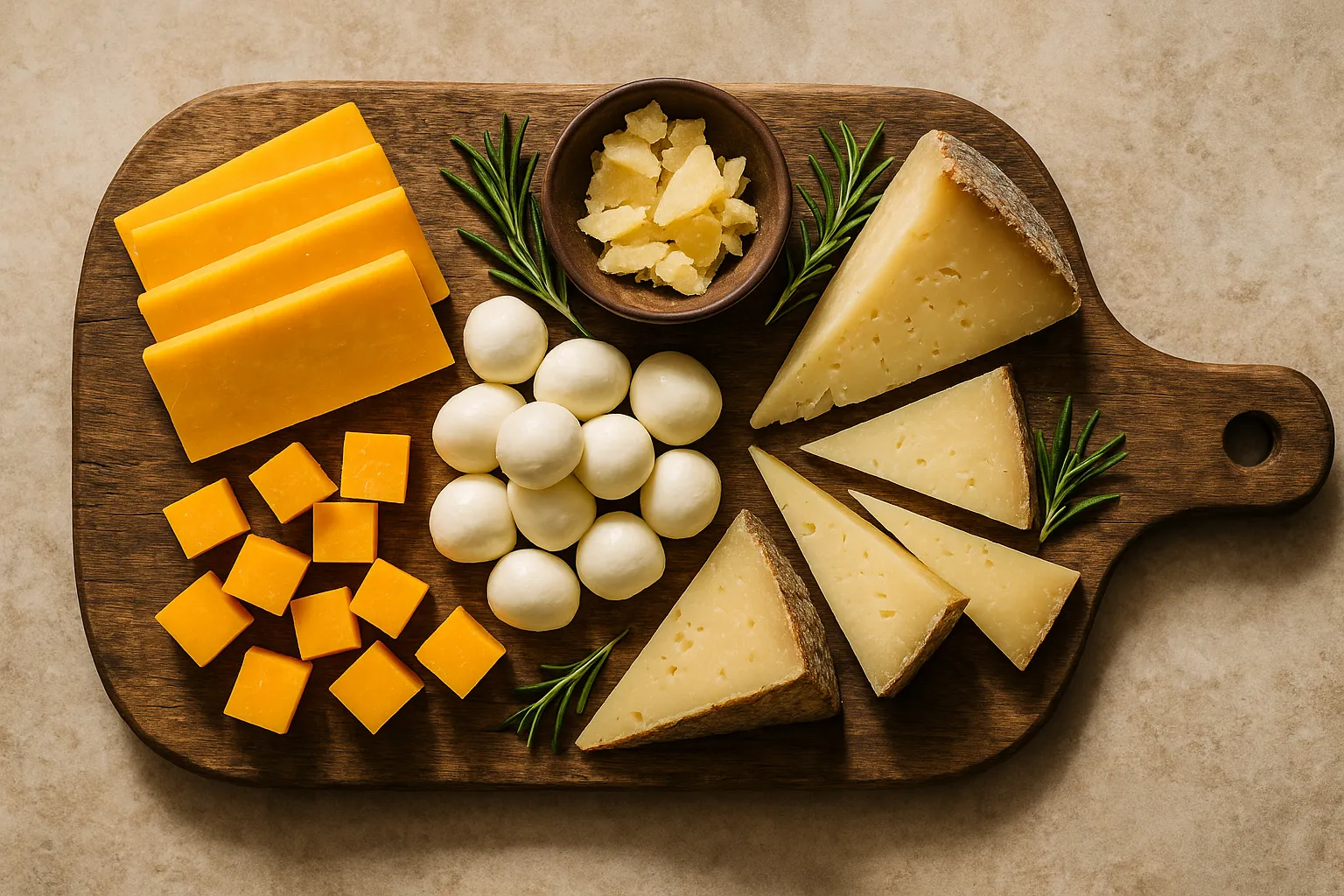
Cheese is a protein-rich dairy staple, but portion blindness means most people consume 2-3 ounces instead of the standard 1-ounce serving — tripling calories from 114 to 340+. Add the processed cheese epidemic (51% minimum real cheese by FDA standards), and the nutritional landscape becomes murky.
This comprehensive guide examines cheese's true nutritional profile, addresses portion distortion, and clarifies the critical distinction between real cheese and "cheese food" based on 2026 evidence.
Quick Nutrition Facts: Cheese (Cheddar, Per 1 oz / 28g)
| Nutrient | Amount | % Daily Value* |
|---|---|---|
| Calories | 114 kcal | 6% |
| Total Fat | 9g | 12% |
| Saturated Fat | 6g | 30% |
| Cholesterol | 30mg | 10% |
| Sodium | 176mg | 8% |
| Carbohydrates | 0.5g | 0% |
| Protein | 7g | 14% |
| Calcium | 204mg | 20% |
| Vitamin A | 75µg | 8% |
| Vitamin B12 | 0.24µg | 10% |
 ChatGPT
  Claude
  AI Mode
  Perplexity
*Based on a 2,000 calorie diet. Source: USDA FoodData Central
Nutrition Breakdown
What Makes Cheese Nutritious?
High-Quality Protein: Contains 7g protein per ounce with all nine essential amino acids. Casein protein digests slowly, providing sustained amino acid release for muscle protein synthesis.
Calcium Powerhouse: Delivers 20% of daily calcium needs per ounce, crucial for bone health. Bioavailability is high due to fat and protein content that enhance mineral absorption.
Vitamin B12 & Fat-Soluble Vitamins: Provides 10% DV of B12 (vital for vegans' concerns) plus vitamins A, D, and K2. Grass-fed cheese contains more K2 (menaquinone-7) for cardiovascular and bone health.
Saturated Fat Reality: At 6g saturated fat per ounce (30% DV), cheese is a major contributor to saturated fat intake. However, 2024 research suggests dairy saturated fat may have neutral effects on heart health compared to meat sources.
6 Myths About Cheese – Busted
Myth 1: "A Serving of Cheese is What I Put on My Sandwich"
Truth: The FDA defines a cheese serving as 1 ounce (28g) — roughly the size of four stacked dice or a standard pre-sliced deli slice. Most sandwich constructions use 2-3 slices (2-3 oz), tripling calories from 114 to 340+ and saturated fat from 6g to 18g.
Citation: Saint Luke's Health System - How to Judge Serving Sizes
Myth 2: "American Cheese is Real Cheese"
Truth: Most "American cheese" is labeled "pasteurized process cheese food" or "pasteurized prepared cheese product" — not "cheese." FDA regulations require products labeled "cheese" to contain at least 51% real cheese. The remaining 49% can include emulsifiers, artificial colors, and dairy fillers.
After a 2002 FDA warning letter, Kraft Singles shifted from "cheese food" to "cheese product" to use cheaper ingredients not permitted in official cheese standards.
Citation: FDA - Code of Federal Regulations: Cheese Food
Myth 3: "Cheese Has Too Much Cholesterol to Eat Daily"
Truth: While cheese contains 30mg cholesterol per ounce, dietary cholesterol has minimal impact on blood cholesterol for most people. The 2015-2020 Dietary Guidelines removed the 300mg daily cholesterol limit. The saturated fat content (6g/oz) is the greater concern for cardiovascular health.
Myth 4: "Low-Fat Cheese is Always Healthier"
Truth: Reduced-fat cheese cuts calories by 30-40% but often compensates with added sodium (up to 50% more) and texture modifiers. Fat-soluble vitamins (A, D, K2) are reduced. Full-fat cheese provides more satiety, potentially preventing overeating. Choose based on your total dietary fat and sodium goals.
Myth 5: "Aged Cheese is Lactose-Free"
Truth: Partially true. Aging reduces lactose content — aged cheddar, Parmesan, and Swiss contain <1g lactose per ounce vs. 2-4g in fresh cheeses like ricotta or cottage cheese. However, "lactose-free" claims require <0.5g per serving — most aged cheeses don't meet this threshold. Lactose-intolerant individuals tolerate aged cheeses better but may still react.
Myth 6: "All Cheese Melts the Same"
Truth: Melting quality depends on moisture and fat content. High-moisture mozzarella melts smoothly (perfect for pizza), while low-moisture aged cheddar becomes greasy and separates. Processed cheese (American) melts uniformly due to emulsifiers — this is the one advantage of cheese products over real cheese.
NutriScore Rating for Cheese
| Health Goal | Rating | Key Factors |
|---|---|---|
| Fat Loss | C | 114 cal/oz, portion confusion doubles/triples intake |
| Muscle Gain | A | 7g protein/oz, slow-digesting casein, leucine-rich |
| Diabetes Mgmt | B | Low carb (<1g), high satiety, but saturated fat concern |
| Heart Health | C | 6g saturated fat/oz (30% DV), sodium varies (150-400mg) |
| PCOS | B | Protein supports hormone balance, but dairy sensitivity varies |
| Overall Health | B | Excellent protein & calcium, but saturated fat and portion control issues |
Rating Rationale:
- A-grade for muscle gain: High-quality complete protein with slow-digesting casein ideal for muscle protein synthesis
- C-grade for fat loss: Calorie density and portion distortion (2-3 oz typical vs 1 oz serving) sabotage weight goals
- C-grade for heart health: 30% DV saturated fat per ounce adds up fast; latest research suggests dairy fat may be neutral, but evidence is mixed
Blood Sugar Response
Impact: ⭐ MINIMAL (Glycemic Index: <10)
Cheese contains minimal carbohydrates (0.5g per ounce), producing negligible blood sugar response. The protein and fat content actually slow glucose absorption when paired with carb-rich foods.
Research Evidence:
- Glycemic Control: Adding cheese to a meal reduces post-meal blood sugar spikes by 12-15% due to delayed gastric emptying
- Insulin Response: Protein triggers modest insulin release without glucose elevation — beneficial for muscle protein synthesis
- Diabetes Studies: Daily cheese consumption (1-2 oz) associated with 12% lower type 2 diabetes risk in meta-analyses, likely due to satiety and protein content
Citation: Harvard Nutrition Source - Cheese
Best Practice: Pair cheese with whole-grain crackers or fruit to moderate their glycemic impact. A 1-oz cheese serving can reduce the blood sugar spike from 15g crackers by 10-15%.
Cultural & Culinary Significance
Global Cheese Traditions
Cheese production dates back 7,500 years, with each culture developing distinct varieties:
- France: Over 1,000 cheese varieties — from soft Brie to pungent Roquefort. French law mandates traditional production methods for AOC (Appellation d'Origine Contrôlée) cheeses.
- Italy: Parmesan (Parmigiano-Reggiano) aged 24-36 months by law, mozzarella for pizza perfection, ricotta for desserts.
- Switzerland: Emmental and Gruyère with characteristic holes from propionic acid bacteria fermentation.
- United States: Cheddar dominates (51% of consumption), processed American cheese invented in 1916 by James Kraft for WWI military rations.
Portion Control Across Cultures
- European servings: 30-50g (1-1.75 oz) with bread, wine, and conversation
- American servings: 60-90g (2-3 oz) on sandwiches, burgers, and in dishes
- Difference: Cultural emphasis on cheese as a component vs. a main ingredient
Cheese Varieties Comparison
| Cheese (1 oz) | Calories | Protein | Fat | Sat Fat | Sodium | Best For |
|---|---|---|---|---|---|---|
| Cheddar | 114 | 7g | 9g | 6g | 176mg | All-purpose, sandwiches |
| Mozzarella (part-skim) | 72 | 7g | 5g | 3g | 175mg | Pizza, low-cal option |
| Parmesan | 111 | 10g | 7g | 5g | 454mg | Grating, high protein |
| Swiss | 106 | 8g | 8g | 5g | 54mg | Low sodium, sandwiches |
| Feta | 75 | 4g | 6g | 4g | 316mg | Salads, Mediterranean |
| Cream Cheese | 99 | 2g | 10g | 6g | 84mg | Spreading, baking |
| American (processed) | 104 | 5g | 9g | 5g | 377mg | Melting, nostalgia |
| Cottage Cheese | 28 | 4g | 1g | 0.7g | 115mg | High-protein snack |
Key Takeaways:
- Parmesan leads in protein (10g/oz) but packs high sodium (454mg)
- Mozzarella (part-skim) is lowest calorie (72 cal/oz) while maintaining 7g protein
- Swiss is lowest sodium (54mg/oz) — ideal for salt-sensitive individuals
- Cottage cheese is a protein superstar (4g per 1-oz portion, which is ~2 tbsp) with minimal fat
- American cheese (processed) has moderate stats but isn't legally "cheese" in many cases
Frequently Asked Questions
Is cheese bad for cholesterol?
Not for most people. Cheese contains 30mg cholesterol per ounce, but dietary cholesterol minimally affects blood cholesterol in 75% of the population. The 2015 Dietary Guidelines removed the 300mg daily cholesterol cap. The saturated fat content (6g/oz) is the greater concern — it can raise LDL cholesterol. However, 2024 research suggests dairy saturated fat may be neutral for heart health. Monitor your personal response.
What's the difference between cheese and cheese product?
FDA definition is key:
- "Cheese" = at least 51% real cheese (milk, cultures, enzymes, salt)
- "Cheese food" = 51%+ cheese but allows added dairy ingredients
- "Cheese product" = <51% cheese or uses ingredients not permitted in official cheese standards (e.g., milk protein concentrate)
Kraft Singles shifted from "cheese food" to "cheese product" in 2002 after FDA warnings about ingredients. Check labels — if it says "cheese product" or "cheese food," it's not primarily cheese.
Citation: Taste of Home - Is American Cheese Real Cheese?
How much cheese can I eat per day?
Recommendations vary by health goal:
- General health: 1-2 oz daily (114-228 calories) fits most balanced diets
- Weight loss: 0.5-1 oz (57-114 calories) due to calorie density
- Muscle gain: 2-3 oz (14-21g protein) supports protein targets
- Heart disease risk: Limit to 1 oz due to saturated fat (6g = 30% DV)
Harvard Nurses' Health Study found 1 serving daily (1 oz) associated with neutral cardiovascular outcomes — not protective like yogurt, but not harmful like red meat.
Is mozzarella healthier than cheddar?
Part-skim mozzarella wins on calories and fat (72 cal, 5g fat vs. 114 cal, 9g fat), making it ideal for weight management. Both provide 7g protein per ounce. Cheddar has more vitamin A and K2 (especially grass-fed). Choose mozzarella for cutting calories, cheddar for flavor and micronutrients.
Does cheese cause inflammation?
Mixed evidence. Some studies link dairy to reduced inflammation (CRP, IL-6 markers) due to anti-inflammatory peptides formed during digestion. Others show dairy can trigger inflammation in lactose-intolerant or casein-sensitive individuals. Fermented/aged cheeses (yogurt, kefir, aged cheddar) may be anti-inflammatory, while high-saturated-fat fresh cheeses could promote inflammation. Personal tolerance varies.
Can I eat cheese on a low-carb or keto diet?
Yes — cheese is naturally low-carb (<1g per ounce for most varieties). Hard cheeses (cheddar, Parmesan, Swiss) have <0.5g carbs/oz, ideal for keto. Watch total calories and saturated fat — easy to overeat on keto due to "fat is free" mindset. Stick to 1-2 oz portions to avoid stalling weight loss. Pair with vegetables to balance nutrients.
Related Nutrition Pages
4505 Chicharrones Classic Chili Salt
7 Eleven Japan Crispy Corn Cheese


The Bottom Line
Cheese is not a villain or a superfood — it's a nutrient-dense dairy source that delivers 7g protein and 20% of daily calcium per ounce, but with 114 calories and 30% DV saturated fat that accumulate fast when portions double or triple.
Evidence-based recommendations:
- ✅ Measure portions — 1 oz = four stacked dice, not "enough to cover the sandwich"
- ✅ Choose real cheese — avoid "cheese food" or "cheese product" labels
- ✅ Opt for part-skim mozzarella for lower calories (72 vs 114 per oz)
- ✅ Pair with whole grains or vegetables to moderate blood sugar response
- ✅ Consider aged varieties if lactose-intolerant (cheddar, Parmesan, Swiss)
- ❌ Don't assume low-fat is always better — often trades fat for sodium
- ❌ Don't ignore processed cheese distinctions — FDA requires 51% minimum real cheese for "cheese" label
The difference between cheese supporting your goals and sabotaging them comes down to portion awareness and choosing real cheese over processed alternatives.
Disclaimer: This guide is for informational purposes only and is not medical advice. Consult a healthcare provider or registered dietitian for personalized nutrition guidance, especially if you have cardiovascular conditions, lactose intolerance, or are managing body weight.