Custard Apple: Calories, Nutrition and Health Benefits
Creamy tropical treasure packed with vitamin C, fiber, and natural sweetness - a seasonal delight with powerful immune and digestive benefits.
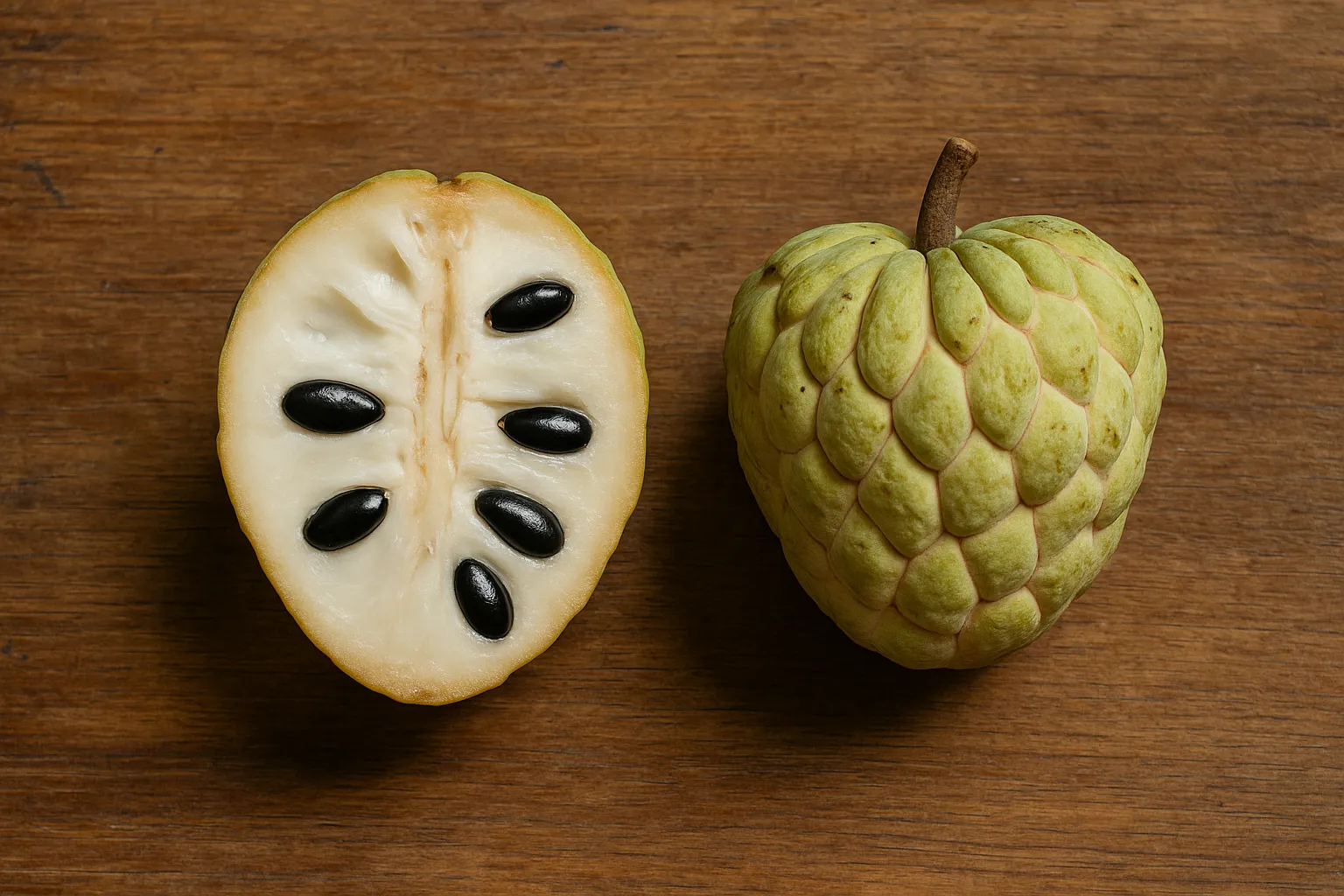
Quick Nutrition Facts
Per 1 Medium Custard Apple (150g)
| Nutrient | Amount |
|---|---|
| Calories | 152 kcal |
| Protein | 2.5g |
| Carbohydrates | 38g |
| Fiber | 3.6g |
| Sugars | 34g |
| Fat | 0.9g |
| Vitamin C | 29mg |
| Potassium | 573mg |
| Magnesium | 32mg |
| Calcium | 36mg |
Macronutrient Breakdown
 ChatGPT
  Claude
  AI Mode
  Perplexity
NUTRITIONIST INSIGHT
Custard apples provide 32% of your daily vitamin C needs in one fruit, supporting immune function and collagen synthesis. The creamy texture comes from natural soluble fiber that aids digestion and promotes gut health. Choose slightly firm fruits and ripen at room temperature for best flavor and nutrition.
Custard Apple Nutrition per 100 g
Custard apple, also sold as sitaphal or cherimoya, carries 101 kcal per 100 g of pulp, roughly double a regular apple. Here is the full breakdown.
| Nutrient | Per 100 g |
|---|---|
| Calories | 101 kcal |
| Protein | 1.7 g |
| Carbohydrates | 25.2 g |
| of which sugars | 23 g |
| Fiber | 2.4 g |
| Fat | 0.6 g |
| Salt | trace |
| Vitamin C | 19.2 mg |
| Potassium | 382 mg |
Against two close tropical fruits, per 100 g
| Fruit | Calories | Sugars | Vitamin C |
|---|---|---|---|
| Custard apple | 101 kcal | 23 g | 19.2 mg |
| Guava | 68 kcal | 8.9 g | 228.3 mg |
| Papaya | 43 kcal | 7.8 g | 60.9 mg |
Sugar explains the gap. Custard apple is one of the sweetest fruits on the stall, with close to three times the sugar of papaya at the same weight. In return it gives 382 mg of potassium per 100 g, as much as a banana, and 2.4 g of fiber that slows absorption. A medium 150 g fruit comes to 152 calories and 34 g of sugar, which makes it a snack in its own right rather than a light nibble. Half a custard apple is enough for most people.
Myth Busters
MYTH #1: Custard Apples Are Too High in Sugar for Anyone
TRUTH: While one fruit contains 34g natural sugars, it also provides 3.6g fiber, vitamin C, and potassium. For most people, 1 fruit per day fits a balanced diet. The issue isn't the fruit itself but portion control and pairing with protein.
MYTH #2: Diabetics Should Never Eat Custard Apples
TRUTH: Diabetics can enjoy custard apples with portion control. Custard apple leaves show blood glucose-lowering properties, and the fruit's fiber helps moderate sugar absorption. Eat half a fruit, pair with nuts or cheese, and monitor your blood sugar response.
MYTH #3: Custard Apples Cause Weight Gain
TRUTH: 152 calories per fruit won't cause weight gain unless it pushes you over daily calorie needs. The 3.6g fiber promotes satiety. Weight management depends on total calorie balance, not single foods. One fruit as a snack replacement can actually support weight goals.
MYTH #4: Custard Apple Is Healthier Than Regular Apple
TRUTH: Both are nutritious but different. Custard apples have more vitamin C (29mg vs 7mg) and calories (152 vs 95); regular apples have similar fiber with fewer calories. Neither is "better" - choose based on your calorie budget and taste preference.
MYTH #5: You Can Eat Custard Apple Seeds
TRUTH: Never eat custard apple seeds - they contain toxic compounds that can cause digestive distress. Always remove and discard all black seeds before eating. Only consume the white creamy flesh. The seeds have no nutritional benefit and pose health risks.
MYTH #6: Custard Apples Are Available Year-Round
TRUTH: Custard apples (sitaphal) are seasonal fruits, typically available August through November in India and other tropical regions. The short season makes them special. Out-of-season fruits are either imported (expensive) or previously frozen (texture changes).
NutriScore by Health Goals
| Health Goal | NutriScore | Why This Score? |
|---|---|---|
| Weight Loss |  | 152 calories with 34g natural sugars - moderate calorie density. The 3.6g fiber helps satiety. Best as occasional treat, limit to 1/2-1 fruit per day. |
| Muscle Gain | | Low protein (2.5g) limits muscle building. Good as natural carb source post-workout for glycogen. Pair with protein shake or Greek yogurt. |
| Diabetes Management |  | Medium-high glycemic impact due to 34g sugars. Eat half portions, pair with protein/healthy fat, monitor blood sugar closely. |
| PCOS Management | | Natural sugars affect insulin sensitivity. Limit to 1/2 fruit 2-3 times weekly, choose slightly firm, pair with almonds. |
| Pregnancy Nutrition |  | Rich in vitamin C and folate essential for fetal development, fiber relieves pregnancy constipation. Safe 1 fruit daily. Avoid seeds, wash thoroughly. |
| Viral/Flu Recovery |  | Excellent vitamin C (29mg, 32% DV) boosts immunity, easy to digest creamy texture, natural sugars provide quick energy, hydrating. Perfect illness recovery food. |
PERSONALIZED NUTRITION
Track your meals with NutriScan for personalized NutriScores based on your specific health goals!
Blood Sugar Response to Custard Apple
Understanding how custard apples affect your blood glucose helps optimize consumption for metabolic health.
Typical Glucose Response Curve
This chart shows typical blood glucose response for healthy individuals. Individual responses may vary, especially for diabetics. Not medical advice.
How to Minimize the Glucose Spike
Pairing fruit with protein or fat significantly reduces post-meal glucose levels by slowing sugar absorption:
- 🧀 Cottage cheese or paneer - Protein slows digestion and moderates blood sugar
- 🥜 Handful of almonds or walnuts - Healthy fats reduce glucose spike by 30-40%
- 🥛 Greek yogurt - Protein and probiotics support metabolic health
- 🥚 Boiled egg - Complete protein balances natural fruit sugars
This combination not only flattens the glucose curve but also extends satiety, making custard apple a more balanced snack that keeps you full for 2-3 hours instead of causing energy crashes.
Cultural Significance
Custard apples (Annona species) originated in the Americas but have been cultivated in India for over 300 years, becoming deeply integrated into Indian culture.
In India:
- Known as "sitaphal" in Hindi (Sita's fruit, named after goddess Sita from Ramayana)
- Called "shareefa" in Urdu, "seethaphal" in Telugu, "seetha pazham" in Tamil
- Offered in temples during festivals, especially in Maharashtra and Tamil Nadu
- Traditional Ayurvedic use for cooling the body and improving digestion
- Peak season: August to November in most regions
- Maharashtra is India's largest producer, followed by Gujarat and Madhya Pradesh
Global Impact:
- Over 170 Annona species worldwide, but only 3-4 cultivated commercially
- Grown throughout tropical and subtropical regions
- Australian varieties (Pinks Mammoth, African Pride) are renowned for size
- Taiwan developed seedless varieties through selective breeding
- Used in ice creams, smoothies, and desserts globally
Compare & Substitute
Custard Apple vs Similar Fruits (Per 100g)
| Nutrient | 🍎 Custard Apple | 🍎 Regular Apple | 🍌 Banana | 🥭 Mango |
|---|---|---|---|---|
| Calories | 101 kcal | 52 kcal | 89 kcal | 60 kcal |
| Carbs | 25.2g | 14g | 23g | 15g |
| Fiber | 2.4g | 2.4g | 2.6g | 1.6g |
| Protein | 1.7g | 0.3g | 1.1g | 0.8g |
| Fat | 0.6g | 0.2g | 0.3g | 0.4g |
| Vitamin C | 19.2mg | 4.6mg | 8.7mg | 36mg |
| Potassium | 382mg | 107mg | 358mg | 168mg |
| Sugar | 23g | 10g | 12g | 14g |
| Season | Aug-Nov | Year-round | Year-round | Mar-Jul |
| Best For | Immunity, seasonal indulgence | Weight loss, daily snacking | Quick energy, post-workout | Vitamin A, seasonal treat |
Frequently Asked Questions
Are custard apples good for weight loss?
Custard apples can support weight loss in moderation, despite 152 calories per fruit. The 3.6g fiber promotes fullness and supports digestive health, which aids weight management. However, the 34g natural sugars mean portion control is essential.
Best practices: Limit to 1/2-1 fruit per day for weight loss; eat in morning or as pre-lunch snack (not late evening); pair with protein like Greek yogurt or nuts; count toward daily fruit servings (2-3 total fruits per day).
One fruit occasionally as a dessert replacement is smarter than restricting entirely - sustainable approach prevents cravings.
Can diabetics eat custard apples?
Diabetics can eat custard apples with caution and portion control. The fruit has medium-high glycemic impact due to 23g natural sugars per 100g, though research shows custard apple leaves have glucose-lowering properties.
Tips for diabetics:
- Eat half a fruit maximum (75g) at a time to limit sugar load
- Always pair with protein (15-20g) or healthy fat (almonds, cheese)
- Best timing: mid-morning or afternoon, never on empty stomach
- Monitor blood sugar 2 hours after consumption to assess personal response
- Choose slightly firm fruit over very ripe for lower sugar content
The fiber helps moderate absorption, but individual responses vary. Consult your healthcare provider, especially if blood sugar control is challenging.
How much vitamin C is in custard apple?
One medium custard apple (150g) contains approximately 29mg of vitamin C - about 32% of the recommended daily allowance. Per 100g, custard apples provide 19.2mg vitamin C.
This makes custard apples a good vitamin C source, though not as high as guava (228mg/100g) or kiwi (93mg/100g). The vitamin C supports immune function, collagen synthesis for skin health, wound healing, and enhances iron absorption from plant foods.
What are the main health benefits of custard apples?
Key Benefits:
- Immune Support: 29mg vitamin C (32% DV) boosts immunity and fights infections
- Digestive Health: 3.6g fiber promotes regular bowel movements and gut bacteria balance
- Blood Pressure Regulation: 573mg potassium helps maintain healthy blood pressure
- Antioxidant Protection: Vitamin C and polyphenols protect cells from oxidative damage
- Energy Metabolism: B vitamins (B6, thiamin, niacin) support energy production
- Pregnancy Nutrition: Folate, vitamin C, and fiber support fetal development and maternal health
Is custard apple safe during pregnancy?
Yes, custard apple is safe and beneficial during pregnancy when consumed properly. Rich in vitamin C essential for fetal development, folate for neural tube formation, fiber for constipation relief (common pregnancy complaint), and potassium for fluid balance.
Pregnancy guidelines: Limit to 1 fruit daily to control sugar intake; wash thoroughly to remove potential surface contaminants; always remove and discard all seeds; avoid if gestational diabetes unless approved by doctor.
Vitamin C supplementation during pregnancy may help reduce pregnancy complications, making custard apple a nutritious whole-food source during this critical period.
IMPORTANT NOTE
Always remove all seeds before eating - custard apple seeds are toxic and should never be consumed.
Are custard apple seeds poisonous?
Yes, custard apple seeds contain toxic compounds and should never be eaten. The seeds contain alkaloids and other compounds that can cause digestive distress, nausea, and potential toxicity if consumed in quantity.
Safe consumption: Always cut the fruit in half; scoop out the white creamy flesh with a spoon; remove and discard every single black seed; never blend or process whole fruit with seeds; teach children to spit out seeds.
Only the white creamy pulp is edible and nutritious. The seeds have no nutritional benefit and pose health risks.
How do you know when a custard apple is ripe?
Ripeness indicators:
- Touch: Fruit yields gently to pressure, like a ripe avocado (not mushy)
- Skin: Slightly separated segments with small gaps between scales
- Color: Pale green to yellowish-green (variety dependent)
- Stem: Easily detaches from fruit when gently twisted
Ripening tips: Buy slightly firm fruit; ripen at room temperature for 2-5 days away from direct sunlight; check daily by gentle pressing; refrigerate once ripe and consume within 2-3 days; never refrigerate unripe fruit as it stops ripening.
Overripe fruits become mushy with fermented smell - consume promptly once ripe for best flavor and nutrition.
How many custard apples should I eat per day?
General Guidelines:
- 1 medium fruit daily - Most people (fits balanced diet with 2-3 fruits total)
- 1/2 fruit daily - Weight loss, diabetes management, strict calorie control
- 1 fruit 2-3 times weekly - PCOS management, low-carb diets
- Avoid or limit - Poorly controlled diabetes, very low-carb diets
Consider: One fruit = 152 calories and 34g sugars; count toward daily fruit allowance (2-3 servings total); seasonal availability limits overconsumption naturally.
Track your meals with NutriScan app to see how custard apples fit your personal nutrition goals and daily calorie budget.


Similar Nutritious Fruits
4505 Chicharrones Classic Chili Salt
7 Eleven Japan Crispy Corn Cheese
Explore More Nutrition Tools & Resources
AI Calorie Counter App - Snap a Photo, Get Macros
AI Nutritionist App That Reads Your Logged Meals
Best Protein Supplements for Women
Bulking Meal Plan App That Sets Your Surplus
ChatGPT Calorie Counter Alternative That Keeps the Total
ChatGPT Diet Plan Alternative That Tracks What You Eat
ChatGPT Weight Loss Coach Alternative With a Food Log
Fast Food Calorie Counter App That Reads the Tray
Free Calorie Tracker App with AI Photo Scans | NutriScan
Indian Diet Plan App With Veg and Non Veg Meals
Indian Food Calorie Calculator - Get Instant Nutrition Facts for Desi Meals — 2026
Intermittent Fasting for Women, Timer and Meal Log App
Intermittent Fasting Tracker App - Free Fasting Timer
Macro Tracker App That Fills the Numbers From a Photo
Mediterranean Diet Meal Plan App That Counts the Oil
Micronutrient Tracker App for Vitamins and Minerals
MyFitnessPal Alternative That Stays Free | NutriScan
NutriScore App: A Free Grade on Every Meal | NutriScan
Nutrition Label Scanner App for the Amount You Ate
Second Trimester Protein Guide
Vegetarian Meal Plan App With a Protein Target
Voice Calorie Counter - Speak to Track Meals Hands-Free
Water and Calorie Tracker App - Free Water Log