Green Salad: Calories, Nutrition and Health Benefits
Nature's ultimate low-calorie superfood with only 15-20 calories per cup, packed with vitamins, minerals, and fiber for vibrant health.
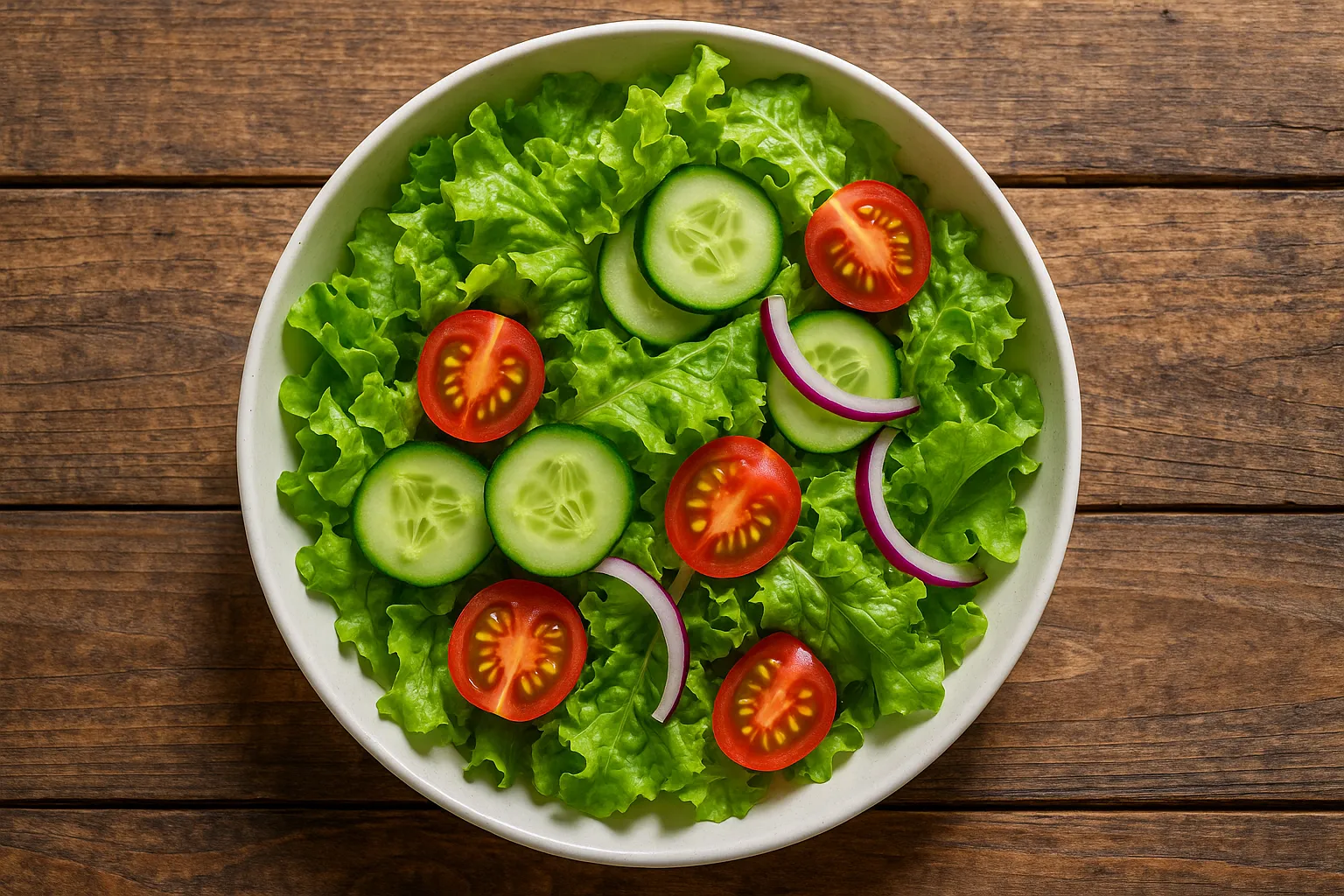
Quick Nutrition Facts
Per 1 Cup Mixed Green Salad (85g)
| Nutrient | Amount |
|---|---|
| Calories | 15 kcal |
| Protein | 1.2g |
| Carbohydrates | 3g |
| Fiber | 1.5g |
| Sugars | 0.8g |
| Fat | 0.2g |
| Vitamin A | 148µg RAE |
| Vitamin K | 62µg |
| Vitamin C | 8mg |
| Folate | 46µg |
Macronutrient Breakdown
 ChatGPT
  Claude
  AI Mode
  Perplexity
NUTRITIONIST INSIGHT
Green salad is 95% water, making it the perfect volume food for weight loss. One cup provides 52% of daily vitamin K needs for bone health and blood clotting, while virtually calorie-free.
Myth Busters
MYTH #1: Salad Has No Nutrients, It's Just Water
TRUTH: While 95% water, green salad is nutrient-dense per calorie. One cup provides significant vitamin K (52% DV), vitamin A (16% DV), folate (12% DV), and powerful antioxidants like lutein and zeaxanthin for eye health.
MYTH #2: Eating Salad Makes You Lose Weight Automatically
TRUTH: Salad supports weight loss when it replaces higher-calorie foods or eaten before meals to reduce overall intake. However, adding high-calorie dressings, cheese, and croutons can make salad higher in calories than a burger. Focus on oil-free dressings or use lemon juice and vinegar.
MYTH #3: Iceberg Lettuce Has Zero Nutrition
TRUTH: While less nutrient-dense than darker greens, iceberg still provides hydration, fiber, vitamin K, and folate. It's a valid choice for those who dislike stronger-tasting greens. Mix with romaine or spinach for nutrient boost.
MYTH #4: You Should Only Eat Salad for Lunch
TRUTH: Salad is beneficial any time. For weight loss: start dinner with salad to reduce main course portions. For diabetes: include salad with every meal for fiber and blood sugar control. For digestion: raw vegetables provide enzymes and fiber.
MYTH #5: Pre-Washed Salad Is Less Nutritious
TRUTH: Pre-washed greens retain most nutrients when consumed within best-by dates. While freshly harvested is ideal, the convenience of pre-washed greens encourages more vegetable consumption, which is the bigger win.
MYTH #6: You Can't Build Muscle Eating Salads
TRUTH: While salad alone won't build muscle, it's essential for muscle-building diets. Greens provide micronutrients, fiber for digestion, and volume without excess calories. Pair with grilled chicken, chickpeas, or tofu for complete muscle-building meal.
NutriScore by Health Goals
| Health Goal | NutriScore | Why This Score? |
|---|---|---|
| Weight Loss |  | Only 15 calories per cup with high volume and fiber creates fullness. Starting meals with salad reduces total intake by 10-12%. |
| Muscle Gain |  | Low calorie, provides micronutrients and fiber. Add protein (chicken, chickpeas, eggs) to make complete muscle-building meal. |
| Diabetes Management | | Minimal carbs (3g), low glycemic index (near 0), high fiber slows glucose absorption. Excellent for blood sugar control. |
| PCOS Management | | High fiber supports hormone regulation and gut health. Low calorie aids weight management, crucial for PCOS symptom reduction. |
| Pregnancy Nutrition | | Rich in folate (46µg, 12% DV) essential for fetal neural tube development. Vitamin K supports healthy blood clotting. Fiber prevents pregnancy constipation. |
| Viral/Flu Recovery | | Vitamin C boosts immunity, vitamin A supports immune cell function. Easy to digest, hydrating (95% water). Light on digestive system during illness. |
PERSONALIZED NUTRITION
Track your meals with NutriScan for personalized NutriScores based on your specific health goals!
Blood Sugar Response to Green Salad
Understanding how green salad affects blood glucose helps with meal planning and diabetes management.
Typical Glucose Response Curve
This chart shows minimal blood glucose response for low-carb vegetables. Individual responses may vary. Not medical advice.
Building Blood Sugar-Friendly Salad Meals
Green salad forms the perfect base for glucose-stable meals. Enhance with these additions:
- 🍗 Lean protein (grilled chicken, tofu, boiled eggs) - Slows digestion, extends fullness
- 🥑 Healthy fats (avocado, olive oil, nuts) - Minimal glucose impact, nutrient absorption
- 🫘 Legumes (chickpeas, black beans) - Protein, fiber, sustained energy
- 🌰 Seeds (pumpkin, sunflower) - Healthy fats, minerals, crunch
This combination provides complete nutrition with minimal blood sugar impact, ideal for diabetes, PCOS, and weight management.
Cultural Significance
Salads have evolved from simple vegetable dishes to culinary art forms across cultures.
Global Salad Traditions:
- Mediterranean: Greek salad (tomatoes, cucumber, feta, olives) - heart-healthy olive oil dressing
- American: Garden salad, Caesar salad, Cobb salad - popularized in 1920s-1940s
- Middle Eastern: Fattoush (mixed greens, pita chips), Tabbouleh (parsley-based)
- Asian: Thai papaya salad, Vietnamese herb salads served with pho
Historical Evolution:
- Ancient Romans and Greeks ate raw vegetables with vinegar and oil
- "Salad" derives from Latin "sal" (salt), referring to salted vegetable preparations
- 1950s: Iceberg lettuce dominated American salads
- 2000s: Kale, arugula, microgreens popularity surged with health movement
- Today: Pre-washed salad greens make daily consumption convenient
Compare & Substitute
Green Salad vs Other Salad Greens (Per 100g)
| Nutrient | 🥗 Mixed Greens | 🥬 Romaine Lettuce | 🌿 Spinach | 🥬 Kale | 🌱 Arugula |
|---|---|---|---|---|---|
| Calories | 17 kcal | 17 kcal | 23 kcal | 35 kcal | 25 kcal |
| Protein | 1.4g | 1.2g | 2.9g | 2.9g | 2.6g |
| Carbs | 3.5g | 3.3g | 3.6g | 4.4g | 3.7g |
| Fiber | 1.8g | 2.1g | 2.2g | 4.1g | 1.6g |
| Vitamin A | 370µg | 436µg | 469µg | 500µg | 119µg |
| Vitamin K | 126µg | 103µg | 483µg | 390µg | 109µg |
| Vitamin C | 9mg | 4mg | 28mg | 93mg | 15mg |
| Folate | 38µg | 136µg | 194µg | 62µg | 97µg |
| Calcium | 36mg | 33mg | 99mg | 254mg | 160mg |
| Iron | 0.8mg | 0.97mg | 2.7mg | 1.6mg | 1.5mg |
| Best For | Mild flavor | Crunch, folate | Iron, versatility | Nutrient density | Peppery flavor |
Frequently Asked Questions
Is green salad good for weight loss?
Yes, green salad is one of the best foods for weight loss. With only 15-20 calories per cup and 95% water content, it provides exceptional volume and fullness without significant calories.
Why it works: High water and fiber create satiety; low calorie density allows large portions; eating salad first reduces total meal calories by 10-12%; replaces higher-calorie side dishes.
Best practices: Start meals with large salad; use vinegar, lemon juice, or light dressings (avoid creamy dressings); add protein for complete meal; eat 2-3 cups daily.
How many calories are in a green salad?
Basic green salad (per cup/85g): 15-20 calories
By green type (per cup):
- Mixed greens: 9 calories
- Romaine lettuce: 8 calories
- Spinach: 7 calories
- Kale: 33 calories (more nutrient-dense)
With common additions:
- Cucumber, tomato, peppers: +10-15 calories
- 2 tbsp balsamic vinegar: +10 calories
- 2 tbsp ranch dressing: +150 calories
- Grilled chicken (4 oz): +150 calories
Warning: Dressings and toppings often contain more calories than the salad itself.
Can diabetics eat green salad?
Absolutely. Green salad is ideal for diabetics with only 3g carbohydrates per cup, virtually zero glycemic impact, and high fiber that slows glucose absorption.
Benefits for diabetics:
- No blood sugar spike (GI near 0)
- Fiber slows carb digestion from other foods in meal
- High volume promotes fullness without glucose impact
- Rich in antioxidants that support vascular health
Best practices: Include salad with every meal; pair with lean protein; limit high-carb toppings (croutons, dried fruit); use oil and vinegar dressing.
What are the main health benefits of green salad?
Top 7 Benefits:
- Weight Management: High volume, low calories promote fullness and weight loss
- Bone Health: Vitamin K (52% DV) supports calcium absorption and bone density
- Eye Health: Vitamin A, lutein, and zeaxanthin protect against macular degeneration
- Heart Health: Fiber lowers cholesterol; folate reduces homocysteine (heart disease marker)
- Digestive Health: Fiber promotes regularity and feeds beneficial gut bacteria
- Immune Support: Vitamin C and phytonutrients strengthen immune function
- Hydration: 95% water content contributes to daily fluid needs
Should I eat salad before or after a meal?
For weight loss: Eat salad BEFORE the main meal.
Research shows starting with 1-2 cups of salad reduces total calorie intake by 10-12%. The fiber and water create fullness, naturally reducing portions of higher-calorie foods.
Timing strategies:
- Weight loss: Large salad before main course
- Diabetes: With every meal to slow glucose absorption
- Digestion: Before cooked food (raw enzymes aid digestion)
- Muscle gain: After protein main course (ensures adequate protein intake first)
Optimal approach: Large salad → Protein → Complex carbs → Healthy fats
Is it healthy to eat green salad every day?
Yes, eating green salad daily is very healthy and encouraged. Daily consumption is associated with better health outcomes across multiple measures.
Benefits of daily salad:
- Reduced risk of heart disease and stroke
- Lower diabetes risk (improved insulin sensitivity)
- Better digestive function and regularity
- Slower cognitive decline with aging
- Easier weight management
- Consistent micronutrient intake
Variety tips: Rotate greens (romaine, spinach, kale, arugula); add colorful vegetables (tomatoes, peppers, carrots); vary toppings and dressings.
Recommended: 2-4 cups of mixed greens daily, preferably with every main meal.
What's the healthiest salad dressing?
Healthiest options (per 2 tbsp):
- Lemon juice + herbs: 5 calories, vitamin C, zero added fat
- Balsamic vinegar: 10 calories, antioxidants, tangy flavor
- Olive oil + vinegar: 120 calories, heart-healthy fats, aid nutrient absorption
- Tahini-based: 90 calories, calcium, healthy fats
Avoid: Ranch (150 cal), blue cheese (140 cal), honey mustard (130 cal), Caesar (160 cal)
Best practice: Use oil-based dressings sparingly (1-2 tbsp) as they help absorb fat-soluble vitamins A and K. Avoid creamy, sugar-laden dressings.
Can I eat salad on an empty stomach?
Generally yes - salad is gentle on digestion and provides hydration and nutrients to start the day.
May want to avoid if you have:
- IBS or sensitive digestion: Raw vegetables may cause bloating; try cooked vegetables first
- Very low stomach acid: Protein or cooked food may be easier to digest initially
- Extreme hunger: May not provide enough immediate energy; add protein or healthy fat
Better approach: If eating salad for breakfast, add protein (eggs, chicken, tofu) or healthy fats (avocado, nuts) for balanced nutrition and sustained energy.


Similar Nutritious Vegetables
4505 Chicharrones Classic Chili Salt
7 Eleven Japan Crispy Corn Cheese
Explore More Nutrition Tools & Resources
AI Calorie Counter App - Snap a Photo, Get Macros
AI Nutritionist App That Reads Your Logged Meals
Best Protein Supplements for Women
Bulking Meal Plan App That Sets Your Surplus
ChatGPT Calorie Counter Alternative That Keeps the Total
ChatGPT Diet Plan Alternative That Tracks What You Eat
ChatGPT Weight Loss Coach Alternative With a Food Log
Fast Food Calorie Counter App That Reads the Tray
Free Calorie Tracker App with AI Photo Scans | NutriScan
Indian Diet Plan App With Veg and Non Veg Meals
Indian Food Calorie Calculator - Get Instant Nutrition Facts for Desi Meals — 2026
Intermittent Fasting for Women, Timer and Meal Log App
Intermittent Fasting Tracker App - Free Fasting Timer
Macro Tracker App That Fills the Numbers From a Photo
Mediterranean Diet Meal Plan App That Counts the Oil
Micronutrient Tracker App for Vitamins and Minerals
MyFitnessPal Alternative That Stays Free | NutriScan
NutriScore App: A Free Grade on Every Meal | NutriScan
Nutrition Label Scanner App for the Amount You Ate
Second Trimester Protein Guide
Vegetarian Meal Plan App With a Protein Target
Voice Calorie Counter - Speak to Track Meals Hands-Free
Water and Calorie Tracker App - Free Water Log