Honey: Calories, Nutrition and Health Benefits
Natural sweetener with antioxidants and antimicrobial properties, but still concentrated sugar requiring careful portion control.
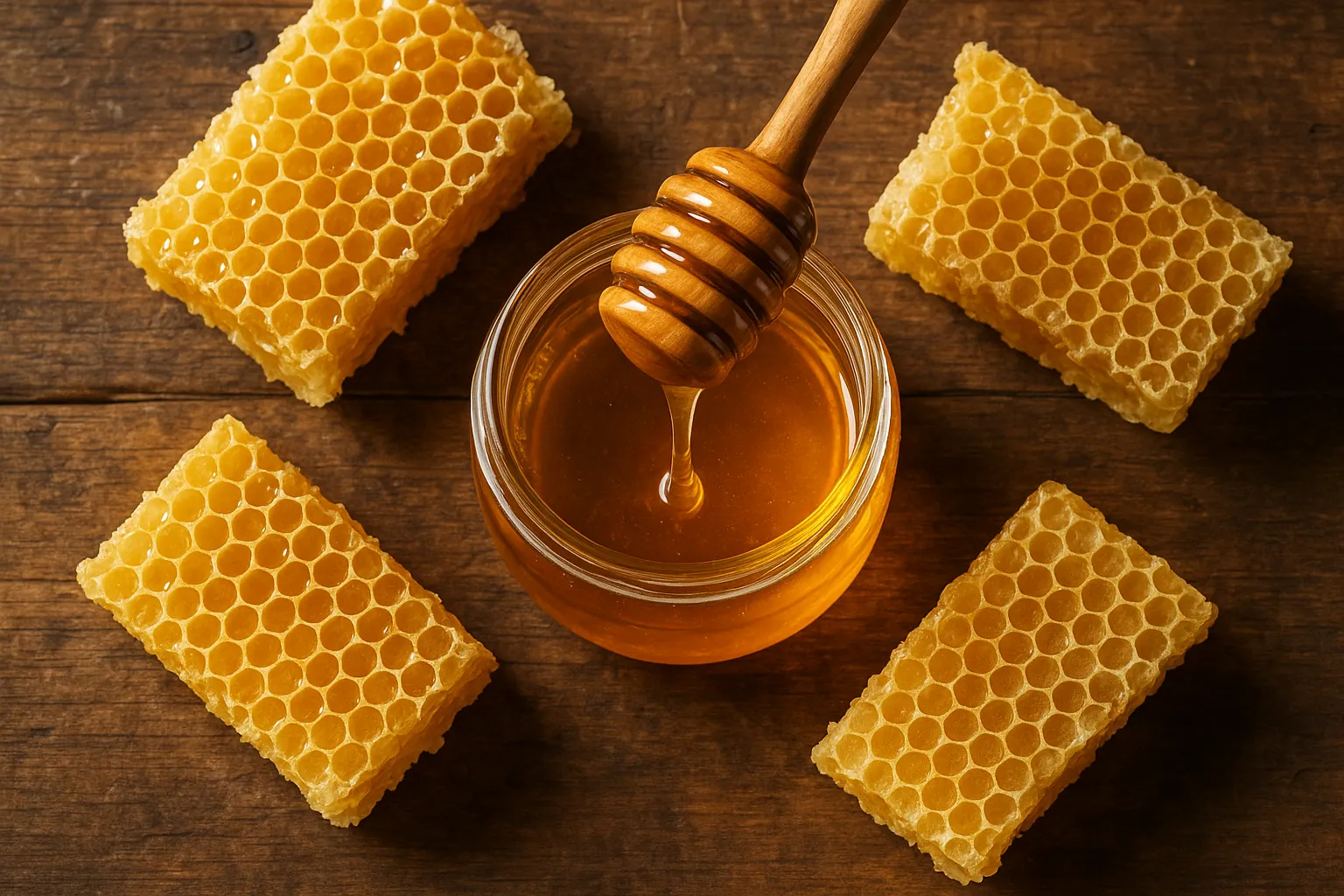
Quick Nutrition Facts
Per 1 Tablespoon (21g)
| Nutrient | Amount |
|---|---|
| Calories | 64 kcal |
| Protein | 0.1g |
| Carbohydrates | 17.3g |
| Sugars | 17.2g |
| Fiber | 0g |
| Fat | 0g |
| Vitamin C | 0.1mg |
| Calcium | 1mg |
| Potassium | 11mg |
| Iron | 0.1mg |
Macronutrient Breakdown
 ChatGPT
  Claude
  AI Mode
  Perplexity
NUTRITIONIST INSIGHT
Honey offers antioxidants and antimicrobial benefits, but contains 64 calories and 17g sugar per tablespoon—nearly identical to table sugar. Use mindfully as a flavor enhancer, not a health food.
Myth Busters
MYTH #1: Honey is a Healthy Sugar Alternative
TRUTH: Honey contains 82g sugar per 100g, nearly identical to table sugar's 99.98g. While honey has trace antioxidants, both spike blood sugar similarly. The health halo around honey leads to overconsumption. Treat honey like any added sugar—use sparingly.
MYTH #2: You Can Eat Unlimited Honey on a Diet
TRUTH: Honey adds 64 calories per tablespoon. Acai bowls with honey drizzles contain 200-500 extra calories, often hidden under the "natural sweetener" label. For weight loss, limit to 1 teaspoon (21 calories) and track carefully.
MYTH #3: Raw Honey Cures Everything
TRUTH: While raw honey has antimicrobial and wound-healing properties, it's not a cure-all. Scientific evidence supports cough suppression and topical wound care, but claims about curing cancer, diabetes, or arthritis lack robust proof. Enjoy for flavor, not as medicine.
MYTH #4: Honey Doesn't Raise Blood Sugar Like Sugar Does
TRUTH: Honey has a glycemic index of 58 vs table sugar's 65—marginally lower but still medium-high. Both cause significant blood sugar spikes. Diabetics should treat honey identically to sugar and limit intake carefully.
MYTH #5: All Honey is the Same
TRUTH: Raw honey contains enzymes, pollen, and antioxidants. Processed honey loses most beneficial compounds through heating and ultra-filtering. Some commercial honey is adulterated with corn syrup. Choose raw, local honey from trusted sources for maximum benefits.
MYTH #6: Honey is Better Than Agave or Maple Syrup
TRUTH: All liquid sweeteners are concentrated sugars. Honey (64 cal/tbsp), maple syrup (52 cal/tbsp), and agave (60 cal/tbsp) provide similar calories and blood sugar impact. Choose based on flavor preference and processing level, not perceived health benefits.
NutriScore by Health Goals
| Health Goal | NutriScore | Why This Score? |
|---|---|---|
| Weight Loss |  | High calorie density (304/100g), zero satiety, easy to overconsume. Honey in smoothies/bowls adds 200-500 calories. Limit to 1 tsp if needed. |
| Muscle Gain |  | Quick carbs for glycogen replenishment post-workout. Better options exist (fruit, whole grains). Use 1 tbsp post-workout if preferred. |
| Diabetes Management | | GI 58 (medium), raises blood sugar significantly. Marginally better than sugar but still requires strict portion control. Limit to 1 tsp maximum. |
| PCOS Management | | High sugar content worsens insulin resistance. Avoid honey in regular diet; choose low-GI alternatives (berries, stevia). |
| Pregnancy Nutrition | | Pasteurized honey safe during pregnancy; avoid raw honey (botulism risk for infants under 1 year). Limit to 1-2 tsp daily due to sugar content. |
| Viral/Flu Recovery |  | 1-2 tsp before bed reduces cough and improves sleep. Antimicrobial properties support throat health. Don't exceed recommended dose. |
PERSONALIZED NUTRITION
Track your meals with NutriScan to see how honey fits your daily sugar and calorie targets!
Blood Sugar Response to Honey
Understanding how honey affects blood glucose helps you make informed decisions about when and how to consume it.
Typical Glucose Response Curve
This chart shows typical blood glucose response for general healthy individuals. Individual responses may vary. Not medical advice.
How to Minimize Blood Sugar Spike
Pairing honey with protein, fat, or fiber slows glucose absorption and reduces the blood sugar peak:
- 🥜 Nut butter - Adds protein and healthy fats (spread on whole grain toast with honey)
- 🥛 Greek yogurt - Provides protein that blunts sugar absorption (mix honey into plain yogurt)
- 🍎 Fresh fruit with fiber - Whole apple slices with honey drizzle (fiber slows digestion)
- 🥣 Oatmeal - Combine honey with steel-cut oats for sustained energy
Important: Even with these pairings, limit honey to 1-2 teaspoons to control total sugar intake.
Cultural Significance
Honey has been harvested and revered for over 8,000 years across ancient civilizations worldwide.
Ancient History:
- Egyptian pharaohs used honey in mummification and healing
- Greek athletes consumed honey for Olympic energy
- Romans valued honey more than gold for medicinal properties
- Ancient Chinese medicine prescribed honey for digestion
In India:
- Ayurveda considers honey (Madhu) a healing nectar
- Used in Panchakarma detox treatments
- Mixed with turmeric for wound healing (traditional remedy)
- Significant in Hindu ceremonies and offerings
Modern Global Impact:
- Global honey production: 1.9 million tons annually
- Beekeeping supports pollination of $15+ billion in crops
- Manuka honey from New Zealand commands premium prices
- Local raw honey gaining popularity for allergy relief (limited evidence)
Compare & Substitute
Honey vs Other Sweeteners (Per 1 Tablespoon)
| Nutrient | 🍯 Honey | 🍁 Maple Syrup | 🌵 Agave Nectar | 🍬 White Sugar |
|---|---|---|---|---|
| Calories | 64 kcal | 52 kcal | 60 kcal | 49 kcal |
| Carbs | 17g | 13g | 16g | 12.6g |
| Sugars | 17g | 12g | 16g | 12.6g |
| GI | 58 (Medium) | 54 (Low-Medium) | 15 (Low) | 65 (Medium) |
| Fructose | 40% | 1% | 85% | 50% |
| Vitamins | Trace B vitamins, vitamin C | Manganese, riboflavin, zinc | Minimal | None |
| Minerals | Calcium, potassium, iron | Calcium, potassium, iron | Calcium, potassium | None |
| Best For | Cough relief, wound healing | Pancakes, lower calorie | Lower GI (but high fructose) | Baking |
Frequently Asked Questions
Is honey better than sugar?
Honey and table sugar are nutritionally very similar, both being concentrated sugars with minimal health differences.
Comparison (per tablespoon):
- Honey: 64 calories, 17g sugar, GI 58
- Table sugar: 49 calories, 12.6g sugar, GI 65
Honey advantages: Trace antioxidants, enzymes (in raw honey), antimicrobial properties, slightly lower GI. Sugar advantages: Lower calories per tablespoon, more stable for baking.
Bottom line: Choose honey for flavor and minimal processing, but don't overconsume thinking it's "healthy sugar." Both require strict moderation. The American Heart Association recommends limiting all added sugars to 25g (women) or 36g (men) daily.
Is honey good for weight loss?
No, honey is not ideal for weight loss due to high calorie density (304 calories per 100g) and zero satiety.
Weight loss concerns:
- 1 tablespoon = 64 calories from pure sugar
- Easy to overconsume (common in smoothies, acai bowls, tea)
- No fiber or protein to promote fullness
- Drizzling honey on "healthy" meals adds 200-500 hidden calories
If using honey for weight loss:
- Limit to 1 teaspoon daily (21 calories)
- Track every amount carefully in NutriScan app
- Consider stevia or monk fruit (zero-calorie alternatives)
- Focus on whole fruits for natural sweetness with fiber
Most weight loss plans recommend eliminating or severely restricting all added sugars, including honey.
Can diabetics eat honey?
Diabetics should treat honey like any other sugar and consume only in very limited amounts.
Diabetes considerations:
- Honey GI: 58 (medium) vs table sugar GI: 65
- Both raise blood sugar significantly
- No evidence honey improves glycemic control in diabetics
- Fructose in honey may worsen insulin resistance long-term
If diabetics choose to consume honey:
- Maximum 1 teaspoon per day (5g = 17 calories)
- Always pair with protein/fat to slow absorption
- Test blood sugar 1-2 hours after consuming
- Count honey carbs in total daily carbohydrate allowance
Better alternatives for diabetics: Stevia, erythritol, allulose (non-nutritive sweeteners that don't raise blood sugar).
What are the main health benefits of honey?
Raw honey provides several science-backed health benefits when consumed in moderation.
Proven Benefits:
- Cough Suppression: 1-2 teaspoons before bed reduces nighttime cough better than some OTC medicines (children over 1 year)
- Wound Healing: Topical application has antimicrobial properties for burns and cuts (medical-grade honey only)
- Antioxidants: Raw honey contains polyphenols that fight oxidative stress
- Sore Throat Relief: Coats throat and provides temporary relief (anecdotal)
Limited/No Evidence:
- Allergy relief (local honey) - mixed research, mostly anecdotal
- Improved athletic performance - better options exist
- Digestive health - insufficient evidence
- Weight loss - contradicted by high calorie content
Important: These benefits require consuming small amounts (1-2 teaspoons). Overconsumption for "health benefits" negates advantages with excess sugar and calories.
Is raw honey better than processed honey?
Yes, raw honey is significantly more beneficial than processed honey due to retained bioactive compounds.
Raw Honey (unheated, unfiltered):
- Retains natural enzymes, antioxidants, pollen, propolis
- Contains beneficial bacteria and yeasts
- Antimicrobial properties intact
- May crystallize (natural process, still safe)
- Higher antioxidant capacity
Processed Honey (heated, ultra-filtered):
- High heat (160°F+) destroys enzymes and some antioxidants
- Ultra-filtering removes pollen and trace minerals
- Stays liquid longer (cosmetic appeal)
- May be adulterated with corn syrup (fraud concern)
- Lower health benefits
Recommendation: Choose raw, local honey from trusted beekeepers. Store at room temperature. Crystallization is normal—gently warm in water bath to reliquefy.
How much honey can I eat per day?
General Guidelines:
- 1-2 tablespoons (21-42g) - Maximum for most adults (64-128 calories)
- 1 teaspoon (7g) - Weight loss or diabetes (21 calories)
- 2 teaspoons - Children over 1 year for cough relief
- ZERO - Infants under 1 year (botulism risk)
American Heart Association added sugar limits:
- Women: Maximum 25g (6 teaspoons) total added sugars daily
- Men: Maximum 36g (9 teaspoons) total added sugars daily
1 tablespoon of honey (17g sugar) consumes 68% of women's daily added sugar limit or 47% of men's limit.
Best practice: Treat honey as an occasional flavor enhancer (1-2 times per week), not a daily staple. Track all honey consumption in NutriScan app to stay within sugar targets.
Can I give honey to babies?
CRITICAL WARNING: NEVER give honey to infants under 12 months old.
Honey can contain Clostridium botulinum spores that cause infant botulism—a potentially fatal illness. Infant digestive systems cannot neutralize these spores. Symptoms include constipation, weak cry, poor feeding, and paralysis.
Safe ages:
- Under 12 months: NO HONEY (including raw, processed, cooked in foods)
- 12+ months: Safe to introduce in small amounts
- Pregnancy: Pasteurized honey safe (avoid raw due to general food safety)
For cough relief in children:
- Under 1 year: Use approved pediatric cough medicine only
- 1-5 years: 1/2 teaspoon honey before bed (if no allergies)
- 6+ years: 1 teaspoon honey before bed
Always consult pediatrician before giving honey to young children.


Similar Nutritious Foods
4505 Chicharrones Classic Chili Salt
7 Eleven Japan Crispy Corn Cheese
Explore More Nutrition Tools & Resources
AI Calorie Counter App - Snap a Photo, Get Macros
AI Nutritionist App That Reads Your Logged Meals
Best Protein Supplements for Women
Bulking Meal Plan App That Sets Your Surplus
ChatGPT Calorie Counter Alternative That Keeps the Total
ChatGPT Diet Plan Alternative That Tracks What You Eat
ChatGPT Weight Loss Coach Alternative With a Food Log
Fast Food Calorie Counter App That Reads the Tray
Free Calorie Tracker App with AI Photo Scans | NutriScan
Indian Diet Plan App With Veg and Non Veg Meals
Indian Food Calorie Calculator - Get Instant Nutrition Facts for Desi Meals — 2026
Intermittent Fasting for Women, Timer and Meal Log App
Intermittent Fasting Tracker App - Free Fasting Timer
Macro Tracker App That Fills the Numbers From a Photo
Mediterranean Diet Meal Plan App That Counts the Oil
Micronutrient Tracker App for Vitamins and Minerals
MyFitnessPal Alternative That Stays Free | NutriScan
NutriScore App: A Free Grade on Every Meal | NutriScan
Nutrition Label Scanner App for the Amount You Ate
Second Trimester Protein Guide
Vegetarian Meal Plan App With a Protein Target
Voice Calorie Counter - Speak to Track Meals Hands-Free
Water and Calorie Tracker App - Free Water Log