Kombucha: Calories, Nutrition and Health Benefits
Fermented tea beverage packed with live probiotics, organic acids, and antioxidants for gut health and digestion.
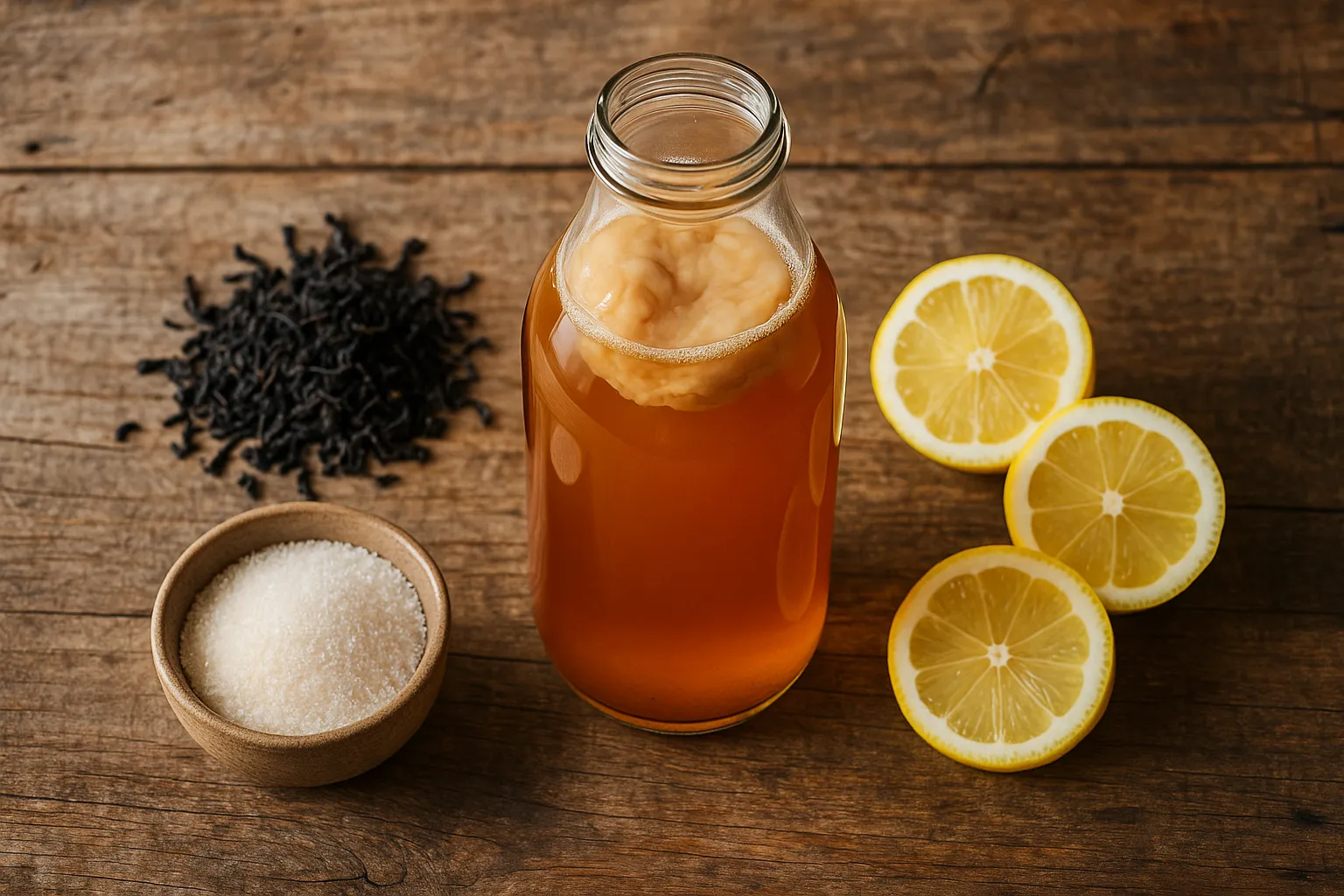
Quick Nutrition Facts
Per 1 Cup (8 fl oz / 240mL)
| Nutrient | Amount |
|---|---|
| Calories | 29 kcal |
| Protein | 0g |
| Carbohydrates | 8g |
| Fiber | 0g |
| Sugars | 6-14g |
| Fat | 0g |
| Sodium | 10mg |
| Caffeine | 15-25mg |
| Alcohol | 0.5-2% |
| Probiotics | Live cultures |
Macronutrient Breakdown
 ChatGPT
  Claude
  AI Mode
  Perplexity
NUTRITIONIST INSIGHT
Kombucha provides live probiotics and organic acids that support gut health. Choose brands with <10g sugar and drink 4-8 oz daily. The fermentation process reduces sugar while producing beneficial compounds.
Myth Busters
MYTH #1: All Kombucha Is Created Equal
TRUTH: Commercial kombucha varies drastically in sugar (6-20g), probiotic strains, and alcohol content. Fermentation time and process significantly affect nutrient composition. Homemade and artisanal brands often have more diverse probiotics than mass-produced versions.
MYTH #2: Kombucha Is Completely Alcohol-Free
TRUTH: Kombucha contains 0.5-2% alcohol by volume from natural fermentation. Commercial brands labeled "non-alcoholic" stay below 0.5% ABV. Homemade or longer-fermented versions can reach 2-3% ABV.
MYTH #3: Kombucha Cures Diseases
TRUTH: While kombucha provides probiotics and antioxidants, claims of curing cancer, diabetes, or autoimmune diseases lack strong clinical evidence. Research shows potential benefits for gut health and immune function, but it's not a cure-all.
MYTH #4: More Kombucha = Better Health
TRUTH: Excessive intake (>16 oz daily) can cause digestive upset, excess sugar/caffeine, and acidosis in rare cases. Start with 4-8 oz daily and increase gradually based on tolerance.
MYTH #5: Kombucha Is Sugar-Free After Fermentation
TRUTH: Fermentation reduces but doesn't eliminate sugar. Even well-fermented kombucha retains 6-8g sugar per 8 oz. Bacteria consume sugar during fermentation, but complete sugar elimination would stop the process.
MYTH #6: All Probiotics in Kombucha Are the Same
TRUTH: Probiotic strains vary by SCOBY (symbiotic culture of bacteria and yeast), fermentation conditions, and tea type. Quality matters: artisanal kombucha typically has more diverse strains than mass-produced versions.
NutriScore by Health Goals
| Health Goal | NutriScore | Why This Score? |
|---|---|---|
| Weight Loss |  | Low calorie (29 per cup), probiotics support metabolism, but 6-14g sugar limits frequency. Best as 4-8 oz daily treat. |
| Muscle Gain |  | Zero protein, minimal nutrients for muscle building. Use as hydration option but not primary nutrition source. |
| Diabetes Management | | Contains 6-14g sugar; choose brands with <6g, limit to 4-6 oz portions, and monitor blood glucose response. |
| PCOS Management | | Sugar content affects insulin sensitivity. Opt for low-sugar versions (<6g), limit to 4-6 oz daily, and pair with meals. |
| Pregnancy Nutrition | | Contains trace alcohol (0.5-2% ABV) and unpasteurized probiotics. Most healthcare providers recommend avoiding kombucha during pregnancy due to these concerns. |
| Viral/Flu Recovery | | Probiotics and vitamin C support immune function, gentle hydration, organic acids have antimicrobial properties. |
PERSONALIZED NUTRITION
Track your meals with NutriScan for personalized NutriScores based on your specific health goals!
Blood Sugar Response to Kombucha
Understanding how kombucha affects blood glucose helps with portion control and timing.
Typical Glucose Response Curve
This chart shows typical blood glucose response for healthy individuals. Individual responses vary based on sugar content, serving size, and metabolic health. Not medical advice.
How to Minimize Blood Sugar Impact
Pairing kombucha with food slows sugar absorption and reduces glucose spikes:
- 🥜 With meals containing protein/fat - Slows digestion and sugar absorption
- 🥗 As part of balanced meals - Fiber and nutrients moderate glucose response
- ⏰ Limit serving size to 4-8 oz - Reduces total sugar load
- 🍃 Choose low-sugar brands (<6g) - Less glucose impact
Best timing: Mid-morning or afternoon with a snack, not on empty stomach.
Cultural Significance
Kombucha originated in Northeast China around 220 BCE, spreading through trade routes to Russia, Eastern Europe, and eventually worldwide.
Historical Context:
- Ancient Chinese called it "Tea of Immortality" for claimed longevity benefits
- Gained popularity in Russia and Eastern Europe in the 19th century
- Introduced to Germany in early 1900s as "kombucha" (Japanese seaweed tea - misnomer)
- Revived in Western health movements in the 1990s-2000s
In India:
- Not traditionally consumed but gaining popularity in urban areas
- Artisanal kombucha brands emerging in Delhi, Mumbai, Bangalore
- Fits Ayurvedic concepts of fermented foods for digestion
- Homemade brewing communities growing online
Global Impact:
- $2.64 billion global market in 2023, projected to reach $9.47 billion by 2030
- Popular in health-conscious communities worldwide
- DIY brewing culture with SCOBY sharing networks
- Sustainable beverage: minimal processing, reusable SCOBY culture
Compare & Substitute
Kombucha vs Similar Fermented Beverages (Per 8 oz / 240mL)
| Nutrient | 🫙 Kombucha | 🥛 Kefir (Milk) | 🥬 Kimchi Juice | 🍵 Green Tea (Unsweetened) |
|---|---|---|---|---|
| Calories | 29 kcal | 104 kcal | 15 kcal | 0 kcal |
| Carbs | 8g | 12g | 3g | 0g |
| Protein | 0g | 8g | 1g | 0g |
| Fat | 0g | 2g | 0g | 0g |
| Sugar | 6-14g | 12g (lactose) | 1g | 0g |
| Probiotics | Live cultures | Higher CFU count | High (Lactobacillus) | None |
| Sodium | 10mg | 105mg | 500-800mg | 0mg |
| Alcohol | 0.5-2% | Trace (<0.5%) | None | None |
| Best For | Gut health, low-cal probiotics | Protein + probiotics | High probiotics, low-cal | Antioxidants, zero-cal |
Frequently Asked Questions
Is kombucha good for gut health?
Yes, kombucha contains live probiotics (beneficial bacteria and yeasts) that support gut microbiome diversity. Studies show kombucha provides Lactobacillus species, Saccharomyces yeasts, organic acids (acetic, gluconic), and antioxidants that may improve digestion.
Best practices: Start with 4 oz daily; increase gradually; choose brands with "live cultures" or "raw/unpasteurized" labels; store refrigerated to maintain probiotic viability.
How much sugar is in kombucha?
Kombucha contains 6-14g sugar per 8 oz, depending on fermentation duration and brand. Longer fermentation (7-14 days) reduces sugar as bacteria consume it.
Sugar variations:
- Homemade, well-fermented (10-14 days): 6-8g per 8 oz
- Commercial artisanal brands: 8-10g per 8 oz
- Commercial flavored/sweetened: 12-20g per 8 oz (avoid for health goals)
Tip: Check labels for added fruit juice or cane sugar after fermentation, which increases total sugar.
Does kombucha contain alcohol?
Yes, kombucha naturally contains 0.5-2% alcohol by volume (ABV) from fermentation. Commercial brands labeled "non-alcoholic" must stay below 0.5% ABV by law.
Alcohol content factors:
- Fermentation time (longer = higher ABV)
- Sugar content (more sugar = more potential alcohol)
- Temperature (warmer = faster fermentation)
- Homemade kombucha can reach 2-3% ABV
Who should avoid: Pregnant/breastfeeding women, those in recovery from alcohol dependence, children under 4.
What are the main health benefits of kombucha?
Proven benefits:
- Probiotics: Live bacteria and yeasts support gut microbiome diversity
- Organic acids: Acetic and gluconic acids have antimicrobial properties
- Antioxidants: Tea polyphenols combat oxidative stress
- B-vitamins: Fermentation produces B1, B2, B6, B12
- Digestive support: May improve bowel regularity and reduce bloating
Emerging research: Potential blood sugar regulation, immune function support, liver health protection (animal studies).
Can diabetics drink kombucha?
Diabetics should exercise caution due to 6-14g sugar per serving. Choose brands with <6g sugar per 8 oz, limit to 4-6 oz portions, and monitor blood glucose 1-2 hours after drinking.
Tips for diabetics:
- Opt for plain, unsweetened, well-fermented brands
- Avoid fruit-flavored versions with added juice
- Drink with meals containing protein/fat to slow sugar absorption
- Test blood sugar to determine individual response
Some preliminary research suggests kombucha may improve insulin sensitivity, but individual responses vary significantly. Always consult your healthcare provider.
How much kombucha should I drink per day?
Beginner (Week 1): 4 oz (120mL) daily to assess tolerance
Regular consumption: 8-16 oz (240-480mL) daily if well-tolerated
Maximum: Avoid exceeding 16 oz daily due to potential side effects (digestive upset, excess sugar/caffeine, acidosis in rare cases)
Listen to your body: Reduce intake if experiencing gas, bloating, or digestive changes. Increase gradually over 2-3 weeks.
Is homemade kombucha safer than store-bought?
Both have pros and cons. Homemade: More diverse probiotics, lower sugar (if fermented longer), no additives, but contamination risk if hygiene is poor. Store-bought: Consistent quality, tested for safety, but may have added sugar, fewer probiotic strains, and higher cost.
Safety tips for homemade:
- Use clean equipment and hands
- Maintain proper fermentation temperature (68-78°F / 20-26°C)
- Monitor for mold (fuzzy growth on SCOBY - discard if present)
- Ferment 7-14 days for optimal sugar reduction
- Taste test: should be tangy, slightly sweet, effervescent (not vinegary)


Similar Nutritious Foods
4505 Chicharrones Classic Chili Salt
7 Eleven Japan Crispy Corn Cheese
Explore More Nutrition Tools & Resources
AI Calorie Counter App - Snap a Photo, Get Macros
AI Nutritionist App That Reads Your Logged Meals
Best Protein Supplements for Women
Bulking Meal Plan App That Sets Your Surplus
ChatGPT Calorie Counter Alternative That Keeps the Total
ChatGPT Diet Plan Alternative That Tracks What You Eat
ChatGPT Weight Loss Coach Alternative With a Food Log
Fast Food Calorie Counter App That Reads the Tray
Free Calorie Tracker App with AI Photo Scans | NutriScan
Indian Diet Plan App With Veg and Non Veg Meals
Indian Food Calorie Calculator - Get Instant Nutrition Facts for Desi Meals — 2026
Intermittent Fasting for Women, Timer and Meal Log App
Intermittent Fasting Tracker App - Free Fasting Timer
Macro Tracker App That Fills the Numbers From a Photo
Mediterranean Diet Meal Plan App That Counts the Oil
Micronutrient Tracker App for Vitamins and Minerals
MyFitnessPal Alternative That Stays Free | NutriScan
NutriScore App: A Free Grade on Every Meal | NutriScan
Nutrition Label Scanner App for the Amount You Ate
Second Trimester Protein Guide
Vegetarian Meal Plan App With a Protein Target
Voice Calorie Counter - Speak to Track Meals Hands-Free
Water and Calorie Tracker App - Free Water Log