Oat Milk: Calories, Nutrition and Health Benefits
The creamy plant-based milk with cholesterol-lowering beta-glucan fiber and sustainable environmental impact.
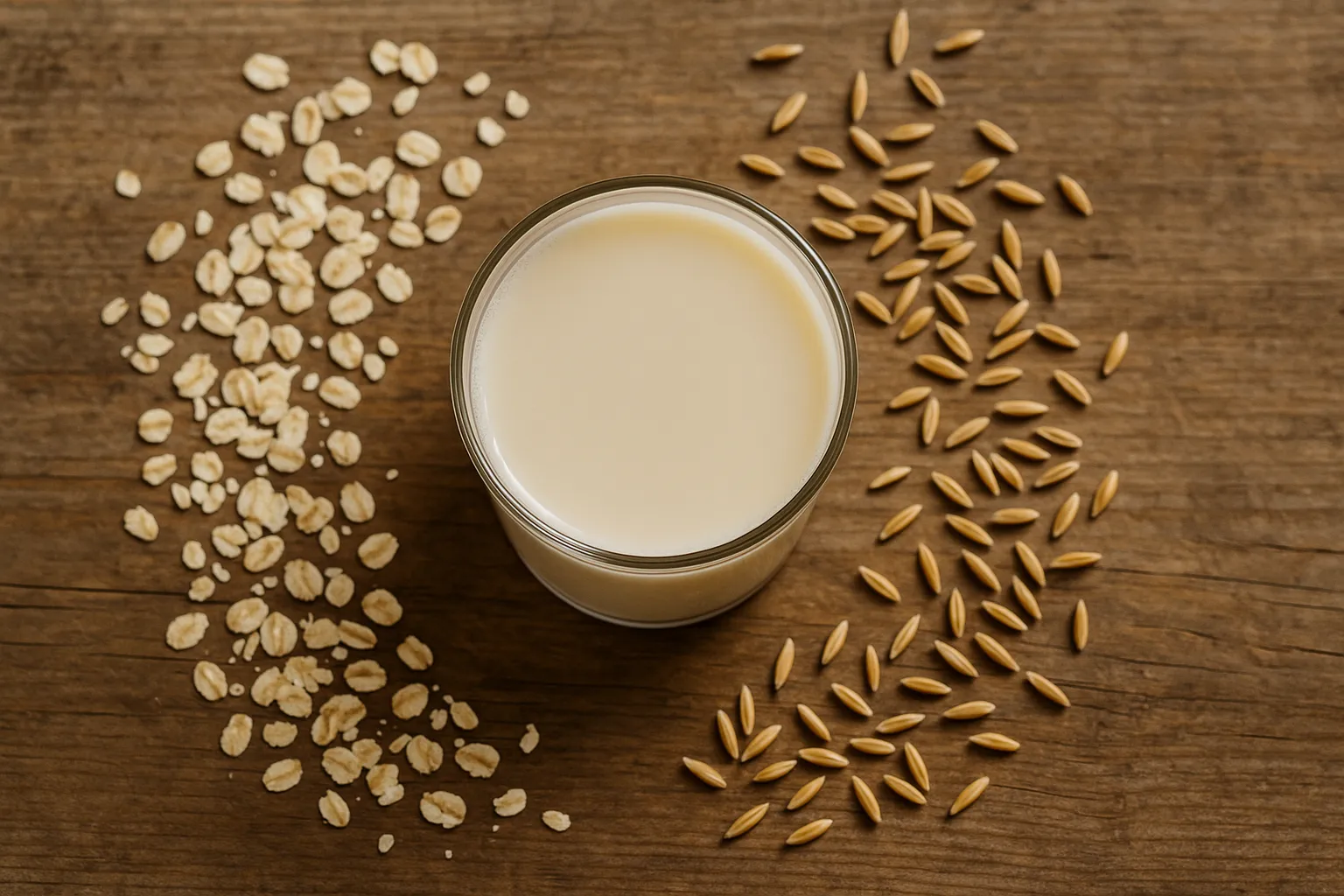
Quick Nutrition Facts
Per 1 Cup (240ml) - Unsweetened
| Nutrient | Amount |
|---|---|
| Calories | 120 kcal |
| Protein | 3g |
| Carbohydrates | 16g |
| Fiber | 2g |
| Sugars | 7g |
| Fat | 5g |
| Calcium | 350mg |
| Vitamin D | 3.6mcg |
| Vitamin B12 | 1.2mcg |
| Beta-Glucan | 0.75g |
Macronutrient Breakdown
 ChatGPT
  Claude
  AI Mode
  Perplexity
NUTRITIONIST INSIGHT
Oat milk's beta-glucan fiber can reduce LDL cholesterol by 5-6% when consumed regularly. It's the most environmentally sustainable plant milk, using 80% less land than dairy.
Myth Busters
MYTH #1: Oat Milk Is as Nutritious as Dairy Milk
TRUTH: Oat milk has only 3g protein versus dairy's 8g per cup. While fortified versions match dairy's calcium and vitamin D, oat milk is naturally lower in protein and requires fortification to be nutritionally comparable.
MYTH #2: All Oat Milk Is Healthy
TRUTH: Many commercial oat milks contain 7-19g of added sugar per cup. Sweetened varieties can have 140-170 calories versus 60-80 for unsweetened. Always check labels for "unsweetened" to avoid hidden sugars.
MYTH #3: Oat Milk Is Good for Diabetics
TRUTH: Oat milk has 16g carbs per cup and a moderate glycemic index. The processing breaks down oats, causing faster blood sugar spikes than whole oats. Diabetics should limit portions and pair with protein.
MYTH #4: Oat Milk Doesn't Lower Cholesterol
TRUTH: Studies show oat milk consumption reduces total cholesterol by 6% and LDL by 6% after 5 weeks. The beta-glucan fiber is scientifically proven to improve heart health markers.
MYTH #5: Oat Milk Is Gluten-Free
TRUTH: Pure oats are gluten-free, but cross-contamination during processing is common. Only oat milk labeled "certified gluten-free" is safe for celiac disease. Many brands contain trace gluten from shared facilities.
MYTH #6: Oat Milk Is Better Than All Plant Milks
TRUTH: "Better" depends on goals. Oat milk has more calories than almond (120 vs 30-40) but more protein and fiber. Soy milk has more protein (7g) and is the only FDA-approved dairy equivalent when fortified.
NutriScore by Health Goals
| Health Goal | NutriScore | Why This Score? |
|---|---|---|
| Weight Loss |  | 120 calories per cup (unsweetened). Choose unsweetened to avoid 60+ extra calories from added sugar. Lower calorie than dairy. |
| Muscle Gain |  | Only 3g protein per cup, insufficient for muscle building. Pair with protein powder or choose soy milk (7g protein). |
| Diabetes Management |  | 16g carbs per cup affects blood sugar. Choose unsweetened, limit to 1/2 cup portions, pair with protein. |
| PCOS Management | | Moderate carbs can affect insulin sensitivity. Beta-glucan fiber helps, but limit portions and choose unsweetened. |
| Pregnancy Nutrition | | Fortified versions provide calcium (350mg) and vitamin D (3.6mcg) essential for fetal bone development. Choose fortified brands. |
| Heart Health |  | Beta-glucan reduces LDL cholesterol 5-6%. Consuming 3g beta-glucan daily (2-3 cups) provides cardiovascular benefits. |
PERSONALIZED NUTRITION
Track your meals with NutriScan for personalized NutriScores based on your specific health goals!
Blood Sugar Response to Oat Milk
Understanding how oat milk affects blood glucose helps you make informed choices about portions and pairings.
Typical Glucose Response Curve
This chart shows typical blood glucose response for healthy individuals. Individual responses vary. Not medical advice.
How to Minimize Blood Sugar Impact
Oat milk has 16g carbs per cup. Slow glucose absorption by pairing with protein or healthy fat:
- 🥜 Nut butter - Add 1 tbsp almond or peanut butter to smoothies
- 🥚 Protein powder - Blend with 20-30g protein powder
- 🌰 Handful of nuts (almonds, walnuts) - Eat alongside your oat milk latte
- 🥄 Chia seeds - Add 1 tbsp to oat milk for extra fiber and omega-3s
This combination reduces the glucose spike and provides sustained energy.
Cultural Significance
Oat milk has ancient roots but modern popularity, becoming the fastest-growing plant milk globally.
Historical Background:
- Oats cultivated for 3,000+ years in Europe and Asia
- Oat drinks consumed in medieval Europe as "oat water"
- Modern oat milk invented in Sweden in 1990s by Oatly
- Became coffee shop staple in 2010s for superior frothing
Global Adoption:
- Market grew 212% from 2019-2022 in North America
- Most popular plant milk in UK and Scandinavia
- Barista editions designed specifically for coffee art and texture
- Environmental benefits driving mainstream acceptance
Sustainability Leadership:
- Uses 80% less land than dairy milk production
- Requires 60% less water than almond milk
- Produces 70% fewer carbon emissions than dairy
- Oats grow in cooler climates, reducing tropical deforestation
Compare & Substitute
Oat Milk vs Plant-Based Alternatives (Per 100ml)
| Nutrient | 🥛 Oat Milk | 🥛 Almond Milk | 🥛 Soy Milk | 🥛 Dairy Milk (2%) |
|---|---|---|---|---|
| Calories | 47 kcal | 13 kcal | 54 kcal | 50 kcal |
| Carbs | 6.7g | 0.6g | 3g | 5g |
| Fiber | 0.8g | 0.4g | 0.6g | 0g |
| Protein | 1.3g | 0.4g | 3.3g | 3.4g |
| Fat | 2g | 1.1g | 1.8g | 2g |
| Calcium | 146mg (fortified) | 146mg (fortified) | 123mg (fortified) | 125mg |
| Sugar | 3g (varies by brand) | 0g (unsweetened) | 1g (unsweetened) | 5g (natural lactose) |
| Best For | Coffee, cholesterol, eco | Weight loss, low-carb | Protein, dairy replacement | Complete nutrition, muscle |
Frequently Asked Questions
Is oat milk good for weight loss?
Yes, oat milk can support weight loss when chosen wisely. Unsweetened oat milk has 60-80 calories per cup versus dairy milk's 150 calories, a 50% reduction. However, sweetened varieties can have 140-170 calories, negating this benefit.
Best practices: Choose unsweetened varieties; use 1/2 cup portions in smoothies; the 2g fiber promotes satiety; avoid flavored versions with 10-19g added sugar.
Does oat milk actually lower cholesterol?
Yes, scientifically proven. The beta-glucan fiber in oat milk reduces total cholesterol by 6% and LDL cholesterol by 6% after 5 weeks of regular consumption.
Effective dosing: Consume 3g of beta-glucan daily, equivalent to 2-3 cups of oat milk; choose brands listing beta-glucan content; works best when replacing saturated fat sources. The FDA recognizes beta-glucan as a cholesterol-lowering nutrient.
How much protein is in oat milk?
Oat milk contains 2-4g protein per cup, significantly less than dairy milk's 8g. This makes it inadequate as a primary protein source.
For muscle gain or high-protein needs: Combine with protein powder (20-30g); choose soy milk instead (7g protein per cup); pair with Greek yogurt or eggs; don't rely on oat milk alone for protein.
Is oat milk better than almond milk?
Depends on your goals - each excels in different areas.
Oat milk advantages: More protein (3g vs 1g); more fiber (2g vs 0g); creamier texture for coffee; better environmental profile than almonds.
Almond milk advantages: Lower calories (30-40 vs 120); lower carbs (1-2g vs 16g); better for strict low-carb or keto diets.
Verdict: Weight loss = almond milk. Coffee/texture = oat milk. Protein/fiber = oat milk. Low-carb = almond milk.
Can diabetics drink oat milk?
Diabetics should be cautious with oat milk due to its 16g carbs per cup and moderate glycemic index. While not forbidden, portion control is essential.
Diabetes-friendly approach: Limit to 1/2 cup (8g carbs); choose unsweetened only; pair with protein or fat; monitor blood sugar 2 hours after consumption; consider almond milk (1-2g carbs) as lower-carb alternative.
The processing that creates oat milk breaks down fiber, causing faster blood sugar spikes than whole oats.
Is oat milk environmentally friendly?
Yes, oat milk has the lowest environmental impact of all plant-based and dairy milks.
Sustainability facts: Uses 80% less land than dairy milk; requires 60% less water than almond milk; produces 70% fewer greenhouse gases than dairy; oats grow in cooler climates, no tropical deforestation; every part of oat plant is usable (minimal waste).
Oat milk's environmental benefits are a major driver of its popularity, especially among eco-conscious consumers.
Does oat milk cause bloating?
Some people experience bloating from oat milk, though less commonly than with dairy.
Common causes: High fiber content (2g per cup) if you're not used to it; added gums (gellan, xanthan) for texture; rapid consumption of cold liquid; FODMAPs in oats (affects some IBS sufferers).
Solutions: Start with 1/2 cup portions; choose brands without added gums; consume at room temperature; switch to low-FODMAP almond milk if sensitive. Most people tolerate oat milk well after adjustment period.
Is oat milk gluten-free?
Not always. Pure oats are naturally gluten-free, but cross-contamination is very common.
Gluten risk factors: Oats processed in facilities with wheat/barley; shared transportation and storage; only "certified gluten-free" oat milk is safe for celiac disease; regular oat milk may contain 5-20 ppm gluten from contamination.
If you have celiac disease or gluten sensitivity, only choose oat milk with "certified gluten-free" label. Don't assume all oat milk is gluten-free.


Similar Nutritious Foods
4505 Chicharrones Classic Chili Salt
7 Eleven Japan Crispy Corn Cheese
Explore More Nutrition Tools & Resources
AI Calorie Counter App - Snap a Photo, Get Macros
AI Nutritionist App That Reads Your Logged Meals
Best Protein Supplements for Women
Bulking Meal Plan App That Sets Your Surplus
ChatGPT Calorie Counter Alternative That Keeps the Total
ChatGPT Diet Plan Alternative That Tracks What You Eat
ChatGPT Weight Loss Coach Alternative With a Food Log
Fast Food Calorie Counter App That Reads the Tray
Free Calorie Tracker App with AI Photo Scans | NutriScan
Indian Diet Plan App With Veg and Non Veg Meals
Indian Food Calorie Calculator - Get Instant Nutrition Facts for Desi Meals — 2026
Intermittent Fasting for Women, Timer and Meal Log App
Intermittent Fasting Tracker App - Free Fasting Timer
Macro Tracker App That Fills the Numbers From a Photo
Mediterranean Diet Meal Plan App That Counts the Oil
Micronutrient Tracker App for Vitamins and Minerals
MyFitnessPal Alternative That Stays Free | NutriScan
NutriScore App: A Free Grade on Every Meal | NutriScan
Nutrition Label Scanner App for the Amount You Ate
Second Trimester Protein Guide
Vegetarian Meal Plan App With a Protein Target
Voice Calorie Counter - Speak to Track Meals Hands-Free
Water and Calorie Tracker App - Free Water Log