Yuzu Kosho: Calories, Nutrition and Health Benefits
Japan's prized citrus-chili condiment delivering bright yuzu aromatics with spicy heat - virtually zero calories with powerful flavor impact.
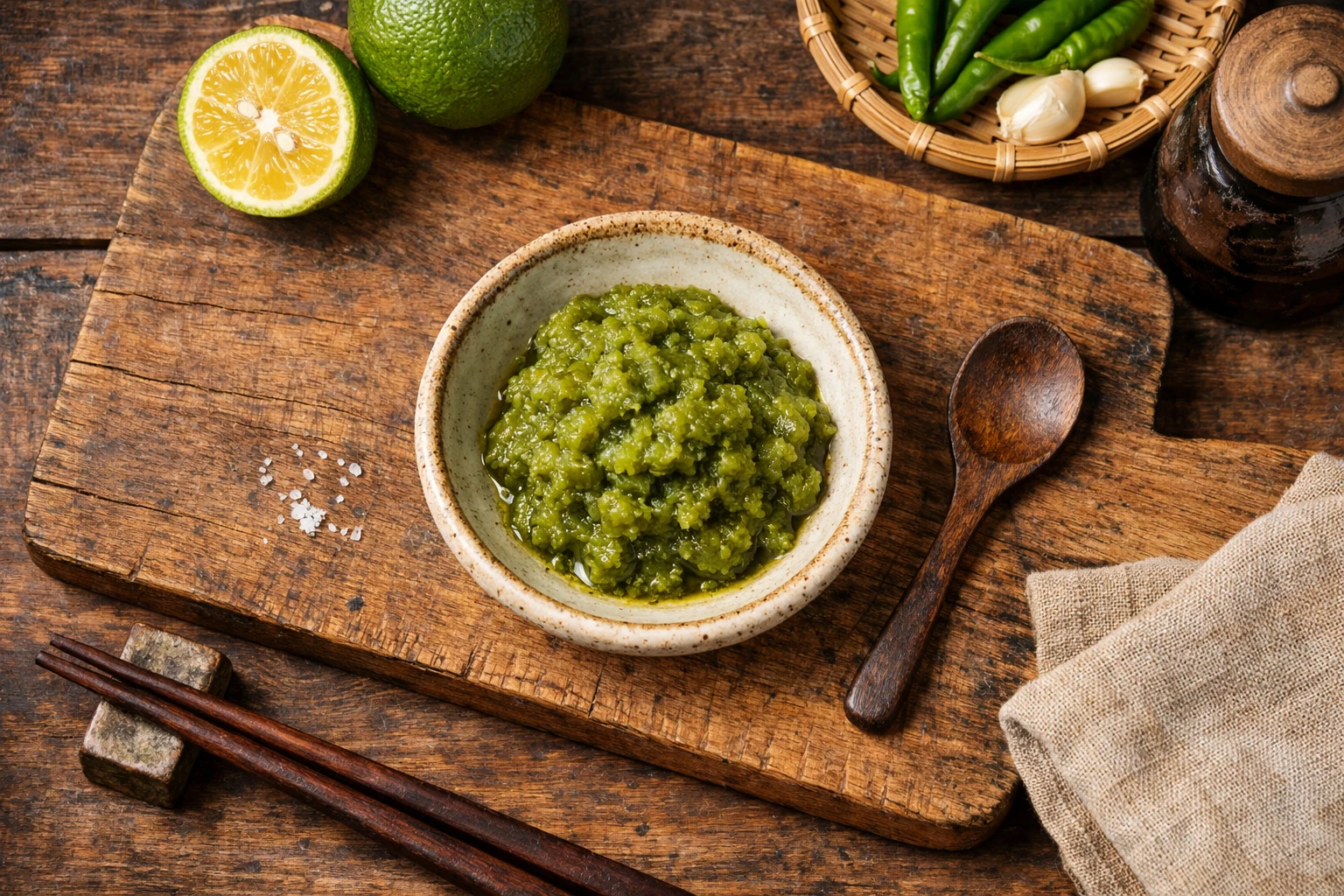
Quick Nutrition Facts
Per 1 Teaspoon (5g)
| Nutrient | Amount |
|---|---|
| Calories | 0 kcal |
| Protein | 0g |
| Carbohydrates | <1g |
| Fiber | 0g |
| Sugars | 0g |
| Fat | 0g |
| Sodium | 330mg |
| Vitamin C | 2mg |
| Capsaicin | ~1mg |
| Limonene | trace |
Macronutrient Breakdown
 ChatGPT
  Claude
  AI Mode
  Perplexity
NUTRITIONIST INSIGHT
Yuzu kosho is a zero-calorie flavor bomb that can transform bland healthy foods into exciting dishes. The vitamin C and antioxidants from yuzu peel plus capsaicin from chilies provide modest health benefits. Use 1/4-1/2 teaspoon to add intense flavor without calories.
Myth Busters
MYTH #1: Yuzu Kosho Is Just Another Hot Sauce
TRUTH: Unlike vinegar-based hot sauces, yuzu kosho is a fermented paste with complex citrus aromatics from yuzu peel, providing unique floral-citrus notes alongside heat. It's closer to a flavor enhancer than a simple spicy condiment.
MYTH #2: Green and Red Yuzu Kosho Are the Same
TRUTH: Green yuzu kosho uses unripe yuzu and green chilies for a brighter, more pungent flavor. Red yuzu kosho uses ripe yuzu and red chilies for a mellower, slightly sweeter taste. Choose based on your dish and preference.
MYTH #3: Yuzu Kosho Has Significant Vitamin C
TRUTH: While yuzu fruit is rich in vitamin C, yuzu kosho uses only the peel in small amounts. A teaspoon provides ~2mg vitamin C (2% DV). It's a flavor enhancer with modest antioxidant benefits, not a vitamin supplement.
MYTH #4: The Salt in Yuzu Kosho Is Unhealthy
TRUTH: At 330mg sodium per teaspoon, yuzu kosho is high in salt. However, its intense flavor means you need less to season food, potentially reducing overall sodium intake compared to salting dishes directly. Monitor portions if hypertensive.
MYTH #5: Yuzu Kosho Must Be Refrigerated After Opening
TRUTH: Due to high salt content, yuzu kosho is shelf-stable, but refrigeration extends freshness and preserves volatile citrus aromatics. For best flavor, refrigerate after opening and use within 6-12 months.
NutriScore by Health Goals
| Health Goal | NutriScore | Why This Score? |
|---|---|---|
| Weight Loss |  | Zero calories makes it ideal for adding flavor without adding energy. Capsaicin may slightly boost metabolism. |
| Muscle Gain |  | Zero protein but excellent for flavoring lean proteins. High sodium supports electrolyte needs for athletes. |
| Diabetes Management | | No carbs or sugars; won't affect blood glucose. Capsaicin may improve insulin sensitivity. Watch sodium if hypertensive. |
| PCOS Management | | Zero sugar, zero calories; anti-inflammatory properties from capsaicin and citrus antioxidants may help. |
| Pregnancy Nutrition |  | High sodium may worsen swelling; spicy foods safe but may trigger heartburn. Use sparingly if tolerated. |
| Heart Health | | Zero fat and calories support heart health; yuzu antioxidants may benefit circulation. Sodium requires moderation for hypertension. |
PERSONALIZED NUTRITION
Track your meals with NutriScan for personalized NutriScores based on your specific health goals!
Blood Sugar Response to Yuzu Kosho
Yuzu kosho has virtually no impact on blood sugar due to negligible carbohydrate content.
Typical Glucose Response Curve
This chart shows typical blood glucose response for 1 tsp yuzu kosho in healthy individuals. Virtually flat response. Not medical advice.
Ideal Pairings for Blood Sugar Management
Yuzu kosho enhances flavor without affecting glucose, making it perfect for diabetic-friendly meals:
- 🐟 Grilled salmon or white fish - Zero-carb protein with flavor boost
- 🥗 Mixed green salads - Whisk into olive oil for a bright dressing
- 🍜 Zucchini noodles - Low-carb alternative with Japanese flair
- 🥚 Eggs any style - Transform plain eggs with a tiny dab
Use yuzu kosho to make healthy, low-glycemic foods more exciting without adding sugars or carbs.
Cultural Significance
Yuzu kosho originated in Kyushu, Japan, particularly Oita Prefecture, where it has been made for centuries using local yuzu and chilies.
In Japan:
- Traditional condiment for nabemono (hot pot), yakitori, and sashimi
- Each family and restaurant often has their own secret recipe
- Green version made in summer (unripe yuzu), red version in winter (ripe yuzu)
- Considered a regional specialty of Kyushu island
Global Impact:
- Growing 63% in international foodservice over 4 years
- Adopted by Western chefs for fusion applications
- Featured in Michelin-starred restaurants worldwide
- Popular in craft cocktails and innovative desserts
Compare & Substitute
Yuzu Kosho vs Similar Condiments (Per 1 Teaspoon)
| Nutrient | 🍋 Yuzu Kosho | 🌶️ Gochujang | 🌿 Wasabi | 🍋 Lemon Zest |
|---|---|---|---|---|
| Calories | 0 kcal | 13 kcal | 5 kcal | 1 kcal |
| Carbs | <1g | 3g | 1g | 0.3g |
| Sugar | 0g | 1.7g | 0.3g | 0.1g |
| Protein | 0g | 0.3g | 0.2g | 0g |
| Fat | 0g | 0g | 0g | 0g |
| Sodium | 330mg | 130mg | 50mg | 0mg |
| Heat Level | Medium | Medium | High (sinus) | None |
| Best For | Fish, soups, grilled meat | Korean dishes, marinades | Sushi, sashimi | Baking, light dishes |
Frequently Asked Questions
What is yuzu kosho?
Yuzu kosho is a Japanese condiment paste made from yuzu citrus peel, chili peppers, and salt. The ingredients are finely ground together and fermented, developing complex citrus-spicy-salty flavors. Green yuzu kosho uses unripe yuzu and green chilies; red uses ripe yuzu and red chilies.
How many calories are in yuzu kosho?
Yuzu kosho has virtually zero calories per teaspoon (5g) serving. The minimal carbohydrates from citrus peel are negligible at <1g. This makes it an ideal zero-calorie flavor enhancer for weight loss and calorie-conscious diets.
Is yuzu kosho healthy?
Yes, yuzu kosho offers modest health benefits. Vitamin C and flavonoid antioxidants from yuzu peel support immune function and cell protection. Capsaicin from chilies may boost metabolism and has anti-inflammatory properties. The main concern is sodium (330mg/tsp), requiring moderation for those with hypertension.
Is yuzu kosho high in sodium?
Yes, yuzu kosho contains approximately 330mg sodium per teaspoon (14% daily value). However, its intense flavor means less is needed compared to regular salt. Those with high blood pressure should limit to 1/4-1/2 teaspoon per serving or seek low-sodium versions.
What does yuzu kosho taste like?
Yuzu kosho delivers a complex flavor: bright, floral citrus aromatics from yuzu; spicy heat from chilies; and savory depth from salt and fermentation. It's intensely flavored with a distinctive fragrance unlike any Western condiment. A pea-sized amount provides significant flavor impact.
How do you use yuzu kosho?
Use yuzu kosho sparingly - start with 1/4 teaspoon. Add to miso soup, hot pot, or ramen broth. Spread on grilled fish, chicken, or steak. Mix into mayonnaise for sandwiches. Whisk into salad dressings. Pair with sashimi instead of wasabi. Stir into noodles or rice bowls for brightness.
Green vs red yuzu kosho - which should I choose?
Green yuzu kosho (ao yuzu kosho) is more pungent and sharp, ideal for raw fish and light dishes. Red yuzu kosho (aka yuzu kosho) is mellower and slightly sweeter, better for rich meats and stews. Most beginners prefer green; experiment to find your preference.


Similar Nutritious Foods
4505 Chicharrones Classic Chili Salt
7 Eleven Japan Crispy Corn Cheese
Explore More Nutrition Tools & Resources
AI Calorie Counter App - Snap a Photo, Get Macros
AI Nutritionist App That Reads Your Logged Meals
Best Protein Supplements for Women
Bulking Meal Plan App That Sets Your Surplus
ChatGPT Calorie Counter Alternative That Keeps the Total
ChatGPT Diet Plan Alternative That Tracks What You Eat
ChatGPT Weight Loss Coach Alternative With a Food Log
Fast Food Calorie Counter App That Reads the Tray
Free Calorie Tracker App with AI Photo Scans | NutriScan
Indian Diet Plan App With Veg and Non Veg Meals
Indian Food Calorie Calculator - Get Instant Nutrition Facts for Desi Meals — 2026
Intermittent Fasting for Women, Timer and Meal Log App
Intermittent Fasting Tracker App - Free Fasting Timer
Macro Tracker App That Fills the Numbers From a Photo
Mediterranean Diet Meal Plan App That Counts the Oil
Micronutrient Tracker App for Vitamins and Minerals
MyFitnessPal Alternative That Stays Free | NutriScan
NutriScore App: A Free Grade on Every Meal | NutriScan
Nutrition Label Scanner App for the Amount You Ate
Second Trimester Protein Guide
Vegetarian Meal Plan App With a Protein Target
Voice Calorie Counter - Speak to Track Meals Hands-Free
Water and Calorie Tracker App - Free Water Log