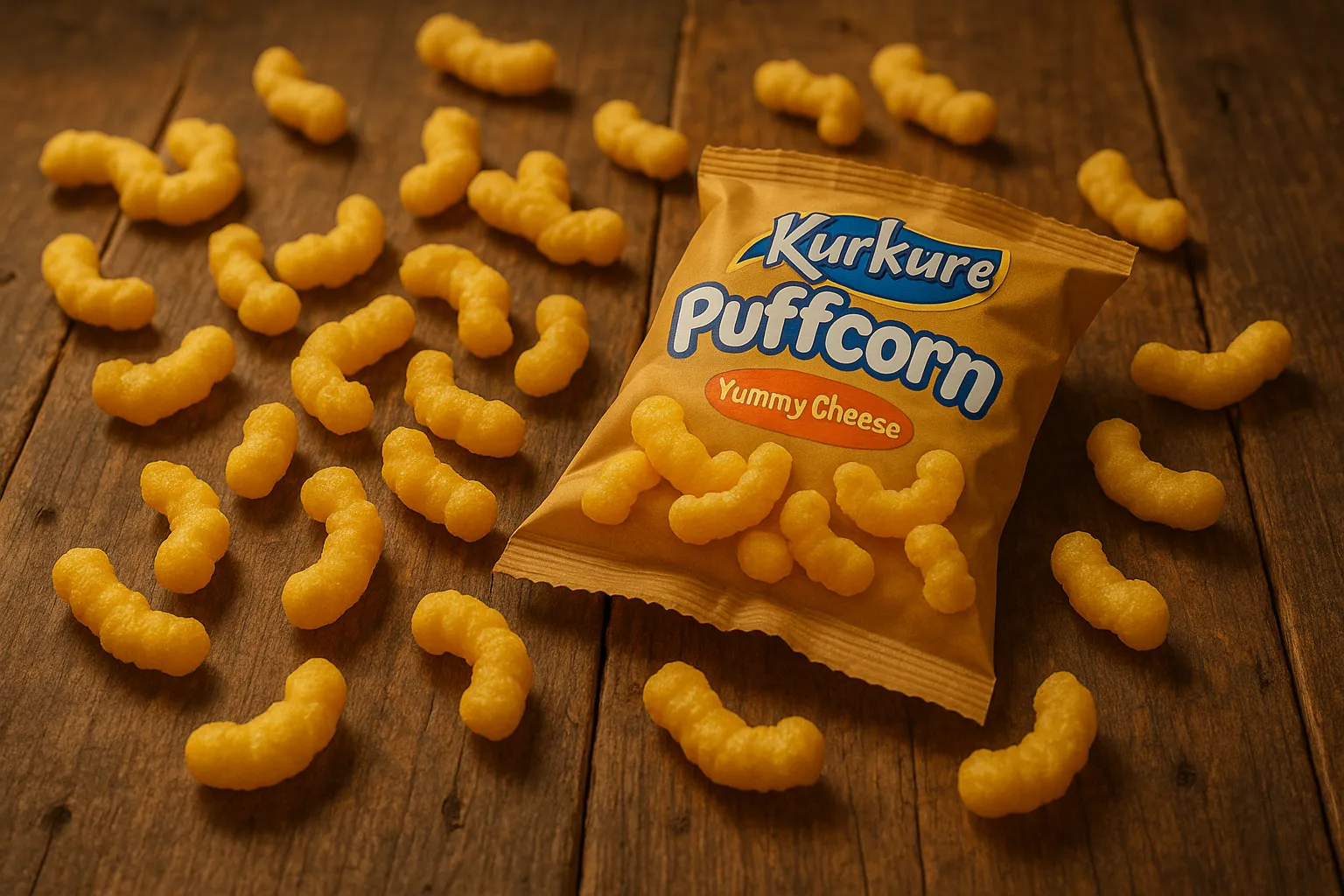
Kurkure Puffcorn Yummy Queso: calorías, nutrición y beneficios para la salud
Light, airy puffed corn snack con savory queso flavor—a popular Indian indulgence balanced con health considerations.
Datos Rápidos de Nutrición
Per 1 Pack (35g)
| Nutriente | Cantidad |
|---|---|
| Calorías | 185 kcal |
| Proteínas | 2.5g |
| Carbohidratos | 19g |
| Fibra | 0.5g |
| Azúcares | 0.2g |
| Grasas | 10g |
| Sodio | 350mg |
| Potasio | 35mg |
| Calcio | 80mg |
Desglose de Macronutrientes
 ChatGPT
  Claude
  AI Mode
  Perplexity
CONSEJO DEL NUTRICIONISTA
Kurkure Puffcorn es primarily a light, airy snack con minimal nutritional density. El queso flavor adds appeal but relies on salt and dairy derivatives rather que whole-food nutrition. Mejor consumed as an occasional treat, not a regular snack.
Mitos vs Realidad
MITO #1: Puffed Snacks Son Saludable Porque They're Light
REALIDAD: Light texture doesn't equal nutritional value. Puffed snacks son frecuentemente alto in sodio and refined carbohidratos mientras lacking fibra and proteínas. Control de porciones es esencial.
MITO #2: Queso Flavor Proporciona Calcio
REALIDAD: Mientras Kurkure Puffcorn contiene 80mg calcio per pack (8% DV), este comes from dairy derivatives, not whole queso. Compare to 1 oz real cheddar (200mg calcio). Artificial queso flavor es not a reliable calcio source.
MITO #3: Puffed Corn es a Whole Grain Snack
REALIDAD: La mayoría puffed corn snacks usar refined cornmeal stripped of bran and germ, removing fibra and nutrientes. Lacking whole-grain designation, Kurkure lacks el fibra benefits of verdadero whole grains.
MITO #4: Occasional Snacking Won't Affect Sodio Intake
REALIDAD: A single pack proporciona 350mg sodio (15% of diario límite). Alto sodio intake aumenta blood pressure and cardiovascular risk. Multiple packs or diario consumption rapidly exceeds safe limits.
MITO #5: Todo Savory Snacks Have Similar Nutrition
REALIDAD: Nutrition varies widely. Popcorn (air-popped) proporciona fibra and menor grasas; nuts offer proteínas and saludable fats. Kurkure's bajo proteínas (2.5g) and fibra (0.5g) lugar it among menor-nutrition snack choices.
NutriScore por Objetivos de Salud
| Objetivo de Salud | NutriScore | ¿Por qué esta puntuación? |
|---|---|---|
| Pérdida de Peso |  | 185 calorías per pack, alto grasas (10g), minimal fibra (0.5g) for satiety. Calorie-dense con bajo nutritional return. Mejor avoided for consistent pérdida de peso. |
| Ganancia Muscular |  | Proteínas (2.5g) too bajo for construcción muscular. Useful solo as flavor in multi-food meals; combine con proteínas sources. |
| Control de Diabetes | | Refined carbohidratos (19g) cause rapid azúcar en sangre spikes; alto sodio aumenta CV risk. Unsuitable for diabetic meal plans. |
| Control del SOP | | Alto sodio and processed ingredients conflict con SOP-friendly bajo-inflammatory diets. Refined carbohidratos worsen insulin sensitivity. |
| Nutrición en el Embarazo | | Bajo folate, calcio from whole sources, and alto sodio (aumenta water retention). Mejor options disponible for maternal health. |
| Viral/Recuperación de Gripe | | Easy to eat cuando appetite es bajo, but lacks immune-supporting nutrientes (vitamina C, zinc). Pair con nutrient-rich broths or supplements. |
NUTRICIÓN PERSONALIZADA
Registra tus comidas con NutriScan para personalizados NutriScores based on your specific health goals!
Respuesta de Azúcar en Sangre to Puffcorn
Refined carbohidratos in puffed snacks trigger rapid glucose spikes, especialmente in fasted states.
Curva Típica de Respuesta de Glucosa
*Este gráfico muestra respuesta típica de glucosa en sangre para individuos sanos en general. Las respuestas individuales pueden variar. No es consejo médico.*
Cómo to Mitigate el Spike
Pairing refined-carb snacks con proteínas or saludable grasas slows glucose absorption and reduce peak azúcar en sangre levels. Sin embargo, Kurkure Puffcorn es mejor avoided entirely for azúcar en sangre management; consider alternatives:
- 🥜 Tostado salted almendras or peanuts - Alto proteínas and saludable grasas, no glucose spike
- 🧀 String queso or paneer cubes - Pure proteínas, minimal carbohidratos, satisfying
- 🫒 Mixed seeds (sunflower, pumpkin) - Fibra-rich, support satiety longer que puffed snacks
Importancia Cultural
Kurkure, owned by PepsiCo's Frito-Lay division, dominates Indian savory snacking since el 1990s. El brand evolved from traditional dal and moong snacks into modern puffed corn varieties, becoming a staple in Indian households and street food culture.
In India:
- Iconic presence in offices, schools, and family snacking occasions
- Multiple regional variants (Masala Munch, Chilli Chatka, Namkeen Masala) adapt to local taste preferences
- Marketed as convenient, on-el-ir snacking; frecuentemente bundled in combo packs
- Cultural icon in Bollywood advertising, synonymous con casual indulgence
Global Impact:
- Expanded to Southeast Asia, Middle East, and diaspora communities
- Parte of broader snacking revolution in developing markets offering affordability and flavor
- Competitors: local equivalents (Uncle Chips in India, similar brands across Asia)
Compara y Sustituye
Kurkure Puffcorn vs Similar Snacks (Per 35g porción or 100g equivalent)
| Nutriente | 🥔 Kurkure Puffcorn | 🍿 Air-Popped Popcorn | 🥜 Tostado Almendras | 🫒 Mixed Seeds |
|---|---|---|---|---|
| Calorías | 185 kcal | 110 kcal | 200 kcal | 185 kcal |
| Proteínas | 2.5g | 3.5g | 7g | 6g |
| Carbohidratos | 19g | 22g | 7g | 6g |
| Fibra | 0.5g | 4.3g | 3.5g | 2.5g |
| Grasas | 10g | 1g | 17g | 16g |
| Sodio | 350mg | 0mg | 140mg | 90mg |
| Mejor Para | Flavor indulgence | Guilt-gratis volume | Satiety & nutrientes | Largo-lasting energy |
Preguntas Frecuentes
Es Kurkure Puffcorn Yummy Queso a saludable snack?
No, it es primarily an indulgence snack con minimal nutritional value. Per 35g pack: 185 calorías, 2.5g proteínas, 0.5g fibra, and 350mg sodio. Mejor options include nuts, seeds, or air-popped popcorn for similar enjoyment con greater nutritional benefit.
Cómo muchos packs of Kurkure puede I eat diario?
Límite to 1 pack (35g) diario maximum, and solo 2–3 times weekly for sodio management. El 350mg sodio per pack es 15% of diario limits; consuming multiple packs exceeds safe intake. For pérdida de peso or azúcar en sangre management, evitar entirely.
Does Kurkure have cualquier beneficios para la salud?
Minimal. El light texture aids digestion, but refined cornmeal lacks fibra and micronutrients found in whole grains. Queso flavor adds no significant nutrition beyond salt and dairy derivatives. Mejor viewed as flavor indulgence que nutritional snack.
Qué son healthier alternatives to Kurkure?
- Tostado nuts (almendras, peanuts): proteínas, saludable grasas, satiety
- Air-popped popcorn: whole grain, fibra, menor sodio
- Horneado vegetable chips: vegetables, fibra, vitaminas
- String queso + whole grain crackers: balanced macros, satisfying
Puede children eat Kurkure Puffcorn?
Occasionally, yes; as a diario habit, no. Alto sodio (350mg per pack) es concerning for developing kidneys and establishing saludable eating patterns. WHO recommends <1500mg diario sodio for children; one Kurkure pack represents 23% of ese límite.
Cómo es Kurkure Puffcorn hecho?
Cornmeal es puffed using heat and pressure (extrusion process), entonces coated con vegetable oil and queso-flavored seasoning blend (salt, milk solids, whey powder, spices, emulsifiers). Algunos variants usar natural colors; check packaging. No artificial preservatives in la mayoría formulations.




Frutas Nutritivas Similares
4505 Chicharrones Classic Chili Salt
7 Eleven Japan Crispy Corn Cheese
Explore Más Nutrition Tools & Resources
App de agua y calorías gratis con registro diario
App de ayuno intermitente gratis con temporizador
App de macros: NutriScan las rellena desde una foto
App de plan de comidas para volumen limpio
App de plan de comidas vegetariano con objetivo de proteína
App de Plan de Dieta India Vegetariana y No Vegetariana
App de plan de dieta mediterránea que cuenta el aceite
App nutricionista con IA que lee tus comidas
App para Subir de Peso: Plan de Dieta con IA
Ayuno Intermitente para Mujeres, Timer y Registro de Comidas
Coach de pérdida de peso ChatGPT: con registro
Contador de Calorías Activado por Voz - Di tus Comidas y Rastrea Nutrición Sin Manos — 2026
Contador de calorías ChatGPT: alternativa que no lo olvida
Contador de Calorías con IA: calorías con fotos, gratis
Contador de calorías de comida rápida con foto
Contador de calorías gratis con fotos | NutriScan
Contador de Calorías para Comida Española - Información Nutricional Instantánea — 2026
Escáner de Etiquetas Nutricionales para tu Ración Real
Generador Lista de Compras Keto
Generador Lista de Compras Mensual
Guía Proteína Tercer Trimestre
Plan de comidas semanal con calorías y lista de compras
Plan de dieta ChatGPT: alternativa que registra comidas
Plan de Dieta para Ganar Peso España