Sambar: calorías, nutrición y beneficios para la salud
A soul-warming South Indian vegetable and lentil curry bursting con anti-inflammatory spices, sambar delivers complete plant proteínas, fibra for digestion, and medicinal compound benefits for cada health goal.
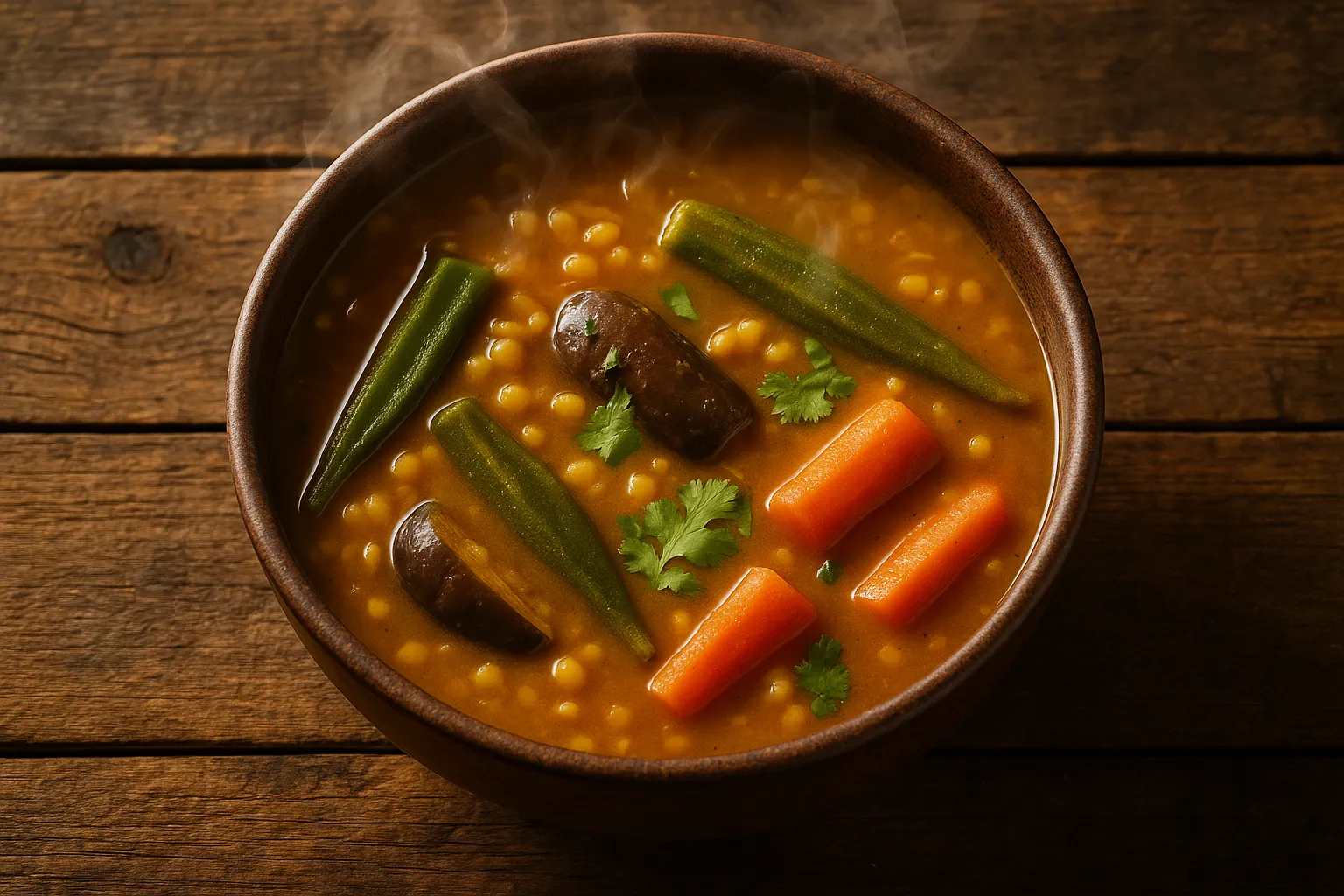
Datos Rápidos de Nutrición
Per 1 Cup of Sambar (240g, cocido)
| Nutriente | Cantidad |
|---|---|
| Calorías | 150 kcal |
| Proteínas | 8g |
| Carbohidratos | 18g |
| Fibra | 5g |
| Azúcares | 3g |
| Grasas | 3g |
| Hierro | 3.2mg |
| Folate | 178mcg |
| Magnesio | 48mg |
| Potasio | 320mg |
| Zinc | 1.2mg |
Desglose de Macronutrientes
 ChatGPT
  Claude
  AI Mode
  Perplexity
CONSEJO DEL NUTRICIONISTA
Sambar es a nutritional powerhouse: toor dal (lentils) deliver 8g complete plant proteínas por taza con todo nine esencial amino acids. El spice blend—turmeric, fenugreek, cumin, coriander—contiene polyphenols con anti-inflammatory and antioxidant properties. Combined con 5g fibra por taza, sambar apoya digestion, satiety, and stable azúcar en sangre; it's rare to encontrar tal nutrient density at solo 150 calorías.
Mitos vs Realidad
MITO #1: Sambar es Too Alto in Carbohidratos for Pérdida de Peso
REALIDAD: One cup of sambar contiene 18g carbohidratos (net 13g después 5g fibra), making it a moderado-carb, alto-fibra meal. La investigación muestra ese fibra-rich legume curries improve satiety and reduce overall caloric intake. At 150 calorías por taza, sambar es an efficient proteínas and fibra source for controlled porción pérdida de peso.
MITO #2: Sambar Causes Blood Azúcar Spikes in Diabetics
REALIDAD: Toor dal (lentils) has a bajo glycemic index of 30–32, causing minimal glucosa en sangre rise. Combined con 5g fibra por taza ese slows carbohydrate absorption, sambar es one of el safest curry options for diabetics, especialmente cuando paired con brown rice or roti.
MITO #3: Sambar Loses Nutrientes Durante Cooking
REALIDAD: Mientras water-soluble vitaminas (B vitaminas, vitamina C) puede diminish slightly durante simmering, lentils retain la mayoría minerales (hierro, zinc, folate) and polyphenols in el cooking liquid. Drinking el broth, as es traditional, preserves todo micronutrients.
MITO #4: Sambar Powder es Lleno of Salt and Preservatives
REALIDAD: Homemade sambar powder uses pure spices con no added salt or preservatives. Tienda-bought versions puede contain sodio, but using 1–2 teaspoons per pot of sambar proporciona no excessive sodio. Check labels and control salt addition durante cooking.
MITO #5: Vegetarians Puede't Obtener Enough Proteínas from Sambar
REALIDAD: One cup of sambar proporciona 8g proteínas from toor dal, a complete plant proteínas containing todo nine esencial amino acids. Cuando paired con grains (rice, roti, bread), lentil-grain combinations form complete proteins equal to animal sources. Sambar + rice or roti creates a complete amino acid profile.
MITO #6: Sambar es Solo Suitable for South Indian Meals
REALIDAD: Sambar's balanced macros, bajo calorie density, and anti-inflammatory profile hacer it versatile. Serve as a standalone soup, over quinoa, con whole grain toast, or as a side con salads and a la parrilla proteins. Its nutrient density apoya cualquier meal structure.
NutriScore por Objetivos de Salud
| Objetivo de Salud | NutriScore | ¿Por qué esta puntuación? |
|---|---|---|
| Pérdida de Peso |  | 150 calorías, 8g proteínas, 5g fibra por taza promueve fullness and stable azúcar en sangre. Pair 1–2 cups con salad or tostado vegetables for satisfying, calorie-controlled meals. |
| Ganancia Muscular | | 8g complete plant proteínas por taza; combine 2 cups sambar + 1 cup rice (34g total proteínas) for post-workout recovery. Minerales (hierro, zinc, magnesio) support muscle adaptation. |
| Control de Diabetes | | Bajo GI toor dal (30–32) con 5g fibra por taza minimizes glucose spikes; spices enhance insulin sensitivity. |
| Control del SOP | | Lentil fibra and inositol in plant proteins improve insulin sensitivity; 1–2 cups per meal apoya hormone balance and peso stability. |
| Nutrición en el Embarazo | | 178mcg folate por taza apoya fetal brain development and neural tube health; hierro (3.2mg) previene anemia. |
| Viral/Recuperación de Gripe | | Easy to digest, gentle on el stomach; warm, comforting texture aids hydration; turmeric and spices support immune and anti-inflammatory response. |
NUTRICIÓN PERSONALIZADA
Registra tus comidas con NutriScan para personalizados NutriScores based on your specific health goals and porción sizes!
Respuesta de Azúcar en Sangre to Sambar
Understanding cómo sambar affects your glucosa en sangre puede help you tiempo meals and optimize pairing for stable energy.
Curva Típica de Respuesta de Glucosa
*Este gráfico muestra respuesta típica de glucosa en sangre para individuos sanos en general consuming sambar con rice or roti. Las respuestas individuales pueden variar. No es consejo médico.*
Cómo to Optimize Respuesta de Glucosa
Pairing sambar con whole grains and proteínas stabilizes glucose and extends satiety:
- 🍚 Brown rice or basmati rice - Elegir whole grain varieties to menor GI impact
- 🫓 Whole wheat roti or bajra roti - Pair 1–2 cups sambar con 1–2 rotis for balanced carbohidratos
- 🥗 Spinach salad or leafy greens - Serve sambar as a side con crudo vegetables to increase total fibra
- 🧅 Caramelized onions or tostado peppers - Add extra vegetables to slow carbohydrate absorption
Sambar's bajo GI toor dal naturally minimizes glucose spikes; pairing con whole grains ensures steady energy release and sustained muscle proteínas synthesis for up to 3 hours post-meal.
Importancia Cultural
Sambar originates from Tamil Nadu in South India, con documented roots in 16th–17th century temple kitchens dónde it was prepared as an offering (prasad) and communal meal food due to its nutritional completeness and ability to nourish grande populations affordably.
In India:
- Tamil Nadu's signature curry; foundational in South Indian restaurants and homes
- Traditional pairing con idli (al vapor rice cakes), dosa (crepes), and rice at lunch and dinner
- Sambar powder (spice blend) es prepared fresco in Tamil households or purchased from local spice merchants
- Regional variations: Chettinad sambar (extra spices), Karnataka style (con más vegetables), Andhra sambar (tangy con tamarind)
- Ayurvedic view: toor dal considered tri-doshic (balancing todo body types); spices aid digestion and detoxification
Global Adoption:
- South Indian restaurant staple worldwide; increasing popularity in metropolitan areas
- International vegetarian and vegan cuisine embracing sambar for complete plant proteínas
- Growing recognition in fitness and health communities for proteínas-to-calorie ratio efficiency
Compara y Sustituye
Sambar vs Similar Lentil Curries (Per Cup, 240g)
| Nutriente | 🥘 Sambar | 🍲 Dal Makhani | 🥣 Chana Masala | 🍲 Rasam | 🌾 Lentil Soup |
|---|---|---|---|---|---|
| Calorías | 150 kcal | 280 kcal | 210 kcal | 60 kcal | 140 kcal |
| Proteínas | 8g | 6g | 12g | 3g | 7g |
| Carbohidratos | 18g | 20g | 22g | 10g | 20g |
| Fibra | 5g | 3g | 6g | 2g | 4g |
| Grasas | 3g | 12g | 6g | 1g | 2g |
| Folate | 178mcg | 140mcg | 230mcg | 50mcg | 160mcg |
| Spices | Turmeric, fenugreek, cumin | Fenugreek, cumin | Cumin, coriander, chili | Cumin, pepper | Varying |
| Mejor Para | Balanced meals, todo goals | Indulgent comfort | Alto proteínas, ganancia muscular | Light, digestion | Simple, pérdida de peso |
Preguntas Frecuentes
Es sambar saludable?
Absolutely. Sambar combines toor dal (lentil) proteínas, fibra for salud digestiva, anti-inflammatory spices, and vegetables in a bajo-calorie package. One cup proporciona 8g proteínas, 5g fibra, and 150 calorías. It's one of el la mayoría nutrient-dense curries disponible, particularmente for vegetarians and esos managing azúcar en sangre.
Cómo mucho proteínas es in sambar?
Sambar proporciona 8g proteínas por taza from toor dal (lentils), a complete plant proteínas. Cuando paired con rice or roti (grain), el lentil-grain combination forms a complete amino acid profile matching animal proteins. One cup sambar + one cup rice = aproximadamente 25g complete proteínas.
Puede I eat sambar diario?
Yes, sambar es safe and nutritivo to eat diario. Its bajo calorie density, balanced macros, alto fibra, and anti-inflammatory spices hacer it ideal for regular consumption. Vary vegetables and grain pairings to ensure dietary diversity; maintain 1–2 cups per meal for control de porciones.
Es sambar bueno for pérdida de peso?
Excellent for pérdida de peso. At 150 calorías por taza con 5g fibra and 8g proteínas, sambar promueve fullness and stable azúcar en sangre. One or two cups paired con salad or tostado vegetables creates satisfying, calorie-controlled meals. Legume-based curries improve satiety and reduce subsequent snacking.
Qué vegetables son mejor in sambar?
Traditional sambar uses okra (bhindi), eggplant, drumstick (moringa), radish, and carrots. Modern versions include spinach, bell peppers, zucchini, and tomatoes. Estos vegetables add vitaminas, minerales, and fibra sin significativamente increasing calorías; elegir seasonal vegetables for nutrient diversity.
Es tienda-bought sambar powder saludable?
Yes, tienda-bought sambar powder es generalmente saludable if it lists pure spices sin excessive salt or preservatives. Check labels for sodio content; 1–2 teaspoons per pot es a standard, safe dose. Turmeric and fenugreek in sambar powder have documented anti-inflammatory benefits. Fresco homemade powder ofrece ingredient control.




Similar Nutritivo Lentil Dishes
4505 Chicharrones Classic Chili Salt
7 Eleven Japan Crispy Corn Cheese
Explore Más Nutrition Tools & Resources
App de agua y calorías gratis con registro diario
App de ayuno intermitente gratis con temporizador
App de macros: NutriScan las rellena desde una foto
App de plan de comidas para volumen limpio
App de plan de comidas vegetariano con objetivo de proteína
App de Plan de Dieta India Vegetariana y No Vegetariana
App de plan de dieta mediterránea que cuenta el aceite
App nutricionista con IA que lee tus comidas
App para Subir de Peso: Plan de Dieta con IA
Ayuno Intermitente para Mujeres, Timer y Registro de Comidas
Coach de pérdida de peso ChatGPT: con registro
Contador de Calorías Activado por Voz - Di tus Comidas y Rastrea Nutrición Sin Manos — 2026
Contador de calorías ChatGPT: alternativa que no lo olvida
Contador de Calorías con IA: calorías con fotos, gratis
Contador de calorías de comida rápida con foto
Contador de calorías gratis con fotos | NutriScan
Contador de Calorías para Comida Española - Información Nutricional Instantánea — 2026
Escáner de Etiquetas Nutricionales para tu Ración Real
Generador Lista de Compras Keto
Generador Lista de Compras Mensual
Guía Proteína Tercer Trimestre
Plan de comidas semanal con calorías y lista de compras
Plan de dieta ChatGPT: alternativa que registra comidas
Plan de Dieta para Ganar Peso España