Portion Control App and Plate Tricks for Balanced Eating
 ChatGPT
  Claude
  AI Mode
  Perplexity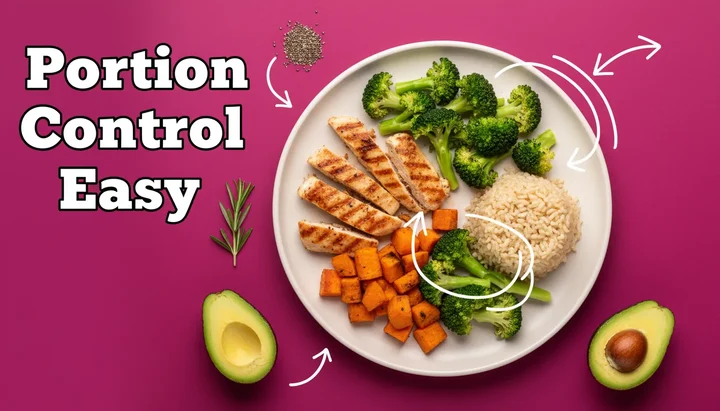
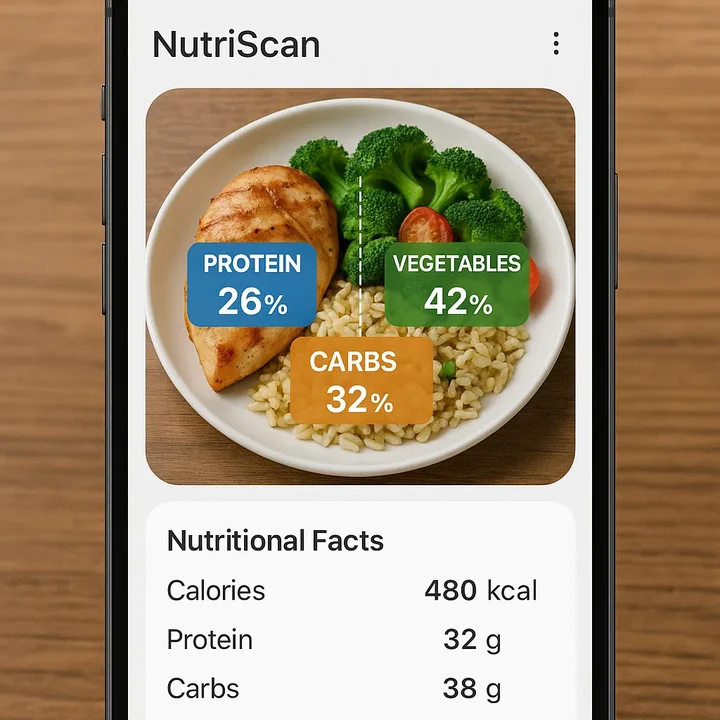
A portion control app is the quickest way to find out whether your plate matches your target. You photograph the meal, the app estimates how much food is there, and you adjust the next one. NutriScan does that from a single photo, hands back calories and macros, and puts a NutriScore band on the meal so a heavy plate is obvious in one glance. Free accounts get 5 scans a week, Premium is unlimited. The phone will not follow you into a wedding buffet, though, so this post covers both halves: the app for calibrating your eye, and the plate, hand, and habit rules that carry the meals you never photograph.
Why Portions Creep Up Even When Meals Look Small
TL;DR - Easy Portion Control Without Food Scales
• Who it's for: People wanting to control portions naturally without measuring tools, weight management seekers, mindful eating practitioners
• Main outcomes: 20-30% calorie reduction, better hunger awareness, sustainable eating habits, natural portion sizes
• Key steps: Use smaller plates → Apply hand measurement guide → Practice mindful eating → Track with meal scanning → Build consistent habits
• Timeframe: Learn techniques in 1-2 weeks, notice appetite changes in 3-4 weeks, establish automatic habits in 2-3 months
• How NutriScan helps: Visual portion feedback, track eating patterns, identify optimal portions, and build personalized portion database
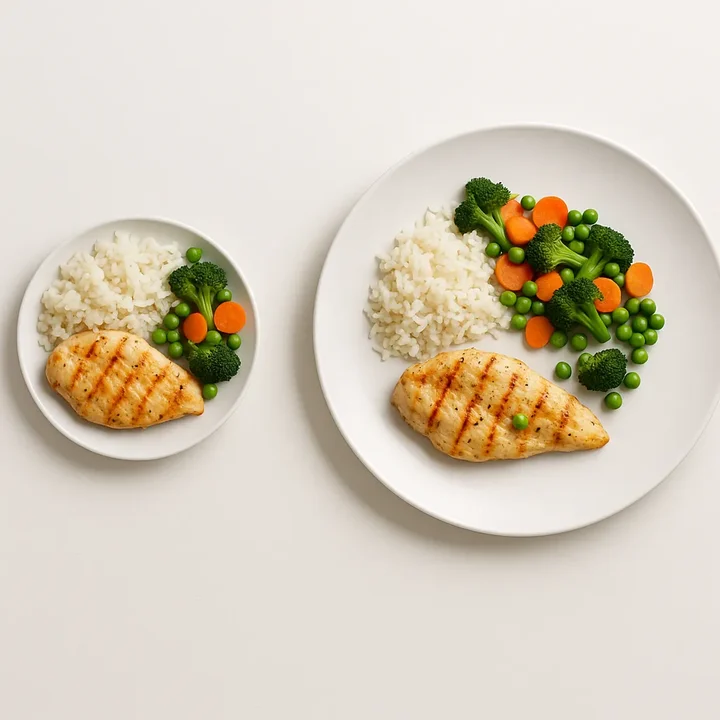
The problem hit me the day my jeans felt tight after a "light" buffet lunch. The plates were huge, and my serving blew past what my body needed. Plate size does most of that work quietly. A 28 cm plate makes a normal serving look mean, so you top it up, and the extra rice never registers as a decision. Since then, I've leaned on a handful of portion-control hacks that keep me on target, no food scale in my backpack.
What I Mean by Portion Control
- How much food goes on the plate, not just the tiny "serving size" printed on a packet.
- Match portions to energy need so weight, blood sugar, and mood stay steady.
Serving size is a label number set by a manufacturer. Portion is what you actually eat. The two rarely agree, which is why a "two-serving" bag of chips disappears in one sitting and the calorie maths quietly doubles. If you want the underlying numbers for home cooking, our breakdown of how to count calories in Indian food has the per-katori figures I lean on.
Portion Control App: How NutriScan Checks Your Plate
A portion control app earns its place by being faster than the alternative. Weighing a mixed bowl of biryani means separating rice, chicken, and oil, which nobody does twice. A photo takes three seconds.
Here is the loop I run:
- Snap the meal before the first bite, crop to the plate.
- Tag the food type and the oil level so the estimate matches how it was actually cooked. NutriScan has four oil levels, from No Oil to High Oil, and eleven cooking methods.
- Read the macro split and the NutriScore band.
- Adjust the next plate, not the one in front of you.
Four things make it work as a portion tool rather than a logging chore. Photo scan is only one of four inputs, so a meal you forgot to shoot can still go in by text, by voice, or by copying an earlier meal. Every meal keeps its history, on both plans, so you can look back at what a normal Tuesday actually held. Micronutrients come with every scan on the free plan too, which matters when you shrink portions and want to check you have not shrunk the iron along with the rice. And Monika, the voice nutritionist, will talk through a plate with you, four calls a week on Free.
Five free scans a week is not a daily food diary. It is enough to test the scanner on the meals that usually break a food database, your curries, your restaurant plates, your mixed bowls, before you decide whether the prompts are worth paying for. If you want the wider comparison, we ranked the options in the best AI photo calorie counter apps, and the calorie counter app page covers what the scanner does end to end.
Real-World Examples From My Diary
| Day & place | Food | What I used | Result |
|---|---|---|---|
| Tue, home | Biryani | 20 cm plate instead of 28 cm | Ate 22% less rice, still felt full |
| Fri, office | Snack nuts | Pre-portioned 30 g into mini box | Saved 180 cal of "extra handfuls" |
| Sun, café | Pasta | Shared main + side salad | No sleepy slump after meal |
| Wed, travel | Granola | Palm-size measure | Avoided sugar rush on flight |
Small swaps, steady wins.
Facts That Keep Me Honest
- Smaller pre-portioned meals cut daily calories in adults across multiple controlled trials.
- Bigger plates and bowls push people to eat more, and we rarely "make up" for it later.
- The hand-portion guide lines up well with calorie maths while adjusting to body size.
- Larger portions raise energy intake in adults, with strong evidence in the latest guidelines.
- Calorie labels on menus reduce the energy people order online.
Portion-Control Tricks I Trust
- Small plate magic 🥣 - plates under 23 cm slash rice or pasta by almost one-quarter for me.
- Half-plate veggie rule 🥗 - fill half with veggies first; protein and carbs share the rest.
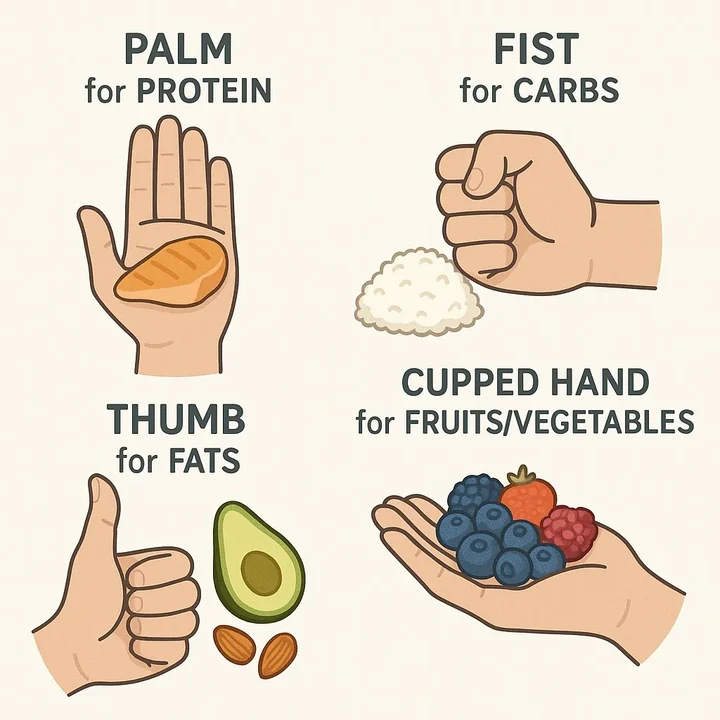
- Palm-fist-thumb guide ✋ - palm protein, fist carbs, fist veggies, thumb fat. No weighing.
- Pre-portion snacks - nuts, seeds, even grapes go into mini boxes before TV time.
- Restaurant split 🍽️ - share mains or box half before the first bite.
- Mindful first-bite pause - fork down, deep breath; reminds the brain food is coming.
- One plate only - keep "family-style" bowls off the table. Out of sight, out of stomach.
- NutriScan click-check 📸 - quick photo; the app shows if my plate skews heavy on carbs or fat.
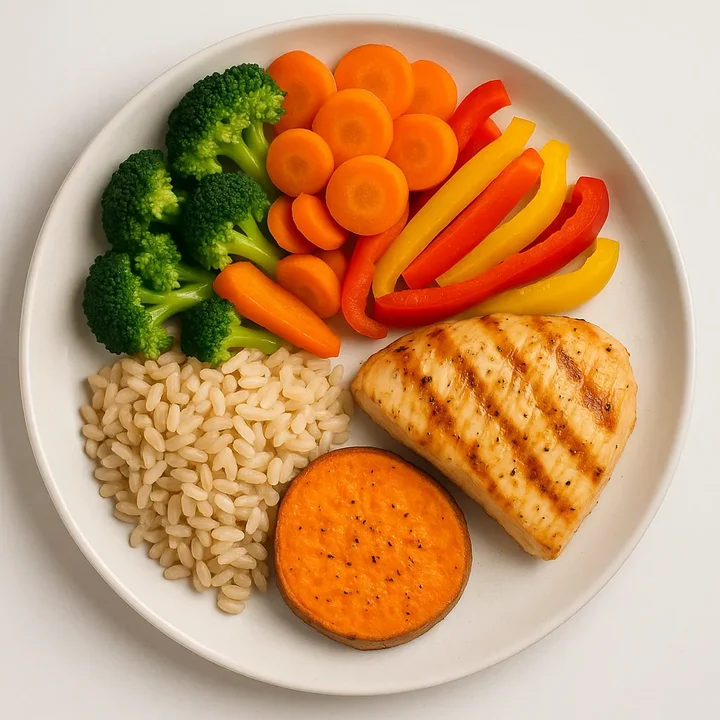
Hand Portion Sizes for Common Foods
Your hand scales with your body, which is why it beats a generic cup measure. Bigger frame, bigger hand, bigger portion. Here is the cheat sheet I keep on the freezer door.
| Hand shape | Rough volume | Use it for | One portion looks like |
|---|---|---|---|
| Palm (no fingers) | About 85 to 110 g | Protein | Chicken breast, paneer, fish fillet, 2 eggs |
| Cupped hand | About 120 to 150 ml | Cooked carbs | Rice, cooked dal, pasta, poha |
| Closed fist | About 200 ml | Vegetables | Sabzi, salad, stir-fried greens |
| Thumb, tip to base | About 12 g | Fats | Oil, ghee, butter, nut butter, cheese |
A plate for a desk day: one palm of protein, one cupped hand of carbs, two fists of vegetables, one thumb of fat. Add a second cupped hand of carbs on a training day. Women usually land on one palm and one cupped hand, men on two of each, which is the whole reason the guide travels better than "one cup of rice".
Two cautions. Hands underestimate anything soaked in oil, so a restaurant curry needs a smaller carb portion to stay level. And nuts blow past the thumb rule fast, which is why they are the single best food to pre-portion. Our high-protein snacks guide has portioned options that survive a desk drawer.
Step-by-Step Guide I Give Friends
- Write your calorie target (NutriScan sets this after a week of logs, or use the online calorie calculator).
- Choose your portion method from above. I suggest the palm-fist guide.
- Start with breakfast for 1 week, then add lunch, then dinner.
- Take before photos of plates for 3 days with NutriScan.
- Adjust one portion size if energy is too high or too low.
- Create a visual cheat sheet for the freezer door.
- Review after 2 weeks. How do clothes fit? How's your energy?
"Portion control is about finding the right amount for your body, activity level, and goals. The best system is one you'll actually use consistently."
Portion Control App vs Measuring Cups and a Scale
All three measure the same thing. They fail in different places.
A digital scale is the most exact, and the most fragile. It works for single ingredients on your own kitchen counter and falls apart the moment food is mixed, plated by someone else, or eaten out. Most people use one for two weeks and then put it in a drawer.
Measuring cups sit in the middle. They are fine for dry rice and oats before cooking, useless afterwards, because cooked rice packs differently every time depending on water and grain.
A portion control app handles the case the other two cannot: a finished, mixed plate you did not cook. It is an estimate, not a lab reading, and it will read a heavy gravy conservatively. What it buys you is a number for every meal instead of an exact number for the three meals you were willing to weigh.
The lazy combination that works: weigh your five most-eaten foods once, so your eye is calibrated, then run the app for everything else and the hand guide when the phone stays in your pocket.
When to Adjust Your Portions
- More active day? Add half a fist of carbs.
- Desk day? Trim carbs slightly, keep protein the same. Sedentary weeks need a different baseline, which we cover in the desk job weight loss plan.
- Big dinner planned? Have a smaller lunch, not no lunch.
- Hungry between meals? Add protein and fiber, not just calories.
- No results after 3 weeks? Check your portion estimates with a scale once, then go back to the hand method.
- Eating out twice a week? Order first, box half before you start. Restaurant plates are the single biggest source of portion drift, and logging restaurant meals is where an app pays for itself.
Conclusion
Portion control is like steering a car: small wheel turns keep me on the road. By shrinking plates, using my hand as a measure, and photographing plates with NutriScan, I keep energy steady and avoid surprise weight gain. Start with one trick, build from there, and your meals will match your goals without stress.
FAQs
Q1. What does a portion control app actually do?
You photograph the meal and the app estimates how much is on the plate, then breaks it into calories, protein, carbs, and fat. NutriScan also puts a NutriScore band on the meal so a heavy plate is obvious. Free accounts get 5 scans a week, Premium is unlimited.
Q2. Is a portion control app better than weighing food?
A scale is more exact for a single item. An app is more exact over a month, because people keep using it. Weigh your five most common foods once, then let the app and the hand method carry the rest.
Q3. Do I need special tiny plates?
No. Any plate around 20-23 cm works. Even a cereal bowl can be a dinner plate in a pinch.
Q4. Can I still eat out?
Yes. Ask for half-plate veggies or share dishes, and box leftovers before the first bite.
Q5. Will smaller portions leave me hungry?
Start with slow eating and a water preload. Hunger usually fades by the 15-minute mark.
Q6. How long to see results?
Most friends notice a waistband change in 2-3 weeks of steady portion habits.
Q7. Are portion tricks enough without calorie counting?
For many, yes. Consistent smaller servings cut 300-400 kcal a day, a big impact over months.
Q8. How do I handle buffet events?
One plate rule plus a tall glass of water first. Walk the line once before picking food.
Q9. Best way to teach kids portion control?
Use colorful divided plates and the "rainbow rule" (many vegetable colors). Make it a game.
Q10. Do liquid calories need the same rules?
Even stricter. Smoothies and soda slide in fast. I pour into a 250 ml glass and stop.
Q11. What if family cooks large portions?
Serve your plate in the kitchen, store leftovers away before you sit. Out of sight works.
Q12. Does a portion control app work offline or at a buffet?
Scanning needs a connection, and a buffet plate you rebuild twice is hard to capture. That is where the one-plate rule and the palm-fist guide take over, and you can log the meal by text later from memory.