Online Calorie Counter for Any Meal
Type a meal, describe it in a sentence, or upload a photo. The counter returns calories, protein, carbs and fat for the portion you actually ate, including dishes that never came with a label.
Upload a photo of your food
Upload a JPEG or PNG image, up to 5 MB
Upload a photo or enter food name to see nutrition analysis
How the calorie count is worked out
The tool identifies the dish first, then the parts inside it. A plate of chicken biryani is not one item, it is rice, chicken, oil, yoghurt and spices in rough proportions, and each of those carries its own calorie density. Once the components are named, the portion is estimated from the description or the image and the totals are added up.
Packaged food takes a shorter route. A photo of the nutrition label or the brand name gives the manufacturer's own per 100 g values, and the only thing left to decide is how much of the pack you ate.
NutriScan puts its own accuracy at 95 percent for identification. Portion size is the part that drifts, so every result stays editable. Change 250 g of rice to 150 g and the whole row recalculates.
Daily calorie presets
These are the daily targets people search for most, and who each one tends to suit. Treat them as a starting point, then check the number against your own TDEE calculator result.
A 1,200 calorie day is the usual floor for women on a fast cut, and going lower is hard to hit nutritionally and should involve a doctor. A 1,500 calorie day is a steady deficit for shorter or less active women and the sensible floor for most men. A 1,800 calorie day is a moderate deficit for an average height man, or maintenance for a smaller sedentary woman. A 2,000 calorie day is the reference day printed on food labels and close to maintenance for a moderately active woman. A 2,500 calorie day is maintenance for a moderately active man, or a lean bulk for a lighter one.
Counting calories in restaurant meals
Restaurant food is where most calorie logs fall apart, because nobody publishes the recipe and the cooking oil is invisible. A photo works better than a guess here. The estimate lands close on the components and you correct the portion, which beats skipping the meal entirely and pretending the day was clean.
Chains are easier. If the dish comes from a menu with published values, the number is already known, and pages like the Domino's calorie calculator do the arithmetic per slice.
Counting home cooked meals
Home cooking has no label but it does have a recipe. Log the ingredients once, save the dish, and reuse it every time you cook it. The oil matters more than people expect. A tablespoon is 120 calories, and two tablespoons across a pan of vegetables can outweigh the vegetables.
Batch cooking is simpler still. Log the whole pot, then divide by the number of servings you portioned it into.
Track it in NutriScan
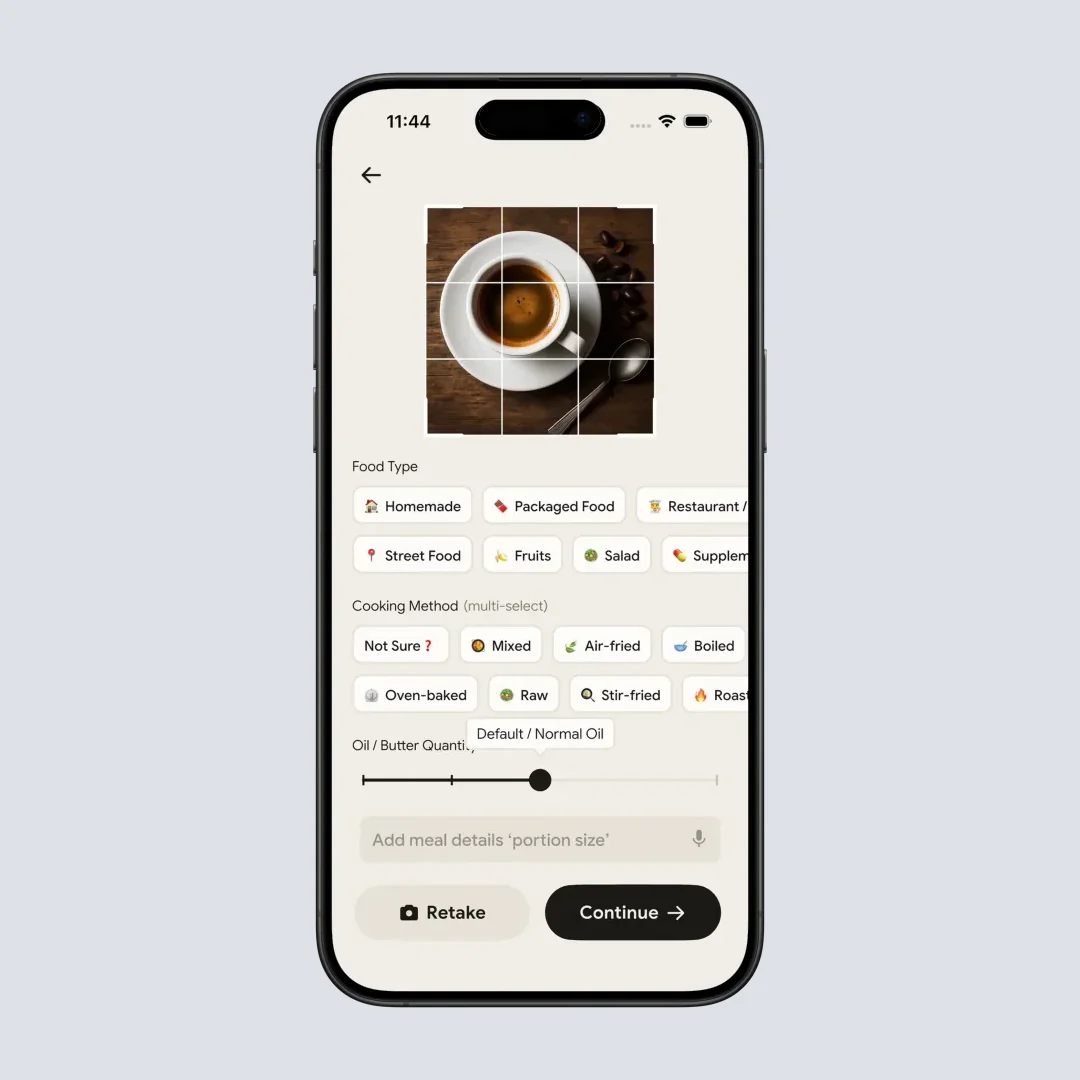
The web counter answers one meal at a time. The app keeps the running total, which is the part that changes behaviour. NutriScan logs meals from a photo, a pack label, your voice or typed text, then shows the day against your calorie and macro targets.
The free plan gives you 5 meal logs a week by photo, voice or text, plus water tracking and the fasting timer. Premium removes the scan cap and costs about $59 a year. The app has passed 150k downloads and holds a 4.6 star rating.
Frequently asked questions
How do I count calories for a meal with no label?
Take a photo of it or describe it in a line. The tool names the dish, splits it into ingredients, and adds up calories, protein, carbs and fat for the portion you say you ate. Home cooked food, restaurant plates and street food all work this way, since none of them come with a nutrition panel.
How accurate is a photo calorie count?
NutriScan puts identification at 95 percent by its own testing, not by a published study. Naming the food is the reliable half. Portion size is where the error sits, because a photo cannot weigh anything, so check the grams on the result and correct them when the serving is bigger or smaller than average.
Does it show macros as well as calories?
Yes. Every result carries protein, carbohydrate and fat for the meal, plus the main micronutrients. In the app those totals roll up by day, week and month against the targets you set.
Does it work for food outside American and European menus?
Yes. The database covers dishes from across Asia, Latin America, the Middle East, Africa and Europe. Recipes vary by household, so for a dish cooked a particular way, edit the ingredient list once and save it for next time.
What happens to my food and health data?
It stays in your account and is not sold or passed to third parties. You can delete individual entries or your whole account from the app.
Can it handle a mixed dish with many ingredients?
That is the case it is built for. A curry, a burrito bowl or a bento box gets read as separate components rather than one item, so the rice, the protein and the cooking oil each get their own line and their own number.
Does it work for keto, vegan or gluten free eating?
Yes. The tool counts what is on the plate, so any way of eating fits. Set your carb, protein and fat targets to match the approach you follow and the daily totals track against those numbers.
Related calculators
- Macro calculator for protein, carb and fat targets
- TDEE calculator for the maintenance number underneath any goal
- Weight loss calculator for a deficit and a finish date
- Calories burned calculator for a workout or a day of steps
- AI calorie counter app for how photo logging works day to day