PCOS Macro Calculator for Daily Protein, Carbs and Fat
Enter your age, height, weight, activity level and goal. The calculator returns a daily calorie target with the protein, carbohydrate and fat grams that fit inside it, using a split weighted for polycystic ovary syndrome.
Fill out the form to see your personalized results
Your macro and water intake recommendations will appear here
How the numbers are worked out
Your resting burn comes first, from the Mifflin-St Jeor equation using weight, height, age and sex. That gets multiplied by an activity factor between 1.2 for a sedentary day and 1.9 for heavy daily training. A 29 year old woman at 72 kg and 162 cm who walks and lifts three times a week lands near 2,100 calories of maintenance.
The goal then shifts the total. Fat loss subtracts 15 to 20 percent, maintenance leaves it alone. Calories become grams from there. Protein is set high, around 1.6 to 2 grams per kilogram of body weight, because it blunts the blood sugar response of a meal and keeps you full for longer. Fat holds around 30 to 35 percent of calories. Carbohydrate takes the rest, which usually puts it near 35 to 40 percent instead of the 50 percent a standard split would give.
Nothing here is a treatment. It is a starting point to bring to your doctor or dietitian, especially if you are on metformin or trying to conceive.
Who this is for
Women who have been told to eat for insulin resistance and were not told what that means in grams. The advice usually stops at "cut carbs", which leaves open how much, from where, and what replaces them.
It also suits anyone who has tried a very low carb approach for PCOS and found it unsustainable. A moderate carb target with high protein is easier to hold for years, and consistency beats severity here.
PCOS macros for weight loss
A modest deficit works better than a steep one. Cut 15 to 20 percent below maintenance, hold protein near 2 g per kg, and expect 0.25 to 0.5 kg a week. Loss is often slower with PCOS than the calculator's arithmetic suggests, so judge progress on a four week trend rather than a single weigh in.
The 72 kg woman above eating 1,700 calories would take about 140 g of protein, 60 g of fat and 155 g of carbs. Keep the carbs where they do the most work, around training and at the meals that would otherwise leave you hungry.
PCOS macros for insulin resistance
Carb quality matters as much as the total. The same 40 g of carbohydrate lands differently as white bread than as lentils, oats or beans, because fibre slows the release. Aim for 25 to 30 g of fibre a day inside the carb number.
Pairing helps too. Carbohydrate eaten alongside protein and fat produces a flatter glucose response than the same carbohydrate eaten alone, so a piece of fruit with yoghurt beats the fruit by itself.
Track it in NutriScan
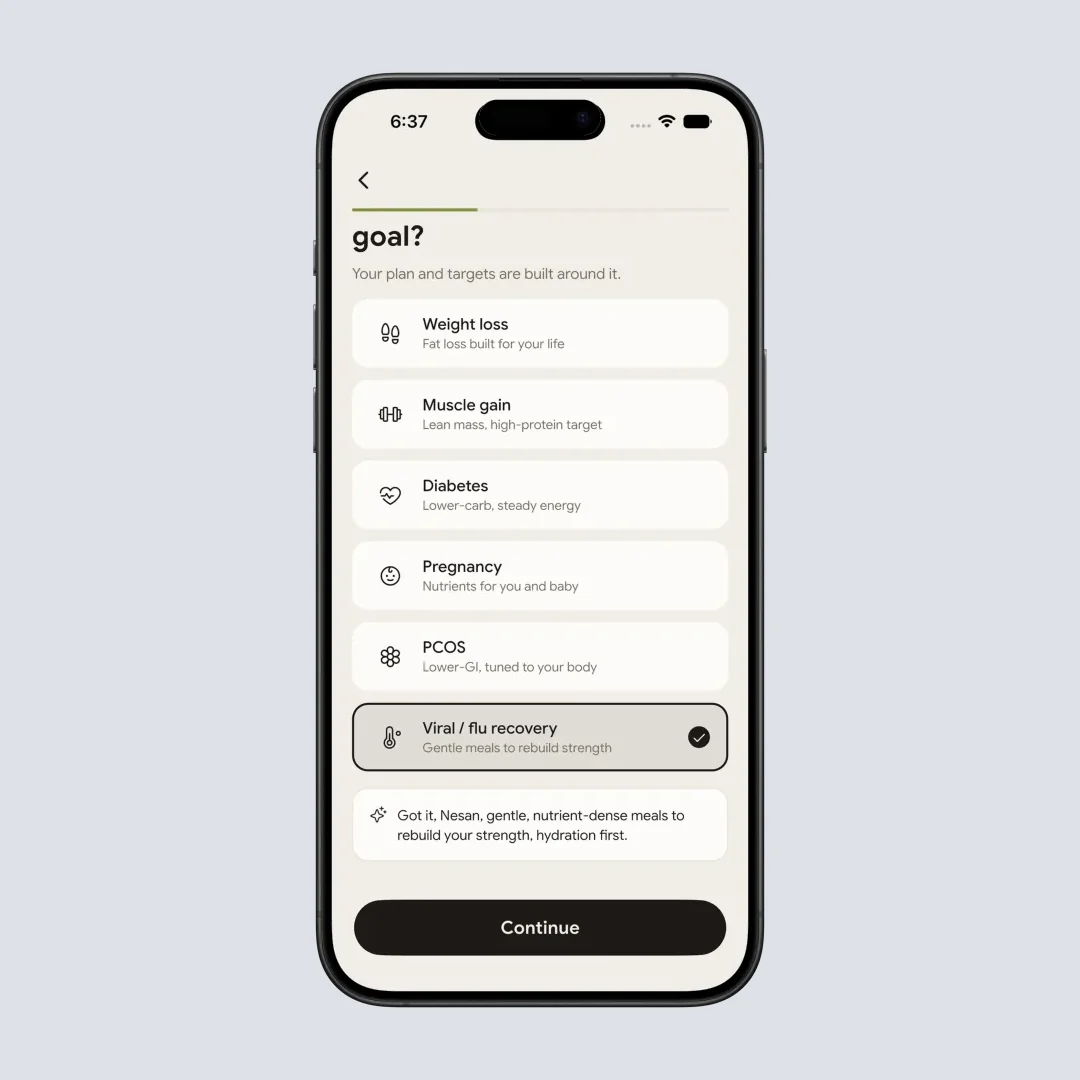
Targets only work if you can see what you actually ate against them. NutriScan logs meals from a photo, your voice, a barcode or typed text, then shows protein, carbs and fat against the numbers from this page. Fibre shows up in the breakdown, which is the figure most PCOS plans ignore and then miss.
The free plan gives you 5 photo scans a week, unlimited manual logging, water tracking and the fasting timer. Premium removes the scan cap and costs about $59 a year. The app has passed 150k downloads and holds a 4.6 star rating.


Frequently asked questions
How does the PCOS macro calculator work?
It takes your age, weight, height, activity level and goal, works out your maintenance calories with the Mifflin-St Jeor equation, then splits those calories into grams. Protein is set high, fat holds around 30 to 35 percent of calories, and carbohydrate takes what is left, usually near 35 to 40 percent.
What macro split is best for PCOS?
There is no single answer, but higher protein with moderate carbohydrate is the common starting point. Protein at 1.6 to 2 grams per kilogram of body weight blunts the glucose response of a meal and keeps you full. Bring the numbers to your doctor or dietitian before making a large change.
Do I have to eat low carb with PCOS?
No. Very low carb approaches help some women and are hard to keep up for years. A moderate target with plenty of fibre works for most people, and quality matters as much as the total, since lentils, oats and beans release far more slowly than white bread or juice.
Why is weight loss slower with PCOS?
Insulin resistance and the hormonal picture make the same deficit produce less loss for many women, so a 0.25 to 0.5 kg a week pace is realistic. Judge progress on a four week trend rather than a single weigh in, because water shifts hide real change over shorter windows.
Can I follow this on a vegetarian or vegan diet?
Yes, though hitting the protein number takes planning. Lentils, chickpeas, tofu, tempeh, dairy or soy yoghurt and a protein powder cover most of it. Those foods carry carbohydrate alongside the protein, so the carb target usually lands at the higher end of the range.
Related calculators
- Macro calculator for a standard split without the PCOS weighting
- TDEE calculator for maintenance calories at each activity level
- Weight loss calculator for a deficit and a projected finish date
- Protein intake calculator for daily grams and a per meal split
- NutriScan for PCOS for how the app handles a PCOS plan day to day