Protein Intake Calculator
Enter your sex, age, height, weight, activity level and what you train for. You get a daily protein range in grams, a split across three to five meals, the calories that protein costs, and a check on where your current intake sits.
Your daily protein
112-154g protein a day
Build muscle: 1.6 to 2.2 g per kg of body weight.
Where your range sits on the protein scale
Split across 4 meals
- Meal 128-39g protein
- Meal 228-39g protein
- Meal 328-39g protein
- Meal 428-39g protein
154 g of protein carries 616 calories, about 24% of your 2,556 calorie maintenance.
Muscle gains from extra protein flatten out near 1.6 g per kg (Morton et al. 2018, British Journal of Sports Medicine). More than 2.5 g per kg adds nothing on top.
An estimate from body weight and goal. Spread it across the day and adjust from how you train and recover.
How the number is worked out
Protein targets scale with body weight, not with calories. The calculator multiplies your weight in kilograms by a range picked from your goal. Maintaining and endurance training use 1.2 to 1.6 g per kg. Losing fat and building muscle use 1.6 to 2.2, because protein protects lean mass in a deficit and keeps you full. Over 65 uses 1.2 to 1.5. Pregnancy uses a 1.1 g per kg base plus 25 g a day.
The upper anchor comes from Morton and colleagues, 2018, in the British Journal of Sports Medicine. They pooled 49 resistance training studies and found lean mass gains stopped improving past roughly 1.6 g per kg a day, with the confidence interval reaching 2.2. That is why 2.2 is the top of the range here, and why the calculator flags anything above 2.5 g per kg as more than the research supports.
The meal split is plain division. A big daily number is easier to eat across three to five meals, and 25 to 40 g in one sitting is enough to trigger muscle protein synthesis in most adults. A 75 kg lifter building muscle needs 120 to 165 g a day, which is 30 to 41 g per meal over four meals and about 660 calories at the top end.
How much protein a day to build muscle
1.6 to 2.2 g per kg, and the bottom of that band does most of the work. Sit higher when you are in a deficit or training six days a week, because 1.6 on paper usually turns into 1.4 in practice once a couple of low days are averaged in. Hitting a slightly lower number every day beats hitting the exact number three days a week.
How much protein for a woman
The math does not change by sex, only the input does. A 62 kg woman cutting body fat needs 99 to 136 g a day, not the 150 to 180 g written on plans built for 90 kg men. Pregnancy is the one exception, adding 25 g to a 1.1 g per kg base to cover the growing tissue.
Can you eat too much protein
Yes, in two ways. The first is displacement: an extra 60 g of protein is 240 calories that carbs and fat do not get, and training suffers. The second is waste: above about 2.5 g per kg there is nothing left to gain in muscle, and the calculator says so when your current intake crosses that line. Healthy kidneys handle a high intake without trouble. If you have kidney disease, the number is a doctor question.
Track it in NutriScan
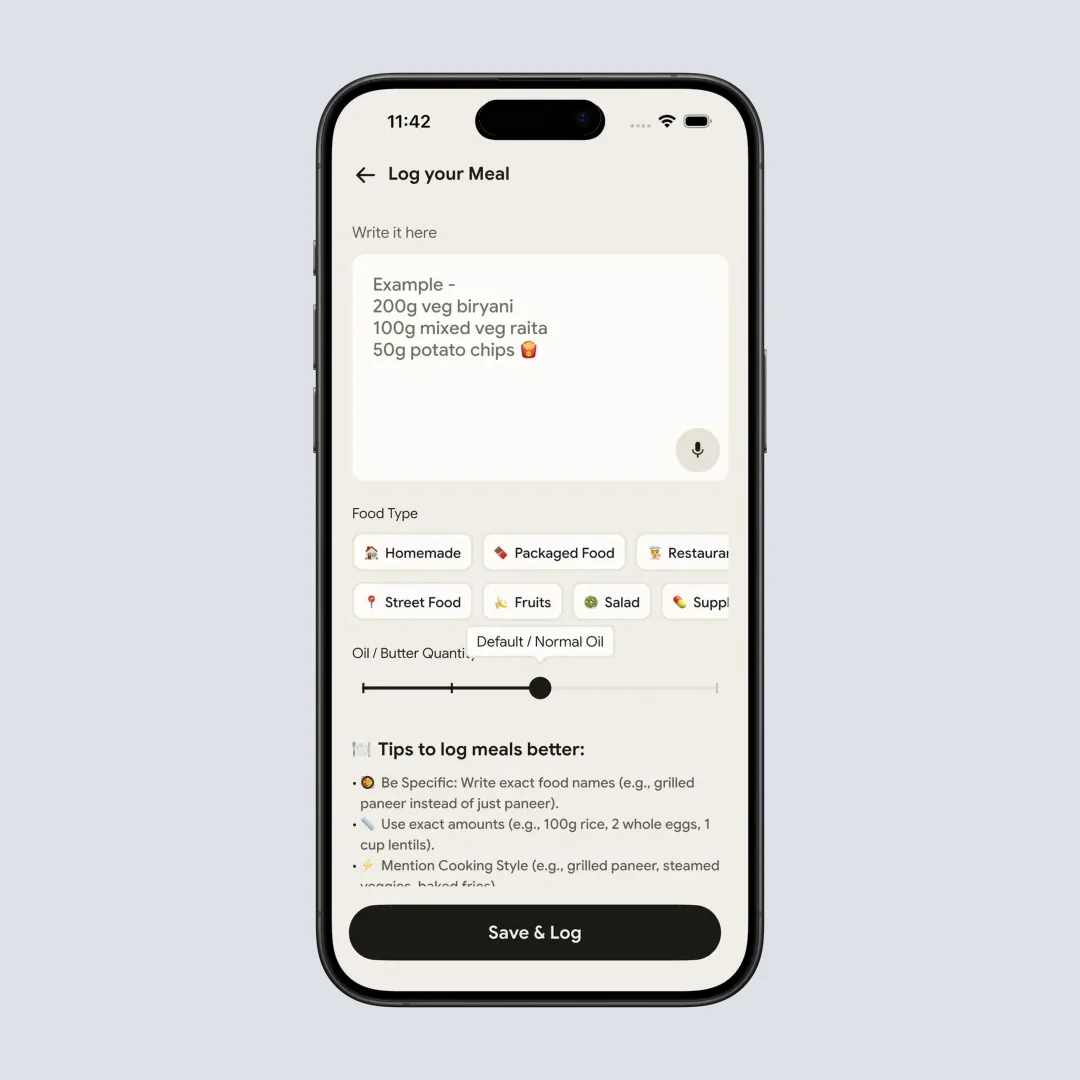
Protein is the macro that quietly comes up short, because a normal day of meals rarely gets there by accident. NutriScan logs a meal from a photo, your voice, a barcode or a typed line, and keeps a running protein total against the target you set here, so at four in the afternoon you know whether dinner needs to carry 20 g or 50 g.
The free plan gives you 5 photo scans a week plus water tracking and the fasting timer. Premium removes the scan cap and costs about $59 a year.
Frequently asked questions
How much protein do I need a day?
For most active adults the useful range is 1.2 to 2.2 grams per kilogram of body weight a day. Sedentary maintenance sits near the bottom, fat loss and muscle building near the top. An 80 kg lifter lands around 128 to 176 grams a day.
Is 200 g of protein a day too much?
It depends on your weight. At 90 kg that is 2.2 grams per kilogram, the top of the useful range. At 60 kg it is 3.3 grams per kilogram, well past the point where more protein does anything for muscle, and it crowds out carbs and fat you need for training. Healthy kidneys handle high intakes, but check with a doctor first if you have kidney disease.
How much protein do I need to build muscle?
A 2018 meta-analysis by Morton and colleagues in the British Journal of Sports Medicine pooled 49 studies and found gains in lean mass stop improving at roughly 1.6 grams per kilogram a day. The calculator uses 1.6 to 2.2 for muscle building, with the upper half as a buffer for hard training or a calorie deficit.
Does protein need to be spread across meals?
Spreading helps and is easy to do. Three to five feedings of 25 to 40 grams each is a practical way to hit a daily target without one enormous dinner. Total daily protein still matters most, so hitting the number in three meals beats missing it across five.
How much protein does a woman need?
The same grams per kilogram apply. Because body weight is usually lower, the gram total is lower: a 62 kg woman losing fat needs about 99 to 136 grams a day. Pregnancy is the exception, adding around 25 grams a day on top of a 1.1 gram per kilogram base.
Related calculators
Your inputs are saved between these pages, so each one opens with your numbers filled in.
- TDEE calculator for maintenance calories and your BMR
- Weight loss calculator for a daily target and a projected date for a goal weight
- Weight gain calculator for the surplus and timeline of a lean bulk
- Calories burned calculator for one workout or a day of steps
- NutriScan for muscle gain for training nutrition once you have a gram target