Why Meal Tracking in Notes Apps Gives You Wrong Data
 ChatGPT
  Claude
  AI Mode
  Perplexity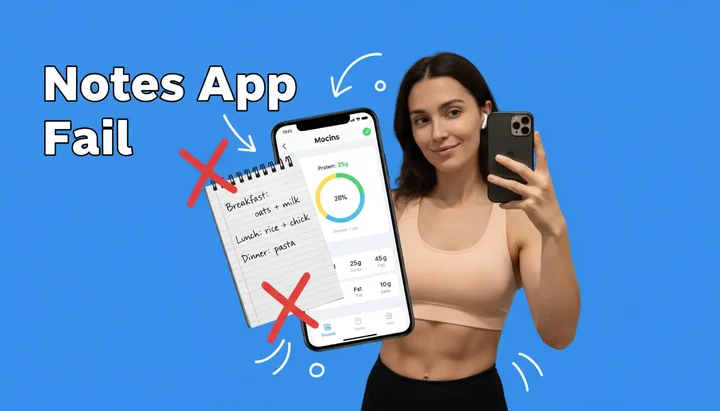
Have you ever tracked every single meal in your notes app but still not seen any results on your health goals? What if I told you that most of the nutrition data you have been recording for weeks or even months is completely wrong?
TL;DR - Why Notes Apps Fail at Meal Tracking
• The problem: Writing "rice" or "dal" in a notebook misses critical context - cooking method, oil level, portion size, and food source
• The impact: The same dish can swing hundreds of calories depending on how it was cooked. A "healthy vegetable biryani" could be 900 calories instead of 400
• The science: A University of Sydney evaluation of nutrition apps found manual food logging overestimated a Western diet by 1040 kilojoules and underestimated an Asian diet by 1520 kilojoules
• The solution: Capture cooking context, oil levels, and portion sizes for every meal - or use AI-powered tools that do it automatically
• The fix: 7 critical contexts to track + step-by-step guide for accurate logging
I know this sounds dramatic. But stay with me.
Last year, I was doing the same thing. Every day, I would open my phone notes and type "Breakfast - 2 roti, sabzi, dal." I felt proud of myself. I was being disciplined. I was tracking. But here is the funny thing - my weight was not moving. My energy levels were still low. My digestion was still giving me problems.
Then one day, my friend asked me a simple question: "How was that sabzi cooked? Was it deep fried? Steamed? How much oil did they use?"
I had no answer.
That is when I realized - I was tracking WHAT I ate, but completely ignoring HOW it was prepared. And that "how" can change your calorie count dramatically.
The Hidden Truth About Manual Food Logging 📝
Let me share something that shocked me. A University of Sydney study of nutrition apps found that manual food-logging apps overestimated energy intake for the Western diet by an average of 1040 kilojoules, while they underestimated energy intake for the Asian diet by an average of 1520 kilojoules. That is a massive error!
But when you are tracking in a simple notes app or notebook? The errors are even bigger because you are not even attempting to capture the full picture.
Think about it. When you write "rice" in your notebook, you are missing:
- Was it white rice or brown rice?
- How much did you actually eat - half a bowl or two bowls?
- Was there ghee or oil added on top?
- Did you eat it with fried curry or steamed vegetables?
Each of these details changes your nutrition numbers dramatically.
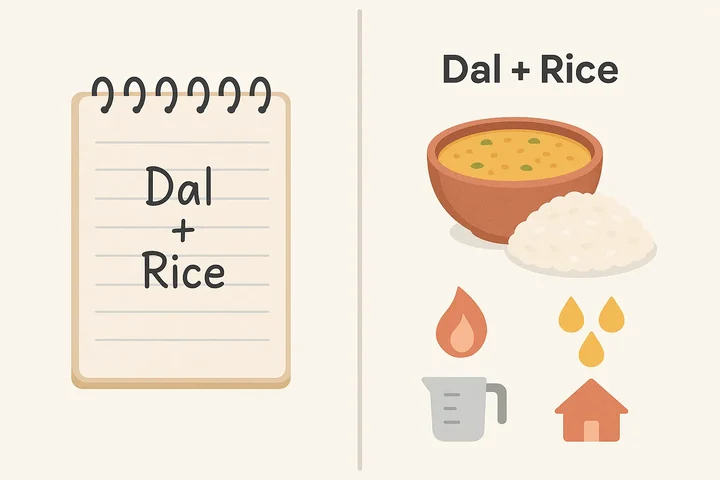 The difference between "I logged my meal" and "I tracked my nutrition accurately"
Three Examples That Will Make You Think Twice 🤔
Priya's Weight Loss Mystery
Here is a composite example, built from the office-canteen lunches I see logged most often. Call her Priya. She tracks religiously in a spreadsheet: "Lunch - Vegetable Biryani, Raita, Salad." Every single day, logged diligently.
Here is what the spreadsheet never captured:
- The biryani from her office canteen was cooked with about 4 tablespoons of oil per serving
- The rice was fried before adding vegetables
- The raita had full-fat curd with added cream
Add up the oil and the full-fat curd and that "healthy vegetable biryani lunch" lands closer to 900 calories than the 400 the spreadsheet assumes. More than double, from details nobody wrote down.
Ravi's Protein Confusion
Second example: someone building muscle, tracking protein carefully. "Dinner - Chicken curry, 2 rotis" is all that goes into the log.
But chicken curry can mean so many things:
- Grilled chicken in light gravy: approximately 250 calories, 30g protein
- Deep fried chicken in thick curry: approximately 550 calories, 25g protein
Eat the deep fried restaurant version while calculating as if it were home-cooked grilled chicken, and the log is wrong on calories and protein at the same time.
If you are trying to hit specific macro targets, our online macro calculator can help you understand your actual needs - but only if your food logging is accurate!
My Own Dal Experience
I used to think dal is dal. How different can it be?
Well, here is a rough comparison using typical tempering amounts, not measured lab values:
- Restaurant dal tadka: Usually has 3-4 tablespoons of ghee added. Around 300 calories per bowl.
- Home made dal with light tempering: Usually 1 teaspoon of oil. Around 150 calories per bowl.
- Boiled dal without any tadka: Around 100 calories per bowl.
The same food item. Three completely different calorie counts. And I was just writing "dal" in my notes.
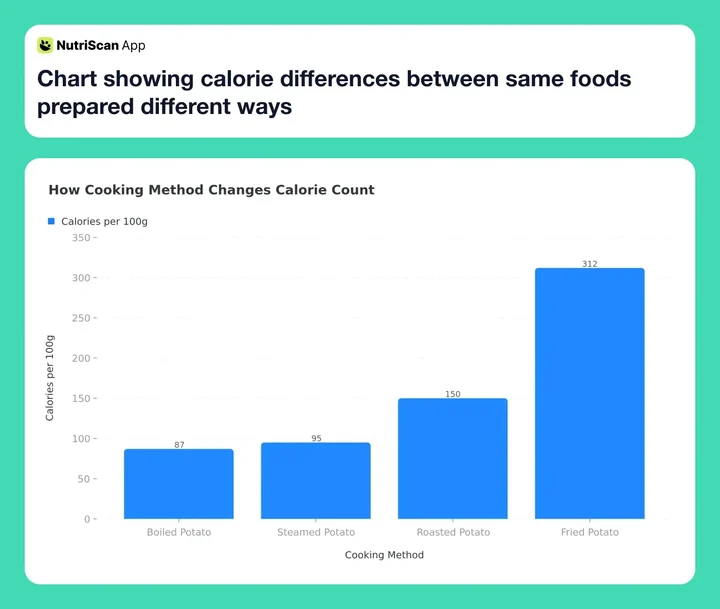 Figure 1: How cooking method changes the calorie count of common Indian foods

The Science Behind Why Context Matters So Much 🔬
Food diaries and recall surveys have a long documented accuracy problem. The measurement error chapter of Principles of Nutritional Assessment reports that omissions are mainly additions to or ingredients in multicomponent foods, such as vegetables and condiments in salads and sandwiches, and cites Guthrie's finding that salad dressings were forgotten by one in six respondents.
Here is why cooking methods make such a big difference:
The Deep Frying Effect 🍟
Deep frying changes a dish more than any other step, because the food absorbs oil while it cooks. A boiled potato and a deep fried one start as the same vegetable and finish in completely different calorie territory.
The reason is simple - fat is very calorie dense at 9 calories per gram compared to 4 calories per gram for protein and carbs. When food absorbs oil during frying, it soaks up those extra calories like a sponge.
 Yes, your "healthy" fried snack can carry far more calories than you thought
Important
One tablespoon of cooking oil adds approximately 120 calories. Most restaurant dishes use 3-4 tablespoons per serving. That is 360-480 hidden calories you are probably not counting!
The Portion Size Problem 📏
"One serving" is not a measurement, it is a guess. And portions drift: the bowl you called small in January is not the bowl you call small in June.
When you write "1 serving of pasta" in your notebook, what does that even mean? Is it the recommended serving of 80 grams dry pasta? Or is it the restaurant serving that is usually 200-300 grams?
The Mixed Dish Challenge 🍛
The same University of Sydney evaluation found that AI-integrated apps struggle with mixed dishes like spaghetti bolognese or Asian dishes that contain multiple components. The calories for beef pho were overestimated by 49 percent, while pearl milk tea had calorie underestimations of up to 76 percent.
If advanced AI systems struggle with mixed dishes, imagine how inaccurate your handwritten notes must be!
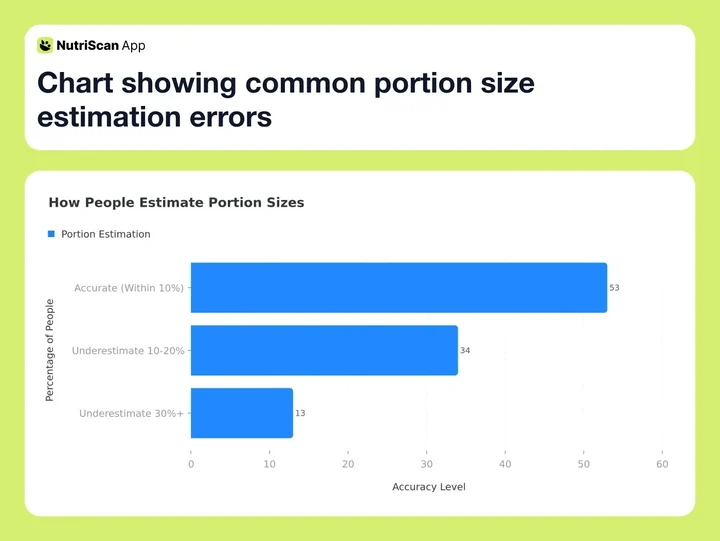 Figure 2: Where portion estimates drift - especially for high-calorie foods
7 Critical Contexts You Are Probably Missing 📋
 That moment when you realize what's been missing from your food log
Through my journey of understanding nutrition tracking, I have identified seven key pieces of information that most people completely ignore:
1. Cooking Method 👨🍳
This is the biggest one. The same food can have wildly different nutrition based on how it is prepared:
- Steamed vegetables vs stir-fried vegetables
- Boiled eggs vs fried eggs (a fried egg has about 90-120 calories depending on oil, while boiled has 78)
- Grilled chicken vs deep fried chicken
- Baked fish vs pan fried fish
2. Oil Level 🛢️
Many of us do not realize how much oil goes into our food. A single tablespoon of oil adds about 120 calories. Most home-cooked Indian dishes use 2-4 tablespoons of oil. Restaurant food often uses even more to enhance taste.
3. Portion Size 🥣
That "small bowl" could be anywhere from 100ml to 400ml depending on whose bowl you are talking about. Without measuring or at least estimating accurately, your tracking is just guesswork.
4. Food Source 🏠
Where your food comes from matters a lot:
- Homemade food: Usually lighter on oil and preservatives
- Restaurant food: Often heavy on butter, cream, and oil for taste
- Street food: Typically deep fried in reused oil
- Packaged food: Contains hidden sugars and sodium
5. Actual Ingredients 🥬
When you write "vegetable curry," which vegetables? Potatoes are much higher in carbs than spinach. Coconut milk curry is very different from tomato-based curry.
6. Time of Eating ⏰
While this does not change the calorie count, it affects how your body processes the food. The same 500-calorie meal eaten at 7 PM vs 11 PM has different metabolic effects.
7. Meal Completeness
Did you finish that entire plate or leave half? Did you have seconds? These details get lost when you log after the fact.
Pro Tip
The NutriScan app lets you select food type, cooking method, and oil level with simple taps. You can choose from options like 🏠 Home Made, 🍫 Packaged Food, 🧑🍳 Restaurant/Cafe, or 📍 Street Food - and adjust oil level from No Oil to High Oil with a slider.
Step-by-Step Guide: How to Track Meals Properly 📝
After years of making mistakes, here is the system I have developed for accurate meal tracking:
Step 1: Capture Before You Eat 📸
The most accurate way to track is to record your meal BEFORE you start eating, not after. When you log after eating, you forget details. You underestimate portions. You skip the small bites you took.
Take a photo of your plate. This gives you a visual reference and helps you remember exactly what was there.
Step 2: Note the Cooking Method 🍳
Before you start eating, ask yourself or whoever cooked: How was this prepared? Was it fried, baked, steamed, or boiled? This single piece of information can change your calorie estimate by 200-400 calories per meal.
Step 3: Estimate Oil and Fat Levels 🫒
Look at your food. Is there visible oil pooling on the plate? Is the food glistening with ghee? Is there butter on your roti?
A simple scale works well:
- No oil visible: Light cooking
- Some shine on food: Medium oil
- Oil pooling or very shiny: High oil content
Step 4: Be Honest About Portions 🤚
Use your fist as a rough guide for portion sizes. One fist equals roughly one cup of rice or vegetables. Compare what is on your plate to this simple reference.
Do not round down. If you ate one and a half rotis, log one and a half - not one.
Step 5: Identify the Food Source 📍
Write down WHERE your food came from. "Lunch from office canteen" gives you more information than just "lunch." Over time, you will learn which sources tend to be heavier on calories.
Step 6: Record Everything - Even Small Bites 🍪
That one samosa from your colleague's desk? That small taste of your kid's ice cream? Those few chips before dinner? They all count, and they are the first things to slip your mind by the time you open the app.
Step 7: Review and Reflect Weekly 📊
At the end of each week, look at your food log. Do you see patterns? Maybe you are eating restaurant food more than you thought. Maybe your "light dinner" is actually not so light.
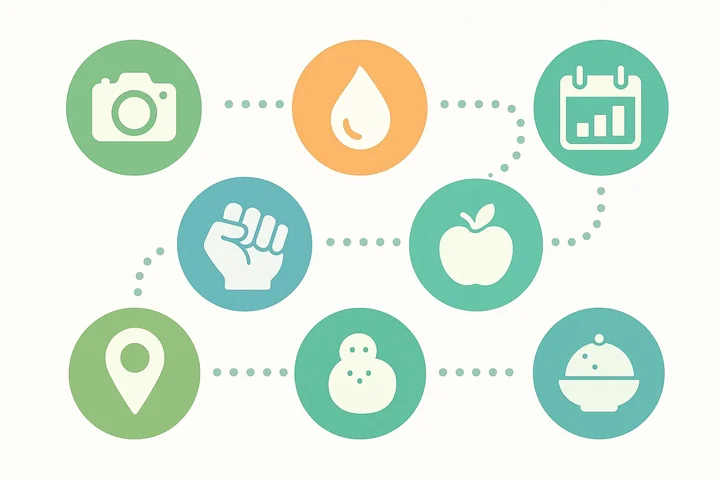 The 7-step system for turning inaccurate food logs into reliable nutrition data
Why Technology Can Help Where Notebooks Fail 📱
I am not saying technology is perfect. But here is what I have learned about why AI-powered food tracking works better than manual logging:
Visual Recognition Captures Context 👁️
When you take a photo of your meal, an AI system can see things you might not think to write down. Is the food swimming in gravy? Is that portion actually quite large? Are there multiple items on the plate?
With NutriScan, for example, you can click a picture of your meal and select the cooking method - was it deep fried, air fried, steamed, boiled, or grilled? You can adjust the oil level from no oil to high oil. This context changes the nutrition calculation significantly.
Forced Accuracy Through Options 🎯
When you have to choose from specific options like "Home Made," "Packaged Food," "Restaurant/Cafe," "Street Food," or "Supplements," you are forced to think about where your food came from. This is context that people rarely write in their notebooks.
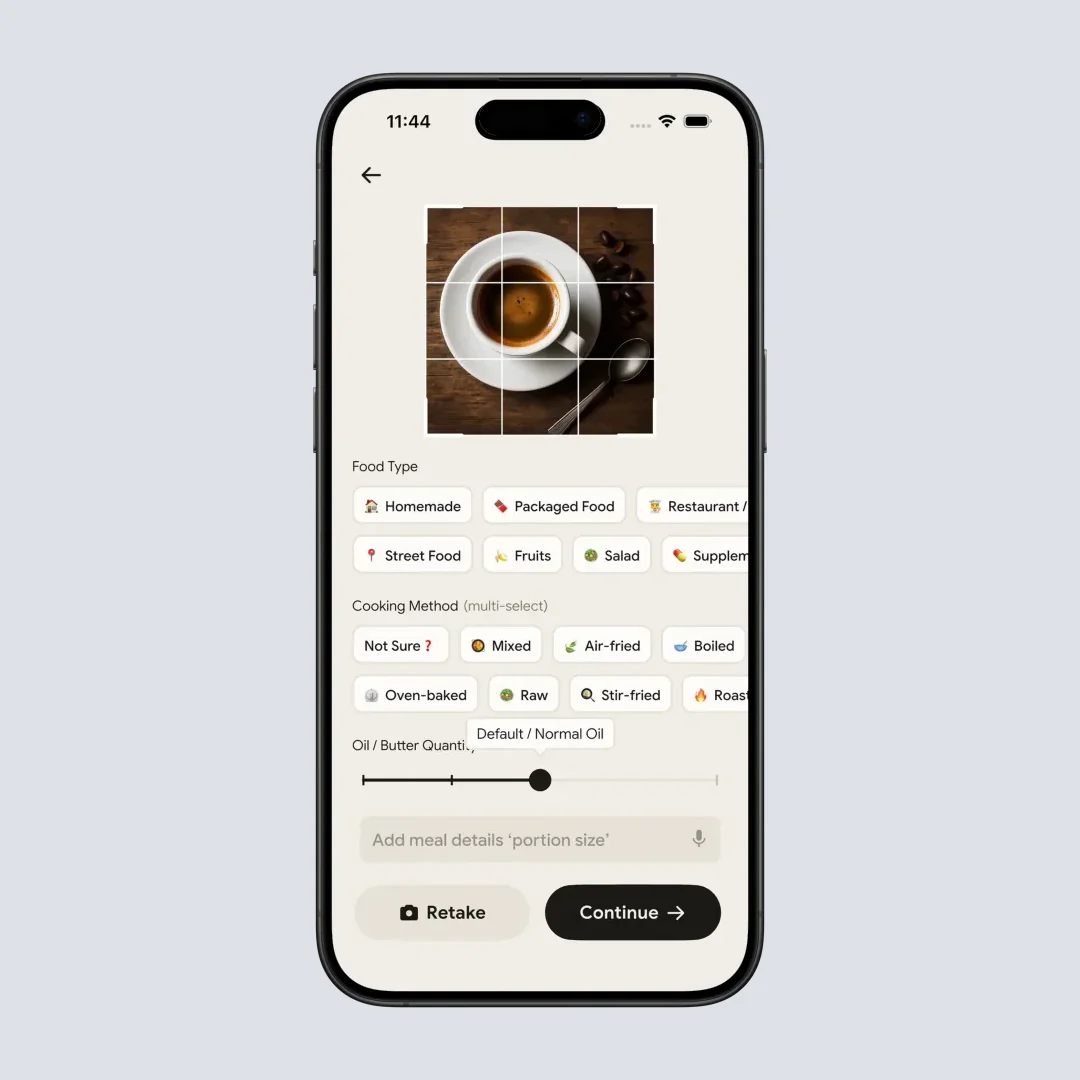
NutriScan's Crop Screen - Select food type from options like Home Made, Restaurant, Street Food, and adjust cooking method and oil level
Historical Pattern Recognition 📈
An app can track your eating patterns over time and help you see insights you would never notice in a notebook. Which days do you tend to overeat? What times do you eat your heaviest meals? What is your average NutriScore across the week?
Learn more about tracking your nutrition patterns with our meal timeline guide.
Related: best app for restaurant meal logging, best app for voice food logging and best app for food photo logging of mixed dishes.
Easy Portion Adjustment ➕➖
In NutriScan, you can tap to adjust portion sizes with plus and minus buttons. You can easily increase or decrease the quantity if your serving was bigger or smaller than standard. Try doing that accurately in a notebook!
Micronutrient Tracking 🧬
Beyond just calories, your body needs specific micronutrients - fiber, potassium, calcium, omega-3, and more. No one is tracking their iron intake in a notes app. But this information can be captured automatically when you scan your meals.
For those managing specific health conditions, accurate tracking is even more critical. Check out our specialized calculators for diabetes or PCOS.
Common Mistakes I See People Making ⚠️
Let me share some patterns I have noticed from talking to hundreds of people about their food tracking habits:
The "Healthy Food Free Pass" 🥗
Many people do not track foods they consider healthy. "It is just a salad, no need to log." But that salad with caesar dressing, croutons, and cheese can easily be 600 calories. Track everything, even the healthy stuff.
The Weekend Amnesia 📅
People track perfectly Monday to Friday, then completely forget about weekends. But those two days of untracked eating can undo a whole week of careful eating. Consistency is key.
The Liquid Blindspot ☕
That morning chai with sugar? That afternoon cold coffee? That evening glass of juice? Liquids have calories too, but they rarely make it into food diaries.
The Cooking Method Assumption 🏠
Assuming all home food is healthy and all restaurant food is unhealthy is too simple. A home-cooked paratha fried in ghee can have more calories than a restaurant grilled sandwich.
The One-Time Measurement 📐
Measuring your food portions once and then estimating forever does not work. Our perception of portion sizes drifts over time. Regular reality checks are important.
The Role of Meal Context in Your Health Journey 🎯
Understanding meal context is not just about calorie counting. It helps you in multiple ways:
Better Digestion Insights 🔍
When you track that your stomach felt upset, you can look back at your detailed food log and identify what might have caused it. Was it the deep fried food? The dairy? The spice level? Without context, you are just guessing.
Pattern Recognition 📊
Maybe you notice that every time you eat street food, your energy crashes two hours later. Or that restaurant meals always leave you feeling bloated. These patterns only emerge with detailed tracking.
Smarter Food Choices 🧠
Once you realize that the restaurant biryani has twice the calories of your home-cooked version, you might choose to eat out less often. Or you might choose grilled options instead of fried when dining out.
Long-Lasting Habits ⭐
When you understand the real impact of your food choices, you can make lasting changes. Not extreme diets, but small adjustments based on real data.
Taking Action: Your Next Steps 🚀
I want you to try something for the next week. Before each meal:
- Take a photo of your food
- Ask yourself: How was this cooked?
- Estimate the oil content - low, medium, or high?
- Note where the food came from
- Be honest about your portion size
At the end of the week, compare this detailed log to what you would have written in a simple notes app. I promise you will be surprised by how much context you were missing.
If you want to make this process easier, try an app that captures this context automatically. NutriScan, for instance, lets you select food type, cooking method, and oil level with simple taps. It even lets you add voice notes if you want to capture additional details. The goal is to make accurate tracking as easy as possible.
Ready to Track Accurately?
Download NutriScan and start capturing the full context of your meals. Select cooking methods, adjust oil levels, and get accurate nutrition data - all in under 30 seconds per meal.
Conclusion 📝
The truth is, tracking meals in a notebook or notes app is better than not tracking at all. But if you are putting in the effort to log your food, you deserve accurate data in return.
The cooking method, oil level, portion size, and food source are not extra details - they are the details that determine whether your tracking is useful or misleading.
I spent months wondering why my food diary was not helping me reach my goals. The answer was simple: I was recording words, not nutrition. I was logging food names, not food context.
Do not make the same mistake I did. Whether you use an app or stick with pen and paper, make sure you are capturing the full picture. Your health journey depends on it.
Frequently Asked Questions ❓
1. How much can cooking method really change the calorie count of food?
The difference can be massive. Deep frying adds fat, and fat contains 9 calories per gram compared to 4 calories for carbs and protein, so a food that soaks up oil while it cooks ends up in a completely different calorie range from the boiled or steamed version of itself. Switching from grilled to fried chicken adds a serious chunk of calories to the same plate. This is why noting the cooking method matters: without it, your calorie estimate describes a dish you did not eat.
2. Why does the food source (restaurant vs home) matter for nutrition tracking?
Restaurant food is typically prepared with more oil, butter, and cream to enhance taste. A restaurant dal is often finished with several tablespoons of ghee where the home version uses a teaspoon of oil, and at roughly 120 calories per tablespoon that gap alone moves the bowl by a few hundred calories. Street food is usually deep fried in reused oil, adding even more hidden calories. Tracking the source helps you understand your actual intake.
3. Is taking photos of meals really better than writing them down?
Yes, for several reasons. First, photos capture visual context that words miss - portion size, visible oil, multiple items on the plate. Second, when you take a photo before eating, you have an accurate record before memory fades, and the dietary assessment literature is clear that the items people omit are small additions and side components. Third, AI-powered apps can analyze photos to identify cooking methods and estimate portions more accurately than self-reporting. While writing is better than nothing, photos provide a much more complete picture.
4. What are the most commonly missed items when people track meals manually?
The most commonly missed items include cooking oils and fats, condiments and sauces, beverages like chai, coffee, and juices, small snacks and bites throughout the day, and additions to food like butter on roti or cream in coffee. Principles of Nutritional Assessment cites Guthrie's early work, which found that salad dressings were forgotten by one in six respondents. These "invisible" calories never make it into your food diary.
5. How can I track meals accurately without spending too much time on it?
The key is using systems that capture context quickly. First, take a photo of every meal - it takes 2 seconds and captures visual context automatically. Second, use an app that lets you select cooking method and oil level with simple taps rather than typing everything. Third, track in real time, not hours later when you have forgotten details. Fourth, use voice input to add quick notes about your meal. With the right tools, accurate tracking can take less than 30 seconds per meal, which is often faster than typing detailed descriptions in a notes app.