Why Most People Quit Their Diet in Month One (And How to Stay)
 ChatGPT
  Claude
  AI Mode
  Perplexity
Have you ever started a diet on Monday, felt super motivated, and then by Friday you're eating pizza at 11 PM thinking "I'll start again next week"? 🍕
TL;DR - Why Diets Fail and How to Succeed
The problem: Most people abandon a diet long before it works. Willpower is rarely the reason. The plan just doesn't fit the life it has to live in
Hidden reasons: Food culture conflicts, all-or-nothing thinking, one-size-fits-all plans, missing lifestyle connection, no tracking system
The solution: Match your diet to your real eating patterns ➡️ Start with small changes ➡️ Allow flexibility ➡️ Track without hassle
Key insight: When diet matches lifestyle, sticking to it becomes natural instead of a struggle
Action step: Document your eating habits for 7 days before changing anything
If yes, you're not alone. I've been there too. Many times actually.
Here's the thing that nobody talks about - the problem isn't you. The problem is the diet itself. When your diet plan doesn't match your real eating patterns and lifestyle, failure becomes almost guaranteed.
Let me explain why this happens and what you can do about it.
The Scary Truth About Diet Failure 😱
Quitting is the norm, and it starts early. In a 12-month follow-up of 250 adults in a community weight management program, 18.8% had dropped out by month three and 53.6% by month twelve.
The pattern repeats elsewhere. Among 178 people tracked after a residential obesity program, 21.3% quit within two months, 44.4% within six months, and 68.5% within a year.
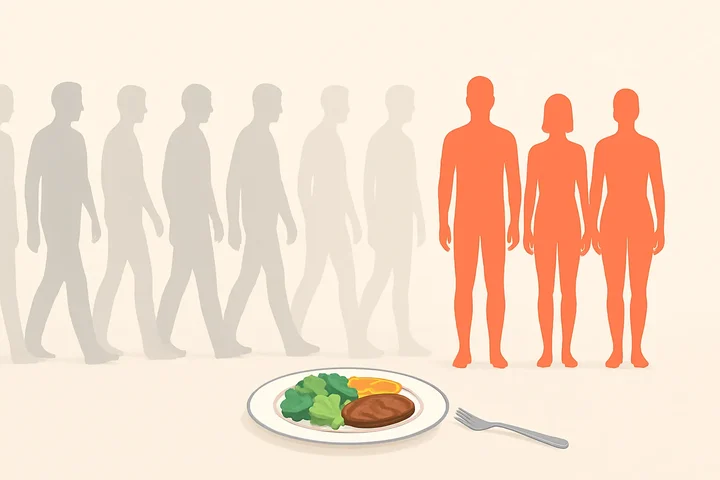 The harsh reality: Most diets fail within the first month
Staying stopped is harder than starting. People lose weight, feel happy, then slowly gain it back, sometimes ending up heavier than when they began.
A 2018 review by Kevin Hall and Scott Kahan in Medical Clinics of North America puts numbers on it, citing a meta-analysis of 29 long-term studies: more than half the lost weight was regained within two years, and by five years more than 80% of it was back.
 That feeling when another diet plan fails - we've all been there
Why does this happen? Because most diet plans are created in a laboratory or by someone who doesn't know you, your culture, your daily schedule, or your food preferences. They give you a generic plan and expect you to follow it like a robot.
That's not how real life works, right?
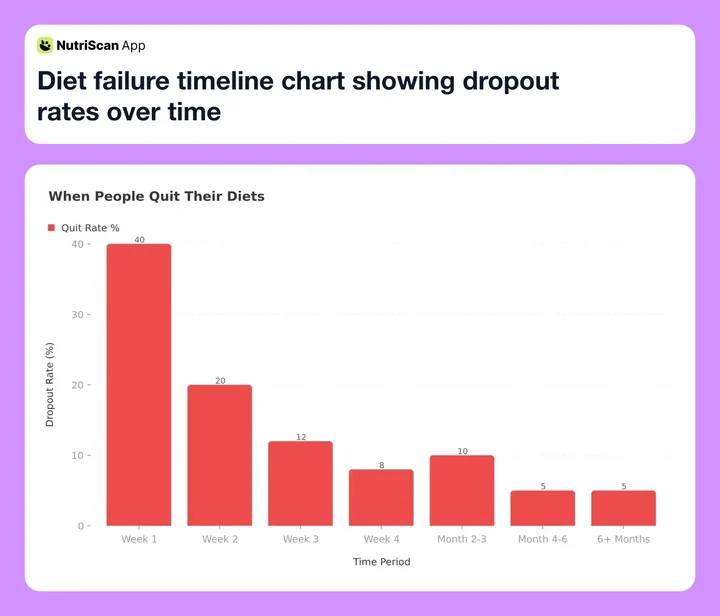 Figure 1: When people quit their diets - the steepest drop happens in week one
Real-World Examples: Stories We All Know 📖
Example 1: The Working Professional
Take a common office schedule: work starts at 9 AM and often runs to 8 PM. The diet plan says "eat dinner at 7 PM" and "prepare fresh salads for lunch."
Here's the reality that plan collides with. You reach home at 9 PM, tired, with no energy to cook. The office canteen serves rice and sambar, not salads. The packaged salad from the shop nearby doesn't taste good. By day 5, the plan is dead.
That diet didn't fail because anyone was lazy. It failed because it was written for someone who works 9-to-5 and has time to cook.
What Works Instead
Track your actual eating patterns first and the room to move shows up inside the schedule you already have. Brown rice instead of white rice at the canteen. Healthy snacks kept in a desk drawer. Small changes that work with the day instead of against it.
Example 2: The Family Person
Now picture a joint family household. The diet plan bans rice and roti completely. But one kitchen cooks for everyone, and asking for separate meals creates tension at the table.
To a parent who cooks for the whole house, refusing the food reads as refusing them. That stress costs more than a couple of kilos ever did. By week 2, most people in that spot are eating with everyone else again.
The fix isn't quitting the diet. It's finding one that survives a shared table: smaller portions of roti, more vegetables on the plate, dal instead of heavy gravies. Same family meal, smarter choices.
Example 3: The Traveler
Consider a sales job with 3 to 4 travel days every week. The diet plan requires meal prep on Sundays and eating those meals through the week.
How do you carry meal-prepped food to a different city every other day? Hotel food becomes the only option, and the diet goes out the window.
That job needs a diet that travels: knowing what to order at any restaurant, grilled items instead of fried, vegetables on the side, smaller portions of rice or bread. NutriScan can check the nutrition of a restaurant meal before you order it.

Why Your Diet Plan Keeps Failing: The 5 Hidden Reasons 🔍
Reason 1: Your Diet Ignores Your Food Culture
A 2025 review in Progress in Cardiovascular Diseases describes how cultural traditions, rituals, and shared beliefs shape what people actually eat, day after day. If your diet plan asks a South Indian to suddenly stop eating rice, or tells a Punjabi to avoid roti, it's setting them up for failure.
Food is not just nutrition. Food is emotion. Food is tradition. Food is celebration. Food is love from your mother's kitchen.
When your diet fights against your food culture, your food culture wins every time. And it should! Your food traditions have been perfected over generations. The problem isn't the food itself - it's the portion sizes and cooking methods.
Traditional Indian thali was actually well-balanced - small portions of many items including vegetables, lentils, fermented foods, and grains. Modern problems came from larger portions and more oil.
Reason 2: The "All or Nothing" Trap
Ban a food outright and the main thing you achieve is thinking about it more.
Think about it. When you tell yourself "no sweets for 30 days," what happens? You think about sweets constantly. Then one day you eat one gulab jamun, feel guilty, and think "I've already failed, might as well finish the whole box."
This is called the eat-repent-repeat cycle. And it's the death of most diets.
The human brain doesn't like being told "no." It wants what it can't have. Smart diets allow flexibility instead of creating forbidden lists.
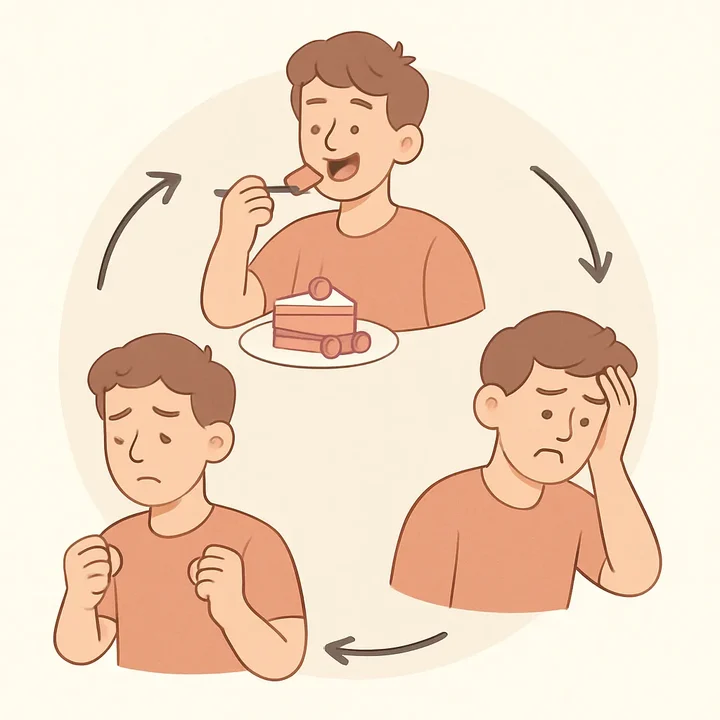 The vicious cycle that kills most diets
Reason 3: One-Size-Fits-All Approach
A 2024 randomized trial in Nature Medicine compared a personalized dietary program against standard US government dietary advice.
The trial randomized 347 US adults aged 41 to 70 and ran for 18 weeks. Both groups improved. The personalized group cut triglycerides significantly more than the control group and did better on secondary measures including body weight and waist circumference, while LDL cholesterol showed no significant difference between the two.
Why does personalization work? Because personalized plans consider your biology, your lifestyle, your barriers, and your preferences. Generic plans consider none of these.
Your body is unique. Your life is unique. Your genetics are unique. Why should your diet be the same as everyone else's?
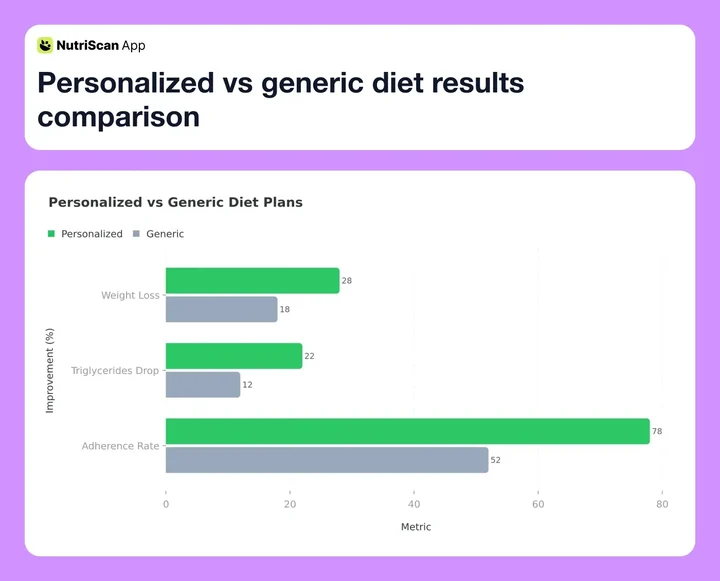 Figure 2: Personalized nutrition outperforms generic advice in every metric
Reason 4: Missing the Lifestyle Connection
Changing what you eat without changing how you live is like rowing a boat with one oar. You just go in circles.
Your diet needs to fit your:
- Work schedule (when you wake up, when you sleep, when you can eat)
- Sleep patterns (poor sleep increases hunger hormones)
- Stress levels (stress eating is real and needs addressing)
- Activity level (athletes need different nutrition than office workers)
- Social commitments (you can't skip every party and dinner invitation)
- Family situation (single person diet is different from family diet)
- Budget (healthy eating shouldn't be expensive)
- Cooking skills (some people can cook, some can't)
If your diet doesn't consider all of these, it's incomplete.
Reason 5: No System for Tracking What Went Wrong
Here's something interesting. When most people fail at their diet, they blame themselves. "I have no willpower," they say. "I'm just not disciplined enough."
But the truth is different. Maybe you felt low energy because you skipped breakfast. Maybe you overate at dinner because you were stressed at work. Maybe you chose the wrong food at the restaurant because you didn't know what was in it. Maybe your afternoon snack was sabotaging your entire day.
Without tracking and understanding these patterns, you keep making the same mistakes again and again. You're fighting with eyes closed.
The Willpower Myth
Willpower is the thing you have least of at 10 PM, after a day of decisions and a commute home. A plan that needs a lot of it at exactly that hour has a design problem, not a character problem. Build the system instead.
7 Tips That Actually Work 💪
 This could be you when your diet finally sticks!
Now let me share what I've learned works for keeping a diet going long term. These aren't fancy tricks - they're practical strategies that real people use.
Tip 1: Start With What You Already Eat 🍲
Don't change everything at once. First, understand your current eating patterns. What do you eat? When do you eat? Where do you eat? Why do you eat?
Once you know your patterns, make small changes. Replace one unhealthy item with a healthier option. Then another. Then another. Changes this size are the ones you can still be doing in month three.
With NutriScan App, you can take pictures of your meals and see exactly what nutrition you're getting. No guessing, no manual logging. Just click and know. You'll be surprised how much you learn about your own eating habits.
Tip 2: Make Your Diet Match Your Schedule 📅
If you work late, plan for a late dinner. If you travel often, choose foods that are available everywhere. If your family eats together, find healthier versions of family recipes.
Your diet should bend to your life, not the other way around. Fighting against your schedule creates stress, and stress leads to diet failure.
NutriScan's diet plan feature asks about your eating schedule during setup. You can choose from breakfast, mid-morning snack, lunch, afternoon snack, dinner, and bedtime options. The plan is built around YOUR timing.
Tip 3: Allow Flexibility in Your Plan 🎯
Aim for 80% healthy, 20% flexible. Don't aim for perfection, that's a recipe for failure. In a 2012 trial published in Steroids, 193 adults ate the same daily calories for 32 weeks; the group whose breakfast included a small sweet reported less hunger and fewer cravings, and kept losing weight in the second half of the study while the low-carb-breakfast group regained.
That gulab jamun at a party? Have it. Just don't have five. That birthday cake? Take a small slice and enjoy it fully.
The goal is progress, not perfection. One bad meal doesn't ruin your diet. One bad week doesn't ruin your diet. What ruins your diet is giving up completely.
Tip 4: Track Your Food Without the Hassle 📸
Manual food logging is boring and time-consuming. Writing down every ingredient and looking up calories takes 5-10 minutes per meal. That's 15-30 minutes daily just for tracking.
That's why most people stop doing it after a few days. Too much effort.
Use technology to make it easy. NutriScan lets you take a photo of your meal, and AI tells you the calories, protein, carbs, fat, fiber, and all micronutrients. Takes 5 seconds instead of 5 minutes.
The app even tells you your NutriScore - how healthy that meal is overall. Dark green means excellent, red means needs improvement. Simple visual feedback.
Tip 5: Understand Your "Why" Behind Eating 🧠
Are you eating because you're hungry? Or bored? Or stressed? Or happy? Or sad?
Emotional eating is real and very common. Many people eat not because they need food but because they need comfort.
Understanding your emotional connection with food is half the battle won. Once you know your triggers, you can find alternatives. Stressed? Maybe a 5-minute walk helps more than a snack. Bored? Maybe call a friend instead of opening the fridge.
Tip 6: Get Diet Plans Based on Your Goals 🎯
Weight loss diet is different from muscle gain diet. Diabetes management diet is different from pregnancy diet. PCOS diet has different requirements than viral recovery diet.
Make sure your diet plan is made for YOUR specific goal, not a general wellness plan. Generic plans give generic results.
NutriScan App creates personalized diet plans based on:
- Your health goal (weight loss, muscle gain, diabetes, pregnancy, PCOS, or viral recovery)
- Your food preferences (veg, non-veg, vegan, eggitarian)
- Your location
- Your lifestyle
- Your eating schedule
Tip 7: Look for Patterns, Not Just Numbers 📊
Don't just track what you eat. Look for patterns.
Feeling bloated often? Check what you ate before bloating started. Maybe dairy doesn't agree with you. Maybe eating too fast is the problem.
Low energy in afternoon? Maybe your lunch is too heavy on carbs. Or maybe you're not drinking enough water.
Got food poisoning? NutriScan can check your past meals and find what was different.
This pattern detection is what separates successful diet followers from those who keep failing. It's like having a detective for your health.
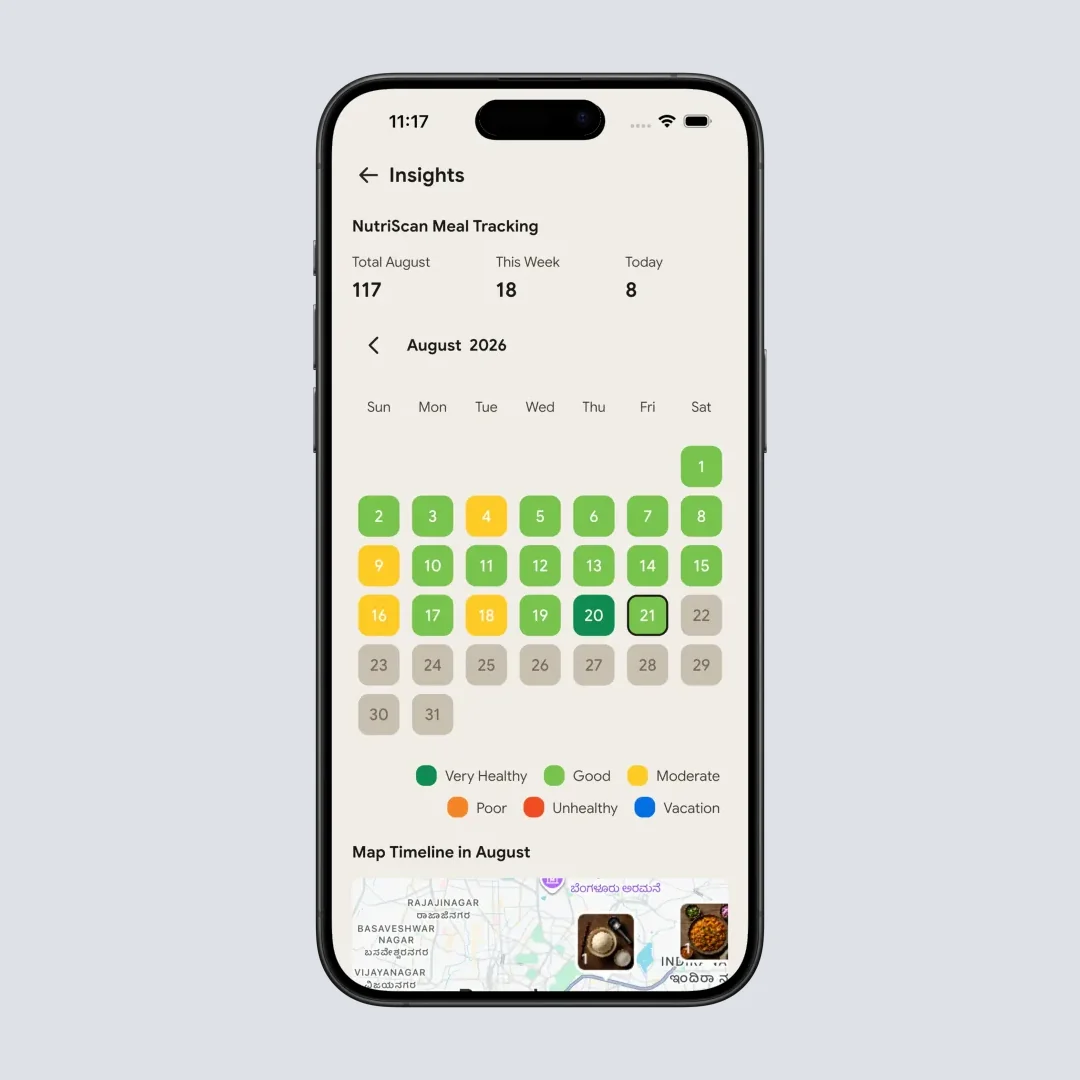
NutriScan's Insights Calendar: See your eating patterns at a glance with color-coded NutriScore days (Home > Insights)
A Step-by-Step Guide to Making Your Diet Work 📋
Let me give you a simple 5-step process to create a diet that actually works for your lifestyle. This isn't complicated - anyone can do this.
Step 1: Document Your Current Eating Habits (Days 1-7)
Before changing anything, spend one week tracking everything you eat. Use NutriScan to click pictures of every meal - breakfast, lunch, dinner, snacks, drinks, everything.
Don't judge, don't change, just observe. Eat normally. The goal is to understand your baseline.
At the end of the week, you'll have data on:
- What you typically eat
- When you typically eat
- Where you eat (home, office, restaurant, street food)
- How different meals affect your energy
- Your average daily calories and macros
- Your NutriScore patterns
This information is gold. Most people have never really looked at their eating patterns objectively.
Step 2: Identify Your Lifestyle Constraints (Day 8)
Make a list of your non-negotiables. Be honest with yourself.
- Work schedule that can't change
- Family meal times you can't skip
- Social events that are important
- Foods you really cannot give up (be honest here)
- Time available for meal preparation
- Budget for food
- Access to certain types of food
Your diet must work around these, not against them. Fighting against your constraints leads to stress, and stress leads to failure.
Step 3: Set Realistic Goals Based on Your Situation (Day 9-10)
Based on your current habits and lifestyle constraints, set goals that make sense.
If you currently eat 3000 calories daily, don't aim for 1200. That's setting yourself up for failure. Aim for 2500 first. Let your body adjust. Then reduce to 2200. Then 2000.
If you can't cook daily, don't choose a diet that requires fresh meals every time. Look for healthy options that can be ordered or bought ready-made.
If you can't give up rice completely, don't try to. Choose smaller portions and better accompaniments.
Realistic goals lead to real results.
Step 4: Create Your Personalized Plan (Day 11-14)
Using NutriScan's Diet Plan feature, fill in your details:
- Your physical profile (height, weight, age, gender)
- Your health goal (weight loss, muscle gain, diabetes, etc.)
- Your food preferences and restrictions
- Your eating schedule (which meals you eat and when)
- Your activity level
- What's available in your kitchen
The app creates a 28-day diet plan that fits YOUR life, not someone else's. Each meal time has 2 food options so you're not stuck with one choice.
You get:
- Daily targets for macros and micronutrients
- Recipes with portion sizes
- Benefits of each meal
- Things to avoid
- Weekly grocery list
Step 5: Track, Learn, and Adjust (Ongoing)
Every week, check your progress:
- Are you losing or gaining weight as planned?
- How is your energy level?
- Are you able to follow the plan without too much struggle?
- Which meals work well and which are hard to follow?
Use NutriScan's insights feature to see your NutriScore colors on a calendar - dark green, green, yellow, orange, and red show how well you're eating each day. You can see patterns over weeks and months.
If something isn't working, adjust. Diet is not about strict rules - it's about continuous improvement. The best diet is the one you can actually follow.
The Simple Habit That Separates Successful Dieters ✨
The National Weight Control Registry has been tracking people who lost a lot of weight and kept it off since 1994, and one habit keeps showing up.
The habit? Consistent self-monitoring.
Three out of four registry members weigh themselves at least once a week. Beyond the registry, a systematic review of 22 weight-loss studies found self-monitoring consistently associated with weight loss, though its authors flag the evidence as weak because most of those studies relied on self-reported records.
But here's the key - it doesn't have to be complicated or time-consuming. The successful maintainers found systems that worked for their lifestyle. Some used apps. Some used journals. Some used mental notes. The method didn't matter. The consistency did.
Here's why it works:
Awareness - You can't fix what you don't measure. Tracking makes you aware of patterns you'd otherwise miss.
Accountability - Even if no one else sees your log, knowing you'll record something makes you think twice before eating.
Pattern Recognition - After a few weeks, you start seeing what works and what doesn't. You become your own nutrition expert.
Early Course Correction - If you notice weight creeping up, you can adjust immediately instead of waiting until you've gained 10 kg.
To join the registry you have to have lost at least 30 pounds (about 14 kg) and kept it off for a year or longer. It now tracks over 10,000 people. Here is what the registry reports about its members:
| Habit | Percentage Who Did It |
|---|---|
| Modified their food intake in some way to lose the weight | 98% |
| Exercise about an hour a day | 90% |
| Eat breakfast every day | 78% |
| Weigh themselves at least once a week | 75% |
| Watch less than 10 hours of TV per week | 62% |
Notice what's absent: no single named diet and no banned-food list. Ordinary habits, done regularly.
The 5-Second Tracking Method
With NutriScan, tracking takes 5 seconds. Take a photo ➡️ AI identifies food ➡️ Select cooking method ➡️ Done. That's it. No typing ingredients, no searching databases, no guessing portions. If the biggest barrier to tracking is time, remove the time barrier.
What Research Tells Us About Successful Weight Maintainers 📊
A 2015 PLOS ONE study interviewed 28 women from a rural weight gain prevention trial. The ones who kept the new habits going had realistic expectations and worked from small, achievable goals. The ones who relapsed had signed up expecting large weight loss and ended up disappointed with their progress.
The lesson? Success comes from lasting changes, not extreme restrictions.
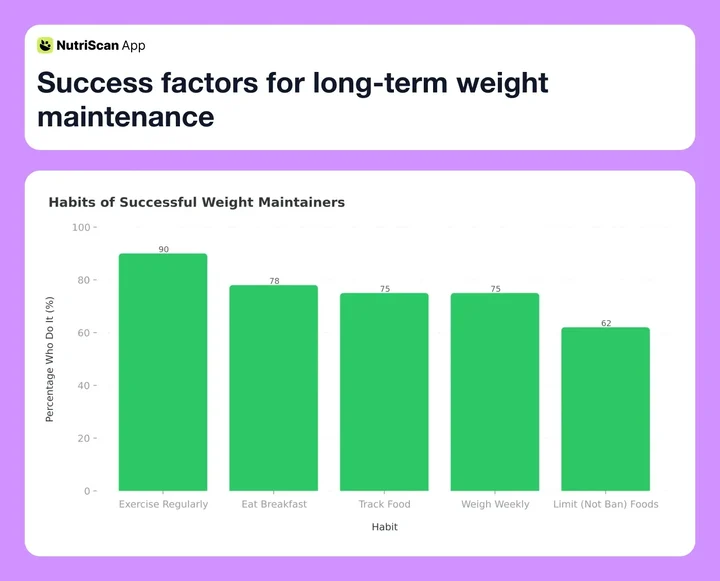 Figure 3: The habits that actually predict long-term diet success
Understanding Your NutriScore: A Quick Guide 🎨
When you track meals with NutriScan, each meal gets a NutriScore color:
| Color | Meaning | Action |
|---|---|---|
| 🟢 Dark Green | Excellent choice | Keep it up! |
| 🟢 Green | Good choice | This works |
| 🟡 Yellow | Average choice | Room for improvement |
| 🟠 Orange | Could be better | Try healthier choices |
| 🔴 Red | Not the best | Don't make this a habit |
Your daily NutriScore is calculated by looking at all your meals together. The app uses a formula that considers both what you eat and how much you eat.
The goal isn't to have dark green every single meal. That's not realistic. The goal is to have more greens than reds over time. Consistency beats perfection.
How NutriScan Makes Diet Matching Easy 📱
Let me explain how NutriScan App is built specifically to solve the diet-lifestyle matching problem.
1. Click and Track, Not Type and Track
Just take a picture of your meal. AI identifies everything on your plate - whether it's home made food, restaurant food, street food, packaged food, supplements, or hotel buffet items. Select the food type and cooking method, and you're done.
2. Understands Cooking Methods
Deep-fried samosa has different nutrition than air-fried one. Steamed vegetables are different from stir-fried. NutriScan lets you select cooking method - deep-fried, air-fried, stir-fried, oven-baked, roasted, steamed, boiled, grilled, or raw. You can even adjust oil levels.
3. Regional Food Recognition
Made for local and regional food from around the world. Whether it's dal chawal, biryani, dosa, pad thai, tacos, sushi, pizza, or burgers - NutriScan recognizes them all.
4. Goal-Based Diet Plans
Tell the app your goal - weight loss, muscle gain, diabetes management, PCOS, pregnancy, or viral recovery. Get a diet plan designed specifically for that goal based on behavior science and nutrition research.
5. NutriBites: Ask Questions About Your Eating
Talk with your meal timeline. Ask questions like "What did I eat last week?" or "Why am I feeling low on energy?" or "Show me my highest protein meals." Get insights based on your actual eating data.
6. Pattern Detection
The app shows you patterns in your eating. Calendar view with NutriScore colors helps you see which days were good and which were not. Monthly, weekly, and daily views available.
7. Copy and Repeat Meals
Eat the same breakfast every day? Just copy the meal from yesterday. Set meals to repeat on specific days automatically. No need to scan the same meal again and again.
FAQ: Common Questions About Diet Failure ❓
Q1: Why do I always feel hungry on a diet?
A: Many diets cut calories too drastically too fast. When you suddenly eat much less than what your body is used to, your hunger hormones go crazy. In the Hall and Kahan review, calorie expenditure falls by roughly 20 to 30 kcal a day for every kilogram lost, while appetite climbs by about 100 kcal a day per kilogram lost. Your body thinks food is scarce and tries to make you eat more. The solution is gradual reduction, not sudden extreme cuts. Aim to reduce 300-500 calories per day, not 1000.
Q2: Is it okay to cheat on my diet sometimes?
A: Yes. The key word is "small." One slice of cake at a birthday party is fine. Eating the whole cake because "I've already cheated" is not. Think progress, not perfection. In a 2012 trial in Steroids, 193 adults on identical calorie targets did better over 32 weeks when breakfast included a small sweet: fewer reported cravings, and continued weight loss in the second half of the study while the strict low-carb-breakfast group regained.
Q3: Why do I gain back more weight after quitting a diet?
A: This is called the rebound effect. When you restrict calories severely, your metabolism slows down to conserve energy. When you go back to eating normally, your body stores more fat because it thinks food is scarce and another "famine" might come. In the meta-analysis of 29 long-term studies cited by Hall and Kahan, more than 80% of lost weight was back by year five. The solution is long-term lifestyle change, not temporary crash dieting.
Q4: How important is tracking my food?
A: Very important. Three quarters of National Weight Control Registry members weigh themselves at least once a week, and a systematic review of 22 studies found self-monitoring consistently associated with weight loss. People who track their food are more aware of what they eat and make better choices. But tracking should be easy, not a chore. That's why NutriScan uses photo-based tracking - it takes seconds instead of minutes. You can even add voice notes to describe your meal.
Q5: Can I follow a diet plan while eating with family?
A: Yes, you can! Your diet plan should include foods that can be shared with family. NutriScan creates diet plans based on your food preferences, eating schedule, and what's available in your kitchen. You don't have to eat separately. You just need to make smarter choices from what's available - more vegetables, less oil, smaller portions of heavy foods, more protein. Your family might even join you in eating healthier!
What to Do Next 💡
People quit diets in large numbers, and early, and not because they're weak or lazy. They quit because the plan was never made for their real life. 💪
The future of nutrition is personalized. In that Nature Medicine trial, the personalized program beat generic government advice on triglycerides and on secondary measures including body weight. One-size-fits-all is ending.
Your diet should consider:
- Your food culture and preferences
- Your work schedule and lifestyle
- Your health goals
- Your family situation
- Your activity level
- Your current eating patterns
- Your cooking abilities and time
- Your budget
When diet matches lifestyle, sticking to it becomes natural instead of a struggle. You don't need willpower when your diet fits your life.
Start by understanding what you really eat. Use technology to make tracking easy. Get a plan made for YOUR life. And remember - it's not about being perfect. It's about being better than yesterday.
Ready to try a diet that actually fits your life? Download NutriScan App and start with a 7-day free trial of the Premium Plan. Click a picture of your next meal and see what you're really eating.
Your healthier self is waiting. 🌟