High Protein Snacks: 15 Easy Ideas With 10 to 20g Protein
 ChatGPT
  Claude
  AI Mode
  Perplexity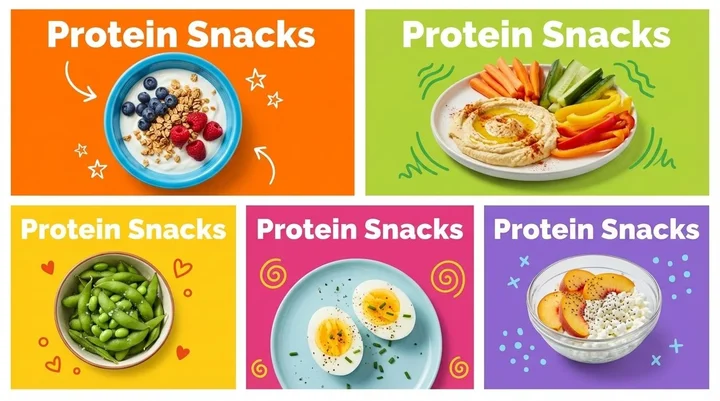
High protein snacks are anything that gives you roughly 10 to 20 grams of protein in a portion you can eat standing at the fridge. Greek yogurt, two hard boiled eggs, cottage cheese, edamame, a can of tuna, roasted chana, paneer. Those seven cover almost everything I eat between meals, they take under two minutes, and most of them cost less than a coffee. If you want 20 grams in one go, a full cup of Greek yogurt or a drained can of tuna gets there on its own. I switched off chips and cookies three years ago after my doctor pointed at my protein intake, and the 3 PM crash stopped inside a week.
TL;DR - High Protein Snacks
- The rule: 10 to 20g of protein per snack, spread across the day, prepped ahead
- Top picks: Greek yogurt, hard boiled eggs, cottage cheese, edamame, nuts, paneer
- For 20g in one go: a full cup of Greek yogurt, or a drained can of tuna
- Cheapest per gram: eggs, lentils, chickpeas, canned tuna, homemade paneer
- Pro tip: photograph any snack in NutriScan to read its protein instead of guessing
Protein snacking is not a passing fitness trend. Cargill's 2025 Protein Profile report puts 61% of Americans at a higher protein intake in 2024, up from 48% in 2019, and Fortune Business Insights values the global protein snacks market near $50 billion in 2024, headed past $100 billion by 2032.
Why I Started Choosing Protein Over Empty Calories
Three years ago I skipped breakfast, survived on coffee, and wondered why I felt tired. My doctor said I wasn't eating enough protein, especially between meals.
What protein does:
- Keeps you full longer - it digests slower than carbs, so you stay satisfied for hours
- Supports muscle health - at 25 or at 65, muscle needs protein to stay strong
- Steadies your energy - no sugar high, no crash after it
- Helps with focus - your brain runs better fueled
 That feeling when you finally crack the code to smart snacking
Research from Harvard Health shows that the minimum protein recommendation is 0.8 grams per kilogram of body weight. But many experts now suggest 1.2 to 1.6 grams per kilogram is better, especially for older adults and active people.
For a 70 kg person (about 154 pounds) that is 56 grams daily at the minimum and 84 to 112 grams at the better target. Snacks are how you reach those numbers without stuffing yourself at meals.
Three Situations and the Snack That Fixes Them
These are worked examples built from the patterns above, not individual users.
Someone working from home with two kids under five, eating whatever is left on the plates: Greek yogurt cups and boiled eggs already in the fridge remove the decision at 3 PM, which is when the afternoon headache usually starts.
Someone buying a chocolate bar from the office vending machine every day: swapping that for a protein bar or a handful of nuts holds you to dinner instead of setting up another crash an hour later, and it drops the sugar without adding a single step to the day.
Someone playing weekend tennis and seeing no strength gain: eat a protein snack within two hours of playing. Mass General Brigham nutrition experts put that post-workout number at 15 to 25 grams.
The Science Behind Protein Snacking
Four facts that changed how I snack:
Fact 1: Your body can only use so much protein at once
Spreading protein across the day beats loading it at dinner. Mayo Clinic Health System recommends 15 to 30 grams per meal or snack. Past 40 grams in one sitting there is no extra muscle-building benefit.
Fact 2: Not all protein snacks are equal
A 2024 study found three-quarters of people surveyed had eaten some form of high-protein processed food. NPR reported that some snack products advertising protein carry up to triple the sugar compared to protein.
Fact 3: Plant protein is growing fast
Plant-based protein snacks are expected to hold about 62.6% of the market in 2025, and more than 42% of consumers worldwide now call themselves flexitarian, eating mostly plants with some animal products.
Fact 4: Protein affects your hunger hormones
Protein suppresses ghrelin, the hunger hormone, and boosts GLP-1 and leptin, which reduce appetite. That is why a handful of nuts holds you longer than a handful of crackers.
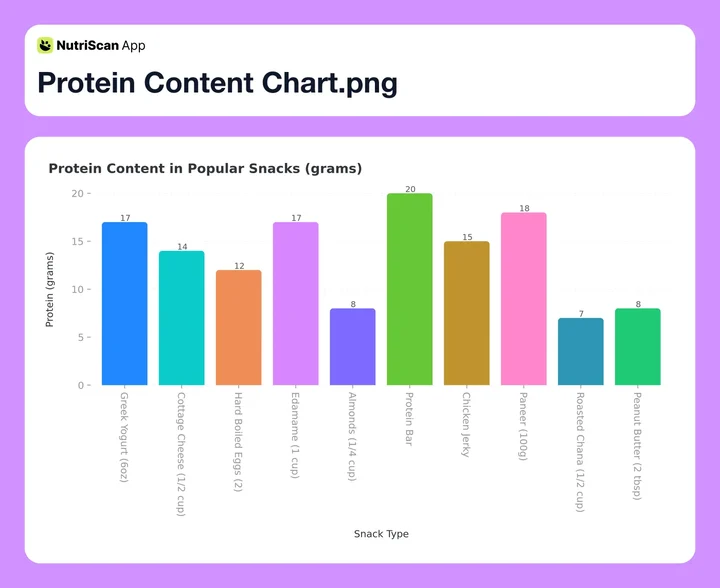 Figure 1: Protein content comparison across popular snack options - protein bars and paneer lead the pack
My Top 15 High Protein Snack Ideas
These are the ones I keep coming back to:
Easy Protein Snacks You Can Grab in Under 2 Minutes
Greek Yogurt with Seeds - 14 to 20 grams in 6 ounces. Pumpkin seeds on top for crunch.
Hard Boiled Eggs - 6 grams each. I boil a batch on Sunday. Two with salt is my morning snack.
Cottage Cheese with Fruit - about 14 grams in half a cup. Berries or sliced peaches for sweetness.
Edamame - about 17 grams per cup, shelled. Buy frozen, microwave 3 minutes.
String Cheese - about 7 grams a stick. Pair with an apple.
Make Ahead Options (10-15 Minutes Prep)
Protein Energy Balls - oats, nut butter, honey, protein powder, rolled and chilled. 5 to 8 grams each.
Roasted Chickpeas - drain, season, bake until crunchy. About 7 grams per half cup, plus fiber.
Homemade Trail Mix - almonds (6 grams a handful), walnuts, pumpkin seeds, a few dark chocolate chips. Portion into small bags.
Turkey Roll-Ups - cream cheese on turkey slices with cucumber strips. Three rolls, about 15 grams.
Hummus with Vegetables - about 3 grams in two tablespoons. Bell peppers, carrots, cucumber for fiber.
Store-Bought Options Worth Trying
Protein Bars - Look for bars with at least 15 grams of protein and less than 10 grams of sugar. Read labels carefully as some bars are just candy in disguise. I went through the label math in detail in are protein bars good for weight loss.
Jerky - 9 to 15 grams per serving for beef, turkey, or chicken. Pick brands with short ingredient lists.
Protein Drinks - some ready-to-drink bottles carry 30 grams with low sugar.
Roasted Nuts - about 8 grams in a quarter cup of almonds. Skip the heavily salted versions.
Protein Yogurt Cups - 15 to 20 grams per cup on the high-protein lines.
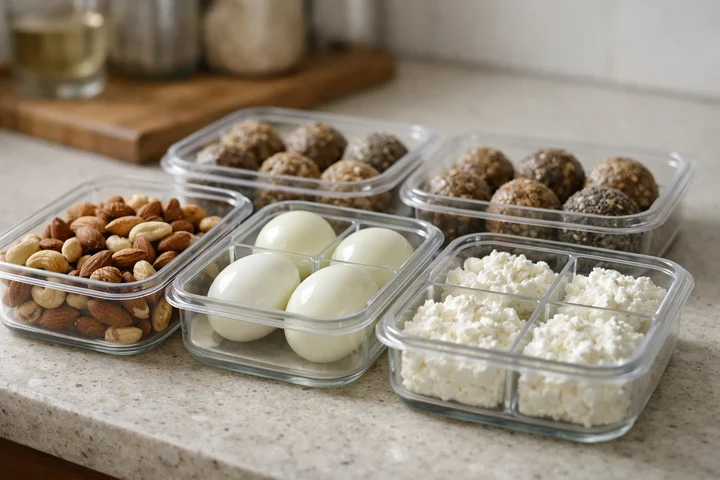 Sunday meal prep is the secret to consistent protein snacking throughout the week
20g Protein Snacks You Can Hit in One Go
Twenty grams is the number people search for, and it is about a small meal's worth of protein in snack form. These reach it without a shaker bottle:
- One cup of Greek yogurt - about 20g on its own, nothing added
- One drained can of tuna in water - about 20g, eat it with a fork and black pepper
- One cup of cottage cheese - about 28g, the highest number on this page
- Three hard boiled eggs - about 18g, add a string cheese and you are at 25g
- One cup of edamame plus a string cheese - 17g plus 7g, about 24g
- 100g of grilled paneer - about 18g, closer to 25g with a small bowl of curd
- A ready-to-drink protein shake - 20 to 30g depending on the brand
For the fewest calories per 20 grams, canned tuna and cottage cheese win by a wide margin. Both land near 100 to 120 calories for that protein. A protein bar with the same 20 grams usually costs you 200 calories or more.
I keep to one 20 gram snack a day and let the rest sit at 10 to 15 grams, which is the same reason the Mayo Clinic Health System number above tops out at 30 grams per sitting.
How Much Protein Is in Cheese?
Cheese turns up more than any other food on this page, so it earns its own numbers. Protein in cheese runs from about 6 grams per 100 grams in cream cheese to about 35 in parmesan. The hard aged cheeses win because the water has been pressed out of them.
| Cheese | Protein per 1 oz (28g) | Protein per 100g |
|---|---|---|
| Parmesan | 10g | 35g |
| Swiss | 8g | 27g |
| Cheddar | 7g | 25g |
| Mozzarella (part skim) | 7g | 24g |
| String cheese (1 stick) | 7g | 24g |
| Paneer | 5g | 18g |
| Feta | 4g | 14g |
| Cottage cheese (2% milkfat) | 3g | 11g |
| Ricotta (part skim) | 3g | 11g |
| Cream cheese | 2g | 6g |
Numbers are rounded from USDA FoodData Central and shift a little by brand.
Portion changes the ranking once you eat a real serving. Parmesan is the densest cheese here, but you eat it a tablespoon at a time, so a serving lands near 2 grams. Cottage cheese is near the bottom per 100 grams, and you eat a whole cup of it, which is how half a cup still gives you 14 grams. Read the portion, not the percentage.
Indian High Protein Snacks
Desi options that carry real protein:
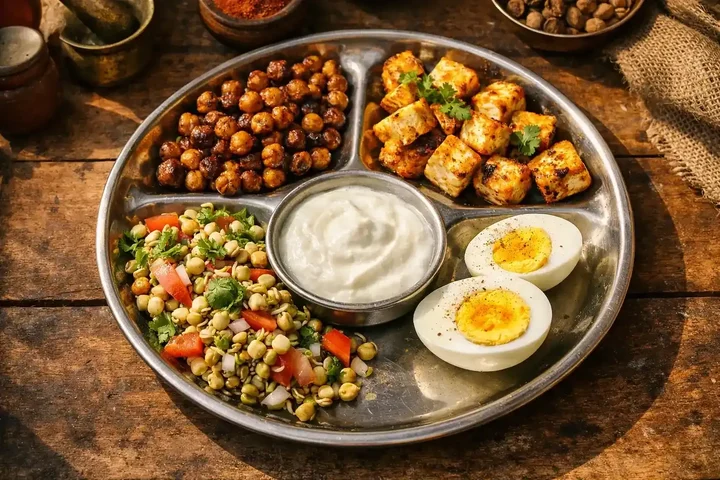 Traditional Indian snacks can be incredibly protein-rich when you know what to choose
| Snack | Protein (approx) | How to Enjoy |
|---|---|---|
| Paneer (100g) | 18g | Grilled, in salads, or as tikka |
| Roasted Chana | 7g per 1/2 cup | Spiced with chaat masala |
| Moong Dal Chilla | 12g per serving | Savory pancake for breakfast |
| Sprouts Salad | 8g per cup | With lemon, onion, tomato |
| Curd/Dahi (1 cup) | 11g | Plain or as raita |
| Sattu Drink | 10g per glass | With salt or jaggery |
| Besan Cheela | 8g per serving | Quick savory crepe |
| Soya Chunks | 52g per 100g | Curry or dry preparation |
If you want a longer desi list with calorie counts beside the protein, see our top 25 low calorie high protein foods in India.
Pro Tip for Indian Snackers
Combine roasted chana with puffed rice (murmura) and some peanuts for a high-protein, low-calorie namkeen that beats store-bought mixtures.
Tips and Tricks for Protein Snacking Success
Tip 1: Check the Protein-to-Calorie Ratio
A nutrition expert from Pennington Biomedical Research Center shared a helpful formula. Multiply the grams of protein by 4 (since protein has 4 calories per gram). Then divide by total calories. Anything 30% or above is truly high protein.
Example: If a bar has 20 grams of protein and 200 calories: 20 x 4 = 80, then 80 / 200 = 40%. That's a good protein snack!
Tip 2: Time Your Snacks Smart
Mid-morning around 10 AM to hold focus before lunch, mid-afternoon around 3 to 4 PM against the slump, and within 2 hours of exercise for recovery.
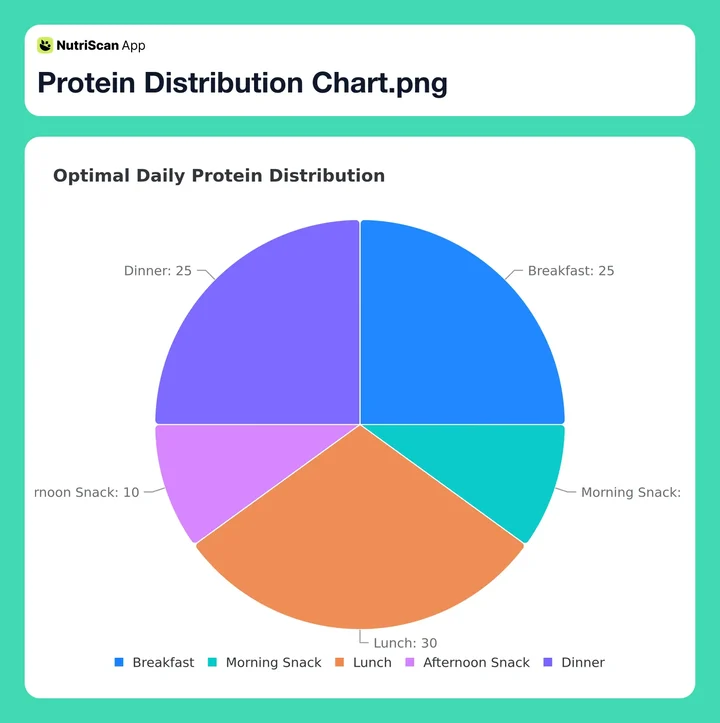 Figure 2: How to distribute your protein intake throughout the day for maximum benefit
Tip 3: Prep on Weekends
Sunday is my prep day: boil eggs, portion nuts into containers, make energy balls, check what needs restocking. It stops the junk grab when I am hungry and rushed.
Tip 4: Read Past the Front Label
The front of a package is marketing. On the back, check protein grams, sugar grams (aim below the protein), the ingredient list (shorter is better), and the serving size, since some packs hold two or three.
Tip 5: Pair Protein With Fiber or Fat
Apple with peanut butter beats peanut butter straight from the jar. The combination holds you longer.
Tip 6: Don't Forget Water
UCLA Health experts remind us that metabolizing protein produces byproducts that need to be filtered by your kidneys. Drink plenty of water when increasing protein intake.
Tip 7: Track What Works For You
Some people do well on dairy protein, others feel better on plant sources. Pay attention to how you feel two hours after each one.
Common Mistake
Don't assume that "protein" on the label means healthy. Some protein snacks have more sugar than a candy bar. Always check the nutrition facts, not just the marketing claims.
Step-by-Step Guide to Building Your Protein Snack Routine
Here's exactly how I help friends set up their protein snacking habit:
Step 1: Calculate Your Protein Target
First, figure out how much protein you need daily. Use the NutriScan Macro Calculator to get personalized protein targets based on your weight, activity level, and goals. Then decide how much you want from snacks - typically 20-30% of your daily total.
Example: a 70 kg person at 1.4 g/kg needs 98 grams daily. Reserve 25 to 30 grams for snacks and that is 2 or 3 of them.
Step 2: Audit Your Current Snacks
Write down everything you snacked on for the past week and mark which ones carried protein. That awareness alone shifts most people's choices.
Step 3: Stock Your Spaces
Desk drawer, kitchen counter, gym bag, glove box (non-perishables only). Visible beats buried.
Step 4: Build a Rotation of Five
The same snack every day gets boring by week two. Keep at least five you actually enjoy.
Step 5: Track and Adjust
Use NutriScan's Meal Scan feature to log what you eat. Photograph the snack, get the protein number, and review the week's pattern before you change anything.
 We've all been there - the key is having protein snacks ready for these moments
The 30-Second Combo I Eat Almost Every Afternoon
Greek yogurt (15g protein), a handful of walnuts (4g protein), a drizzle of honey, a pinch of cinnamon. Thirty seconds to make, about 200 calories, 19 grams of protein.
Why it holds up better than yogurt alone:
- Fast plus slow protein: the yogurt digests quickly, the walnut fat slows absorption so the fuel lasts
- Steady blood sugar: the fat and protein blunt any spike from the honey
- Omega-3s: walnuts are rich in them, which supports cognitive function
- Texture: creamy plus crunchy stops you reaching for a second one
I found it during a week when I was flat by 2 PM despite eating protein snacks, and I have been making it most afternoons for two years since.
Common Mistakes to Avoid
I made all five of these:
- Thinking more is always better. There is a ceiling on what your body uses at once. Past it you are buying calories, not muscle.
- Ignoring sugar. Some protein bars carry 20+ grams of sugar, which is a chocolate bar with protein sprinkled on.
- Forgetting whole foods. UCLA Health experts advocate a food-first approach; bars are the backup.
- Not spreading it out. All your protein at dinner does less than the same amount spaced across the day.
- Neglecting other nutrients. Fiber, healthy fats, vitamins, and minerals still matter.
Smart Protein Snacking for Different Goals
For Weight Loss
Research suggests 1 to 1.2 grams per kilogram. Keep snacks near 150 to 200 calories with at least 10 grams of protein.
Best choices: Greek yogurt, cottage cheese, turkey slices, eggs
For Muscle Building
Aim for 1.4 to 2 grams per kilogram, spread across the day. Post-workout snacks matter most.
Best choices: Protein shakes, Greek yogurt with granola, chicken jerky, cottage cheese with fruit
For Stable Energy
Pair protein with complex carbs and healthy fats to slow digestion and flatten blood sugar spikes.
Best choices: Apple with nut butter, hummus with whole grain crackers, trail mix, yogurt with oats
For Active Aging
Adults over 50 often need 1.2 to 1.6 grams per kilogram to hold muscle mass, according to research published in The Journals of Gerontology. Softer, easier-to-eat snacks work well.
Best choices: Smoothies with protein powder, soft cheese, Greek yogurt, eggs, soups with beans

How NutriScan Makes Protein Tracking Easy
Tracking protein used to mean looking up every food, guessing the portion, and doing mental math. Photographing it takes seconds instead.
Snap a photo of your snack and our AI food tracker gives you:
- The protein number for that portion, at about 95% accuracy on our own testing for foods our database covers
- The other macros (carbs, fats, calories)
- Micronutrients, on every meal, on the free plan too
- A NutriScore band showing how the choice actually rates
NutriBites lets you ask about your own patterns, like "Am I getting enough protein at breakfast?" or "Show me my protein intake this week."
Free gives you 5 scans a week, which is enough to test the scanner on the snacks a food database usually reads wrong. Premium removes the cap and adds the 28-day Diet Plan with a grocery list built from your protein target. We compared the app against the rest in the best app for tracking protein.
Cheap Snacks That Still Give You Real Protein
The cheapest high protein snacks are eggs, lentils, chickpeas, canned tuna, and homemade paneer. All five cost less per 10 grams of protein than any bar or shake on the shelf. Here is how they stack up:
| Snack | Protein | Cost Level |
|---|---|---|
| Eggs (2) | 12g | Low |
| Cottage Cheese (1/2 cup) | 14g | Low |
| Canned Tuna (1 can) | 20g | Low |
| Lentils (1/2 cup cooked) | 9g | Very Low |
| Peanut Butter (2 tbsp) | 8g | Low |
| Greek Yogurt (plain) | 15g | Medium |
| Chickpeas (1/2 cup) | 7g | Very Low |
| Paneer (homemade, 100g) | 18g | Low |
Budget Hack
Buy plain Greek yogurt in large tubs instead of individual flavored cups. Add your own fruit and save up to 50% while avoiding added sugars.
Cheap snacks fall apart when you buy them one packet at a time. Bulk-buying the eggs, dal, and chana once a month is what keeps the cost down, covered in healthy eating on a budget.
Where Protein Snacking Is Heading
Pulse proteins, pea protein, and fermented yeast protein keep spreading, and the formats keep multiplying from protein cookies to protein waffles.
According to March 2025 research from Chomps, protein is involved in 36% of snacking occasions but only fulfilled in 19% of purchases. That gap is the whole problem. People want the protein and cannot find a snack that delivers it.
Conclusion
Pick two or three snacks from this article and keep them stocked this week. Most people notice the difference by day three, and the ones that stick are usually the cheap ones you eat with a fork.
Download NutriScan, photograph what you snack on, and read the protein number instead of guessing it.
Frequently Asked Questions
Q1: How much protein should I eat in a snack?
Aim for 10 to 20 grams. That is enough to hold you to the next meal without overdoing it, and Mayo Clinic Health System guidance says more than 40 grams at once adds nothing extra for muscle building. Lean high if you are training, 10 to 15 grams if you just want steady energy. Regular intervals beat one large serving.
Q2: What are the easiest protein snacks to make?
Two hard boiled eggs, a cup of Greek yogurt, half a cup of cottage cheese, a string cheese, or a bag of frozen edamame microwaved for three minutes. None of them take more than two minutes and none need a recipe. Boil a dozen eggs on Sunday and four of those five need no prep at all.
Q3: What snacks have 20g of protein?
One cup of Greek yogurt, one drained can of tuna, three hard boiled eggs plus a string cheese, a cup of edamame with a string cheese, 100g of grilled paneer with curd, or a ready-to-drink shake. One cup of cottage cheese overshoots at about 28 grams. Tuna and cottage cheese give you the 20 grams for the fewest calories, near 100 to 120.
Q4: How much protein is in cheese?
Between 6 and 35 grams per 100 grams, depending on how hard the cheese is. Parmesan tops the list at about 35g per 100g, cheddar and mozzarella sit near 24 to 25g, paneer is 18g, and cream cheese is 6g. Per real serving the ranking flips: a 28g stick of string cheese gives 7 grams, while a tablespoon of parmesan gives about 2.
Q5: What are the cheapest high protein snacks?
Eggs, lentils, chickpeas, canned tuna, and homemade paneer. Half a cup of cooked lentils gives 9 grams, two eggs give 12, a can of tuna gives 20, and 100g of homemade paneer gives 18. All of them beat bars and shakes on cost per 10 grams of protein, and buying them in bulk once a month is what keeps that true.
Q6: Are protein bars really healthy or just processed junk?
It depends on the bar. Check whether protein grams exceed sugar grams, look for recognizable ingredients, and work out whether at least 30% of the calories come from protein. A good bar is a convenient backup when whole food is not around. It is not a daily habit.
Q7: Can I get enough protein from plant-based snacks?
Yes. Edamame gives 17g per cup, roasted chickpeas 7g per half cup, plus nuts, seeds, hummus, and peanut butter. Plant-based protein snacks are expected to hold over 62% of the market in 2025. Vary the sources across the day, since different plant proteins carry different amino acid profiles, and most bring extra fiber with them.
Q8: When is the best time to eat a protein snack?
Mid-morning around 10 AM, mid-afternoon around 3 to 4 PM, and within 2 hours of exercise. Nutrition experts recommend 15 to 25 grams in that post-workout window. Any point where you are hungry between meals works too. The goal is heading off the extreme hunger that wrecks the next meal.
Q9: How do I know if I'm eating enough protein overall?
Constant hunger between meals, slow recovery after exercise, low energy, losing muscle despite training, and frequent sweet cravings all point at a shortfall. Multiply your weight in kilograms by 1.2 to 1.6 for a target, then track a week with an app like NutriScan. Most health organizations put protein at 10% to 35% of total calories.
Track your protein intake effortlessly with NutriScan. Just snap a photo of your meals and snacks to see detailed nutrition breakdowns instantly. Download now and start your journey to better eating!