Muscle Recovery Nutrition: 7 Science-Backed Foods That Work
 ChatGPT
  Claude
  AI Mode
  Perplexity
Did you know that about 70% of the growth hormone your body releases happens during deep sleep? This means what you eat AND when you sleep both play a big role in how fast your muscles recover.
TL;DR - Muscle Recovery Nutrition Guide
Who it's for: Anyone who exercises regularly and wants to optimize muscle recovery and reduce soreness
Main outcomes: Faster recovery, reduced muscle soreness, improved strength gains, better sleep quality
Key foods: Eggs, tart cherry juice, fatty fish, Greek yogurt, lean poultry, bananas, whole grains
Protein timing: The anabolic window extends 5-6 hours around training, not just 30 minutes
Daily protein: Aim for 1.6-2.2g per kg body weight, spread across 4-5 meals
If you have been pushing hard at the gym but still feeling sore for days, your nutrition might be the missing piece. I remember when I first started my fitness journey. I would hit the gym hard, feel great during the workout, but then spend the next 3-4 days barely able to walk up stairs. My legs would ache. My arms would feel like jelly. I thought this was normal - "no pain, no gain," right? Wrong. Once I fixed my recovery nutrition, everything changed.
In this guide, I am going to share the exact foods, timing strategies, and practical tips that research says actually work for muscle recovery. No fancy supplements needed. No complicated meal plans. Just real food and science-backed strategies you can start using today.
Why Your Muscles Need Recovery Nutrition
When you exercise - especially during resistance training or intense cardio - you create tiny tears in your muscle fibers. This is actually a good thing! It is how your body builds stronger muscles. But here is the catch: your body needs the right nutrients to repair these tears and come back stronger.
Research shows that protein intake after exercise stimulates muscle protein synthesis (MPS), which is basically your body's muscle-building process. According to a study published in Frontiers in Nutrition, consuming protein before or after workouts produces a significant rise in muscle protein synthesis (Frontiers in Nutrition). The key is giving your body what it needs at the right time.
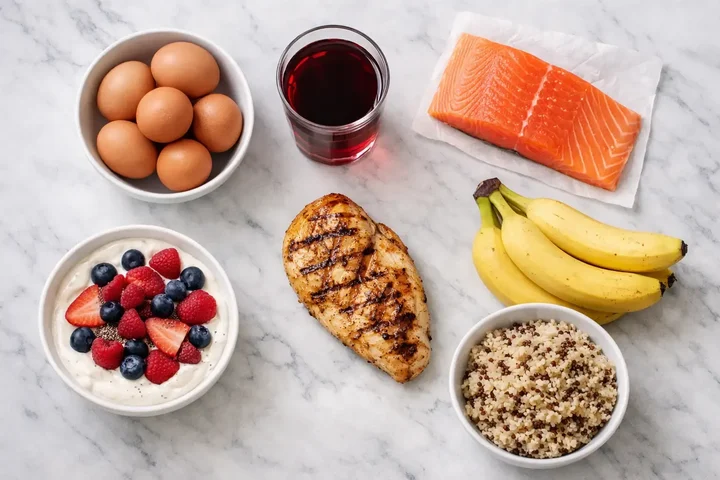 The 7 science-backed recovery foods that help your muscles repair and grow stronger
But protein is not the whole story. Your body also needs:
- Carbohydrates to restore glycogen (energy) in your muscles
- Anti-inflammatory foods to reduce swelling and soreness
- Fluids to support recovery processes
- Quality sleep to maximize growth hormone release
 Building muscle requires the right nutrition - fuel your gains properly
Let me show you exactly how to get all of these right.
The Real Truth About Protein Timing
You have probably heard about the "anabolic window" - that 30-minute period after your workout when you supposedly MUST eat protein or lose all your gains. Good news: research says this window is much bigger than we thought.
A comprehensive review in the Journal of the International Society of Sports Nutrition found that the anabolic window may actually extend up to 5-6 hours surrounding your training session (Journal of ISSN). This means you do not need to chug a protein shake the second you finish your last rep.
Key Insight on Protein Timing
If you ate a meal containing protein 2-3 hours before your workout, you have a comfortable window of a few hours after to eat your next protein-rich meal. Your muscles will still be sensitive to that protein and use it for recovery.
However, if you train first thing in the morning on an empty stomach, eating protein sooner after your workout becomes more important.
How Much Protein Do You Need?
Research consistently shows that about 20-40 grams of protein per meal is ideal for triggering muscle protein synthesis (Nutrients). More than this does not seem to provide extra benefit for muscle building - your body can only use so much at once.
For best results, spread your protein intake across the day rather than having one massive protein meal. Aim for about 0.25 grams of protein per kilogram of body weight at each meal to keep muscle protein synthesis elevated throughout the day (Current Sports Medicine Reports).
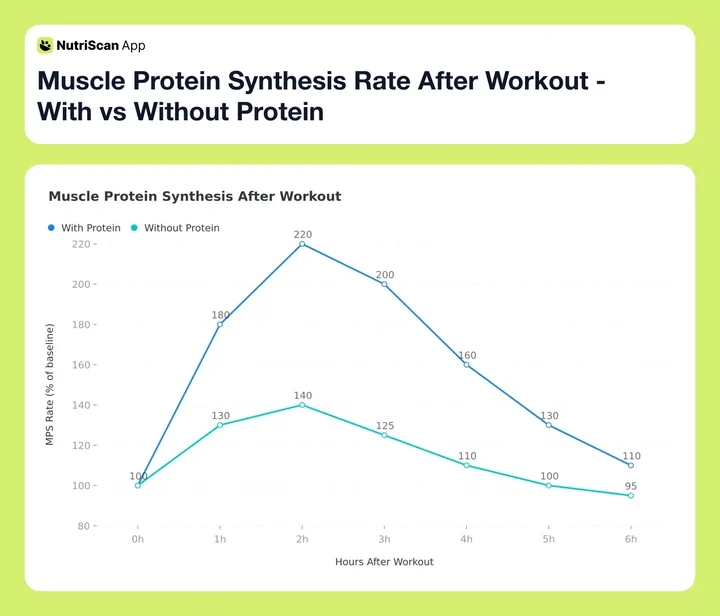 Figure 1: How protein intake dramatically affects muscle protein synthesis after your workout

7 Science-Backed Foods for Faster Muscle Recovery
1. Eggs - The Complete Recovery Food
Eggs are one of nature's most perfect recovery foods. They contain all nine essential amino acids your muscles need for repair, plus healthy fats that support hormone production.
A whole egg is better than just egg whites for recovery. The yolk contains nutrients like vitamin D and healthy fats that work together with the protein for better absorption. Research on whole foods for recovery shows that eating whole food sources of protein provides additional benefits beyond isolated protein sources (Nutrients).
How to use it: Have 2-3 eggs within a few hours of your workout. Scrambled, boiled, or in an omelet with vegetables - however you like them.
2. Tart Cherry Juice - Nature's Anti-Inflammatory
If I could recommend just one recovery drink, it would be tart cherry juice. The research on this is really strong.
Studies show that tart cherry juice helps reduce muscle soreness, inflammation markers, and helps strength recover faster after exercise. In one study with marathon runners, those who drank tart cherry juice for 5 days before and 2 days after their race had significantly lower inflammation markers (IL-6 reduced, CRP reduced) and recovered their muscle strength faster than the placebo group (Scandinavian Journal of Medicine & Science in Sports).
Important Note
The key is starting BEFORE your intense workout, not just after. Drink 8-12 ounces (about 250-350ml) of tart cherry juice twice daily for 4-5 days before a big workout or competition, and continue for 2-3 days after.
3. Fatty Fish (Salmon, Mackerel, Sardines)
Fatty fish are packed with omega-3 fatty acids, which have powerful anti-inflammatory effects. A systematic review from 2024 found that omega-3 supplementation can reduce the inflammatory response after exercise by decreasing a pro-inflammatory marker called IL-6 (Nutrients).
Research also shows that omega-3s can help reduce perceived muscle soreness after intense exercise (Journal of the International Society of Sports Nutrition). The EPA and DHA in fish oil work by competing with pro-inflammatory compounds in your body.
How to use it: Eat fatty fish 2-3 times per week. If you prefer supplements, aim for about 2-3 grams of combined EPA and DHA daily, but getting it from whole fish provides additional benefits.
4. Greek Yogurt with Berries
Greek yogurt is a recovery powerhouse. It contains about twice the protein of regular yogurt (around 17 grams per cup), plus casein protein which digests slowly and provides a sustained amino acid release.
Add berries on top and you get extra antioxidants that help fight the oxidative stress caused by exercise. This combination gives you protein, carbohydrates for glycogen replenishment, and anti-inflammatory compounds all in one delicious package.
How to use it: Have a cup of Greek yogurt with a handful of mixed berries within a few hours after your workout. Add a drizzle of honey if you need more carbs after intense training.
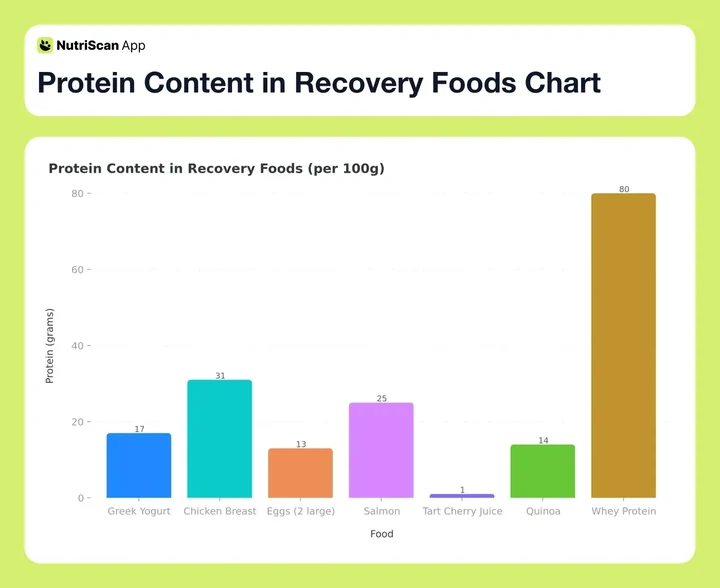 Figure 2: Comparing protein content across the top muscle recovery foods
5. Lean Chicken or Turkey
For high-quality protein that supports muscle recovery, chicken and turkey are hard to beat. They are rich in leucine, the amino acid that plays the biggest role in triggering muscle protein synthesis.
Research shows that whey protein (which is high in leucine) is very effective for post-exercise recovery, and lean poultry provides similar amino acid profiles from whole food (Nestle Nutrition Workshop Series).
How to use it: Include 4-6 ounces (about 100-170 grams) of chicken or turkey in your post-workout meal. Pair it with vegetables and a carb source like rice or sweet potato.
6. Bananas and Other Potassium-Rich Foods
Bananas are a classic post-workout food for good reason. They are rich in potassium, which is an electrolyte that plays a key role in muscle function. Low potassium levels can contribute to muscle cramps and slower recovery.
Bananas also provide easy-to-digest carbohydrates that help restore muscle glycogen. Research shows that consuming carbohydrates after exercise helps with glycogen resynthesis, especially when combined with protein (Current Sports Medicine Reports).
How to use it: Eat a banana with your post-workout protein source. Other good potassium options include sweet potatoes, avocados, and spinach.
7. Whole Grains (Brown Rice, Oats, Quinoa)
Your muscles store energy as glycogen, and intense exercise depletes these stores. Whole grains provide complex carbohydrates that help replenish glycogen while also providing fiber and B-vitamins that support energy metabolism.
For recovery, a combination of protein and carbohydrates works better than either alone. Research indicates that co-ingestion of protein and carbs immediately after exercise can enhance glycogen resynthesis and stimulate muscle protein synthesis together (Current Sports Medicine Reports).
How to use it: Include a serving of whole grains (about 1 cup cooked) with your post-workout meal. Oatmeal with protein powder, brown rice with chicken, or quinoa salad with eggs all work great.
The Role of BCAAs: Do You Need Them?
Branched-chain amino acids (BCAAs) - leucine, isoleucine, and valine - are popular supplements for muscle recovery. But do they actually work?
Research shows mixed results. A meta-analysis found that BCAA supplementation can reduce delayed-onset muscle soreness (DOMS) after exercise, with the effect being most noticeable between 24-72 hours after training (Amino Acids). A 2024 systematic review also found that BCAAs are effective in reducing muscle soreness and creatine kinase levels (a marker of muscle damage) (Sports Medicine Open).
Bottom Line on BCAAs
If you are already eating enough total protein (about 1.6-2.2 grams per kilogram of body weight daily), you are probably getting plenty of BCAAs from your food. BCAA supplements may be most helpful for people who train fasted or have trouble meeting their protein needs. For a deeper dive into all fitness supplements, check out our guide on every popular fitness supplement explained.
Sleep: The Recovery Multiplier That 70% of Athletes Overlook
This is the factor that separates average recovery from elite recovery.
You can eat perfectly and still recover poorly if you are not sleeping enough. Here is why sleep is so important for muscle recovery.
During deep sleep (slow-wave sleep), your body releases about 70% of its daily growth hormone (Journal of Physiology). Growth hormone is essential for muscle repair, protein synthesis, and tissue regeneration. When you do not sleep enough, growth hormone release drops significantly.
 Quality sleep is when most of your muscle recovery actually happens
Research shows that sleep deprivation creates a hormonal environment that favors muscle breakdown. When you are sleep-deprived, cortisol (a stress hormone that breaks down muscle) increases while testosterone and IGF-1 (hormones that build muscle) decrease (Medical Hypotheses).
 Your muscles grow while you rest - prioritize quality sleep for better gains
How to Optimize Sleep for Recovery
- Aim for 7-9 hours of sleep per night
- Keep a consistent schedule, even on weekends
- Avoid screens for 1 hour before bed
- Keep your bedroom cool and dark
- Consider tart cherry juice in the evening - it naturally contains melatonin. For more on nutrition and sleep, read our guide on how food affects rest
Step-by-Step: Your Daily Recovery Nutrition Plan
Here is a practical approach you can follow:
Step 1: Calculate Your Daily Protein Needs
Multiply your body weight in kilograms by 1.6-2.2 grams. This is your daily protein target. For example, if you weigh 70 kg, aim for 112-154 grams of protein daily. Use our online macro calculator to get personalized protein targets based on your goals and activity level.
Step 2: Spread Protein Across 4-5 Meals
Divide your total protein goal into 4-5 meals of roughly equal protein amounts. This keeps muscle protein synthesis elevated throughout the day.
Step 3: Time Your Biggest Meal Around Your Workout
Have a protein and carb-rich meal within 3-4 hours after training. This does not need to be immediately after - just sometime in that window.
Step 4: Include Anti-Inflammatory Foods Daily
Add fatty fish 2-3 times per week, berries daily, and consider tart cherry juice around intense training periods.
Step 5: Prioritize Sleep
No nutrition strategy can fully compensate for poor sleep. Make 7-9 hours of quality sleep non-negotiable.
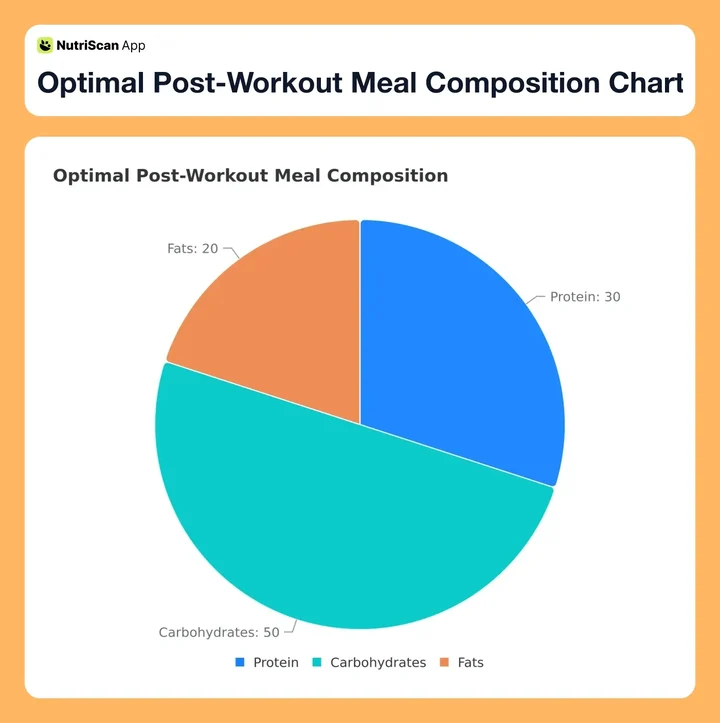 Figure 3: The ideal macronutrient ratio for your post-workout meal
How NutriScan App Helps Track Your Recovery Nutrition
Tracking your recovery nutrition manually can be tedious. This is where the NutriScan App becomes really useful for fitness enthusiasts.
With NutriScan, you can simply snap a photo of your meal and instantly see the protein, carbohydrates, fat, and calories using our AI-powered meal scanning feature. The app also shows you micronutrients like omega-3s, potassium, and other recovery-supporting nutrients in the Nutrition Breakdown section. If you set your goal as "Muscle Gain" during onboarding, the app customizes your daily macro targets based on your body stats and activity level.
The NutriBites feature lets you ask questions about your eating patterns. You could ask things like "Am I getting enough protein after workouts?" or "How much omega-3 did I eat this week?" and get insights based on your actual meal history.
For those who want more structure, the Premium Diet Plan feature creates a personalized eating schedule with specific foods and portion sizes designed for your muscle gain goals. You can view recipes, portion guidance, and nutritional benefits for each meal.
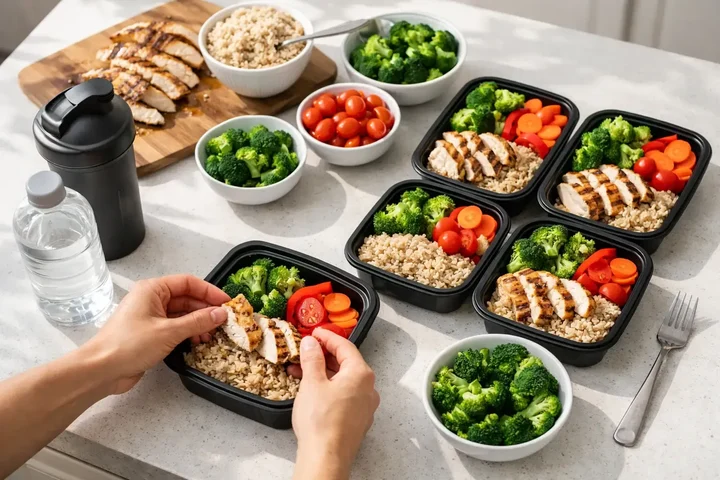 Meal prep makes hitting your recovery nutrition targets much easier

Real-World Examples of Recovery Meals
Post-Workout Meal Option 1: The Quick Fix
- 1 cup Greek yogurt
- 1 banana
- 2 tablespoons honey
- Handful of walnuts
This gives you about 25 grams of protein, quick carbs, potassium, and omega-3s.
Post-Workout Meal Option 2: The Complete Plate
- 150 grams grilled chicken breast
- 1 cup brown rice
- Steamed broccoli
- Olive oil drizzle
This provides around 40 grams of protein with complex carbs and micronutrients.
Post-Workout Meal Option 3: The Smoothie
- 1 scoop whey protein
- 1 cup tart cherry juice
- 1 banana
- 1 tablespoon almond butter
- Handful of spinach
Quick to make, easy to digest, with anti-inflammatory benefits.
Common Recovery Nutrition Mistakes to Avoid
Mistake 1: Not Eating Enough Total Protein
Many people focus so much on post-workout protein that they forget about the rest of the day. Your total daily protein matters more than perfect timing.
Mistake 2: Avoiding Carbs After Workouts
Carbs help restore muscle glycogen and can enhance protein absorption. Unless you are on a strict keto diet for specific reasons, do not skip carbs after training.
Mistake 3: Relying Too Much on Supplements
Whole foods provide more than just protein - they contain vitamins, minerals, and compounds that work together. Use supplements to fill gaps, not replace food.
Mistake 4: Ignoring Sleep
All the protein shakes in the world will not help if you are sleeping 5 hours a night. Prioritize sleep alongside nutrition.
Mistake 5: Not Being Consistent
Recovery nutrition works best when you are consistent. One perfect post-workout meal will not make up for poor overall eating habits.
Conclusion
Muscle recovery nutrition does not need to be complicated. Focus on getting enough total protein (1.6-2.2 g/kg body weight), spread it across 4-5 meals, include anti-inflammatory foods like tart cherry juice and fatty fish, eat carbs to restore glycogen, and prioritize sleep.
The "anabolic window" is much wider than the old 30-minute myth suggested. If you eat a balanced diet with adequate protein throughout the day, your muscles will have what they need to recover and grow stronger.
Start by tracking your current protein intake for a few days. You might be surprised how much (or how little) you are actually eating. Apps like NutriScan make this easy - just photograph your meals and see the breakdown instantly.
Your body is capable of amazing recovery when you give it the right fuel. Now you know exactly what that fuel looks like.
Frequently Asked Questions
Q: How soon after a workout should I eat for muscle recovery?
A: Research suggests you have a window of several hours after exercise, not just 30 minutes as previously believed. If you had a meal 2-3 hours before your workout, eating within 3-4 hours after is fine. If you trained fasted (like first thing in the morning), eating sooner is more beneficial. The key is consuming adequate protein (20-40 grams) and some carbohydrates in that window (Journal of ISSN).
Q: Is whey protein better than eating whole foods for recovery?
A: Whey protein is fast-absorbing and convenient, but whole foods like eggs, chicken, and Greek yogurt provide additional nutrients that support recovery. Research shows that whole food sources of protein may offer benefits beyond isolated protein supplements due to their food matrix effects (Nutrients). A combination of both works well for most people.
Q: How much does sleep actually affect muscle recovery?
A: Sleep has a major impact on recovery. About 70% of growth hormone - which is essential for muscle repair - is released during deep sleep. Studies show that sleep deprivation reduces testosterone and IGF-1 while increasing cortisol, creating conditions that favor muscle breakdown rather than growth (Medical Hypotheses). Aim for 7-9 hours of quality sleep nightly.
Q: Do I need BCAA supplements if I eat enough protein?
A: If you consume 1.6-2.2 grams of protein per kilogram of body weight daily from quality sources, you are likely getting sufficient BCAAs from your food. BCAA supplements may help reduce muscle soreness (Amino Acids), but they are most useful for people who train fasted or struggle to meet protein needs. Focus on total protein intake first.
Q: How effective is tart cherry juice for muscle recovery?
A: Tart cherry juice has strong research support for recovery. Studies show it can reduce inflammation markers, decrease muscle soreness, and help strength recover faster after intense exercise. The key is consuming it for several days BEFORE your intense workout or competition, not just after (Physiological Reports). Most studies used about 8-12 ounces twice daily.