Indian PCOS Diet Plan: 7-Day Low-GI Meal Prep
 ChatGPT
  Claude
  AI Mode
  Perplexity
An Indian PCOS diet plan works when most of your carbs land at 55 or below on the glycemic index. That means dal, rajma, chana, jowar and bajra rotis, ragi, brown rice and whole fruit, with white rice, maida and potato kept to small portions and always eaten alongside protein. In a 12-month trial at the University of Sydney, 95% of women on a low-GI diet regained regular menstrual cycles against 63% on a conventional healthy diet. What follows is a 7-day Indian menu, a Sunday prep routine that runs about 3 hours, and GI numbers for the foods already in your kitchen.
TL;DR - Low-GI Indian PCOS Meal Prep Guide
Who it's for: Women with PCOS looking to manage symptoms through food choices and strategic meal planning
Main outcomes: Better insulin sensitivity, regular periods, sustainable weight management, improved energy and mood
Key approach: Focus on low-GI Indian foods (dal, brown rice, whole grains) + strategic food combining + weekly meal prep
Timeframe: Energy improvements in 2 weeks, cycle regularity in 2-3 months, significant insulin improvements in 8-12 weeks
Research backing: In a 12-month randomized trial, 95% of women achieved regular cycles on a low-GI diet against 63% on a conventional healthy diet
I remember sitting with my friend Priya last year. She was frustrated, tired, and confused. She had been diagnosed with PCOS two years ago, and nothing seemed to work. She tried cutting carbs completely. She tried eating only salads. She tried expensive supplements. Nothing changed her irregular periods, stubborn weight, or constant fatigue.
Then I introduced her to something simple - the concept of glycemic index and how Indian foods can actually work in her favor. Six months later, Priya's story changed completely. Her periods became regular. She lost the weight that had been stuck for years. Her energy came back.
She did not eliminate carbs. She chose the right carbs, kept her dal-chawal, learned how to combine foods, and prepped a week of meals every Sunday.
That is what this Indian PCOS diet plan covers, meal by meal.
Understanding the PCOS and Blood Sugar Connection
PCOS, or Polycystic Ovary Syndrome, affects hormones in women, and insulin resistance sits at the heart of most cases. A 2025 review in Current Nutrition Reports reports that women with PCOS are intrinsically insulin resistant, and that it shows up regardless of body weight. Their bodies struggle to use insulin properly, which pushes blood sugar higher and sets off a cascade of symptoms.
When you eat foods that spike your blood sugar quickly (high-GI foods), your body pumps out more insulin. For women with PCOS, this extra insulin triggers more androgen production. More androgens mean worse symptoms - irregular periods, acne, unwanted hair growth, weight gain that just will not budge.
The Good News
A meta-analysis covering 412 women with PCOS found that low glycemic index diets improved emotional health scores and reduced body hair. In a separate 12-month trial published in the American Journal of Clinical Nutrition, 95% of women following a low-GI diet achieved regular menstrual cycles compared with 63% on a conventional healthy diet.

Left side: Low-GI champions like dal, brown rice, and vegetables. Right side: High-GI foods to limit like white rice and maida.
The glycemic index (GI) is simply a scale from 0 to 100 that tells you how quickly a food raises your blood sugar. Foods scoring 55 or below are low-GI. Foods between 56 and 69 are medium-GI. Anything 70 or above is high-GI.
Indian cooking already carries hundreds of naturally low-GI options, and most of them are the dishes our grandmothers made every week.

Figure 1: GI values of common Indian foods - green bars indicate PCOS-friendly choices
PCOS Success Stories: Real Women, Real Results
Let me share three stories that show the power of low-GI meal prep for PCOS.
Before you copy anyone else's plate, work out your own targets with the free PCOS macro calculator.
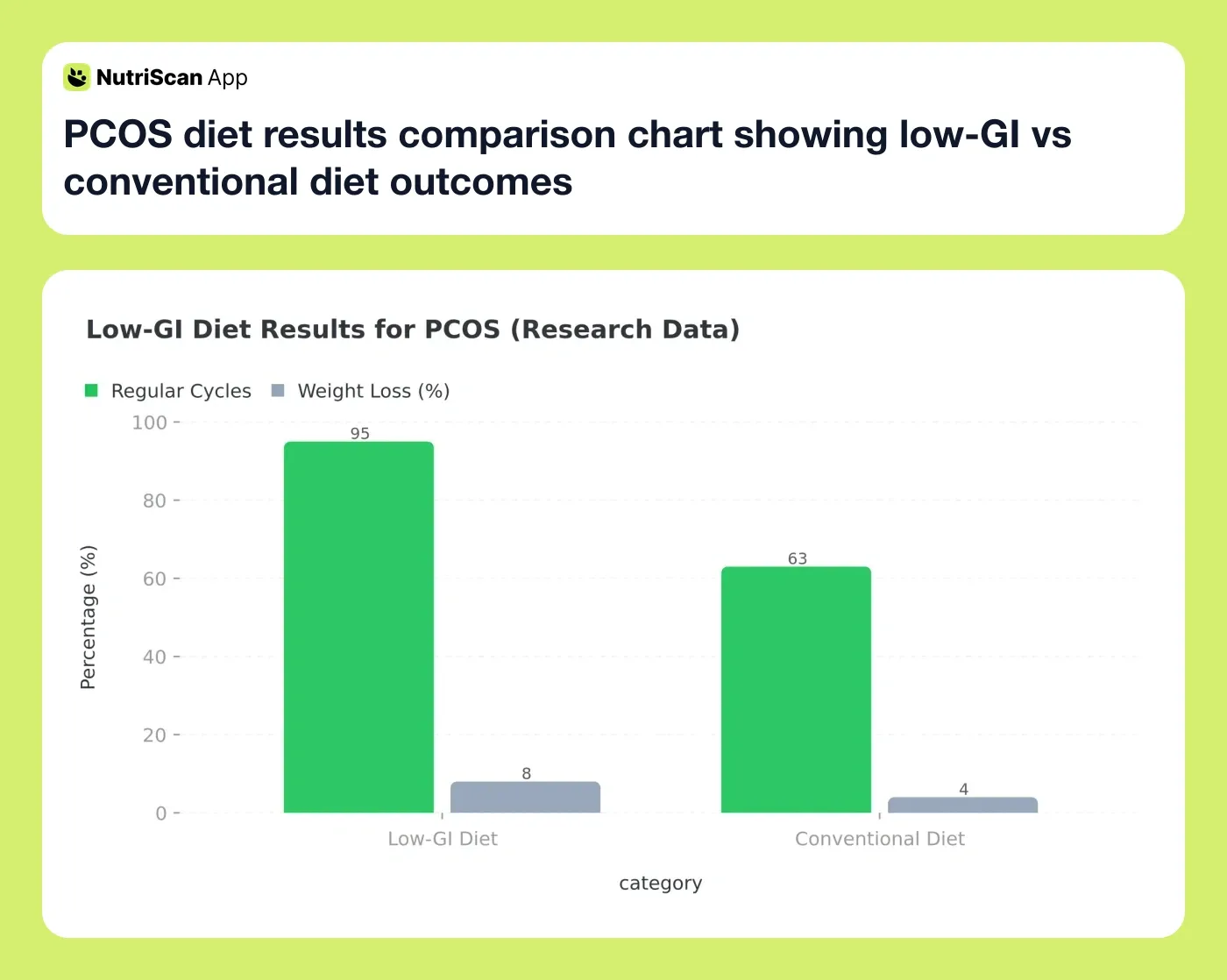
Figure 2: Research shows dramatic differences between low-GI and conventional diets for PCOS outcomes
Meera from Bangalore struggled with PCOS for five years. She loved her South Indian breakfast but thought she had to give up idli and dosa forever. When she learned that fermented foods actually have a lower glycemic impact, she was surprised. She started making ragi dosas and moong dal pesarattu. Within four months, her fasting insulin levels dropped by 30%. Her periods that used to come once in 3 months started appearing monthly.
Ananya from Mumbai was a working professional who thought healthy eating required too much time. She discovered weekend meal prep and everything changed. Every Sunday, she would spend 2 hours preparing her dal, sabzi, and portions of brown rice. She kept roasted makhana and chana at her desk for snacks. Her weight started dropping - 8 kg in 6 months - without feeling hungry.
Fatima from Delhi had the inflammatory type of PCOS. She learned that Indian spices like turmeric, cinnamon, and fenugreek have anti-inflammatory properties backed by science. She started adding half teaspoon of cinnamon to her morning smoothie. Combined with her low-GI meal prep, her acne cleared up and her energy levels improved dramatically.

When your meal prep game is strong and your PCOS symptoms start improving!
The Science-Backed Benefits of Low-GI Eating for PCOS
Improved Insulin Sensitivity
A 2025 systematic review in Frontiers in Nutrition confirmed that low-GI diets help reduce insulin resistance in PCOS patients. When your cells respond better to insulin, you need less of it. Less insulin means less androgen production and fewer symptoms.
Better Menstrual Regularity
The landmark study comparing low-GI diet to conventional healthy diet showed dramatic improvements in ovulation linked to better insulin sensitivity.
Long-Term Weight Management
Unlike crash diets, low-GI eating keeps you fuller for longer. Foods break down slowly, so you do not get hunger spikes. A 24-week study showed women with PCOS achieved 8% weight loss on an energy-restricted low-GI diet.
Reduced Inflammation
Many women with PCOS have chronic low-grade inflammation. Indian spices - turmeric, ginger, cinnamon - have proven anti-inflammatory effects.
Improved Emotional Health
The meta-analysis showed low-GI diets significantly improved emotional health scores. When your blood sugar is stable, your mood is stable.

Figure 3: Fasting insulin levels show greater improvement with low-GI diet compared to conventional diet over 12 weeks
7 Tips for Perfect PCOS-Friendly Meal Prep
Tip 1: Always Pair Carbs with Protein
Never eat carbs alone. When you combine brown rice with rajma, the protein and fiber from the beans slow down digestion. The overall glycemic impact becomes much lower.
Tip 2: Batch Cook Your Dals
Lentils are your best friends with a GI of just 25-35. Cook a large batch on Sunday - yellow moong, masoor, chana dal. Store in separate containers. They last 4-5 days.
Tip 3: Prep Your Breakfast Items First
Mornings are when most people make poor choices. Soak your oats overnight. Make besan cheela batter in advance. Keep boiled eggs ready. Our PCOS breakfast frameworks go deeper on what a first meal needs to hold insulin steady.
Tip 4: Use the Right Flours
Swap refined wheat flour with besan (chickpea flour) - low GI and high protein. Ragi flour is excellent for South Indian preparations. Jowar and bajra rotis are better than white wheat rotis.
Tip 5: Embrace Fermentation
Fermented foods like idli, dosa, and homemade dahi have better glycemic profiles. The fermentation process breaks down some starches and creates beneficial probiotics.
Tip 6: Keep Emergency Snacks Ready
Keep containers of roasted chana, makhana, mixed nuts, and seeds ready. When the 4 PM hunger hits, you grab these instead of biscuits.
Tip 7: Track What You Eat
Use an app like NutriScan to photograph your meals and read the breakdown of calories, protein, carbs, and fat. NutriScan puts its own accuracy at about 95% for foods its database covers. Free includes 5 scans a week, and NutriBites lets you ask questions about your meal timeline on either plan.
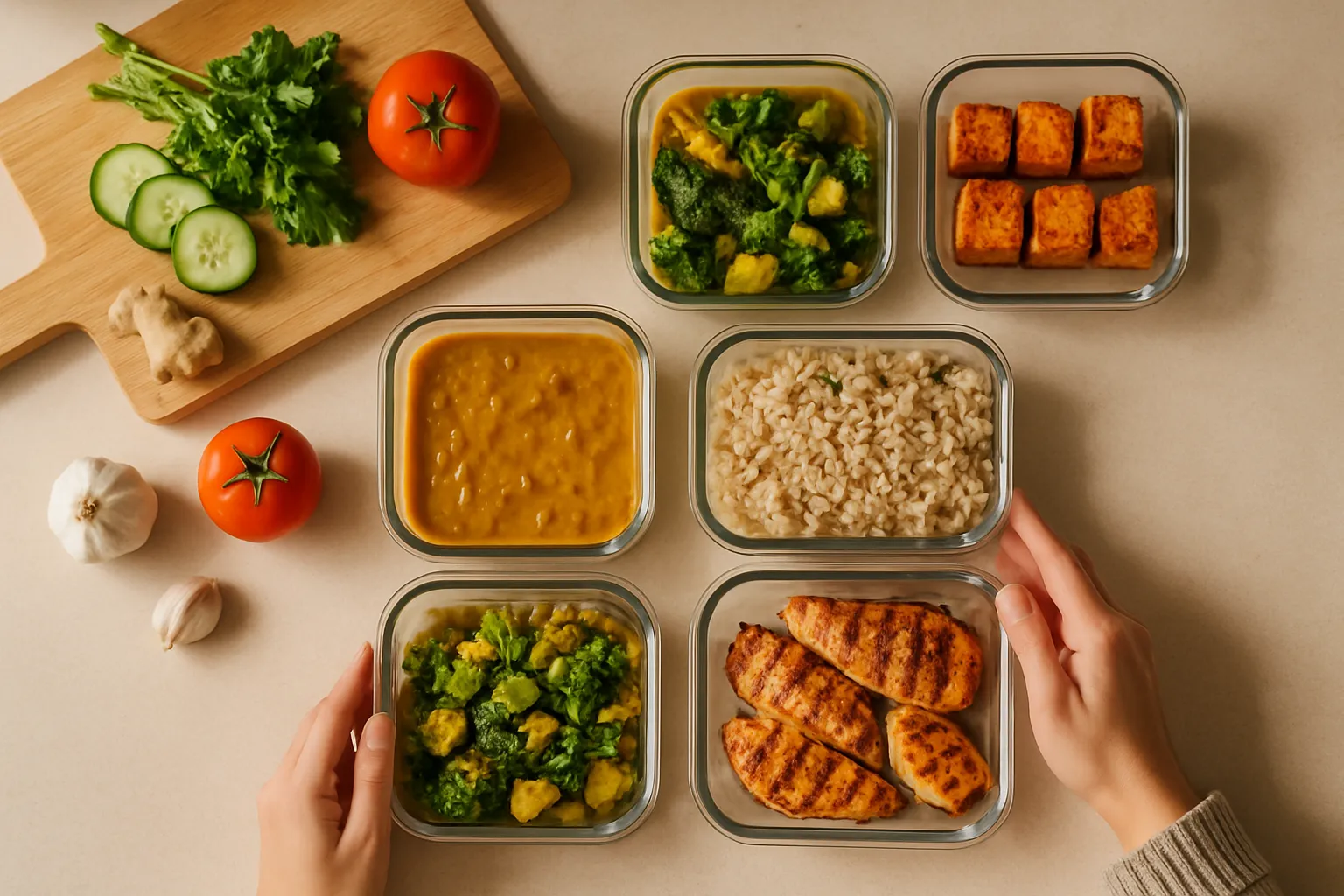
Your Sunday meal prep setup: organized containers with dal, sabzi, brown rice, and protein portions ready for the week
This is the meal prep energy we need every Sunday!
Step-by-Step: Your First PCOS Meal Prep Sunday
Step 1: Plan Your Week (20 minutes)
Write down what you will eat for 5 days. Choose 2 breakfast options, 2 lunch options, 2 dinner options, and 3 snack options.
Step 2: Create Your Shopping List (10 minutes)
Group items by category - vegetables, proteins, grains, spices. Buy only what you need.
Step 3: Prep Your Grains (30 minutes)
Put brown rice on to cook - make enough for 5-6 portions. While rice cooks, soak your dal.
Step 4: Cook Your Proteins (40 minutes)
Grill or bake chicken breast if you eat non-veg. Boil a dozen eggs. Press and marinate tofu.
Step 5: Prepare Your Dals and Curries (45 minutes)
Cook base dals - plain rajma, chana masala base, sambar. Make a large batch of sabzi that keeps well.
Step 6: Chop and Store Vegetables (20 minutes)
Wash and chop vegetables. Store leafy greens wrapped in paper towels. Pre-cut onions and tomatoes.
Step 7: Prepare Your Snacks (15 minutes)
Dry roast makhana with a pinch of salt and turmeric. Portion out nuts into small containers.
Step 8: Organize and Label (10 minutes)
Put everything in clear containers. Label with contents and date.
Your 7-Day Indian PCOS Diet Plan
Swap days freely, the structure matters more than the exact dish. If you want the same plan built around your own numbers, NutriScan's 28-day diet plan is a Premium feature that generates it from your goals and food preferences. For an anti-inflammatory variation with veg, non-veg and vegan tracks, see our 7-day anti-inflammatory PCOS meal plan.
| Day | Breakfast | Lunch | Dinner | Snacks |
|---|---|---|---|---|
| Mon | Moong dal cheela + mint chutney | Brown rice + rajma + salad | Grilled fish + veggies + roti | Almonds, apple |
| Tue | Overnight oats + flaxseeds | Jowar roti + palak paneer | Dal tadka + brown rice | Roasted makhana |
| Wed | Vegetable poha + sprouts | Quinoa pulao + chickpea curry | Egg curry + roti + sabzi | Roasted chana |
| Thu | Ragi dosa + sambar | Rajma brown rice + salad | Paneer tikka + mixed veg | Mixed nuts |
| Fri | Besan cheela + chutney | Curd rice + rasam | Grilled chicken + stir-fry | Makhana, guava |
| Sat | Idli + sambar + coconut chutney | Mixed dal khichdi + raita | Fish curry + brown rice | Trail mix |
| Sun | Oats upma + boiled eggs | Whole wheat pasta + veg sauce | Tofu bhurji + roti + dal | Fruit salad |
Important Notes
- Drink 8-10 glasses of water daily
- Add half teaspoon cinnamon to your morning drink
- Include fenugreek water first thing in morning
Low-GI Indian Ingredients Master List
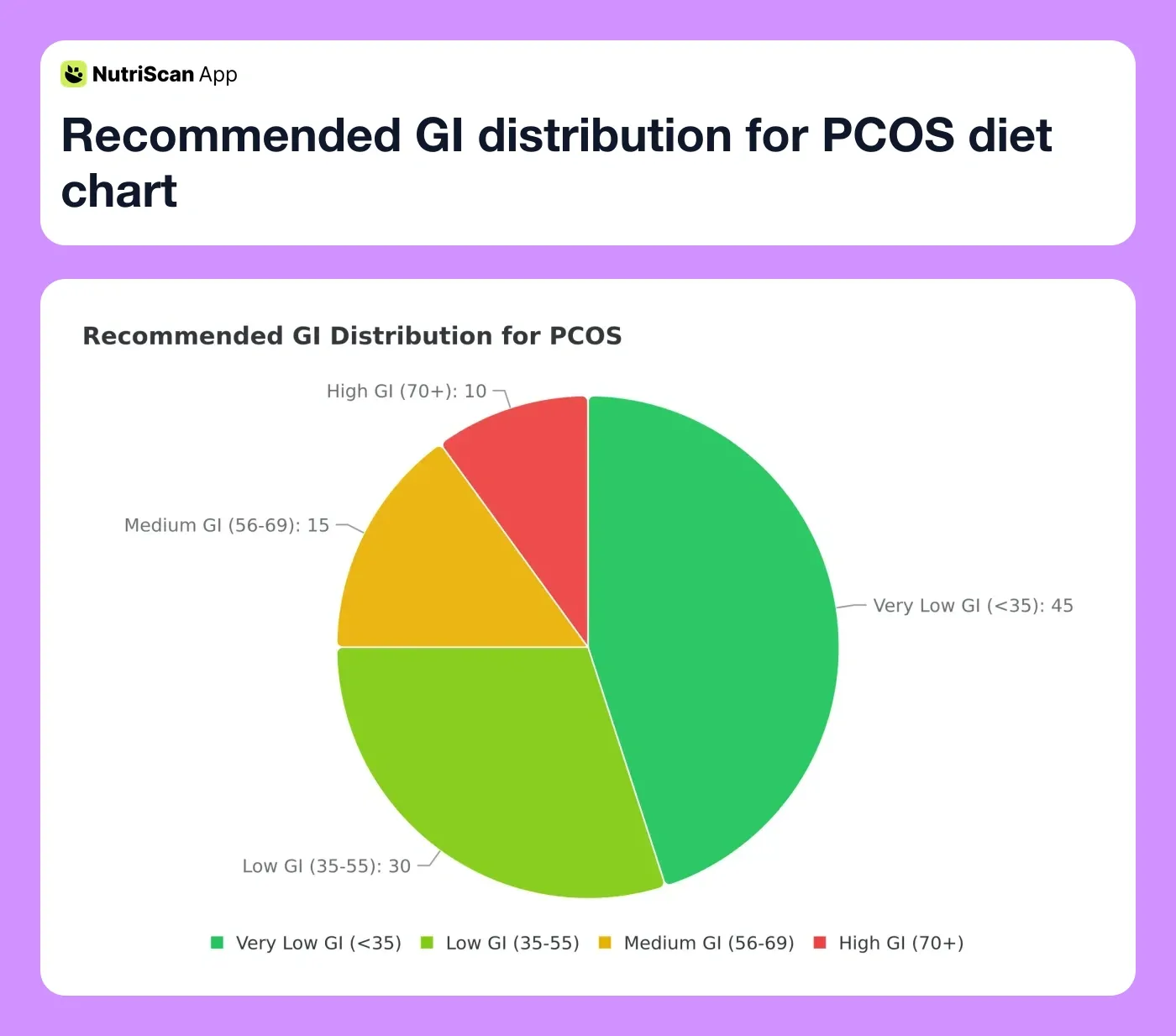
Figure 4: Aim for this distribution - majority of your foods should be from very low and low GI categories
Very Low GI (Below 35)
Green moong dal (25), Chickpeas (28), Rajma (24), Green vegetables (15-25), Paneer (27), Eggs (0), Fish and chicken (0), Nuts and seeds (15-25), Curd (14)
Low GI (35-55)
Brown rice (50-55), Whole wheat roti (52), Oats (55), Sweet potato (54), Quinoa (53), Ragi (54), Jowar (48), Bajra (52)
Medium GI (56-69) - Eat in Moderation
White basmati rice (58), Poha (64), Banana (62), Mango (60)
High GI (70+) - Limit or Avoid
White rice (73), Maida (75), Potatoes (78), White bread (75)
Indian rice varieties test higher than most people expect. In a study of common Indian rices, Sona Masuri came in at 72, Ponni at 70 and Surti Kolam at 77, all of them high GI. Rotis go the other way: a study of whole-grain Indian rotis found multigrain blends held the GI down without wrecking the texture. For the full list of what to cut first, see our guide to PCOS foods to avoid.
The Lowest Calorie Indian Dishes for a PCOS Plate
Low GI and low calorie are two separate questions, and a PCOS plate usually needs both. These are the lowest calorie Indian dishes worth keeping in rotation, with rough per-serving figures for a standard katori or cup:
| Dish | Rough calories | Why it works for PCOS |
|---|---|---|
| Rasam, 1 cup | 50 to 60 | Watery, spiced, almost no starch, and the tamarind and pepper make it filling |
| Clear vegetable soup, 1 cup | 40 to 60 | Volume before a meal, so the rice portion after it shrinks on its own |
| Lauki or tinda sabzi, 1 katori, 1 tsp oil | 70 to 90 | Bottle gourd is mostly water and fiber |
| Steamed idli, 1 piece | 55 to 65 | Fermented, so the glycemic hit is gentler than plain rice |
| Cucumber raita, 1 katori | 60 to 80 | Curd sits near GI 14 and adds protein to a carb-heavy plate |
| Sprouted moong salad, 1 katori | 90 to 110 | Protein and fiber together, no cooking needed |
Oil moves these numbers more than the recipe does. The same lauki sabzi is about 70 calories with a teaspoon of oil and closer to 190 with three. NutriScan asks for the oil level on every scan, No Oil, Low Oil, Medium or High, which is why two photos of the same sabzi come back with different totals.
If you are building a whole week around lower-calorie dishes, our PCOS grocery and pantry swap checklist covers what to keep in the house so those dishes stay the easy option.
PCOS Power Spices: Anti-Inflammatory Indian Ingredients
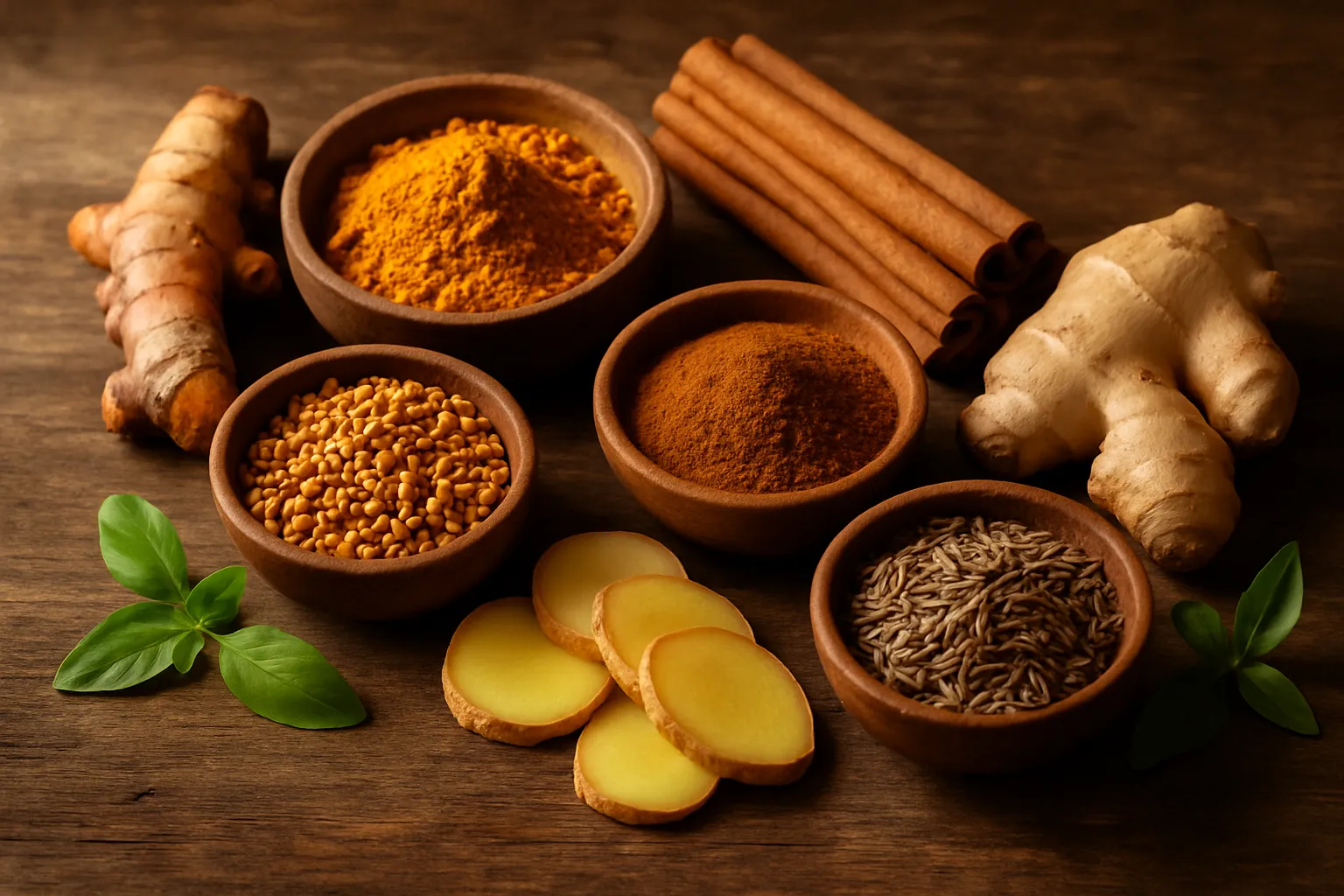
Your PCOS-fighting spice arsenal: turmeric, cinnamon, fenugreek, ginger, and cumin
Cinnamon (Dalchini): Half teaspoon daily can improve insulin sensitivity. Add to smoothie, oats, or tea.
Turmeric (Haldi): Contains curcumin which reduces inflammation. Always pair with black pepper. Add to dal, curries, and milk.
Fenugreek (Methi): Soak 1 tablespoon seeds overnight, drink the water in the morning. Use methi leaves in parathas and sabzis.
Ginger (Adrak): Helps with digestion and has anti-inflammatory properties. Add to tea, curries, and smoothies.
Cumin (Jeera): Improves digestion and nutrient absorption. Jeera water helps with bloating.
Sample PCOS Recipes, Including a Low-GI Laddu
Power-Packed Moong Dal Cheela
Blend 1 cup soaked moong dal with ginger, chilies, minimal water. Add chopped spinach, salt, turmeric. Spread thin on non-stick pan. Cook both sides till golden. GI: Around 28-30. Protein: 12g per serving.
Rajma Brown Rice Bowl
Place 1 cup cooked brown rice in bowl. Add warm rajma curry on one side, cucumber raita on other. Sprinkle roasted cumin and coriander. GI: Around 45. Protein: 15g per serving.
Anti-Inflammatory Turmeric Smoothie
Blend 1 cup unsweetened almond milk, half frozen banana, quarter teaspoon turmeric, pinch black pepper, 1 tablespoon flaxseeds, handful spinach, quarter teaspoon cinnamon. GI: Around 35.
Ragi and Methi Laddu
Dry roast 1 cup ragi flour on low heat until it smells nutty, about 8 minutes. Roast 2 tablespoons ground flaxseed and 1 teaspoon methi powder separately. Blend 10 soft dates into a paste, no sugar and no jaggery. Mix everything with 2 tablespoons warm ghee and 2 tablespoons chopped almonds, then roll into 12 laddus. Roughly 95 calories each. Ragi sits at GI 54, and the ghee, flax and almonds slow the release further, so one with evening tea behaves like a snack instead of a sugar spike.
How to Track an Indian PCOS Diet Plan Without Guessing
This last piece is what kept Priya going after the first month.
Photograph what you eat, then read the pattern back. Women who photograph their meals and review their eating patterns see improvements 3x faster than those who just "try to eat healthy."
Here is what to track, and how often:
Weekly: Energy levels, sleep quality, cravings intensity, mood stability
Monthly: Menstrual cycle regularity, skin clarity, weight, waist measurement
Quarterly: Fasting insulin, blood sugar, HbA1c, hormonal panel
NutriScan helps here. You can look back at your meal history, which is unlimited on both plans, see patterns and insights, and ask NutriBites questions about your eating habits. Every meal gets a NutriScore, a five-band color rating from Dark Green to Red. More green and yellow meals over a week is a simpler goal than any macro target. For the macro side of this, read our complete guide to PCOS macro tracking with AI.
Frequently Asked Questions
Q1: Can I ever eat white rice if I have PCOS?
Yes, but smartly! Always eat it with dal or rajma for protein. Keep portion to half cup or less. Cooking rice and refrigerating overnight before reheating creates resistant starch, which lowers GI.
Q2: How long before I see results from low-GI eating?
Most women notice improved energy within 2 weeks. Menstrual cycle improvements typically show in 2-3 cycles (6-12 weeks). Research shows 8-12 weeks is when significant improvements in insulin sensitivity happen.
Q3: Should I completely avoid fruits?
No! Fruits eaten whole with skin are generally low to medium GI. What to avoid is fruit juice. Best fruits for PCOS: apples, pears, oranges, guava, berries, jamun.
Q4: Is low-GI diet different from low-carb diet?
Yes, very different! Low-carb restricts all carbohydrates. Low-GI focuses on quality of carbs. You still eat carbs - brown rice, whole grains, dal, fruits - but choose ones that release sugar slowly. This is more maintainable long-term.
Q5: Can I follow this if I am vegetarian?
Yes, definitely! Indian vegetarian cuisine is perfect for low-GI PCOS eating. Dal, paneer, tofu, chickpeas, rajma - all are excellent protein sources with low GI.
Q6: What about eating out?
When eating out, choose dal-based dishes, tandoori proteins, and ask for brown rice if available. Avoid naan and prefer roti. Skip desserts or share one small portion.
Q7: Do I need to count calories too?
Not necessarily. Low-GI eating naturally helps with portion control because you stay fuller longer. However, if weight loss is a primary goal, moderate calorie awareness can help. Our PCOS macro calculator works out your specific numbers.
Q8: What is the lowest calorie Indian dish for PCOS?
Rasam and clear vegetable soup sit lowest at roughly 40 to 60 calories a cup, followed by a steamed idli at 55 to 65 and lauki sabzi at 70 to 90 a katori. Oil moves these numbers more than the recipe does, so the same sabzi can double if the kadhai is generous.
Q9: Is there a PCOS-friendly laddu recipe?
Yes, the ragi and methi laddu above. Date paste replaces the sugar and jaggery, and each one comes to roughly 95 calories. Ragi has a GI of 54, and the ghee and almonds slow the release further. One with tea works. Four in an afternoon does not.
Q10: What can I eat instead of paneer?
Every paneer line in the plan swaps out. Tofu works one for one in tikka and bhurji. For palak paneer, use pressed tofu or a cup of black chana. If you eat eggs, two boiled eggs cover the same protein. Rajma, chana and curd carry the rest.
Your Next Steps
Managing PCOS through food is a journey. Here is what to do this week:
Pick ONE change from this guide and implement it. Maybe just adding cinnamon to your morning drink.
Download NutriScan and photograph the meals a food database usually gets wrong, your curries, your restaurant plates, your mixed bowls. Free gives you 5 scans a week, enough to test it on those meals before you decide about Premium.
Be patient with yourself. Your body took years to develop insulin resistance. It will take months to improve. But every low-GI meal is a step forward.
Remember This
Dals, vegetables, spices, and traditional Indian cooking methods all hold blood sugar steady once the portions and the oil are right. The Indian kitchen is where this plan gets easier.
Start with Monday's breakfast on the plan above. Moong dal cheela takes 10 minutes and sits around GI 28, which makes it the smallest first change on this page. Cook it three mornings this week before you touch anything else.