How to Track PCOS Macros with AI Meal Scanning
 ChatGPT
  Claude
  AI Mode
  Perplexity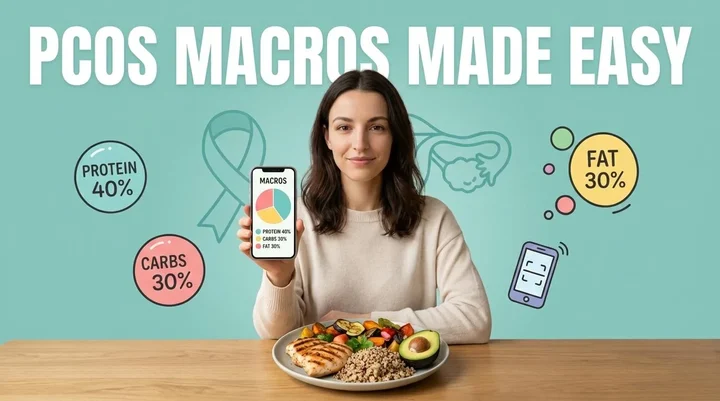
To track PCOS macros, start at 40% carbs, 30% protein, and 30% fat, photograph every meal so the AI returns the grams for you, then adjust the split after 4 to 6 weeks based on how your symptoms respond.
TL;DR - PCOS Macro Tracking with AI
• Who it's for: Women with PCOS who want to manage symptoms through proper nutrition without the hassle of manual food logging
• Main outcomes: Better insulin control, weight management, more regular periods, reduced acne, and improved energy levels
• Key approach: 40% carbs, 30% protein, 30% fat as a starting point - adjusted based on your body's response
• The solution: AI meal scanning eliminates guesswork by instantly analyzing your meals and tracking macros automatically
• Timeframe: Most women see improvements in 4-8 weeks of consistent macro tracking
When I was first diagnosed with PCOS, counting macros felt like solving a math puzzle while blindfolded. My doctor said "watch your carbs" but nobody told me exactly how much protein, fat, or carbs I should eat. And let me tell you, manually logging every bite was driving me crazy.
That is when I discovered AI meal scanning. And it changed everything about how I manage my PCOS through food.
In this guide, I will walk you through exactly how to track your PCOS macros with AI meal scanning, from picking your starting ratio to reading the numbers off a plate of curry.
What Are Macros and Why Do They Matter for PCOS?
Before we get into the how-to part, let me quickly explain what macros actually mean.
Macros is short for macronutrients. These are the three main nutrients your body needs in large amounts: protein, carbohydrates, and fat. Every food you eat contains a mix of these three nutrients.
Now here is why macros matter so much for PCOS.
PCOS (Polycystic Ovary Syndrome) affects an estimated 10-13% of reproductive-aged women, according to the World Health Organization. Insulin resistance is a common feature: Melinda Cater, a clinical dietitian at Johns Hopkins' Sibley Memorial Hospital, puts it at 35% to 80% of people with the condition. When you eat too many carbs, your body produces more insulin. And for women with PCOS, extra insulin can make symptoms worse - think irregular periods, weight gain, acne, and difficulty getting pregnant.
Why Macros Matter for PCOS
Carbs that carry fiber cause less of a blood sugar surge than refined ones, and including a protein source with meals and snacks helps keep levels steady. That is the practical advice in Johns Hopkins Medicine's PCOS diet guide, which also says no single dietary pattern has been shown to beat the others for PCOS.
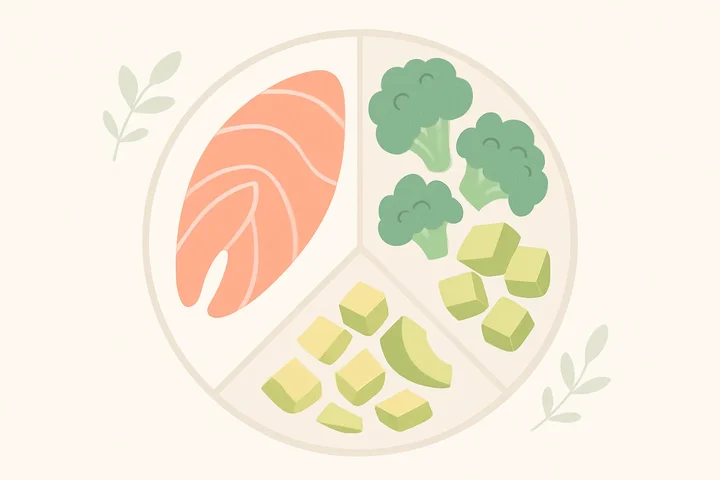 A balanced plate showing the ideal PCOS macro distribution - protein, complex carbs, and healthy fats
The Best Macro Ratio for PCOS, and How Many Carbs a Day
Here is a starting point used in PCOS dietitian practice.
The PCOS Dietitian recommends keeping carbs under 40 percent of total calories, with protein and fat at around 30 percent each:
| Nutrient | Percentage | Example (1400 cal diet) |
|---|---|---|
| Carbohydrates | 40% | 140 grams |
| Protein | 30% | 105 grams |
| Fat | 30% | 47 grams |
However, some women do better with slightly different ratios. Another popular approach suggests:
| Nutrient | Percentage |
|---|---|
| Carbohydrates | 25% |
| Protein | 35% |
| Fat | 40% |
The key is that women with PCOS generally need fewer carbs and more protein compared to typical diet recommendations. This helps keep insulin levels stable throughout the day. Which carbs you cut matters as much as the count, so check our list of PCOS foods to avoid. Use our online macro calculator to find your baseline, then adjust for PCOS.
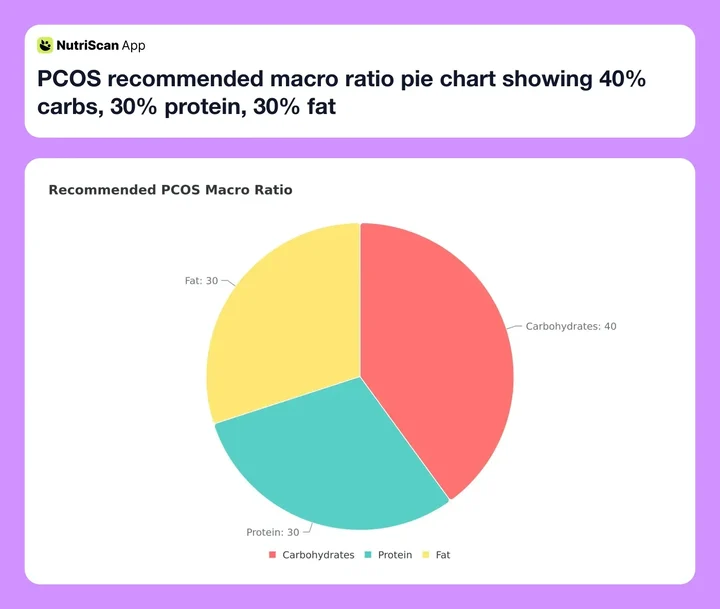 Figure 1: Recommended starting macro ratio for women with PCOS
A 2024 pilot study in Scientific Reports put 32 girls with PCOS on a 12-week anti-inflammatory diet. In the 13 overweight-to-obese participants, fasting insulin and HOMA-IR (a measure of insulin resistance) both improved. The diet focused on high fiber, good fats, and quality proteins - all things that proper macro tracking helps you achieve.
 That feeling when your macro tracking starts showing results!

Three Scenarios: What Macro Tracking Actually Changes
These are composite examples, not case studies of specific users. For documented case studies, check out our comprehensive guide on how women beat weight gain with lean and insulin-resistant PCOS.
Scenario 1: eating "healthy" and stalling. Someone who cooks at home and avoids junk food can still land near 55% of calories from carbs and 15% from protein, because rice, roti, oats, and fruit add up quietly. Photographing a week of meals makes that split visible, which is the step that has to come before any adjustment toward 40/30/30.
Scenario 2: high androgens and a low glycemic brief from a doctor. A photo log turns "eat low glycemic" into a list of specific meals with their carb grams attached, so you can see which breakfasts push carbs past your daily target and which ones leave room.
Scenario 3: keto felt impossible. Moving from strict keto to moderate low-carb eating, around 25% of calories from carbs, only works if you know where you actually land each day. Scanning gives you that number without weighing food.
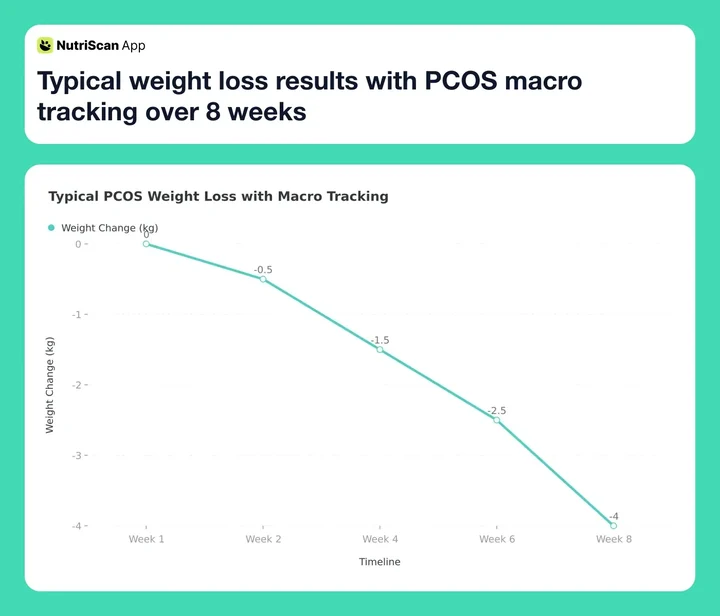 Figure 2: An illustrative trajectory to show the shape of steady progress, not measured NutriScan user data
Why AI Meal Scanning Beats Manual Logging for PCOS
I have tried manual food logging. You probably have too. And let us be honest - it is exhausting.
Here is why AI meal scanning works better for tracking PCOS macros:
1. Speed and Convenience
Instead of typing out every ingredient and portion size, you just snap a photo. The AI analyzes your meal in seconds and gives you the complete nutrition breakdown - calories, protein, carbs, fat, and even micronutrients.
2. Fewer Guesses
When you manually log, you often guess portion sizes from memory. "A cup of rice" can mean different things to different people. AI scanning works from a photo of your specific plate, so the estimate starts from what is actually in front of you. Portion estimates are still estimates, so adjust them when you know the real serving.
3. Works with Any Cuisine
This is huge for women around the world. Whether you are eating Indian dal, Mediterranean salad, Japanese sushi, or Mexican tacos, AI meal scanning can identify and analyze it. No more searching databases for obscure local foods.
4. Learning Over Time
Good AI meal trackers remember your eating patterns. They can tell you "Hey, your carbs are running high today" before you even have dinner. This helps you make smarter choices for your remaining meals.
5. Reduces Stress
Managing PCOS is already stressful enough. Spending 30 minutes daily on food logging adds more stress. AI scanning takes that burden away, letting you focus on actually enjoying your meals.
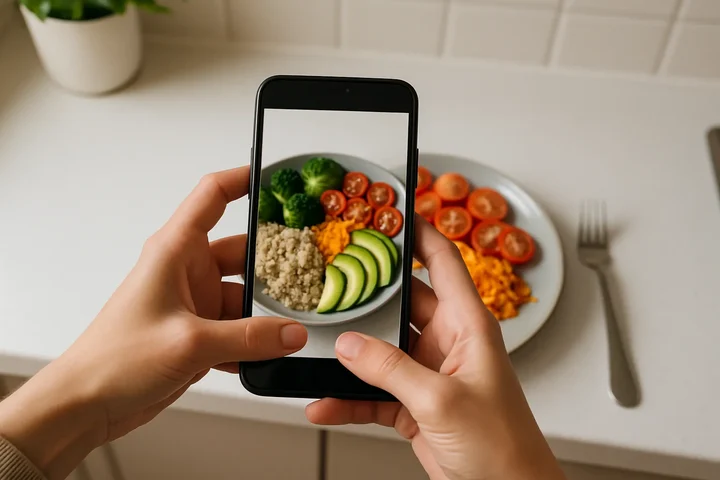 AI meal scanning makes tracking your PCOS macros as simple as taking a photo
How NutriScan AI Meal Scanning Works for PCOS
Let me walk you through exactly how to use AI meal scanning for your PCOS macro goals. I will use NutriScan as an example since it is specifically designed for health conditions like PCOS. Learn more about all the PCOS-specific features in NutriScan.
Step 1: Set Up Your PCOS Goal
When you first open NutriScan, you will go through a quick onboarding process. Here is the important part: when you reach "Choose Your Goal," select PCOS as your health goal. The app also asks for your food preference (Vegan, Vegetarian, Eggitarian, or Non-Vegetarian), activity level, age, height, and weight.
Based on this information, the app calculates your personalized macros. You will see a breakdown of your daily targets for Calories, Protein, Carbs, Fat, Fiber, and Water. Want to calculate your PCOS macros right now? Try our free PCOS Macro Calculator.
Step 2: Scan Your First Meal
This is where the magic happens. From the home screen, tap the camera icon. Point your phone at your meal and take a clear photo. Make sure good lighting and try to capture all the food on your plate. For a complete guide on meal scanning, check out our meal scan feature guide.
After clicking, you will see the Crop Screen. Here you can:
- Crop the image if needed
- Select the food type (Home Made, Packaged Food, Restaurant, Street Food, etc.)
- Choose the cooking method (Steamed, Grilled, Deep-fried, etc.)
- Adjust the oil level using a slider
Why Cooking Method Matters
A grilled chicken breast has very different macros than a deep-fried one. The AI uses this information to give you more accurate results.
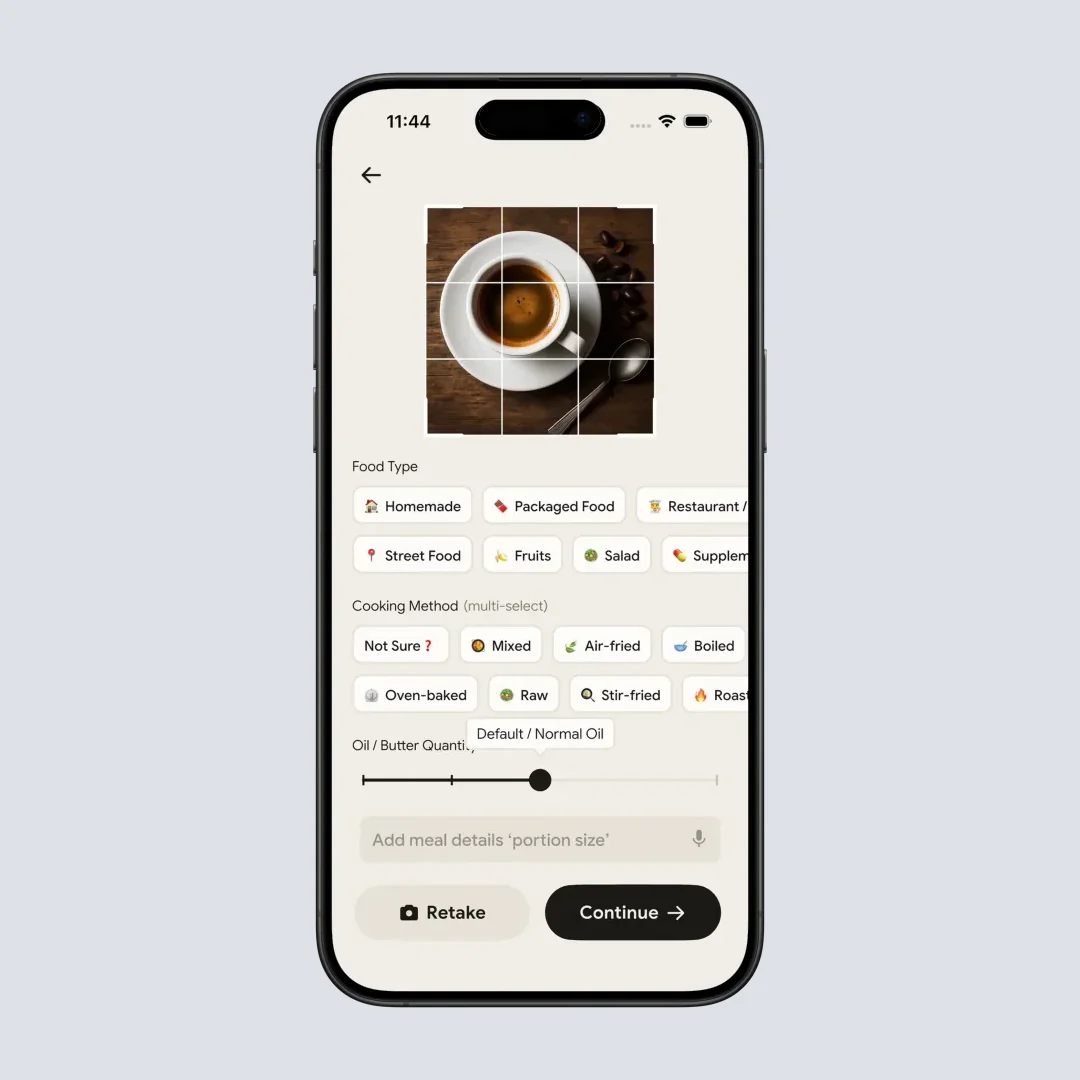
The crop screen lets you fine-tune food type and cooking method for accurate PCOS macro tracking
Step 3: Review Your Nutrition Details
After processing, you will see your Nutrition Details Page. This shows:
- Macros: Calories, Protein, Carbs, Fat
- Top Micronutrients: Fiber, Potassium, Calcium, Omega-3, etc.
- NutriScore: A color-coded rating (Dark Green to Red) showing how healthy the meal is
For PCOS, pay special attention to the carbs number and the NutriScore. Green scores mean the meal supports your PCOS goals. Orange or red means you might want to make some adjustments. Learn how the NutriScore rating system works.
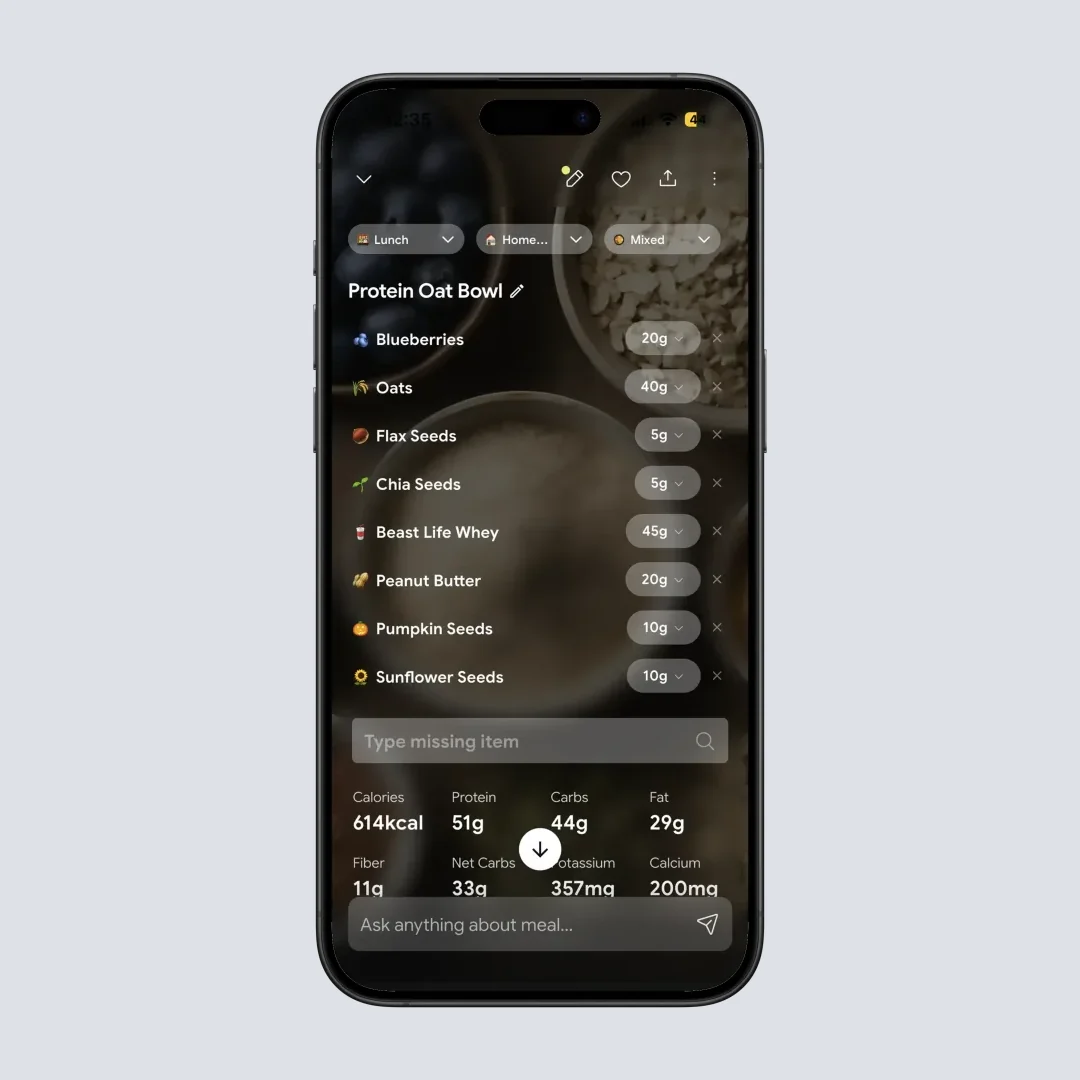
The Nutrition Details page shows complete macro breakdown with color-coded NutriScore rating
Step 4: Ask Questions About Your Meal
One of my favorite features is the ability to ask questions. On the Nutrition Details Page, tap "Nutrition Breakdown & Ask More." You can type or use voice input to ask things like:
- "Is this meal good for PCOS?"
- "How can I reduce the carbs in this meal?"
- "What is the glycemic index of this food?"
- "Will this spike my insulin?"
The AI gives you personalized answers based on your specific meal.
Step 5: Track Your Daily Progress
Back on the Home Page, you will see Today's Count showing your running totals for Calories, Protein, Carbs, and Fat. If you have a Premium plan and created a Diet Plan, you will also see a pie chart showing your progress. The chart turns red when you exceed your daily goals for carbs or fat - a helpful warning for PCOS management.
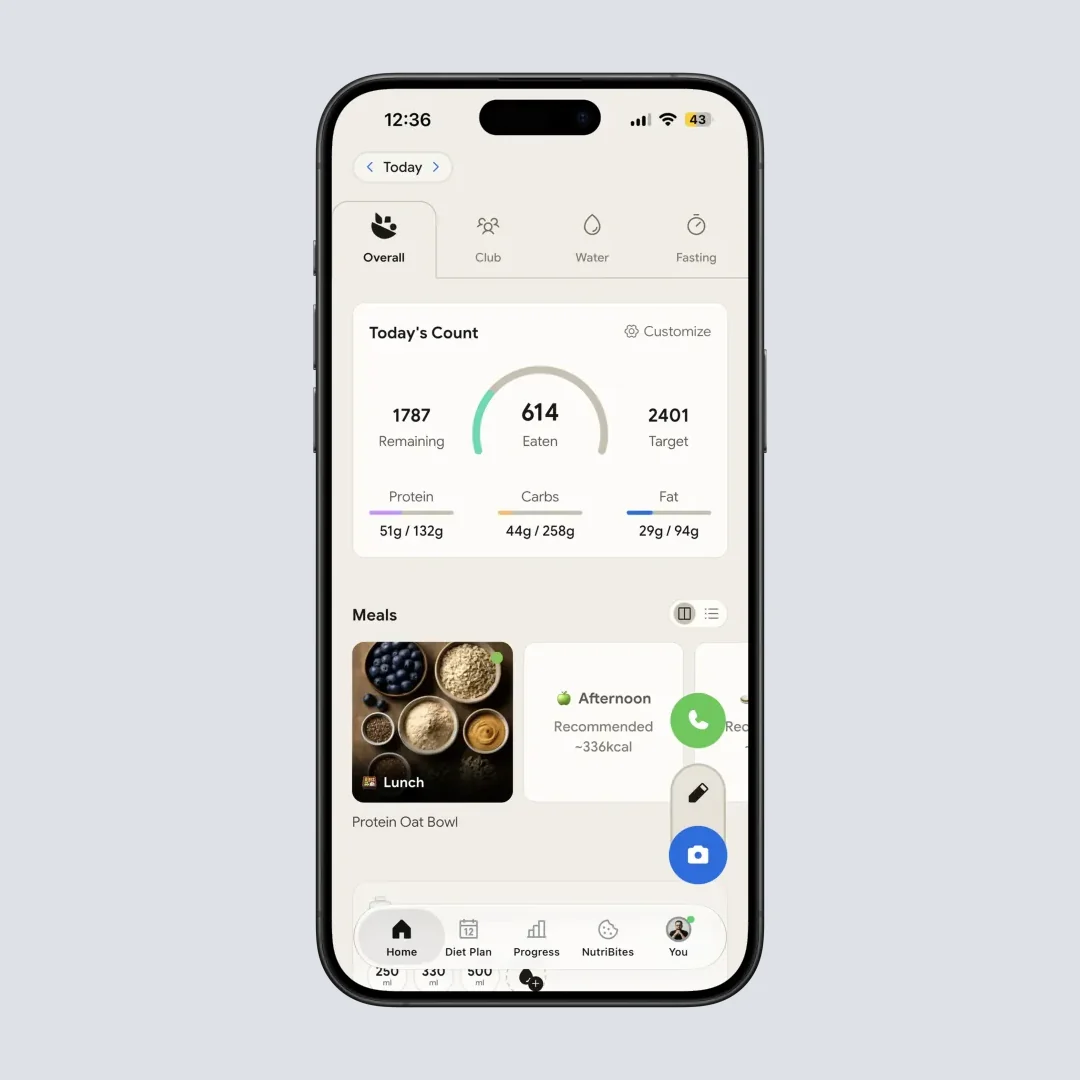
The Home Page displays your running macro totals with visual progress tracking
Step 6: Review Patterns with NutriBites
After scanning a few meals, head to NutriBites (the bottom navigation). This feature lets you talk with your meal timeline. You can ask questions like:
- "What did I eat this week that was high in carbs?"
- "Show me my lowest NutriScore meals"
- "How much protein did I average last week?"
For PCOS, this is gold. It helps you spot patterns you might miss otherwise. Maybe you always eat too many carbs on weekends. Or perhaps your protein drops every time you eat out. NutriBites makes these patterns visible.
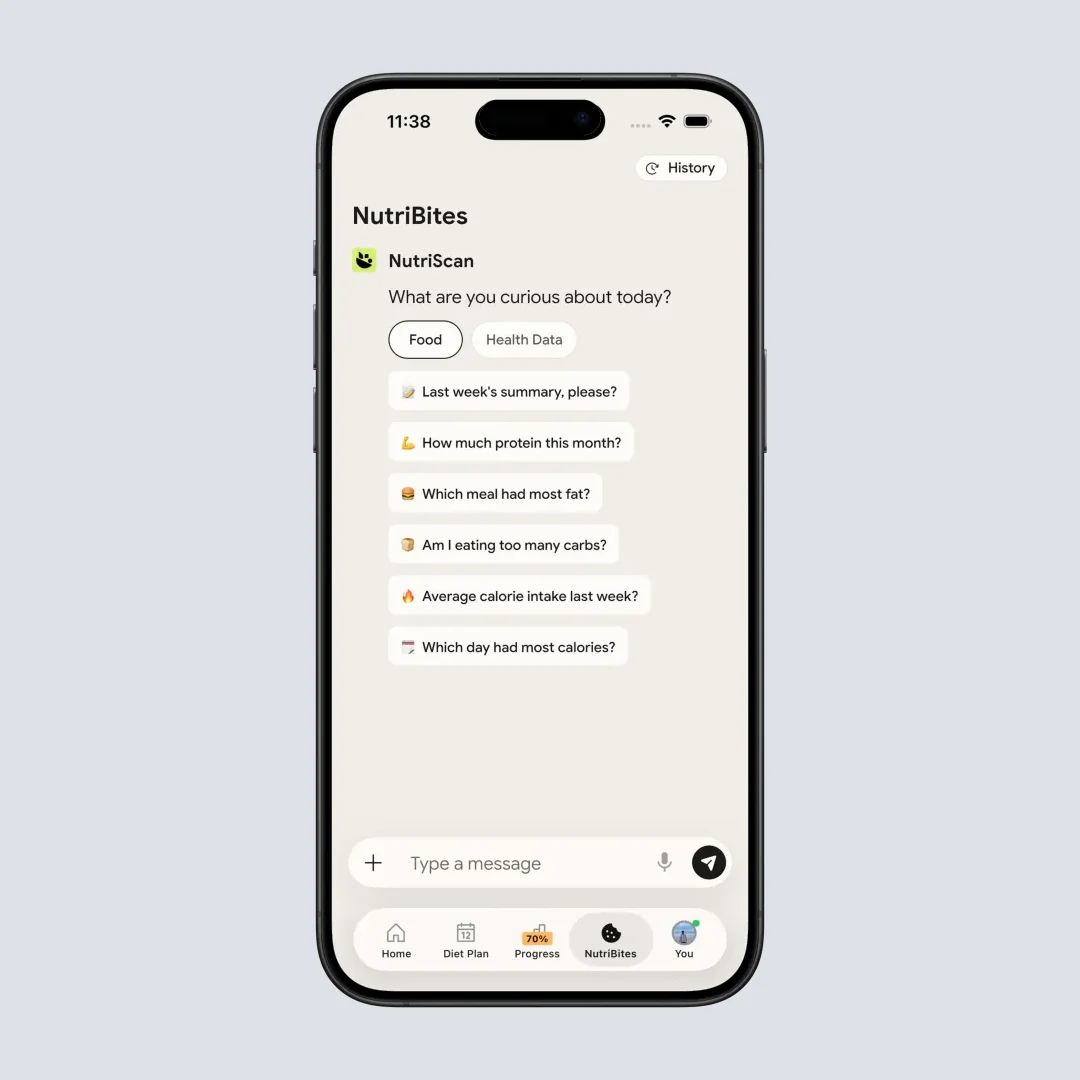
NutriBites lets you chat with your meal history to uncover eating patterns
Step 7: Generate a PCOS-Friendly Diet Plan
If you want to go beyond tracking and get a complete eating plan, NutriScan's Diet Plan feature (Premium) creates a personalized 28-day plan based on your PCOS goal. It considers your food preferences, eating schedule, lifestyle, and even items in your kitchen.
The diet plan shows:
- Daily targets for macros and micronutrients
- Food options for each meal time (breakfast, lunch, dinner, snacks)
- Quick recipes with portion sizes
- Benefits and things to avoid
- A grocery list you can copy
7 Tips for Better PCOS Macro Tracking
After tracking my PCOS macros for over a year, here are my best tips:
Tip 1: Scan Everything, Even Snacks That handful of nuts? Scan it. That chai latte? Scan it. Small bites add up, especially carbs from hidden sugars.
Tip 2: Use the Repeat Meal Feature If you eat the same breakfast most days, use "Start Daily Repeat" from the long press menu. This saves time and keeps your tracking consistent without re-scanning.
Tip 3: Check Your NutriScore Colors Weekly Go to Insights and look at your calendar view. If you see too many orange or red days, it is time to adjust your eating. Aim for mostly green days.
Tip 4: Focus on Protein at Breakfast Many women skip protein at breakfast, then struggle to meet their target. Start with eggs, Greek yogurt, or a protein smoothie. Our PCOS breakfast frameworks for insulin control give you five builds to copy.
Tip 5: Watch Cooking Methods The same food can have wildly different macros based on cooking. Choose steamed, grilled, or air-fried over deep-fried when possible. The oil slider in NutriScan helps account for this.
Tip 6: Save Your PCOS-Friendly Meals as Favorites When you find a meal with perfect macros, tap the heart icon to save it. Later, you can easily copy it to today or set it on repeat.
Tip 7: Talk to Monika for Guidance NutriScan's voice AI nutritionist Monika can answer your PCOS nutrition questions and log meals through conversation. Free gets 4 calls a week, Premium is unlimited. Great when your hands are full.
 Meal prepping makes hitting your PCOS macros so much easier!
Common PCOS Macro Mistakes to Avoid
Learning from mistakes saves time. Here are common ones I see:
Mistake 1: Going Too Low on Carbs
Yes, reducing carbs helps PCOS. But going under 50 grams daily can backfire. Some women experience fatigue, brain fog, and even disrupted periods. Aim for moderate reduction (around 100-140 grams), not elimination.
Mistake 2: Ignoring Fiber Fiber is technically a carb, but it is your friend for PCOS. A systematic review of dietary fiber in PCOS found that every included trial reporting HOMA-IR showed it fall when fiber intake went up. When tracking carbs, focus on net carbs (total carbs minus fiber).
Mistake 3: Not Getting Enough Healthy Fats Many women fear fat. But healthy fats from avocado, olive oil, nuts, and fatty fish actually help PCOS. A meta-analysis of 9 trials with 591 women in Reproductive Biology and Endocrinology found omega-3 supplementation improved the HOMA insulin resistance index and raised adiponectin, an anti-inflammatory hormone. Aim for at least 30% of calories from good fats.
Mistake 4: Eating Too Much Protein at Once Eating 80 grams at dinner and 10 grams at breakfast is not the same as spreading it evenly. Johns Hopkins' PCOS diet guide suggests including a protein source with meals and snacks to keep blood sugar steady, so space your protein across the day.
Mistake 5: Forgetting About Liquid Calories That smoothie or coffee drink might contain 30+ grams of carbs. Always scan beverages too. The packaged food option in NutriScan helps you log drinks accurately.
Sample PCOS Macro Day: What It Looks Like
Here is an example of how a day of PCOS-friendly eating might look:
Breakfast (7:30 AM)
- Scrambled eggs (2) with spinach and feta
- 1 slice whole grain toast
- Black coffee
- Macros: 320 cal | 22g protein | 18g carbs | 19g fat
Mid-Morning Snack (10:30 AM)
- Greek yogurt (plain, full-fat)
- Handful of walnuts
- Macros: 190 cal | 12g protein | 8g carbs | 14g fat
Lunch (1:00 PM)
- Grilled chicken breast
- Large mixed salad with olive oil dressing
- Half cup brown rice
- Macros: 450 cal | 35g protein | 30g carbs | 20g fat
Afternoon Snack (4:00 PM)
- Apple slices with almond butter
- Macros: 200 cal | 5g protein | 20g carbs | 12g fat
Dinner (7:30 PM)
- Baked salmon
- Roasted vegetables (broccoli, bell peppers, zucchini)
- Quinoa (half cup)
- Macros: 520 cal | 38g protein | 32g carbs | 24g fat
Daily Total: 1680 cal | 112g protein | 108g carbs | 89g fat
This gives a macro split of roughly 27% protein, 26% carbs, and 47% fat - fitting within recommended PCOS ranges.
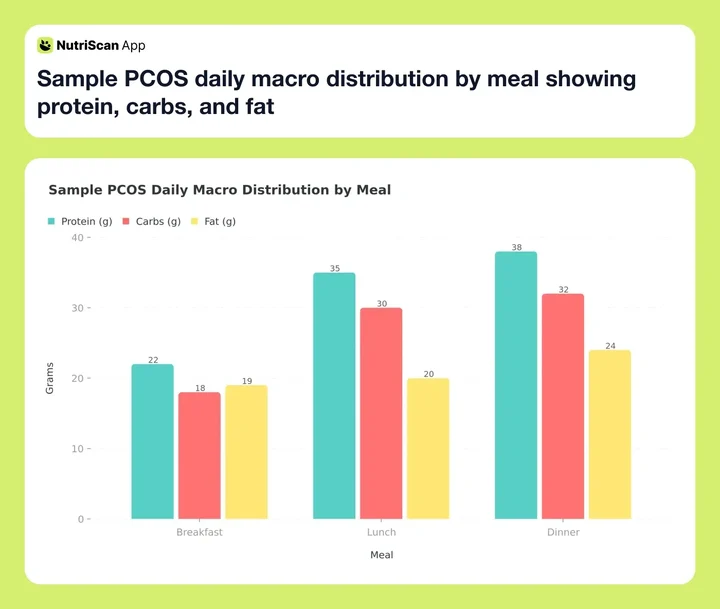 Figure 3: How macros are distributed across a typical PCOS-friendly day
The Science Behind PCOS and Macros: What Research Says
Let me share some recent research that supports macro tracking for PCOS.
A systematic review and meta-analysis in the Journal of Clinical Endocrinology & Metabolism pooled 19 trials with 1,193 participants in 2020. Diet was significantly related to improvements in insulin resistance and body composition in PCOS patients. The DASH diet looked best for insulin sensitivity, and calorie restriction for weight loss.
A 2020 Nature Communications study from UNSW Sydney, the University of Sydney and the ANZAC Research Institute mapped how dietary macronutrient balance affects PCOS traits in mice. An optimized composition rescued ovulatory dysfunction, a key reproductive PCOS feature, at roughly 14% protein, 47% carbohydrate and 39% fat. Reproductive traits responded more to macronutrient balance than metabolic ones did. It is a mouse model, so treat it as a direction to test, not a prescription.
In the same 12-week anti-inflammatory diet pilot from Scientific Reports, IL-1, IL-6, TNF-alpha and androstenedione fell in both the normal-weight and the overweight-to-obese girls, while the fasting insulin and HOMA-IR gains were significant only in the overweight-to-obese group.
What the evidence supports
What you eat matters for PCOS. The 2023 International Evidence-based Guideline makes lifestyle a core focus of care while stating there is no evidence for any one diet composition over another, so tracking is how you find the split that works for you.
How to Adjust Your Macros Over Time
Your PCOS macro needs are not fixed forever. Here is when to adjust:
If you are losing weight too fast (more than 1 kg per week): Add 100-200 calories, mostly from protein and healthy fats.
If you are not losing weight after 4 weeks: First, check your tracking accuracy. Are you scanning every meal? Then consider reducing carbs by 10-20 grams and increasing protein by 10 grams.
If your symptoms are improving: Keep doing what works! You can slightly increase carbs (by 10-15 grams) to test if your body can handle more without symptoms returning.
If you start exercising more: Active women need more fuel. Add 200-300 calories on workout days, mostly from protein (for muscle recovery) and complex carbs (for energy).
If you get pregnant: Pregnancy changes everything. Work with your doctor to adjust macros for healthy baby development. Generally, you will need more calories and different nutrient ratios.
NutriScan's "Modify Macros" feature (found in Profile) lets you adjust your targets anytime. You can set custom macros manually or use "Auto-Set Macros by Goal" to recalculate based on updated information.
Start Your PCOS Macro Journey Today
Managing PCOS through diet does not have to be complicated. With AI meal scanning, you get instant answers about every food you eat. No more guessing. No more struggling with manual food diaries.
Here is your action plan:
- Download NutriScan and set PCOS as your health goal
- Scan your next three meals to understand your current eating patterns
- Compare your actual macros to the recommended PCOS ratios
- Make one small adjustment (like adding protein at breakfast)
- Track consistently for two weeks
- Review your patterns in NutriBites and adjust as needed
Some days you will hit your macros perfectly. Other days, you will have a high-carb meal at a birthday party. That is okay. What matters is the overall pattern. If you have struggled with diet consistency before, read our guide on why 80% quit their diet in 30 days and how to stay.
The 2023 International Evidence-based Guideline recommends lifestyle intervention for all women with PCOS, including diet combined with exercise and behavioral strategies. You have the power to improve your symptoms through the food choices you make every day. AI meal scanning just makes it easier to make those choices wisely.
Frequently Asked Questions
Q1: How many carbs should I eat per day with PCOS?
A common dietitian starting range is 100-140 grams of carbs daily, which equals about 25-40% of total calories. There is no official number: the 2023 International Evidence-based Guideline found no evidence for one diet composition over another, so this varies based on your activity level, weight, and how your body responds to carbs. Start with 40% carbs and reduce if you do not see improvement in symptoms after 4-6 weeks. Focus on complex carbs (whole grains, vegetables, legumes) rather than simple sugars. AI meal scanning helps you track exactly how many carbs each meal contains without doing math yourself.
Q2: Is the keto diet good for PCOS?
Keto can help some women with PCOS because it drastically reduces carbs. A 2023 meta-analysis in the Journal of the Endocrine Society pooled 7 trials with 170 participants and found short-term keto lowered the LH/FSH ratio and free testosterone, raised SHBG, and produced weight loss in every included study, though the authors urge caution given how few subjects were studied. However, keto is very restrictive (under 50 grams of carbs daily) and hard to maintain long-term. Many women do better with moderate low-carb eating (100-140 grams of carbs). The 2024 Scientific Reports pilot found that even moderate dietary improvements, without extreme restriction, improved insulin markers in the overweight-to-obese participants. If you want to try keto, work with a healthcare provider and track your macros carefully.
Q3: How much protein should a woman with PCOS eat?
Aim for 25-35% of your total calories from protein, which usually means 80-120 grams daily depending on your calorie needs. Protein helps keep you full, stabilizes blood sugar, and supports muscle mass. Do not expect the protein share alone to drive weight loss: a meta-analysis of 8 trials in Nutrition & Diabetes found high-protein diets did not significantly beat balanced diets on body weight or BMI in women with PCOS once calories were matched. Good protein sources include eggs, chicken, fish, Greek yogurt, legumes, and tofu. Spread your protein across all meals rather than eating most of it at dinner.
Q4: Can I still eat rice and bread with PCOS?
Yes, but choose wisely and watch portions. Whole grain bread and brown rice are better than white versions because they have more fiber and a lower glycemic index. Johns Hopkins Medicine's PCOS diet guide says breads and pastas made with whole grains can help people with PCOS avoid spikes in blood sugar. Stick to half cup portions (cooked) and always pair carbs with protein and healthy fats. AI meal scanning shows you exactly how much carbs your rice or bread portion contains so you can fit it into your daily target.
Q5: How long does it take to see results from tracking PCOS macros?
Most women notice some changes within 4-8 weeks of consistent macro tracking. Early signs include more stable energy levels, fewer cravings, and better sleep. Weight loss typically starts after 2-4 weeks if you are in a calorie deficit. Hormonal improvements like more regular periods may take 2-3 months. The 2020 meta-analysis found that longer diet interventions produced greater improvements in insulin resistance. Be patient and focus on trends over time rather than daily fluctuations. Use NutriScan's Insights calendar to visualize your progress across weeks and months.
Download NutriScan today and start your PCOS macro tracking journey. Click a picture, discover your nutrition, and plan meals that actually work for your body.