Anti-Inflammatory PCOS Meal Plan: 7 Days, Veg and Non-Veg
 ChatGPT
  Claude
  AI Mode
  Perplexity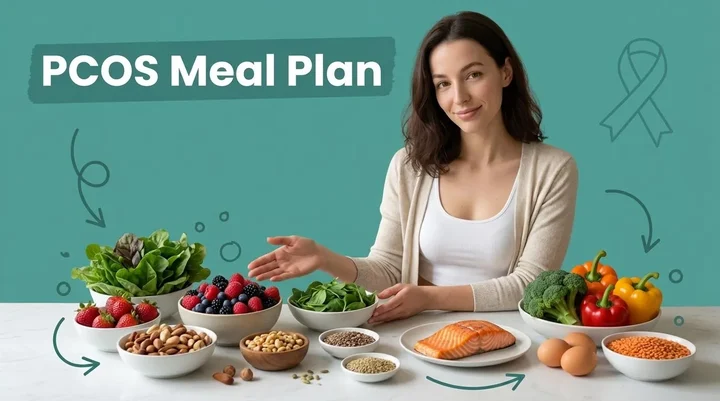
An anti-inflammatory PCOS meal plan is built to bring down the inflammatory markers that run high in PCOS: roughly 50% complex carbs, 25% protein and 25% healthy fats, with fatty fish or omega-3 seeds twice a week, leafy greens, berries, legumes, olive oil, and daily turmeric, ginger and cinnamon. Refined carbs, sugary drinks, processed meat and deep-fried food come out. In a 12-week trial in the North American Journal of Medical Sciences, women with PCOS eating this way lost about 7% of body weight, cut visceral fat area by 21.7%, and 63% regained regular menstrual cycles. The full seven days are below, with a vegetarian and a non-vegetarian option for every meal, plus vegan swaps.
TL;DR - 7-Day Anti-Inflammatory PCOS Meal Plan
Who it's for: Women with PCOS looking to reduce inflammation, balance hormones, and improve symptoms through diet
Main outcomes: 63% regained regular menstrual cycles in the 12-week trial below, about 7% body weight reduction, 21.7% visceral fat reduction, improved insulin sensitivity
Key approach: 50% complex carbs, 25% protein, 25% healthy fats with anti-inflammatory foods like fatty fish, turmeric, leafy greens, and berries
Timeframe: Energy improvements in 2-3 weeks, skin changes at 4-6 weeks, menstrual regularity in 2-3 months
Both options: Complete vegetarian AND non-vegetarian meal plans for every day
The months after a PCOS diagnosis tend to follow one shape: periods, weight, energy and mood all going sideways at once, then a run of crash diets and expensive supplements that promise a lot and deliver nothing. Food is not the whole answer. It is the lever most people have not pulled properly yet.
PCOS runs deeper than the ovaries. Chronic low-grade inflammation sits underneath it, and the food you eat every day either feeds that inflammation or calms it.
A 2025 review in Nutrients screened 21 randomized trials of dietary patterns in PCOS and is careful about what they prove: no single named diet has clearly beaten the others, and the clearest signal came from a calorie-restricted DASH diet on weight and glucose control. So treat what follows as a pattern to run, not a cure. That is why I built it as seven ordinary days instead of a protocol.
Why Anti-Inflammatory Eating Matters for PCOS 🔬
Let me share something that surprised me when I first learned about it. Women with PCOS have higher levels of inflammatory markers in their bodies compared to women without the condition. We are talking about things like C-reactive protein (CRP), interleukin-6 (IL-6), and tumor necrosis factor alpha (TNF-α). These inflammatory markers do not just sit there quietly - they actively mess with your hormones, make insulin resistance worse, and keep you stuck in an endless cycle of frustrating symptoms.
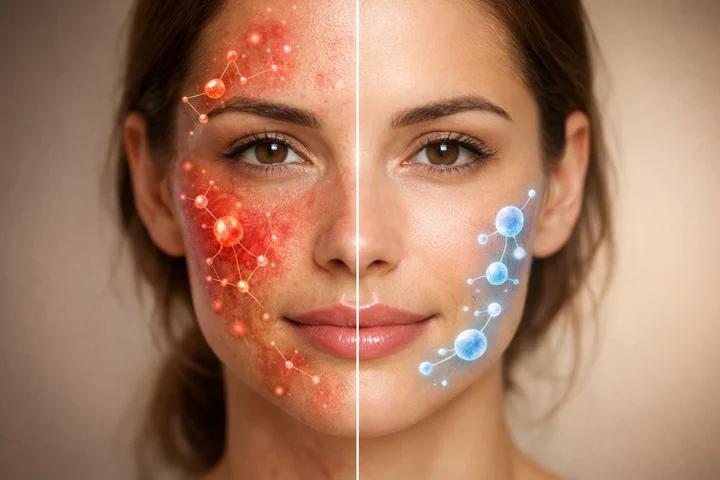 How anti-inflammatory foods work to reduce PCOS symptoms at the cellular level
Salama and colleagues put 100 overweight and obese women with PCOS on an anti-inflammatory diet for 12 weeks and published the results in the North American Journal of Medical Sciences. Seventy-five finished the trial. What changed:
| Outcome | Improvement |
|---|---|
| Body weight reduction | 7% |
| Waist circumference | -6.6% |
| Body fat loss | 9.2% |
| Visceral fat reduction | 21.7% |
| Regained regular cycles | 63% |
| Spontaneous pregnancy | 12% |
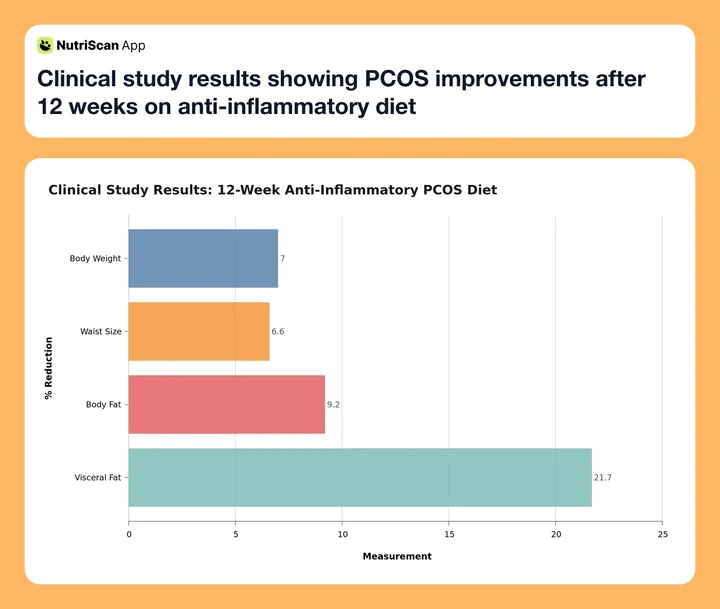 Figure 1: Clinical study results showing significant improvements after 12 weeks on an anti-inflammatory diet
The diet composition in this study was carefully designed: 50% complex carbohydrates, 25% protein, and 25% healthy fats. The researchers emphasized fatty fish twice a week, legumes, nuts, olive oil, herbs, spices, and green tea while limiting processed meat, poultry, and added sugars.
Think about that for a moment. Just by changing what they ate, these women saw real, measurable improvements in their PCOS symptoms. No expensive medications with side effects. No complicated procedures. Just food as medicine working its magic.
 When you realize healthy eating can actually be this simple and delicious!
Three Situations This Plan Is Built For 💪
The three sketches below are composites, not case reports. No named person, no measured result, just the situations that come up most often and what to change first in each.
Situation 1: The Working Professional
Take a typical office schedule: a marketing manager in her early thirties, six years since diagnosis, periods that skip two or three months, belly fat that will not move despite regular gym sessions, and cystic acne that flares before big presentations.
The first move here is not a new diet. It is two weeks of logging, because the link between a bad symptom week and a run of processed food, white rice and sugar only becomes obvious once it is written down. NutriScan's Free plan covers 5 AI meal scans a week, which is enough to spot-check the meals you are least sure about. Then swap the worst offenders and watch afternoon energy first, since that shifts well before cycle length does.
Situation 2: Trying to Conceive Again
A second common case: a woman in her mid-thirties whose first child came through IVF, wanting to try again and dreading another round of it. An anti-inflammatory diet is not a fertility treatment and does not replace one. In the 12-week trial above, 12% of the women conceived spontaneously, which makes this a pattern worth running alongside your doctor's monitoring, never instead of it. Tell your doctor what you are changing before you change it.
Situation 3: The College Student
Third: a final-year student living on hostel food that is mostly fried and carb-heavy, with exam stress on top. Weight climbs over a semester and cycles get less predictable.
Almost none of this plan needs a kitchen. Weekend batch cooking, nuts and fruit in a bag for campus, and a photo instead of a written food diary is the whole system. Where the plan calls for salmon, the moong dal recipe further down does the same job at a fraction of the price.
 That feeling when your PCOS symptoms finally start improving!
Understanding the Science Behind Anti-Inflammatory Foods 🧪
Before I give you the meal plan, let me explain what makes certain foods anti-inflammatory. This knowledge will help you make better choices even when you are eating out, traveling, or cannot follow the plan exactly.
Omega-3 Fatty Acids 🐟
These are the superstars of anti-inflammatory eating. Found in fatty fish like salmon, mackerel, sardines, and tuna, omega-3s help reduce inflammatory cytokines in your body. They work by blocking the production of substances that trigger inflammation.
For vegetarians, omega-3s can be found in walnuts, chia seeds, flaxseeds, and hemp seeds - though the plant form (ALA) needs to be converted by your body and is less efficient than the fish form (EPA and DHA). This is why vegetarians should consume larger quantities of these plant sources daily.
Colorful Vegetables and Fruits 🥗
The colors in vegetables and fruits come from antioxidants that actively fight inflammation:
| Color | Source | Key Compounds |
|---|---|---|
| Deep blue/purple | Berries | Anthocyanins |
| Dark green | Spinach, kale | Chlorophyll, vitamin K, folate |
| Red | Tomatoes | Lycopene (more available when cooked) |
| Orange/yellow | Bell peppers | Vitamin C, beta-carotene |
Each color offers different protective compounds, which is why eating a rainbow of colors throughout your day is so important. Aim for at least 5 servings of vegetables and 2-3 servings of fruit daily.
Spices That Heal 🌿
Turmeric, ginger, and cinnamon are not just for flavor - they are powerful anti-inflammatory agents backed by science. Curcumin, the active compound in turmeric, is the best studied of the three. A meta-analysis of seven randomized trials covering 447 women with PCOS found that curcumin supplements lowered C-reactive protein, fasting glucose, insulin and HOMA-IR against placebo, though only two of those trials measured CRP.
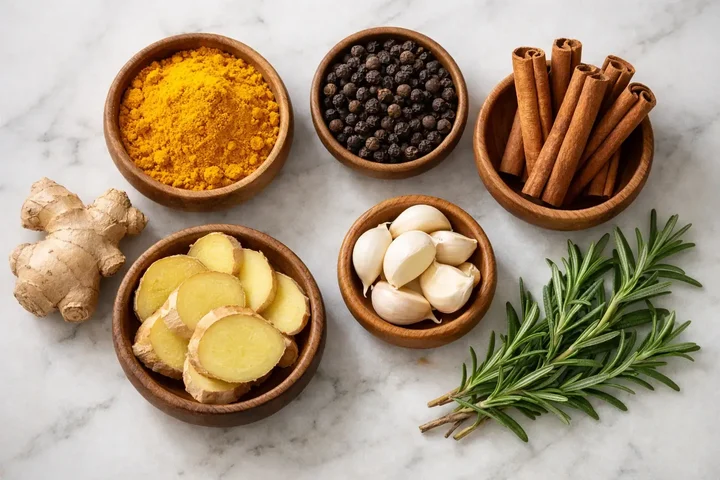 The power spices: turmeric, ginger, cinnamon, and black pepper for enhanced absorption
The 2024 AIDiet pilot study in Scientific Reports trained its participants to cook with cinnamon, ginger, turmeric and black cumin, plus chives, garlic, onion, cloves, rosemary, black pepper, chilies, oregano, thyme and lemongrass. Add these spices to your cooking daily for best results.
Pro Tip
Always add black pepper when you cook with turmeric. In Shoba's 1998 pharmacokinetic study in Planta Medica, 20 mg of piperine alongside 2 g of curcumin raised curcumin bioavailability in human volunteers by 2000%.
Healthy Fats 🥑
Extra virgin olive oil contains oleocanthal, which, as Beauchamp and colleagues reported in Nature, inhibits the same cyclooxygenase enzymes that ibuprofen blocks. Avocados provide monounsaturated fats and fiber. Nuts like almonds, walnuts, and pistachios offer a combination of healthy fats, protein, and fiber that helps stabilize blood sugar and reduce inflammation.
Foods to Avoid or Limit ⚠️
Understanding what to avoid is just as important as knowing what to eat. These foods can increase inflammation and worsen PCOS symptoms, and our longer list of PCOS foods to avoid explains why each one does it:
Foods That Trigger Inflammation
- Refined carbohydrates - white bread, white rice, pastries (spike blood sugar quickly)
- Sugary drinks - sodas, sweetened teas, even 100% fruit juices
- Processed meats - bacon, sausages, hot dogs, deli meats
- Deep-fried foods - cooked in vegetable oils high in omega-6
- Trans fats - packaged snacks, cookies, baked goods
- Excessive red meat - limit to once or twice per week maximum
- Artificial sweeteners - can disrupt gut bacteria
- Alcohol - especially in excess, increases inflammation
Your 7-Day Anti-Inflammatory PCOS Meal Plan 📋
I have designed this meal plan with both vegetarian and non-vegetarian options for each meal. The macronutrient ratio follows the research-backed composition of approximately 25% protein, 25% healthy fats, and 50% complex carbohydrates. This ratio was shown to produce the best results in clinical studies on PCOS. Use our PCOS Macro Calculator to get personalized targets based on your body and goals. If you cook Indian food most nights, the low-GI Indian PCOS meal prep playbook has the Sunday prep routine that keeps this plan running.
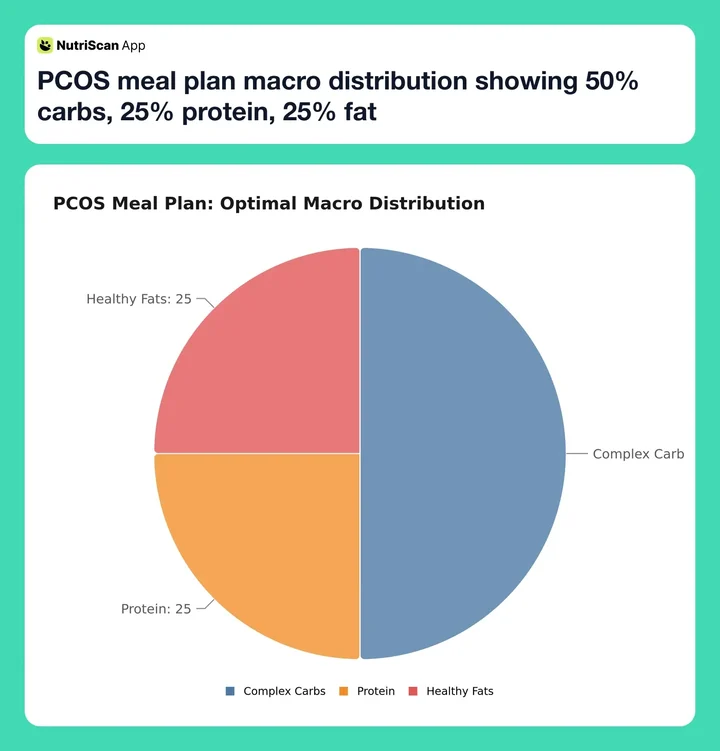 Figure 2: The optimal macronutrient distribution for PCOS management based on clinical research
Snack Guidelines for All Days:
- Mid-Morning: A handful of almonds (10-12) with green tea OR mixed berries with Greek yogurt
- Afternoon: Carrot and cucumber sticks with hummus OR an apple with almond butter OR roasted makhana with turmeric
Day 1: Fresh Start Monday 🌅
Breakfast
| Vegetarian | Non-Vegetarian |
|---|---|
| Overnight oats made with rolled oats, chia seeds, almond milk, fresh berries (blueberries and strawberries), and a generous sprinkle of cinnamon. Add crushed walnuts on top for omega-3s and crunch. | Same overnight oats base with a side of 2 boiled eggs for extra protein and choline. |
Lunch
| Vegetarian | Non-Vegetarian |
|---|---|
| Quinoa salad with roasted chickpeas (seasoned with cumin and paprika), cucumber, cherry tomatoes, bell peppers, red onion, and a dressing made with olive oil, lemon juice, and fresh herbs. Add crumbled feta cheese if you eat dairy. | Grilled chicken breast (100g) seasoned with herbs, served over the same quinoa salad base. |
Dinner
| Vegetarian | Non-Vegetarian |
|---|---|
| Palak paneer (spinach with cottage cheese) made with minimal oil and lots of garlic, served with one small bowl of brown rice and a side of cucumber raita made with Greek yogurt. | Baked salmon fillet (100g) with a turmeric and herb crust, served with steamed broccoli, asparagus, and a small portion of mashed sweet potato. |
Day 2: Turmeric Tuesday 🌟
Breakfast
| Vegetarian | Non-Vegetarian |
|---|---|
| Vegetable poha (flattened rice) with green peas, carrots, peanuts, and plenty of turmeric and curry leaves for flavor. Squeeze fresh lime on top. | Turmeric scrambled eggs (add a pinch of turmeric and black pepper to the eggs) with sauteed spinach and one slice of whole grain toast with avocado. |
Lunch
| Vegetarian | Non-Vegetarian |
|---|---|
| Moong dal (yellow lentils) cooked with tomatoes, turmeric, and cumin, served with jeera brown rice, a bowl of mixed vegetable sabzi (beans, carrots, peas), and fresh cucumber-tomato salad. | Grilled turkey or chicken wrap with whole wheat tortilla, hummus, lettuce, tomatoes, cucumbers, and a side of warming lentil soup. |
Dinner
| Vegetarian | Non-Vegetarian |
|---|---|
| Vegetable and tofu stir-fry made in olive oil with garlic, ginger, bell peppers, snap peas, and mushrooms. Use low-sodium soy sauce and serve over cauliflower rice. | Grilled fish tikka marinated in yogurt and spices, served with mint chutney, a large mixed green salad, and a small portion of quinoa. |
Day 3: Wellness Wednesday 💚
Breakfast
| Vegetarian | Non-Vegetarian |
|---|---|
| Green smoothie bowl made with fresh spinach, banana, frozen mango, chia seeds, and coconut milk. Top with coconut flakes, sliced almonds, and fresh berries. | Same smoothie bowl with a side of smoked salmon (30g) for an omega-3 boost first thing in the morning. |
Lunch
| Vegetarian | Non-Vegetarian |
|---|---|
| Mediterranean bowl with homemade or store-bought falafel, tabbouleh (bulgur wheat salad with parsley), hummus, kalamata olives, and tzatziki sauce over a bed of mixed greens. | Grilled lamb kebabs (lean cuts, about 80g) with the same tabbouleh and Greek salad with feta cheese. |
Dinner
| Vegetarian | Non-Vegetarian |
|---|---|
| Rajma (kidney beans) curry made with tomatoes, onions, and warming spices, served with brown rice, cooling raita, and a side of sauteed green beans with garlic and sesame seeds. | Chicken curry made with tomato-based gravy (not cream-based), served with one whole wheat roti and a large salad with olive oil dressing. |
Day 4: Thriving Thursday 🌻
Breakfast
| Vegetarian | Non-Vegetarian |
|---|---|
| Besan chilla (chickpea flour pancakes) stuffed with grated carrots, onions, and green chilies, served with fresh mint chutney and a glass of spiced buttermilk. | Same chilla with a side of chicken keema (minced chicken) cooked with peas, ginger, and garam masala. |
Lunch
| Vegetarian | Non-Vegetarian |
|---|---|
| Buddha bowl with roasted sweet potato cubes, black beans, sliced avocado, corn kernels, cherry tomatoes, purple cabbage, and cilantro lime dressing. | Same Buddha bowl base with grilled shrimp or prawns (100g) seasoned with chili and lime. |
Dinner
| Vegetarian | Non-Vegetarian |
|---|---|
| Stuffed bell peppers filled with a mixture of quinoa, black beans, corn, and cheese, baked until golden and slightly crispy on top. Serve with a side salad. | Baked cod or any white fish (100g) with roasted Mediterranean vegetables (zucchini, eggplant, tomatoes, onions) drizzled with olive oil and herbs. |
Day 5: Fabulous Friday 🎉
Breakfast
| Vegetarian | Non-Vegetarian |
|---|---|
| Whole wheat vegetable uttapam topped with tomatoes, onions, and green chilies, served with sambar (lentil vegetable stew) and coconut chutney. Enjoy with a cup of fresh ginger chai. | Egg bhurji (Indian spiced scrambled eggs) with onions, tomatoes, and green chilies, served with one whole wheat paratha and sliced tomatoes. |
Lunch
| Vegetarian | Non-Vegetarian |
|---|---|
| Vietnamese-style fresh spring rolls made with rice paper, crispy tofu, rice vermicelli noodles, fresh mint, basil, and lettuce. Serve with peanut dipping sauce. | Same spring rolls filled with grilled chicken or shrimp instead of tofu. |
Dinner
| Vegetarian | Non-Vegetarian |
|---|---|
| Creamy mushroom and spinach risotto made with brown rice instead of arborio, finished with parmesan cheese and fresh herbs like thyme and parsley. | Herb-crusted baked chicken breast with the mushroom risotto and a side of steamed asparagus with lemon. |
Day 6: Satisfying Saturday 🥗
Breakfast
| Vegetarian | Non-Vegetarian |
|---|---|
| Chia pudding made the night before with coconut milk, topped with fresh mango chunks, passion fruit pulp, toasted coconut flakes, and a drizzle of honey. | Same chia pudding with a side of smoked mackerel (30g) for omega-3s. |
Lunch
| Vegetarian | Non-Vegetarian |
|---|---|
| Falafel bowl with tabbouleh, creamy hummus, pickled turnips and cucumbers, tahini dressing, and warm whole wheat pita bread torn into pieces. | Shawarma chicken bowl with the same accompaniments plus garlic sauce and extra pickled vegetables. |
Dinner
| Vegetarian | Non-Vegetarian |
|---|---|
| Thai green curry made with firm tofu, Thai eggplant, bamboo shoots, and fresh basil in coconut milk. Serve with jasmine or brown rice. | Same Thai green curry with fish pieces or chicken thigh instead of tofu. |
Day 7: Self-Care Sunday 🌸
Breakfast
| Vegetarian | Non-Vegetarian |
|---|---|
| Fluffy buckwheat pancakes topped with fresh mixed berries, a dollop of Greek yogurt, crushed walnuts, and a light drizzle of pure maple syrup. | Same pancakes with a side of smoked salmon and a small amount of cream cheese. |
Lunch
| Vegetarian | Non-Vegetarian |
|---|---|
| Traditional South Indian sambar rice with drumstick and vegetables, served with avial (mixed vegetable curry in coconut), a small amount of pickle, and crispy papadam. | Kerala-style fish curry made with coconut milk and kokum, served with brown rice and vegetable thoran (dry vegetable preparation with coconut). |
Dinner
| Vegetarian | Non-Vegetarian |
|---|---|
| Hearty minestrone soup loaded with cannellini beans, vegetables, whole wheat pasta, and fresh basil, served with a slice of whole wheat garlic bread. | Lean grilled steak (100g, once a week treat) with roasted root vegetables (carrots, parsnips, beets) and a large green salad with balsamic vinaigrette. |
Vegan PCOS Meal Plan: Swaps for Every Day
Every day above works without animal food. Start from the vegetarian column, then run these swaps:
| Plan item | Vegan swap |
|---|---|
| Greek yogurt, raita | Unsweetened coconut or soy yogurt |
| Paneer, feta, parmesan | Firm tofu, or cashew cheese |
| Boiled eggs, egg bhurji | Tofu bhurji with turmeric and black salt |
| Honey, maple drizzle | Date paste or a few chopped dates |
| Ghee, butter | Extra virgin olive oil or cold-pressed sesame oil |
Two things need attention on a vegan PCOS plate. Omega-3s first: the plant form (ALA) in walnuts, chia and flax converts poorly to EPA and DHA, so eat those seeds daily and ask your doctor about an algae-based supplement. Protein second: aim for 20 grams at breakfast from tofu, tempeh, soy yogurt or besan chilla, because a carb-only vegan breakfast is the shortest route to a 3 PM crash. Our vegetarian weight loss diet for Indian women has more plant protein combinations that reach that number.
Anti-Inflammatory PCOS Meals: 3 Recipes to Repeat
You do not need 21 recipes. Three cover most of the week.
Turmeric salmon tray bake, 25 minutes. Rub a 100g salmon fillet with 1 teaspoon olive oil, half a teaspoon of turmeric, cracked black pepper and lemon zest. Sit it on a tray with broccoli florets and sliced sweet potato tossed in olive oil. Bake at 200C (400F) for 18 to 20 minutes. Vegan version: the same rub on a 150g block of pressed firm tofu.
Moong dal with tomato and cumin, 20 minutes. Pressure cook half a cup of moong dal with turmeric and salt. Temper cumin seeds, garlic and ginger in a teaspoon of olive oil, add chopped tomato, cook until it collapses, then stir into the dal. Serve with jeera brown rice and a cucumber salad.
Berry cinnamon overnight oats, 5 minutes. Half a cup rolled oats, a tablespoon of chia seeds, three-quarters of a cup of milk or plant milk, a big pinch of cinnamon. Refrigerate overnight, top with berries and crushed walnuts in the morning.
7 Tips for Success on Your PCOS Journey 🎯
Tip 1: Start Your Day with Warm Lemon Water 🍋
Before eating anything in the morning, drink a glass of warm water with half a lemon squeezed in. This simple habit helps kickstart your digestion and provides a dose of vitamin C.
Tip 2: Never Skip Protein at Breakfast 💪
Protein helps stabilize blood sugar levels throughout the entire day. Whether it is eggs, Greek yogurt, nuts, or tofu - make sure your breakfast has at least 15-20 grams of protein. The PCOS breakfast frameworks for insulin control show how to build one in under ten minutes.
Tip 3: Cook with Anti-Inflammatory Spices Daily 🌶️
Add turmeric to your scrambled eggs. Put cinnamon in your oatmeal. Use fresh ginger in your stir-fries. Sprinkle black pepper whenever you use turmeric, for the absorption reason above.
Tip 4: Eat Fatty Fish Twice a Week 🐟
Non-vegetarians should eat salmon, mackerel, or sardines at least twice weekly. Vegetarians should include chia seeds, flaxseeds, and walnuts daily, and consider an algae-based omega-3 supplement.
Tip 5: Practice Mindful Eating 🧘♀️
Eat slowly and chew your food properly. Put your phone away during meals. Stress activates inflammatory pathways in your body.
Tip 6: Stay Hydrated Right 💧
Drink 2-3 liters of water daily. The 12-week PCOS trial linked earlier had participants drinking five cups of green tea a day, so that is an easy habit to copy.
Tip 7: Track Your Meals 📱
Using the NutriScan App, take a picture of your meal and get instant nutrition analysis. Learn more about how meal scanning works. The app shows daily intake of calories, protein, carbs, and fat clearly. The NutriBites feature lets you ask questions about your eating patterns.
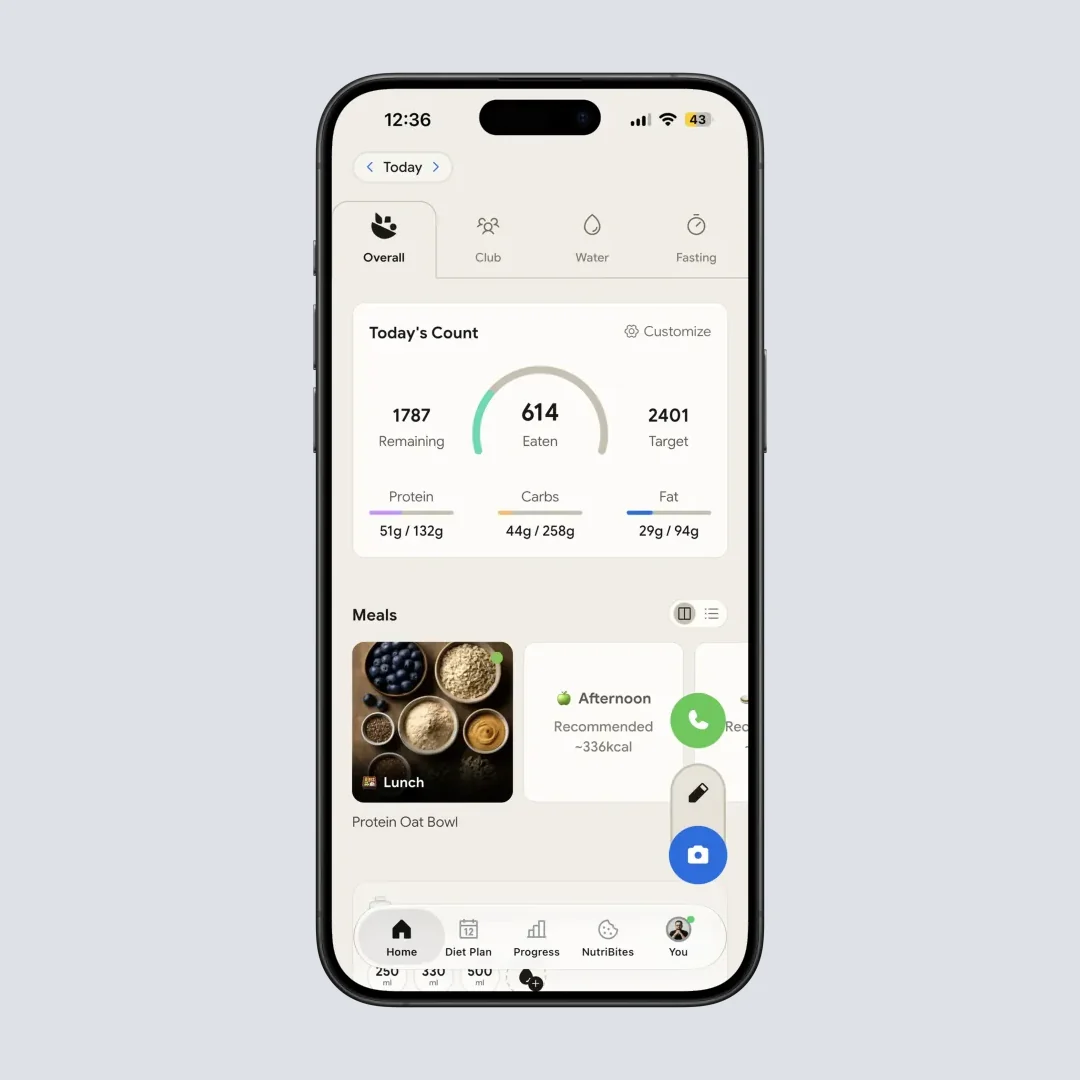
NutriScan App Home Screen: Track your daily macros and see your nutrition at a glance (Home > Daily Nutrition Breakdown)
Step-by-Step Guide to Starting 📝
Step 1: Clean Your Kitchen
Remove processed snacks, sugary cereals, white bread, and anything with trans fats or high fructose corn syrup.
Step 2: Stock Up on Essentials
Get olive oil, vegetables (especially leafy greens), berries, nuts and seeds, eggs, lean proteins or tofu, whole grains, and spices like turmeric, ginger, and cinnamon.
Step 3: Plan Your Meals Weekly
Take 30 minutes every Sunday to plan meals. With NutriScan's Premium Diet Plan feature, get personalized meal plans based on your PCOS goals - the app creates recipes, portion sizes, and even a grocery list.
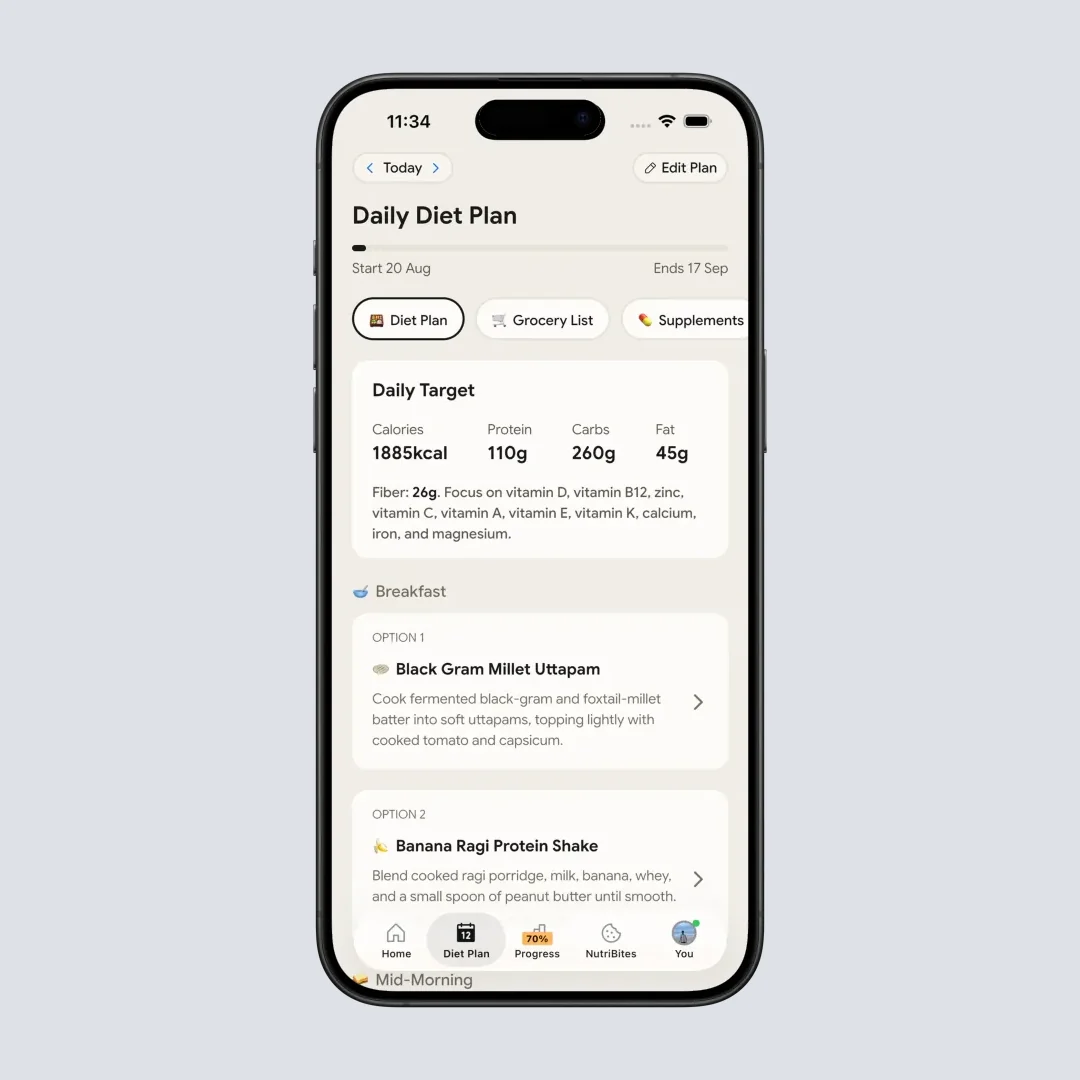
NutriScan Premium Diet Plan: Get personalized PCOS meal plans (Home > Bottom Nav Diet Plan)
Step 4: Prep in Advance
Wash and chop vegetables, cook quinoa or brown rice, prepare overnight oats, and boil eggs for quick snacks.
Step 5: Track from Day One
Take a quick photo of each meal using NutriScan. After a week, review your nutrition insights to see patterns.
Step 6: Listen to Your Body
Pay attention to how you feel after meals. Note which foods make you bloated, tired, or energized.
Step 7: Adjust and Iterate
After 7 days, evaluate what worked. Adjust portion sizes and food choices based on your experience.
What Results to Expect 📈
Based on research and real user experiences, here is what you can expect:
| Timeline | Expected Changes |
|---|---|
| Week 1-2 | Improved energy, reduced bloating |
| Week 3-4 | Better sleep, less cravings |
| Week 4-6 | Clearer skin, stable moods |
| Month 2-3 | More regular periods |
| Month 3+ | Sustained weight management, improved hormone levels |
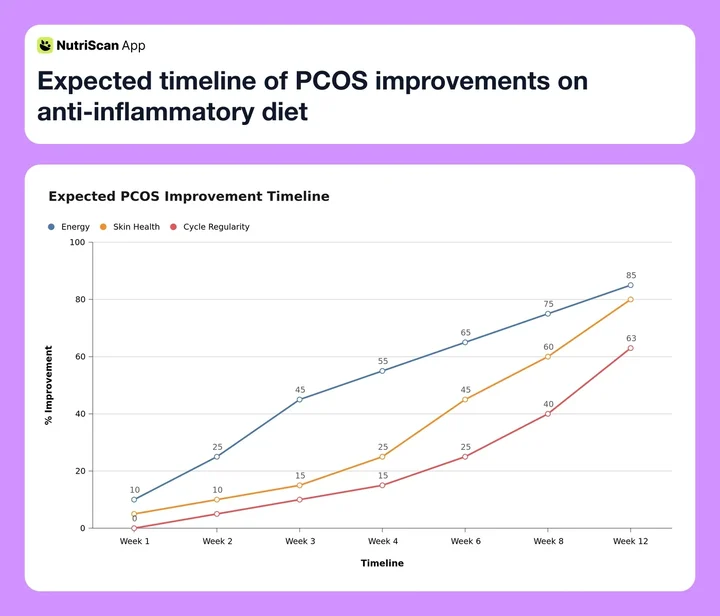 Figure 3: Expected timeline of improvements when following an anti-inflammatory PCOS diet consistently
The 60-Second Habit Worth Keeping ✨
You made it. Here is the habit I promised: track every meal. Not perfectly, not obsessively, just consistently.
Here is why it works: awareness creates accountability. When you photograph your meals, you naturally make better choices. You see patterns. You catch yourself before reaching for inflammatory foods. And it takes just 60 seconds per meal.
The easiest way to do this? Snap a photo with NutriScan. The app logs calories and macros and grades the meal with a NutriScore band, so an inflammatory plate is obvious before you finish it. No manual entry, just one quick photo.
Advanced Tip: Using NutriBites for PCOS Insights
NutriScan's NutriBites feature allows you to ask questions about your meal timeline. Try asking:
- "How much protein did I eat this week?"
- "Which days did I have the most omega-3s?"
- "Show me my sugar intake patterns"
This helps identify patterns that may be affecting your PCOS symptoms.
Frequently Asked Questions ❓
Q1: How quickly will I see results from an anti-inflammatory PCOS diet?
Most women notice improved energy and reduced bloating within 2-3 weeks. Skin changes appear around 4-6 weeks. Menstrual regularity improvements can take 2-3 months. The clinical study showed significant results at 12 weeks.
Q2: Can I follow this with gluten-free or dairy-free restrictions?
Yes! For gluten-free: use certified gluten-free oats, rice or quinoa instead of wheat. For dairy-free: use coconut yogurt, skip paneer and cheese, opt for plant-based milk.
Q3: Is this diet safe during pregnancy or when trying to conceive?
The anti-inflammatory approach is generally considered safe during conception and pregnancy. However, consult your doctor before making major dietary changes.
Q4: How do I eat anti-inflammatory when dining out?
Choose grilled over fried options. Ask for olive oil-based dressings. Order extra vegetables. Avoid bread baskets and sugary desserts. Use NutriScan to scan restaurant meals.
Q5: What if I slip up and eat something inflammatory?
One meal does not undo your progress. Return to anti-inflammatory eating at the next meal. Following the plan 80% of the time can produce significant improvements.
Q6: How much water should I drink daily?
Aim for 2-3 liters of water daily. Include green tea for added antioxidant benefits. Proper hydration supports hormone balance and reduces water retention.
Q7: Can I have coffee on this diet?
Yes, in moderation (1-2 cups daily). Avoid adding sugar or flavored creamers. Black coffee or coffee with a splash of unsweetened almond milk is best.
Q8: Should I take any supplements with this diet?
Many women with PCOS benefit from vitamin D, omega-3s (if vegetarian), and inositol. However, always consult your healthcare provider before starting any supplements.
Q9: Is there a vegan PCOS meal plan version of these 7 days?
Yes. Take the vegetarian column each day and swap dairy for unsweetened soy or coconut yogurt, paneer for firm tofu, and eggs for turmeric tofu bhurji. Eat walnuts, chia and flax daily for omega-3s and keep breakfast protein at 20 grams.
Q10: Which anti-inflammatory diet for PCOS recipes should I start with?
Start with three: turmeric salmon or tofu tray bake, moong dal tempered with cumin and garlic, and berry cinnamon overnight oats. They cover dinner, lunch and breakfast, take under 25 minutes each, and repeat without getting boring.
Final Thoughts 💭
You are not alone in this journey. Millions of women around the world deal with PCOS, and many have found relief through dietary changes like the ones in this meal plan.
The research is clear: anti-inflammatory eating can reduce your symptoms, balance your hormones, and improve your quality of life. You do not need expensive supplements or complicated treatments. You just need to make better food choices, one meal at a time.
Start small. Maybe begin by just changing your breakfast this week. Then add an anti-inflammatory lunch. Build momentum gradually.
And if you want extra support, the NutriScan App for PCOS is here to help. With features like meal scanning, personalized diet plans, NutriBites AI assistant, and detailed nutrition breakdowns - you have everything you need. The app lets you set PCOS as your health goal during onboarding, so all recommendations are tailored for your condition.
Your body responds when you give it the right fuel. Here is to steadier energy, calmer symptoms, and a plan you can actually keep.
Ready to Start?
Download the NutriScan App and select "PCOS" as your health goal during onboarding. You will get personalized meal recommendations, macro targets, and the ability to track your anti-inflammatory journey with just a photo of each meal.
Ready to start your anti-inflammatory journey? Download NutriScan App today and get a personalized PCOS diet plan based on your preferences, lifestyle, and goals.