PCOS Breakfast Frameworks for Insulin Resistance
 ChatGPT
  Claude
  AI Mode
  Perplexity
The best PCOS breakfast for insulin resistance runs on one ratio: 20 to 30 grams of protein, 5 to 8 grams of fiber, one serving of healthy fat, and any carbohydrate kept under a glycemic index of 55. I call it the PFF Formula. In a study published in Clinical Science, women with PCOS who ate a high-calorie breakfast with a lighter dinner had a 54% decrease in insulin levels and a 50% reduction in free testosterone. If you train before breakfast, that same plate still applies, eat it within an hour of finishing rather than pushing food to lunch.
TL;DR - PCOS Breakfast Frameworks for Insulin Resistance
Who it's for: Women with PCOS looking to manage insulin resistance through strategic breakfast choices and meal timing
Main outcomes: 54% decrease in insulin levels, 50% reduction in free testosterone, better energy throughout the day, reduced cravings
Key formula: Protein (20-30g) + Fiber (5-8g) + Healthy Fat = Blood sugar stability
Timeframe: Noticeable energy improvements within 1-2 weeks, hormonal benefits within 2-3 months of consistent practice
Action step: Start tomorrow with one breakfast from this guide and track your response
If you live with Polycystic Ovary Syndrome (PCOS), your first meal sets the insulin response for the rest of the day. I have spent years watching how the right breakfast framework changes the way women with PCOS feel and function, and the pattern is consistent enough to write down.
Below are the breakfast and snack frameworks that work for insulin control in PCOS, plus what to do about training before breakfast. No fancy ingredients. No complicated recipes. Just simple, science-backed strategies you can start using tomorrow morning.
 The right breakfast changes how you feel all day
Why Breakfast Matters So Much for PCOS
Let me tell you about my friend Sarah. She used to skip breakfast thinking it would help her lose weight. But by 11 AM, she was shaking, irritable, and craving everything sweet she could find. Her PCOS symptoms were getting worse, not better.
What Sarah did not know was that skipping breakfast actually increases cortisol - your stress hormone. Research shows that women with PCOS who skip breakfast have higher circulating cortisol levels, which directly worsens hormone imbalances. Another study found that breakfast eaters with PCOS experienced an 8% decrease in glucose levels and better insulin sensitivity compared to those who skipped.
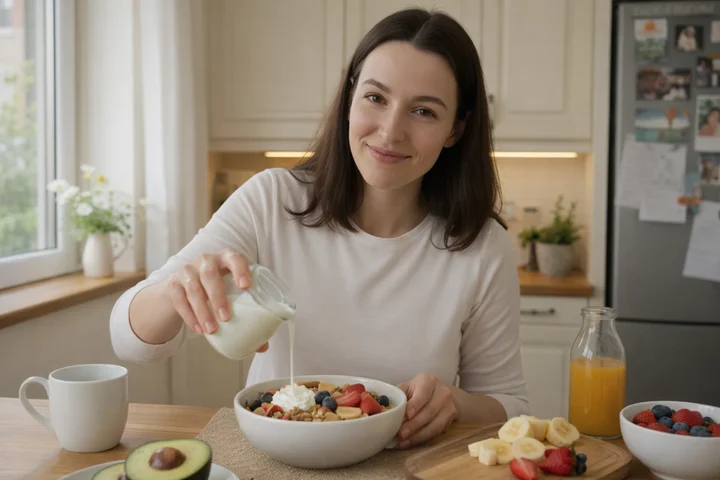 Starting your day with a balanced breakfast sets the tone for stable blood sugar all day
Here is another example. My colleague Priya struggled with constant fatigue and brain fog. She was eating breakfast, but it was a bowl of sugary cereal with low-fat milk. She was eating, and what she ate was the problem. High glycemic foods like sugary cereals cause rapid blood sugar spikes followed by crashes. This is especially problematic for women with PCOS because 35% to 80% of them have insulin resistance, making their cells struggle to respond properly to insulin.
Key Insight
Skipping breakfast increases cortisol and worsens insulin resistance. Eating the wrong breakfast causes blood sugar crashes. The solution is eating the right breakfast with the PFF Formula.
Understanding the Glycemic Index Connection
The Glycemic Index (GI) ranks how quickly a carbohydrate raises your blood sugar, on a scale of 0 to 100 with pure glucose at 100.
| GI Category | Score Range | Effect on Blood Sugar | PCOS Impact |
|---|---|---|---|
| Low GI | 55 or below | Slow, gradual rise | Best choice |
| Medium GI | 56 to 69 | Moderate impact | Use sparingly |
| High GI | 70 and above | Rapid spike | Avoid |
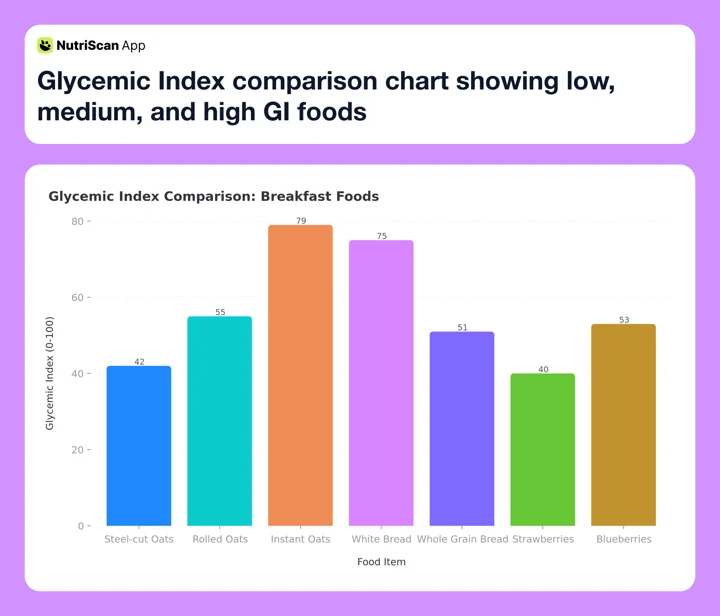 Figure 1: Glycemic index scores for common breakfast foods. Steel-cut oats sit at 42 and instant oats at 79, from the same grain.
For women with PCOS, low GI foods do most of the work. Research published in Current Nutrition Reports (2025) confirms that low GI diets help reduce insulin resistance, regulate menstrual cycles, and lower the risk of complications associated with PCOS.
The mechanism is a loop. High GI food spikes blood sugar, your body answers with insulin, and insulin-resistant cells barely respond, so it produces more. That excess insulin is what drives the acne, excess hair growth, and irregular periods. If rice and roti are staples for you, our low-GI Indian PCOS meal prep playbook covers the swaps that keep the same meals under GI 55.
The Best PCOS Breakfast for Insulin Resistance: Protein + Fiber + Fat
Here is the framework I recommend for every PCOS breakfast. I call it the PFF Formula:
Protein (30-40% of your meal) - Protein helps stabilize blood sugar, keeps you full longer, and supports hormone production. Aim for at least 20-25 grams at breakfast.
Fiber (at least 5-8 grams) - Fiber slows down the absorption of glucose into your bloodstream, preventing sharp spikes. It also feeds your gut bacteria, which affects hormone balance.
Fat (15-20% of your meal) - Healthy fats take longest to digest, keeping you full and supporting hormone production. They also help absorb fat-soluble vitamins.
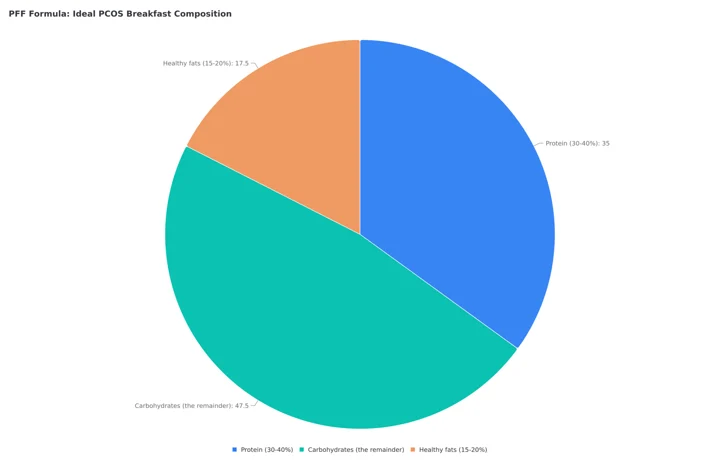 Figure 2: The PFF Formula drawn at the midpoints of the ranges above, protein at 35% and fat at 17.5%, which leaves 47.5% for carbohydrates. Fiber is counted in grams, 5 to 8 per breakfast, so it does not get its own slice.
When these three work together, your breakfast becomes a blood sugar stabilizing powerhouse. The protein and fat slow down the digestion of carbohydrates, while fiber adds bulk and further reduces the glycemic impact of your meal. Use our PCOS macro calculator to find your ideal daily targets.

7 Actionable Tips for PCOS-Friendly Breakfasts
Tip 1: Always Pair Carbs with Protein
Toast gets eggs or nut butter. Fruit gets Greek yogurt or cottage cheese. Pairing carbohydrates with protein instead of eating them alone can cut your blood sugar response by up to 40%.
Tip 2: Choose Whole Grains Over Refined Ones
Swap white bread for whole grain bread. Replace sugary cereals with steel-cut oats. Choose quinoa over white rice. Whole grains have more fiber, which means a lower glycemic impact. Steel-cut oats have a GI of around 42, while instant oats can be as high as 79.
Tip 3: Add Vinegar or Lemon to Your Meals
Adding acidic ingredients to your meal can lower the overall glycemic response. A tablespoon of apple cider vinegar in water before breakfast or lemon juice squeezed over your food can make a difference.
Tip 4: Make Breakfast Your Biggest Meal
Front-loading calories to breakfast is what drove the insulin drop in the Clinical Science study above. Try 40-50% of your daily calories at breakfast, with smaller portions at lunch and dinner.
Tip 5: Include Cinnamon in Your Breakfast
A pilot study published in Fertility and Sterility found that women with PCOS who took oral cinnamon daily for eight weeks had a significant reduction in insulin resistance. Add a teaspoon to your oatmeal, smoothie, or coffee.
Tip 6: Wait 30 Minutes After Waking to Have Coffee
Having coffee before breakfast can increase cortisol levels. Wait until after you have eaten your protein-rich breakfast to have your first cup. This helps keep stress hormones balanced.
Tip 7: Prep Your Breakfasts in Advance
Time is why most women skip breakfast or grab something unhealthy. Spend one hour on Sunday prepping overnight oats, egg muffins, or chia puddings for the week. Something ready removes the decision that leads to a poor choice.
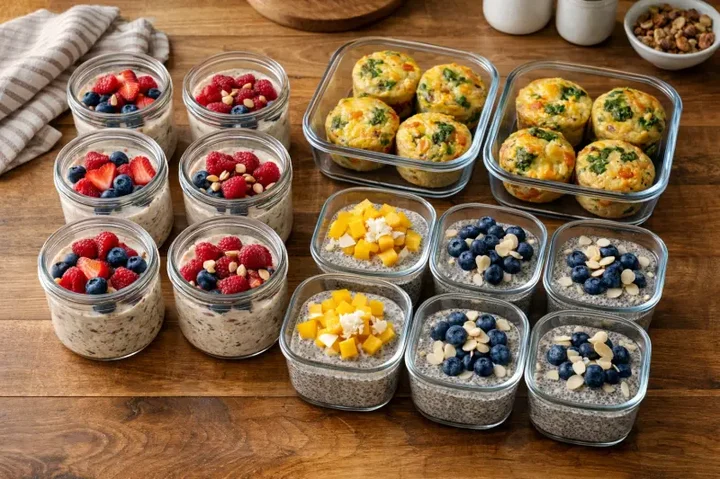 Sunday meal prep keeps PCOS breakfasts easy all week
Step-by-Step Guide: Building Your Perfect PCOS Breakfast
Step 1: Start with a Protein Base
Choose one protein source as your foundation:
- Eggs (2-3 whole eggs give you about 18 grams of protein)
- Greek yogurt (one cup has about 20 grams)
- Cottage cheese (one cup has about 25 grams)
- Tofu scramble
- Protein smoothie
This is your anchor against blood sugar spikes.
Step 2: Add Your Fiber Source
Layer on fiber through vegetables, whole grains, or seeds: spinach in your eggs, berries in your yogurt, chia seeds in your smoothie. Non-starchy vegetables like kale and bell peppers add fiber with barely any carbs. If you include whole grains, stick to steel-cut oats, quinoa, or whole grain bread, all low on the GI scale.
Step 3: Include a Healthy Fat
Add avocado to your eggs, nuts to your yogurt, or nut butter to your smoothie. Fat helps you absorb vitamins and keeps you satisfied. Olive oil, almonds, walnuts, and chia seeds all work.
Step 4: Keep Carbs Low Glycemic - The 40% Blood Sugar Secret
The order you eat your food matters as much as what you eat. Research from Weill Cornell Medical College found that eating foods in a specific order can reduce blood sugar spikes by up to 40%.
The sequence: Vegetables first ➡️ Protein and fat second ➡️ Carbohydrates last
When you eat vegetables and fiber first, they create a gel-like barrier in your stomach that slows down the absorption of everything that follows. Then protein and fat further slow digestion. By the time carbohydrates arrive, your body processes them much more gradually.
For your PCOS breakfast, this means:
- Eat your spinach or vegetables first
- Then your eggs or protein
- Save any toast or fruit for last
If you include carbs in addition to vegetables, choose wisely:
- Berries (strawberries GI 40, blueberries GI 53, raspberries GI 32)
- Whole grain bread (better than white bread)
- Sweet potatoes (better than white potatoes)
Step 5: Add Flavor Without Sugar
Avoid adding sugar to your breakfast. Instead, use:
- Cinnamon for sweetness (bonus: it helps with insulin sensitivity)
- Vanilla extract
- A small amount of raw honey if needed
- Naturally sweet berries
Remember, added sugar causes immediate blood sugar spikes and worsens insulin resistance.
Step 6: Track What You Eat
Snap a photo of your breakfast and NutriScan shows the macros: calories, protein, carbs, and fat, plus fiber and micronutrients, which are free on every meal. Too many carbs or not enough protein, and you know before tomorrow's plate.
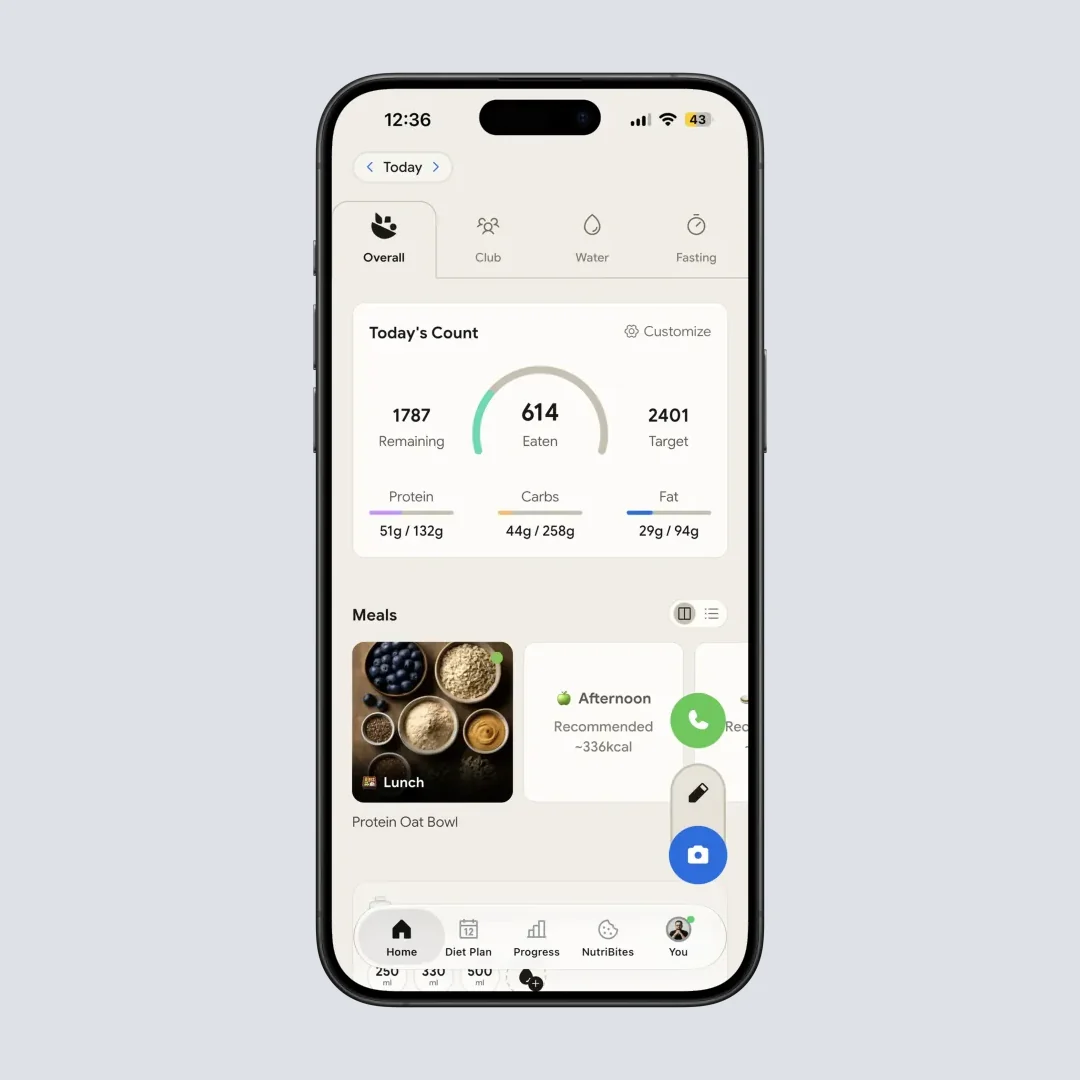
Track your breakfast macros instantly with NutriScan - Home > Camera Icon > Snap Photo
With NutriScan, you can also set PCOS as your health goal during onboarding. The app then provides a personalized diet plan with breakfast options that align with your insulin control needs.
PCOS and Training Before Breakfast: Fasted or Fed?
Training before breakfast is one of the most common PCOS questions I get, and the answer depends on how hard you are training.
Your body already releases a burst of cortisol in the first hour after waking. Exercise adds more on top. For a light session that is fine. For a hard one on an empty stomach, a lot of women with PCOS end up shaky and ravenous by 10 AM, then eat a much larger carb load at the next meal, which is the exact blood sugar swing the PFF Formula exists to prevent.
Two rules that hold up in practice:
- Light and short, train fasted. A 20 to 30 minute walk, mobility work, or easy cycling before breakfast is fine without food. Walking after you eat helps blood sugar too, so you can put the walk on either side of the meal.
- Hard or long, eat something first. For strength training or intervals over 30 minutes, have a small protein-led snack 30 to 45 minutes before: a scoop of protein in water, a hard boiled egg, or half a cup of Greek yogurt. It is small enough not to sit heavy and enough to keep the session from running on stress hormones.
Either way, eat the full PFF breakfast within an hour of finishing. The thing to avoid is letting fasted training slide into a skipped breakfast, because skipping is the part that reliably makes insulin resistance worse.
Three signals tell you that you trained too hard on too little: shakiness during the session, a crash in the hour after it, and cravings that arrive before lunch. Any of them means you need the pre-workout snack, not a bigger lunch. If you log the session and the meal that follows it, the pattern shows up in a week or two, and our guide to tracking PCOS macros with AI meal scanning walks through the setup.
PCOS-Friendly Snack Frameworks
Snacks are just as important as breakfast for maintaining stable blood sugar.
The Mini-Meal Approach
Snacks are small versions of your breakfast formula. Protein, fiber, and fat in every one:
- Apple slices with almond butter
- Greek yogurt with walnuts
- Vegetable sticks with hummus
The Blood Sugar Bridge
Time your snacks about 3-4 hours after your last meal. This prevents the blood sugar dip that triggers cravings. Do not wait until you are starving.
Quick PCOS Snack Ideas
| Snack | Protein | Fiber | Fat |
|---|---|---|---|
| Hard boiled eggs with cherry tomatoes | 12g | 2g | 10g |
| Cottage cheese with cucumber slices | 14g | 1g | 2g |
| Handful of almonds with berries | 6g | 4g | 14g |
| Celery sticks with natural peanut butter | 8g | 3g | 16g |
| Greek yogurt with chia seeds | 18g | 5g | 6g |
| Avocado with sea salt | 2g | 7g | 15g |
| Turkey slices with bell pepper strips | 16g | 2g | 2g |
Notice that every snack has protein. This is non-negotiable for PCOS. Snacks that are pure carbohydrates will spike your blood sugar and leave you hungry again within an hour.
What Research Says About PCOS and Diet
A 2025 review published in the Journal of Health, Population and Nutrition confirms that Mediterranean and low-glycemic index diets are the best approaches for addressing insulin resistance in PCOS. The researchers note that increased protein and reduced refined carbs improve glucose metabolism and hormone regulation. The Current Nutrition Reports work cited earlier adds the other half: high GI diets induce systemic inflammation and worsen insulin resistance.
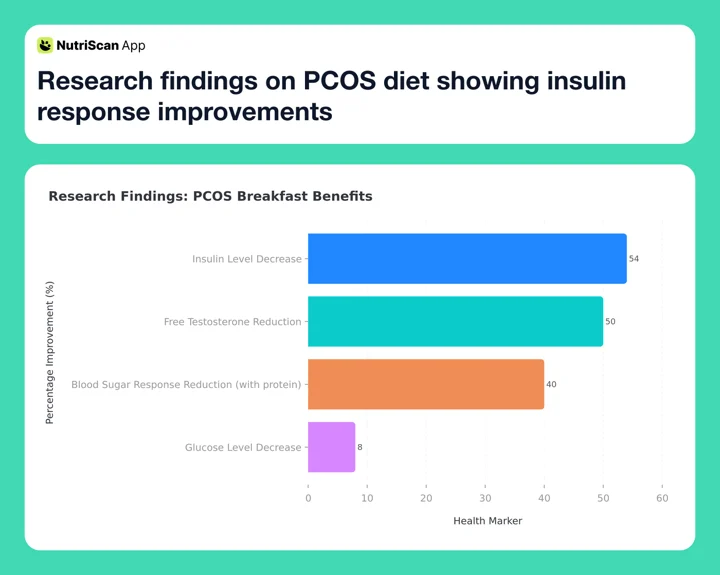 Figure 3: Research shows 54% decrease in insulin levels with high-calorie breakfast approach
More on the PCOS fiber gap
Interestingly, research shows that women with PCOS typically eat less dietary fiber than women without the condition. A pooling of 13 studies found that PCOS patients consume significantly less daily fiber, directly contributing to insulin resistance. This is why adding fiber to every meal and snack is so important.
Sample PCOS Breakfast Menu for One Week
Here is a practical week of breakfasts you can follow:
Monday: Greek Yogurt Parfait One cup Greek yogurt + half cup mixed berries + two tablespoons walnuts + one tablespoon chia seeds + sprinkle of cinnamon.
- Protein: 25g | Fiber: 8g | Calories: ~350
Tuesday: Vegetable Egg Scramble Three eggs scrambled with spinach, tomatoes, and bell peppers + one slice whole grain toast + quarter avocado.
- Protein: 24g | Fiber: 6g | Calories: ~400
Wednesday: Overnight Chia Pudding Three tablespoons chia seeds + one cup unsweetened almond milk + half scoop protein powder + topped with raspberries and almonds. Prepare night before.
- Protein: 22g | Fiber: 12g | Calories: ~320
Thursday: Cottage Cheese Bowl One cup cottage cheese + half cup peaches (ripe or frozen) + two tablespoons pecans + drizzle of tahini.
- Protein: 28g | Fiber: 4g | Calories: ~380
Friday: Protein Smoothie One scoop protein powder + one cup spinach + half avocado + half cup frozen berries + one tablespoon flax seeds + unsweetened almond milk.
- Protein: 26g | Fiber: 9g | Calories: ~350
Saturday: Tofu Scramble (Vegan Option) Firm tofu crumbled with turmeric, garlic, and vegetables + side of sauteed greens + whole grain toast.
- Protein: 20g | Fiber: 7g | Calories: ~340
Sunday: Egg Muffin Cups Make a batch for the week. Whisk eggs with broccoli, cheese, and herbs. Bake in muffin tin. Serve three muffins with a side of berries.
- Protein: 21g | Fiber: 5g | Calories: ~330
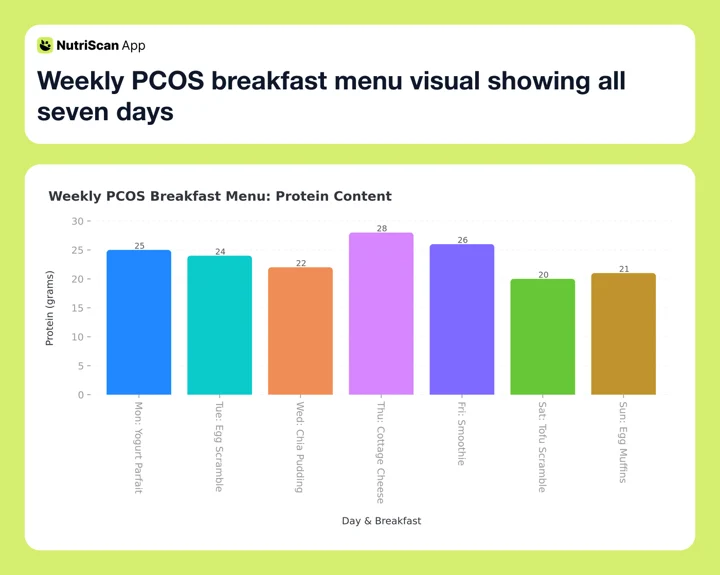 Figure 4: Protein in each breakfast across the week, 20g to 28g. Fiber and calories for each day are listed above.

Using Technology to Stay on Track
Snap your breakfast with NutriScan and the macro breakdown tells you in seconds whether the plate matches the PFF Formula.
The app shows your NutriScore - a color-coded rating of meal quality. Dark green means excellent, while red indicates room for improvement. For PCOS, aiming for green scores ensures you are choosing foods that support insulin control.
With NutriScan's Premium Plan, you get personalized diet planning specifically for PCOS. The app creates meal options based on your preferences - vegan, vegetarian, eggitarian, or non-vegetarian. Each meal comes with portions, recipes, and nutrition breakdown.
NutriBites lets you ask questions about your meal timeline: "Which breakfasts this week had the most protein?" or "Show me meals under 30 grams carbs." Found a breakfast that works? Save it to Favorite Meals, then copy it to today whenever you eat it again. Learn more about how NutriScan helps manage PCOS.
Common Mistakes to Avoid
Mistake 1: Choosing "Low Fat" Options
Low-fat yogurts and dairy products often have added sugar. Full-fat options keep you more satisfied and have a lower glycemic impact. Fat is essential for hormone production.
Mistake 2: Drinking Fruit Juice
A glass of orange juice is pure sugar without the fiber. It spikes blood sugar faster than a cookie. Eat whole fruits instead, paired with protein.
Mistake 3: Relying on Protein Bars
Many protein bars are candy bars with added protein. Check sugar content - if it has more than 8 grams of added sugar, find a better option.
Mistake 4: Skipping Breakfast to "Save Calories"
It backfires. Skipping raises cortisol, worsens insulin resistance, and leads to overeating later, and breakfast eaters take in fewer total calories than skippers.
Mistake 5: Eating Without Tracking
You might think your breakfast is healthy, but without tracking, you do not know for sure. Track for at least two weeks to understand your patterns.
Your PCOS Breakfast Checklist
Structure, not restriction, is what makes breakfast work for PCOS. Follow the Protein + Fiber + Fat formula, choose low glycemic foods, and eat breakfast as your largest meal, and you give your body what it needs to manage insulin.
Check your morning against this list:
- Eat breakfast within an hour of waking
- Include 20-25 grams of protein minimum
- Choose foods with a glycemic index under 55
- Add fiber through vegetables, seeds, and whole grains
- Include healthy fats like avocado, nuts, and olive oil
- Prep meals in advance to avoid unhealthy choices
- Track your meals to understand what works for your body
Start tomorrow. Pick one breakfast from this guide and try it. Track it with NutriScan. See how your body responds, then build from there. Reduced insulin spikes, fewer cravings, and steadier energy come from repeating a plate that works, not from finding a perfect one.
 You have got this - every healthy breakfast is a step toward better hormone balance
For more guidance on managing PCOS through nutrition, check out our PCOS weight loss plateau guide, the 7-day anti-inflammatory PCOS meal plan, and our macro calculator to personalize your daily targets.
Frequently Asked Questions
How much protein should I eat at breakfast if I have PCOS?
Aim for 20-30 grams of protein at breakfast. This amount helps stabilize blood sugar for several hours and reduces mid-morning cravings. Good sources include eggs (6 grams each), Greek yogurt (15-20 grams per cup), cottage cheese (25 grams per cup), or a protein smoothie. Adding a scoop of protein powder to oatmeal or smoothies can help if you struggle to reach this target.
Are oats good for PCOS, and which type should I choose?
Yes, oats can be excellent for PCOS when chosen correctly. Steel-cut oats have the lowest glycemic index (around 42) because they are the least processed. Rolled oats come next at around 55. Avoid instant oats, which can have a GI as high as 79. Always pair your oats with protein like Greek yogurt or nuts, and add fiber through berries or chia seeds.
Should I avoid all carbohydrates at breakfast if I have PCOS?
No, you should not avoid all carbohydrates. Your body and brain need glucose for energy. The key is choosing low glycemic, high fiber options rather than refined ones. Non-starchy vegetables, berries, whole grains, and legumes are all appropriate. What matters most is never eating carbs alone - always pair them with protein and fat to slow digestion.
Can I drink coffee at breakfast if I have PCOS?
Yes, but with guidelines. Wait until after eating your protein-rich breakfast before having coffee. Drinking coffee on an empty stomach can spike cortisol levels. Avoid adding sugar - use cinnamon instead for flavor, which helps with insulin sensitivity. Limit yourself to one to two cups daily.
Should I train before breakfast if I have PCOS?
Light, short sessions are fine fasted: a 20 to 30 minute walk, mobility work, or easy cycling. For strength training or intervals longer than 30 minutes, eat a small protein snack 30 to 45 minutes before, then have your full breakfast within an hour of finishing. Training before breakfast adds to the cortisol your body already releases at waking, and for many women with PCOS that shows up as a shaky, ravenous mid-morning followed by a much bigger carb load at lunch. Never let fasted training become a skipped breakfast.
How do I know if my breakfast is actually helping my PCOS?
Track your meals and notice how you feel. Signs your breakfast framework is working include stable energy throughout the morning, no intense cravings before lunch, better focus, and over time, more regular menstrual cycles. Using an app like NutriScan helps you see the exact macros so you can connect what you eat with how you feel.