Diabetes Diet Plan to Manage Blood Sugar: 5 Simple Steps
 ChatGPT
  Claude
  AI Mode
  Perplexity
A diabetes diet plan is a repeatable way to build a plate so carbohydrates never arrive alone. Half the plate non-starchy vegetables, a quarter lean protein, a quarter complex carbs, eaten at roughly the same times each day. You build it in five steps: agree a daily carb target with your provider, learn what each macro does to your blood sugar, log one honest week of meals, read the pattern, then adjust portions. Nothing gets banned. Rice, bread and fruit all stay on the plate, at a size you chose on purpose instead of one you guessed.
TL;DR - Diabetes Diet Plan for Blood Sugar
• Who it's for: People with diabetes, prediabetes, or blood sugar concerns seeking practical meal planning strategies
• Main outcomes: Stable blood sugar levels, reduced A1c readings, improved energy throughout the day, better long-term diabetes management
• Key steps: Calculate diabetes macro needs → Plan balanced meals → Track with meal scanning → Monitor patterns → Adjust portions based on results
• Timeframe: Blood sugar stability in 1-2 weeks, energy improvements in 3-4 weeks, A1c improvements in 2-3 months
• How NutriScan helps: Blood sugar-friendly meal suggestions, carb tracking, timing optimization, and personalized diabetes plans
What a Diabetes Diet Plan Actually Is
A diabetes or prediabetes diagnosis usually arrives with a pile of contradictory advice. Cut out all sugar. Drop every carb. Buy the special foods. Most of it is too vague to act on, which is why so many people quit inside two weeks.
A working plan is much narrower. You agree a daily carbohydrate range with your provider, you learn which foods move your numbers and how fast, and you keep the foods you like at portions you picked deliberately. That is the whole job. The rest of this post covers the five steps, the seven habits that hold them up, and the data you need to check whether any of it is working for you.
Three Diabetes Diet Plans That Worked
The same patterns keep showing up in what NutriScan users tell us. Three of them are probably familiar.
There's Sarah, a 45-year-old marketing manager and mother of two. She was diagnosed with prediabetes during a routine check-up. Her problem was the 3 PM crash, met with cookies or a sugary latte. She started logging lunches through the meal scanning feature and found her "healthy" salad carried a sugary dressing, and her sandwich bread spiked her harder than she expected. Our diabetes macro calculator gave her daily targets to aim at. Then came the swaps: a vinaigrette dressing, whole-grain bread, and adding Greek yogurt for protein. Her afternoon crashes disappeared, and her next A1c test showed she was back in the normal range.
Then there's David, a 68-year-old retiree with a lifelong love for traditional desserts. His Type 2 diagnosis read to him as a life without his favorite foods, and he thought tracking would be too much work. He tried anyway, typing dinner into Manual Logging. A large portion of white rice turned his Home Page pie chart red. He kept the rice, cut the portion, and paired it with vegetables and lean chicken. He also found low-carb dessert recipes he likes as much as the originals. He told me, "I thought I had to give up everything. Instead, I just learned how to balance the plate."
And let's not forget Maria, a 20-year-old university student managing Type 1 diabetes in a hostel. Her options looked like cafeteria food or instant noodles. Tagging meals 🥘 Hostel or 🍫 Packaged Food on the Crop Screen surfaced the hidden sugar and sodium, and asking NutriBites for easy low-carb dorm meals got her microwave-scrambled eggs, canned-tuna salads and apple slices with peanut butter. It gave her workable options in a kitchen she does not control.
 Sarah, David and Maria each found a version of the plate that fit their week
Glycemic Index: How Fast a Food Raises Blood Sugar
My own journey into nutrition was sparked by my grandfather. He managed his Type 2 diabetes for over 30 years with an incredible discipline I always admired. He didn't have a fancy app; he had a little notebook where he wrote down his blood sugar readings and what he ate. He taught me the concept of "eating the rainbow" before it was a popular hashtag. He knew instinctively that a colorful plate full of vegetables was good for him.
What he was practicing holds up. The core principle for blood sugar management is understanding the Glycemic Index (GI). The GI is a scale from 0 to 100 that ranks carbohydrate-containing foods by how much they raise blood glucose levels. High-GI foods (like white bread) are digested quickly, causing a rapid spike. Low-GI foods (like lentils and whole grains) are digested slowly, leading to a more gradual rise.
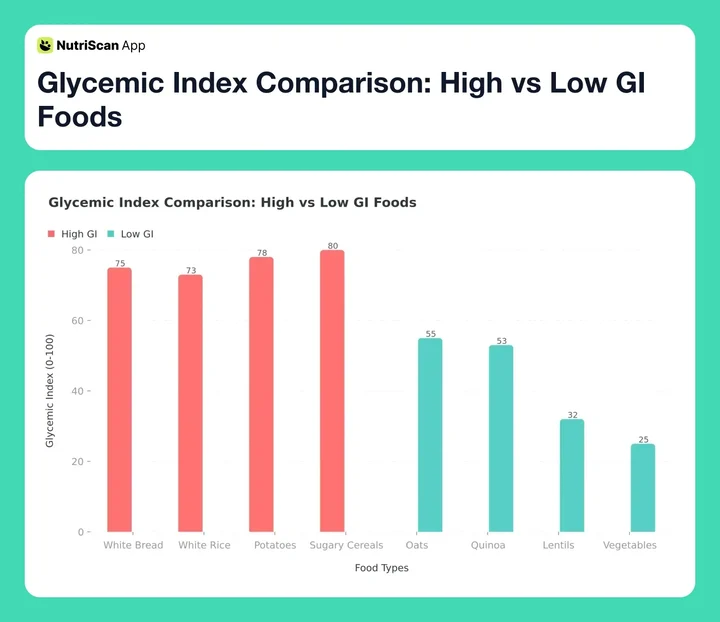 Figure 1: Glycemic Index comparison showing how low-GI foods (lentils, vegetables, oats) maintain stable blood sugar while high-GI foods (white bread, potatoes) cause rapid spikes
Why Pairing Carbs With Protein and Fat Flattens the Spike
How you eat a carbohydrate matters as much as which carbohydrate it is. Eating fiber, protein, and healthy fats along with carbohydrates can slow down the absorption of sugar. Think of it like a traffic controller. A piece of white bread eaten alone is like a sports car on an empty highway - zoom! But eat that same bread as part of a sandwich with chicken, lettuce, tomato, and avocado, and the fiber, protein, and fat slow digestion, like rush-hour traffic. This prevents that sudden, sharp spike.
The International Diabetes Federation reports hundreds of millions of people living with diabetes worldwide, with the number still climbing. The CDC's position on Type 2 diabetes is that lifestyle changes, diet first, are the opening treatment rather than a fallback.
7 Diabetes Diet Tips for Stable Blood Sugar
Seven habits do most of the work. Start with one.
1. Master the Plate Method
This is the easiest visual guide. Imagine your plate is divided into three sections. Fill half of your plate with non-starchy vegetables (think broccoli, spinach, bell peppers, salad greens). Fill one quarter with lean protein (like chicken, fish, beans, or tofu). Fill the final quarter with complex carbohydrates (such as quinoa, brown rice, sweet potatoes, or whole-wheat pasta). This simple method ensures a balanced meal without complicated counting.
2. Pair Every Snack With Protein or Fat
Snacking is a chance to hold your blood sugar steady between meals. The thing to avoid is snacks that are pure carbohydrates. Instead, choose a snack that combines carbs with protein or healthy fats. Examples include an apple with a spoonful of almond butter, a small handful of nuts, Greek yogurt, or a hard-boiled egg. These will keep you full and prevent energy dips.
3. Hydrate, but Watch What You Drink
Thirst gets mistaken for hunger all the time. Water does the job; unsweetened tea and coffee are fine too. The biggest culprits to avoid are sugary drinks: sodas, sweetened iced teas, fruit juices, and fancy coffee drinks. They are loaded with "liquid sugar" that sends your blood glucose soaring with zero nutritional benefit.
4. Read the Label on Every Packaged Food
For any 🍫 Packaged Food, the nutrition label holds the answer, though the layout works against you. In NutriScan, packaged items go in through the 🍫 Packaged Food tag with manual or voice entry, and you get carbs, sugars, fiber and protein back against your daily targets. There is no barcode scanner in the app yet. Check the serving size before anything else. The numbers on the label are often for a much smaller portion than what you might actually eat.
5. Eat at Roughly the Same Times Each Day
Try to eat your meals and snacks at roughly the same times each day. A regular eating schedule helps your body's internal clock and can lead to more stable blood sugar levels. Your body learns to anticipate when it will be fed, which can improve its insulin response. Using NutriScan to log meals helps build this routine. After a few weeks, you can look at your Insights and see your consistency in the Calendar Widget.
6. Eat Whole Fruit, Not Juice
People with diabetes can eat fruit. Fruits are packed with vitamins, minerals, and fiber. The key is to choose whole fruits over fruit juices or dried fruits. A whole orange has fiber that slows down sugar absorption; a glass of orange juice is like drinking sugar water. Berries, apples, pears, and citrus fruits are all great choices. Just be mindful of the portion size.
7. Cook at Home Where You Control the Oil
Whenever possible, prepare your own meals. When you eat out at a 🧑🍳 Restaurant / Cafe, you have less control over the ingredients, especially oil, salt, and hidden sugars. When you cook at home, you are the chef. You control everything. When you log a home-cooked meal in NutriScan, you can use tags on the Crop Screen to specify 🍳 Stir-fried or 🔥 Roasted and adjust the Oil Level slider from No Oil to High Oil. This gives a much more accurate picture of your nutrition.
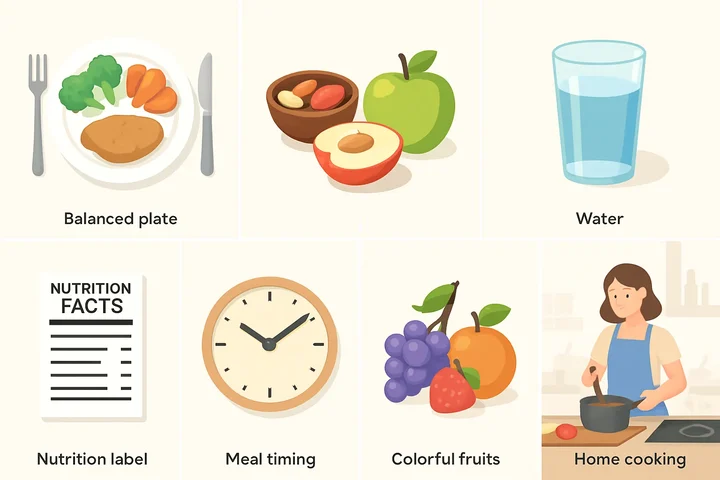 Your roadmap to success: Seven practical strategies that make blood sugar management simple and sustainable
How to Build Your Diabetes Diet Plan in 5 Steps
Five steps, in order. None of them is a rigid rule; together they are a framework you can keep using.
Step 1: Set Your Carb Target With Your Provider
Before you change anything, you need a starting point. If you have been diagnosed with diabetes or prediabetes, you should always work with your healthcare provider. They can give you personalized targets for blood sugar, blood pressure, and cholesterol. Once you have that information, you can set up your goals. The first thing you do in the NutriScan app during the Onboarding Screen is Choose Your Goal. You can select options like 'Weight Loss' or, in this case, 'Diabetes'. This tells the app what to prioritize when it analyzes your food and gives you feedback. This is your "why." It's the reason you're starting this journey, and it will keep you motivated.
Step 2: Learn What Carbs, Protein and Fat Do
Food is made up of three main macronutrients: carbohydrates, proteins, and fats. For blood sugar management, understanding their roles is vital.
- Carbohydrates: These have the most direct impact on your blood sugar because they break down into glucose. The goal isn't to eliminate them, but to choose wisely and control portions. Focus on complex carbs (vegetables, whole grains, legumes) which contain fiber and are digested slowly. Limit simple carbs (sugar, white flour, sugary drinks).
- Protein: Protein has a minimal effect on blood sugar. It promotes satiety (feeling full), which can prevent overeating. Including a source of lean protein with every meal is a cornerstone of a good diabetes diet plan.
- Fat: Healthy fats (from sources like avocados, nuts, seeds, and olive oil) do not raise blood sugar and can be beneficial for heart health, which is important for people with diabetes. They also slow down digestion, which helps prevent blood sugar spikes.
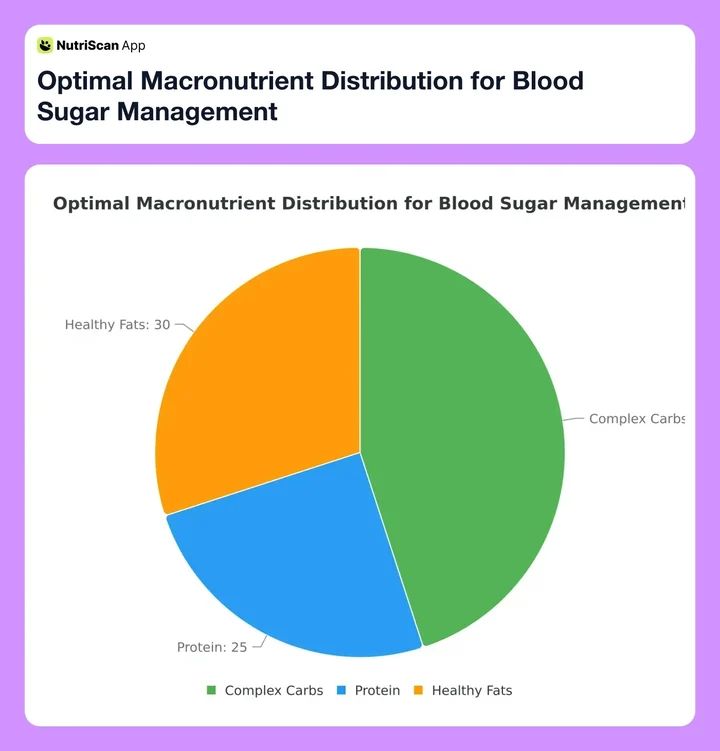 Figure 2: Recommended macronutrient breakdown for diabetes management - 45% complex carbohydrates, 25% lean protein, and 30% healthy fats for optimal blood sugar control
Step 3: Log One Honest Week of Meals
This is the step that creates the awareness the other four depend on.
Start by logging everything you eat for a week without judgment. Use the NutriScan app's camera feature. Just Click Meal Picture, and our AI will identify the food and its nutritional content. On the Crop Screen, you can add more context for better accuracy. Was it 🏠 Home Made or from a 📍 Street Food vendor? Was it 🍟 Deep-fried or 🥗 Raw? You can even adjust the Oil Level with a simple slider. If you prefer not to use the camera, Manual Logging is just as quick: type in what you ate, or use voice input. Free accounts get 5 scans a week, which covers the meals a food database usually gets wrong, and Premium removes the cap. The goal is a baseline you can read.
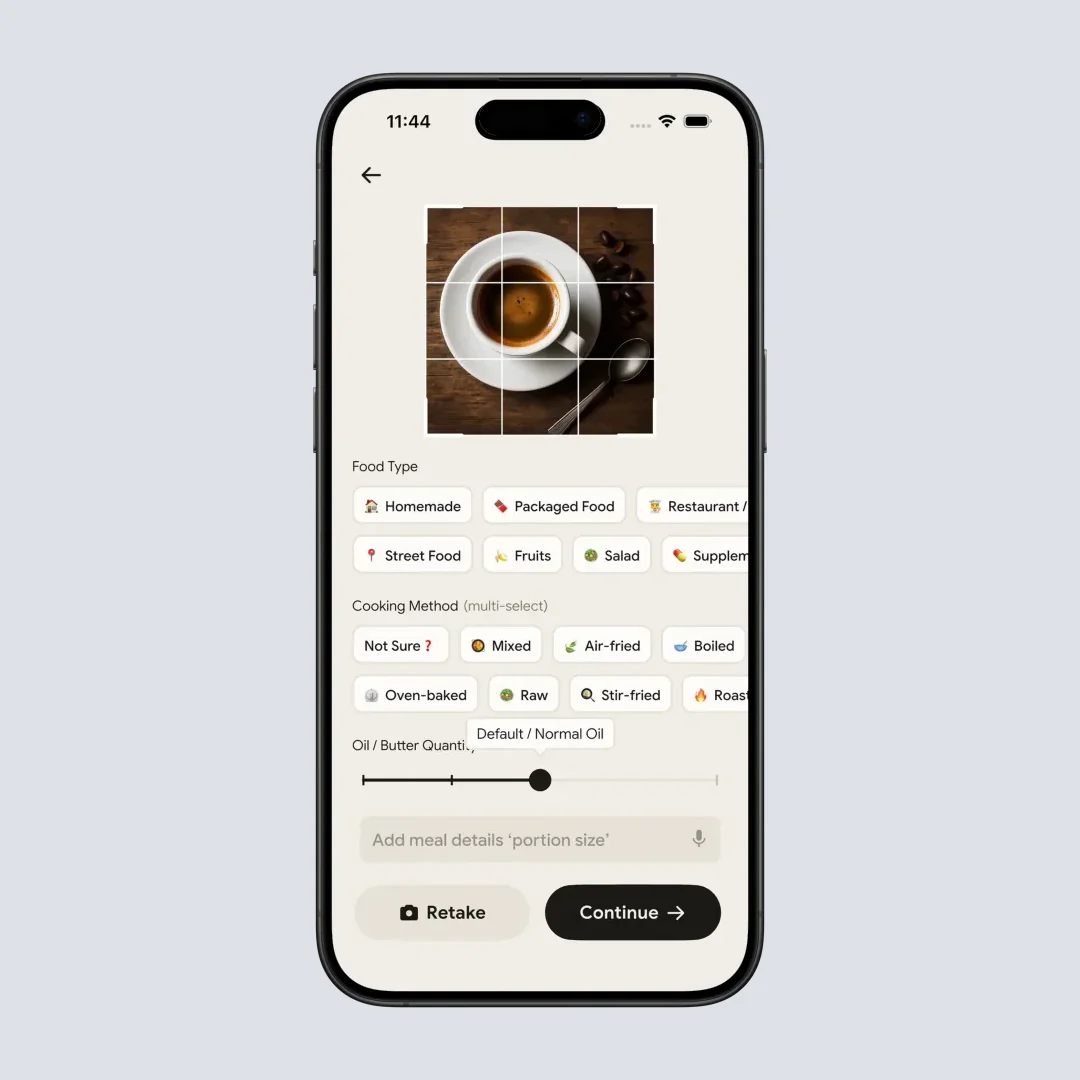
Photograph the meal or type it in, then add context tags for a closer estimate
Step 4: Read the Pattern in Your Data
After a few days of tracking, open the Home Page. Today's Count shows calories, protein, carbs and fat, with a pie chart against your goal. Tap a logged meal to open the Nutrition Details Page.
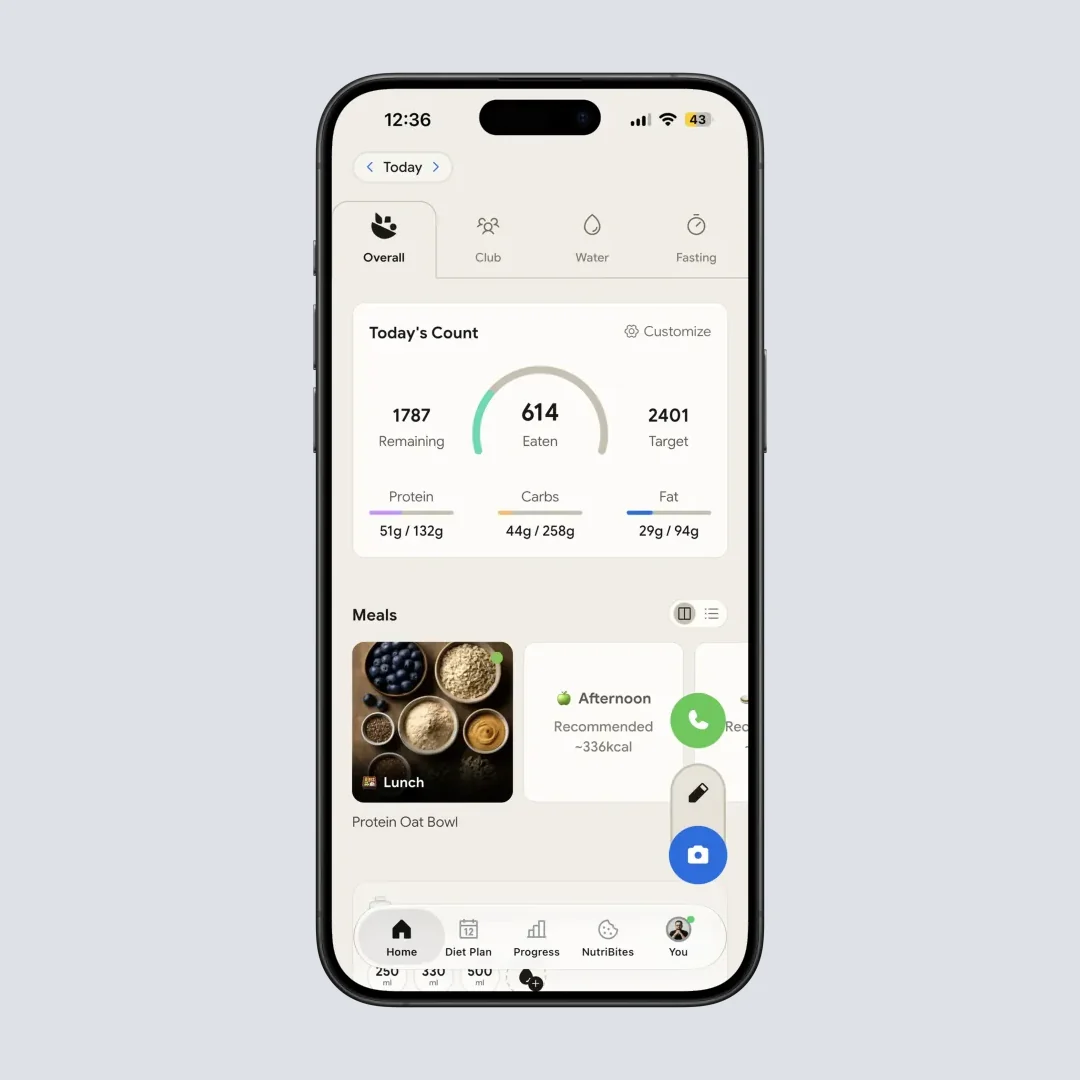
The daily view: calories, macros and progress against your goal
Here you will see:
- A full breakdown of Macros (Calories, Protein, Carbs, Fat).
- The Top 4 Micro Nutrients in that meal, like fiber or potassium.
- A
NutriScore, which rates the overall healthiness of your meal on a color-coded scale. This simple score helps you see at a glance if a meal is supporting your goals. - You can even Edit or Adjust Portion Size if the initial estimate needs tweaking, or Add a missing item.
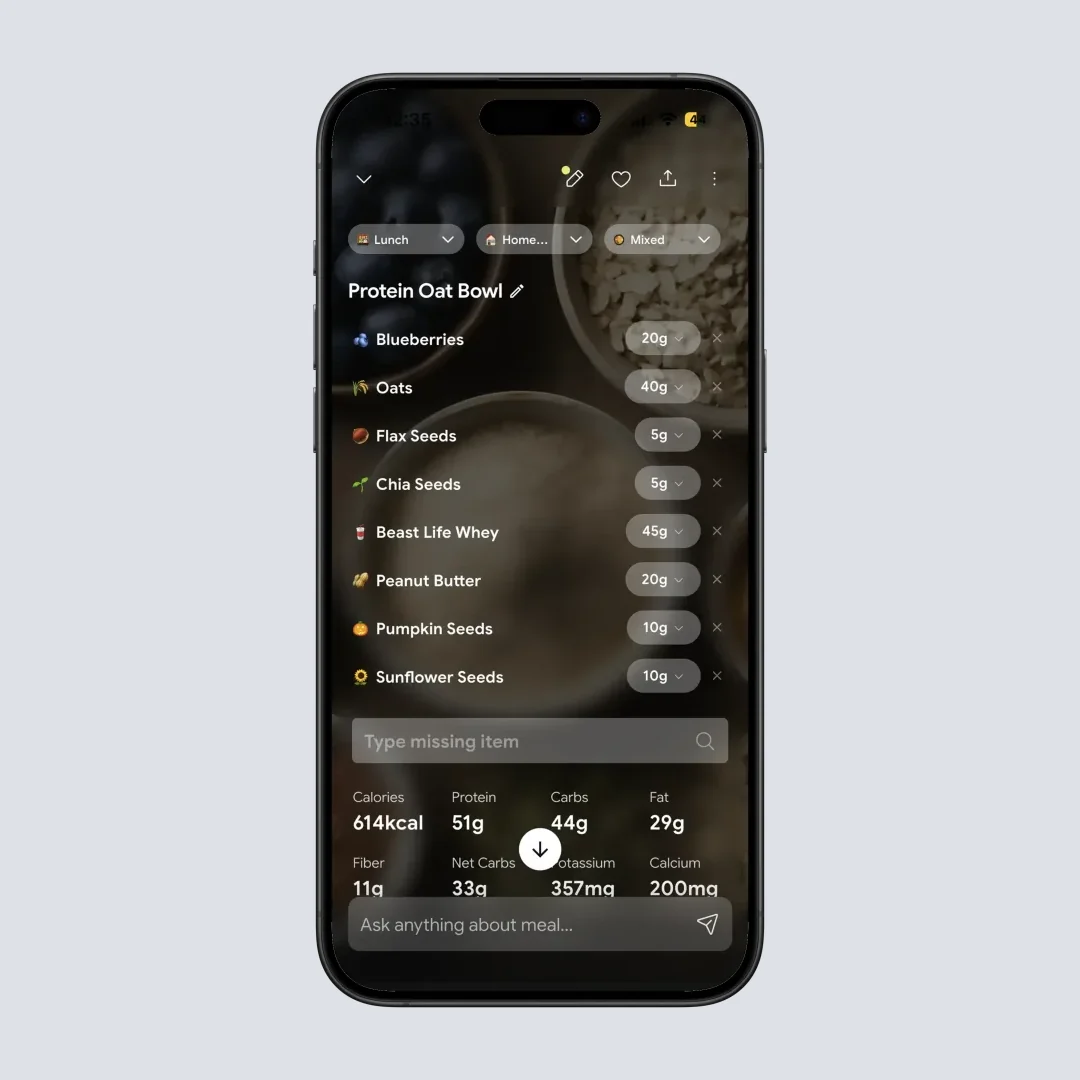
Nutrition Details: full macros, top micronutrients and a NutriScore per meal
Perfection is not the point. You might find your morning oatmeal carries more sugar than you assumed, or that your "light" lunch was mostly fat. That is the finding you act on.
Step 5: Adjust Portions and Get Support
A diet plan is meant to be edited. Use the app's tools to review your progress. The Insights widget on your home screen shows a Calendar Widget. You can see your daily NutriScore colors over the whole month, making it easy to spot patterns. Are your weekends a different color than your weekdays? This helps you identify areas to work on.
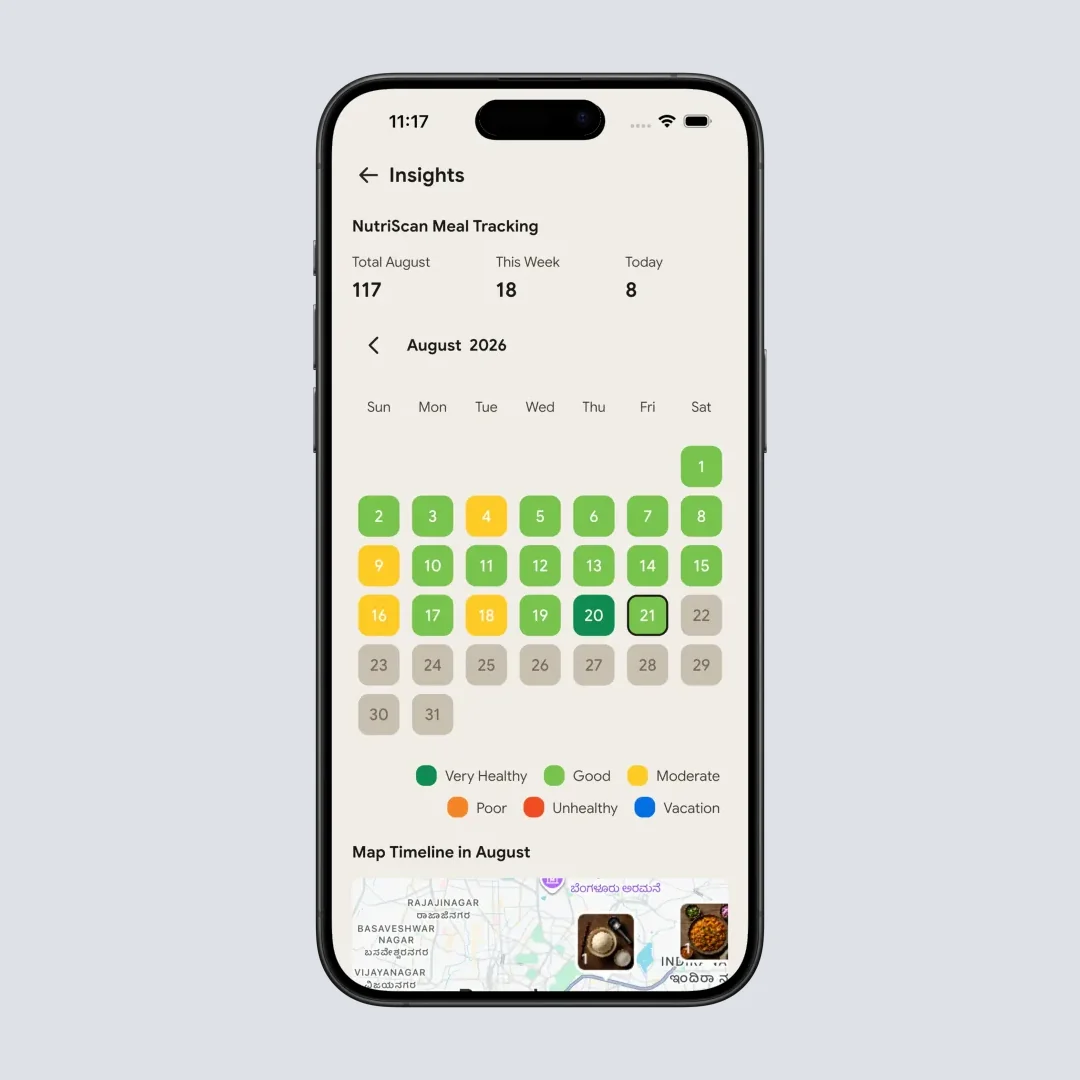
The Insights calendar shows a month of NutriScore colors at once
Premium adds the Diet Plan feature, which turns your goals, preferences and lifestyle into a 28-day meal plan with recipes and a grocery list. For a specific question like "why did my blood sugar spike after that meal?", ask NutriBites or call Monika, the voice AI nutritionist, free accounts get 4 of those calls a week. The Club leaderboard is there if other people's streaks keep you honest, and Share Food Timeline sends your log to your doctor or dietitian.
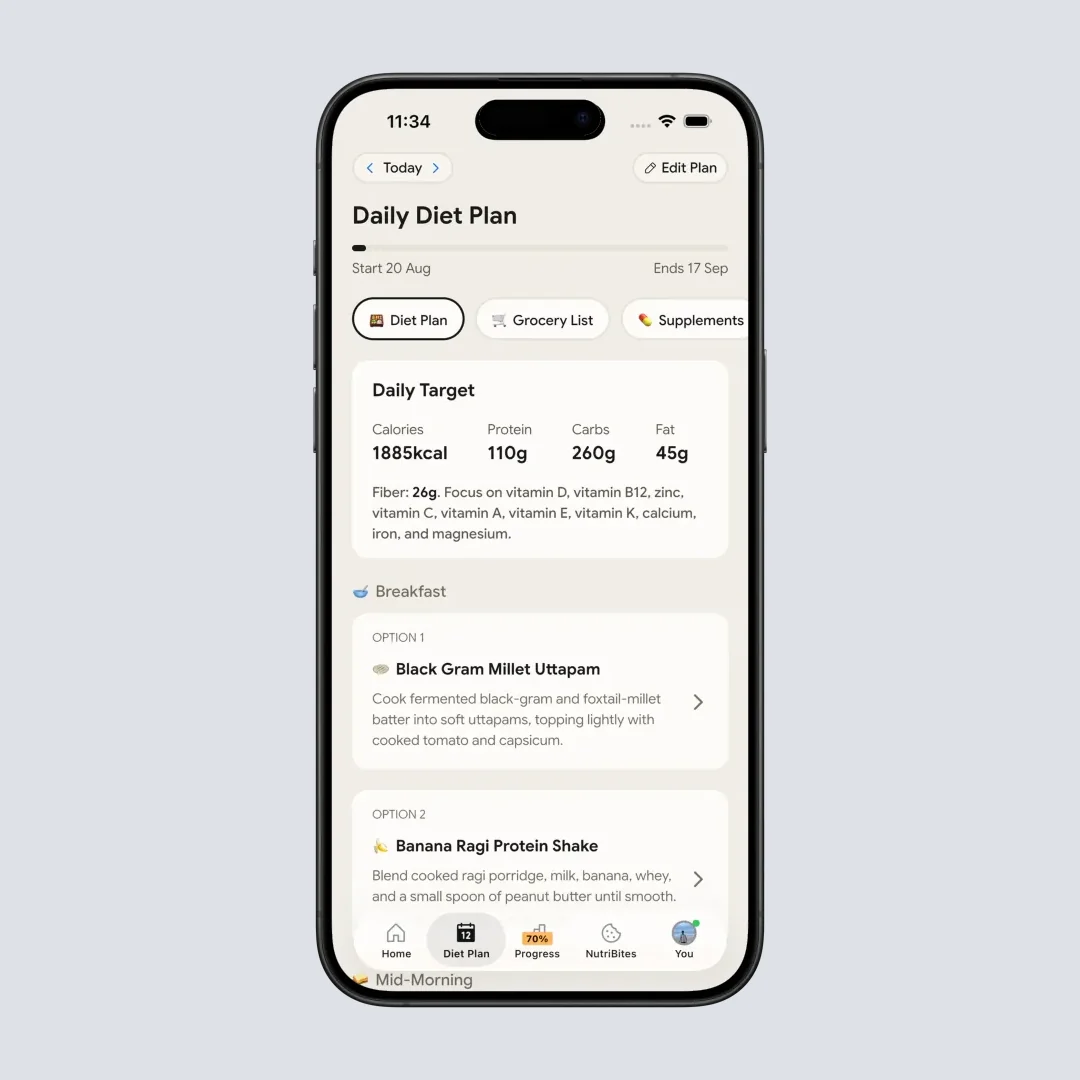
Premium builds a 28-day diabetes meal plan with recipes and a grocery list
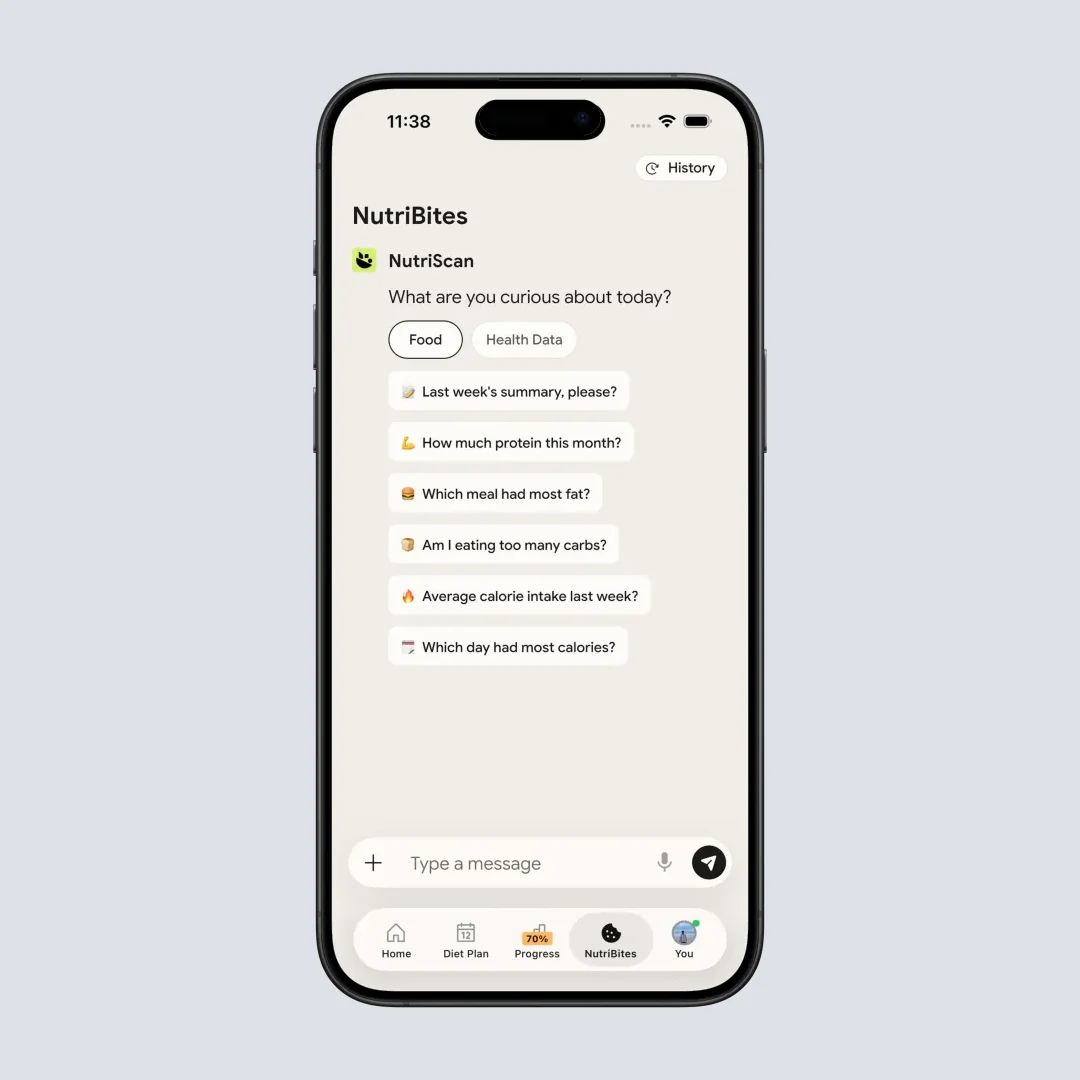
NutriBites answers questions about the meals already in your log
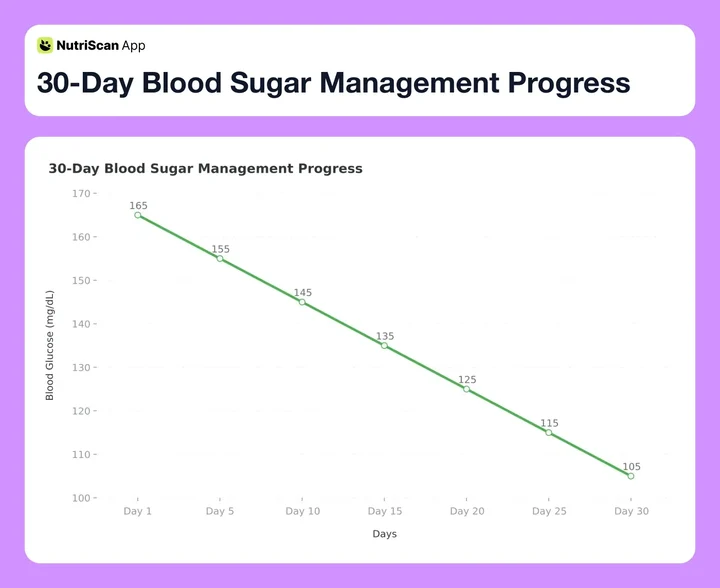 Figure 3: Typical 30-day blood sugar improvement trajectory showing steady decline from 165 mg/dL to 105 mg/dL through consistent dietary management and tracking
What the Research Says About Diet and Type 2 Diabetes
Plant-forward eating patterns keep coming out ahead for diabetes management. A 2024 review of Mediterranean diet trials in Type 2 diabetes is a good example. The Mediterranean diet is rich in vegetables, fruits, nuts, legumes, whole grains, fish, and olive oil, and low in red meat and processed foods. The findings were very clear: participants who followed this eating pattern showed marked improvements in their HbA1c levels (a measure of long-term blood sugar control), as well as lower body weight and better cholesterol profiles compared to those on a standard low-fat diet.
No single food does that work; the whole pattern does. The review also singled out healthy fats and fiber, which is why olive oil, avocados and a lot of vegetables sit in the advice above. The framing is additive, more of these foods rather than a list of bans, and additive framing is far easier to keep up for a year. When you use NutriScan to log your meals, you can see how closely your diet aligns with these healthy patterns and get a NutriScore that reflects this.
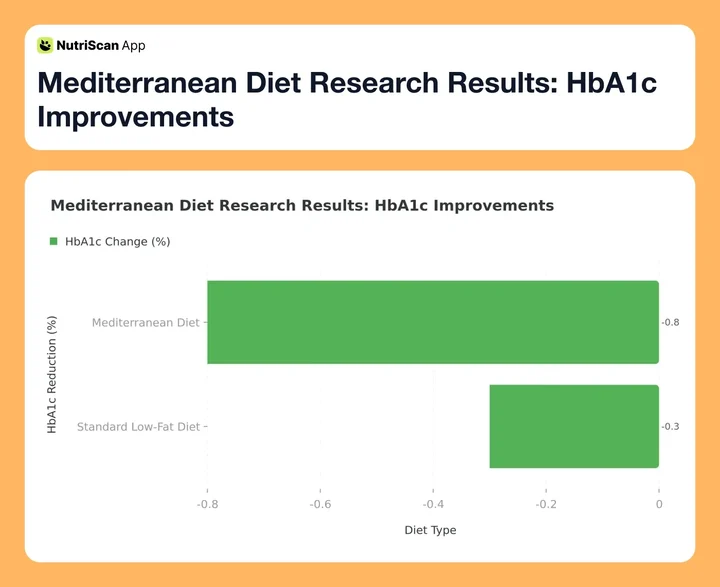 Figure 4: Clinical research comparing Mediterranean diet (-0.8% HbA1c reduction) versus standard low-fat diet (-0.3% HbA1c reduction) in Type 2 diabetes management over 12 months
Your First Week on a Diabetes Diet Plan
Pick one meal for week one. Use the plate method at dinner, log those dinners, change nothing else. Two more weeks of that and you will have enough logged meals to see which dinners hold your numbers steady and which ones do not.
Week two, add breakfast. Week three, add the snack that never gets logged, the one at 3 PM. By week four you have a month of NutriScore colors on the Insights calendar and a real answer to what your own body does with rice, bread and fruit.
Then take the log to your next appointment. A doctor reading four weeks of your actual meals gives sharper advice than a doctor asking what you usually eat. If you want the plan built for you instead, the NutriScan diabetes app page walks through the diabetes goal setup, and the 7-day diabetic meal plan gives you a week of meals to copy.
Diabetes Diet Plan: Frequently Asked Questions
Q: Can I still eat carbs if I have high blood sugar?
A: Yes, you absolutely can and should. Carbohydrates are your body's primary source of energy. The key is not elimination, but selection and portion control. Focus on "complex" carbohydrates that are high in fiber, as fiber slows down the digestion and absorption of sugar. Great choices include whole grains (oats, quinoa, brown rice), legumes (beans, lentils, chickpeas), starchy vegetables (sweet potatoes, corn, peas), and whole fruits. You should limit "simple" or refined carbs like white bread, sugary cereals, pastries, and sugary drinks, as they cause rapid blood sugar spikes. Using the NutriScan app to log your meals will help you see exactly how many grams of carbs and fiber you're consuming, allowing you to learn your personal limits and make smarter swaps.
Q: What are the best snacks for a diabetic diet?
A: The best snacks are ones that help stabilize your blood sugar, not spike it. This means choosing snacks that contain a balance of protein, healthy fats, and fiber. Purely carbohydrate snacks can cause a quick rise and fall in energy. Some excellent options include:
- A handful of almonds or walnuts.
- An apple or pear slices with a tablespoon of peanut or almond butter.
- Plain Greek yogurt (you can add a few berries for flavor).
- A hard-boiled egg.
- Vegetable sticks (carrots, cucumbers, bell peppers) with hummus.
- A small portion of cottage cheese. These snacks will provide steady energy and keep you feeling full until your next meal.
Q: Do I need to buy special "diabetic" foods?
A: Generally, no. The aisle of specially marketed "diabetic" foods can be confusing and expensive. Many of these products offer little to no real health advantage. Some "sugar-free" cookies, for example, are still made with refined flour and may contain sugar alcohols that can cause digestive upset. The best diet for managing diabetes is not a "special" diet but simply a healthy eating pattern based on whole, unprocessed foods that is good for everyone. Focus your budget on fresh vegetables, fruits, lean proteins, and whole grains. You can log any packaged food in NutriScan, "diabetic" or not, through the 🍫 Packaged Food tag with manual or voice entry, and see its real numbers before you buy it again. Our diabetic grocery list covers what to put in the cart instead.
Q: How can the NutriScan app specifically help me manage my diabetes?
A: NutriScan is designed to be your personal nutrition assistant for managing diabetes. Here's how:
- Fast Logging: Log meals with your phone's camera (
Click Meal Picture), by voice or by typing. You get the carbohydrate, sugar and fiber content back straight away. Free covers 5 scans a week; Premium is unlimited. - Personalized Goals: Set "Diabetes" as your health goal during
Onboardingfor tailored feedback. YourHome Pagepie chart will turn red if you exceed your daily carb targets. - Detailed Insights: The
Nutrition Details Pagefor each meal gives you aNutriScoreand breaks down all macros and key micronutrients. The mainInsightssection uses aCalendar Widgetto show you long-term trends in your eating habits. - Custom Plans: For premium users, the
Diet Planfeature creates a complete, personalized 28-day meal plan based on your specific needs and preferences, taking the guesswork out of what to eat. - Instant Answers: Use
NutriBitesto ask questions about your food log ("Which of my meals this week had the most carbs?") or talk to ourMonika AI Assistantfor on-demand nutritional advice.
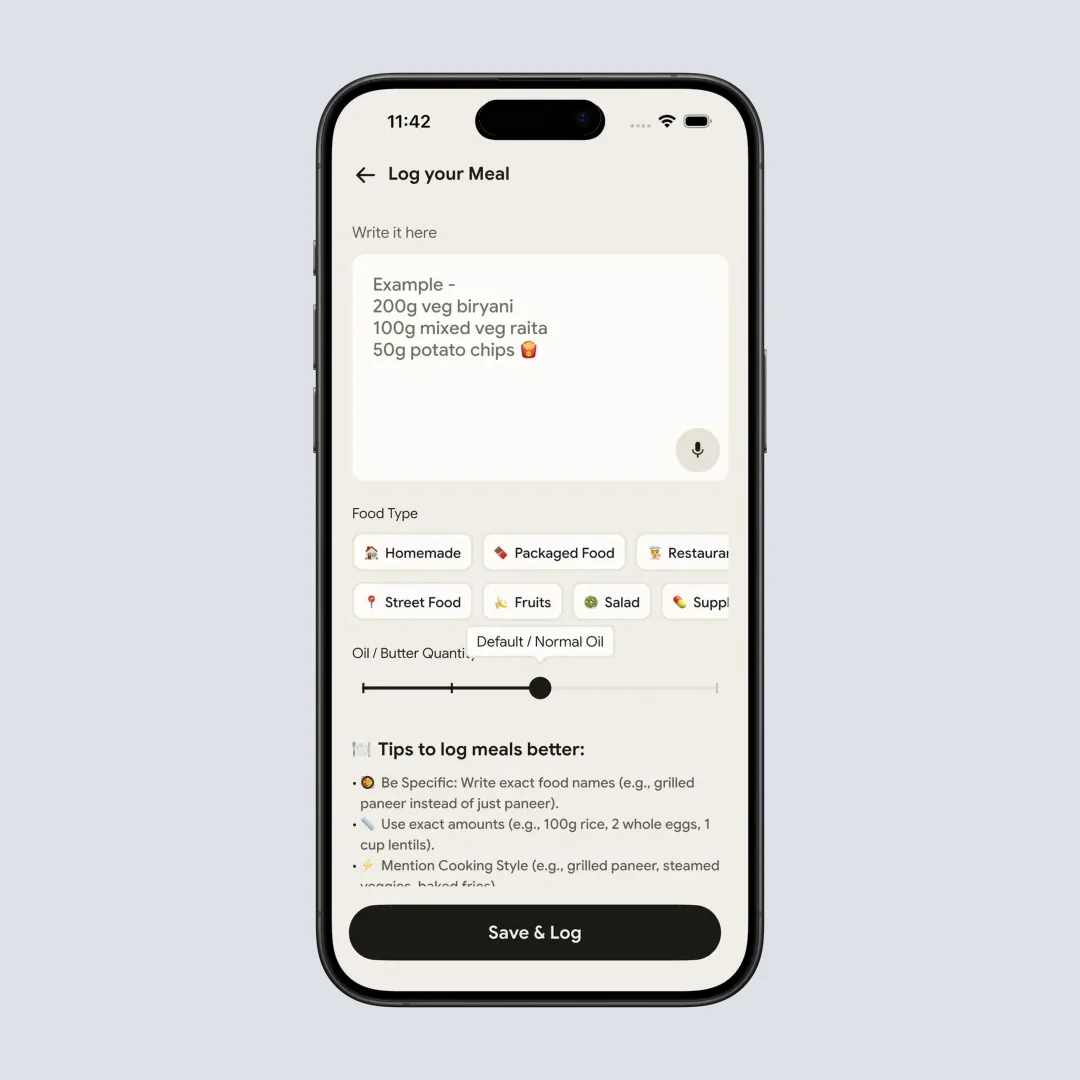
Three ways to log a meal: photo capture, manual entry, or voice
Q: Is it possible to reverse prediabetes with diet?
A: For many people, yes. Prediabetes means blood sugar above normal but below the Type 2 threshold. Research from the U.S. Centers for Disease Control and Prevention has shown lifestyle changes cut the risk of prediabetes progressing to Type 2 diabetes, with the main interventions being modest weight loss (5-7% of body weight) and regular physical activity. Applying the principles in this post, whole foods, controlled portions, balanced macronutrients, brings many people's blood sugar back into the normal range. That is a large result for a change you make at the grocery store.
Q: How many carbs should I eat a day with diabetes?
A: There is no single number that fits everyone. Many people land somewhere between 45 and 60 grams of carbohydrate per main meal, but your target depends on your medication, your weight, your activity level and what your own readings actually do. Set the number with your provider, then log a week of meals against it in the app and adjust from what you see. The diabetes macro calculator gives you a starting split to take to that conversation, and the carb tracking app guide compares the tools that count it for you.
Q: What is a good breakfast for a diabetes diet plan?
A: One with protein and fiber in it before any carbohydrate lands. Eggs with vegetables, plain Greek yogurt with berries and a spoon of seeds, or steel-cut oats cooked with milk and topped with nuts. Skip fruit juice, sweetened cereal and pastries, which arrive as fast sugar with nothing to slow them down. If insulin resistance is the reason you are here, the PCOS breakfast frameworks use the same build.