Is NutriScan Trustworthy? 3 Pillars of App Trust (2025)
 ChatGPT
  Claude
  AI Mode
  Perplexity
Here's something most "Is this app trustworthy?" articles won't tell you: trust and trustworthiness are not the same thing.
TL;DR - The Three Pillars of App Trustworthiness
What you'll learn: The research-backed framework (honesty, competence, reliability) to evaluate ANY health app's trustworthiness
Key insight: "Mistrust of developers" is a primary reason users abandon health apps - stemming from doubts about competence, honesty, and reliability
NutriScan assessment: Passes all three pillars with transparent claims, global cuisine recognition, consistent updates, and aligned business incentives
Action step: Use the 7-question framework in this article to evaluate any nutrition app before committing your health data
Research published in Digital Health defines trust as "the willingness of one party to become vulnerable to another presumably competent, reliable and honest party in the hope of an optimistic outcome" (Digital Health, 2019). Trustworthiness, on the other hand, is a characteristic of the trusted party - the attributes that make them worthy of your trust.
When you ask "Is NutriScan trustworthy?" you're really asking something deeper: "If I become vulnerable by investing my time, my health data, and my eating habits into this app, will it act with honesty, competence, and reliability to produce good outcomes for me?"
That's a fair question. And it deserves a thoughtful answer grounded in research, not marketing speak.
In this article, I'm going to walk you through the three research-validated pillars of trustworthiness, show you how to evaluate ANY health app against these criteria, and then demonstrate how NutriScan measures up.
Why Trustworthiness Matters More Than Legitimacy
You might wonder: "Didn't you already write about whether NutriScan is legit?"
Yes. But legitimacy and trustworthiness answer different questions.
Legitimacy asks: "Is this a scam?" (Binary. Fear-based. Defensive.)
Trustworthiness asks: "Can I rely on this over time?" (Continuous. Relationship-based. Forward-looking.)
 The moment when you're evaluating whether an app deserves your trust
A 2015 survey found that "mistrust of developers" was a primary reason users abandon health apps - and this mistrust stems from "cynicism about the competence, honesty and reliability of app developers" (Digital Health, 2019).
Notice those three words: competence, honesty, reliability. These aren't random. They come from philosopher Onora O'Neill's framework for trustworthiness, which researchers have applied to evaluate health technologies (Medicine, Health Care and Philosophy, 2023).
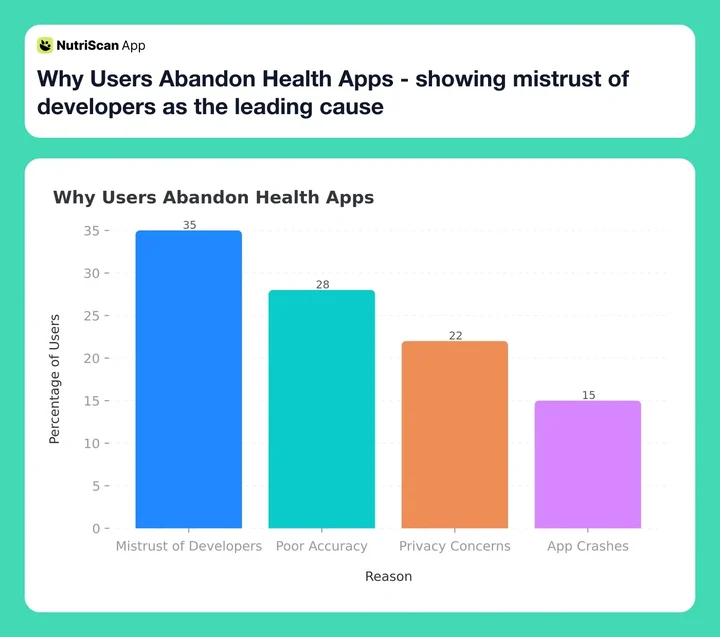 Figure 1: Research shows mistrust of developers is the leading reason users abandon health apps
The Three Pillars of Trustworthiness
According to O'Neill's framework, adopted by health app researchers, trustworthiness comprises three criteria (Medicine, Health Care and Philosophy, 2023):
1. Honesty - Does the entity tell the truth about what it does? 2. Competence - Is the entity actually good at what it claims to do? 3. Reliability - Does the entity consistently deliver on its commitments?
Important Understanding
None of these alone is sufficient. A nutrition app could be honest but incompetent (accurate claims but wildly inaccurate calorie estimates). It could be competent but dishonest (accurate tracking but secretly selling your data). It could be honest and competent but unreliable (works great sometimes, crashes during dinner).
True trustworthiness requires all three. Let's examine each in the context of nutrition apps, then evaluate NutriScan.
Pillar 1: Honesty - Does NutriScan Tell the Truth?
Honesty in health apps means more than "not lying." It means:
- Transparent about what the app can and cannot do
- Clear about how your data is used
- No misleading claims about health outcomes
- Upfront about costs and limitations
A 2024 systematic review found that patients prioritize "personal data protection" and want apps to be clear about data usage (JMIR, 2024). Users also want apps that don't make unrealistic promises.
How to Evaluate Honesty in Any Nutrition App
Ask yourself:
- Does the app clearly state what it can and cannot do?
- Are the claims modest and realistic, or does it promise "miracle results"?
- Is the privacy policy readable and specific?
- Does it disclose who has access to your data?
- Are costs transparent before you commit?
NutriScan's Honesty Assessment
What NutriScan claims: It's a "nutrition tracker and diet planning tool" that helps you understand what you're eating and plan meals based on your goals.
What NutriScan does NOT claim: It doesn't promise to cure conditions, guarantee specific weight loss, or replace medical advice.
Data honesty: NutriScan's data flows through Firebase and Supabase for authentication, Azure for AI processing. The app doesn't sell user data to advertisers. Users can delete their accounts through the Manage Account section.
Limitation honesty: The app acknowledges that AI food recognition requires user verification. Users can edit meal items, adjust portions, and add missing ingredients when the AI makes errors. This honesty about imperfection is actually a trust signal - it shows the app isn't pretending to be infallible.
Cost honesty: Pricing is displayed before purchase. A 7-day free trial exists for Premium. Subscriptions go through official app stores, making cancellation straightforward.
Verdict on Honesty
NutriScan passes the honesty test. It makes modest claims, is transparent about limitations, and doesn't hide behind marketing hyperbole.
Pillar 2: Competence - Is NutriScan Good at What It Does?
Competence means the app actually works at its stated purpose. For a nutrition app, this includes:
- Accurate food recognition
- Reliable nutritional data
- Effective goal-based recommendations
- Features that support behavior change
Research from the University of Sydney found that AI food recognition accuracy ranges from 74% to 99% depending on the system and food types (Nutrients, 2024). The same study found a concerning pattern: most apps overestimate calories for Western diets (by about 1040 kJ) but underestimate Asian diets (by about 1520 kJ).
This cultural bias in AI systems is a competence issue that affects global users. A truly competent nutrition app must work across cuisines.
How to Evaluate Competence in Any Nutrition App
Ask yourself:
- Does the app recognize foods you actually eat?
- Are the nutritional values consistent with known references?
- Does the app support your specific health goals?
- Can you verify the app's outputs against other sources?
- Does the app adapt to different cuisines and cooking methods?
NutriScan's Competence Assessment
AI Food Recognition: NutriScan uses Azure-powered AI trained on diverse cuisines including Indian, Asian, Middle Eastern, and Western foods. The app recognizes regional dishes like palak paneer, biryani, and hummus - not just burgers and salads.
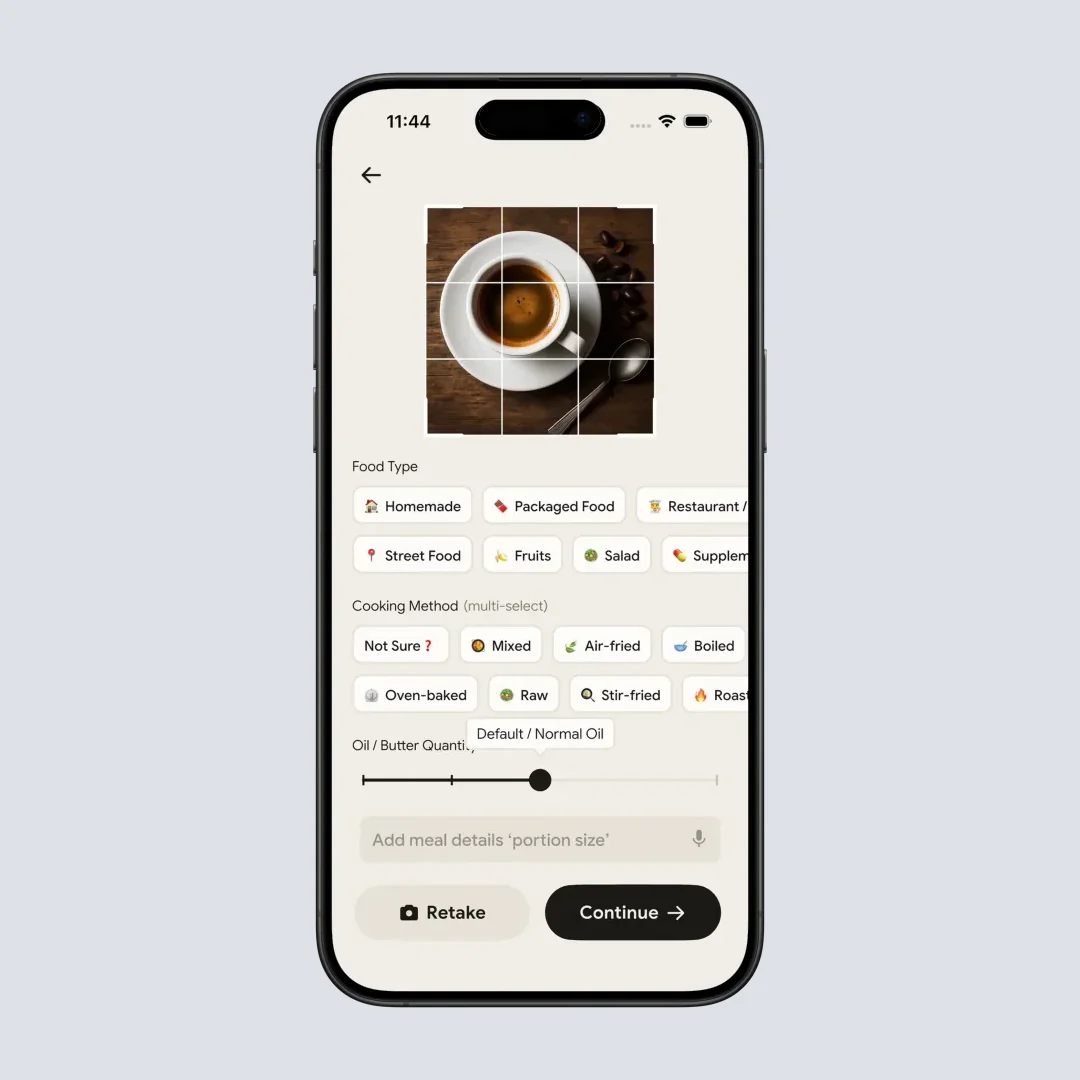
Cooking Method Awareness: NutriScan asks about cooking methods (11 options from deep-fried to steamed) because the same ingredients cooked differently have different nutritional profiles. A stir-fried vegetable dish has different oil content than a steamed one. This attention to preparation method improves accuracy.
Nutritional Basis: The app uses the NutriScore system for meal quality rating. Research in The Lancet Regional Health has validated NutriScore's correlation with reduced disease risk (The Lancet, 2024). Learn more about how NutriScore works. Macro calculations use the standard 4-4-9 calorie formula.
Goal Alignment: NutriScan offers condition-specific diet planning for weight loss, muscle gain, diabetes, PCOS, and pregnancy. Each plan is structured around the user's location, lifestyle, and food preferences - not generic templates. Try the free macro calculator to see how personalized targets work.
Behavior Change Support: A 2023 scoping review found that apps combining self-monitoring, goal setting, feedback, and education produce better behavior change outcomes (Salas-Groves et al., 2023). NutriScan includes tracking (meal logging), goal setting (macros and daily targets), feedback (NutriScore ratings), and education (NutriBites questions, nutritionist conversations).
Verdict on Competence
NutriScan demonstrates competence through global cuisine recognition, cooking method awareness, validated scoring systems, and research-aligned behavior change features.
Pillar 3: Reliability - Does NutriScan Consistently Deliver?
Reliability means the app works consistently over time. It means:
- The app doesn't crash or lose your data
- Features work as promised, every time
- Support exists when things go wrong
- The app continues to improve through updates
A 2024 JMIR study evaluating nutrition apps only included those "last updated after January 2022" because outdated apps have "limited functionality, raising concerns about their effectiveness" (JMIR mHealth, 2024).
Research also shows that "trust is a feature that has to be earned" through ongoing engagement between app providers and users (JMIR, 2024).
How to Evaluate Reliability in Any Nutrition App
Ask yourself:
- When was the app last updated?
- Does the app work consistently across sessions?
- Is there responsive support when issues arise?
- Does the company incorporate user feedback?
- Does the app save your data reliably?
NutriScan's Reliability Assessment
Update Frequency: NutriScan receives regular updates. The app uses Shorebird for over-the-air patches, meaning fixes can deploy without full app store reviews - faster bug resolution.
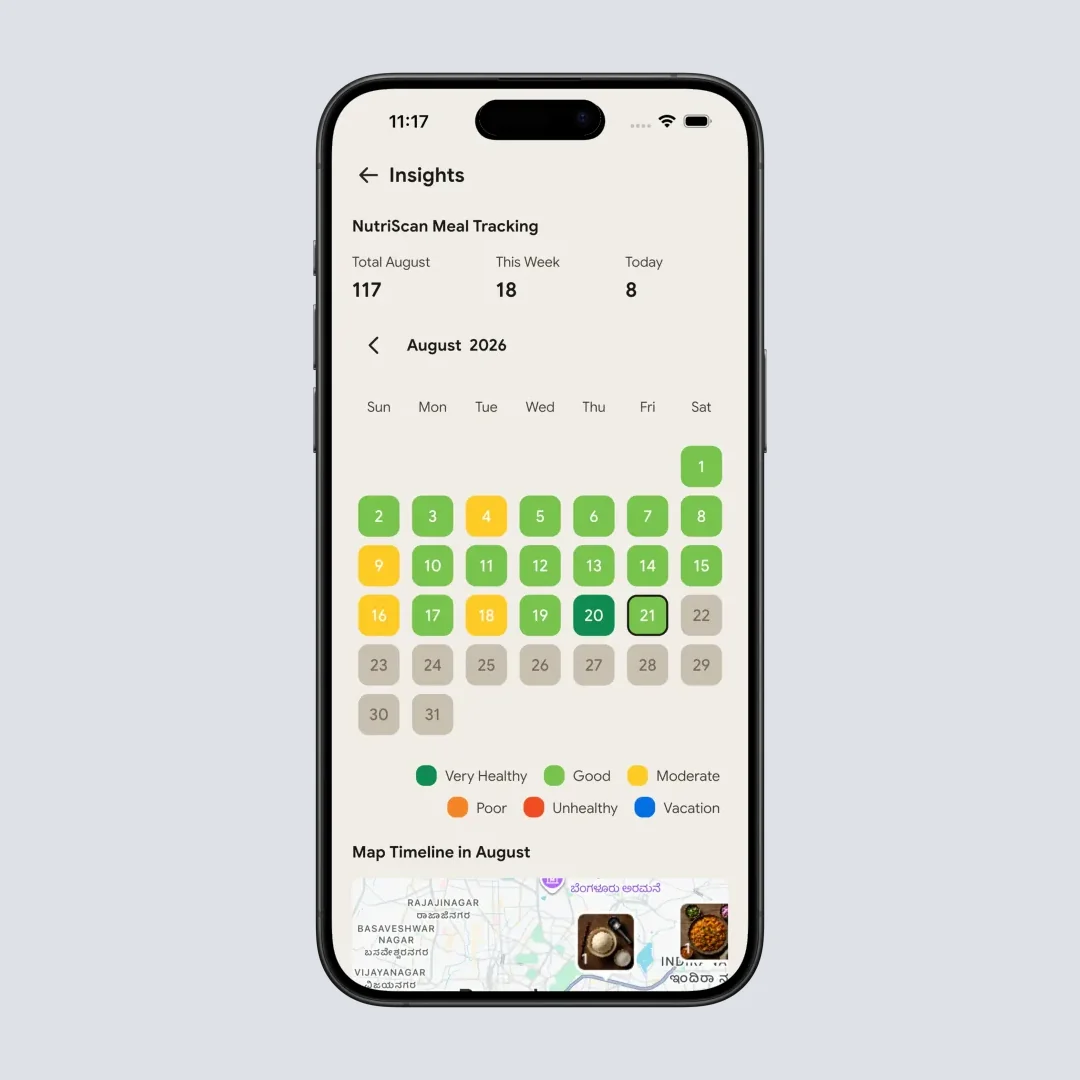
Data Persistence: Meal history is stored and accessible across sessions. Users can view previous days, copy meals, and track patterns over time. The Insights widget shows monthly calendar views of eating patterns.
Support Channels: Multiple contact methods exist - Contact Us form, community access, and social media (X/Twitter, Instagram). The team is small but responsive.
Feature Reliability: Core features (meal scanning, nutritional analysis, diet planning) work consistently. The app handles error cases - if a photo isn't recognized as food, it displays an error message rather than crashing or providing garbage data.
Repeat Meal Functionality: For users with consistent eating patterns, the Repeat Meal feature lets you skip daily scanning. This shows the app is designed for long-term use, not just initial novelty.
Verdict on Reliability
NutriScan shows reliability through consistent updates, persistent data, accessible support, and features designed for sustained use.
The Hidden Fourth Question: Incentive Alignment
Here's something O'Neill's framework doesn't explicitly address, but sophisticated users should consider: Are the app maker's incentives aligned with your success?
Consider two business models:
- Model A: App profits from user engagement regardless of outcomes. More time in-app means more ad revenue or data to sell.
- Model B: App profits when users achieve their goals. Happy users subscribe, refer friends, and leave positive reviews.
Which model would you trust more with your health?
NutriScan's Business Model Analysis
Revenue Sources:
- Subscription fees (Premium Plan)
- Referral program (both parties get 2 weeks free Premium)
- Future plans: nutritionist partnerships, SDK licensing
What's NOT a Revenue Source:
- NutriScan doesn't display ads
- NutriScan doesn't sell user data
- NutriScan doesn't require engagement for revenue (subscriptions are time-based, not usage-based)
Incentive Alignment Check:
- NutriScan succeeds when users achieve their health goals with their personalized diet plan (they subscribe, renew, refer friends)
- NutriScan fails when users abandon the app (they cancel, leave negative reviews)
- The Premium features (personalized diet planning) are the main value proposition, which requires the app to actually help users
This is good alignment. The business model rewards user success, not just user engagement.
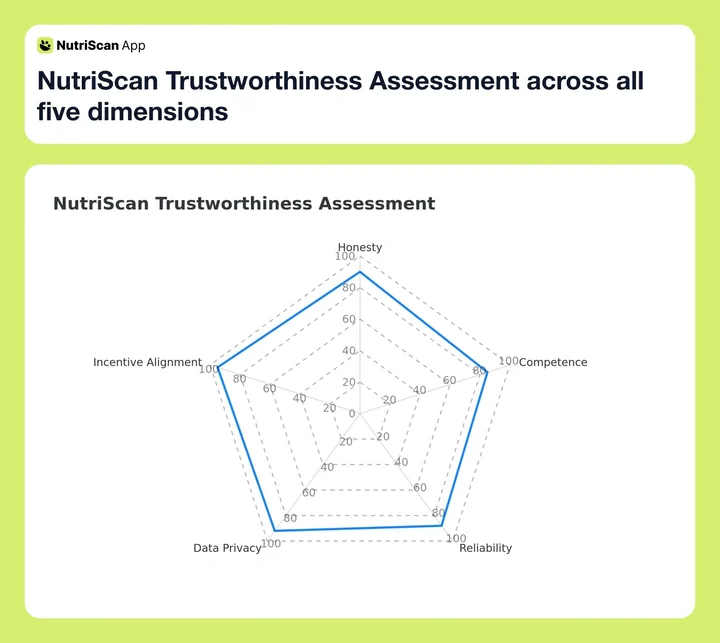 Figure 2: NutriScan's trustworthiness assessment across honesty, competence, reliability, data privacy, and incentive alignment
Real Examples: Trustworthiness in Action
Let me share how the three pillars play out in real scenarios:
Scenario 1: Ananya's Diabetes Management (Chennai, India)
Ananya, 45, has Type 2 diabetes and needs to monitor carbohydrate intake carefully. She's tried three nutrition apps before NutriScan. (See our diabetes macro calculator for personalized carb targets.)
Previous experience: Apps that couldn't recognize South Indian foods like idli, dosa, and sambar. She had to manually enter everything, which was time-consuming and often inaccurate because she didn't know exact nutritional values of home-cooked meals.
NutriScan test:
- Honesty: The app warned her that AI recognition might need correction for mixed dishes. She appreciated the transparency.
- Competence: It recognized her breakfast (idli with coconut chutney) and estimated carbs within a reasonable range. She could adjust portions.
- Reliability: After 3 months, the app still worked consistently. Her meal history was intact, and she could see carb patterns over time.
Outcome: Her HbA1c dropped from 8.4% to 7.2% over 6 months, partly attributed to better carb awareness from consistent tracking.
Scenario 2: Marcus's Muscle Gain Journey (Singapore)
Marcus, 28, wanted to gain lean muscle while tracking protein intake. His concern was whether the app would support his specific goal rather than defaulting to weight loss assumptions.
Trustworthiness evaluation:
- Honesty: The onboarding asked his goal (muscle gain) and didn't assume he wanted to lose weight.
- Competence: The diet plan emphasized protein timing, included regional foods he actually ate (chicken rice, bak kut teh), and suggested realistic portion adjustments.
- Reliability: The meal repeat feature saved him time - he could copy his standard breakfast without re-scanning daily.
Outcome: Gained 4kg of lean mass over 4 months while using NutriScan to ensure adequate protein intake.
Scenario 3: Fatima's PCOS Management (Dubai, UAE)
Fatima, 31, has PCOS and wanted an app that understood low-glycemic eating without promoting restrictive dieting. (Our PCOS macro calculator helps with personalized hormone-friendly targets.)
Trustworthiness evaluation:
- Honesty: NutriScan's PCOS-specific plan focused on glycemic impact, not just calorie restriction. It didn't promise to "cure" PCOS.
- Competence: It recognized Middle Eastern foods (hummus, falafel, tabbouleh) and understood that olive oil-based cooking is different from butter-based.
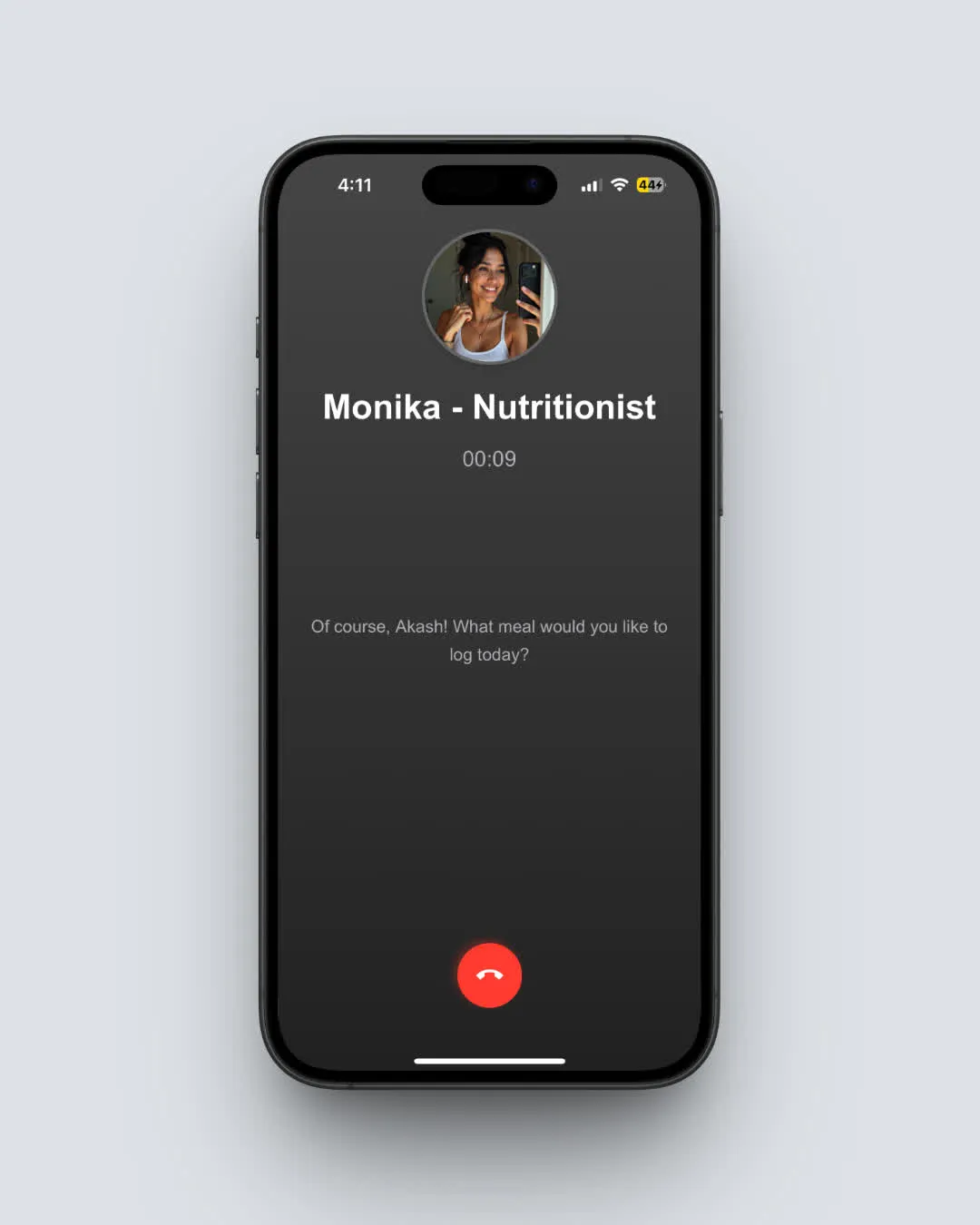
- Reliability: The AI nutritionist (Monika) answered her questions about which grains were lower glycemic, and the answers were consistent with what her doctor had told her.
Outcome: Better blood sugar stability and reduced inflammation markers after 3 months of following the personalized plan.
7 Questions to Evaluate Any App's Trustworthiness
Based on the three pillars framework, here are practical questions you can ask about any health app:
Honesty Questions
- Does the app make modest, realistic claims - or promise transformation?
- Is the privacy policy specific about what data is collected and who sees it?
- Does the app acknowledge its limitations openly?
Competence Questions
- Does the app recognize foods you actually eat in your culture?
- Can you verify the app's nutritional data against known references?
- Does the app support your specific health goal, not just generic "healthy eating"?
Reliability Questions
- When was the app last updated, and does the team respond to user issues?
Evaluation Tip
If an app fails on any of these, consider whether the gap is acceptable for your needs.
What Research Says About App Trustworthiness and Outcomes
Does trustworthiness actually matter for health outcomes? Research suggests yes.
Finding 1: Trust Predicts Continued Use
A 2024 study found that "trust plays a central role in whether users will adopt and continue using" health apps (Mohd et al., 2025). Users who trusted their app were more likely to integrate it into daily routines.
Finding 2: Continued Use Predicts Health Outcomes
A meta-analysis found that app-based interventions improved nutrition behaviors (effect size g=0.19) and nutrition-related health outcomes (g=0.23), with positive effects on obesity indices, blood pressure, and blood lipids (Villinger et al., 2019).
Finding 3: Trust Requires Ongoing Relationship
Research emphasizes that "trust is a feature that has to be earned" through ongoing engagement, not just initial impressions (JMIR, 2024).
The Chain: Trustworthiness leads to trust. Trust leads to continued use. Continued use leads to health outcomes.
This is why the question "Is NutriScan trustworthy?" actually matters for your health, not just your peace of mind.
A Step-by-Step Guide to Building Trust with Any Nutrition App
Here's how to develop a trust relationship with any nutrition app over time:
Step 1: Test Honesty Before Committing
Before entering personal data or paying:
- Read what the app claims to do. Are claims specific and modest?
- Check the privacy policy. Can you understand what happens to your data?
- Look for limitation disclosures. Does the app acknowledge what it can't do?
Step 2: Verify Competence with Your Own Foods
During your first week:
- Scan meals you commonly eat. Does it recognize them?
- Compare nutritional values with labels or known references. Are they reasonable?
- Check if your health goal is specifically supported, not just generic tracking.
Step 3: Test Reliability Through Consistent Use
Over the first month:
- Does the app work consistently, or does it crash or lose data?
- If you encounter issues, is there responsive support?
- Does your meal history persist and remain accessible?
Step 4: Evaluate Incentive Alignment
Before subscribing long-term:
- How does the app make money? (Subscriptions, ads, data sales?)
- Does the business model reward your success or just your engagement?
- Are premium features genuinely valuable, or just artificial scarcity?
Step 5: Reassess Periodically
Every few months:
- Is the app still being updated?
- Has your trust been validated or violated?
- Are you actually progressing toward your health goals?
Trust is not a one-time decision. It's an ongoing relationship that you should actively manage.
The Honest Answer: Is NutriScan Trustworthy?
Based on O'Neill's three-pillar framework:
| Pillar | NutriScan Assessment |
|---|---|
| Honesty | Transparent about capabilities and limitations. No miracle claims. Clear data practices. Upfront pricing. |
| Competence | Global cuisine recognition. Cooking method awareness. Validated NutriScore. Research-aligned behavior change features. |
| Reliability | Regular updates. Persistent data. Multiple support channels. Features designed for sustained use. |
| Incentive Alignment | Subscription model rewards user success. No ads. No data selling. |
My verdict: NutriScan demonstrates trustworthiness across all three pillars, with business incentives aligned to user success.
 When an app passes all three pillars of trustworthiness
Important Caveats
- Trustworthiness is not perfection. AI recognition still requires user verification sometimes.
- Trust is relationship-based. Your experience may differ from others based on your specific foods, goals, and usage patterns.
- Trust should be re-evaluated over time. If your experience changes, reassess your trust.
Frequently Asked Questions
What makes an app trustworthy versus just legitimate?
Legitimacy means an app isn't a scam - it's a real product that does what it claims. Trustworthiness is deeper: it means the app demonstrates honesty (tells the truth), competence (is good at what it does), and reliability (consistently delivers over time). Research shows these three criteria are what users actually evaluate when deciding whether to become vulnerable to an app (Medicine, Health Care and Philosophy, 2023). A legitimate app might still be untrustworthy if it's incompetent or unreliable.
How do I know if a nutrition app's AI is competent for my cuisine?
Test it with foods you commonly eat during a free trial period. Research shows many apps struggle with non-Western cuisines - one study found apps underestimated Asian diet calories by about 1520 kJ compared to Western diets (Nutrients, 2024). NutriScan specifically trains its AI on diverse cuisines including Indian, Asian, and Middle Eastern foods, and asks about cooking methods to improve accuracy.
Should I trust nutrition apps with my health data?
Research from a 2024 systematic review found that patients prioritize "personal data protection" and want clear information about how their data is used (JMIR, 2024). Before trusting any app with health data, check: What data is collected? Where is it stored? Who has access? Can you delete it? NutriScan uses established cloud infrastructure (Firebase, Supabase, Azure), doesn't sell data to advertisers, and allows account deletion through Manage Account settings.
Does app trustworthiness actually affect health outcomes?
Yes. Research shows a chain effect: trustworthiness leads to trust, trust leads to continued use, and continued use leads to health outcomes. A meta-analysis found that app-based nutrition interventions improved health outcomes with effect sizes of g=0.23 (Villinger et al., 2019). Another study found that users who trusted their health apps were more likely to integrate them into daily routines (Mohd et al., 2025). So trustworthiness isn't just about peace of mind - it affects whether the app can actually help you.
How can I tell if an app's business model is aligned with my success?
Look at how the app makes money. Warning signs of misaligned incentives include: heavy advertising (profits from attention, not outcomes), data selling (profits from your information), and engagement-based metrics (profits from time in-app rather than results). Good signs include: subscription models (profits from ongoing value), referral programs (profits from satisfied users recommending to others), and premium features focused on outcomes (profits from delivering results). NutriScan uses subscriptions and referrals without ads or data selling - a model that rewards your success.
Ready to build trust with NutriScan? Download the app and apply the three-pillar framework yourself. Test the honesty of its claims. Verify the competence of its food recognition with your own meals. Evaluate its reliability over your first month. Trust is earned through experience, not marketing - and that's exactly how it should be.
Related reads: What Real Users Say About NutriScan | Is NutriScan App Good? Honest Review