Why I Stopped Counting Calories and Started Tracking Nutrition
 ChatGPT
  Claude
  AI Mode
  Perplexity
The short answer: I stopped counting calories because the number was hitting its target while my energy, sleep and bloodwork were not. I now track four things instead, protein, fiber, added sugar and the vitamins and minerals I keep missing, and let calories fall where they fall. The switch took about eight weeks, cost me nothing in weight, and fixed the 3 PM crash I had lived with for two years.
TL;DR - From Calorie Counting to Real Nutrition
• Main problem: Calorie counting focuses on quantity over quality, leaving you tired and hungry despite hitting targets
• Better approach: Track protein (0.8-1g per kg), fiber (25-35g daily), vitamins, and minerals for sustained energy and health
• Key benefits: Natural appetite control, stable energy, better sleep, improved mood, and effortless weight management
• How to transition: Start with 2-3 nutrition metrics, use tools like NutriScan for easy tracking, focus on whole foods
• Timeline: Energy improves from 5/10 to 7/10 within 1 week, sleep onset reduces from 45 to 15 minutes in 2-3 weeks, blood markers and physical changes visible after 1 month
I remember sitting at my desk at 3 PM, struggling to keep my eyes open. My calorie tracking app showed I was perfectly on target - 1,200 calories consumed out of my 1,800 daily goal. Yet, I felt terrible. My brain felt foggy, my energy was crashing, and I was irritable with everyone around me. That's when I realized something was seriously wrong with how I was approaching nutrition.
My Journey from Calorie Counting to Nutrition Tracking 📊
For three years, I religiously counted every single calorie. I had spreadsheets, apps, and even a food scale that traveled with me everywhere. My friends thought I was obsessed - and honestly, I was. But despite hitting my calorie targets consistently, my health wasn't improving. I was losing weight, yes, but I was also losing hair, muscle mass, and my sanity.
The Breaking Point That Changed Everything
One morning, I logged my breakfast: a 300-calorie protein bar and a 150-calorie diet soda. Perfect numbers, right? Wrong. By 10 AM, I was shaking from low blood sugar, desperately searching for snacks. Meanwhile, my colleague ate a 500-calorie breakfast of eggs, whole grain toast, and avocado - and she was energized until lunch.
That's when it hit me: calories tell you the quantity, but nutrition tells you the quality. 🎯
 The daily struggle of calorie counting without considering nutrition quality
Three Real Examples of Hitting Calorie Targets and Feeling Awful
Example 1: The 1,500-Calorie Disaster Diet
Let me share Sarah's story (name changed for privacy). She came to me frustrated and confused. She was eating exactly 1,500 calories daily but gaining weight and feeling terrible. Here's what her typical day looked like:
- Breakfast: 400-calorie muffin from a coffee shop
- Lunch: 500-calorie frozen meal
- Dinner: 400-calorie instant noodles
- Snack: 200-calorie cookies
Total calories: 1,500 ✓
Total nutrition: Disaster ✗
She was getting less than 40g of protein daily (her body needed 90g), almost no fiber, and her vitamin D levels were critically low. No wonder she felt awful!
Example 2: The Power Breakfast Revolution
Compare that to Tom's transformation. He increased his breakfast from 250 calories of cereal to 450 calories of eggs, oatmeal, and berries. Yes, more calories - but also:
- 25g protein (vs 4g before)
- 8g fiber (vs 1g before)
- Healthy fats for hormone production
- Antioxidants for recovery
Result? He lost 15 pounds in two months and his afternoon energy crashes disappeared completely.
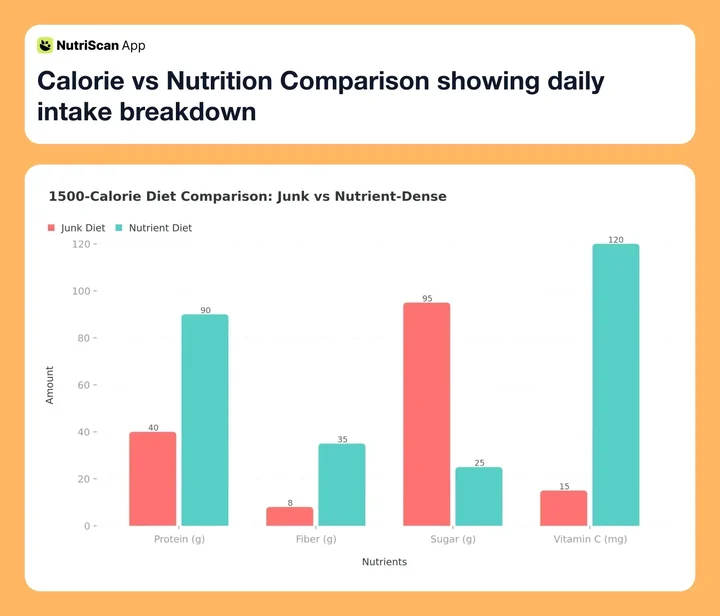 Figure 1: Tom's breakfast before and after the switch. Protein goes from 4g to 25g and fiber from 1g to 8g.
Example 3: The Hidden Sugar Trap
Jessica thought she was being healthy with her 1,200-calorie "clean eating" plan. But when we analyzed her nutrition (not just calories), we found she was consuming 95g of sugar daily - mostly from "healthy" smoothies and granola bars. Her insulin was on a roller coaster all day long!

Why the Same Number of Calories Does Not Land the Same Way
Did you know that your body can absorb different amounts of calories from the same food depending on how it's prepared? A study from Harvard found that we absorb about 30% fewer calories from whole almonds compared to almond butter. The same 170 calories on paper, but your body treats them completely differently!
Here's another mind-blowing fact: Two people eating identical meals can extract different amounts of calories based on their gut bacteria composition. Research from Washington University showed variations of up to 10% in calorie extraction between individuals. This means your friend might get 1,800 calories from the same food that gives you 2,000 calories!
The Protein Leverage Hypothesis
Scientists in Sydney discovered something remarkable: humans will keep eating until we get enough protein. If your diet is low in protein, you'll naturally eat more calories trying to meet your protein needs. This explains why high-protein diets work so well for weight loss. Appetite shuts off once the protein target is met.
I experienced this myself. When I increased my protein from 50g to 100g daily, my constant hunger disappeared. I was eating more protein calories but fewer total calories because my body stopped demanding more food.
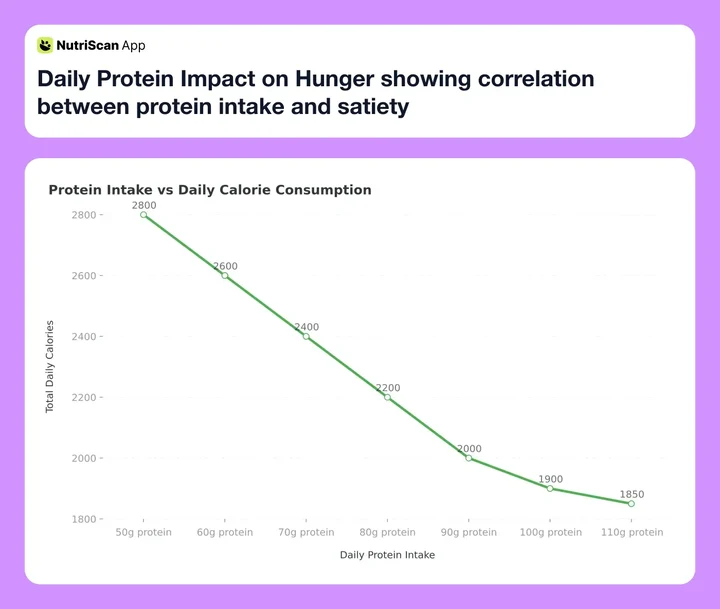 Figure 2: How increasing protein intake naturally reduces total daily calories through improved satiety
The Fiber Factor Nobody Talks About
Here's a shocking statistic: 95% of Americans don't get enough fiber. The recommended amount is 25-35g daily, but most people get less than 15g. Why does this matter for weight loss?
Fiber:
- Slows digestion, keeping you full longer
- Feeds beneficial gut bacteria
- Reduces calorie absorption
- Stabilizes blood sugar
- Lowers inflammation
One study showed that simply adding 14g of fiber daily led to an average weight loss of 4.2 pounds over 4 months - without any other changes!
7 Habits That Replaced Calorie Counting for Me
1. Start Your Day with High-Protein Foods for Better Nutrition 💪
I aim for at least 30g of protein within the first two hours of waking. This sets my metabolism for the entire day. My go-to breakfast: scrambled eggs with cottage cheese and turkey bacon. Yes, it's 450 calories, but it keeps me satisfied until lunch.
2. Track Your Fiber Like It's Money in the Bank
I treat fiber grams like deposits in my health account. Every meal needs to contribute at least 5g. My trick? I add chia seeds to smoothies (5g), choose whole grain bread (3g per slice), and snack on apples with skin (4g).
3. Focus on Nutrient Density Scores
Instead of asking "How many calories?", I ask "How many nutrients per calorie?" Spinach, for example, delivers 56% daily vitamin K, 181% vitamin A, and 15% folate for only 7 calories per cup. Ice cream? 137 calories with minimal vitamins. This doesn't mean never eat ice cream - it means balance it with nutrient-dense choices.
4. Time Your Carbs Strategically
I eat most of my carbs around workouts and earlier in the day. Complex carbs before exercise give me energy, and simple carbs after help recovery. Evening carbs? I keep them minimal unless I'm particularly active.
5. Don't Fear Healthy Fats
For years, I avoided fats because they're calorie-dense. Big mistake! Now I include avocado, nuts, and olive oil daily. Yes, they add calories, but they also:
- Help absorb vitamins A, D, E, and K
- Support hormone production
- Keep skin healthy
- Reduce inflammation
6. Hydration Is Free Nutrition
Water isn't just about thirst. Proper hydration improves nutrient transport, helps fiber work effectively, and can reduce false hunger signals. I drink water before every meal - it's zero calories but huge impact.
7. Listen to Your Body's Signals
This took me longest to learn. Feeling tired after eating? You might be eating too many simple carbs. Constant hunger? Check your protein and fiber. Mood swings? Look at your blood sugar stability. Your body gives feedback - we just need to listen.
 The joy of discovering that healthy eating actually makes you feel amazing
Step-by-Step Guide to Transition from Calorie Counting to Nutrition Tracking 📋
Step 1: Assess Your Current Nutrition (Week 1)
Don't change anything yet - just observe. Use a tool like NutriScan to photograph your meals and see the full nutritional breakdown. I was shocked when I first saw my vitamin D was at 15% of daily needs! Focus on noticing:
- Protein intake (aim for 0.8-1g per kg body weight - use our macro calculator to find your exact needs)
- Fiber consumption (target 25-35g)
- Added sugar amounts (less than 25g for women, 37g for men)
- Vitamin and mineral gaps
Write down how you feel after each meal. Energy level? Satisfaction? Mood? This baseline helps you connect nutrition to wellbeing.
Step 2: Identify Your Biggest Nutritional Gaps (Week 2)
After a week of tracking, you'll see patterns. Common gaps I find with clients:
- Morning protein too low (under 20g)
- Fiber practically non-existent
- Omega-3 fatty acids missing
- Vitamin D insufficient
- Magnesium lacking
Pick your top 3 gaps to address first. Don't try fixing everything at once - that's a recipe for overwhelm.
Step 3: Make Strategic Food Swaps (Weeks 3-4)
Now comes the fun part - upgrading your food choices without drastically changing calories. Here are swaps that worked for me:
Instead of: Regular pasta (200 cal, 2g fiber, 7g protein)
Choose: Chickpea pasta (190 cal, 8g fiber, 14g protein)
Instead of: White rice (205 cal, 0.6g fiber, 4g protein)
Choose: Quinoa (222 cal, 5g fiber, 8g protein)
Instead of: Fruit juice (110 cal, 0g fiber, 26g sugar)
Choose: Whole fruit (95 cal, 4g fiber, 19g natural sugar)
Instead of: Granola bar (140 cal, 1g fiber, 5g protein)
Choose: Greek yogurt with nuts (150 cal, 2g fiber, 15g protein)
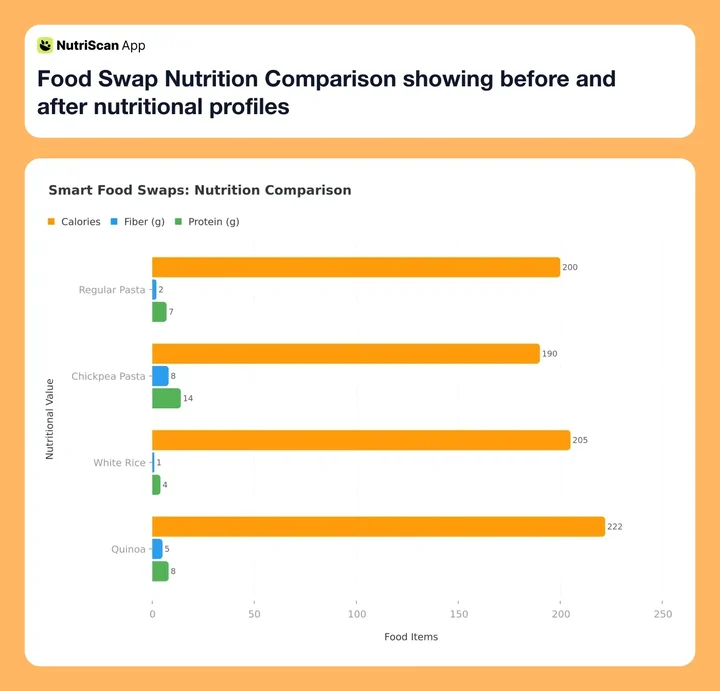 Figure 3: Four food swaps that raise fiber per serving while keeping calories within 20 of the original
Step 4: Build Balanced Meal Templates (Weeks 5-6)
Create go-to meal formulas that hit your nutritional targets. My template:
- 1/2 plate: vegetables (fiber, vitamins, minerals)
- 1/4 plate: lean protein (muscle, satiety)
- 1/4 plate: complex carbs (energy, fiber)
- Thumb-size: healthy fat (hormones, absorption)
This visual method removes guesswork. You're building nutritious meals automatically.
Step 5: Fine-Tune Based on Biofeedback (Week 7 onwards)
Now you're ready for advanced optimization. Track:
- Energy levels throughout the day
- Sleep quality
- Workout performance
- Mood stability
- Hunger patterns
- Digestive comfort
Adjust your nutrition based on these signals. Afternoon crashes? Add more protein to lunch. Poor sleep? Check evening meal timing. Constant bloating? Investigate food sensitivities.
Step 6: Develop Food Intuition
This is the ultimate goal - eating intuitively while meeting nutritional needs. After three months of conscious nutrition tracking, I developed a sixth sense for what my body needed. I could feel when I needed more iron (craved red meat), when my omega-3s were low (dry skin appeared), or when I needed more fiber (digestion slowed).
Research That Changed How I Think About Nutrition 🔬
Recent studies have completely shifted our understanding of nutrition versus calories:
The DIETFITS Study (2018)
Stanford researchers followed 609 adults for a year. One group counted calories on low-fat diets, another on low-carb diets. The shocking result? Both groups lost the same amount of weight, but those who focused on food quality rather than calorie counting had lower LDL cholesterol (average 12mg/dL reduction), improved insulin sensitivity (23% better glucose tolerance), and 73% higher adherence rates.
The POUNDS LOST Trial
This Harvard study compared four diets with different macro ratios but similar calories. While weight loss was similar across all groups, the high-protein group preserved more muscle mass and reported less hunger. Quality of calories mattered more than quantity for body composition.
The Gut Microbiome Revolution
Research from the European Molecular Biology Laboratory found that gut bacteria influence how many calories we extract from food. People with certain bacterial profiles extracted up to 150 extra calories daily from the same foods. This explains why some people struggle despite perfect calorie counting.
The Processed Food Problem
A National Institutes of Health study had people eat either processed or unprocessed foods with identical calories and macros. The processed food group consumed 500 more calories daily and gained weight, while the unprocessed group naturally ate less and lost weight. Food quality literally changed appetite regulation.
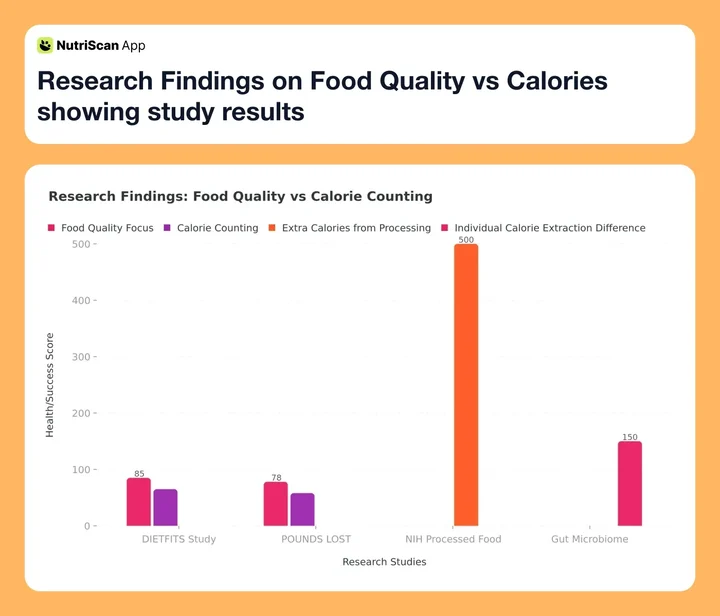 Figure 4: In the NIH study, the processed food group ate about 500 more calories a day than the unprocessed group
What This Means for Your Health Journey 🌟
After implementing nutrition-focused tracking instead of calorie obsession, here's what changed for me:
Energy: Energy levels rated 7-8/10 consistently from 7 AM to 10 PM. Eliminated afternoon crashes that occurred daily at 2-4 PM for 2+ years.
Hunger: Meal satisfaction lasts 4-5 hours (previously 2-3 hours). Reduced snacking frequency from 3-4 times daily to 0-1 times daily.
Mood: Fewer mood swings. Better stress management.
Sleep: Falling asleep easier. Waking up refreshed.
Fitness: Better workout performance. Faster recovery.
Appearance: Clearer skin. Shinier hair. Stronger nails.
Health markers: HDL cholesterol increased from 45 to 58 mg/dL in 4 months. Fasting glucose dropped from 94 to 82 mg/dL. Triglycerides decreased from 165 to 108 mg/dL.
The scale? It moved in the right direction without me obsessing over it.
 The joy of discovering that healthy eating actually makes you feel amazing
Pro Tip: The 80/20 Nutrition Rule
Focus on making 80% of your food choices nutrient-dense and balanced. The remaining 20% can be for pure enjoyment - pizza, desserts, or social meals. This creates sustainability without sacrifice.
How I Track Nutrition Instead of Calories with NutriScan
Traditional calorie counting apps show you numbers. But what do those numbers mean for your health? When I photograph my meals with NutriScan, I see:
- Complete macro breakdown (protein, carbs, fat)
- Fiber content for digestive health
- Sugar amounts to manage energy
- Vitamin and mineral content
- NutriScore for overall meal quality
- Personalized insights based on my goals
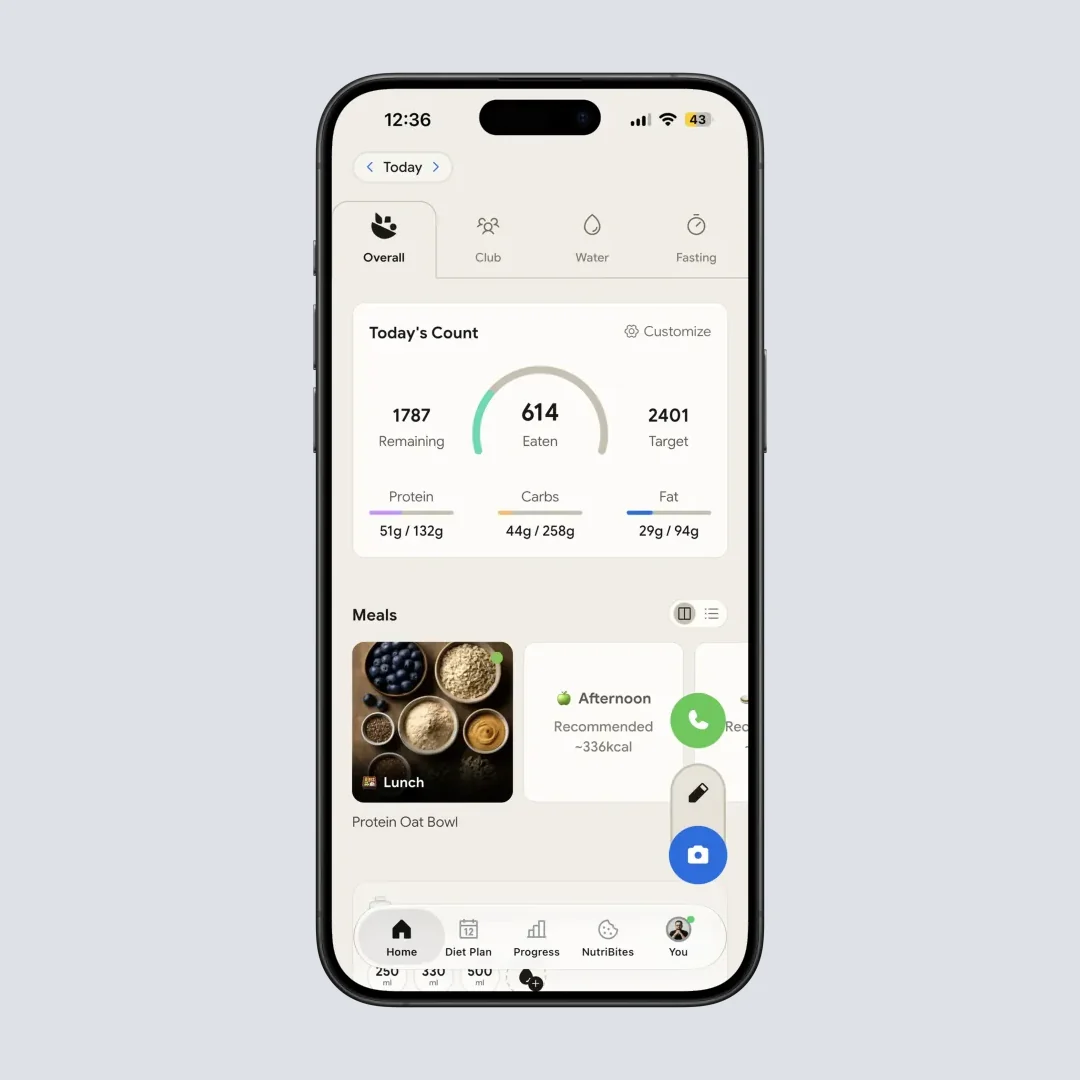
NutriScan's home dashboard provides a complete daily nutrition overview beyond simple calories - Home > Dashboard
More importantly, it helps me understand patterns. Why did I feel great on Tuesday but terrible on Wednesday? NutriScan's meal timeline shows me exactly what was different. Maybe Tuesday had 35g fiber and Wednesday only had 10g. Or Tuesday's meals had balanced macros while Wednesday was carb-heavy.
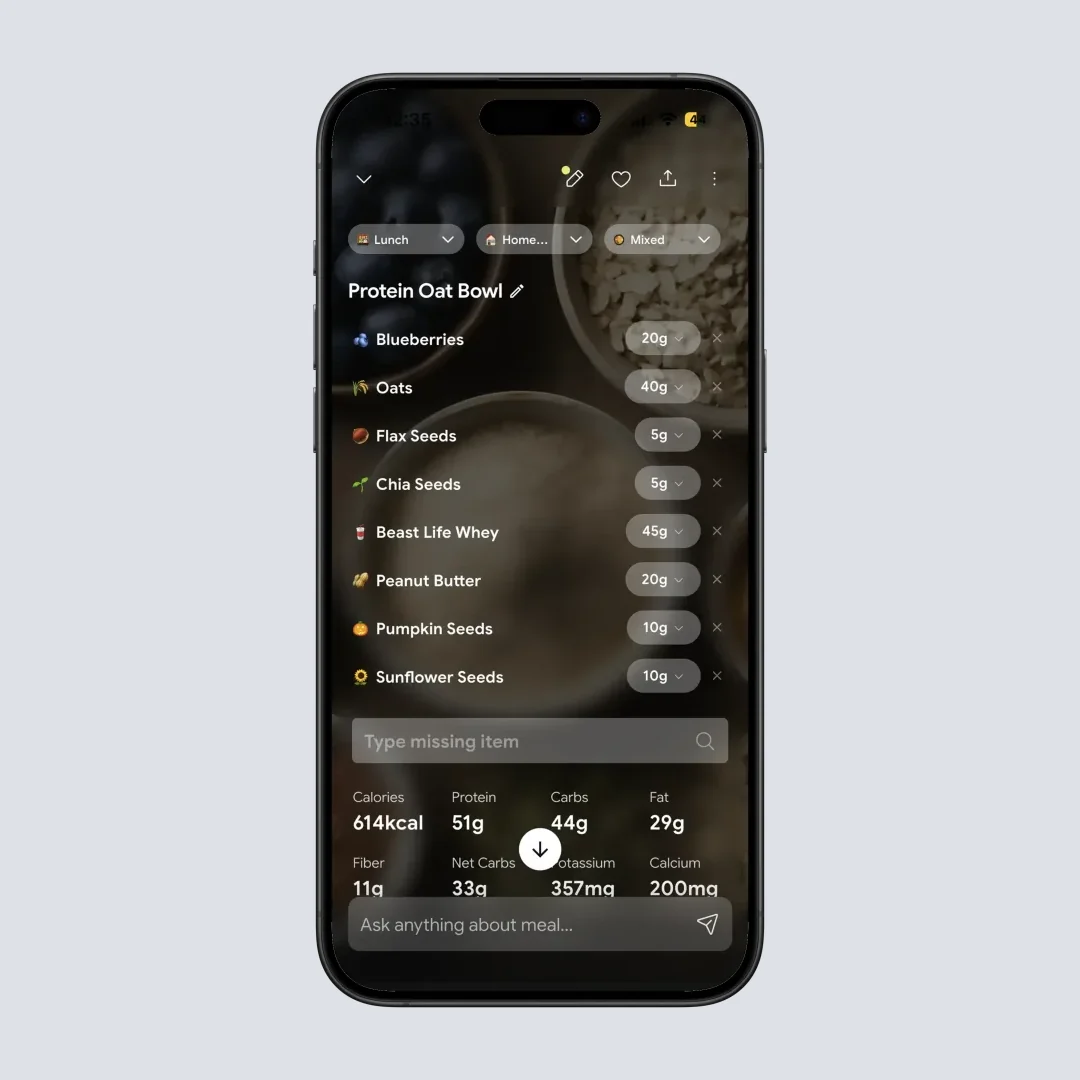
Detailed nutrition analysis reveals exactly which vitamins and minerals you're getting - Home > Camera > Detailed Analysis
Premium adds the parts I use for planning: a goal-based grocery list, weekly meal-plan suggestions and the 28-day personalized diet plan. Scanning, NutriScore and the full micronutrient breakdown sit on the free plan, capped at five scans a week. If you want the feature list before you install anything, the AI food tracker page lays it out, and my earlier post on nutrition tracking versus calorie counting covers the metric-by-metric case.
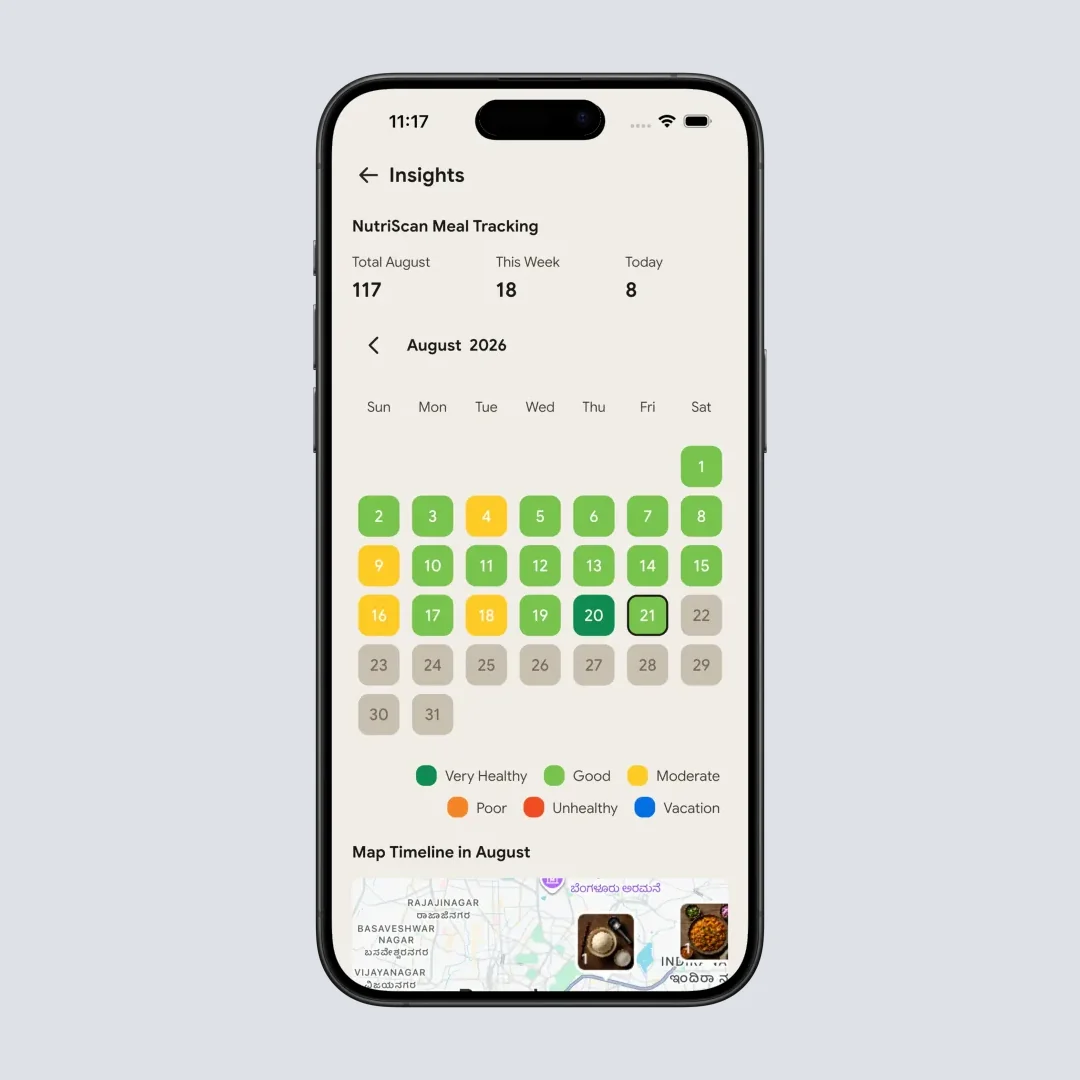
Pattern analysis reveals nutrition trends and helps identify what works best for your body - Home > Insights > Calendar View
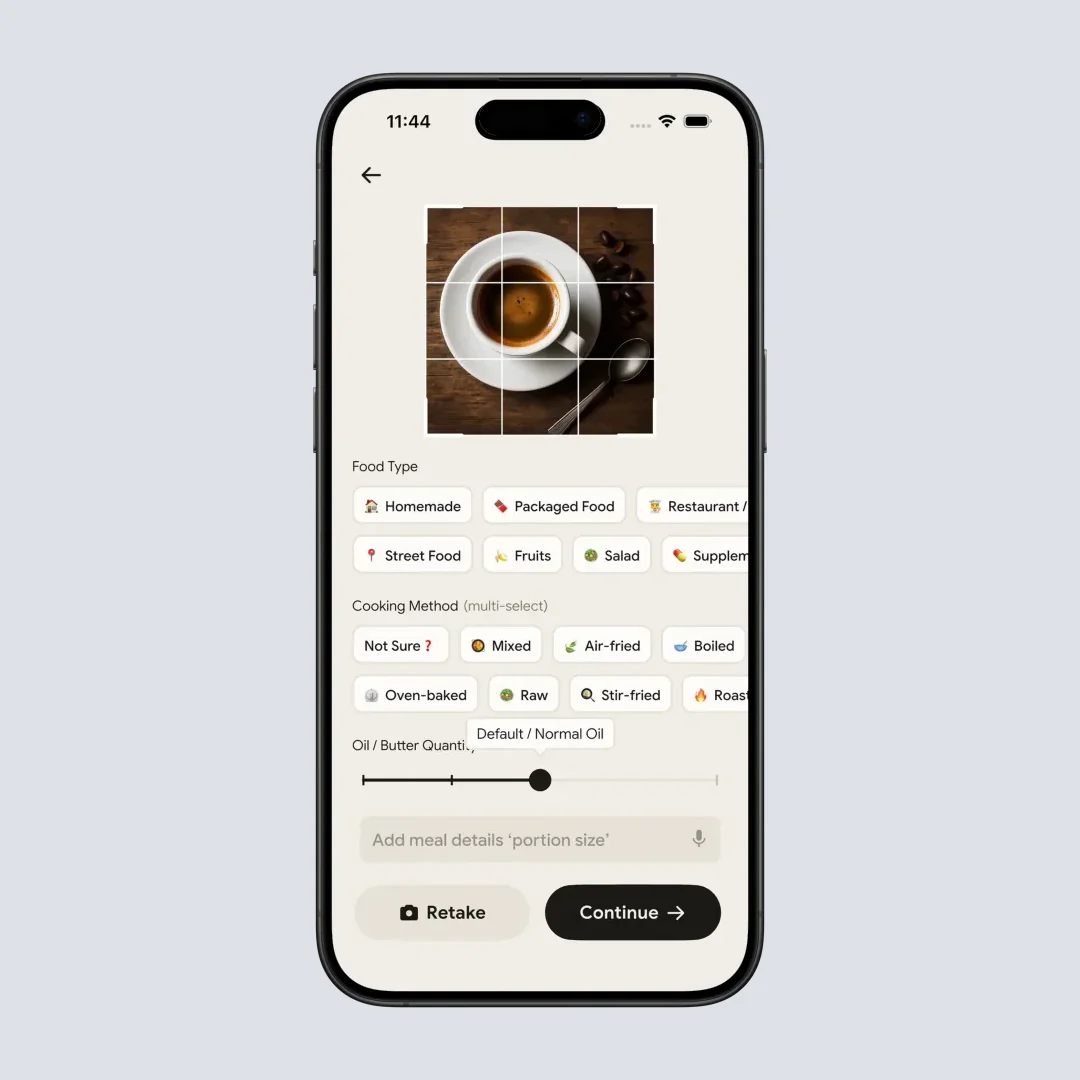
NutriScan's comprehensive nutrition tracking goes far beyond simple calorie counting
Common Mistakes I Made (So You Don't Have To) ⚠️
Common Nutrition Tracking Pitfalls
Mistake 1: Eliminating entire food groups for calorie savings. I cut all fats for months. Result? Hormonal chaos, dry skin, and constant hunger. Now I include healthy fats daily.
Mistake 2: Choosing "diet" foods over real food. Those 100-calorie snack packs? Usually processed junk with zero nutrition. A 150-calorie apple with almond butter wins every time.
Mistake 3: Ignoring meal timing. I used to save all my calories for dinner. Bad idea. Now I front-load nutrition earlier when my body needs it most.
Mistake 4: Drinking calories mindlessly. Fancy coffee drinks, smoothies, and juices added 400+ calories daily with minimal nutrition. Now I eat my calories and drink water, tea, or black coffee.
Mistake 5: Not planning for real life. Perfect nutrition plans fail at the first restaurant meal or social event. Now I focus on patterns over perfection.
The Mental Health Component Nobody Discusses 🧠
Calorie counting made me anxious. I'd panic at restaurants without nutrition menus. I'd skip social events to avoid "ruining" my numbers. Food became math, not nourishment.
Switching to nutrition tracking changed my relationship with food. Instead of "I can't eat that, too many calories," I think "What nutrients does my body need right now?" It's addition, not subtraction. I ADD nutrition rather than RESTRICT calories.
This shift reduced my food anxiety dramatically. I make choices based on how food serves my body, not arbitrary numbers. Birthday cake at a party? Sure! I'll balance it with nutrient-dense choices at other meals. No guilt, no stress, just balance.
Where to Start This Week
Calories still matter for weight. I have not stopped believing that. What changed is the order I check things in: protein first, fiber second, added sugar third, and the calorie total last, as a sanity check rather than a verdict.
Here is the week-one version, about ten minutes a day:
- Days 1 to 3: log every meal in full, macros and micros, and change nothing. You are collecting a baseline, not fixing anything yet.
- Day 4: pick your two worst gaps. For most people it is morning protein and daily fiber. If those are yours, the protein tracking guide and my fiber experiment cover what I did about each.
- Days 5 to 7: run the swaps from the table above on the two meals you repeat most often. Leave everything else alone.
Free NutriScan gives you five scans a week, which is enough to test the scanner on the meals a food database usually gets wrong, your curries, restaurant plates and mixed bowls, before you decide whether the paid plan is worth it. Micronutrients show on every meal on both plans, and if that is the part you care about most, the micronutrient tracking comparison is the more useful read.
Frequently Asked Questions ❓
Q1: Won't I gain weight if I stop counting calories?
A1: I had the same fear! Here's what actually happens: when you focus on nutrition quality, your body's natural hunger and satiety signals start working properly. I eat more calories now than when I was strictly counting, but my weight is stable because I'm eating nutrient-dense foods that satisfy my body's actual needs. High-protein, high-fiber meals keep you full longer. You naturally eat less because you're not constantly hungry.
Q2: How do I track nutrition without getting overwhelmed by all the numbers?
A2: Start simple! Pick just 2-3 metrics that matter most for your goals. For most people, I recommend starting with protein (aim for 0.8-1g per kg body weight - calculate your exact needs here), fiber (25-35g daily), and added sugar (minimize as much as possible). If you have specific health conditions like PCOS or diabetes, use our specialized calculators for personalized recommendations. Using NutriScan makes this process much easier - photograph your meal and instantly see the breakdown. The app's NutriScore gives you a quick quality assessment without drowning in data.
Q3: What if I need to lose weight quickly? Don't I need a calorie deficit?
A3: Yes, weight loss requires consuming less energy than you burn. But here's the key: you can create that deficit while still prioritizing nutrition. In fact, nutrient-dense eating makes deficits easier to maintain! Focus on filling your plate with vegetables, lean proteins, and whole grains. You'll likely eat fewer calories naturally while feeling more satisfied than counting calories on processed "diet" foods.
Q4: How long before I see results from nutrition tracking vs calorie counting?
A4: The timeline surprised me! Within the first week of proper nutrition tracking, I noticed energy levels improve from 5/10 to 7/10, digestive issues reduced by ~70%, and afternoon sugar cravings dropped from 3-4 daily to 0-1. After 2-3 weeks: sleep onset time decreased from 45 minutes to 15 minutes, mood swings reduced significantly, and energy stayed consistent 7-8/10 from 7 AM to 9 PM. After a month: skin clarity improved (fewer breakouts), hair became noticeably shinier, workout recovery time decreased from 48 hours to 24 hours, and weight naturally stabilized without active restriction. Compare this to calorie counting, where I saw 2-3 lb/week weight loss but energy dropped to 4-5/10 and mood became unstable.
Q5: Can I still enjoy "unhealthy" foods while nutrition tracking?
A5: This is my favorite question because the answer is a resounding YES! I eat chocolate almost daily and enjoy pizza nights with friends. The difference? I balance these choices with nutrient-dense foods at other meals. The 80/20 rule works great: 80% of your choices support your nutritional goals, 20% are for pure enjoyment. NutriScan helps you see how that slice of cake fits into your overall daily nutrition.
Q6: Is calorie counting bad for you?
A6: Not on its own, and the energy balance behind it is real. What it does not tell you is how much protein, fiber, added sugar or micronutrients you got, so you can hit 1,500 every day for a year and still be short on the things that decide how you feel. I check calories last now, as a sanity check on the rest. If you want the metric-by-metric version of that argument, I wrote it up in nutrition tracking versus calorie counting.