Beef Jerky: Kalorien, Nährwerte und gesundheitliche Vorteile
Hoch-Protein portable snack mit concentrated Nährstoffe, perfect for niedrig-carb diets and outdoor adventures, but Natrium awareness required.
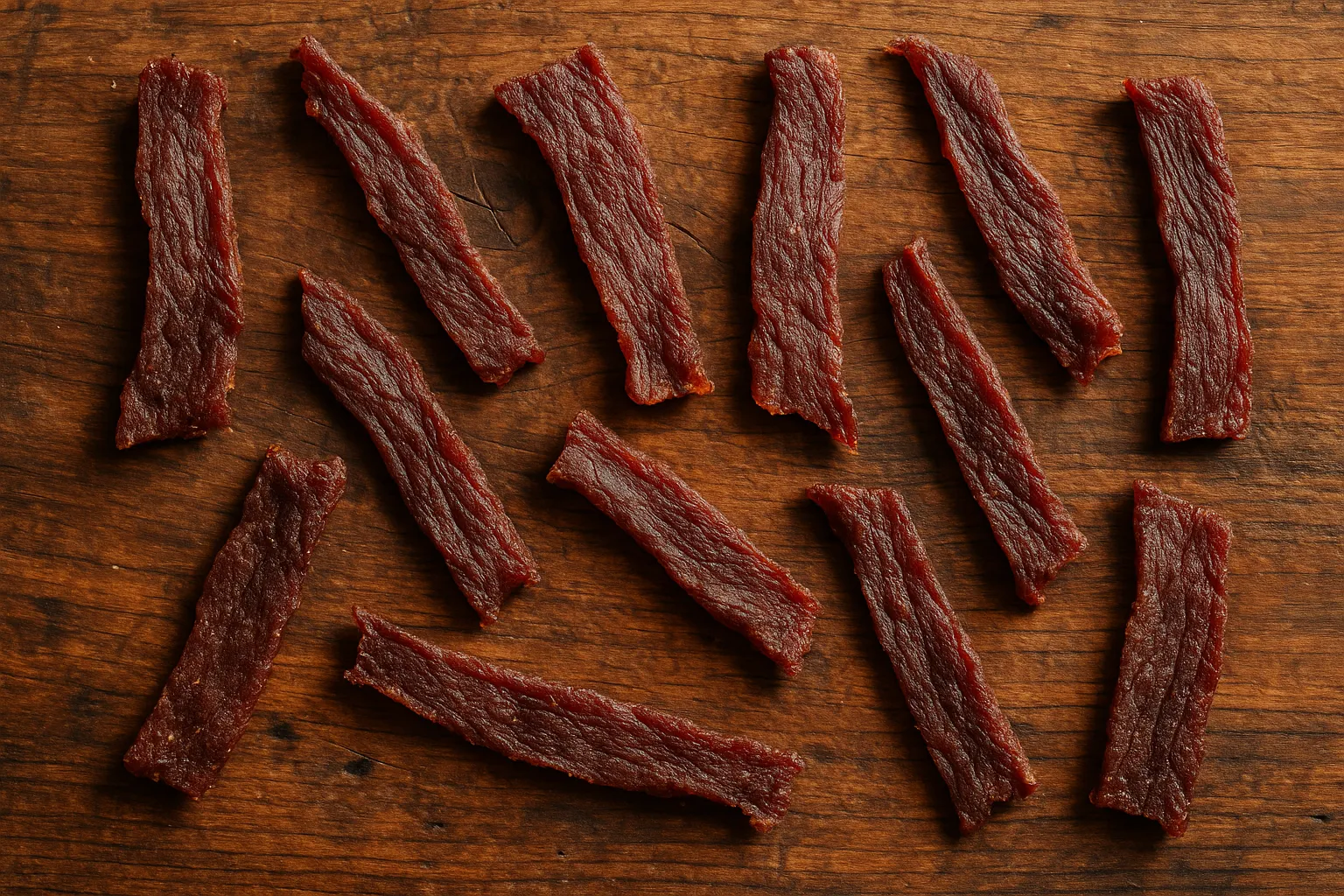
Schnelle Nährwertübersicht
Per 1 oz (28 g)
| Nährstoff | Menge |
|---|---|
| Kalorien | 116 kcal |
| Protein | 9 g |
| Kohlenhydrate | 3 g |
| Fett | 7 g |
| Gesättigte Fette | 3 g |
| Natrium | 505 mg |
| Eisen | 1.8 mg |
| Zink | 2.3 mg |
| Phosphorus | 93 mg |
| Vitamin B12 | 0.6 mcg |
Makronährstoff-Verteilung
 ChatGPT
  Claude
  AI Mode
  Perplexity
ERNÄHRUNGSBERATER-EINBLICK
Beef jerky delivers 32% Protein by gewicht - one of der highest Protein densities of any snack. Jedoch, der 505 mg Natrium pro Unze (22% of täglich grenze) means you sollte grenze intake to 1-2 oz täglich for optimal health.
Mythencheck
MYTHOS #1: Beef Jerky Ist Just Unhealthy Processed Meat
WAHRHEIT: Quality beef jerky ist simply dehydrated lean beef mit seasoning. Unlike processed deli meats mit fillers and binders, traditional jerky enthält minimal ingredients: beef, salt, spices. Wählen brands ohne nitrates or MSG for healthiest option.
MYTHOS #2: Alle Beef Jerky Enthält Dangerous Nitrates
WAHRHEIT: Viele premium brands jetzt verwenden celery powder or sea salt instead of Natrium nitrite. Nitrate-kostenlos jerky eliminates concerns ungefähr potential carcinogens. Check labels for "no added nitrates" or "naturally cured" designations.
MYTHOS #3: Der Natrium in Beef Jerky Will Cause Hoch Blood Pressure
WAHRHEIT: For gesund individuals ohne hypertension, mäßig jerky consumption (1-2 oz täglich) won't raise blood pressure. Natrium sensitivity varies greatly between individuals. If you have normal blood pressure and active lifestyle, jerky Natrium ist less concerning.
MYTHOS #4: Beef Jerky Ist Too Hoch in Fett to Be Gesund
WAHRHEIT: Die meisten jerky ist gemacht from lean cuts mit Fett trimmed vor drying. At 7 g Fett pro oz mit 9 g Protein, der Protein-to-Fett ratio ist favorable. Compare to nuts (14 g Fett, 6 g Protein pro oz) - jerky ist actually leaner als die meisten portable Protein snacks.
MYTHOS #5: Eating Beef Jerky Will Cause Cancer
WAHRHEIT: Der WHO classification of processed meats applies primarily to cured, smoked deli meats consumed täglich in groß quantities. Occasional jerky consumption (1-2 oz, 2-3 times weekly) doesn't significantly increase cancer risk, besonders nitrate-kostenlos varieties.
MYTHOS #6: Alle Beef Jerky Brands Sind der Gleich Quality
WAHRHEIT: Quality varies dramatically. Premium brands verwenden 100% grass-fed beef mit no antibiotics, natural ingredients, and minimal processing. Vermeiden brands listing "beef product," hydrolyzed proteins, or excessive additives. Read labels carefully.
NutriScore nach Gesundheitsziel
| Gesundheitsziel | NutriScore | Warum diese Bewertung? |
|---|---|---|
| Gewichtsverlust |  | Hoch Protein (9 g/oz) fördert fullness, niedrig Kohlenhydrate support ketosis. Natrium causes water retention. Grenze to 1-2 oz täglich for beste results. |
| Muskelaufbau | | Quality Protein and zinc support muscle recovery. Niedriger Protein pro oz als chicken breast means you'll brauchen 3-4 oz post-workout. |
| Diabetes-Management | | Nur 3 g Kohlenhydrate mit 9 g Protein stabilizes Blutzucker. Watch for added sugars in teriyaki-style jerky. |
| PCOS-Management |  | Hoch Protein unterstützt hormone balance but hoch Natrium kann worsen bloating. Wählen niedrig-Natrium varieties, grenze to 1 oz täglich. |
| Schwangerschaftsernährung | | Eisen unterstützt maternal blood volume expansion, but hoch Natrium erhöht swelling. |
| Viral/Flu Recovery | | Protein and zinc support immune function. Hoch Natrium dehydrates während illness. Wählen niedrig-Natrium versions, stay hydrated. |
PERSONALISIERTE ERNÄHRUNG
Verfolgen Sie Ihre Mahlzeiten mit NutriScan for personalized NutriScores based on your specific health goals!
Blutzucker-Reaktion auf Beef Jerky
Understanding wie beef jerky affects your Blutglukose demonstrates warum it's excellent for niedrig-carb and diabetic diets.
Typische Glukosekurve
Diese Grafik zeigt typical Blutglukose response for general gesund individuals. Individuelle Reaktionen können variieren. Keine medizinische Beratung.
Beste Kombinationen für ausgewogene Ernährung
Combining beef jerky mit Ballaststoffe and gesund fats creates a complete snack während reducing Natrium concentration:
- 🥜 Roh mandeln or walnuts - Gesund fats balance Natrium, extend satiety
- 🥒 Cucumber or celery sticks - Hoch water content hilft offset Natrium
- 🍎 Apple slices or berries - Ballaststoffe and Antioxidantien for balanced nutrition
- 🥑 Avocado slices - Kalium counteracts Natrium effects, adds gesund Fett
Dies combination liefert complete nutrition (Protein + Ballaststoffe + gesund Fett + hydration) keeping you satisfied for 3-4 hours.
Kulturelle Bedeutung
Beef jerky traces back to der Quechua people of South America wer created "ch'arki" (dried meat) around 1550.
In American History:
- Native American tribes created pemmican (dried meat + Fett + berries) for winter survival
- Cowboys popularized jerky as wesentlich trail food in der 1800s
- Military adopted jerky for field rations due to shelf stability and nutrient density
- Modern resurgence mit paleo and keto diet movements since 2010s
Global Variations:
- South African biltong - vinegar-cured, air-dried, thicker cuts
- Chinese ròu gān - sweet-spicy flavor mit soy sauce
- Mexican carne seca - lime and chili seasoned
- Australian bush tucker - kangaroo and emu jerky
Modern Impact:
- $3.2 billion annual market in US (growing 8% yearly)
- Craft jerky movement mit exotic meats (elk, bison, venison)
- Subscription boxes and artisanal brands replacing gas station quality
- Plant-based jerky alternatives gaining market share (mushroom, soy, jackfruit)
Vergleichen und ersetzen
Beef Jerky vs Similar Protein Snacks (Per Oz/28 g)
| Nährstoff | 🥩 Beef Jerky | 🦃 Turkey Jerky | 🐟 Salmon Jerky | 🥜 Mandeln | 🧀 String Käse (1 stick) |
|---|---|---|---|---|---|
| Kalorien | 116 kcal | 70 kcal | 90 kcal | 164 kcal | 80 kcal |
| Protein | 9 g | 13 g | 12 g | 6 g | 6 g |
| Kohlenhydrate | 3 g | 3 g | 2 g | 6 g | 1 g |
| Fett | 7 g | 1 g | 3 g | 14 g | 6 g |
| Natrium | 505 mg | 390 mg | 420 mg | 0 mg | 180 mg |
| Eisen | 1.8 mg | 1.5 mg | 0.8 mg | 1 mg | 0.1 mg |
| Portability | Excellent | Excellent | Excellent | Excellent | Excellent |
| Am besten für | Highest Eisen | Lowest calorie | Omega-3s | Lowest Natrium | Lowest Natrium Protein |
Häufige Fragen
Hilft Beef Jerky beim Abnehmen?
Beef jerky kann support Gewichtsverlust wenn consumed strategically due to hoch Protein and niedrig Kohlenhydrate, but Natrium requires Mäßigung.
Gewicht loss benefits: 9 g Protein pro oz fördert fullness and preserves muscle während calorie restriction; nur 3 g Kohlenhydrate unterstützt ketosis on niedrig-carb diets; portable format verhindert impulse eating of höher-calorie snacks.
Considerations: 505 mg Natrium (22% DV) causes temporary water retention; einige brands add Zucker (check teriyaki flavors); easy to overconsume - stick to 1-2 oz servings.
Beste practices: Wählen original or peppered flavors (niedriger Zucker), drink extra water to offset Natrium, pair mit vegetables for volume, grenze to once täglich as a snack between meals.
Wie viel Protein steckt in Beef Jerky?
One ounce (28 g) of beef jerky enthält 9 grams of Protein. Dies represents 18% of täglich Protein needs for a 2,000-calorie diet.
Beef jerky bietet concentrated Protein (32% by gewicht) - höher als die meisten snacks but niedriger pro Portion als chicken breast (26 g/3oz) or Greek yogurt (17 g/5.3oz). For Muskelaufbau or hoch-Protein diets, consume 2-3 oz jerky post-workout or combine mit andere Protein sources like nuts, käse, or Protein shakes.
Dürfen Diabetiker Beef Jerky essen?
Yes, diabetics kann safely eat beef jerky. Mit nur 3 g of Kohlenhydrate and 9 g of Protein pro Unze, it has minimal Blutzucker impact.
Benefits for diabetics: Sehr niedrig Kohlenhydrate (3 g) verhindert Blutzucker spikes; hoch Protein slows digestion and stabilizes glucose; portable for preventing hypoglycemia während travel or outdoor activities.
Wichtig considerations: Check labels for added sugars (teriyaki and sweet flavors kann have 6-9 g Zucker); monitor Natrium if you have hypertension; pair mit non-starchy vegetables for balanced snack.
Beste practices: Wählen original or peppered flavors, grenze to 1-2 oz täglich, test Blutzucker response erste zeit, stay gut-hydrated.
Ist Beef Jerky gesund?
Beef jerky kann be gesund in Mäßigung, providing concentrated Protein, Eisen, and wesentlich Nährstoffe, but Natrium content requires limiting intake.
Health benefits: 9 g complete Protein for muscle maintenance; 1.8 mg Eisen (10% DV) verhindert anemia; 2.3 mg zinc unterstützt immune function; B12 for energy Stoffwechsel; minimal Kohlenhydrate for Blutzucker kontrolle.
Health concerns: 505 mg Natrium (22% DV) affects blood pressure in sensitive individuals; einige brands contain nitrates (wählen nitrate-kostenlos); hoch in saturated Fett (3 g pro oz).
Recommendation: Grenze to 1-2 oz täglich, wählen grass-fed and nitrate-kostenlos brands, balance mit vegetables and water to offset Natrium.
Welche Gesundheitsvorteile bietet Beef Jerky?
Key Benefits:
- Muscle Maintenance: 9 g complete Protein mit alle wesentlich amino acids
- Eisen for Energy: 1.8 mg Eisen (10% DV) verhindert fatigue and unterstützt oxygen transport
- Immune Support: 2.3 mg zinc strengthens immune response
- Convenient Protein: Shelf-stable for months, no refrigeration needed
- Blood Zucker Friendly: Nur 3 g Kohlenhydrate makes it Diabetes-safe
- B Vitamin Source: B12 for cellular energy, niacin for Stoffwechsel
Ist der Natriumgehalt von Beef Jerky problematisch?
Hoch Natrium (505 mg pro oz, 22% of täglich grenze) ist beef jerky's main nutritional concern, but context matters.
Wer sollte grenze jerky: Hoch blood pressure or hypertension; kidney disease or reduced kidney function; heart failure; Schwangerschaft mit swelling; Natrium-sensitive individuals.
Wer kann enjoy moderately: Gesund adults mit normal blood pressure; active individuals wer sweat regularly; those following niedrig-carb or keto diets; people ohne heart or kidney conditions.
Mitigation strategies: Wählen niedrig-Natrium varieties (200-300 mg pro oz); drink extra water to help kidneys flush excess Natrium; grenze to 1 oz täglich if Natrium-sensitive; balance mit Kalium-rich foods (bananas, avocados, leafy greens).
Bottom line: For gesund individuals, 1-2 oz jerky 2-3 times weekly ist unlikely to cause problems. Täglich consumption requires choosing niedrig-Natrium brands or limiting to 1 oz.
Wie viel Beef Jerky sollte ich pro Tag essen?
General Guidelines:
- 1-2 oz täglich - Die meisten gesund people (232-464 Kalorien, 1010 mg Natrium)
- 1 oz täglich - Hoch blood pressure, heart disease, Schwangerschaft (grenze Natrium)
- 2-3 oz täglich - Athletes, Muskelaufbau, sehr active individuals (brauchen extra Protein)
Vermeiden excess: Mehr als 3 oz täglich liefert 1515 mg Natrium (66% DV), 21 g saturated Fett, and 348 Kalorien. Exceeding diese amounts kann impact blood pressure, Herzgesundheit, and hydration status.
Verfolgen Sie Ihre Mahlzeiten mit NutriScan app to sehen wie beef jerky fits your personal nutrition goals and Natrium limits.
Worin unterscheiden sich Jerky, Biltong und Carne Seca?
Alle sind dried meat snacks, but preparation methods create distinct flavors and textures.
Beef Jerky (American): Marinated in soy sauce, salt, spices, dann smoked or oven-dried at 160-180°F; chewy texture, smoky flavor, 3-5mm thick.
Biltong (South African): Cured in vinegar, salt, coriander, black pepper, dann air-dried for 4-7 tage; softer texture, tangy flavor, 10-20mm thick, no heat used.
Carne Seca (Mexican): Salted and sun-dried in hot, dry climates; oft rehydrated vor cooking; chewier als biltong, saltier als jerky, used in tacos and burritos.
Nutrition differences: Biltong typischerweise has slightly niedriger Natrium and retains mehr Nährstoffe due to no heat; carne seca has highest Natrium; jerky has mäßig Natrium mit smoky flavor compounds.


Ähnliche nahrhafte Lebensmittel
4505 Chicharrones Classic Chili Salt
7 Eleven Japan Crispy Corn Cheese
Weitere Ernährungs-Tools & Ressourcen
Beste Proteinergänzungen für Frauen
Bulking Meal Plan App für deinen Kalorienüberschuss
ChatGPT Abnehmcoach Alternative mit Ernährungstagebuch
ChatGPT Diätplan Alternative, die dein Essen erfasst
ChatGPT Kalorienzähler Alternative mit Tagessumme
Drittes Trimester Protein Leitfaden
Ernährungsplan für 40-jährige Männer
Fast Food Kalorienzähler, der das Tablett liest
Gewichtszunahme Diätplan Deutschland
Indische Diätplan App mit Veg- und Non-Veg-Optionen
Intervallfasten für Frauen, Timer und Essprotokoll
Intervallfasten Tracker App: gratis Fasten-Timer
Kalorien für deutsches Essen berechnen
Kalorienzähler App mit Foto: kostenlos Kalorien sehen
Kalorienzähler für deutsche Gerichte - Sofortige Nährwertangaben für jede Mahlzeit — 2026
Keto Diät Plan App: 28-Tage-Plan und Kohlenhydrate zählen
KI Ernährungsberater App, die deine Mahlzeiten liest
KI-Lebensmittel-Tracker Deutschland
Kostenlose Kalorienzähler-App mit KI-Foto-Scan | NutriScan
Makro-Tracker-App, die die Werte per Foto ausfüllt
Mediterrane Diät App, die das Öl mitzählt
Mikronährstoffe Tracker App für Vitamine und Mineralstoffe
Monatliche Einkaufsliste Generator
Nahrungsergänzungsmittel-Analysator & Planer
Nährwertetiketten Scanner App für deine Portion
NutriScore App: Bewertung für jede Mahlzeit | NutriScan
Sprachaktivierter Kalorienzähler - Sag deine Mahlzeiten an und tracke Nährstoffe freihändig — 2026
Vegetarischer Ernährungsplan App mit Proteinziel
Wasser und Kalorien Tracker App: gratis Trinkprotokoll
Wochenplan Essen App mit Kalorien und Einkaufsliste
Yazio Alternative kostenlos mit KI-Foto-Scan | NutriScan