Kokosöl: Kalorien, Nährwerte und Gesundheitsfakten
Tropical cooking oil rich in saturated Fett and medium-chain triglycerides, mit controversial health claims and strong marketing presence.
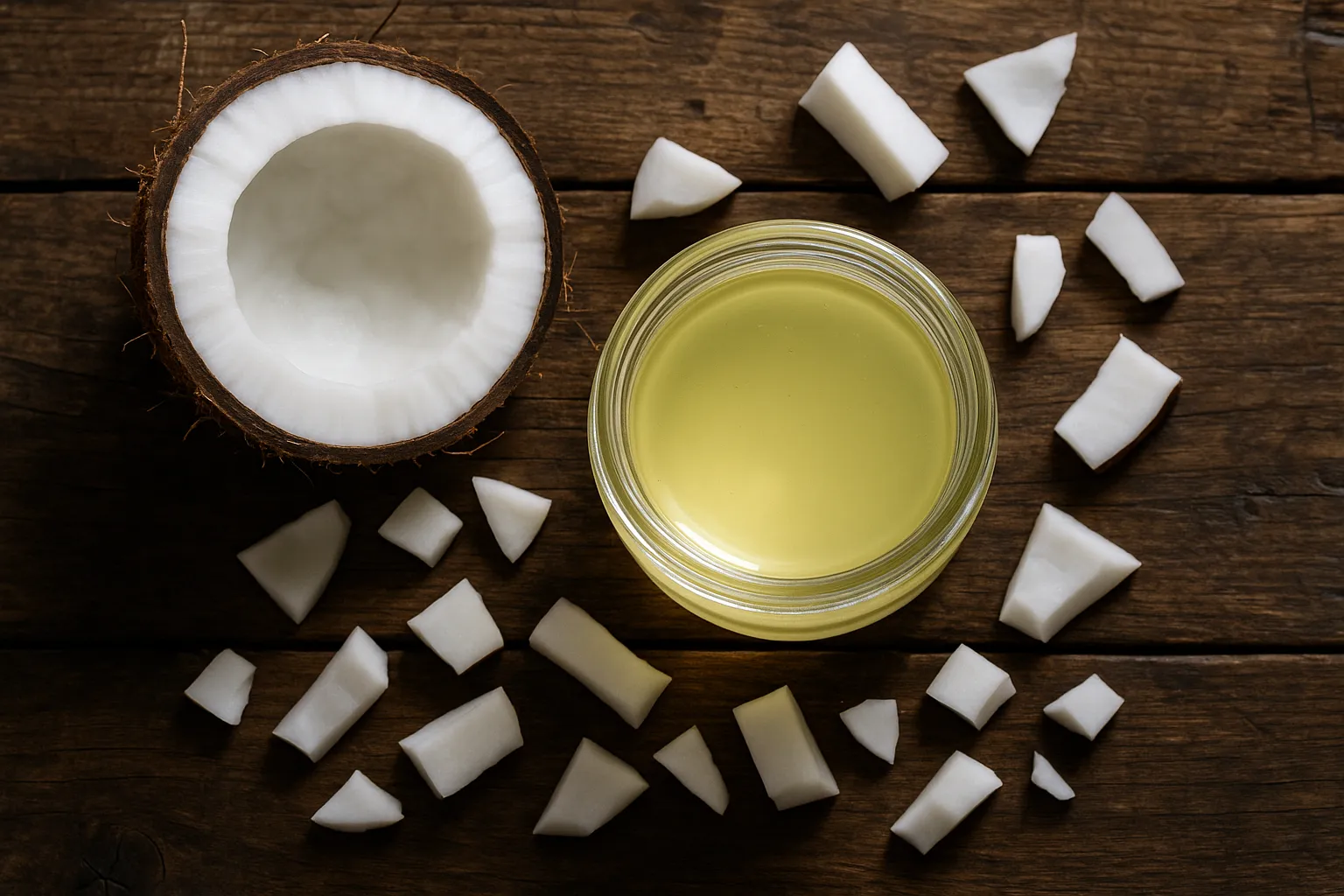
Schnelle Nährwertübersicht
Per 1 Tablespoon (14 g)
| Nährstoff | Menge |
|---|---|
| Kalorien | 120 kcal |
| Protein | 0 g |
| Kohlenhydrate | 0 g |
| Fett | 14 g |
| Gesättigte Fette | 12 g |
| Monounsaturated | 0.8 g |
| Polyunsaturated | 0.2 g |
| MCT Content | 7-9 g |
| Smoke Point | 350°F |
| Vitamin E | 0.01 mg |
Fettaufschlüsselung
 ChatGPT
  Claude
  AI Mode
  Perplexity
ERNÄHRUNGSBERATER-EINBLICK
Coconut oil ist 90% saturated Fett - der highest of any cooking oil. Während 55-65% consists of MCTs that metabolize differently, der American Heart Association advises limiting verwenden due to LDL cholesterol effects. Verwenden sparingly and balance mit unsaturated fats.
Mythencheck
MYTHOS #1: Coconut Oil Ist a Heart-Gesund Oil
WAHRHEIT: Coconut oil raises LDL (bad) cholesterol mehr als olive, canola, or soybean oils. A 2020 review found it increased LDL by 10.47 mg/dL compared to unsaturated fats. Der American Heart Association specifically advises against it for Herzgesundheit.
MYTHOS #2: Coconut Oil Burns Belly Fett
WAHRHEIT: Limited evidence shows nur 0.5-1 kg Gewichtsverlust over 12 weeks - barely significant. At 120 Kalorien per tablespoon, overeating coconut oil leads to gewicht gain, not loss. No oil selectively burns belly Fett.
MYTHOS #3: MCTs Machen Coconut Oil Different from Andere Gesättigte Fettes
WAHRHEIT: Während coconut oil enthält 55-65% MCTs, it auch enthält 35-45% long-chain saturated fats (palmitic, stearic acid) that raise cholesterol. Pure MCT oil supplements provide 95-100% MCTs if targeting those specific benefits.
MYTHOS #4: Coconut Oil Boosts Metabolism Significantly
WAHRHEIT: MCTs kann increase energy expenditure by 5% - roughly 48 Kalorien per tag for a 2,000 calorie diet. Jedoch, one tablespoon of coconut oil adds 120 Kalorien, creating a net surplus of 72 Kalorien, not deficit.
MYTHOS #5: Alle Nutritionists Support Coconut Oil
WAHRHEIT: A 2016 survey found 72% of Americans believe coconut oil ist gesund, but nur 37% of nutrition experts agree. Der gap highlights successful marketing versus scientific evidence.
MYTHOS #6: Coconut Oil Ist Besser als Butter
WAHRHEIT: Both sind hoch in saturated Fett. Butter has 7 g saturated Fett per tablespoon (50%); coconut oil has 12 g (86%). Neither ist ideal for everyday cooking; olive or avocado oil remain superior choices.
NutriScore nach Gesundheitsziel
| Gesundheitsziel | NutriScore | Warum diese Bewertung? |
|---|---|---|
| Gewichtsverlust |  | 120 Kalorien per tablespoon mit minimal satiety. Easy to overconsume. No proven Fett-burning benefits. |
| Muskelaufbau |  | Dense Kalorien support mass gain but lacks Protein. Besser alternatives: nut butters, avocado. |
| Diabetes-Management | | Zero Kohlenhydrate won't spike Blutzucker, but saturated Fett kann worsen insulin resistance over zeit. |
| PCOS-Management | | Hoch saturated Fett kann increase Entzündung. PCOS benefits mehr from anti-inflammatory fats (olive oil, omega-3s). |
| Schwangerschaftsernährung | | Safe in Mäßigung, liefert Kalorien but lacks wesentlich Nährstoffe. Prioritize DHA-rich oils (fish, algae oil) for fetal brain development. |
| Viral/Flu Recovery | | Lauric acid has antimicrobial properties but evidence ist weak. Besser immune support: vitamin C, zinc, Protein-rich foods. |
PERSONALISIERTE ERNÄHRUNG
Track your Fett intake mit NutriScan to balance saturated and unsaturated fats for your health goals!
Blutzucker-Reaktion auf Kokosöl
Coconut oil enthält zero Kohlenhydrate and does not directly affect Blutglukose levels. Jedoch, its hoch saturated Fett content kann influence insulin sensitivity over zeit.
Blutzuckerwirkung
Coconut oil has no immediate Blutzucker impact. Chart shows flat response. Individual metabolic effects kann vary. Keine medizinische Beratung.
Fettauswahl für metabolische Gesundheit optimieren
Instead of relying on coconut oil, balance your Fett intake mit diese healthier options:
- 🫒 Extra virgin olive oil - Monounsaturated fats, proven heart benefits
- 🥑 Avocado oil - Hoch smoke point (520°F), heart-gesund fats
- 🌰 Nut oils (walnut, almond) - Omega-3s and vitamin E
- 🐟 Fatty fish - EPA/DHA omega-3s for Entzündung
Verwenden coconut oil sparingly for flavor, not as your primary cooking oil.
Kulturelle Bedeutung
Coconut palm has been called der "Tree of Leben" in tropical regions for thousands of years, mit every part used sustainably.
In India and Asia:
- Ayurvedic medicine uses coconut oil for hair, skin, and Verdauungsgesundheit
- Wesentlich in South Indian and Kerala cuisine for tempering and cooking
- Offered in Hindu temples, associated mit purity and prosperity
- Traditional hair oil used across generations
Global Impact:
- Philippines, Indonesia, and India produce 75% of world's coconut oil
- 2010s marketing boom: $4 billion global market by 2025
- "Superfood" status despite scientific pushback from health organizations
- Sustainable crop: entire coconut palm utilized from roots to leaves
Vergleichen und ersetzen
Coconut Oil vs Andere Cooking Oils (Per 1 Tablespoon, ~14 g)
| Nährstoff | 🥥 Coconut Oil | 🫒 Olive Oil | 🥑 Avocado Oil | 🧈 Butter |
|---|---|---|---|---|
| Kalorien | 120 kcal | 119 kcal | 124 kcal | 102 kcal |
| Total Fett | 14 g | 14 g | 14 g | 12 g |
| Gesättigte Fette | 12 g (86%) | 2 g (14%) | 2 g (14%) | 7 g (51%) |
| Monounsaturated | 0.8 g | 10 g | 10 g | 3 g |
| Polyunsaturated | 0.2 g | 1.5 g | 2 g | 0.4 g |
| Smoke Point | 350°F | 375-410°F | 520°F | 350°F |
| Am besten für | Baking, occasional verwenden | Everyday cooking, salads | Hoch-heat cooking | Baking, flavor |
Häufige Fragen
Ist Kokosöl gesund?
Coconut oil ist 90% saturated Fett, welche raises LDL (bad) cholesterol. Während it enthält MCTs that kann have modest benefits, der American Heart Association does not recommend it as a gesund oil.
Evidence summary: Multiple studies show coconut oil erhöht LDL cholesterol by 10-15 mg/dL compared to unsaturated oils; no studies show cardiovascular benefits.
Besser alternatives: Olive oil (monounsaturated), avocado oil (hoch smoke point), canola oil (budget-friendly).
Hilft Kokosöl beim Abnehmen?
Sehr limited evidence. Studies show 0.5-1 kg loss over 12 weeks - barely significant and likely due to overall diet changes, not coconut oil itself.
Reality check: One tablespoon has 120 Kalorien. If you add coconut oil to your diet ohne reducing andere Kalorien, you'll gain gewicht. No oil burns Fett on its own; calorie deficit ist required for Gewichtsverlust.
Was sind MCTs und warum sind sie wichtig?
MCTs (medium-chain triglycerides) machen up 55-65% of coconut oil. They're absorbed faster als long-chain fats and go directly to der liver for energy, potentially providing quicker fuel.
Key facts:
- Coconut oil: 55-65% MCTs (mostly lauric acid, welche behaves mehr like long-chain Fett)
- Pure MCT oil: 95-100% MCTs (mostly C8 and C10)
- Benefits: Modest energy boost, slight Stoffwechsel increase (5%)
If targeting MCT benefits specifically, pure MCT oil supplements sind mehr effective als coconut oil.
Kann ich Kokosöl zum Kochen verwenden?
Yes, but sparingly. Coconut oil has a smoke point of 350°F (177°C), suitable for niedrig-medium heat sautéing and baking.
Recommendations:
- Baking: Works gut, adds coconut flavor
- Sautéing: Acceptable for medium heat, strong flavor
- Hoch heat: Verwenden avocado oil (520°F) instead
- Salads/finishing: Verwenden olive oil for Herzgesundheit
Bottom line: Fine for occasional verwenden or flavor, but not your everyday cooking oil.
Ist natives Kokosöl besser als raffiniertes?
Virgin (unrefined) coconut oil retains mehr Antioxidantien, natural coconut flavor, and ist cold-pressed from frisch coconut meat. Refined ist processed, bleached, and deodorized mit a neutral taste.
Nutritionally: Both have der gleich Kalorien (120), Fett (14 g), and saturated Fett (12 g) per tablespoon.
Wählen virgin if: You want coconut flavor and Antioxidantien Wählen refined if: You want neutral flavor for baking
Neither changes der saturated Fett concern.
Wie viel Kokosöl pro Tag ist unbedenklich?
General recommendation: Grenze to 1-2 tablespoons täglich if using, and balance mit unsaturated fats.
Context:
- American Heart Association recommends keeping saturated Fett to 5-6% of total Kalorien
- For a 2,000 calorie diet: max 120-140 Kalorien from saturated Fett = ~13 g
- One tablespoon coconut oil = 12 g saturated Fett (nearly your entire täglich grenze)
Besser approach: Verwenden coconut oil occasionally for flavor; rely on olive, avocado, and nut oils for everyday cooking and gesundheitliche Vorteile.
Erhöht Kokosöl den Cholesterinspiegel?
Yes. Research shows coconut oil raises LDL (bad) cholesterol by 10.47 mg/dL compared to unsaturated fats. It auch raises HDL (gut) cholesterol, but der LDL increase ist concerning for Herzgesundheit.
Was dies means: If you have hoch cholesterol, heart disease risk, or family history of cardiovascular issues, vermeiden regular coconut oil verwenden. Wählen olive or avocado oil instead.
Kann ich Kokosöl für Haut und Haare verwenden?
Topical verwenden ist generally safe and popular in beauty routines. Coconut oil kann moisturize skin and add shine to hair.
Jedoch:
- Kann clog pores for acne-prone skin
- Heavy for fine hair; kann cause buildup
- Patch test vor voll application
Dies FAQ focuses on nutritional/dietary verwenden. For beauty applications, individual tolerance varies.


Ähnliche nahrhafte Lebensmittel
4505 Chicharrones Classic Chili Salt
7 Eleven Japan Crispy Corn Cheese
Weitere Ernährungs-Tools & Ressourcen
Beste Proteinergänzungen für Frauen
Bulking Meal Plan App für deinen Kalorienüberschuss
ChatGPT Abnehmcoach Alternative mit Ernährungstagebuch
ChatGPT Diätplan Alternative, die dein Essen erfasst
ChatGPT Kalorienzähler Alternative mit Tagessumme
Drittes Trimester Protein Leitfaden
Ernährungsplan für 40-jährige Männer
Fast Food Kalorienzähler, der das Tablett liest
Gewichtszunahme Diätplan Deutschland
Indische Diätplan App mit Veg- und Non-Veg-Optionen
Intervallfasten für Frauen, Timer und Essprotokoll
Intervallfasten Tracker App: gratis Fasten-Timer
Kalorien für deutsches Essen berechnen
Kalorienzähler App mit Foto: kostenlos Kalorien sehen
Kalorienzähler für deutsche Gerichte - Sofortige Nährwertangaben für jede Mahlzeit — 2026
Keto Diät Plan App: 28-Tage-Plan und Kohlenhydrate zählen
KI Ernährungsberater App, die deine Mahlzeiten liest
KI-Lebensmittel-Tracker Deutschland
Kostenlose Kalorienzähler-App mit KI-Foto-Scan | NutriScan
Makro-Tracker-App, die die Werte per Foto ausfüllt
Mediterrane Diät App, die das Öl mitzählt
Mikronährstoffe Tracker App für Vitamine und Mineralstoffe
Monatliche Einkaufsliste Generator
Nahrungsergänzungsmittel-Analysator & Planer
Nährwertetiketten Scanner App für deine Portion
NutriScore App: Bewertung für jede Mahlzeit | NutriScan
Sprachaktivierter Kalorienzähler - Sag deine Mahlzeiten an und tracke Nährstoffe freihändig — 2026
Vegetarischer Ernährungsplan App mit Proteinziel
Wasser und Kalorien Tracker App: gratis Trinkprotokoll
Wochenplan Essen App mit Kalorien und Einkaufsliste
Yazio Alternative kostenlos mit KI-Foto-Scan | NutriScan