Granola: Kalorien, Nährwerte und gesunde Portionsstrategien
Knusprig, süß und voller Textur – aber auch energiedicht. Mit den richtigen Tricks kannst du Granola genießen, ohne deine Kalorien- oder Blutzuckerziele zu sprengen.
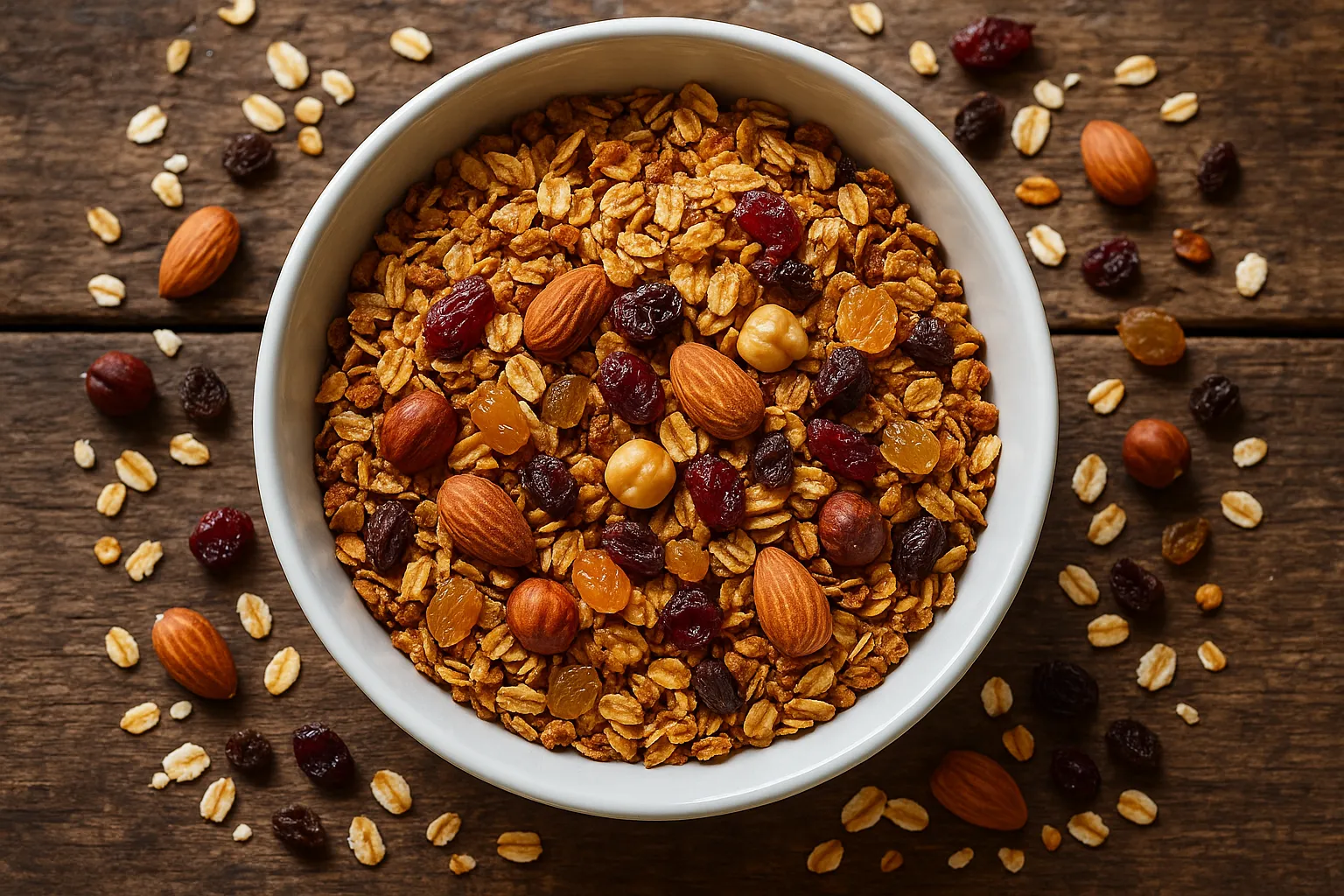
Nährwerte auf einen Blick
Pro Portion (29 g / 1/4 Tasse)
| Nährstoff | Menge |
|---|---|
| Kalorien | 140 kcal |
| Protein | 3 g |
| Kohlenhydrate | 14 g |
| Ballaststoffe | 3 g |
| Zucker | 4 g |
| Fett | 9 g |
| Gesättigte Fette | 2 g |
| Natrium | 70 mg |
Makronährstoff-Verteilung
 ChatGPT
  Claude
  AI Mode
  Perplexity
ERNÄHRUNGSTIPP
Portioniere Granola mit einem Messbecher direkt ins Schälchen. Kombiniere es mit Skyr oder griechischem Joghurt sowie frischen Beeren – so erhältst du Protein und Volumen ohne viele extra Kalorien.
Häufige Fehler
ZU GROSSE PORTIONEN
Viele gießen Granola direkt aus der Tüte in die Schale – das sind schnell 80-100 g und damit 400-500 kcal.
ZUCKERFALLEN
Granolas mit Honig, Sirup oder Schokolade enthalten oft mehr Zucker als Frühstücksflocken. Lies die Zutatenliste kritisch.
ÖLE UND ADDITIVE
Palmöl und künstliche Aromen sind typische „Streckmittel“. Setze auf Mischungen mit Raps- oder Olivenöl und natürlichen Gewürzen.
NutriScore nach Zielsetzung
| Ziel | NutriScore | Empfehlung |
|---|---|---|
| Gewichtsreduktion | 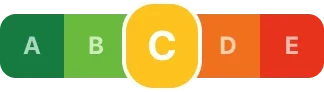 | Nur 1/4 Tasse als Topping, nicht als Hauptmahlzeit. |
| Gewicht halten |  | Kombiniere mit Protein (Joghurt) und viel Obst. |
| Sport & Energie | | Gute Energiequelle vor langen Trainings – wähle Varianten mit Nüssen und Samen. |
| Diabetes | | Achte auf weniger als 6 g Zucker pro Portion und kombiniere es mit Proteinen. |
SMART TRACKING
NutriScan synchronisiert deine Frühstücksdaten, warnt bei Portionsüberschreitungen und schlägt zuckerärmere Produkte vor.
Wie genieße ich Granola smarter?
- Messe 30 g ab und streue es über Skyr, Smoothie Bowls oder Porridge.
- Mische Granola im Verhältnis 1:1 mit Haferflocken oder gepopptem Amaranth, um die Kalorien zu strecken.
- Tausche Granola zwischenzeitlich gegen Overnight Oats oder Chia-Pudding aus.
Einkaufs-Checkliste
- Zucker < 6 g pro Portion
- Mindestens 3 g Ballaststoffe
- Gesunde Fette aus Nüssen/Samen, nicht aus Palmöl
- Kurze Zutatenliste, keine künstlichen Aromen
Alternativen mit weniger Kalorien
| Option | Kalorien (30 g) | Zucker | Kommentar |
|---|---|---|---|
| Klassisches Granola | 150 | 12 g | Vorsicht bei der Menge |
| Granola ohne Zucker | 120 | 4 g | Süße durch Trockenfrüchte |
| Haferflocken | 110 | 0,4 g | Neutral, gut kombinierbar |
| Crunchy Müsli (Bio) | 135 | 8 g | Besser, aber immer noch energiedicht |


Ähnliche nahrhafte Lebensmittel
4505 Chicharrones Classic Chili Salt
7 Eleven Japan Crispy Corn Cheese
Tools & Ressourcen
Beste Proteinergänzungen für Frauen
Bulking Meal Plan App für deinen Kalorienüberschuss
ChatGPT Abnehmcoach Alternative mit Ernährungstagebuch
ChatGPT Diätplan Alternative, die dein Essen erfasst
ChatGPT Kalorienzähler Alternative mit Tagessumme
Drittes Trimester Protein Leitfaden
Ernährungsplan für 40-jährige Männer
Fast Food Kalorienzähler, der das Tablett liest
Gewichtszunahme Diätplan Deutschland
Indische Diätplan App mit Veg- und Non-Veg-Optionen
Intervallfasten für Frauen, Timer und Essprotokoll
Intervallfasten Tracker App: gratis Fasten-Timer
Kalorien für deutsches Essen berechnen
Kalorienzähler App mit Foto: kostenlos Kalorien sehen
Kalorienzähler für deutsche Gerichte - Sofortige Nährwertangaben für jede Mahlzeit — 2026
Keto Diät Plan App: 28-Tage-Plan und Kohlenhydrate zählen
KI Ernährungsberater App, die deine Mahlzeiten liest
KI-Lebensmittel-Tracker Deutschland
Kostenlose Kalorienzähler-App mit KI-Foto-Scan | NutriScan
Makro-Tracker-App, die die Werte per Foto ausfüllt
Mediterrane Diät App, die das Öl mitzählt
Mikronährstoffe Tracker App für Vitamine und Mineralstoffe
Monatliche Einkaufsliste Generator
Nahrungsergänzungsmittel-Analysator & Planer
Nährwertetiketten Scanner App für deine Portion
NutriScore App: Bewertung für jede Mahlzeit | NutriScan
Sprachaktivierter Kalorienzähler - Sag deine Mahlzeiten an und tracke Nährstoffe freihändig — 2026
Vegetarischer Ernährungsplan App mit Proteinziel
Wasser und Kalorien Tracker App: gratis Trinkprotokoll
Wochenplan Essen App mit Kalorien und Einkaufsliste
Yazio Alternative kostenlos mit KI-Foto-Scan | NutriScan
Häufig Gestellte Fragen
Is granola good for weight loss?
Granola can support weight loss only with strict portion control. A 1/4 cup serving has 140 calories, but most people pour 2-3 servings at once, consuming 280-420 calories thinking it's a "light" breakfast.
Best practices: Measure 1/4 cup portions; use as yogurt topping, not bowl filler; choose varieties with under 6g sugar per serving; pair with high-protein Greek yogurt; avoid eating from the bag.
How much granola should I eat per day?
Standard serving: 1/4 cup (29g) = 140 calories, eaten 1-2 times daily maximum.
Portion control tips:
- Use a proper 1/4 cup measure, not your hand or a regular spoon
- Pour into a small bowl, not directly from bag
- Treat as a garnish or topping, not the main component
- If using for energy needs (athletes), up to 1/2 cup (280 cal) is acceptable
Most granola overconsumption happens from eyeballing portions. Studies show people pour 3-4x the serving size.
Was ist: the healthiest type of granola?
Look for these qualities:
- Under 6g added sugar per serving (natural fruit sweetness okay)
- Whole grain oats as first ingredient
- Nuts and seeds for healthy fats and protein
- Minimal added oils (coconut, canola, or palm oil)
- No artificial sweeteners or preservatives
- At least 3g fiber per serving
Best option: Homemade granola using oats, nuts, seeds, minimal honey or maple syrup, and spices like cinnamon. You control sweetness, oil amount, and cluster size.
Is granola better than oatmeal for breakfast?
Oatmeal wins for most health goals - here's why:
Oatmeal advantages:
- 68 cal/100g vs granola's 490 cal/100g (7x fewer calories)
- Lower glycemic index for better blood sugar control
- More customizable (add your own toppings)
- Less added sugar and processed oils
Granola advantages:
- More convenient (no cooking)
- Higher in fiber (8.6g vs oatmeal's 1.7g per 100g)
- Provides healthy fats from nuts
- Crunchier texture
Verdict: Choose oatmeal for weight loss or diabetes. Choose granola for high energy needs or when convenience matters, but watch portions carefully.
Can diabetics eat granola?
Diabetics can eat granola in small portions with proper pairing strategies.
Safe granola practices for diabetes:
- Limit to 2-3 tablespoons (1/8 cup) per meal
- Choose varieties with under 6g sugar and at least 3g fiber per serving
- Always pair with high-protein foods: Greek yogurt, cottage cheese, nuts
- Avoid granola as a standalone snack or with just milk
- Monitor blood sugar 2 hours after eating to assess personal response
Better diabetes breakfast options: Steel-cut oats, eggs with vegetables, Greek yogurt with berries. Reserve granola as occasional small topping, not daily staple.
Does granola have high protein?
Granola provides moderate protein: 3g per 1/4 cup serving or 14.87g per 100g. This is higher than plain oats (2.5g/100g cooked) due to nuts and seeds, but not high enough to be a primary protein source.
To boost granola's protein:
- Mix with Greek yogurt: adds 15-20g protein per cup
- Sprinkle on cottage cheese: adds 12-14g protein per 1/2 cup
- Choose varieties with added protein powder
- Pair with hard-boiled eggs on the side: adds 6g protein per egg
For high-protein diets (muscle gain, satiety), granola must be combined with additional protein sources to be effective.
Is homemade granola healthier than store-bought?
Yes, homemade granola is significantly healthier when made correctly:
Homemade advantages:
- Control sugar content (can reduce by 50-70%)
- Choose healthy oils and amounts (coconut, olive, or minimal oil)
- Add superfoods: chia seeds, flaxseeds, nuts
- Adjust sweetness to preference
- No preservatives or additives
- Often fresher and more flavorful
However: Homemade can also be unhealthy if you add excessive honey, chocolate chips, or oils. Many recipes contain just as much sugar and fat as commercial versions. Focus on whole grains, minimal sweetener, and healthy fats.
Basic healthy recipe ratio: 3 cups oats, 1 cup nuts/seeds, 1/4 cup oil, 1/4 cup honey/maple syrup, spices.
What's the difference between granola and muesli?
Granola:
- Baked with oil and sweeteners
- Crunchy clusters
- 490 calories per 100g
- 20g sugar per 100g (average)
- Sweeter taste
Muesli:
- Raw or lightly toasted, no added oil
- Loose mixture, no clusters
- 350 calories per 100g
- 26g sugar per 100g (from dried fruit)
- Less sweet, chewier texture
Which is healthier? Muesli typically has fewer calories and less added sugar. However, muesli often contains more dried fruit, increasing natural sugar content. For weight loss, muesli is generally better; for quick energy or taste preference, many choose granola.