Haldiram's Murukku: Kalorien, Nährwerte und gesundheitliche Vorteile
Iconic South Indian spiral-shaped crispy snack gemacht from rice and lentil flour, perfect for tea-zeit or festive celebrations.
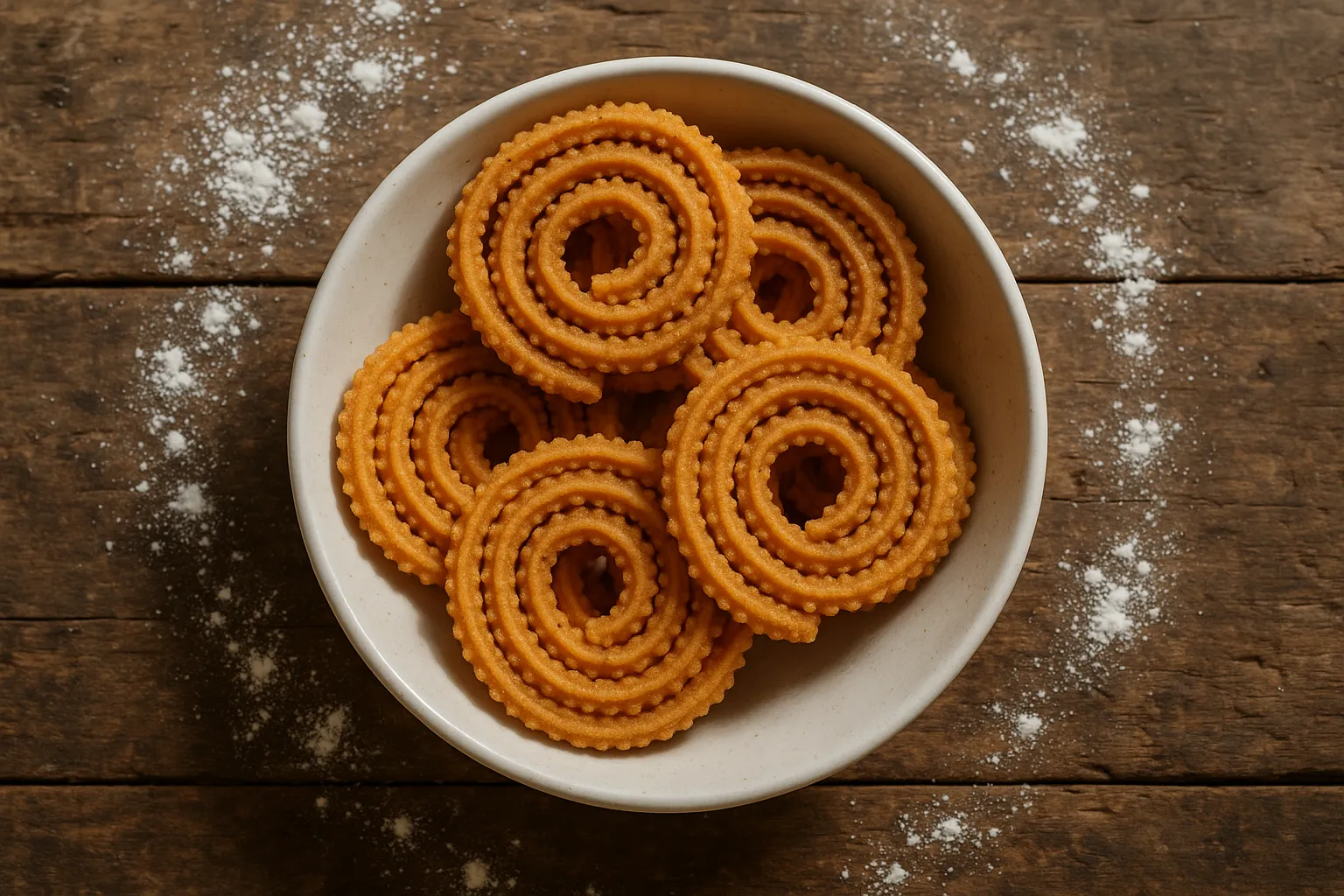
Schnelle Nährwerte
Pro 100g Serving
| Nährstoff | Menge |
|---|---|
| Kalorien | 450 kcal |
| Protein | 8g |
| Kohlenhydrate | 60g |
| Ballaststoffe | 3g |
| Zucker | 2g |
| Fett | 18g |
| Gesättigte Fette | 6g |
| Natrium | 580mg |
| Eisen | 2.5mg |
| Kalzium | 45mg |
Makronährstoff-Aufschlüsselung
 ChatGPT
  Claude
  AI Mode
  Perplexity
ERNÄHRUNGSBERATER-EINBLICK
Murukku combines rice flour and lentil flour for a unique Protein-carb balance. Der traditional deep-frying method makes it calorie-dense (450 kcal pro 100g); wählen gebacken versions to reduce Fett by 30-40% während maintaining der signature crunch.
Mythen Entlarvt
MYTHOS #1: Murukku ist Just Empty Kalorien
WAHRHEIT: Während calorie-dense, Murukku liefert 8g Protein pro 100g from rice and lentil flours, plus Eisen (2.5mg) and calcium (45mg). Der combination of flours bietet besser nutrition als single-grain snacks, though Portionskontrolle remains wesentlich for calorie management.
MYTHOS #2: Diabetics Sollte Nie Eat Murukku
WAHRHEIT: Diabetics kann enjoy Murukku in klein Portionen (15-20g). Der refined rice flour has a hoch glycemic index (70-75), so pair mit Protein and Ballaststoffe-rich foods, monitor Blutzucker response, and wählen whole grain versions wenn available.
MYTHOS #3: Alle Deep-Gebraten Snacks Sind Equally Unhealthy
WAHRHEIT: Oil quality and frying temperature matter significantly. Murukku gebraten in rice bran oil or sunflower oil enthält healthier unsaturated fats compared to palm oil or reused cooking oil. Check ingredient labels for oil type.
MYTHOS #4: Packaged Murukku Has No Nutritional Value
WAHRHEIT: Quality brands like Haldiram's maintain nutritional standards mit Protein from lentil flour, Mineralien from rice, and controlled Natrium levels. Jedoch, homemade versions allow customization of ingredients, oil quality, and salt content.
MYTHOS #5: Murukku Causes Immediate Gewicht Gain
WAHRHEIT: Gewicht gain results from excess overall Kalorien, not specific foods. A 30g Portion of Murukku (135 Kalorien) fits into balanced meal plans wenn combined mit vegetables, Protein, and appropriate Portion sizes. Track total täglich intake mit NutriScan app for personalized guidance.
NutriScore nach Gesundheitszielen
| Gesundheitsziel | NutriScore | Warum diese Bewertung? |
|---|---|---|
| Gewichtsverlust |  | Hoch calorie density (450 kcal pro 100g) from deep frying. Grenze to 20-30g Portionen; wählen gebacken versions. |
| Muskelaufbau |  | Liefert quick energy (60g Kohlenhydrate) and mäßig Protein (8g). Besser post-workout wenn paired mit Protein shake. |
| Diabetes-Management | | Hoch GI from refined rice flour (70-75); saturated fats affect insulin sensitivity. Grenze to 15-20g, pair mit vegetables. |
| PCOS-Management | | Refined Kohlenhydrate and saturated fats worsen insulin resistance. Reserve for occasional treats in 20g Portionen. |
| Schwangerschaftsernährung | | Eisen (2.5mg) and calcium (45mg) support fetal development, but hoch Natrium requires Mäßigung. Grenze to 30-40g Portionen. |
| Viral/Flu Recovery | | Quick energy from Kohlenhydrate hilft recovery, but hoch Natrium kann cause water retention. Wählen niedrig-Natrium versions. |
PERSONALISIERTE ERNÄHRUNG
Verfolgen Sie Ihre Mahlzeiten mit NutriScan for personalized NutriScores based on your specific health goals!
Blutzucker-Reaktion to Murukku
Understanding wie Murukku affects Blutglukose hilft mit Portionskontrolle and meal pairing decisions.
Typische Glukose-Reaktionskurve
Diese Grafik zeigt typical Blutglukose response for general gesund individuals. Individuelle Reaktionen können variieren. Keine medizinische Beratung.
So Flachen Sie den Anstieg Ab
Pairing Murukku mit Protein or Ballaststoffe slows glucose absorption and reduziert der peak Blutzucker level:
- 🥛 Greek yogurt or curd (dahi) - Liefert Protein and probiotics
- 🥜 Handful of geröstet nuts - Adds gesund fats and Protein
- 🥗 Frisch vegetable salad - Ballaststoffe slows carb absorption
- ☕ Unsweetened tea or coffee - Enhances satiety ohne added Kalorien
Dies combination extends energy release, verbessert satiety, and minimizes Blutzucker fluctuations.
Kulturelle Bedeutung
Murukku ist a cherished South Indian snack mit deep cultural roots, enjoyed across India and Southeast Asia.
In South India:
- Wesentlich snack während Diwali, Krishna Jayanthi, and andere festivals
- Traditional tea-zeit accompaniment in Tamil Nadu, Karnataka, Kerala, Andhra Pradesh
- Grandmother's specialty passed down through generations
- Jeder region has unique variations: Thenkuzhal (Tamil Nadu), Nippattu (Karnataka), Chegodilu (Andhra Pradesh)
Across India:
- Haldiram's modernized traditional recipes for nationwide distribution
- Available in multiple flavors: plain, spicy, butter, mint
- Popular office snack and travel companion
- Integral to Indian snack culture alongside bhujia, chakli, and sev
Global Reach:
- Popular in Malaysia, Singapore, Sri Lanka as "Muruku"
- Exported worldwide to Indian diaspora communities
- Featured in international Indian grocery stores
- Symbol of South Indian culinary heritage
Vergleichen und Ersetzen
Murukku vs Similar Indian Snacks (Pro 100g)
| Nährstoff | 🌀 Murukku | 🌀 Chakli | 🥨 Bhujia | 🌾 Khakhra |
|---|---|---|---|---|
| Kalorien | 450 kcal | 460 kcal | 520 kcal | 380 kcal |
| Kohlenhydrate | 60g | 58g | 50g | 65g |
| Ballaststoffe | 3g | 3.5g | 4g | 5g |
| Protein | 8g | 9g | 12g | 10g |
| Fett | 18g | 20g | 28g | 12g |
| Natrium | 580mg | 620mg | 750mg | 480mg |
| Eisen | 2.5mg | 2.8mg | 3.2mg | 3.5mg |
| Am besten für | Tea-zeit snack, festivals | Special occasions, gifting | Hoch Protein needs, variety | Gewicht management, travel |
Häufige Fragen
Ist Haldiram's Murukku gut for Gewichtsverlust?
Murukku ist calorie-dense (450 kcal pro 100g) due to deep frying, making it challenging for Gewichtsverlust. Jedoch, klein Portionen (20-30g = 90-135 Kalorien) kann fit into calorie-controlled diets.
Beste practices: Measure Portionen using a kitchen scale; pair mit vegetables and Protein; wählen air-gebraten or gebacken versions (reduziert Kalorien by 30-40%); grenze frequency to 2-3 times weekly; track total täglich Kalorien mit NutriScan app.
Kann diabetics eat Murukku?
Diabetics kann consume Murukku in sehr limited Portionen (15-20g) mit careful Blutzucker monitoring. Refined rice flour has a hoch glycemic index (70-75), causing rapid Blutzucker spikes.
Tips for diabetics:
- Eat maximum 15-20g pro Portion (67-90 Kalorien)
- Immer pair mit Protein (Greek yogurt, nuts, paneer) and Ballaststoffe (vegetables, salad)
- Beste timing: mid-afternoon snack, nie on empty stomach
- Monitor Blutzucker 2 hours nach eating
- Wählen whole grain varieties wenn available
Consult your healthcare provider for personalized guidance.
Wie viel Protein ist in Murukku?
Haldiram's Murukku enthält 8g of Protein pro 100g, derived from rice flour and lentil flour. Während not a hoch-Protein snack, it bietet mehr Protein als potato chips (2-3g pro 100g) or corn puffs (4-5g pro 100g).
For hoch-Protein snacking, combine Murukku mit Greek yogurt, geröstet chickpeas, or a handful of mandeln.
Was sind der main gesundheitliche Vorteile of Murukku?
Key Benefits:
- Quick Energy: 60g Kohlenhydrate pro 100g provide rapid energy for physical activities
- Moderate Protein: 8g Protein from rice and lentil flours unterstützt muscle maintenance
- Eisen Content: 2.5mg Eisen (14% DV) hilft prevent anemia
- Kalzium: 45mg calcium unterstützt Knochengesundheit
- Cultural Connection: Traditional snack connecting generations and celebrating heritage
Consume in Mäßigung as part of a balanced diet emphasizing whole foods, vegetables, and lean proteins.
Wenn ist der beste zeit to eat Murukku?
Depends on your goal:
- Gewicht Management: Mid-morning or afternoon snack in klein Portionen (20-30g), not close to main meals
- Energy Boost: 45-60 minutes vor physical activity or workout
- Diabetes: Mid-afternoon paired mit Protein and vegetables; nie on empty stomach
- General Health: Tea-zeit snack in controlled Portionen; vermeiden late-night eating
IMPORTANT NOTE
Vermeiden excessive Murukku consumption late at night as hoch Natrium kann disrupt sleep and cause water retention.
Sind homemade or packaged Murukku healthier?
Both have advantages; wählen based on your priorities:
Homemade Murukku:
- Kontrolle oil quality (verwenden rice bran oil, sunflower oil)
- Adjust salt and spice levels
- Incorporate whole grain flours (brown rice, ragi)
- Bake instead of deep-fry (reduziert Kalorien by 30-40%)
- No preservatives or additives
Packaged Murukku (Haldiram's):
- Consistent quality and taste
- Convenient and shelf-stable
- Standardized Portionskontrolle
- Kann contain preservatives for longer shelf leben
- Less kontrolle over oil quality and Natrium content
Recommendation: Homemade gebacken Murukku for regular consumption; packaged varieties for convenience and travel. Immer check ingredient labels for oil type and Natrium levels.
Wie viele grams of Murukku sollte I eat per tag?
General Guidelines:
- 20-30g täglich - Gewicht management, Diabetes, PCOS (90-135 Kalorien)
- 30-40g täglich - General health, Schwangerschaft (135-180 Kalorien)
- 40-50g täglich - Athletes, Muskelaufbau, hoch activity levels (180-225 Kalorien)
Vermeiden excess: Mehr als 50g per tag liefert excessive Kalorien (225+ kcal), saturated fats, and Natrium, potentially causing gewicht gain, hoch blood pressure, and insulin resistance.
Verfolgen Sie Ihre Mahlzeiten mit NutriScan app to sehen wie Murukku fits your personal nutrition goals.
Kann I eat Murukku on an empty stomach?
Generally nicht empfohlen for die meisten people, besonders those mit Diabetes, acid reflux, or GERD.
Kann cause issues if you have:
- Diabetes: Rapid Blutzucker spike ohne Protein or Ballaststoffe buffer
- Acid Reflux/GERD: Hoch Fett content triggers acid production
- Digestive Sensitivity: Deep-gebraten foods kann cause discomfort
Besser approach: Pair mit Protein (yogurt, nuts, gekocht eggs) or have nach a balanced meal mit vegetables and whole grains for besser digestion and sustained energy.


Similar Nahrhaft Snacks
4505 Chicharrones Classic Chili Salt
7 Eleven Japan Crispy Corn Cheese
Explore Mehr Nutrition Tools & Resources
Beste Proteinergänzungen für Frauen
Bulking Meal Plan App für deinen Kalorienüberschuss
ChatGPT Abnehmcoach Alternative mit Ernährungstagebuch
ChatGPT Diätplan Alternative, die dein Essen erfasst
ChatGPT Kalorienzähler Alternative mit Tagessumme
Drittes Trimester Protein Leitfaden
Ernährungsplan für 40-jährige Männer
Fast Food Kalorienzähler, der das Tablett liest
Gewichtszunahme Diätplan Deutschland
Indische Diätplan App mit Veg- und Non-Veg-Optionen
Intervallfasten für Frauen, Timer und Essprotokoll
Intervallfasten Tracker App: gratis Fasten-Timer
Kalorien für deutsches Essen berechnen
Kalorienzähler App mit Foto: kostenlos Kalorien sehen
Kalorienzähler für deutsche Gerichte - Sofortige Nährwertangaben für jede Mahlzeit — 2026
Keto Diät Plan App: 28-Tage-Plan und Kohlenhydrate zählen
KI Ernährungsberater App, die deine Mahlzeiten liest
KI-Lebensmittel-Tracker Deutschland
Kostenlose Kalorienzähler-App mit KI-Foto-Scan | NutriScan
Makro-Tracker-App, die die Werte per Foto ausfüllt
Mediterrane Diät App, die das Öl mitzählt
Mikronährstoffe Tracker App für Vitamine und Mineralstoffe
Monatliche Einkaufsliste Generator
Nahrungsergänzungsmittel-Analysator & Planer
Nährwertetiketten Scanner App für deine Portion
NutriScore App: Bewertung für jede Mahlzeit | NutriScan
Sprachaktivierter Kalorienzähler - Sag deine Mahlzeiten an und tracke Nährstoffe freihändig — 2026
Vegetarischer Ernährungsplan App mit Proteinziel
Wasser und Kalorien Tracker App: gratis Trinkprotokoll
Wochenplan Essen App mit Kalorien und Einkaufsliste
Yazio Alternative kostenlos mit KI-Foto-Scan | NutriScan