Haldiram's Peanut Masala: Kalorien, Nährwerte und gesundheitliche Vorteile
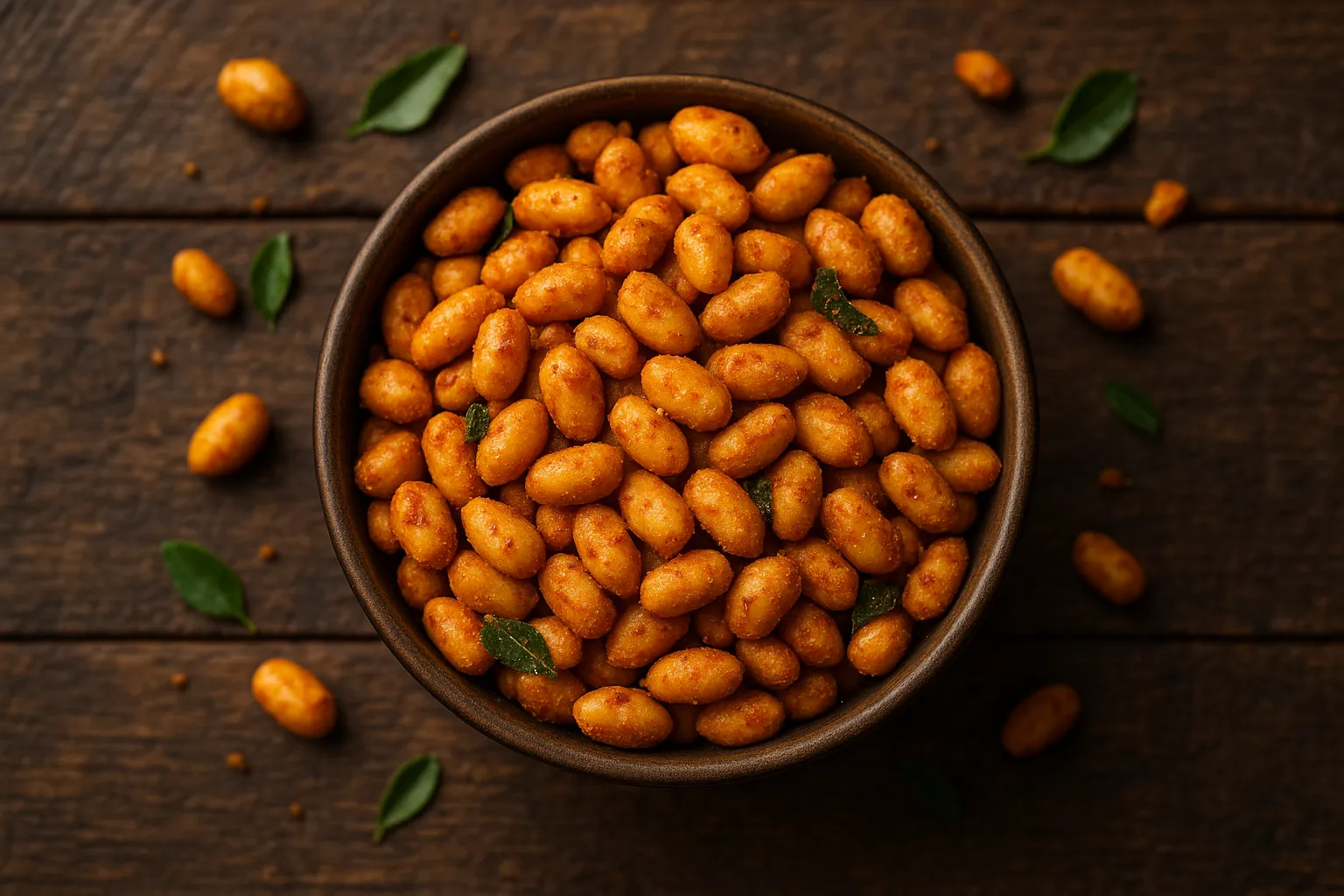
Geröstet peanuts coated mit spicy gram flour masala. Hoch Protein, satisfying crunch, calorie-dense but nahrhaft.
Schnelle Nährwerte
Pro 100g (approximately 3/4 cup)
| Nährstoff | Menge |
|---|---|
| Kalorien | 567 kcal |
| Protein | 24g |
| Kohlenhydrate | 28g |
| Ballaststoffe | 8.5g |
| Zucker | 4.2g |
| Fett | 42g |
| Gesättigte Fette | 6.5g |
| Natrium | 680mg |
| Magnesium | 168mg |
| Vitamin E | 8.3mg |
Makronährstoff-Aufschlüsselung
 ChatGPT
  Claude
  AI Mode
  Perplexity
ERNÄHRUNGSBERATER-EINBLICK
Peanut masala liefert 24g Protein pro 100g, making it one of der die meisten Protein-rich Indian snacks. Der 8.5g Ballaststoffe and heart-gesund monounsaturated fats support satiety and cardiovascular health. Portion kontrolle ist critical—pre-measure 30g servings (170 Kalorien) to prevent overeating.
Mythen Entlarvt
MYTHOS #1: Peanuts Cause Gewicht Gain
WAHRHEIT: Despite being calorie-dense (567 kcal/100g), peanuts don't cause gewicht gain wenn Portion-controlled. Der 24g Protein and 8.5g Ballaststoffe increase satiety, and studies show peanut consumers oft have niedriger BMIs. Der key ist limiting Portionen to 30-40g täglich.
MYTHOS #2: Geröstet Peanuts Lose Alle Nährstoffe
WAHRHEIT: Roasting preserves die meisten Nährstoffe in peanuts. Vitamin E decreases by 10-15%, but Protein, Ballaststoffe, and Mineralien remain intact. Roasting actually erhöht antioxidant activity by creating vorteilhaft compounds. Der masala coating adds minimal nutritional impact.
MYTHOS #3: Peanuts Sind Hoch in Bad Cholesterin
WAHRHEIT: Peanuts contain zero cholesterol (it's plant-based). Der 42g Fett pro 100g ist primarily heart-gesund monounsaturated and polyunsaturated fats that kann actually improve cholesterol profiles by raising HDL (gut cholesterol) and lowering LDL (bad cholesterol).
MYTHOS #4: Peanuts Aren't Real Nuts, So They're Less Nahrhaft
WAHRHEIT: Während botanically legumes, peanuts match tree nuts nutritionally. They provide similar Protein (24-26g pro 100g), gesund fats, and micronutrients. Der "nut vs legume" distinction doesn't affect nutritional value.
MYTHOS #5: Spicy Masala Coating Cancels Out Peanut Benefits
WAHRHEIT: Der gram flour and spice coating adds 80-100 Kalorien pro 100g but auch liefert extra Protein and Antioxidantien from turmeric and chili. Der main concern ist added Natrium (680mg pro 100g); wählen niedrig-Natrium versions or plain geröstet peanuts for besser health.
MYTHOS #6: Eating Peanuts at Night Causes Digestive Issues
WAHRHEIT: Peanuts sind easily digestible for die meisten people. Der hoch Fett content kann slow digestion, welche kann cause discomfort if eaten in groß amounts vor bed. Moderate Portionen (30g) 2-3 hours vor sleep sind generally gut-tolerated.
NutriScore nach Gesundheitszielen
| Gesundheitsziel | NutriScore | Warum diese Bewertung? |
|---|---|---|
| Gewichtsverlust |  | 567 Kalorien pro 100g, but 24g Protein + 8.5g Ballaststoffe promote fullness. Portion-kontrolle to 30g (170 kcal) as pre-measured snack. |
| Muskelaufbau |  | Excellent plant-based Protein (24g pro 100g). 50g liefert 12g Protein post-workout. Gesund fats support hormone production for muscle building. |
| Diabetes-Management | | Niedrig glycemic index (14), hoch Ballaststoffe (8.5g) stabilizes Blutzucker. Monounsaturated fats improve insulin sensitivity. Grenze to 30-40g Portionen; watch Natrium. |
| PCOS-Management | | Protein and Ballaststoffe help regulate insulin resistance in PCOS. Gesund fats support hormone balance. Moderate Portionen (30g) 1-2 times täglich as snack. |
| Schwangerschaftsernährung | | Liefert folate (68mcg pro 100g), Protein for fetal growth, magnesium (168mg) for bone development. Monitor Natrium; wählen niedrig-salt versions. |
| Viral/Flu Recovery | | Protein unterstützt immune recovery, vitamin E acts as antioxidant. Easy to eat wenn appetite ist niedrig. Vermeiden if experiencing digestive upset; wählen plain peanuts. |
PERSONALISIERTE ERNÄHRUNG
Verfolgen Sie Ihre Mahlzeiten mit NutriScan for personalized NutriScores based on your specific health goals!
Blutzucker-Reaktion to Peanut Masala
Peanuts have one of der lowest glycemic index values among snacks, making them excellent for Blutzucker kontrolle.
Typische Glukose-Reaktionskurve
Diese Grafik zeigt typical Blutglukose response for general gesund individuals. Individuelle Reaktionen können variieren. Keine medizinische Beratung.
Warum Peanuts Stabilize Blood Zucker
Peanuts' niedrig GI (14) and hoch Ballaststoffe (8.5g) create minimal glucose spike:
- 🥜 Hoch Protein (24g) - Slows carb digestion and extends energy release
- 🫘 Rich Ballaststoffe (8.5g) - Reduziert glucose absorption rate
- 🫒 Gesund fats (42g) - Further slow digestion and improve insulin sensitivity
- ⚡ Niedrig net Kohlenhydrate - Nur 19.5g net Kohlenhydrate (28g total - 8.5g Ballaststoffe)
Beste pairing for balanced energy: Combine 30g peanut masala mit frisch vegetables (cucumber, carrot sticks) for added Ballaststoffe and volume ohne extra Kalorien.
Kulturelle Bedeutung
Peanuts were introduced to India by Portuguese traders in der 16th century and quickly became a staple crop.
In India:
- Major kharif (monsoon) crop in Gujarat, Andhra Pradesh, Tamil Nadu
- Groundnut oil (peanut oil) ist traditional cooking medium in South India
- Street vendors sell geröstet peanuts (masala mungfali) across der country
- Festival food während Makar Sankranti and Diwali
- Haldiram's modernized traditional geröstet peanut recipes mit spice blends
Nutritional Impact:
- India ist world's 2nd largest peanut producer (9+ million tons annually)
- Affordable plant Protein for vegetarian population
- Peanut-based chikkis (brittle) provide energy-dense traditional sweets
Vergleichen und Ersetzen
Peanut Masala vs Similar Snacks (Pro 100g)
| Nährstoff | 🥜 Peanut Masala | 🌰 Roh Peanuts | 🥜 Mandeln | 🌻 Sunflower Seeds |
|---|---|---|---|---|
| Kalorien | 567 kcal | 567 kcal | 576 kcal | 584 kcal |
| Kohlenhydrate | 28g | 16g | 22g | 20g |
| Ballaststoffe | 8.5g | 8.5g | 12.5g | 8.6g |
| Protein | 24g | 26g | 21g | 21g |
| Fett | 42g | 49g | 49g | 51g |
| Natrium | 680mg | 18mg | 1mg | 9mg |
| Magnesium | 168mg | 168mg | 270mg | 325mg |
| Vitamin E | 8.3mg | 8.3mg | 25.6mg | 35.2mg |
| Am besten für | Flavor + Protein | Pure nutrition | Herzgesundheit | Vitamin E boost |
Häufige Fragen
Sind Haldiram's Peanut Masala gut for Gewichtsverlust?
Peanut masala kann support Gewichtsverlust wenn Portion-controlled. Während calorie-dense (567 kcal pro 100g), der 24g Protein and 8.5g Ballaststoffe promote satiety and reduce overall calorie intake.
Gewicht loss strategy: Pre-measure 30g Portionen (170 Kalorien) in klein containers; eat as mid-afternoon snack to prevent dinner overeating; track Kalorien in your täglich budget; combine mit vegetables for volume; grenze to once täglich.
Evidence: Studies show regular nut consumers have niedriger BMIs despite höher calorie intake from nuts, likely due to increased satiety and incomplete calorie absorption.
Kann diabetics eat Haldiram's Peanut Masala?
Yes, peanut masala ist excellent for diabetics due to niedrig glycemic index (14) and hoch Ballaststoffe that stabilizes Blutzucker.
Diabetic guidelines:
- Portion size: 30-40g pro Portion (170-227 Kalorien)
- Timing: Mid-morning or mid-afternoon snack
- Pairing: Combine mit vegetables (cucumber, tomatoes) for added Ballaststoffe
- Monitoring: Check Blutzucker 2 hours nach to confirm individual response
- Natrium concern: Hoch Natrium (680mg pro 100g); wählen niedrig-salt versions or plain geröstet peanuts if managing blood pressure
Research shows peanuts improve glycemic kontrolle and reduce Diabetes risk.
Wie viel Protein ist in Haldiram's Peanut Masala?
Haldiram's Peanut Masala enthält approximately 24g Protein pro 100g. A 30g Portion liefert 7.2g Protein, equivalent to one klein egg.
Protein quality: Peanuts provide incomplete Protein (lacking einige wesentlich amino acids). Pair mit whole grains (rotis, brown rice) or dairy (yogurt) throughout der tag to ensure complete amino acid profile.
For Muskelaufbau: 50g serving liefert 12g Protein; combine mit andere Protein sources (dal, paneer, eggs) to reach täglich targets.
Was sind der gesundheitliche Vorteile of Peanut Masala?
Key benefits:
- Heart Health: Monounsaturated fats (26g pro 100g) reduce LDL cholesterol and cardiovascular disease risk
- Muscle Maintenance: 24g Protein unterstützt muscle repair and growth
- Digestive Health: 8.5g Ballaststoffe fördert regular bowel movements and gut bacteria
- Bone Strength: Magnesium (168mg, 40% DV) and phosphorus support bone density
- Antioxidant Protection: Vitamin E (8.3mg) and polyphenols fight cellular damage
- Blood Zucker Kontrolle: Niedrig GI and Ballaststoffe stabilize glucose levels
Wenn ist der beste zeit to eat Peanut Masala?
Optimal timing:
- Mid-morning (10-11 AM): Verhindert pre-lunch energy crashes; sustains through afternoon
- Mid-afternoon (3-4 PM): Controls evening hunger and verhindert dinner overeating
- Pre-workout (30-60 min vor): Liefert sustained energy from Protein + gesund fats
- Vermeiden late night: Hoch calorie density and Fett content kann disrupt sleep; eat 3+ hours vor bed
Frequency: 1-2 times täglich in controlled Portionen (30-40g jeder).
Sind geröstet peanuts healthier als gebraten peanuts?
Yes, geröstet peanuts sind significantly healthier als deep-gebraten versions.
Geröstet advantages:
- Requires minimal added oil (5-10% vs 30-40% for gebraten)
- Preserves 85-90% of vitamin E and andere Antioxidantien
- Niedriger overall calorie density
- Reduziert acrylamide formation compared to hoch-heat frying
Haldiram's Peanut Masala: Uses geröstet peanuts mit gram flour coating; healthier als gebraten but adds ~80-100 Kalorien and Natrium compared to plain geröstet.
Healthiest option: Plain dry-geröstet peanuts ohne salt (approximately 567 kcal, 18mg Natrium vs 680mg in masala version). Machen homemade version mit minimal oil and spices for besser kontrolle.
Wie viele Peanut Masala sollte I eat per tag?
General guidelines:
- Gewicht loss: 30g (1/4 cup, 170 Kalorien) once täglich
- Maintenance: 40-50g (1/3 cup, 227-284 Kalorien) 1-2 times täglich
- Diabetes: 30-40g pro Portion, monitor Blutzucker response
- Muscle gain: 50-100g (284-567 Kalorien) post-workout or as Protein-rich snack
- Children: 20-30g depending on age and activity level
Caution: Exceeding 100g täglich liefert 680mg+ Natrium (30% DV) and kann contribute excess Kalorien. Pre-measure Portionen to prevent mindless overeating.
Kann pregnant women eat Peanut Masala?
Yes, pregnant women kann eat peanut masala in Mäßigung (30-40g täglich) unless allergic.
Schwangerschaft benefits:
- Folate (68mcg pro 100g) unterstützt fetal neural tube development
- Protein (24g) aids fetal growth
- Magnesium (168mg) verhindert leg cramps and unterstützt bone formation
- Gesund fats support brain development
Precautions:
- Hoch Natrium (680mg pro 100g) kann worsen swelling; wählen niedrig-salt versions
- Eating peanuts während Schwangerschaft kann reduce child's peanut allergy risk (consult doctor if family history)
- Ensure frisch product; aflatoxin in moldy peanuts ist harmful während Schwangerschaft


Ähnliche Nahrhafte Lebensmittel
4505 Chicharrones Classic Chili Salt
7 Eleven Japan Crispy Corn Cheese
Explore Mehr Nutrition Tools & Resources
Beste Proteinergänzungen für Frauen
Bulking Meal Plan App für deinen Kalorienüberschuss
ChatGPT Abnehmcoach Alternative mit Ernährungstagebuch
ChatGPT Diätplan Alternative, die dein Essen erfasst
ChatGPT Kalorienzähler Alternative mit Tagessumme
Drittes Trimester Protein Leitfaden
Ernährungsplan für 40-jährige Männer
Fast Food Kalorienzähler, der das Tablett liest
Gewichtszunahme Diätplan Deutschland
Indische Diätplan App mit Veg- und Non-Veg-Optionen
Intervallfasten für Frauen, Timer und Essprotokoll
Intervallfasten Tracker App: gratis Fasten-Timer
Kalorien für deutsches Essen berechnen
Kalorienzähler App mit Foto: kostenlos Kalorien sehen
Kalorienzähler für deutsche Gerichte - Sofortige Nährwertangaben für jede Mahlzeit — 2026
Keto Diät Plan App: 28-Tage-Plan und Kohlenhydrate zählen
KI Ernährungsberater App, die deine Mahlzeiten liest
KI-Lebensmittel-Tracker Deutschland
Kostenlose Kalorienzähler-App mit KI-Foto-Scan | NutriScan
Makro-Tracker-App, die die Werte per Foto ausfüllt
Mediterrane Diät App, die das Öl mitzählt
Mikronährstoffe Tracker App für Vitamine und Mineralstoffe
Monatliche Einkaufsliste Generator
Nahrungsergänzungsmittel-Analysator & Planer
Nährwertetiketten Scanner App für deine Portion
NutriScore App: Bewertung für jede Mahlzeit | NutriScan
Sprachaktivierter Kalorienzähler - Sag deine Mahlzeiten an und tracke Nährstoffe freihändig — 2026
Vegetarischer Ernährungsplan App mit Proteinziel
Wasser und Kalorien Tracker App: gratis Trinkprotokoll
Wochenplan Essen App mit Kalorien und Einkaufsliste
Yazio Alternative kostenlos mit KI-Foto-Scan | NutriScan