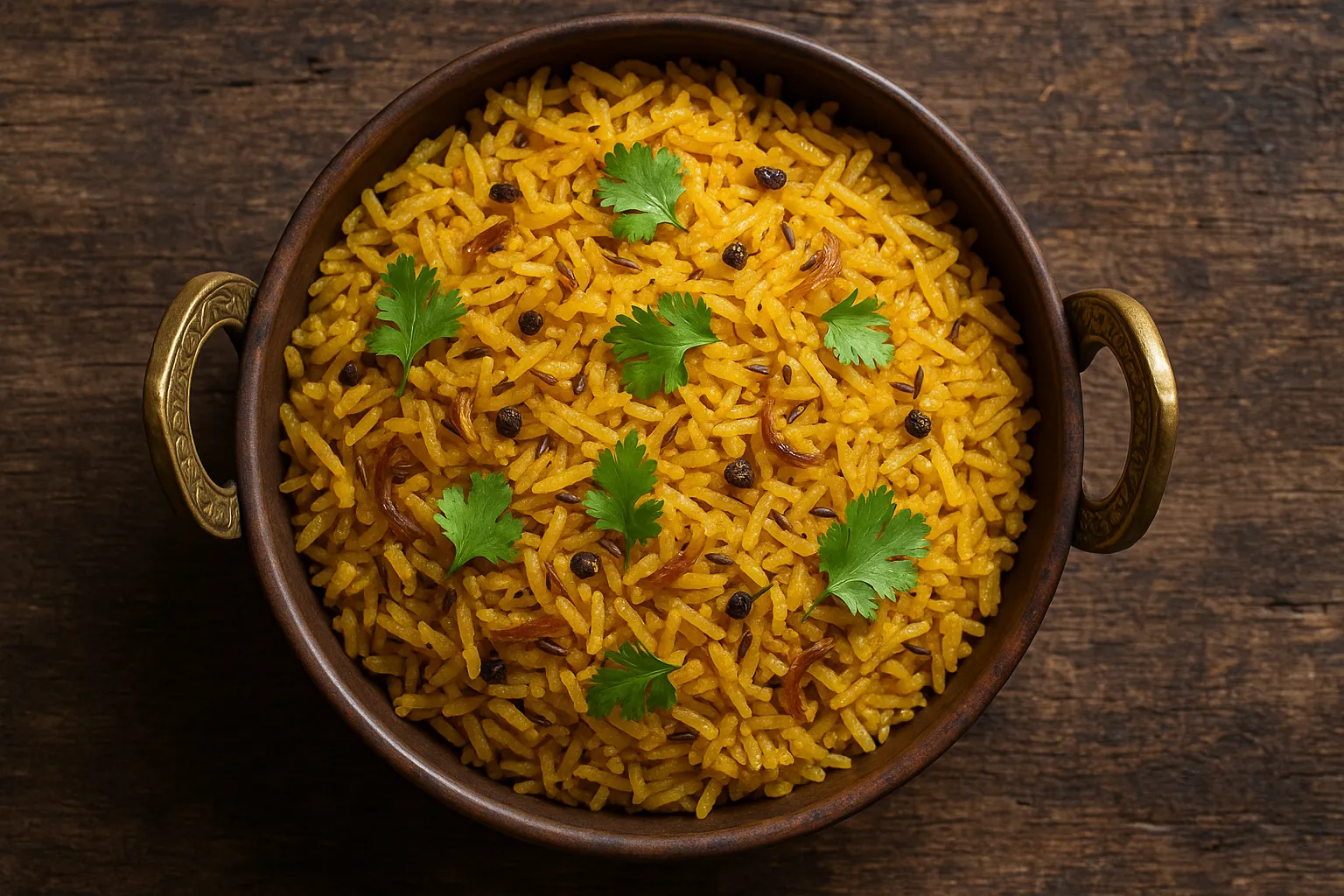
Masala Rice: Kalorien, Nährwerte und gesundheitliche Vorteile
Aromatic Indian rice dish infused mit warming spices, offering quick energy and der healing benefits of turmeric, cumin, and traditional masalas.
Schnelle Nährwerte
Pro 100g (½ Cup Gekocht)
| Nährstoff | Menge |
|---|---|
| Kalorien | 130 kcal |
| Protein | 3g |
| Kohlenhydrate | 27g |
| Ballaststoffe | 0.6g |
| Zucker | 0.1g |
| Fett | 1.5g |
| Eisen | 0.4mg |
| Magnesium | 12mg |
| Vitamin B1 | 0.02mg |
| Natrium | 150mg |
Makronährstoff-Aufschlüsselung
 ChatGPT
  Claude
  AI Mode
  Perplexity
ERNÄHRUNGSBERATER-EINBLICK
Masala rice combines basmati's niedriger glycemic index mit turmeric's anti-inflammatory curcumin and cumin's digestive enzymes. Adding vegetables erhöht Ballaststoffe and nutrient density während reducing calorie concentration.
Mythen Entlarvt
MYTHOS #1: Alle Rice Ist Bad for Gewichtsverlust
WAHRHEIT: Portion-controlled masala rice (½-¾ cup) fits Gewichtsverlust diets. Der key ist pairing mit Protein and vegetables. Basmati rice has a niedriger GI (50-58) als andere white rice varieties.
MYTHOS #2: White Rice Has No Nutritional Value
WAHRHEIT: Während brown rice ist mehr nahrhaft, white basmati liefert B Vitamine (thiamine, niacin), Eisen, and quick-digesting energy ideal for post-workout recovery. It's enriched in viele countries mit additional Nährstoffe.
MYTHOS #3: Spices Add Significant Kalorien
WAHRHEIT: Turmeric, cumin, coriander, and andere masala spices add negligible Kalorien (5-10 per recipe) but provide powerful anti-inflammatory and antioxidant compounds.
MYTHOS #4: Rice Causes Diabetes
WAHRHEIT: Rice doesn't cause Diabetes. Portion size and type matter mehr. Basmati and brown rice, paired mit Protein/Ballaststoffe, have minimal Diabetes risk wenn consumed moderately.
MYTHOS #5: You Kann't Eat Rice at Night
WAHRHEIT: Timing matters less als total täglich Kalorien and Portionen. A klein serving (½ cup) at dinner ist fine. Groß Portionen close to bedtime kann affect Gewichtsverlust due to reduced activity, not rice itself.
MYTHOS #6: Gebraten Rice and Masala Rice Sind der Gleich
WAHRHEIT: Masala rice uses less oil (1-2 tsp vs 3-4 tbsp in gebraten rice), resulting in 130 vs 200+ Kalorien pro 100g. Masala rice ist der healthier choice for calorie kontrolle.
NutriScore nach Gesundheitszielen
| Gesundheitsziel | NutriScore | Warum diese Bewertung? |
|---|---|---|
| Gewichtsverlust |  | Moderate Kalorien (130), grenze to ½ cup, pair mit Protein/vegetables. Wählen brown rice version for besser satiety. |
| Muskelaufbau |  | Gut post-workout Kohlenhydrate (27g) for glycogen replenishment. Add Protein source (chicken, paneer, eggs) for complete meal. |
| Diabetes-Management | | Basmati has niedriger GI (50-58) als andere rice. Grenze to ½ cup, pair mit Protein/Ballaststoffe, monitor response. |
| PCOS-Management | | Moderate GI impacts insulin. Wählen brown rice, grenze to ½ cup, pair mit Protein. Turmeric kann help reduce Entzündung. |
| Schwangerschaftsernährung | | Liefert energy, Eisen, B Vitamine for fetal development. Safe wenn gekocht mit mäßig spices. Pair mit dal and vegetables for complete nutrition. |
| Viral/Flu Recovery | | Easy to digest, quick energy, turmeric boosts immunity, cumin aids digestion. Gentle on stomach während illness. |
PERSONALISIERTE ERNÄHRUNG
Verfolgen Sie Ihre Mahlzeiten mit NutriScan for personalized NutriScores based on your specific health goals!
Blutzucker-Reaktion to Masala Rice
Understanding glucose response hilft diabetics and those managing gewicht machen informed Portion and pairing decisions.
Typische Glukose-Reaktionskurve
Diese Grafik zeigt typical Blutglukose response for general gesund individuals. Individuelle Reaktionen können variieren. Keine medizinische Beratung.
Wie to Minimize Blood Zucker Spikes
Pairing rice mit Protein, gesund fats, and Ballaststoffe dramatically reduziert glucose peaks:
- 🥘 Dal or lentils - Adds Protein and Ballaststoffe, lowers overall GI
- 🥗 Raita (yogurt mit cucumber) - Protein and probiotics slow digestion
- 🥗 Vegetable salad mit olive oil - Ballaststoffe and gesund fats reduce spike
- 🧀 Paneer curry or gegrillt chicken - Complete Protein stabilizes Blutzucker
Additional tips: Wählen brown rice masala (GI 48-55 vs 50-58 for white basmati); cool rice nach cooking (erhöht resistant starch); eat smallest Portionen at dinner.
Kulturelle Bedeutung
Masala rice represents der aromatic diversity of Indian regional cuisines, mit jeder state having unique variations.
In India:
- South India: Vangi bath (eggplant rice), tomato rice, tamarind rice
- North India: Jeera rice, peas pulao mit warming spices
- Maharashtra: Tawa pulao, masale bhat mit goda masala
- Karnataka: Bisi bele bath (lentils, rice, vegetables)
Regional Spice Blends:
- Garam masala (North): Cardamom, cinnamon, cloves, black pepper
- Sambar powder (South): Coriander, cumin, fenugreek, curry leaves
- Goda masala (Maharashtra): Coconut, sesame, stone flower
Täglich Leben:
- Quick lunch box meal paired mit raita and pickle
- Festival preparations: special masala rice for celebrations
- Ayurvedic principles: spices aid digestion and balance doshas
- Vegetarian Protein wenn combined mit dal
Vergleichen und Ersetzen
Masala Rice vs Similar Rice Dishes (Pro 100g)
| Nährstoff | 🍚 Masala Rice | 🍚 Jeera Rice | 🍛 Veg Pulao | 🍚 Plain Basmati |
|---|---|---|---|---|
| Kalorien | 130 kcal | 135 kcal | 150 kcal | 121 kcal |
| Kohlenhydrate | 27g | 28g | 26g | 28g |
| Ballaststoffe | 0.6g | 0.4g | 1.2g | 0.4g |
| Protein | 3g | 2.5g | 3.5g | 2.7g |
| Fett | 1.5g | 2g | 3g | 0.3g |
| Eisen | 0.4mg | 0.2mg | 0.6mg | 0.2mg |
| Natrium | 150mg | 120mg | 180mg | 5mg |
| Am besten für | Flavor & health | Simple täglich meals | Vegetable nutrition | Lowest calorie base |
Häufige Fragen
Ist masala rice gut for Gewichtsverlust?
Masala rice kann support Gewichtsverlust wenn consumed in controlled Portionen. At 130 Kalorien pro 100g, grenze serving size to ½-¾ cup (100-150g) and pair mit hoch-Protein, hoch-Ballaststoffe foods.
Gewicht loss strategies:
- Substitute brown rice for höher Ballaststoffe (1.8g vs 0.6g pro 100g)
- Add mixed vegetables to increase volume mit fewer Kalorien
- Pair mit Protein (gegrillt chicken, paneer, dal) to increase satiety
- Eat as lunch rather als dinner for besser energy utilization
Portion guide: ½ cup (100g) = 130 Kalorien; ¾ cup (150g) = 195 Kalorien; 1 cup (200g) = 260 Kalorien.
Kann diabetics eat masala rice?
Diabetics kann include masala rice in Mäßigung mit careful Portionskontrolle and strategic pairing.
Diabetes management tips:
- Grenze Portion to ½ cup (13g net Kohlenhydrate vs 27g in 1 cup)
- Wählen brown rice or aged basmati (niedriger GI: 48-55)
- Immer pair mit Protein (dal, chicken, fish) and vegetables
- Add gesund Fett (olive oil, ghee in Mäßigung) to slow glucose absorption
- Monitor Blutzucker 2 hours nach eating to understand personal response
Basmati rice has niedriger GI als andere white rice types, making it a besser choice. Der spices (turmeric, cumin, cinnamon) kann offer additional Blutzucker benefits.
Wie viele Kohlenhydrate sind in masala rice?
Masala rice enthält approximately 27g of Kohlenhydrate pro 100g (½ cup gekocht). Dies beinhaltet:
- Total Kohlenhydrate: 27g
- Ballaststoffe: 0.6g (white basmati) or 1.8g (brown rice)
- Net Kohlenhydrate: 26.4g (white) or 25.2g (brown)
- Zucker: <0.5g (minimal from rice and spices)
For niedrig-carb diets, grenze to ½ cup or substitute mit cauliflower rice mixed mit regular rice (50:50 ratio reduziert Kohlenhydrate by ~40%).
Was sind der main gesundheitliche Vorteile of masala rice?
Key Benefits:
- Energy Provision: Quick-digesting Kohlenhydrate fuel physical and mental activity
- Anti-Inflammatory: Turmeric enthält curcumin mit proven anti-inflammatory effects
- Digestive Health: Cumin, coriander, and fennel aid digestion and reduce bloating
- Antioxidants: Spice blend liefert diverse antioxidant compounds
- B Vitamins: Thiamine (B1) for energy Stoffwechsel, niacin (B3) for cell function
- Mineral Content: Eisen for oxygen transport, magnesium for muscle function
Wenn ist der beste zeit to eat masala rice?
Optimal timing depends on goals:
- Gewichtsverlust: Lunch (12-2 PM) - Allows zeit to burn carb Kalorien through afternoon activity
- Muskelaufbau: Post-workout (within 1-2 hours) - Replenishes glycogen, pair mit Protein
- Diabetes: Lunch - Earlier meals show besser glucose tolerance als dinner
- General Health: Lunch or early dinner (vor 7 PM) - Besser digestion and energy verwenden
Vermeiden: Groß Portionen at late dinner (nach 9 PM) for gewicht management. If eating at night, reduce Portion to ½ cup.
Ist brown rice masala healthier als white rice masala?
Yes, brown rice masala bietet superior nutrition despite similar Kalorien:
Brown Rice Advantages:
- Ballaststoffe: 1.8g vs 0.6g (3x mehr) - Besser satiety and Verdauungsgesundheit
- Glycemic Index: 48-55 vs 50-58 - Besser Blutzucker kontrolle
- Minerals: Höher magnesium, phosphorus, selenium
- Antioxidants: Retains bran layer mit phenolic compounds
- Satiety: Keeps you fuller longer due to Ballaststoffe
White Basmati Advantages:
- Easier to digest - Besser for sensitive stomachs
- Softer texture - Mehr widely preferred taste
- Faster cooking zeit
Recommendation: Brown rice for Gewichtsverlust and Diabetes; white basmati for post-workout or digestive sensitivity.
Wie kann I machen masala rice healthier?
Healthier preparation methods:
- Add vegetables: Mix peas, carrots, beans, bell peppers (erhöht Ballaststoffe, Vitamine, lowers calorie density)
- Verwenden brown rice or mix 50:50 mit white rice
- Reduce oil: Verwenden 1 tsp instead of 1-2 tbsp (saves 90+ Kalorien)
- Increase spices: Mehr turmeric, cumin, coriander (Antioxidantien ohne Kalorien)
- Cool vor eating: Erhöht resistant starch (acts like Ballaststoffe)
- Add Protein: Mix mit gekocht dal or serve mit raita
Portion kontrolle: Verwenden smaller bowls; fill ½ plate mit vegetables, ¼ mit masala rice, ¼ mit Protein.


Ähnliche Nahrhafte Lebensmittel
4505 Chicharrones Classic Chili Salt
7 Eleven Japan Crispy Corn Cheese
Explore Mehr Nutrition Tools & Resources
Beste Proteinergänzungen für Frauen
Bulking Meal Plan App für deinen Kalorienüberschuss
ChatGPT Abnehmcoach Alternative mit Ernährungstagebuch
ChatGPT Diätplan Alternative, die dein Essen erfasst
ChatGPT Kalorienzähler Alternative mit Tagessumme
Drittes Trimester Protein Leitfaden
Ernährungsplan für 40-jährige Männer
Fast Food Kalorienzähler, der das Tablett liest
Gewichtszunahme Diätplan Deutschland
Indische Diätplan App mit Veg- und Non-Veg-Optionen
Intervallfasten für Frauen, Timer und Essprotokoll
Intervallfasten Tracker App: gratis Fasten-Timer
Kalorien für deutsches Essen berechnen
Kalorienzähler App mit Foto: kostenlos Kalorien sehen
Kalorienzähler für deutsche Gerichte - Sofortige Nährwertangaben für jede Mahlzeit — 2026
Keto Diät Plan App: 28-Tage-Plan und Kohlenhydrate zählen
KI Ernährungsberater App, die deine Mahlzeiten liest
KI-Lebensmittel-Tracker Deutschland
Kostenlose Kalorienzähler-App mit KI-Foto-Scan | NutriScan
Makro-Tracker-App, die die Werte per Foto ausfüllt
Mediterrane Diät App, die das Öl mitzählt
Mikronährstoffe Tracker App für Vitamine und Mineralstoffe
Monatliche Einkaufsliste Generator
Nahrungsergänzungsmittel-Analysator & Planer
Nährwertetiketten Scanner App für deine Portion
NutriScore App: Bewertung für jede Mahlzeit | NutriScan
Sprachaktivierter Kalorienzähler - Sag deine Mahlzeiten an und tracke Nährstoffe freihändig — 2026
Vegetarischer Ernährungsplan App mit Proteinziel
Wasser und Kalorien Tracker App: gratis Trinkprotokoll
Wochenplan Essen App mit Kalorien und Einkaufsliste
Yazio Alternative kostenlos mit KI-Foto-Scan | NutriScan