Matki Usal: Kalorien, Nährwerte und gesundheitliche Vorteile
Traditional Maharashtrian Protein powerhouse gemacht from moth beans, packed mit Nährstoffe for muscle health, gewicht management, and sustained energy.
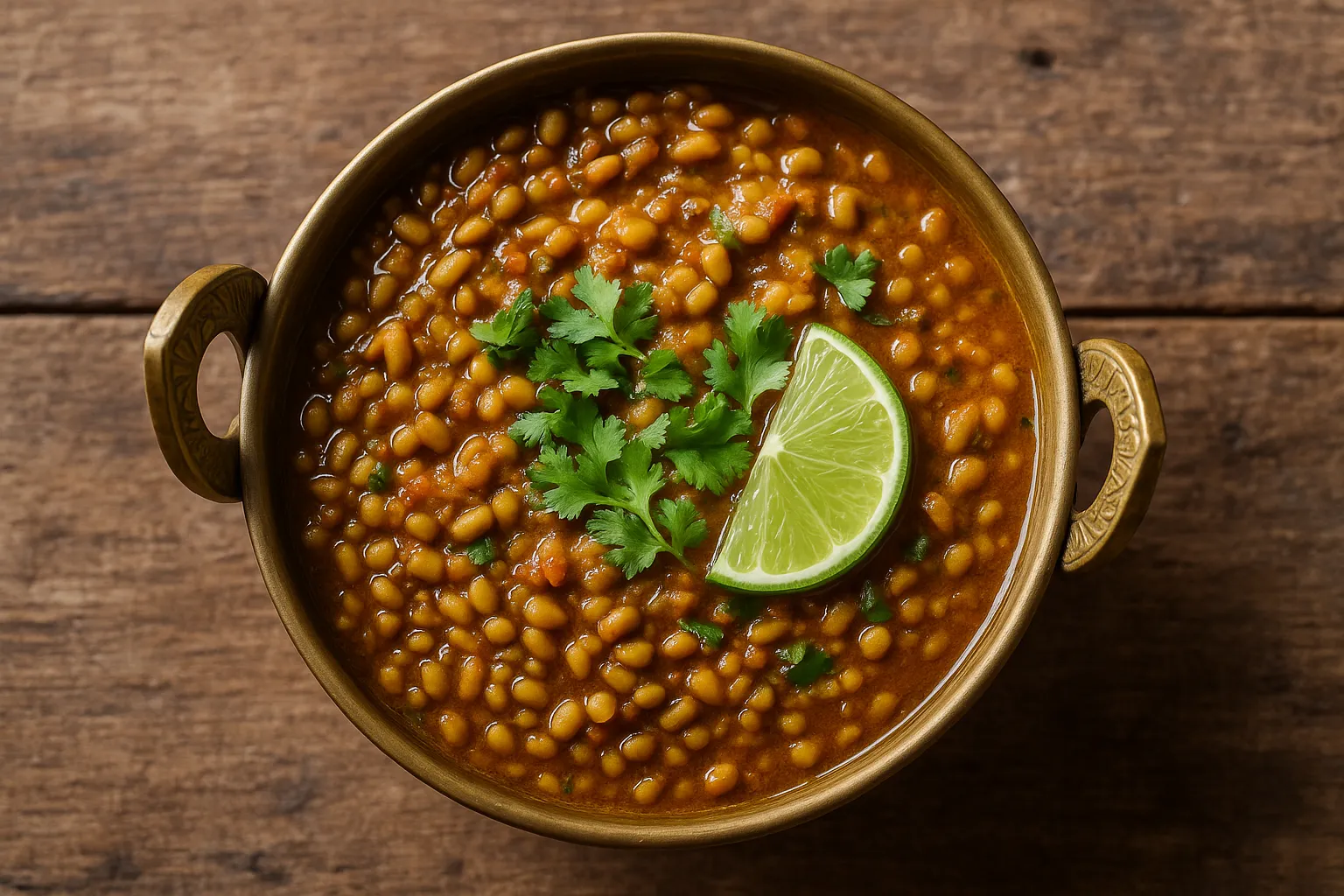
Schnelle Nährwerte
Pro 100g Gekocht Matki Usal
| Nährstoff | Menge |
|---|---|
| Kalorien | 343 kcal |
| Protein | 24g |
| Kohlenhydrate | 62g |
| Ballaststoffe | 4g |
| Zucker | 2g |
| Fett | 1.6g |
| Eisen | 7mg |
| Magnesium | 189mg |
| Folate | 625mcg |
| Kalium | 1246mg |
Makronährstoff-Aufschlüsselung
 ChatGPT
  Claude
  AI Mode
  Perplexity
ERNÄHRUNGSBERATER-EINBLICK
Matki usal liefert an impressive 24g Protein pro 100g, making it one of der highest plant-based Protein sources. Der combination of Protein and Ballaststoffe unterstützt sustained energy, muscle health, and gewicht management.
Mythen Entlarvt
MYTHOS #1: Legumes Like Matki Cause Bloating for Everyone
WAHRHEIT: Während einige people experience bloating, proper soaking and cooking methods reduce anti-Nährstoffe and machen matki easier to digest. Soak overnight, discard water, cook thoroughly, and start mit klein Portionen to build tolerance.
MYTHOS #2: Matki Usal Ist Too Hoch in Kohlenhydrate for Gewichtsverlust
WAHRHEIT: Der 24g Protein and 4g Ballaststoffe promote fullness and muscle preservation während Gewichtsverlust. Wenn prepared mit minimal oil and paired mit vegetables, matki usal unterstützt sustainable gewicht management despite der carb content.
MYTHOS #3: Plant Proteins Sind Inferior to Animal Proteins
WAHRHEIT: Moth beans provide a complete amino acid profile wenn combined mit grains throughout der tag. Plant-based proteins support muscle building effectively and offer additional benefits like Ballaststoffe, Antioxidantien, and niedriger saturated Fett.
MYTHOS #4: Diabetics Sollte Vermeiden Alle Legumes
WAHRHEIT: Matki has a niedrig to medium glycemic index and hoch Ballaststoffe content that hilft stabilize Blutzucker. Der Protein and Ballaststoffe slow glucose absorption, making it suitable for diabetic meal plans in mäßig Portionen.
NutriScore nach Gesundheitszielen
| Gesundheitsziel | NutriScore | Warum diese Bewertung? |
|---|---|---|
| Gewichtsverlust |  | Hoch Protein (24g) and Ballaststoffe (4g) promote fullness. Prepare mit minimal oil, kontrolle Portionen to 100-150g. |
| Muskelaufbau | | Excellent plant-based Protein source (24g pro 100g). Liefert Eisen, magnesium, and Kalium for muscle recovery. |
| Diabetes-Management |  | Niedrig to medium GI, hoch Ballaststoffe controls Blutzucker. Grenze to 100-150g, pair mit vegetables, vermeiden excess oil. |
| PCOS-Management | | Hoch Protein unterstützt hormonal balance, niedrig glycemic impact benefits insulin sensitivity. Excellent choice for PCOS-friendly meals. |
| Schwangerschaftsernährung | | Rich in folate (625mcg), Eisen, and Protein for fetal development. Unterstützt maternal health and Energieniveaus. |
| Viral/Flu Recovery | | Hoch Protein unterstützt immune function and tissue repair. Easy to digest wenn gekocht gut. Liefert wesentlich Mineralien. |
PERSONALISIERTE ERNÄHRUNG
Verfolgen Sie Ihre Mahlzeiten mit NutriScan for personalized NutriScores based on your specific health goals!
Blutzucker-Reaktion to Matki Usal
Understanding wie matki usal affects Blutglukose hilft mit Portionskontrolle and meal planning.
Typische Glukose-Reaktionskurve
Diese Grafik zeigt typical Blutglukose response for gesund individuals to 150g matki usal. Individual responses vary. Keine medizinische Beratung.
Wie to Optimize Blood Zucker Kontrolle
Combining matki usal mit vegetables and gesund fats further stabilizes Blutzucker and enhances nutrient absorption:
- 🥬 Leafy greens or mixed vegetables - Adds Ballaststoffe and micronutrients
- 🥑 Klein amount of avocado or nuts - Gesund fats slow digestion
- 🍋 Lemon juice or vinegar - Kann improve insulin sensitivity
- 🌶️ Spices like turmeric and cumin - Anti-inflammatory benefits
Dies combination creates a balanced meal mit sustained energy release and minimal glucose spikes.
Kulturelle Bedeutung
Matki (moth beans) has been cultivated in India for thousands of years, insbesondere in Maharashtra, Rajasthan, and Gujarat.
In Maharashtra:
- Matki usal ist a staple breakfast and dinner dish, oft served mit pav (bread rolls)
- Traditional preparation beinhaltet overnight soaking and sprouting for enhanced nutrition
- Part of Maharashtrian street food culture, served at usal stalls and restaurants
- Considered an economical and nahrhaft Protein source for alle socioeconomic groups
In Indian Cuisine:
- Used in various regional dishes: Rajasthani matki curry, Gujarati matki dhokla
- Sprouted matki used in salads and chaats for extra nutrition
- Ayurveda recognizes matki as warming and nourishing for vata and kapha doshas
- Growing in popularity as plant-based Protein gains recognition
Nutritional Heritage:
- Liefert affordable, sustainable Protein for millions of Indians
- Drought-resistant crop supporting agricultural sustainability
- Part of India's rich legume diversity alongside moong, chana, and masoor
Vergleichen und Ersetzen
Matki Usal vs Similar Legume Dishes (Pro 100g)
| Nährstoff | 🥘 Matki Usal | 🌱 Moong Usal | 🥘 Chana Masala | 🥘 Rajma Curry |
|---|---|---|---|---|
| Kalorien | 343 kcal | 347 kcal | 164 kcal | 127 kcal |
| Kohlenhydrate | 62g | 63g | 27g | 23g |
| Ballaststoffe | 4g | 16g | 8g | 6g |
| Protein | 24g | 24g | 9g | 8.7g |
| Fett | 1.6g | 1.2g | 3g | 0.5g |
| Eisen | 7mg | 6.7mg | 3mg | 2.4mg |
| Folate | 625mcg | 625mcg | 172mcg | 130mcg |
| Kalium | 1246mg | 1246mg | 291mg | 405mg |
| Am besten für | Hoch Protein | Ballaststoffe boost | Niedriger calorie | Kidney health |
Häufige Fragen
Ist matki usal gut for Gewichtsverlust?
Yes, matki usal unterstützt Gewichtsverlust effectively. Mit 24g Protein pro 100g and 4g Ballaststoffe, it fördert fullness and hilft preserve muscle mass während calorie restriction.
Beste practices: Prepare mit minimal oil (1-2 tsp pro Portion); kontrolle Portionen to 100-150g per meal; pair mit vegetables and whole grain roti; eat for lunch or early dinner; vermeiden heavy coconut-based gravies.
Kann diabetics eat matki usal?
Diabetics kann eat matki usal in Mäßigung. Moth beans have a niedrig to medium glycemic index, and der hoch Protein and Ballaststoffe content help stabilize Blutzucker levels.
Tips for diabetics:
- Grenze Portionen to 100-150g per meal
- Pair mit plenty of non-starchy vegetables
- Vermeiden adding Zucker or jaggery to der recipe
- Monitor Blutzucker 2 hours nach eating
- Wählen sprouted matki for even besser glycemic kontrolle
Immer consult your healthcare provider ungefähr einschließlich legumes in your diabetic meal plan.
Wie viel Protein ist in matki usal?
Matki usal enthält approximately 24 grams of Protein pro 100g, making it one of der richest plant-based Protein sources. A typical serving (150g) liefert ungefähr 36g of Protein, comparable to a groß chicken breast.
Dies hoch Protein content makes matki usal excellent for muscle building, Gewichtsverlust, Schwangerschaft, and vegetarian/vegan diets.
Was sind der main gesundheitliche Vorteile of matki usal?
Key Benefits:
- Hoch Protein: 24g pro 100g unterstützt muscle health, satiety, and tissue repair
- Rich in Folate: 625mcg unterstützt Schwangerschaft, Herzgesundheit, and cell division
- Eisen-Rich: 7mg hilft prevent anemia and unterstützt Energieniveaus
- Blood Zucker Kontrolle: Niedrig GI and hoch Ballaststoffe stabilize glucose levels
- Heart Health: Magnesium, Kalium, and Ballaststoffe support cardiovascular function
- Gewicht Management: Protein and Ballaststoffe combination fördert fullness and lean muscle preservation
Wenn ist der beste zeit to eat matki usal?
Depends on your goal:
- Gewichtsverlust: Lunch or early dinner (vor 7 PM). Vermeiden late-night consumption for besser digestion.
- Muskelaufbau: Post-workout meal or dinner. Liefert amino acids for muscle recovery.
- Diabetes: Lunch paired mit vegetables and roti. Monitor Portion sizes.
- General Health: Lunch ist optimal for Protein-rich legume meals, allowing zeit for digestion.
IMPORTANT NOTE
Einige people kann experience bloating or gas from legumes. Start mit smaller Portionen and ensure thorough cooking to improve digestibility.
Ist matki der gleich as moong?
No, matki (moth beans) and moong (mung beans) sind different legumes, though both sind nahrhaft:
Matki (Moth Beans):
- Smaller, darker brown color
- Slightly höher Protein (24g vs 24g pro 100g dry)
- Firmer texture
- Traditional in Maharashtrian cuisine
Moong (Mung Beans):
- Larger, green color (kann be yellow wenn split)
- Höher Ballaststoffe wenn whole (16g vs 4g)
- Softer, easier to digest
- Widely used across India
Both sind excellent Protein sources and kann be used interchangeably in viele recipes, though cooking times and textures differ.
Wie do I prepare matki to reduce bloating?
Steps to Improve Digestibility:
- Soak overnight (8-12 hours) in plenty of water
- Discard soaking water and rinse thoroughly
- Add a pinch of asafoetida (hing) während cooking to reduce gas
- Cook thoroughly until soft and tender
- Start mit klein Portionen (50-75g) and gradually increase
- Consider sprouting for 24-48 hours vor cooking
Diese methods reduce anti-Nährstoffe and complex sugars that cause digestive discomfort.
Wie viele times per woche sollte I eat matki usal?
General Guidelines:
- 3-4 times per woche - Die meisten people (variety ist wichtig)
- Täglich - Vegetarians/vegans needing consistent Protein sources
- 2-3 times per woche - If you experience digestive discomfort
Rotate mit andere Protein sources: eggs, paneer, chicken, tofu, chana, rajma, moong for nutritional variety and besser digestion.
Verfolgen Sie Ihre Mahlzeiten mit NutriScan app to ensure balanced nutrition and achieve your health goals.


Ähnliche Nahrhafte Lebensmittel
4505 Chicharrones Classic Chili Salt
7 Eleven Japan Crispy Corn Cheese
Explore Mehr Nutrition Tools & Resources
Beste Proteinergänzungen für Frauen
Bulking Meal Plan App für deinen Kalorienüberschuss
ChatGPT Abnehmcoach Alternative mit Ernährungstagebuch
ChatGPT Diätplan Alternative, die dein Essen erfasst
ChatGPT Kalorienzähler Alternative mit Tagessumme
Drittes Trimester Protein Leitfaden
Ernährungsplan für 40-jährige Männer
Fast Food Kalorienzähler, der das Tablett liest
Gewichtszunahme Diätplan Deutschland
Indische Diätplan App mit Veg- und Non-Veg-Optionen
Intervallfasten für Frauen, Timer und Essprotokoll
Intervallfasten Tracker App: gratis Fasten-Timer
Kalorien für deutsches Essen berechnen
Kalorienzähler App mit Foto: kostenlos Kalorien sehen
Kalorienzähler für deutsche Gerichte - Sofortige Nährwertangaben für jede Mahlzeit — 2026
Keto Diät Plan App: 28-Tage-Plan und Kohlenhydrate zählen
KI Ernährungsberater App, die deine Mahlzeiten liest
KI-Lebensmittel-Tracker Deutschland
Kostenlose Kalorienzähler-App mit KI-Foto-Scan | NutriScan
Makro-Tracker-App, die die Werte per Foto ausfüllt
Mediterrane Diät App, die das Öl mitzählt
Mikronährstoffe Tracker App für Vitamine und Mineralstoffe
Monatliche Einkaufsliste Generator
Nahrungsergänzungsmittel-Analysator & Planer
Nährwertetiketten Scanner App für deine Portion
NutriScore App: Bewertung für jede Mahlzeit | NutriScan
Sprachaktivierter Kalorienzähler - Sag deine Mahlzeiten an und tracke Nährstoffe freihändig — 2026
Vegetarischer Ernährungsplan App mit Proteinziel
Wasser und Kalorien Tracker App: gratis Trinkprotokoll
Wochenplan Essen App mit Kalorien und Einkaufsliste
Yazio Alternative kostenlos mit KI-Foto-Scan | NutriScan