Mix Vegetable Sabji: Kalorien, Nährwerte und gesundheitliche Vorteile
India's beloved vegetable curry—colorful, nutrient-dense, and adaptable for every health goal from Gewichtsverlust to Diabetes management.
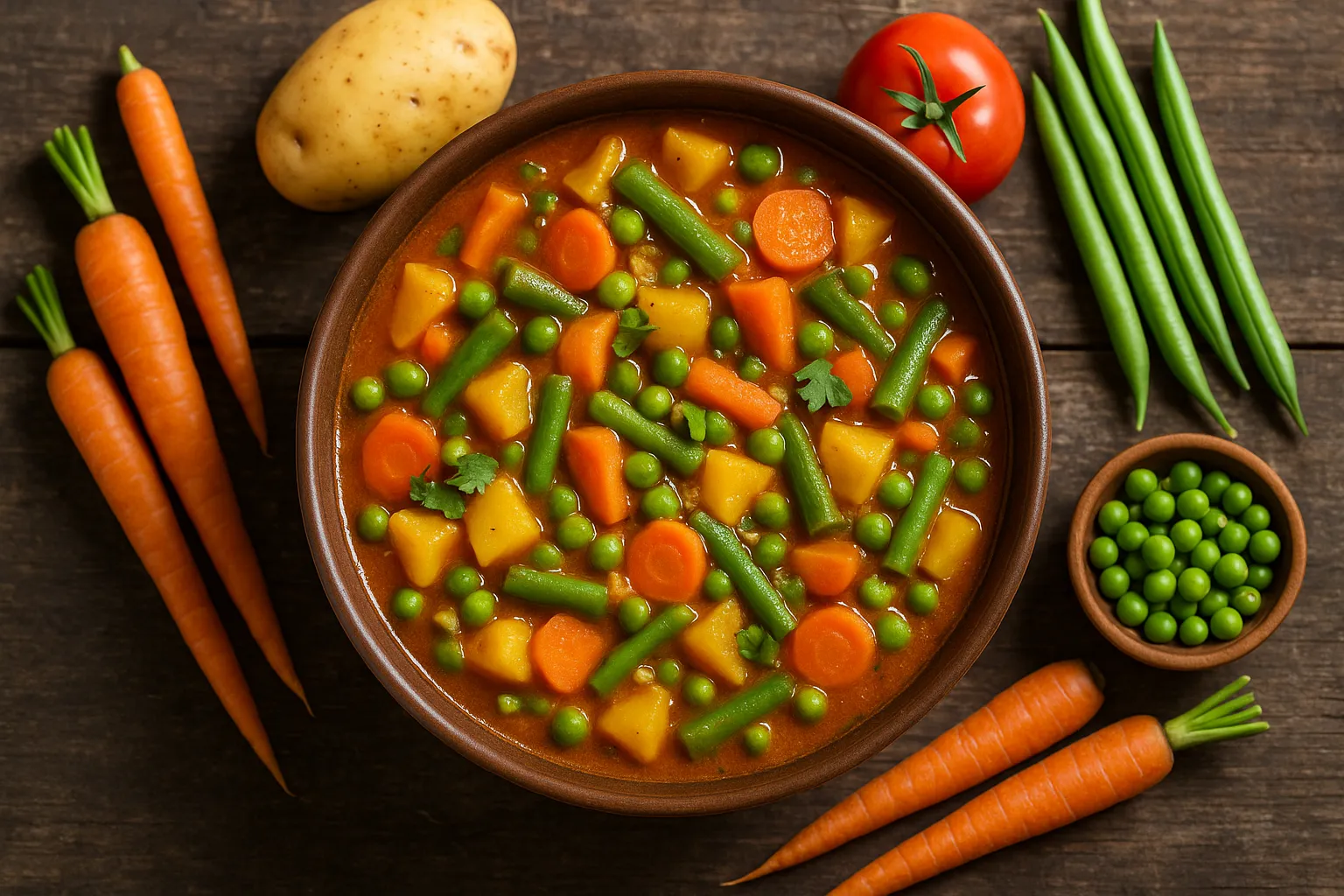
Schnelle Nährwerte
Per 1 Cup (200g) mit Moderate Oil
| Nährstoff | Menge |
|---|---|
| Kalorien | 140 kcal |
| Protein | 4g |
| Kohlenhydrate | 18g |
| Ballaststoffe | 5g |
| Zucker | 6g |
| Fett | 6g |
| Vitamin A | 3500 IU |
| Vitamin C | 45mg |
| Kalium | 480mg |
| Eisen | 2.5mg |
Makronährstoff-Aufschlüsselung
 ChatGPT
  Claude
  AI Mode
  Perplexity
ERNÄHRUNGSBERATER-EINBLICK
Mix vegetable sabji liefert 5g Ballaststoffe (20% DV) and diverse phytonutrients from colorful vegetables. Der traditional spices—turmeric, cumin, coriander—offer anti-inflammatory and digestive benefits beyond basic nutrition.
Mythen Entlarvt
MYTHOS #1: Mix Veg Sabji Ist Too Hoch in Kalorien for Gewichtsverlust
WAHRHEIT: At 140 Kalorien pro Tasse mit 5g Ballaststoffe, mix veg sabji ist excellent for Gewichtsverlust. Kalorien come from nutrient-dense vegetables and mäßig oil. Hoch Ballaststoffe fördert satiety and reduziert overall calorie intake. Prepare mit 1-2 tsp oil for even niedriger Kalorien (100-120 pro Tasse).
MYTHOS #2: Potatoes in Sabji Spike Blood Zucker
WAHRHEIT: Während potatoes have medium GI, cooking and cooling erhöht resistant starch, lowering glycemic impact. Der Ballaststoffe from andere vegetables and Fett from oil further moderates Blutzucker response. Diabetics kann enjoy sabji mit limited potato Portionen paired mit Protein.
MYTHOS #3: Restaurant-Style Sabji Ist Just As Gesund as Homemade
WAHRHEIT: Restaurant sabji oft enthält 2-3x mehr oil (300-400 Kalorien pro Tasse), added Zucker, cream, and excessive salt. Homemade versions mit controlled oil, frisch vegetables, and minimal processing provide authentic nutrition at half der Kalorien.
MYTHOS #4: Sabji Loses Alle Nährstoffe Wenn Gekocht
WAHRHEIT: Während einige vitamin C ist lost, cooking enhances bioavailability of lycopene from tomatoes and beta-carotene from carrots. Fett-soluble Vitamine (A, K) sind besser absorbed mit der oil in sabji. Light cooking preserves die meisten Nährstoffe.
MYTHOS #5: You Brauchen Paneer or Meat to Bekommen Protein from Sabji
WAHRHEIT: Mix veg sabji liefert 4g plant-based Protein pro Tasse from peas, beans, and vegetables. Adding chickpeas, tofu, or lentils boosts Protein to 10-15g, creating a complete plant-based meal ohne animal products.
NutriScore nach Gesundheitszielen
| Gesundheitsziel | NutriScore | Warum diese Bewertung? |
|---|---|---|
| Gewichtsverlust |  | 140 Kalorien mit 5g Ballaststoffe (20% DV) fördert fullness. Verwenden minimal oil (1-2 tsp) for 100-120 Kalorien. Hoch volume food. |
| Muskelaufbau |  | Moderate Protein (4g). Add paneer, chickpeas, or tofu for 15-20g Protein. Liefert Vitamine for muscle recovery. |
| Diabetes-Management | | Hoch Ballaststoffe slows glucose absorption, mäßig GI wenn prepared mit diverse vegetables. Grenze potatoes, add Protein for besser Blutzucker kontrolle. |
| PCOS-Management |  | Anti-inflammatory spices (turmeric, cumin), hoch Ballaststoffe, niedrig glycemic load. Excellent for hormone balance and insulin sensitivity. |
| Schwangerschaftsernährung | | Folate (60mcg), Eisen (2.5mg), vitamin C aids Eisen absorption, diverse vegetables support fetal growth. |
| Viral/Flu Recovery | | Hoch vitamin C (50% DV), vitamin A, anti-inflammatory spices, easy to digest. Unterstützt immune function and recovery. |
PERSONALISIERTE ERNÄHRUNG
Verfolgen Sie Ihre Mahlzeiten mit NutriScan for personalized NutriScores based on your specific health goals!
Blutzucker-Reaktion to Mix Veg Sabji
Understanding wie mix vegetable sabji affects Blutglukose hilft optimize Portion sizes and pairings for Diabetes management.
Typische Glukose-Reaktionskurve
Diese Grafik zeigt typical Blutglukose response for gesund individuals. Individuelle Reaktionen können variieren. Keine medizinische Beratung.
So Flachen Sie den Anstieg Ab
Hoch Ballaststoffe and gesund fats in sabji mäßig Blutzucker response. Further optimize mit diese pairings:
- 🍞 Whole wheat roti or chapati - Complex Kohlenhydrate mit Ballaststoffe
- 🥚 Gekocht egg or omelette - Complete Protein source
- 🧀 Paneer or tofu - Adds Protein and calcium
- 🫘 Chickpeas or rajma (kidney beans) - Plant Protein and resistant starch
Diese combinations create balanced meals mit stable Blutzucker and 4-6 hours of satiety.
Kulturelle Bedeutung
Mix vegetable sabji ist a staple of Indian home cooking, representing regional diversity and culinary creativity.
In India:
- Regional variations: North (Navratan korma), South (Avial mit coconut), West (Undhiyu), East (Bengali mixed vegetables)
- Wesentlich part of täglich thali (complete meal platter)
- Used in religious festivals and celebrations (Navratri, Janmashtami)
- Represents seasonal eating—vegetables change mit harvest cycles
- Ayurvedic balance of six tastes (sweet, sour, salty, bitter, pungent, astringent)
Global Influence:
- Vegetable curries adopted worldwide mit local variations
- Part of global vegetarian movement and plant-based diets
- Indian restaurants worldwide feature mixed vegetable curry
- Demonstrates sustainable, vegetable-forward eating patterns
Vergleichen und Ersetzen
Mix Veg Sabji vs Similar Vegetable Dishes (Pro 100g)
| Nährstoff | 🍛 Mix Veg Sabji | 🥘 Ratatouille (French) | 🥗 Stir-Fry Vegetables | 🍲 Vegetable Soup |
|---|---|---|---|---|
| Kalorien | 70 kcal | 55 kcal | 80 kcal | 45 kcal |
| Kohlenhydrate | 9g | 7g | 10g | 8g |
| Ballaststoffe | 2.5g | 2g | 2.5g | 2g |
| Protein | 2g | 1.5g | 3g | 1.5g |
| Fett | 3g | 2.5g | 4g | 1g |
| Vitamin A | 1750 IU | 800 IU | 2000 IU | 900 IU |
| Vitamin C | 22mg | 15mg | 30mg | 12mg |
| Kalium | 240mg | 320mg | 280mg | 200mg |
| Am besten für | Complete meal, spice | Light side dish | Quick Protein meal | Niedrig-calorie option |
Häufige Fragen
Ist mix vegetable sabji gut for Gewichtsverlust?
Yes, mix vegetable sabji unterstützt Gewichtsverlust wenn prepared mit minimal oil. At 140 Kalorien pro Tasse mit 5g Ballaststoffe, it liefert filling nutrition that reduziert overall calorie intake.
Gewicht loss optimization:
- Verwenden 1-2 tsp oil: Reduziert Kalorien to 100-120 pro Tasse
- Load mit Ballaststoffe-rich vegetables: Cauliflower, beans, spinach, capsicum
- Grenze potatoes: Verwenden klein amounts or substitute mit cauliflower
- Pair mit whole grains: 1-2 rotis or brown rice for complete meal
- Eat as main dish: Groß Portion (1.5-2 cups) mit minimal sides
Beste practices: Prepare at home to kontrolle oil; vermeiden cream or butter; add Protein (chickpeas, paneer) for extended satiety; consume for lunch/dinner mit whole grains.
Kann diabetics eat mix vegetable sabji?
Yes, mix vegetable sabji ist suitable for diabetics wenn prepared correctly. Der hoch Ballaststoffe content (5g pro Tasse) hilft regulate Blutzucker.
Diabetic-friendly preparation:
- Wählen niedrig-GI vegetables: Beans, cauliflower, spinach, capsicum, tomatoes
- Grenze hoch-GI vegetables: Verwenden klein amounts of potatoes, peas, carrots
- Add Protein: Paneer, chickpeas, or tofu to reduce glycemic load
- Verwenden mäßig oil: 1-2 tsp for wesentlich fats ohne excess Kalorien
- Pair mit Protein and whole grains: Complete balanced meal
Beste practices: Monitor Blutzucker 2 hours nach eating; combine mit dal (lentils) for additional Protein and Ballaststoffe; eat smaller Portionen (1 cup) mit balanced meal; vermeiden restaurant versions mit excess oil and Zucker.
Was vegetables sind in mix vegetable sabji?
Common vegetables in mix veg sabji:
- Potatoes - Liefert substance and energy
- Peas - Adds sweetness and Protein
- Carrots - Beta-carotene and natural sweetness
- Beans (green beans) - Ballaststoffe and texture
- Cauliflower - Niedrig-calorie, filling
- Capsicum (bell peppers) - Vitamin C and color
- Tomatoes - Creates gravy base, lycopene
Optional additions: Corn, mushrooms, paneer, potatoes, broccoli, zucchini, eggplant
Spice blend: Turmeric, cumin, coriander, garam masala, red chili, ingwer-garlic paste
Der diverse vegetables provide Vitamine A, C, K, folate, Kalium, Eisen, and powerful Antioxidantien.
Wie viele Kalorien sind in mix vegetable sabji?
Kalorien vary by preparation:
- Homemade, minimal oil (1-2 tsp): 100-120 Kalorien pro Tasse
- Standard homemade (mäßig oil): 140-160 Kalorien pro Tasse
- Restaurant-style (heavy oil, cream): 200-250 Kalorien pro Tasse
- Niedrig-oil, no potato version: 80-100 Kalorien pro Tasse
Calorie factors:
- Oil amount (biggest contributor: 1 tbsp oil = 120 Kalorien)
- Vegetable composition (potatoes add mehr Kalorien als cauliflower)
- Added cream, butter, or cashew paste
- Cooking method (sautéing vs steaming dann light sautéing)
Recommendation: Prepare at home mit 1-2 tsp oil pro Portion for optimal calorie kontrolle während maintaining flavor and nutrition.
Ist mix vegetable sabji gesund?
Yes, mix vegetable sabji ist sehr gesund for multiple reasons:
Nutritional benefits:
- Hoch Ballaststoffe (5g pro Tasse): Digestive health, satiety, Blutzucker kontrolle
- Diverse Vitamine: A, C, K, folate from colorful vegetables
- Minerals: Kalium, Eisen, magnesium
- Antioxidants: Lycopene, beta-carotene, vitamin C
- Anti-inflammatory spices: Turmeric (curcumin), cumin, coriander
Health benefits:
- Unterstützt gewicht management (niedrig-calorie, hoch-volume)
- Verbessert digestion (Ballaststoffe and spices)
- Boosts immunity (vitamin C, Antioxidantien)
- Reduziert Entzündung (turmeric, diverse phytonutrients)
- Unterstützt Herzgesundheit (Ballaststoffe, Kalium, Antioxidantien)
Maximizing gesundheitliche Vorteile: Verwenden minimal oil, include variety of colorful vegetables, vermeiden cream or excess salt, pair mit whole grains and Protein, prepare frisch at home.
Was ist der beste way to machen niedrig-calorie mix vegetable sabji?
Niedrig-calorie preparation method (80-100 Kalorien pro Tasse):
Step-by-step:
- Steam vegetables erste (potatoes, carrots, cauliflower, beans) - Reduziert brauchen for extended sautéing in oil
- Verwenden 1 teaspoon oil - Just enough to sauté onions, ingwer-garlic paste, and spices
- Load mit niedrig-calorie vegetables: Cauliflower, beans, spinach, capsicum, mushrooms, zucchini
- Grenze or skip potatoes - Substitute mit extra cauliflower or add klein amount (1/4 cup pro Portion)
- Tomato-based gravy - Blend tomatoes mit spices for rich flavor ohne Kalorien
- Spices for flavor - Turmeric, cumin, coriander, garam masala, red chili add zero Kalorien
- Skip cream and butter - Verwenden niedrig-Fett yogurt if creaminess desired
Flavor boosters ohne Kalorien:
- Frisch coriander (cilantro) and curry leaves
- Lemon juice for tanginess
- Kasuri methi (dried fenugreek leaves)
- Ingwer-garlic paste (minimal amounts)
Dies method maintains authentic flavor während reducing Kalorien by 40-50%.
Kann I eat mix vegetable sabji every tag?
Yes, mix vegetable sabji kann be eaten täglich—it's a cornerstone of gesund Indian diet patterns.
Täglich consumption benefits:
- Meets vegetable intake targets: 2-3 cups täglich liefert significant Portion of empfohlen 5 servings vegetables
- Nährstoff diversity: Rotating vegetable combinations ensures broad nutrient intake
- Hoch Ballaststoffe: Unterstützt digestive regularity and gut health
- Disease prevention: Antioxidants and phytonutrients reduce chronic disease risk
- Sustainable eating: Plant-based, affordable, culturally appropriate
Beste practices for täglich consumption:
- Vary vegetables täglich for nutrient diversity
- Kontrolle oil amount (1-2 tsp pro Portion)
- Pair mit different proteins (dal one tag, paneer nächste, chickpeas another)
- Combine mit whole grains (roti, brown rice, quinoa)
- Include roh vegetables (salad, raita) for enzyme preservation
Recommendation: 1-2 cups täglich as part of balanced thali (meal platter) mit Protein, whole grains, and curd/raita liefert optimal nutrition for alle health goals.


Ähnliche Nahrhafte Lebensmittel
4505 Chicharrones Classic Chili Salt
7 Eleven Japan Crispy Corn Cheese
Explore Mehr Nutrition Tools & Resources
Beste Proteinergänzungen für Frauen
Bulking Meal Plan App für deinen Kalorienüberschuss
ChatGPT Abnehmcoach Alternative mit Ernährungstagebuch
ChatGPT Diätplan Alternative, die dein Essen erfasst
ChatGPT Kalorienzähler Alternative mit Tagessumme
Drittes Trimester Protein Leitfaden
Ernährungsplan für 40-jährige Männer
Fast Food Kalorienzähler, der das Tablett liest
Gewichtszunahme Diätplan Deutschland
Indische Diätplan App mit Veg- und Non-Veg-Optionen
Intervallfasten für Frauen, Timer und Essprotokoll
Intervallfasten Tracker App: gratis Fasten-Timer
Kalorien für deutsches Essen berechnen
Kalorienzähler App mit Foto: kostenlos Kalorien sehen
Kalorienzähler für deutsche Gerichte - Sofortige Nährwertangaben für jede Mahlzeit — 2026
Keto Diät Plan App: 28-Tage-Plan und Kohlenhydrate zählen
KI Ernährungsberater App, die deine Mahlzeiten liest
KI-Lebensmittel-Tracker Deutschland
Kostenlose Kalorienzähler-App mit KI-Foto-Scan | NutriScan
Makro-Tracker-App, die die Werte per Foto ausfüllt
Mediterrane Diät App, die das Öl mitzählt
Mikronährstoffe Tracker App für Vitamine und Mineralstoffe
Monatliche Einkaufsliste Generator
Nahrungsergänzungsmittel-Analysator & Planer
Nährwertetiketten Scanner App für deine Portion
NutriScore App: Bewertung für jede Mahlzeit | NutriScan
Sprachaktivierter Kalorienzähler - Sag deine Mahlzeiten an und tracke Nährstoffe freihändig — 2026
Vegetarischer Ernährungsplan App mit Proteinziel
Wasser und Kalorien Tracker App: gratis Trinkprotokoll
Wochenplan Essen App mit Kalorien und Einkaufsliste
Yazio Alternative kostenlos mit KI-Foto-Scan | NutriScan