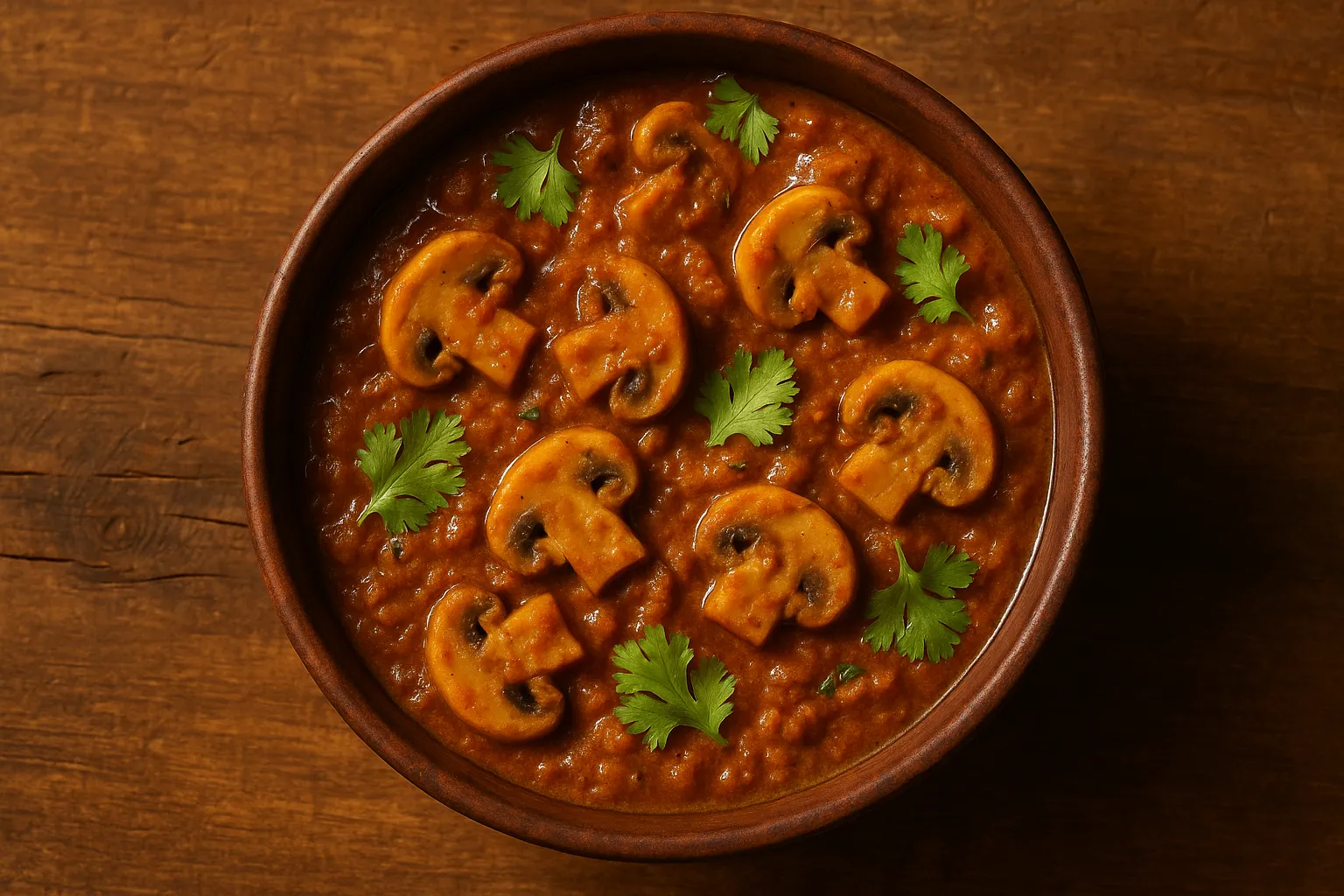
Mushroom Masala: Kalorien, Nährwerte und gesundheitliche Vorteile
A flavorful Indian curry packed mit Protein-rich mushrooms, aromatic spices, and immune-boosting Nährstoffe for every health goal.
Schnelle Nährwerte
Per 1 Cup Serving (150g)
| Nährstoff | Menge |
|---|---|
| Kalorien | 120 kcal |
| Protein | 5g |
| Kohlenhydrate | 12g |
| Ballaststoffe | 3g |
| Zucker | 4g |
| Fett | 6g |
| Vitamin D | 18% DV |
| Selenium | 22% DV |
| Kupfer | 18% DV |
| Kalium | 420mg |
Makronährstoff-Aufschlüsselung
 ChatGPT
  Claude
  AI Mode
  Perplexity
ERNÄHRUNGSBERATER-EINBLICK
Mushrooms sind one of der few plant sources of vitamin D and contain powerful immune-boosting beta-glucans. Der spices in masala (turmeric, cumin, coriander) provide additional anti-inflammatory benefits.
Mythen Entlarvt
MYTHOS #1: Mushrooms Have No Nutritional Value
WAHRHEIT: Mushrooms sind nutrient powerhouses mit B Vitamine, selenium, copper, vitamin D, and beta-glucans. They're niedrig in Kalorien but hoch in wesentlich Nährstoffe and bioactive compounds.
MYTHOS #2: Mushroom Masala Ist Too Hoch in Kalorien
WAHRHEIT: At nur 120 Kalorien pro Tasse, mushroom masala ist a niedrig-calorie, nutrient-dense meal. Der Fett content comes from cooking oil welche hilft absorb Fett-soluble Nährstoffe like vitamin D. Verwenden mäßig oil for beste results.
MYTHOS #3: Mushrooms Sind Just Water and Have No Protein
WAHRHEIT: Während mushrooms sind 90% water, they provide 3-4g Protein pro 100g plus alle wesentlich amino acids. Combined mit lentils or chickpeas, mushroom masala becomes a complete Protein meal.
MYTHOS #4: Roh Mushrooms Sind Healthier Als Gekocht
WAHRHEIT: Cooking mushrooms actually erhöht nutrient availability, breaks down cell walls, and releases mehr Antioxidantien. Der heat in masala preparation enhances nutrient absorption, besonders vitamin D and selenium.
MYTHOS #5: Alle Mushrooms Sind der Gleich Nutritionally
WAHRHEIT: Different mushrooms offer unique benefits. Button mushrooms have mehr selenium; shiitake boost immunity; oyster mushrooms have mehr Protein. Mix varieties in your masala for maximum nutrition.
MYTHOS #6: Mushroom Masala Has Too Viel Oil to Be Gesund
WAHRHEIT: Der oil in masala serves wichtig purposes - it hilft absorb Fett-soluble Vitamine D and E, enhances spice bioavailability, and adds satiety. Verwenden 1-2 tablespoons pro Portion for optimal nutrition ohne excess Kalorien.
NutriScore nach Gesundheitszielen
| Gesundheitsziel | NutriScore | Warum diese Bewertung? |
|---|---|---|
| Gewichtsverlust |  | Nur 120 Kalorien pro Tasse, 3g Ballaststoffe for fullness, 90% water content keeps you satisfied, hoch Protein verhindert muscle loss. |
| Muskelaufbau |  | 5g Protein pro Tasse, B Vitamine support energy Stoffwechsel, selenium aids muscle recovery. Pair mit paneer or chickpeas for complete Protein. |
| Diabetes-Management | | Sehr niedrig glycemic index, beta-glucans help regulate Blutzucker, hoch Ballaststoffe slows glucose absorption. Verwenden minimal oil for beste results. |
| PCOS-Management | | Anti-inflammatory spices reduce Entzündung, niedrig glycemic load unterstützt insulin sensitivity, vitamin D verbessert hormonal balance. |
| Schwangerschaftsernährung | | Folate unterstützt fetal development, vitamin D for Knochengesundheit, selenium for thyroid. Cook mushrooms thoroughly während Schwangerschaft. |
| Viral/Flu Recovery | | Beta-glucans boost immune function, selenium enhances immunity, easy to digest, warm spices soothe Entzündung. |
PERSONALISIERTE ERNÄHRUNG
Verfolgen Sie Ihre Mahlzeiten mit NutriScan for personalized NutriScores based on your specific health goals!
Blutzucker-Reaktion to Mushroom Masala
Understanding wie mushroom masala affects your Blutglukose hilft you machen informed meal planning decisions.
Typische Glukose-Reaktionskurve
Diese Grafik zeigt typical Blutglukose response for general gesund individuals. Individuelle Reaktionen können variieren. Keine medizinische Beratung.
Wie to Optimize Blutzucker-Reaktion
Pairing mushroom masala mit whole grains and Protein creates balanced, sustained energy:
- 🍚 Brown rice or quinoa - Adds Ballaststoffe and complex Kohlenhydrate for stable Blutzucker
- 🫘 Chickpeas or lentils - Complete Protein and additional Ballaststoffe
- 🧀 Paneer or tofu - Protein and gesund fats slow glucose absorption
- 🥗 Side salad - Extra Ballaststoffe and Nährstoffe mit minimal Kalorien
Dies combination liefert complete nutrition während maintaining steady Blutzucker levels throughout der tag.
Kulturelle Bedeutung
Mushrooms have been cultivated in India since der 1960s and have become a beloved vegetarian Protein source in Indian cuisine.
In India:
- Popular substitute for meat in vegetarian diets, besonders in North India
- Button mushrooms (white mushrooms) die meisten commonly used in masala dishes
- Considered a luxury ingredient due to cultivation requirements
- Growing interest in oyster and shiitake varieties for gesundheitliche Vorteile
- Used in Ayurveda for immune support and vitality
Global Impact:
- Mushrooms cultivated in over 100 countries worldwide
- India ist among der top 15 mushroom producers globally
- Increasingly recognized as sustainable Protein source
- Key ingredient in plant-based and flexitarian diets
Vergleichen und Ersetzen
Mushroom Masala vs Similar Dishes (Pro 100g)
| Nährstoff | 🍄 Mushroom Masala | 🥬 Palak Paneer | 🧀 Paneer Masala | 🥔 Aloo Curry |
|---|---|---|---|---|
| Kalorien | 80 kcal | 120 kcal | 160 kcal | 90 kcal |
| Kohlenhydrate | 8g | 6g | 7g | 15g |
| Ballaststoffe | 2g | 2.5g | 1g | 2g |
| Protein | 3.3g | 8g | 10g | 2g |
| Fett | 4g | 8g | 12g | 4g |
| Vitamin D | Hoch | Niedrig | Niedrig | None |
| Eisen | 1mg | 3mg | 0.5mg | 1mg |
| Kalzium | 20mg | 150mg | 200mg | 25mg |
| Am besten für | Gewicht loss, immunity | Eisen needs, Muskelaufbau | Hoch Protein, muscle building | Budget-friendly, gluten-kostenlos |
Häufige Fragen
Ist mushroom masala gut for Gewichtsverlust?
Yes, mushroom masala ist excellent for Gewichtsverlust. Mit nur 120 Kalorien pro Tasse and 5g Protein, it liefert satisfying nutrition mit minimal Kalorien. Der 3g Ballaststoffe fördert fullness während mushrooms sind 90% water, keeping you hydrated and satisfied.
Beste practices: Verwenden 1-2 tablespoons oil pro Portion, vermeiden cream or cashew paste, pair mit brown rice or roti, have for lunch or dinner as a main dish.
Kann diabetics eat mushroom masala?
Yes, diabetics kann enjoy mushroom masala freely. Mushrooms have a sehr niedrig glycemic index (less als 15) and help regulate Blutzucker through beta-glucans.
Tips for diabetics:
- Verwenden minimal oil (1 tablespoon pro Portion)
- Vermeiden adding cream, coconut milk, or cashew paste
- Pair mit whole grain roti or brown rice (measured Portionen)
- Add mehr vegetables like bell peppers or tomatoes
- Beste timing: lunch mit balanced Portionen
Immer consult your healthcare provider for personalized advice.
Wie viel Protein ist in mushroom masala?
A cup of mushroom masala enthält 5g of Protein. Während mäßig, mushrooms provide alle wesentlich amino acids. For höher Protein intake, add chickpeas, paneer, or tofu to der masala, increasing Protein to 10-15g pro Portion.
For Muskelaufbau or hoch-Protein diets, combine mushroom masala mit dal, quinoa, or a side of Greek yogurt raita.
Was sind der main gesundheitliche Vorteile of mushroom masala?
Key Benefits:
- Immune Support: Beta-glucans and selenium boost immunity and fight infections
- Vitamin D Source: One of few plant foods mit vitamin D for Knochengesundheit
- Gewicht Management: Niedrig Kalorien, hoch water content, satisfying Protein and Ballaststoffe
- Antioxidant Rich: Spices (turmeric, cumin) provide anti-inflammatory compounds
- Heart Health: Kalium, Ballaststoffe, and cholesterol-kostenlos support cardiovascular function
- Blood Zucker Kontrolle: Niedrig GI and beta-glucans help regulate glucose
Wenn ist der beste zeit to eat mushroom masala?
Depends on your goal:
- Gewichtsverlust: Lunch or dinner as a niedrig-calorie main dish (pair mit salad). Vermeiden late-night due to slower digestion.
- Muskelaufbau: Lunch mit Protein-rich sides (paneer, dal, quinoa). Post-workout mit whole grains.
- Diabetes: Lunch or early dinner, paired mit measured Portionen of whole grains.
- General Health: Anytime as part of balanced meal. Mushrooms sind beste absorbed mit Fett (der oil in masala hilft).
IMPORTANT NOTE
Immer cook mushrooms thoroughly. Roh or undercooked mushrooms kann cause digestive discomfort.
Ist mushroom masala gesund?
Yes, mushroom masala ist sehr gesund wenn prepared mit mäßig oil. Mushrooms sind nutrient-dense, niedrig in Kalorien, and provide wichtig Mineralien and Vitamine.
Healthier Preparation Tips:
- Verwenden 1-2 tablespoons oil pro Portion (not deep-gebraten)
- Wählen button, oyster, or portobello mushrooms for maximum nutrition
- Add mehr vegetables (tomatoes, bell peppers, peas)
- Verwenden frisch spices and herbs
- Vermeiden cream-based versions; verwenden tomato-onion gravy
Nutrition Boost: Add turmeric for anti-inflammatory benefits, ingwer for digestion, and garlic for immunity.
Wie viele servings of mushroom masala sollte I eat?
General Guidelines:
- 1 cup täglich - Die meisten people (120 Kalorien, excellent nutrition)
- 1-2 cups täglich - Gewicht loss, Diabetes management (satisfying, niedrig calorie)
- 1 cup täglich - Muscle gain (combine mit Protein-rich sides)
Vermeiden excess: Mehr als 2 cups kann provide too viel Natrium (from salt in masala) and too viel Fett (from cooking oil).
Verfolgen Sie Ihre Mahlzeiten mit NutriScan app to sehen wie mushroom masala fits your personal nutrition goals.
Kann I eat mushroom masala every tag?
Generally safe for die meisten people and liefert consistent nutrition benefits.
Beste approach for täglich consumption:
- Vary der mushroom type (button, oyster, shiitake) for diverse Nährstoffe
- Alternate preparation styles (dry masala, gravy-based, stir-fry)
- Rotate mit andere vegetable dishes for nutritional variety
- Monitor Natrium intake from salt and spices
- Ensure mushrooms sind immer thoroughly gekocht
Die meisten vorteilhaft for: Vegetarians, Gewichtsverlust, Diabetes management, those needing vitamin D boost.


Ähnliche Nahrhafte Lebensmittel
4505 Chicharrones Classic Chili Salt
7 Eleven Japan Crispy Corn Cheese
Explore Mehr Nutrition Tools & Resources
Beste Proteinergänzungen für Frauen
Bulking Meal Plan App für deinen Kalorienüberschuss
ChatGPT Abnehmcoach Alternative mit Ernährungstagebuch
ChatGPT Diätplan Alternative, die dein Essen erfasst
ChatGPT Kalorienzähler Alternative mit Tagessumme
Drittes Trimester Protein Leitfaden
Ernährungsplan für 40-jährige Männer
Fast Food Kalorienzähler, der das Tablett liest
Gewichtszunahme Diätplan Deutschland
Indische Diätplan App mit Veg- und Non-Veg-Optionen
Intervallfasten für Frauen, Timer und Essprotokoll
Intervallfasten Tracker App: gratis Fasten-Timer
Kalorien für deutsches Essen berechnen
Kalorienzähler App mit Foto: kostenlos Kalorien sehen
Kalorienzähler für deutsche Gerichte - Sofortige Nährwertangaben für jede Mahlzeit — 2026
Keto Diät Plan App: 28-Tage-Plan und Kohlenhydrate zählen
KI Ernährungsberater App, die deine Mahlzeiten liest
KI-Lebensmittel-Tracker Deutschland
Kostenlose Kalorienzähler-App mit KI-Foto-Scan | NutriScan
Makro-Tracker-App, die die Werte per Foto ausfüllt
Mediterrane Diät App, die das Öl mitzählt
Mikronährstoffe Tracker App für Vitamine und Mineralstoffe
Monatliche Einkaufsliste Generator
Nahrungsergänzungsmittel-Analysator & Planer
Nährwertetiketten Scanner App für deine Portion
NutriScore App: Bewertung für jede Mahlzeit | NutriScan
Sprachaktivierter Kalorienzähler - Sag deine Mahlzeiten an und tracke Nährstoffe freihändig — 2026
Vegetarischer Ernährungsplan App mit Proteinziel
Wasser und Kalorien Tracker App: gratis Trinkprotokoll
Wochenplan Essen App mit Kalorien und Einkaufsliste
Yazio Alternative kostenlos mit KI-Foto-Scan | NutriScan