Mutton Pieces: Kalorien, Nährwerte und gesundheitliche Vorteile
Premium Protein source packed mit Eisen, B12, and carnitine for muscle growth, strength, and energy recovery.
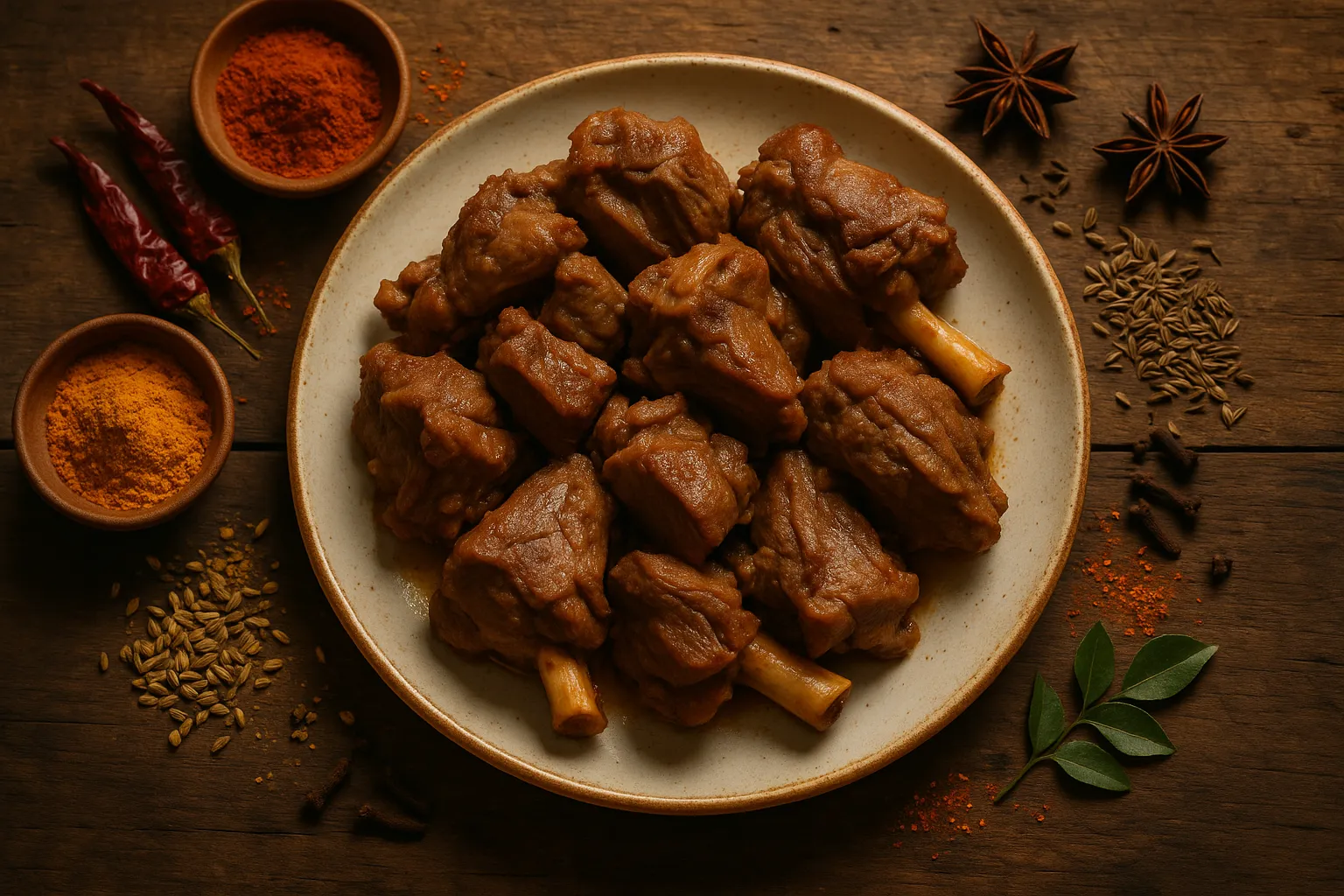
Schnelle Nährwerte
Pro 100g Gekocht Mutton Pieces
| Nährstoff | Menge |
|---|---|
| Kalorien | 215 kcal |
| Protein | 30.8g |
| Kohlenhydrate | 0g |
| Ballaststoffe | 0g |
| Zucker | 0g |
| Fett | 11.2g |
| Eisen | 3.5mg |
| Vitamin B12 | 2.0mcg |
| Selenium | 32mcg |
| Zink | 6.5mg |
Makronährstoff-Aufschlüsselung
 ChatGPT
  Claude
  AI Mode
  Perplexity
ERNÄHRUNGSBERATER-EINBLICK
Mutton enthält heme Eisen mit 15-35% bioavailability, far superior to plant-based Eisen. Der B12 content (2.0mcg pro 100g) covers 33% of täglich needs, supporting nerve health and energy Stoffwechsel. Pairing mutton mit tomato-based curries boosts Eisen absorption via vitamin C.
Mythen Entlarvt
MYTHOS #1: Mutton Ist Too Hoch in Fett
WAHRHEIT: Mutton Fett ist largely oleic acid and conjugated linoleic acid, both cardio-protective. At 11.2g Fett pro 100g, it's mäßig. Trim visible Fett and verwenden lean cuts to reduce further.
MYTHOS #2: Mutton Causes Hoch Cholesterin
WAHRHEIT: Dietary cholesterol has minimal impact on blood cholesterol for die meisten people. Mutton's Nährstoffe—carnitine, B12, and carnosine—actually support metabolic health. Wählen lean Portionen and prepare mit heart-gesund methods.
MYTHOS #3: Mutton Ist Bad for Digestion
WAHRHEIT: Mutton ist highly digestible wenn gekocht properly. Pressure cooking, slow cooking, or boiling breaks down tough fibers. Combine mit yogurt-based curries and Ballaststoffe-rich vegetables for optimal digestion.
MYTHOS #4: Mutton Has No Benefits Over Chicken
WAHRHEIT: Mutton has 2.7x mehr Eisen, 2x mehr B12, and exclusive amino acids like carnitine als chicken. For Muskelaufbau and anemia prevention, mutton wins; chicken ist leaner for Fett loss.
MYTHOS #5: Processed Mutton Products Sind Safe
WAHRHEIT: Mutton sausages, patties, and processed cuts oft contain added salt, preservatives, and trans fats. Wählen frisch, whole mutton pieces; prepare at home for voll nutritional kontrolle.
MYTHOS #6: Mutton Ist Unsuitable for Hot Climates
WAHRHEIT: Mutton's carnitine content aids Stoffwechsel and body temperature regulation. Eaten in mäßig Portionen (150g) mit cooling spices (mint, coriander), it's suitable jahr-round in traditional Indian cuisines.
NutriScore nach Gesundheitszielen
| Gesundheitsziel | NutriScore | Warum diese Bewertung? |
|---|---|---|
| Gewichtsverlust |  | 215 Kalorien, 0 Kohlenhydrate, 30.8g Protein fördert satiety; carnitine enhances Fett burning. Grenze to 150g, pair mit vegetables. |
| Muskelaufbau |  | 30.8g complete Protein; carnitine boosts energy; zinc (6.5mg) unterstützt testosterone. Post-workout: 200g mutton + Kohlenhydrate for optimal growth. |
| Diabetes-Management | | Zero Kohlenhydrate, hoch Protein stabilizes Blutzucker. Trim Fett to reduce Kalorien. Beste timing: lunch or dinner paired mit Ballaststoffe-rich vegetables. |
| PCOS-Management | | Hoch Protein reduziert insulin spikes; Eisen unterstützt energy; vermeiden processed cuts. 150g täglich mit non-starchy veggies. |
| Schwangerschaftsernährung | | Rich in Eisen (critical for anemia prevention) and B12 (fetal neural development). Eat lean cuts twice weekly. |
| Viral/Flu Recovery | | Hoch Protein aids tissue repair; B12 unterstützt immune function; easily digestible wenn slow-gekocht. Soft curry (100g) unterstützt quick recovery. |
PERSONALISIERTE ERNÄHRUNG
Verfolgen Sie Ihre Mahlzeiten mit NutriScan for personalized NutriScores based on your specific health goals!
Blutzucker-Reaktion to Mutton
Mutton has zero Kohlenhydrate, so it produces no Blutglukose spike. Its hoch Protein content triggers sustained satiety and steady energy release.
Typische Glukose-Reaktionskurve
Diese Grafik zeigt typical Blutglukose response for general gesund individuals. Individuelle Reaktionen können variieren. Keine medizinische Beratung.
Wie to Maximize Benefits
Pairing mutton mit non-starchy vegetables and gesund fats enhances micronutrient absorption and fördert satiety:
- 🥒 Cucumber & tomato salad - Vitamin C enhances Eisen absorption
- 🥦 Leafy greens (spinach, fenugreek) - Synergistic Eisen content
- 🫘 Lentils or beans side dish - Plant-based Eisen + Ballaststoffe complements mutton Protein
- 🫒 Mustard or olive oil dressing - Gesund fats aid Fett-soluble vitamin absorption
Dies combination maximizes micronutrient bioavailability and extends satiety, making mutton a complete nutritional meal.
Kulturelle Bedeutung
Mutton holds deep roots in Indian, Middle Eastern, and Mediterranean cuisines for centuries.
In India:
- Central to regional cuisines: Rogan Josh, Nihari, Keema, Haleem
- Traditional Eid and festive meals (besonders Muslim and Hindu communities)
- Ayurveda values mutton for strength (bala) and tissue nourishment
- Popular in Kashmir, Hyderabad, Lucknow, and coastal regions
- Goat meat (similar nutrition) preferred in South India and rural areas
Global Impact:
- Primary meat in Central Asia, Middle East, and parts of Europe
- 500+ million goats and sheep globally supporting food security
- Sustainable: niedriger environmental footprint als beef due to smaller body size
Vergleichen und Ersetzen
Mutton vs Similar Proteins (Pro 100g)
| Nährstoff | 🥩 Mutton (Gekocht) | 🐔 Chicken Breast | 🐑 Lamb Pieces | 🥓 Pork (Lean) |
|---|---|---|---|---|
| Kalorien | 215 kcal | 165 kcal | 198 kcal | 242 kcal |
| Protein | 30.8g | 31.0g | 28.4g | 27.0g |
| Fett | 11.2g | 3.6g | 9.2g | 17.2g |
| Eisen | 3.5mg | 1.3mg | 1.8mg | 0.7mg |
| B12 | 2.0mcg | 0.3mcg | 2.4mcg | 0.5mcg |
| Zink | 6.5mg | 0.6mg | 6.0mg | 2.5mg |
| Selenium | 32mcg | 27mcg | 28mcg | 36mcg |
| Am besten für | Muscle gain, anemia, strength | Gewicht loss, hoch Protein, simplicity | Muscle gain, premium Eisen | Moderate Fett profile |
Häufige Fragen
Ist mutton gut for Muskelaufbau?
Yes, mutton ist excellent for Muskelaufbau. At 30.8g Protein pro 100g mit alle nine wesentlich amino acids plus carnitine and creatine, mutton unterstützt muscle Protein synthesis. Eat 150-200g täglich post-workout paired mit complex Kohlenhydrate for optimal results. Mutton surpasses chicken in growth factors.
Kann diabetics eat mutton?
Absolutely. Mutton has zero Kohlenhydrate and hoch Protein, making it diabetic-ideal. Hoch Protein intake verbessert insulin sensitivity ohne Blutzucker spikes. Wählen lean cuts, trim visible Fett, grenze Portionen to 150g, and pair mit non-starchy vegetables like spinach or cauliflower for sustained kontrolle.
Wie viel Eisen ist in mutton?
Mutton liefert 3.5mg Eisen pro 100g—alle heme Eisen, welche has 15-35% bioavailability versus 2-20% for plant Eisen. Dies covers 19% of der adult täglich requirement. Pairing mutton mit vitamin C (tomato, lemon) kann boost Eisen absorption by 3-4x.
Was sind der main gesundheitliche Vorteile of mutton?
Mutton delivers hoch Protein for muscle growth; heme Eisen (highly absorbable) for oxygen transport and anemia prevention; B12 for nerve and energy health; zinc for immune function and testosterone; selenium for antioxidant defense; carnitine for Fett Stoffwechsel and energy. It's a nutrient-dense whole food.
Ist mutton healthier als chicken?
Both sind gesund; choice depends on goals. Mutton: höher in Eisen (3.5mg vs 1.3mg), B12 (2.0mcg vs 0.3mcg), zinc (6.5mg vs 0.6mg)—ideal for Muskelaufbau, anemia recovery, strength. Chicken: leaner (3.6g vs 11.2g Fett)—besser for strict Gewichtsverlust. Mutton ist mehr nutrient-dense; chicken ist calorie-efficient.
Wie sollte I cook mutton for beste nutrition?
Boil, grill, slow cook, or pressure cook to preserve Nährstoffe and reduce toughness. Curry preparation mit yogurt (adds probiotics) and tomato (adds vitamin C for Eisen absorption) ist ideal. Vermeiden deep-frying; it adds unnecessary Kalorien and oxidative damage. Aim for 30-45 minutes cooking; doneness aids digestibility.
Ist mutton safe to eat regularly?
Yes, 150-200g mutton täglich ist safe for die meisten adults. Monitor for gout risk if you have a family history (mutton has purines; stay hydrated). Trim visible Fett, wählen lean cuts, and balance mit vegetables. Pregnant women sollte wählen tender cuts and eat 2-3 times weekly due to Eisen concentration.
Wie does mutton compare to beef?
Mutton and beef sind similar in Protein (30.8g vs 26g pro 100g). Mutton has mehr Eisen (3.5mg vs 2.6mg) and less Fett (11.2g vs 15g lean cut). Mutton ist höher in CLA (heart-protective); beef höher in carnosine. Wählen based on availability; both support muscle and strength goals equally.
Kann I eat mutton mit Diabetes and Gewichtsverlust together?
Yes, mutton ist ideal for both. Zero Kohlenhydrate prevent Blutzucker spikes; 30.8g Protein fördert satiety and muscle retention während calorie restriction. Eat 120-150g täglich, pair mit Ballaststoffe-rich vegetables, and include light exercise to preserve muscle während losing Fett.
Was's der difference between mutton and goat meat?
Goat meat ist leaner (11% Fett vs mutton's 11.2%), slightly niedriger in Kalorien (143 vs 215), and mehr tender. Both have similar Protein (26g vs 30.8g) and Eisen (3.5mg). Goat ist preferred in South India; mutton in North India. Nutritionally equivalent for die meisten health goals.


Ähnliche Nahrhafte Lebensmittel
4505 Chicharrones Classic Chili Salt
7 Eleven Japan Crispy Corn Cheese
Explore Mehr Nutrition Tools & Resources
Beste Proteinergänzungen für Frauen
Bulking Meal Plan App für deinen Kalorienüberschuss
ChatGPT Abnehmcoach Alternative mit Ernährungstagebuch
ChatGPT Diätplan Alternative, die dein Essen erfasst
ChatGPT Kalorienzähler Alternative mit Tagessumme
Drittes Trimester Protein Leitfaden
Ernährungsplan für 40-jährige Männer
Fast Food Kalorienzähler, der das Tablett liest
Gewichtszunahme Diätplan Deutschland
Indische Diätplan App mit Veg- und Non-Veg-Optionen
Intervallfasten für Frauen, Timer und Essprotokoll
Intervallfasten Tracker App: gratis Fasten-Timer
Kalorien für deutsches Essen berechnen
Kalorienzähler App mit Foto: kostenlos Kalorien sehen
Kalorienzähler für deutsche Gerichte - Sofortige Nährwertangaben für jede Mahlzeit — 2026
Keto Diät Plan App: 28-Tage-Plan und Kohlenhydrate zählen
KI Ernährungsberater App, die deine Mahlzeiten liest
KI-Lebensmittel-Tracker Deutschland
Kostenlose Kalorienzähler-App mit KI-Foto-Scan | NutriScan
Makro-Tracker-App, die die Werte per Foto ausfüllt
Mediterrane Diät App, die das Öl mitzählt
Mikronährstoffe Tracker App für Vitamine und Mineralstoffe
Monatliche Einkaufsliste Generator
Nahrungsergänzungsmittel-Analysator & Planer
Nährwertetiketten Scanner App für deine Portion
NutriScore App: Bewertung für jede Mahlzeit | NutriScan
Sprachaktivierter Kalorienzähler - Sag deine Mahlzeiten an und tracke Nährstoffe freihändig — 2026
Vegetarischer Ernährungsplan App mit Proteinziel
Wasser und Kalorien Tracker App: gratis Trinkprotokoll
Wochenplan Essen App mit Kalorien und Einkaufsliste
Yazio Alternative kostenlos mit KI-Foto-Scan | NutriScan