Peanut Butter Chikki: Kalorien, Nährwerte und gesundheitliche Vorteile
A traditional Indian sweet gemacht from geröstet peanuts and jaggery, delivering quick energy, Protein, and der nostalgia of homemade treats.
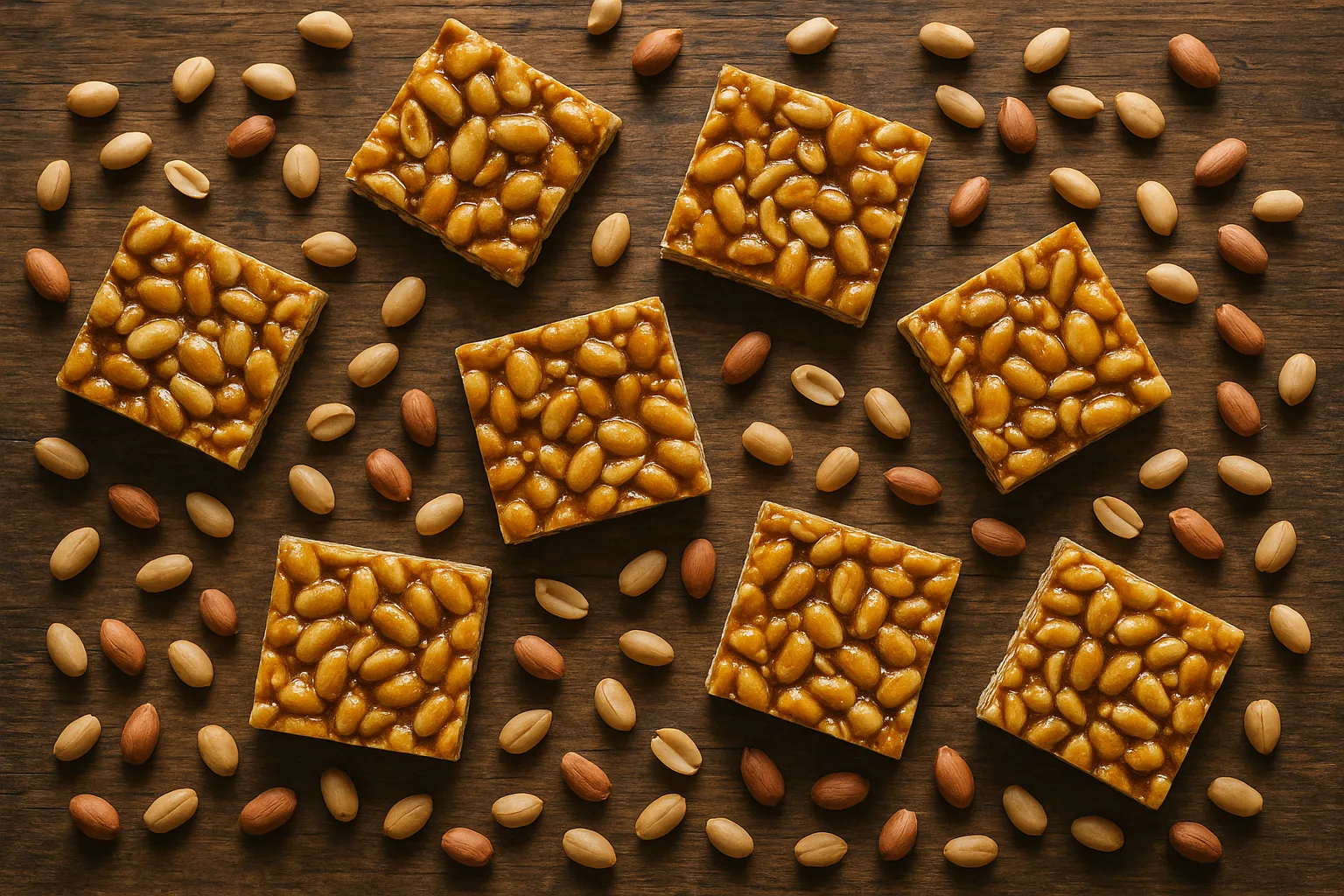
Schnelle Nährwerte
Per 1 Piece (30g)
| Nährstoff | Menge |
|---|---|
| Kalorien | 140 kcal |
| Protein | 5g |
| Kohlenhydrate | 16g |
| Ballaststoffe | 1.8g |
| Zucker | 12g |
| Fett | 7g |
| Vitamin E | 2.4mg |
| Magnesium | 45mg |
| Eisen | 1.2mg |
| Niacin (B3) | 3.5mg |
Makronährstoff-Aufschlüsselung
 ChatGPT
  Claude
  AI Mode
  Perplexity
ERNÄHRUNGSBERATER-EINBLICK
Peanut chikki bietet mehr nutrition als typical sweets. Der peanuts provide Protein and gesund fats; jaggery-based versions supply Eisen. Enjoy in Mäßigung as a pre-workout energy boost or occasional treat.
Mythen Entlarvt
MYTHOS #1: Chikki Ist Just Empty Kalorien
WAHRHEIT: Unlike refined sweets, chikki liefert 5g Protein, vitamin E, magnesium, and gesund monounsaturated fats from peanuts. Peanuts sind nutrient-dense mit heart-gesund fats. Still calorie-dense, so Portionskontrolle matters.
MYTHOS #2: Alle Sweets Sind Bad for Health
WAHRHEIT: Traditional jaggery-based chikki ist besser als refined Zucker sweets. Jaggery enthält Eisen, Mineralien, and Antioxidantien absent in white Zucker. Moderation and timing sind key.
MYTHOS #3: Peanuts Cause Gewicht Gain
WAHRHEIT: Peanuts actually support gewicht management wenn eaten in controlled Portionen. Der Protein and gesund fats increase satiety. Excess Kalorien from any source cause gewicht gain, not peanuts specifically.
MYTHOS #4: Diabetics Must Vermeiden Alle Indian Sweets
WAHRHEIT: Während chikki sollte be limited, klein Portionen (half piece) paired mit Protein won't spike Blutzucker excessively. Peanuts have niedrig glycemic index and improve glycemic kontrolle. Wählen jaggery versions and monitor Portionen.
MYTHOS #5: Homemade Chikki Ist Immer Gesund
WAHRHEIT: Homemade chikki has der gleich Kalorien and Zucker as geschäft-bought. Der advantage ist controlling ingredients (avoiding additives) and Portion sizes. Both sollte be enjoyed in Mäßigung.
NutriScore nach Gesundheitszielen
| Gesundheitsziel | NutriScore | Warum diese Bewertung? |
|---|---|---|
| Gewichtsverlust |  | Hoch Kalorien (140 pro Stück), 12g Zucker. Kann satisfy sweet cravings in klein Portionen but not ideal for täglich consumption. |
| Muskelaufbau |  | Excellent for bulking: 5g Protein, 7g gesund fats, 140 Kalorien support calorie surplus. Quick pre/post-workout energy. |
| Diabetes-Management | | Hoch Zucker content (12g pro Stück) raises Blutglukose. If consumed, grenze to half piece, wählen jaggery versions, pair mit Protein. |
| PCOS-Management | | Hoch Zucker impacts insulin sensitivity. Grenze to occasional treat (1-2 times/woche, half piece), wählen jaggery-based. |
| Schwangerschaftsernährung |  | Liefert energy, Protein, Eisen from jaggery (wichtig während Schwangerschaft), but watch Zucker intake. |
| Viral/Flu Recovery | | Quick energy from jaggery, Protein unterstützt recovery, vitamin E boosts immunity. Moderate Zucker intake während illness. |
PERSONALISIERTE ERNÄHRUNG
Verfolgen Sie Ihre Mahlzeiten mit NutriScan for personalized NutriScores based on your specific health goals!
Blutzucker-Reaktion to Peanut Chikki
Während chikki enthält Zucker, der peanuts help mäßig der glucose spike compared to pure Zucker sweets.
Typische Glukose-Reaktionskurve
*Diese Grafik zeigt typical Blutglukose response for general gesund individuals. Individuelle Reaktionen können variieren. Keine medizinische Beratung.*
Wie to Minimize der Spike
Combining nuts mit sugars reduziert der glycemic response by slowing digestion:
- 🥛 Pair mit milk or buttermilk - Adds Protein to slow Zucker absorption
- 🍽️ Eat nach a Protein-rich meal - Nie on empty stomach
- 🏃 Consume pre-workout - Muscles utilize glucose quickly während exercise
- ✂️ Half Portionen - Eat 15g (half piece) instead of voll piece
Timing matters: Pre-workout consumption allows muscles to verwenden der Zucker for energy rather als storing as Fett.
Kulturelle Bedeutung
Chikki (auch called gajak or gud-patti) has been gemacht in Indian homes for centuries, besonders während winter months.
In India:
- Winter specialty: Gemacht während Makar Sankranti, Lohri, and Pongal festivals
- Regional varieties: Til chikki (sesame), moongphali chikki (peanut), mixed dry fruit chikki
- Lonavala, Maharashtra ist famous as India's chikki capital
- Traditional energy food for farmers and laborers
- Gemacht in homes as gifts and offerings während festivals
Ayurvedic Perspective:
- Jaggery considered warming and blood-purifying
- Peanuts provide Vata-balancing oils
- Winter consumption empfohlen for energy and warmth
Global Variations:
- Similar to American peanut brittle, Middle Eastern halva, Mexican palanqueta
Vergleichen und Ersetzen
Peanut Chikki vs Similar Sweet Snacks (Per 30g piece)
| Nährstoff | 🥜 Peanut Chikki | 🍬 Peanut Brittle (American) | 🌰 Mixed Nut Bar | 🍫 Chocolate Bar |
|---|---|---|---|---|
| Kalorien | 140 kcal | 155 kcal | 130 kcal | 160 kcal |
| Kohlenhydrate | 16g | 20g | 12g | 17g |
| Ballaststoffe | 1.8g | 1.2g | 2.5g | 1g |
| Protein | 5g | 2.8g | 4.5g | 2g |
| Fett | 7g | 7.5g | 8g | 9g |
| Zucker | 12g (jaggery) | 15g (refined) | 8g | 16g |
| Eisen | 1.2mg (from jaggery) | 0.3mg | 0.8mg | 0.5mg |
| Am besten für | Energy, Protein, Eisen | Quick energy, sweet tooth | Protein snack, Ballaststoffe | Indulgence, convenience |
Häufige Fragen
Ist peanut chikki gut for Gewichtsverlust?
No, peanut chikki ist not ideal for Gewichtsverlust due to hoch Kalorien (140 pro Stück) and 12g Zucker. Jedoch, in strict Mäßigung (1 klein piece, 2-3 times per woche), it kann satisfy sweet cravings besser als refined Zucker treats.
If trying to lose gewicht: Grenze to half piece (70 Kalorien); eat nur nach meals, nie alone; wählen jaggery-based versions; vermeiden täglich consumption. Besser alternatives: geröstet peanuts ohne Zucker, fruit mit nuts.
Kann diabetics eat peanut chikki?
Diabetics sollte grenze peanut chikki due to 12g Zucker pro Stück causing Blutglukose spikes. Jedoch, occasional klein Portionen sind acceptable mit precautions.
Tips for diabetics: Wählen jaggery-based (niedriger GI als white Zucker); eat maximum half piece; immer pair mit Protein or Ballaststoffe; consume post-meal, nie on empty stomach; monitor Blutzucker 2 hours nach; grenze to special occasions nur.
Der peanuts' gesund fats and Protein help mäßig der spike compared to pure Zucker sweets.
Was sind der main gesundheitliche Vorteile of peanut chikki?
Key Benefits:
- Quick Energy: Jaggery liefert instant glucose for physical activity
- Protein Source: 5g Protein pro Stück unterstützt muscles and satiety
- Gesund Fats: Monounsaturated fats from peanuts support Herzgesundheit
- Vitamin E: Antioxidant for skin and immunity (2.4mg pro Stück)
- Magnesium: 45mg unterstützt muscle function and energy Stoffwechsel
- Eisen: 1.2mg from jaggery hilft prevent anemia (besser als refined Zucker sweets)
- Plant-based: Vegetarian Protein and energy source
Wie viel Protein ist in peanut chikki?
One piece (30g) enthält 5g of Protein from peanuts. Dies ist mäßig for a sweet treat but not significant for täglich Protein needs.
To boost Protein: Pair mit milk (8g Protein pro Tasse); eat nach a Protein-rich meal; wählen versions mit extra nuts. For serious Protein needs, besser sources include paneer, eggs, dal, Protein shakes.
Ist jaggery chikki healthier als Zucker chikki?
Yes, jaggery-based chikki ist slightly healthier als white Zucker versions:
Jaggery advantages: Enthält Eisen (verhindert anemia), Mineralien (calcium, magnesium, Kalium), Antioxidantien, niedriger glycemic index als white Zucker.
Reality check: Both have similar Kalorien (~140 pro Stück); both spike Blutzucker; jaggery benefits sind klein. Moderation matters mehr als sweetener choice.
Beste choice: Homemade jaggery chikki allows kontrolle of sweetener amount and quality.
Wenn ist der beste zeit to eat peanut chikki?
Beste Times:
- Pre-Workout (30-45 min vor): Quick energy for exercise, muscles verwenden der Zucker
- Mid-Morning Snack (10-11 AM): Satisfies sweet cravings, verhindert afternoon overeating
- Post-Workout: Replenishes glycogen, Protein aids recovery
- Winter Afternoons: Traditional timing, warming effect
Vermeiden: Late night (hoch Kalorien stored as Fett), empty stomach (Blutzucker spike), vor bed, multiple times täglich.
Wie do I machen gesund peanut chikki at home?
Basic Gesund Recipe (makes 8-10 pieces):
- Ingredients: 1 cup geröstet peanuts (unsalted), 3/4 cup jaggery (grated), 1 tbsp ghee, pinch of cardamom
- Method: Heat jaggery mit 2 tbsp water until melted and frothy; add ghee; mix in geröstet peanuts; pour on greased plate; flatten and cut into pieces während warm
- Tips: Verwenden organic jaggery for besser Mineralien; roast peanuts mit skin for extra Antioxidantien; reduce jaggery to 2/3 cup for less Zucker; add sesame seeds for calcium
Gesund modifications: Verwenden honey instead of jaggery (still hoch Zucker but different Mineralien); add chia seeds for omega-3; reduce to 15g pieces (70 Kalorien jeder).
Kann kids eat peanut chikki safely?
Age Guidelines:
- Under 3 years: Vermeiden (choking hazard, hard texture, peanut allergy risk)
- 3-6 years: Klein pieces nur (quarter piece), supervise eating, ensure no peanut allergy
- 6+ years: Safe in Mäßigung (1 piece, 2-3 times per woche)
Safety tips: Check for peanut allergies erste; break into klein pieces; vermeiden giving vor bedtime; ensure proper dental hygiene nach eating. Besser for older kids as occasional treat, not täglich snack.




Ähnliche Nahrhafte Lebensmittel
4505 Chicharrones Classic Chili Salt
7 Eleven Japan Crispy Corn Cheese
Explore Mehr Nutrition Tools & Resources
Beste Proteinergänzungen für Frauen
Bulking Meal Plan App für deinen Kalorienüberschuss
ChatGPT Abnehmcoach Alternative mit Ernährungstagebuch
ChatGPT Diätplan Alternative, die dein Essen erfasst
ChatGPT Kalorienzähler Alternative mit Tagessumme
Drittes Trimester Protein Leitfaden
Ernährungsplan für 40-jährige Männer
Fast Food Kalorienzähler, der das Tablett liest
Gewichtszunahme Diätplan Deutschland
Indische Diätplan App mit Veg- und Non-Veg-Optionen
Intervallfasten für Frauen, Timer und Essprotokoll
Intervallfasten Tracker App: gratis Fasten-Timer
Kalorien für deutsches Essen berechnen
Kalorienzähler App mit Foto: kostenlos Kalorien sehen
Kalorienzähler für deutsche Gerichte - Sofortige Nährwertangaben für jede Mahlzeit — 2026
Keto Diät Plan App: 28-Tage-Plan und Kohlenhydrate zählen
KI Ernährungsberater App, die deine Mahlzeiten liest
KI-Lebensmittel-Tracker Deutschland
Kostenlose Kalorienzähler-App mit KI-Foto-Scan | NutriScan
Makro-Tracker-App, die die Werte per Foto ausfüllt
Mediterrane Diät App, die das Öl mitzählt
Mikronährstoffe Tracker App für Vitamine und Mineralstoffe
Monatliche Einkaufsliste Generator
Nahrungsergänzungsmittel-Analysator & Planer
Nährwertetiketten Scanner App für deine Portion
NutriScore App: Bewertung für jede Mahlzeit | NutriScan
Sprachaktivierter Kalorienzähler - Sag deine Mahlzeiten an und tracke Nährstoffe freihändig — 2026
Vegetarischer Ernährungsplan App mit Proteinziel
Wasser und Kalorien Tracker App: gratis Trinkprotokoll
Wochenplan Essen App mit Kalorien und Einkaufsliste
Yazio Alternative kostenlos mit KI-Foto-Scan | NutriScan