Plant Based Milk: Kalorien, Nährwerte und gesundheitliche Vorteile
Lactose-kostenlos, sustainable alternatives to dairy milk mit options for every health goal and taste preference.
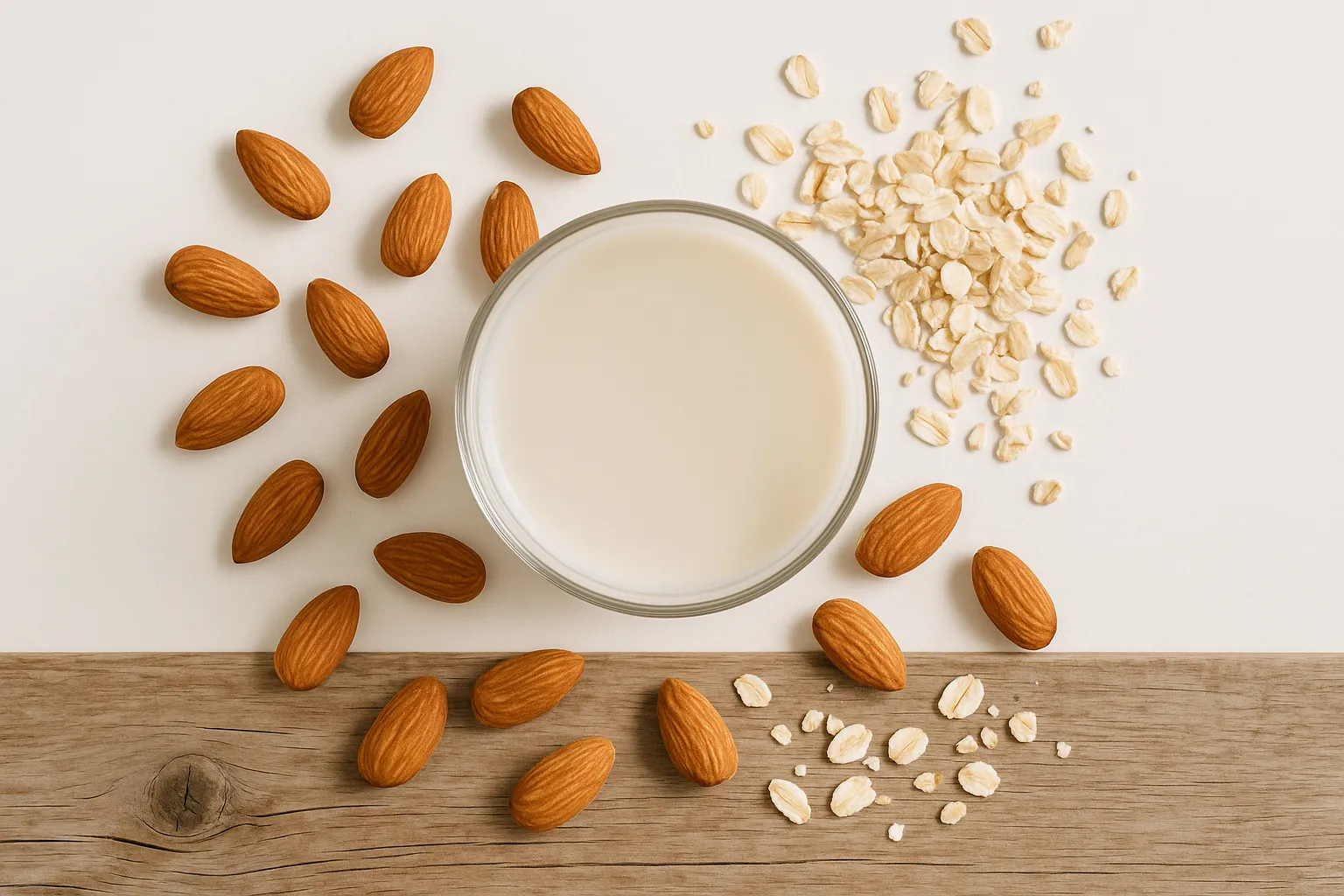
Schnelle Nährwerte
Per 1 Cup Unsweetened Almond Milk (240ml)
| Nährstoff | Menge |
|---|---|
| Kalorien | 37 kcal |
| Protein | 1g |
| Kohlenhydrate | 1.5g |
| Ballaststoffe | 0.5g |
| Zucker | 0g |
| Fett | 2.5g |
| Kalzium | 450mg |
| Vitamin D | 100 IU |
| Vitamin E | 7.5mg |
| Kalium | 160mg |
Makronährstoff-Aufschlüsselung
 ChatGPT
  Claude
  AI Mode
  Perplexity
ERNÄHRUNGSBERATER-EINBLICK
Unsweetened plant milks offer 50-80% fewer Kalorien als dairy milk während providing comparable calcium wenn fortified. Immer wählen fortified versions to meet calcium needs (300-450mg pro Tasse).
Mythen Entlarvt
MYTHOS #1: Plant Milk Has Less Kalzium Als Dairy
WAHRHEIT: Fortified plant milks contain similar or mehr calcium als dairy milk (300-450mg vs 300mg pro Tasse). Kalzium carbonate in plant milk ist gut-absorbed. Check labels to confirm fortification.
MYTHOS #2: Alle Plant Milks Have der Gleich Nutrition
WAHRHEIT: Protein ranges from 0.5g (coconut) to 8g (soy/pea milk). Kalorien vary 37-150 pro Tasse. Kohlenhydrate range 1g (almond) to 19g (oat). Wählen based on your health goals.
MYTHOS #3: Plant Milk Has No Protein
WAHRHEIT: Soy milk liefert 7-8g Protein pro Tasse, comparable to dairy milk. Pea milk bietet 8g. Während almond and coconut sind niedriger in Protein, viele people meet Protein needs through andere foods.
MYTHOS #4: Coconut Milk Ist Unhealthy Due to Gesättigte Fette
WAHRHEIT: Coconut milk's medium-chain triglycerides (MCTs) behave differently als animal saturated Fett, kann support Stoffwechsel, and sind quickly used for energy rather als stored as Fett. Still, Mäßigung advised.
MYTHOS #5: Sweetened and Unsweetened Sind Nearly der Gleich
WAHRHEIT: Sweetened versions add 60-100+ Kalorien and 10-20g added Zucker pro Tasse. Dies turns a niedrig-calorie beverage into a sugary drink. Immer check labels; "original" oft means sweetened.
MYTHOS #6: Homemade Plant Milk Ist Immer Healthier
WAHRHEIT: Homemade lacks fortification. You'll miss wesentlich calcium (450mg) and vitamin D unless supplemented separately. Geschäft-bought fortified versions ensure adequate micronutrient intake.
NutriScore nach Gesundheitszielen
| Gesundheitsziel | NutriScore | Warum diese Bewertung? |
|---|---|---|
| Gewichtsverlust |  | Ultra-niedrig Kalorien (37 kcal/cup), no Zucker, hoch volume. Perfect dairy replacement for calorie deficit. Vermeiden sweetened versions. |
| Muskelaufbau |  | Niedrig Protein (1g) inadequate for muscle building. Wählen soy milk (7g) or add Protein powder. Verwenden as base, not primary Protein source. |
| Diabetes-Management | | Minimal Kohlenhydrate (1.5g), zero Zucker, negligible Blutzucker impact. Wählen unsweetened nur. Almond milk doesn't spike glucose. |
| PCOS-Management | | Niedrig carb, niedrig calorie, no insulin spike. Excellent dairy alternative for insulin resistance. Fortified calcium unterstützt hormone regulation. |
| Schwangerschaftsernährung |  | Fortified versions provide calcium (450mg) and vitamin D wesentlich for fetal bone development. Ensure Protein intake from andere sources. |
| Viral/Flu Recovery | | Easy to digest, fortified mit vitamin D for immunity. Niedriger Protein limits score. Combine mit Protein-rich foods for optimal recovery. |
PERSONALISIERTE ERNÄHRUNG
Verfolgen Sie Ihre Mahlzeiten mit NutriScan for personalized NutriScores based on your specific health goals!
Blutzucker-Reaktion to Plant Milk
Understanding wie different plant milks affect Blutglukose hilft you wählen der beste option for your needs.
Typische Glukose-Reaktionskurve (Unsweetened)
Diese Grafik zeigt typical Blutglukose response for unsweetened plant milk in general gesund individuals. Sweetened versions will cause significant spikes. Individuelle Reaktionen können variieren. Keine medizinische Beratung.
Choosing der Right Plant Milk for Blood Zucker
Unsweetened plant milks have minimal impact on Blutglukose. Comparison by carb content:
- 🥛 Almond milk (unsweetened) - 1.5g Kohlenhydrate, flat glucose curve, am besten für Diabetes
- 🥥 Coconut milk (unsweetened) - 1g Kohlenhydrate, minimal impact, keto-friendly
- 🌾 Oat milk - 19g Kohlenhydrate, mäßig impact, pair mit Protein
- 🫘 Soy milk (unsweetened) - 4g Kohlenhydrate, Protein slows absorption
Critical: Sweetened versions add 10-20g Zucker, causing Blutzucker spikes similar to soda. Immer wählen unsweetened.
Kulturelle Bedeutung
Plant-based milks have ancient roots across cultures, experiencing modern resurgence due to health, environmental, and ethical concerns.
Historical Origins:
- Almond milk documented in medieval Europe and Middle Eastern cuisine since 13th century
- Soy milk originated in China over 2,000 years ago während Han dynasty
- Indian "badam milk" (almond milk) traditional in Ayurvedic practices
- Coconut milk staple in Southeast Asian and South Indian cuisine for centuries
Modern Plant Milk Revolution:
- Global plant milk market grew 61% from 2016-2022
- Environmental concerns drive adoption (90% less water als dairy)
- Lactose intolerance affects 65% of global population
- Vegan movement accelerates innovation
In India Today:
- Traditional badam milk meets modern almond milk alternatives
- Soy milk gaining acceptance in urban areas
- Coconut milk long established in South Indian cooking
- Oat milk newest entrant in metro supermarkets
Sustainability Impact:
- Almond milk: 90% less water als dairy, but water-intensive crop
- Oat milk: Lowest environmental impact, grows in diverse climates
- Soy milk: Efficient Protein production, deforestation concerns
- Coconut milk: Sustainable if sourced responsibly
Vergleichen und Ersetzen
Plant Milk Comparison (Per 240ml/1 Cup, Unsweetened)
| Nährstoff | 🥛 Almond | 🫘 Soy | 🌾 Oat | 🥥 Coconut | 🥛 Dairy (Whole) |
|---|---|---|---|---|---|
| Kalorien | 37 kcal | 105 kcal | 130 kcal | 45 kcal | 150 kcal |
| Kohlenhydrate | 1.5g | 4g | 19g | 1g | 12g |
| Ballaststoffe | 0.5g | 1g | 2g | 0g | 0g |
| Protein | 1g | 7g | 3g | 0.5g | 8g |
| Fett | 2.5g | 4g | 2.5g | 4g | 8g |
| Kalzium (fortified) | 450mg | 300mg | 350mg | 450mg | 300mg |
| Zucker | 0g | 1g | 4g | 0g | 12g |
| Vitamin D (fortified) | 100 IU | 120 IU | 100 IU | 100 IU | 124 IU |
| Am besten für | Gewicht loss, Diabetes | Protein needs, Muskelaufbau | Creamy texture, barista | Niedrig carb, keto | Not lactose intolerant |
Häufige Fragen
Welche plant milk has der die meisten Protein?
Soy milk leads mit 7-8g Protein pro Tasse, nearly matching dairy milk (8g). Pea milk auch bietet 8g. Dies makes soy and pea milk beste choices for muscle building, hoch-Protein diets, and replacing dairy Protein.
Protein comparison: Soy (7-8g) > Oat (3g) > Almond (1g) > Coconut (0.5g).
If using niedrig-Protein plant milk, ensure adequate Protein intake from andere sources (legumes, tofu, nuts, seeds).
Do plant milks have enough calcium?
Yes, fortified plant milks contain 300-450mg calcium pro Tasse, matching or exceeding dairy milk (300mg). Fortification uses calcium carbonate or tricalcium phosphate, welche sind gut-absorbed by der body.
Critical considerations:
- Immer check labels for "fortified" or "calcium-enriched"
- Homemade plant milk lacks fortification (nearly zero calcium)
- Shake carton vor pouring (calcium settles at bottom)
- Vitamin D in fortified milk enhances calcium absorption
Adults brauchen 1,000-1,200mg calcium täglich; 2-3 cups fortified plant milk meets 60-100% of needs.
Ist plant milk gut for Gewichtsverlust?
Yes, unsweetened plant milk ist excellent for Gewichtsverlust due to ultra-niedrig Kalorien and hoch volume. Comparison to whole dairy milk (150 cal/cup):
- Almond milk: 37 cal (75% fewer Kalorien)
- Coconut milk: 45 cal (70% fewer Kalorien)
- Soy milk: 105 cal (30% fewer Kalorien)
Gewicht loss strategies:
- Immer wählen unsweetened (sweetened adds 60-100 cal)
- Verwenden in coffee, smoothies, oatmeal to reduce Kalorien
- Track mit NutriScan to stay within calorie target
- Combine mit Protein for satiety
Switching from dairy to plant milk saves 400-800 Kalorien weekly.
Welche plant milk ist am besten für Diabetes?
Unsweetened almond milk and coconut milk sind am besten für Diabetes due to minimal carbohydrate content and negligible Blutzucker impact.
Carb comparison (pro Tasse):
- Almond milk: 1.5g Kohlenhydrate (beste)
- Coconut milk: 1g Kohlenhydrate (beste)
- Soy milk: 4g Kohlenhydrate (gut)
- Oat milk: 19g Kohlenhydrate (verwenden cautiously, pair mit Protein)
Critical for diabetics:
- Nie consume sweetened versions (10-20g added Zucker)
- Watch for "original" labels (oft sweetened)
- Monitor Blutglukose response
- Check for added thickeners mit hidden Kohlenhydrate
Immer consult your healthcare provider ungefähr dietary changes.
Kann I verwenden plant milk während Schwangerschaft?
Yes, fortified plant milks sind safe and nahrhaft während Schwangerschaft, providing wesentlich calcium and vitamin D for fetal bone development.
Schwangerschaft considerations:
- Wählen fortified versions (300-450mg calcium, 100+ IU vitamin D pro Tasse)
- Soy milk liefert Protein similar to dairy (7-8g pro Tasse)
- Consume 2-3 cups täglich to meet calcium needs
- Ensure adequate Protein intake from varied sources if using niedrig-Protein plant milk
- Vermeiden sweetened versions (excess Zucker)
Pregnant women brauchen 1,000mg calcium and 600 IU vitamin D täglich. Fortified plant milk hilft meet diese requirements in lactose-intolerant or vegan pregnancies.
Ist homemade or geschäft-bought plant milk besser?
Geschäft-bought fortified plant milk ist nutritionally superior due to wesentlich fortification that homemade versions lack.
Geschäft-bought advantages:
- Fortified mit calcium (300-450mg pro Tasse)
- Enthält vitamin D for calcium absorption
- Oft fortified mit B12 (vegan wesentlich)
- Consistent nutritional content
- Convenient, shelf-stable
Homemade advantages:
- No additives, emulsifiers, or preservatives
- Kontrolle over sweetness and flavor
- Mehr economical long-term
- Fresher taste
Recommendation: If making homemade plant milk, supplement mit calcium (500-600mg) and vitamin D (600-800 IU) from andere sources to prevent deficiency. For convenience and complete nutrition, wählen geschäft-bought fortified versions.
Wie do I wählen der right plant milk for my goal?
Quick selection guide:
Gewichtsverlust/Diabetes: Unsweetened almond or coconut milk (lowest Kalorien, minimal Kohlenhydrate)
Muskelaufbau/Protein Needs: Soy milk or pea milk (7-8g Protein pro Tasse)
Coffee/Barista: Oat milk (creamy texture, froths gut)
Cooking/Curries: Coconut milk (rich flavor, heat-stable)
Alle-Purpose: Soy milk (balanced nutrition, versatile)
Keto/Niedrig-Carb: Coconut or almond milk (1-1.5g Kohlenhydrate)
Children/Schwangerschaft: Fortified soy milk (Protein + calcium)
Immer read labels; vermeiden "original" (normalerweise sweetened), wählen "unsweetened," and verify fortification mit calcium and vitamin D.


Ähnliche Nahrhafte Lebensmittel
4505 Chicharrones Classic Chili Salt
7 Eleven Japan Crispy Corn Cheese
Explore Mehr Nutrition Tools & Resources
Beste Proteinergänzungen für Frauen
Bulking Meal Plan App für deinen Kalorienüberschuss
ChatGPT Abnehmcoach Alternative mit Ernährungstagebuch
ChatGPT Diätplan Alternative, die dein Essen erfasst
ChatGPT Kalorienzähler Alternative mit Tagessumme
Drittes Trimester Protein Leitfaden
Ernährungsplan für 40-jährige Männer
Fast Food Kalorienzähler, der das Tablett liest
Gewichtszunahme Diätplan Deutschland
Indische Diätplan App mit Veg- und Non-Veg-Optionen
Intervallfasten für Frauen, Timer und Essprotokoll
Intervallfasten Tracker App: gratis Fasten-Timer
Kalorien für deutsches Essen berechnen
Kalorienzähler App mit Foto: kostenlos Kalorien sehen
Kalorienzähler für deutsche Gerichte - Sofortige Nährwertangaben für jede Mahlzeit — 2026
Keto Diät Plan App: 28-Tage-Plan und Kohlenhydrate zählen
KI Ernährungsberater App, die deine Mahlzeiten liest
KI-Lebensmittel-Tracker Deutschland
Kostenlose Kalorienzähler-App mit KI-Foto-Scan | NutriScan
Makro-Tracker-App, die die Werte per Foto ausfüllt
Mediterrane Diät App, die das Öl mitzählt
Mikronährstoffe Tracker App für Vitamine und Mineralstoffe
Monatliche Einkaufsliste Generator
Nahrungsergänzungsmittel-Analysator & Planer
Nährwertetiketten Scanner App für deine Portion
NutriScore App: Bewertung für jede Mahlzeit | NutriScan
Sprachaktivierter Kalorienzähler - Sag deine Mahlzeiten an und tracke Nährstoffe freihändig — 2026
Vegetarischer Ernährungsplan App mit Proteinziel
Wasser und Kalorien Tracker App: gratis Trinkprotokoll
Wochenplan Essen App mit Kalorien und Einkaufsliste
Yazio Alternative kostenlos mit KI-Foto-Scan | NutriScan