Poached Eggs: Kalorien, Nährwerte und gesundheitliche Vorteile
Pure Protein perfection—no added fats, just complete nutrition in a delicate, runny-yolk package.
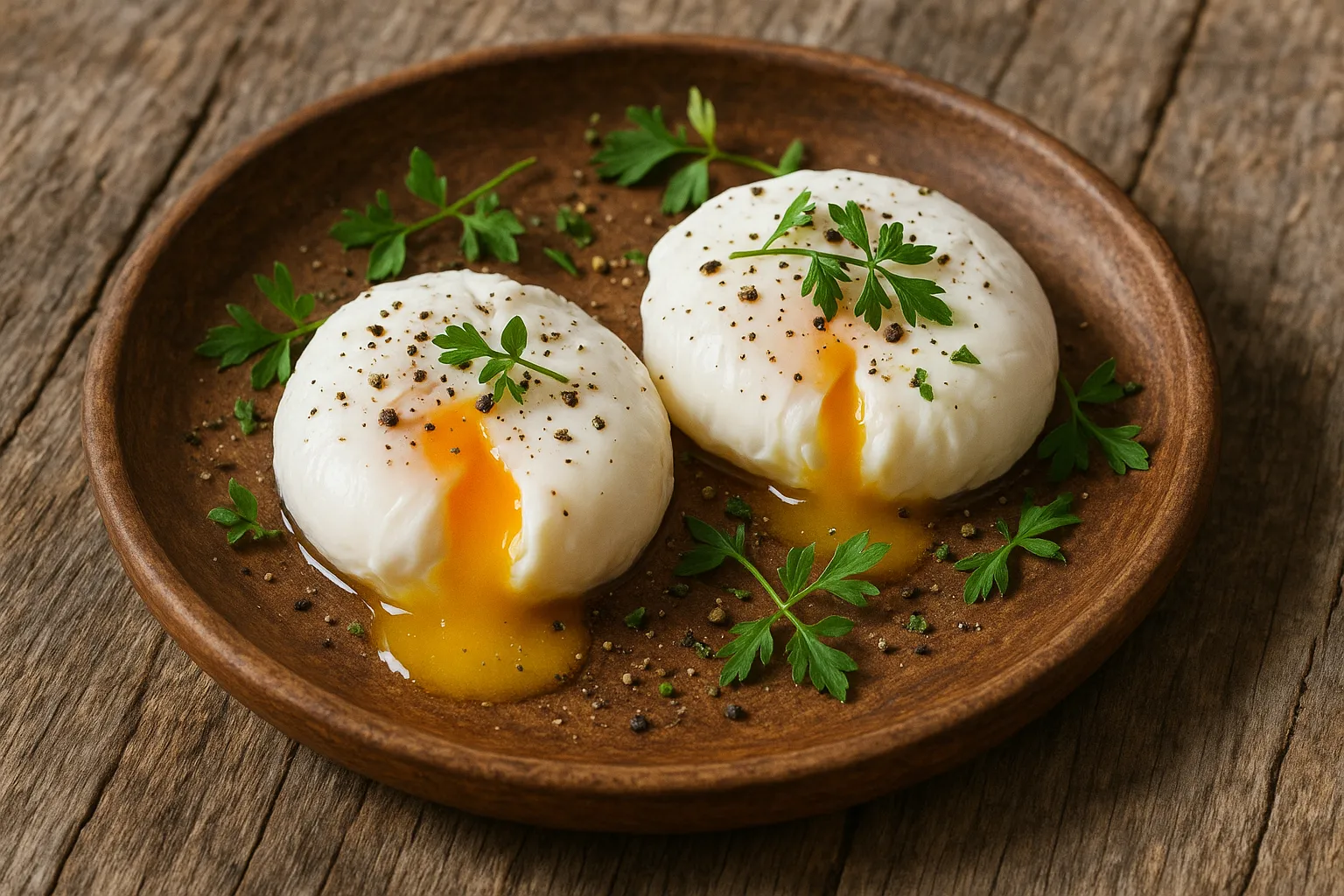
Schnelle Nährwerte
Per 2 Groß Eggs (100g)
| Nährstoff | Menge |
|---|---|
| Kalorien | 143 kcal |
| Protein | 12.6g |
| Kohlenhydrate | 0.7g |
| Ballaststoffe | 0g |
| Zucker | 0.4g |
| Fett | 9.5g |
| Gesättigte Fette | 3.1g |
| Cholesterin | 373mg |
| Vitamin D | 2mcg |
| Vitamin B12 | 1.1mcg |
| Choline | 294mg |
Makronährstoff-Aufschlüsselung
 ChatGPT
  Claude
  AI Mode
  Perplexity
ERNÄHRUNGSBERATER-EINBLICK
Poached eggs sind der cleanest way to enjoy eggs—no added oils means you bekommen pure Protein, gesund fats, and micronutrients. Der 12.6g complete Protein beinhaltet alle wesentlich amino acids for muscle building and satiety.
Mythen Entlarvt
MYTHOS #1: Eggs Raise Cholesterin and Cause Heart Disease
WAHRHEIT: Modern research shows dietary cholesterol has minimal impact on blood cholesterol for die meisten people. Eggs actually improve HDL (gut cholesterol) and kann reduce heart disease risk wenn part of a gesund diet.
MYTHOS #2: Egg Yolks Sind Unhealthy and Sollte Be Avoided
WAHRHEIT: Der yolk enthält die meisten Nährstoffe einschließlich choline, vitamin D, B Vitamine, and Antioxidantien lutein and zeaxanthin. Whole eggs sind mehr nahrhaft als egg whites alone and provide besser satiety for gewicht management.
MYTHOS #3: Poached Eggs Sind Hard to Digest
WAHRHEIT: Poached eggs sind actually easier to digest als gebraten or scrambled eggs. Der gentle cooking method preserves Protein structure, and der runny yolk ist pre-emulsified, making it gentle on der stomach.
MYTHOS #4: You Shouldn't Eat Eggs Every Tag
WAHRHEIT: Studies show eating 1-2 eggs täglich ist safe for gesund adults and doesn't increase heart disease risk. Der hoch-quality Protein and Nährstoffe machen eggs valuable for täglich nutrition.
MYTHOS #5: Roh or Undercooked Eggs Sind Dangerous
WAHRHEIT: Während salmonella risk exists, properly poached eggs mit gekocht whites sind safe. Der USDA considers eggs gekocht to 160°F (71°C) safe; poached eggs reach dies temperature während maintaining a soft yolk.
NutriScore nach Gesundheitszielen
| Gesundheitsziel | NutriScore | Warum diese Bewertung? |
|---|---|---|
| Gewichtsverlust |  | Nur 143 Kalorien mit 12.6g Protein liefert exceptional satiety. No added fats keep Kalorien niedrig während Protein boosts Stoffwechsel. |
| Muskelaufbau | | Complete Protein mit alle wesentlich amino acids for muscle repair and growth. Leucine content triggers muscle Protein synthesis. |
| Diabetes-Management | | Virtually zero Kohlenhydrate (0.7g) means no Blutzucker impact. Studies show eggs improve insulin sensitivity in diabetics. |
| PCOS-Management | | Hoch Protein and niedrig carb help regulate insulin. Quality fats support hormone production ohne spiking Blutzucker. |
| Schwangerschaftsernährung | | Choline (294mg) ist critical for fetal brain development. Protein, vitamin D, and B12 support gesund Schwangerschaft. |
| Viral/Flu Recovery |  | Easy to digest, hoch-quality Protein for immune recovery, vitamin D and selenium for immune function. Gentle on upset stomach. |
PERSONALISIERTE ERNÄHRUNG
Verfolgen Sie Ihre Mahlzeiten mit NutriScan for personalized NutriScores based on your specific health goals!
Blutzucker-Reaktion to Poached Eggs
Understanding wie poached eggs affect your Blutglukose—virtually no impact makes them ideal for stable energy.
Typische Glukose-Reaktionskurve
Diese Grafik zeigt typical Blutglukose response for general gesund individuals. Individuelle Reaktionen können variieren. Keine medizinische Beratung.
Wie to Build a Balanced Meal
Pairing poached eggs mit complex Kohlenhydrate and vegetables creates sustained energy and optimal nutrition:
- 🍞 Whole grain toast or sourdough - Adds Ballaststoffe and complex Kohlenhydrate for energy
- 🥑 Avocado or guacamole - Liefert gesund fats and Kalium
- 🥬 Sautéed spinach or kale - Adds Eisen, Vitamine, and Ballaststoffe
- 🍅 Frisch tomatoes or salsa - Vitamin C enhances Eisen absorption from eggs
Dies combination liefert complete nutrition mit steady Blutzucker for 4-6 hours.
Kulturelle Bedeutung
Poached eggs have been a culinary staple across cultures for centuries, valued for their pure, delicate texture.
In Western Cuisine:
- French "œufs pochés" elevated egg poaching to an art form in classical cuisine
- British Eggs Benedict (poached eggs on English muffins mit hollandaise) ist a brunch icon
- Italian "uova in purgatorio" features poached eggs in tomato sauce
- American diners serve poached eggs as a healthier breakfast alternative
Global Variations:
- Middle Eastern shakshuka uses a similar technique mit eggs in spiced tomato sauce
- Japanese onsen tamago (hot spring eggs) sind gently poached in niedrig-temperature water
- Turkish çılbır features poached eggs over yogurt mit chili butter
- Growing popularity in health-conscious global cuisine for clean eating
Vergleichen und Ersetzen
Poached Eggs vs Andere Egg Preparations (Per 2 Groß Eggs)
| Nährstoff | 🥚 Poached Eggs | 🍳 Gebraten Eggs | 🍳 Scrambled Eggs | 🥚 Gekocht Eggs |
|---|---|---|---|---|
| Kalorien | 143 kcal | 185 kcal | 203 kcal | 155 kcal |
| Kohlenhydrate | 0.7g | 0.8g | 2.2g | 1.1g |
| Ballaststoffe | 0g | 0g | 0g | 0g |
| Protein | 12.6g | 13g | 13.6g | 12.6g |
| Fett | 9.5g | 13.4g | 15g | 10.6g |
| Cholesterin | 373mg | 373mg | 373mg | 373mg |
| Vitamin D | 2mcg | 2mcg | 2mcg | 2mcg |
| Added Fett | 0g | ~4g (oil/butter) | ~5g (butter/oil) | 0g |
| Am besten für | Gewicht loss, clean eating | Höher Kalorien, flavor | Creamier texture, höher cal | Meal prep, portability |
Häufige Fragen
Sind poached eggs gut for Gewichtsverlust?
Yes, poached eggs sind excellent for Gewichtsverlust. At nur 143 Kalorien for 2 eggs mit 12.6g Protein, they provide exceptional satiety ohne der added fats from frying.
Beste practices: Eat 2-3 poached eggs for breakfast mit vegetables; pair mit whole grain toast for Ballaststoffe; der hoch Protein boosts Stoffwechsel by 20-30% for hours; no added oil keeps Kalorien minimal während maintaining fullness.
Kann diabetics eat poached eggs?
Yes, diabetics kann safely eat poached eggs. Mit nur 0.7g Kohlenhydrate pro Portion, they have virtually no impact on Blutzucker levels.
Tips for diabetics: Eggs provide zero glycemic load; studies show eggs kann improve insulin sensitivity; pair mit hoch-Ballaststoffe vegetables or whole grains; vermeiden hoch-carb accompaniments like white toast or hash browns; beste timing ist breakfast for sustained energy.
Wie viel Protein ist in poached eggs?
Two poached eggs contain 12.6g of complete Protein mit alle nine wesentlich amino acids in optimal ratios. Dies makes eggs one of der highest quality Protein sources available (Protein digestibility score: 100).
For Muskelaufbau or hoch-Protein diets, 2-3 poached eggs provide 19-25g Protein; combine mit Greek yogurt or cottage käse for even mehr Protein; verwenden as post-workout meal for muscle recovery.
Was sind der main gesundheitliche Vorteile of poached eggs?
Key Benefits:
- Complete Protein: Alle wesentlich amino acids for muscle maintenance and satiety
- Brain Health: Choline (294mg) unterstützt memory, cognition, and fetal brain development
- Eye Health: Lutein and zeaxanthin protect against macular degeneration and cataracts
- Bone Health: Vitamin D and phosphorus support bone density
- Energy Production: B Vitamine convert food into cellular energy
- Immune Support: Selenium, vitamin A, and zinc boost immune function
Wenn ist der beste zeit to eat poached eggs?
Depends on your goal:
- Gewichtsverlust: Breakfast (Protein erhöht satiety and Stoffwechsel for hours).
- Muskelaufbau: Post-workout within 2 hours (complete Protein for muscle repair).
- Diabetes: Breakfast or lunch (zero Blutzucker impact, sustained energy).
- Schwangerschaft: Any zeit (choline needs sind highest während Schwangerschaft).
IMPORTANT NOTE
Ensure egg whites sind fully gekocht (opaque, not translucent) to minimize salmonella risk.
Sind poached eggs besser als gebraten eggs?
Yes, poached eggs sind nutritionally superior to gebraten eggs:
Poached Advantages:
- 50-100 fewer Kalorien - No added oil or butter
- 4-5g less Fett - Cleaner macros for gewicht management
- Besser nutrient preservation - Gentle cooking protects heat-sensitive Vitamine
- Easier to digest - No oxidized fats from hoch-heat frying
- Niedriger Entzündung - No advanced glycation end products (AGEs) from frying
Wenn to wählen gebraten: If you brauchen extra Kalorien or prefer crispy edges for taste.
Wie viele poached eggs sollte I eat per tag?
General Guidelines:
- 2-3 eggs täglich - Safe for die meisten gesund adults (1-2 for breakfast, 1 as snack)
- 1-2 eggs täglich - If you have hoch cholesterol or heart disease (consult doctor)
- 3-4 eggs täglich - Athletes, Muskelaufbau, or hoch-Protein diets
- 2 eggs täglich während Schwangerschaft - Liefert choline, Protein, and folate
Hinweis: Research shows 1-3 eggs täglich doesn't increase heart disease risk in gesund individuals.
Verfolgen Sie Ihre Mahlzeiten mit NutriScan app to sehen wie poached eggs fit your personal nutrition goals.
Kann I eat poached eggs on a keto diet?
Perfect for keto - Mit nur 0.7g Kohlenhydrate and 9.5g Fett per 2 eggs, poached eggs sind ideal keto food.
Keto tips: Pair mit avocado, bacon, or käse for mehr Fett; add butter or hollandaise sauce to increase Fett ratio; combine mit niedrig-carb vegetables like spinach or mushrooms; 2-3 eggs provide Protein ohne excess that could kick you out of ketosis.


Ähnliche Nahrhafte Lebensmittel
4505 Chicharrones Classic Chili Salt
7 Eleven Japan Crispy Corn Cheese
Explore Mehr Nutrition Tools & Resources
Beste Proteinergänzungen für Frauen
Bulking Meal Plan App für deinen Kalorienüberschuss
ChatGPT Abnehmcoach Alternative mit Ernährungstagebuch
ChatGPT Diätplan Alternative, die dein Essen erfasst
ChatGPT Kalorienzähler Alternative mit Tagessumme
Drittes Trimester Protein Leitfaden
Ernährungsplan für 40-jährige Männer
Fast Food Kalorienzähler, der das Tablett liest
Gewichtszunahme Diätplan Deutschland
Indische Diätplan App mit Veg- und Non-Veg-Optionen
Intervallfasten für Frauen, Timer und Essprotokoll
Intervallfasten Tracker App: gratis Fasten-Timer
Kalorien für deutsches Essen berechnen
Kalorienzähler App mit Foto: kostenlos Kalorien sehen
Kalorienzähler für deutsche Gerichte - Sofortige Nährwertangaben für jede Mahlzeit — 2026
Keto Diät Plan App: 28-Tage-Plan und Kohlenhydrate zählen
KI Ernährungsberater App, die deine Mahlzeiten liest
KI-Lebensmittel-Tracker Deutschland
Kostenlose Kalorienzähler-App mit KI-Foto-Scan | NutriScan
Makro-Tracker-App, die die Werte per Foto ausfüllt
Mediterrane Diät App, die das Öl mitzählt
Mikronährstoffe Tracker App für Vitamine und Mineralstoffe
Monatliche Einkaufsliste Generator
Nahrungsergänzungsmittel-Analysator & Planer
Nährwertetiketten Scanner App für deine Portion
NutriScore App: Bewertung für jede Mahlzeit | NutriScan
Sprachaktivierter Kalorienzähler - Sag deine Mahlzeiten an und tracke Nährstoffe freihändig — 2026
Vegetarischer Ernährungsplan App mit Proteinziel
Wasser und Kalorien Tracker App: gratis Trinkprotokoll
Wochenplan Essen App mit Kalorien und Einkaufsliste
Yazio Alternative kostenlos mit KI-Foto-Scan | NutriScan