Puffed Rice: Kalorien, Nährwerte und gesundheitliche Vorteile
A light, crispy snack that's niedrig in Fett and Kalorien but requires smart pairing for Blutzucker kontrolle.
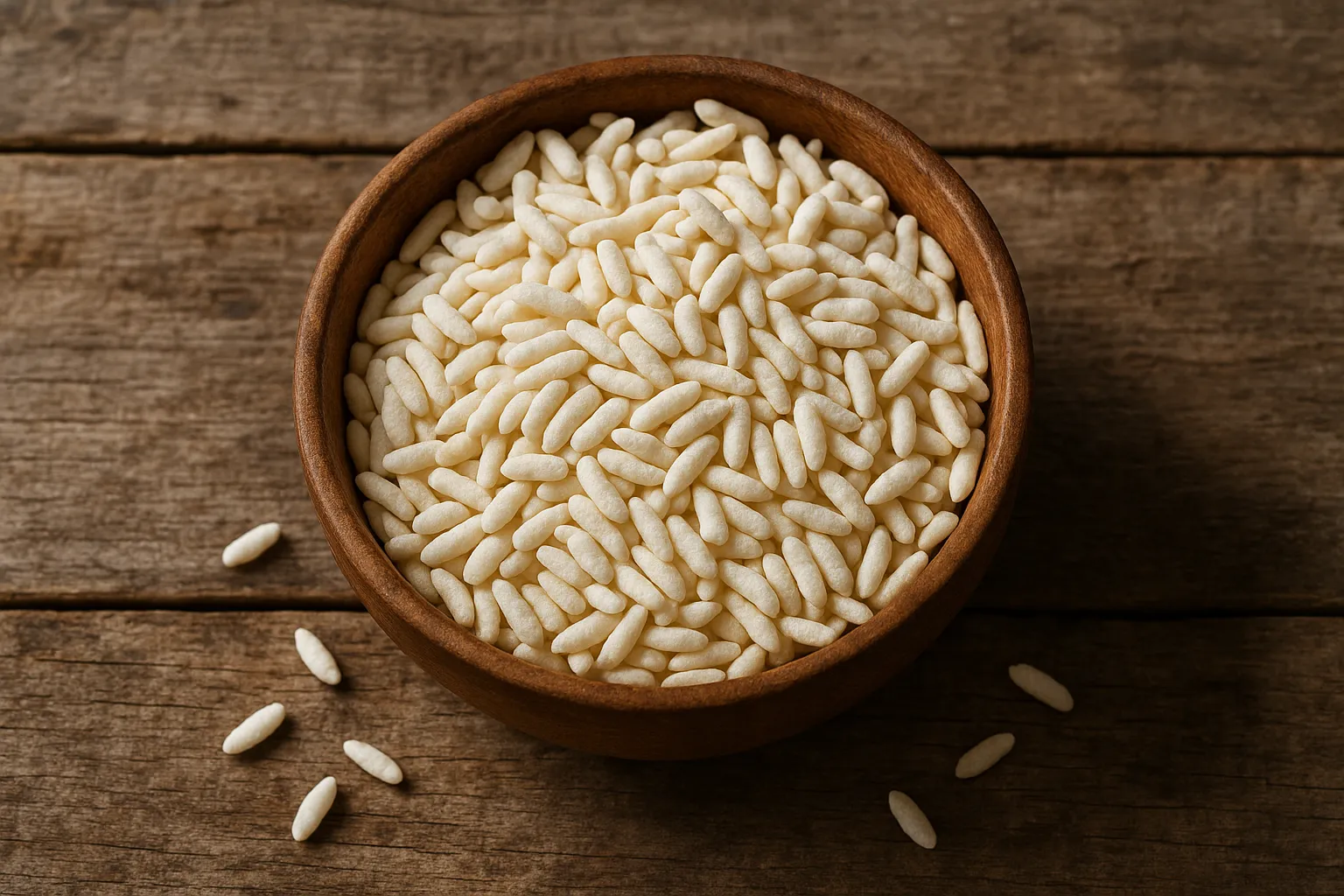
Schnelle Nährwerte
Per 1 Cup (14g)
| Nährstoff | Menge |
|---|---|
| Kalorien | 56 kcal |
| Protein | 0.9g |
| Kohlenhydrate | 12.6g |
| Ballaststoffe | 0.2g |
| Zucker | 0.1g |
| Fett | 0.1g |
| Eisen | 1.4mg |
| Vitamin B6 | 0.2mg |
| Niacin | 2.1mg |
| Natrium | 1mg |
Makronährstoff-Aufschlüsselung
 ChatGPT
  Claude
  AI Mode
  Perplexity
ERNÄHRUNGSBERATER-EINBLICK
Puffed rice ist extremely niedrig in Fett and Kalorien, making it a guilt-kostenlos snack base. Jedoch, its sehr hoch glycemic index (105) demands pairing mit Protein or gesund fats to prevent Blutzucker spikes.
Mythen Entlarvt
MYTHOS #1: Puffed Rice Ist a Complete Gewichtsverlust Food
WAHRHEIT: Während puffed rice ist niedrig in Kalorien (56 pro Tasse), it lacks Ballaststoffe and Protein for satiety. Eating it alone leads to quick hunger and overeating. Der hoch glycemic index triggers insulin spikes that kann promote Fett storage. Beste used as a snack component, not a meal replacement.
MYTHOS #2: Puffed Rice Has No Nutrition
WAHRHEIT: Fortified puffed rice liefert Eisen (25% DV pro Tasse) and B Vitamine wesentlich for energy Stoffwechsel. Während not nutrient-dense, it serves as a vehicle for healthier ingredients in chivda, bhel puri mit vegetables, or paired mit nuts and yogurt.
MYTHOS #3: Diabetics Kann Eat Unlimited Puffed Rice Weil It's Zucker-Kostenlos
WAHRHEIT: Puffed rice has a glycemic index of 105, höher als pure glucose (100). Dies causes rapid Blutzucker spikes worse als table Zucker. Diabetics sollte grenze Portionen to 1/2 cup and immer pair mit Protein, Fett, or Ballaststoffe.
MYTHOS #4: Puffed Rice Ist Gut for Pre-Workout Energy
WAHRHEIT: Partially true. Der quick-digesting Kohlenhydrate provide immediate energy for workouts under 45 minutes. For longer exercise or sustained performance, combine mit banana, peanut butter, or yogurt for besser endurance and muscle fuel.
MYTHOS #5: Alle Puffed Rice Products Sind Gesund
WAHRHEIT: Plain puffed rice ist niedrig-calorie, but commercial products like murmura namkeen, sweet chivda, or chocolate puffed rice add oil, Zucker, and salt. Diese versions kann contain 400-600 Kalorien pro Tasse. Check labels and wählen plain or homemade versions.
MYTHOS #6: Puffed Rice Causes Gewicht Gain
WAHRHEIT: Puffed rice itself doesn't cause gewicht gain due to niedrig calorie density. Gewicht gain happens from excess overall Kalorien or eating it in oil-laden preparations. Track Portionen and preparation methods to maintain benefits.
NutriScore nach Gesundheitszielen
| Gesundheitsziel | NutriScore | Warum diese Bewertung? |
|---|---|---|
| Gewichtsverlust |  | 56 Kalorien pro Tasse, sehr niedrig Fett. Hoch GI means minimal satiety; pair mit Protein/Fett. Grenze to 1-2 cups as snack nur. |
| Muskelaufbau |  | Niedrig Protein (0.9g pro Tasse) makes it unsuitable as primary fuel. Verwenden pre-workout for quick energy mit Protein shake, not post-workout. |
| Diabetes-Management | | Sehr hoch GI (105) causes rapid glucose spikes. If consumed, grenze to 1/2 cup, pair mit yogurt/nuts, and monitor Blutzucker closely. |
| PCOS-Management | | Hoch GI worsens insulin resistance. Wählen alternatives like oats or barley. If consumed, sehr klein Portionen (1/2 cup) mit Protein. |
| Schwangerschaftsernährung | | Fortified versions provide Eisen (25% DV) for Schwangerschaft needs. Safe for morning sickness wenn appetite ist niedrig. Pair mit milk or nuts for complete nutrition. |
| Viral/Flu Recovery |  | Light, easy to digest, liefert quick energy wenn appetite ist poor. Niedrig irritation to digestive system während illness. |
PERSONALISIERTE ERNÄHRUNG
Verfolgen Sie Ihre Mahlzeiten mit NutriScan for personalized NutriScores based on your specific health goals!
Blutzucker-Reaktion to Puffed Rice
Understanding der rapid glucose impact of puffed rice hilft you machen informed decisions ungefähr Portionskontrolle and food pairings.
Typische Glukose-Reaktionskurve
Diese Grafik zeigt typical Blutglukose response for general gesund individuals. Individuelle Reaktionen können variieren. Keine medizinische Beratung.
So Flachen Sie den Anstieg Ab
Pairing puffed rice mit Protein, Fett, or Ballaststoffe significantly slows glucose absorption:
- 🥜 Geröstet peanuts or mandeln - Adds Protein, gesund fats, and crunch to chivda
- 🥛 Greek yogurt or curd (dahi) - Liefert Protein and probiotics; großartig for breakfast parfait
- 🥥 Coconut or seeds - Gesund fats slow digestion and add Nährstoffe
- 🌶️ Vegetable bhel puri - Ballaststoffe from tomatoes, onions, cucumber reduziert overall GI
Dies combination transforms puffed rice from a Blutzucker spike food into a mehr balanced snack mit sustained energy.
Kulturelle Bedeutung
Puffed rice (murmura) has been a staple in Indian and Asian cuisines for centuries, mit ancient references in Ayurvedic texts.
In India:
- Wesentlich ingredient in bhel puri, jhalmuri, and chivda across alle regions
- Used in Hindu ceremonies and festivals; offered to deities während prayers
- Ayurveda considers it light (laghu) and easy to digest, suitable for convalescence
- Regional names: Murmura (Hindi), Pori (Tamil), Borugulu (Telugu), Murir (Bengali)
Global Impact:
- Rice cakes and puffed rice cereals sind breakfast staples in Western countries
- Korean and Japanese cuisines verwenden puffed rice in desserts and snacks
- Gluten-kostenlos alternative gaining popularity in health-conscious markets worldwide
Vergleichen und Ersetzen
Puffed Rice vs Similar Snacks (Pro 100g)
| Nährstoff | 🌾 Puffed Rice | 🍿 Popcorn (air-popped) | 🥣 Cornflakes | 🌰 Geröstet Chana |
|---|---|---|---|---|
| Kalorien | 402 kcal | 387 kcal | 357 kcal | 364 kcal |
| Kohlenhydrate | 89.8g | 78g | 84g | 61g |
| Ballaststoffe | 1.4g | 15g | 3g | 12g |
| Protein | 6.3g | 13g | 7g | 20g |
| Fett | 0.5g | 4.5g | 0.4g | 6g |
| Eisen | 10mg | 3mg | 28mg | 5mg |
| Zucker | 0.7g | 0.9g | 8g | 2g |
| Am besten für | Niedrig-Fett snacks | Hoch-Ballaststoffe snacking | Quick breakfast | Protein-rich snacks |
Häufige Fragen
Ist puffed rice gut for Gewichtsverlust?
Puffed rice unterstützt Gewichtsverlust wenn used strategically. At 56 Kalorien pro Tasse and virtually zero Fett, it's niedrig in calorie density. Jedoch, minimal Ballaststoffe (0.2g pro Tasse) and sehr hoch GI (105) mean poor satiety.
Beste practices: Grenze to 1-2 cups as snack, nie as meal; combine mit hoch-Ballaststoffe vegetables (bhel puri), Protein (yogurt parfait), or gesund fats (chivda mit nuts); measure Portionen to vermeiden mindless eating.
Kann diabetics eat puffed rice?
Diabetics sollte approach puffed rice mit caution. Der extremely hoch glycemic index of 105 causes Blutzucker spikes worse als pure glucose.
Tips for diabetics: Grenze to 1/2 cup Portionen; immer pair mit Protein (paneer, eggs) or Fett (nuts); beste timing ist mid-meal as a component, not standalone; monitor Blutzucker 2 hours nach consumption; consider alternatives like barley puffs or oats for besser glycemic kontrolle.
Wie viel Protein ist in puffed rice?
Puffed rice enthält 6.3g of Protein pro 100g, or approximately 0.9g per 1-cup serving. Dies ist significantly niedriger als popcorn (13g/100g) or geröstet chana (20g/100g).
For Muskelaufbau or hoch-Protein needs, puffed rice alone ist inadequate. Verwenden in chivda mit peanuts, cashews, and geröstet dal to boost Protein to 8-12g pro Portion.
Was sind der main gesundheitliche Vorteile of puffed rice?
Key Benefits:
- Niedrig-Calorie Snacking: 56 Kalorien pro Tasse allows guilt-kostenlos Portion sizes
- Gluten-Kostenlos: Safe for celiac disease and gluten sensitivities
- Quick Energy: Fast-digesting Kohlenhydrate for pre-workout fuel (under 45 minutes)
- Eisen Fortification: 25% DV pro Tasse unterstützt hemoglobin production
- Easy Digestion: Gentle on stomach während illness or recovery
- Versatile Base: Gesund wenn paired mit vegetables, nuts, yogurt
Wenn ist der beste zeit to eat puffed rice?
Depends on your goal:
- Gewichtsverlust: Mid-morning or afternoon snack (paired mit nuts or yogurt). Vermeiden as dinner or late-night snack.
- Muskelaufbau: Pre-workout nur (30-45 minutes vor) for quick energy. Not suitable post-workout due to niedrig Protein.
- Diabetes: Klein Portionen (1/2 cup) as mid-meal component, paired mit Protein and Fett. Not on empty stomach.
- Quick Energy: 30 minutes vor short workouts or physical activities.
IMPORTANT NOTE
Vermeiden eating puffed rice alone on empty stomach if you have Diabetes or reactive hypoglycemia.
Ist puffed rice healthier als popcorn?
Popcorn ist generally healthier als puffed rice for die meisten health goals:
Popcorn advantages:
- 15g Ballaststoffe pro 100g vs 1.4g (10x mehr)
- 13g Protein vs 6.3g (2x mehr)
- Niedriger glycemic index (besser Blutzucker kontrolle)
- Besser satiety and fullness
Puffed rice advantages:
- Niedriger calorie density pro Tasse (lighter, mehr volume)
- Mehr Eisen wenn fortified (25% DV vs 8%)
- Traditional Indian snack mit cultural recipes
Recommendation: Wählen popcorn for Ballaststoffe and Protein; wählen puffed rice for sehr niedrig-calorie, niedrig-Fett snacking or Indian-style preparations.
Wie viele cups of puffed rice sollte I eat per tag?
General Guidelines:
- 1-2 cups täglich - Gewicht loss or maintenance (56-112 Kalorien)
- 1/2 cup täglich - Diabetes or strict niedrig-carb diets (immer paired)
- 2-3 cups täglich - Active athletes using for pre-workout energy
Vermeiden excess: Mehr als 3 cups liefert minimal nutrition for calorie volume; wählen mehr nutrient-dense whole grains like oats or quinoa for larger Portionen.
Track mit NutriScan app to sehen wie puffed rice fits your täglich macro and calorie goals.
Kann I eat puffed rice on an empty stomach?
Generally nicht empfohlen due to sehr hoch glycemic index causing rapid glucose-insulin spike followed by energy crash.
Kann want to vermeiden if you have:
- Diabetes: Causes severe Blutzucker fluctuations
- Reactive Hypoglycemia: Triggers energy crashes
- PCOS or insulin resistance: Worsens hormonal balance
Besser approach: Pair mit Protein (milk, yogurt, Protein shake) or gesund Fett (nuts, coconut) to slow digestion and provide sustained energy. Or wählen oats, barley, or whole grain alternatives for empty stomach consumption.


Ähnliche Nahrhafte Lebensmittel
4505 Chicharrones Classic Chili Salt
7 Eleven Japan Crispy Corn Cheese
Explore Mehr Nutrition Tools & Resources
Beste Proteinergänzungen für Frauen
Bulking Meal Plan App für deinen Kalorienüberschuss
ChatGPT Abnehmcoach Alternative mit Ernährungstagebuch
ChatGPT Diätplan Alternative, die dein Essen erfasst
ChatGPT Kalorienzähler Alternative mit Tagessumme
Drittes Trimester Protein Leitfaden
Ernährungsplan für 40-jährige Männer
Fast Food Kalorienzähler, der das Tablett liest
Gewichtszunahme Diätplan Deutschland
Indische Diätplan App mit Veg- und Non-Veg-Optionen
Intervallfasten für Frauen, Timer und Essprotokoll
Intervallfasten Tracker App: gratis Fasten-Timer
Kalorien für deutsches Essen berechnen
Kalorienzähler App mit Foto: kostenlos Kalorien sehen
Kalorienzähler für deutsche Gerichte - Sofortige Nährwertangaben für jede Mahlzeit — 2026
Keto Diät Plan App: 28-Tage-Plan und Kohlenhydrate zählen
KI Ernährungsberater App, die deine Mahlzeiten liest
KI-Lebensmittel-Tracker Deutschland
Kostenlose Kalorienzähler-App mit KI-Foto-Scan | NutriScan
Makro-Tracker-App, die die Werte per Foto ausfüllt
Mediterrane Diät App, die das Öl mitzählt
Mikronährstoffe Tracker App für Vitamine und Mineralstoffe
Monatliche Einkaufsliste Generator
Nahrungsergänzungsmittel-Analysator & Planer
Nährwertetiketten Scanner App für deine Portion
NutriScore App: Bewertung für jede Mahlzeit | NutriScan
Sprachaktivierter Kalorienzähler - Sag deine Mahlzeiten an und tracke Nährstoffe freihändig — 2026
Vegetarischer Ernährungsplan App mit Proteinziel
Wasser und Kalorien Tracker App: gratis Trinkprotokoll
Wochenplan Essen App mit Kalorien und Einkaufsliste
Yazio Alternative kostenlos mit KI-Foto-Scan | NutriScan