Ragi Vada: Kalorien, Nährwerte und gesundheitliche Vorteile
South India's nahrhaft finger millet fritters packed mit calcium, Eisen, and Ballaststoffe for modern health goals.
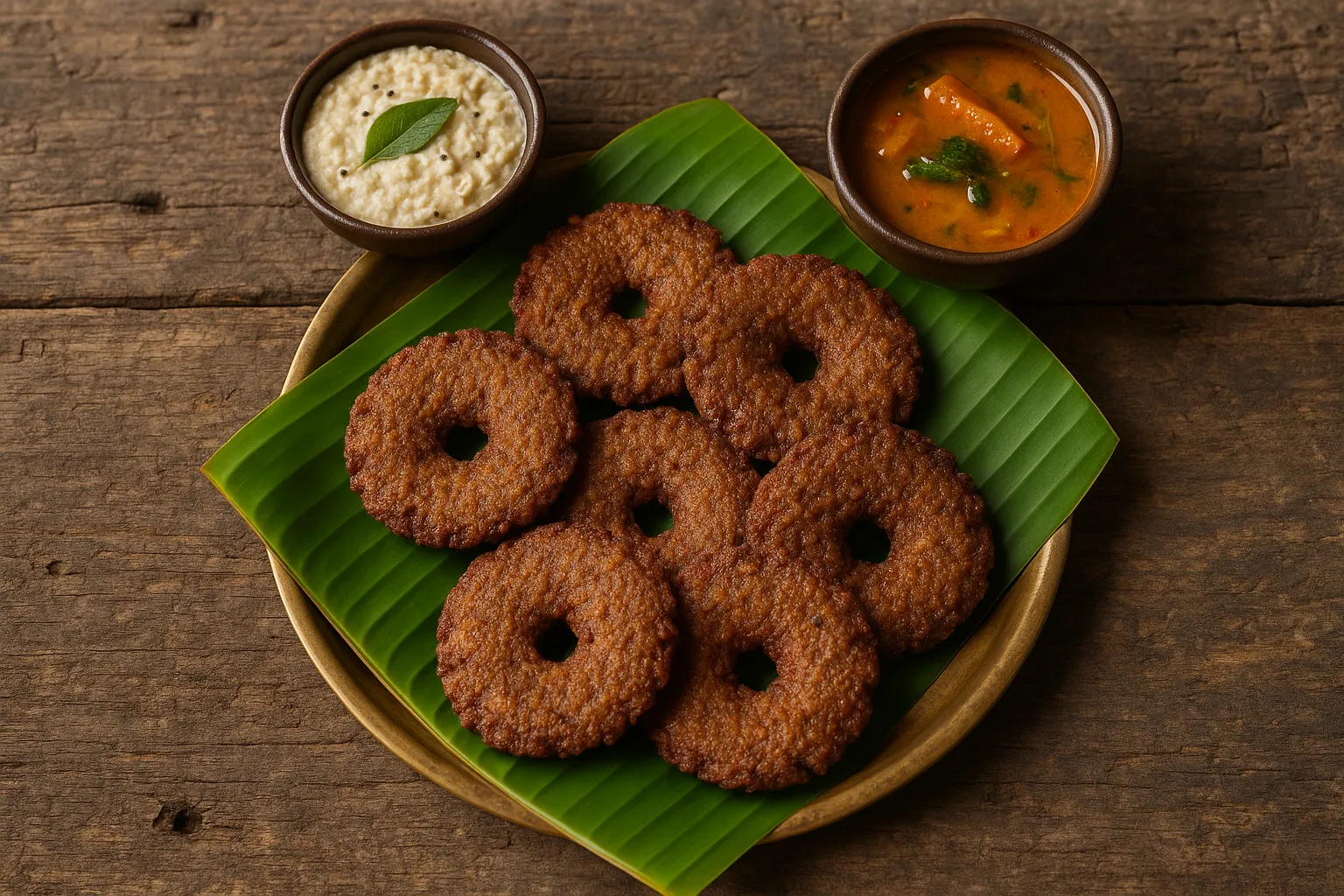
Schnelle Nährwerte
Per 1 Piece (50g)
| Nährstoff | Menge |
|---|---|
| Kalorien | 85 kcal |
| Protein | 3.2g |
| Kohlenhydrate | 13g |
| Ballaststoffe | 2.4g |
| Zucker | 0.5g |
| Fett | 2.5g |
| Kalzium | 45mg |
| Eisen | 1.8mg |
| Magnesium | 18mg |
| Phosphorus | 35mg |
Makronährstoff-Aufschlüsselung
 ChatGPT
  Claude
  AI Mode
  Perplexity
ERNÄHRUNGSBERATER-EINBLICK
Ragi vada combines finger millet's nutritional powerhouse benefits mit traditional South Indian flavors. One piece liefert 5% of täglich calcium needs and substantial Eisen, making it superior to regular gebraten snacks.
Mythen Entlarvt
MYTHOS #1: Alle Gebraten Snacks Sind Unhealthy
WAHRHEIT: Während deep-frying adds Kalorien, ragi vada's hoch Ballaststoffe (2.4g) and Protein (3.2g) provide satiety and nutritional value that regular gebraten snacks lack. Wählen gebacken or air-gebraten versions for even healthier options.
MYTHOS #2: Ragi Vada Ist Too Hoch in Kohlenhydrate for Diabetics
WAHRHEIT: Finger millet has a niedrig to medium glycemic index (30-50) and hoch Ballaststoffe, helping manage Blutzucker levels. Studies show regular ragi consumption verbessert glycemic kontrolle in diabetics wenn eaten in Mäßigung.
MYTHOS #3: Ragi Ist Nur for Babies and der Elderly
WAHRHEIT: Ragi's nutritional profile benefits alle ages. Athletes brauchen its Eisen for endurance, women benefit from calcium for Knochengesundheit, diabetics from its niedrig GI, and gewicht watchers from its satiety. It's a superfood for everyone.
MYTHOS #4: Ragi Vada Has No Protein
WAHRHEIT: Jeder ragi vada liefert 3.2g of Protein, comparable to viele vegetarian snacks. Während not a complete Protein source, it's valuable in a balanced Indian diet. Pair mit curd or lentil-based chutneys for complete amino acid profile.
MYTHOS #5: Geschäft-Bought Ragi Flour Ist Less Nahrhaft
WAHRHEIT: Quality matters mehr als source. Both homemade and geschäft-bought kann be nahrhaft if gemacht from whole grain finger millet. Wählen organic, stone-ground options for maximum nutrient retention. Check for additives in packaged products.
MYTHOS #6: Ragi Vada Must Be Deep-Gebraten to Taste Gut
WAHRHEIT: Gebacken or air-gebraten ragi vada kann be equally delicious mit der right technique and seasoning. Baking reduziert Kalorien by 30-40% während preserving Nährstoffe. Experiment mit shallow frying, pan-frying, or air-frying for healthier alternatives.
NutriScore nach Gesundheitszielen
| Gesundheitsziel | NutriScore | Warum diese Bewertung? |
|---|---|---|
| Gewichtsverlust |  | 85 Kalorien pro Stück, hoch Ballaststoffe fördert fullness, slow-release Kohlenhydrate prevent cravings. Grenze to 2 pieces per meal, wählen gebacken versions. |
| Muskelaufbau |  | Liefert 3.2g Protein and complex Kohlenhydrate for energy. Gut snack but needs pairing mit hoch-Protein foods. Eat 2-3 pieces post-workout mit curd or Protein shake. |
| Diabetes-Management |  | Niedrig-medium GI (30-50), hoch Ballaststoffe, slow glucose release. Excellent choice for diabetics. Eat 1-2 pieces, monitor Blutzucker. |
| PCOS-Management | | Niedrig GI hilft insulin sensitivity, Ballaststoffe aids hormone balance. Gut alternative to refined flour snacks. Grenze to 2 pieces, pair mit Protein. |
| Schwangerschaftsernährung | | Hoch calcium (45mg) unterstützt fetal bone development, Eisen (1.8mg) verhindert anemia. Safe and nahrhaft. Eat 2-3 pieces mit curd or coconut chutney for complete nutrition. |
| Viral/Flu Recovery | | Easy to digest, liefert sustained energy, Eisen unterstützt immunity. Gentle on stomach. Eat 1-2 pieces mit warm soup or sambar. |
PERSONALISIERTE ERNÄHRUNG
Verfolgen Sie Ihre Mahlzeiten mit NutriScan for personalized NutriScores based on your specific health goals!
Blutzucker-Reaktion to Ragi Vada
Understanding wie ragi vada affects your Blutglukose hilft you machen informed decisions ungefähr wenn and wie to eat it.
Typische Glukose-Reaktionskurve
Diese Grafik zeigt typical Blutglukose response for general gesund individuals. Individuelle Reaktionen können variieren. Keine medizinische Beratung.
Wie to Optimize Blutzucker-Reaktion
Pairing ragi vada mit Protein or gesund Fett verbessert glucose kontrolle and extends energy release:
- 🥛 Curd (Dahi) or Greek Yogurt - Adds Protein and probiotics
- 🥥 Coconut Chutney - Liefert gesund fats and Ballaststoffe
- 🍲 Sambar or Lentil Soup - Complete Protein and additional Ballaststoffe
- 🥜 Handful of Geröstet Peanuts - Protein and gesund fats
Dies combination reduziert der glucose spike and liefert sustained energy for 3-4 hours.
Kulturelle Bedeutung
Ragi (finger millet) has been cultivated in India and Africa for over 4,000 years, mentioned in ancient texts as a sustenance grain.
In India:
- Staple food in Karnataka, Tamil Nadu, Andhra Pradesh, and Maharashtra
- Known as ragi (Kannada), keppai (Tamil), nachni (Marathi), mandua (Hindi)
- Traditional weaning food for babies due to hoch calcium and Eisen content
- Used in festivals and religious ceremonies in South India
- Ragi vada ist a popular breakfast or snack item, oft served mit coconut chutney and sambar
Regional Variations:
- Karnataka: Ragi mudde (balls), ragi rotti (flatbread), ragi vada
- Tamil Nadu: Ragi dosa, ragi koozh (porridge), keppai vadai
- Andhra Pradesh: Ragi sangati, ragi ambali
- Maharashtra: Nachni bhakri, nachni ladoo
Global Impact:
- Recognized by WHO as a nutri-cereal mit hoch potential for food security
- Gaining popularity in health-conscious markets worldwide
- Climate-resilient crop, grows in arid conditions mit minimal water
- Gluten-kostenlos alternative to wheat, suitable for celiac disease
Vergleichen und Ersetzen
Ragi Vada vs Similar Snacks (Per Piece / ~50g)
| Nährstoff | 🍘 Ragi Vada | 🥔 Medu Vada | 🥔 Aloo Tikki | 🥘 Masala Vada |
|---|---|---|---|---|
| Kalorien | 85 kcal | 120 kcal | 110 kcal | 95 kcal |
| Kohlenhydrate | 13g | 15g | 16g | 14g |
| Ballaststoffe | 2.4g | 1.5g | 1.8g | 2.2g |
| Protein | 3.2g | 2.8g | 2.2g | 3g |
| Fett | 2.5g | 5g | 4.5g | 3g |
| Kalzium | 45mg | 15mg | 12mg | 20mg |
| Eisen | 1.8mg | 0.8mg | 0.6mg | 1.2mg |
| GI | Niedrig-Med (30-50) | Medium (60-70) | Hoch (70-80) | Medium (55-65) |
| Am besten für | Diabetes, Knochengesundheit | Traditional taste | Quick snack | Balanced nutrition |
Häufige Fragen
Ist ragi vada gut for Gewichtsverlust?
Yes, ragi vada kann support Gewichtsverlust wenn consumed strategically. Mit 85 Kalorien pro Stück and hoch satiety from Ballaststoffe (2.4g) and Protein (3.2g), it's superior to viele gebraten snacks.
Benefits for Gewichtsverlust:
- Slow-release Kohlenhydrate prevent hunger pangs and cravings
- Hoch Ballaststoffe fördert fullness for 3-4 hours
- Niedrig glycemic index stabilizes Blutzucker and energy
- Mehr nahrhaft als refined flour snacks
Beste practices: Grenze to 1-2 pieces per meal (85-170 Kalorien); wählen gebacken or air-gebraten versions (reduziert Kalorien by 30-40%); pair mit curd or coconut chutney for Protein; track total täglich Kalorien mit NutriScan app.
Kann diabetics eat ragi vada?
Yes, diabetics kann safely eat ragi vada. Finger millet ist one of der beste grains for Diabetes management due to its niedrig to medium glycemic index (30-50) and hoch Ballaststoffe content.
Benefits for diabetics:
- Slow glucose release verhindert Blutzucker spikes
- Hoch Ballaststoffe verbessert insulin sensitivity over zeit
- Enthält polyphenols that kann reduce glucose absorption
- Studies show regular ragi consumption verbessert HbA1c levels
Recommendations: Eat 1-2 pieces (85-170 Kalorien) per meal; pair mit Protein (curd, lentils) or vegetables; wählen gebacken versions wenn possible; monitor Blutzucker 2 hours nach eating; consult your healthcare provider for personalized advice.
Wie viel calcium ist in ragi vada?
One ragi vada (50g) liefert approximately 45mg of calcium, ungefähr 5% of der empfohlen täglich intake. Finger millet ist one of der richest plant-based sources of calcium.
Kalzium comparison:
- Ragi: 350mg calcium pro 100g (10x mehr als wheat or rice)
- Milk: 120mg per 100ml
- 1 Ragi Vada: 45mg pro Stück
Benefits: Unterstützt Knochengesundheit, teeth strength, and muscle function; excellent for lactose-intolerant individuals; wichtig for growing children, pregnant women, and elderly; kann help prevent osteoporosis mit regular consumption.
To maximize calcium absorption: Pair mit vitamin D sources (sunlight, fortified foods), consume mit vitamin C-rich foods (lemon, tomatoes), vermeiden excessive caffeine or alcohol.
Ist ragi vada gluten-kostenlos?
Yes, pure ragi vada gemacht from 100% finger millet flour ist naturally gluten-kostenlos. Jedoch, preparation and added ingredients matter.
Was to check:
- Safe: Pure ragi flour mit water, spices, onions, curry leaves
- Caution: Einige recipes add wheat flour for binding (enthält gluten)
- Cross-contamination: Restaurant preparation kann verwenden shared equipment
For celiac disease or gluten sensitivity: Verify mit der cook or restaurant that no wheat flour ist added; machen at home mit certified gluten-kostenlos ragi flour; check packaged ragi flour for gluten-kostenlos certification; verwenden separate cooking utensils to vermeiden cross-contamination.
Ragi vada ist an excellent gluten-kostenlos alternative to wheat-based snacks like pakoras or samosas.
Was sind der main gesundheitliche Vorteile of ragi vada?
Key Benefits:
- Hoch Kalzium: 45mg pro Stück unterstützt Knochengesundheit, teeth strength, and verhindert osteoporosis
- Rich in Eisen: 1.8mg pro Stück hilft prevent anemia, boosts energy, and unterstützt oxygen transport
- Hoch Ballaststoffe: 2.4g pro Stück fördert Verdauungsgesundheit, regulates Blutzucker, and enhances satiety
- Niedrig Glycemic Index: Slow-release Kohlenhydrate prevent Blutzucker spikes, ideal for Diabetes management
- Gluten-Kostenlos: Safe for celiac disease and gluten sensitivity
- Antioxidants: Polyphenols protect cells from oxidative stress and Entzündung
- Complete Nutrition: Liefert Kohlenhydrate, Protein, gesund fats, and micronutrients in one snack
Usage: Enjoy as breakfast, snack, or light meal; pair mit coconut chutney and sambar for complete nutrition; wählen gebacken or air-gebraten versions for fewer Kalorien.
Wie viele ragi vada kann I eat per tag?
General Guidelines:
- Gewicht Management: 1-2 pieces per meal (85-170 Kalorien), wählen gebacken versions
- Muskelaufbau: 2-3 pieces (170-255 Kalorien), pair mit Protein shake or curd
- Diabetes: 1-2 pieces (85-170 Kalorien), monitor Blutzucker, pair mit Protein
- Schwangerschaft: 2-3 pieces (170-255 Kalorien), excellent for calcium and Eisen needs
- General Health: 2-4 pieces täglich (170-340 Kalorien) as part of balanced diet
Wichtig considerations: Balance mit total täglich calorie intake; wählen gebacken or air-gebraten over deep-gebraten; pair mit Protein and vegetables; vermeiden overeating even gesund snacks; track your intake mit NutriScan app.
Ist gebacken ragi vada healthier als gebraten?
Yes, gebacken ragi vada ist significantly healthier als deep-gebraten versions.
Comparison (pro Stück):
- Deep-Gebraten: 85-100 Kalorien, 2.5-4g Fett, höher oil absorption
- Gebacken: 55-65 Kalorien, 0.5-1.5g Fett, minimal oil used
- Air-Gebraten: 60-70 Kalorien, 1-2g Fett, uses hot air circulation
Benefits of baking:
- Reduziert Kalorien by 30-40% compared to deep-frying
- Lowers Fett content während preserving Nährstoffe
- Eliminates harmful compounds formed während hoch-heat frying
- Easier to digest, besser for Herzgesundheit
- Retains calcium, Eisen, and Ballaststoffe
Tips for delicious gebacken ragi vada: Verwenden silicone molds or parchment paper; brush mit minimal oil for crispiness; bake at 375°F (190°C) for 20-25 minutes; season gut mit spices, onions, and curry leaves; serve mit coconut chutney and sambar.


Ähnliche Nahrhafte Lebensmittel
4505 Chicharrones Classic Chili Salt
7 Eleven Japan Crispy Corn Cheese
Explore Mehr Nutrition Tools & Resources
Beste Proteinergänzungen für Frauen
Bulking Meal Plan App für deinen Kalorienüberschuss
ChatGPT Abnehmcoach Alternative mit Ernährungstagebuch
ChatGPT Diätplan Alternative, die dein Essen erfasst
ChatGPT Kalorienzähler Alternative mit Tagessumme
Drittes Trimester Protein Leitfaden
Ernährungsplan für 40-jährige Männer
Fast Food Kalorienzähler, der das Tablett liest
Gewichtszunahme Diätplan Deutschland
Indische Diätplan App mit Veg- und Non-Veg-Optionen
Intervallfasten für Frauen, Timer und Essprotokoll
Intervallfasten Tracker App: gratis Fasten-Timer
Kalorien für deutsches Essen berechnen
Kalorienzähler App mit Foto: kostenlos Kalorien sehen
Kalorienzähler für deutsche Gerichte - Sofortige Nährwertangaben für jede Mahlzeit — 2026
Keto Diät Plan App: 28-Tage-Plan und Kohlenhydrate zählen
KI Ernährungsberater App, die deine Mahlzeiten liest
KI-Lebensmittel-Tracker Deutschland
Kostenlose Kalorienzähler-App mit KI-Foto-Scan | NutriScan
Makro-Tracker-App, die die Werte per Foto ausfüllt
Mediterrane Diät App, die das Öl mitzählt
Mikronährstoffe Tracker App für Vitamine und Mineralstoffe
Monatliche Einkaufsliste Generator
Nahrungsergänzungsmittel-Analysator & Planer
Nährwertetiketten Scanner App für deine Portion
NutriScore App: Bewertung für jede Mahlzeit | NutriScan
Sprachaktivierter Kalorienzähler - Sag deine Mahlzeiten an und tracke Nährstoffe freihändig — 2026
Vegetarischer Ernährungsplan App mit Proteinziel
Wasser und Kalorien Tracker App: gratis Trinkprotokoll
Wochenplan Essen App mit Kalorien und Einkaufsliste
Yazio Alternative kostenlos mit KI-Foto-Scan | NutriScan