Sautéed Vegetables: Kalorien, Nährwerte und gesundheitliche Vorteile
Colorful, nutrient-dense vegetables lightly gekocht to perfection - niedrig calorie, hoch Ballaststoffe, packed mit Vitamine for optimal health.
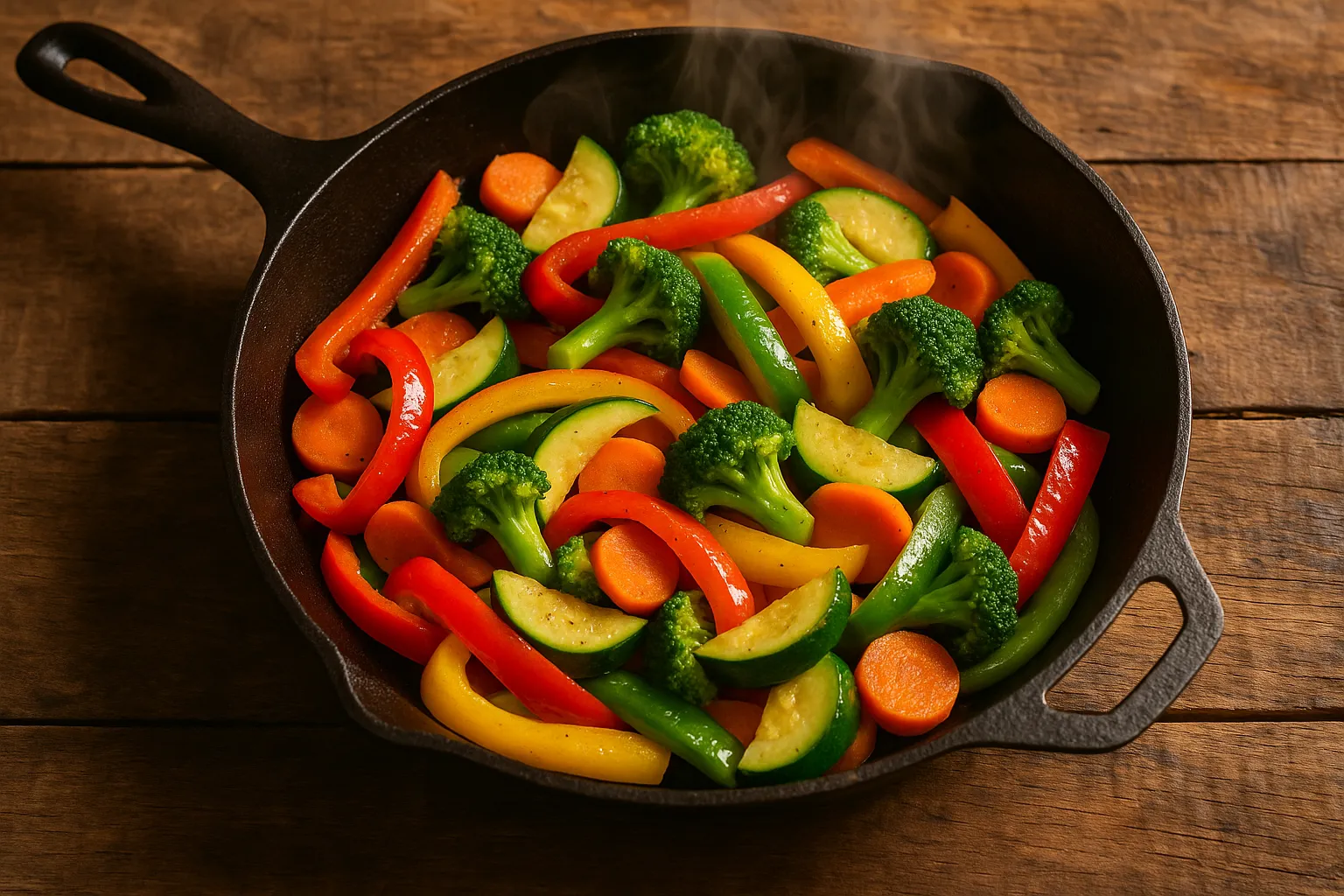
Schnelle Nährwerte
Per 1 Cup (145g) Mixed Sautéed Vegetables
| Nährstoff | Menge |
|---|---|
| Kalorien | 67 kcal |
| Protein | 2.3g |
| Kohlenhydrate | 11g |
| Ballaststoffe | 3.5g |
| Zucker | 4.2g |
| Fett | 2.3g |
| Vitamin A | 2415 IU |
| Vitamin C | 48mg |
| Kalium | 387mg |
| Folate | 56mcg |
Makronährstoff-Aufschlüsselung
 ChatGPT
  Claude
  AI Mode
  Perplexity
ERNÄHRUNGSBERATER-EINBLICK
Sautéing mit a klein amount of gesund Fett enhances absorption of Fett-soluble Vitamine A, E, and K by up to 400%. Quick cooking preserves 70-90% of Nährstoffe.
Mythen Entlarvt
MYTHOS #1: Gekocht Vegetables Lose Alle Nährstoffe
WAHRHEIT: Sautéing preserves 70-90% of Nährstoffe wenn done quickly. Einige Nährstoffe like lycopene and beta-carotene become mehr bioavailable mit cooking. Vitamin C reduziert 10-30%, but overall nutrition remains excellent.
MYTHOS #2: You Brauchen Lots of Oil to Sauté
WAHRHEIT: Nur 1-2 tsp of oil pro Portion ist needed. Verwenden a non-stick pan or klein amount of water to prevent sticking. Excess oil adds unnecessary Kalorien ohne nutritional benefit.
MYTHOS #3: Alle Cooking Methods Sind Equal
WAHRHEIT: Sautéing and air-frying retain mehr Nährstoffe als boiling or deep frying. Boiling leaches water-soluble Vitamine into cooking water. Sautéing keeps Nährstoffe in der vegetables.
MYTHOS #4: Sautéed Vegetables Sind Hoch in Kalorien
WAHRHEIT: At 67 Kalorien pro Tasse mit minimal oil, sautéed vegetables sind one of der lowest-calorie gekocht foods. Der Fett content (2.3g) ist mostly from gesund cooking oil, not der vegetables themselves.
MYTHOS #5: Frozen Vegetables Sind Less Nahrhaft
WAHRHEIT: Frozen vegetables sind flash-frozen at peak ripeness, preserving Nährstoffe. They're equally nahrhaft as frisch for sautéing. Skip der thawing step - sauté directly from frozen for beste texture.
MYTHOS #6: You Sollte Sauté Alle Vegetables der Gleich Way
WAHRHEIT: Different vegetables require different cooking times. Hard vegetables (carrots, broccoli) brauchen 7-10 minutes; soft vegetables (peppers, zucchini) brauchen 3-5 minutes. Add vegetables in stages for even cooking.
NutriScore nach Gesundheitszielen
| Gesundheitsziel | NutriScore | Warum diese Bewertung? |
|---|---|---|
| Gewichtsverlust |  | Nur 67 Kalorien pro Tasse, hoch Ballaststoffe (3.5g) fördert fullness, niedrig energy density. Fill half your plate mit sautéed vegetables for satiety. |
| Muskelaufbau |  | Liefert Vitamine and Mineralien for recovery but limited Protein (2.3g). Pair mit Protein source. Kalium (387mg) verhindert muscle cramps. |
| Diabetes-Management | | Niedrig glycemic index, 3.5g Ballaststoffe slows glucose absorption. Non-starchy vegetables have minimal Blutzucker impact. Ideal for unlimited Portionen. |
| PCOS-Management | | Niedrig calorie, hoch Ballaststoffe aids gewicht management. Antioxidants reduce Entzündung. Non-starchy vegetables don't spike insulin. Perfect base for PCOS-friendly meals. |
| Schwangerschaftsernährung | | Rich in folate (56mcg), vitamin A, vitamin C wesentlich for fetal development. Ballaststoffe verhindert Schwangerschaft constipation. Safe for täglich consumption. |
| Viral/Flu Recovery | | Vitamin C (48mg) boosts immunity, vitamin A unterstützt mucous membranes, Antioxidantien fight infection. Easy to digest, hydrating, gentle on stomach. |
PERSONALISIERTE ERNÄHRUNG
Verfolgen Sie Ihre Mahlzeiten mit NutriScan for personalized NutriScores based on your specific health goals!
Kulturelle Bedeutung
Sautéing vegetables ist a universal cooking technique found across alle cuisines, adapted to regional ingredients and flavor profiles.
In India:
- Bhaji, sabji, and subzi - everyday vegetable sautés mit spices
- Tadka (tempering) adds cumin, mustard seeds, curry leaves to vegetables
- Regional variations: Bengali posto (poppy seed), Punjabi bhuna masala, South Indian poriyal
- Served mit roti, rice, or dal as part of thali
Global Variations:
- France: Sautéed vegetables mit herbs de Provence
- China: Stir-fry mit ingwer, garlic, soy sauce
- Italy: Soffritto base (onions, celery, carrots)
- Mexico: Rajas (sautéed peppers and onions)
Modern Health Movement:
- Mediterranean diet emphasizes sautéed vegetables in olive oil
- Plant-based eating fördert vegetables as meal centerpiece
- Meal prep: batch-sautéed vegetables for woche's meals
Vergleichen und Ersetzen
Sautéed Vegetables vs Andere Cooking Methods (Per 1 Cup / 145g)
| Nährstoff | 🥘 Sautéed Vegetables | 🍲 Gedünstet Vegetables | 🥗 Roh Vegetables | 🍳 Deep Gebraten Vegetables |
|---|---|---|---|---|
| Kalorien | 67 kcal | 45 kcal | 35 kcal | 185 kcal |
| Protein | 2.3g | 2.5g | 2.1g | 2.2g |
| Kohlenhydrate | 11g | 10g | 8g | 18g |
| Ballaststoffe | 3.5g | 3.8g | 3.2g | 3.1g |
| Fett | 2.3g | 0.3g | 0.2g | 12g |
| Vitamin C | 48mg (70-90% retained) | 55mg (80-95% retained) | 65mg (100%) | 35mg (40-60% retained) |
| Vitamin A | 2415 IU (enhanced) | 2200 IU | 1800 IU | 1950 IU |
| Am besten für | Flavor, nutrient absorption, meal prep | Maximum vitamin retention | Maximum enzymes, roh diets | Occasional treat, texture contrast |
Häufige Fragen
Sind sautéed vegetables gut for Gewichtsverlust?
Yes, sautéed vegetables sind excellent for Gewichtsverlust. At nur 67 Kalorien pro Tasse mit 3.5g Ballaststoffe, they provide hoch volume mit minimal Kalorien. Der Ballaststoffe fördert fullness and reduziert overall calorie intake.
Beste practices: Verwenden 1-2 tsp olive oil pro Portion (adds 40-80 Kalorien); fill half your plate mit sautéed vegetables; wählen non-starchy vegetables (peppers, broccoli, zucchini, mushrooms); vermeiden heavy sauces or käse toppings. Aim for 2-3 cups täglich as part of Gewichtsverlust plan.
Kann diabetics eat sautéed vegetables?
Sautéed non-starchy vegetables sind ideal for diabetics mit minimal Blutzucker impact. Niedrig glycemic index, nur 11g Kohlenhydrate pro Tasse, and 3.5g Ballaststoffe that slows glucose absorption machen them perfect for unlimited Portionen.
Beste vegetables for Diabetes: Broccoli, cauliflower, bell peppers, zucchini, mushrooms, green beans, asparagus. Grenze: Starchy vegetables (carrots, peas, corn) to 1/2 cup per meal. Ballaststoffe and Antioxidantien improve insulin sensitivity.
Was sind der main gesundheitliche Vorteile of sautéed vegetables?
Key Benefits:
- Gewicht Management: Niedrig Kalorien (67 pro Tasse), hoch Ballaststoffe (3.5g) promote satiety
- Digestive Health: Ballaststoffe unterstützt regular bowel movements and gut bacteria
- Heart Health: Kalium (387mg), Antioxidantien reduce blood pressure and Entzündung
- Immune Support: Vitamins A (2415 IU) and C (48mg) boost immune function
- Eye Health: Beta-carotene and lutein protect vision
- Cancer Prevention: Antioxidants and phytonutrients reduce oxidative stress
Was's der beste oil for sautéing vegetables?
Extra virgin olive oil ist am besten für sautéing vegetables mit heart-gesund monounsaturated fats, Antioxidantien, and suitable smoke point (375°F/190°C). Verwenden 1-2 tsp pro Portion.
Andere gut options:
- Avocado oil: Höher smoke point (520°F), neutral flavor, expensive
- Grapeseed oil: Hoch smoke point (420°F), mild flavor, omega-6 fatty acids
- Coconut oil: Medium smoke point (350°F), adds flavor, saturated Fett (verwenden sparingly)
Vermeiden: Butter (burns easily), vegetable oil blends (highly processed), excessive amounts of any oil.
Wie long sollte I sauté vegetables?
Cooking times vary by vegetable:
5-10 minutes over medium-hoch heat for tender-crisp texture. Quick cooking preserves Vitamine and verhindert mushiness.
Hard vegetables (7-10 minutes): Carrots, broccoli, cauliflower, green beans - add erste Medium vegetables (5-7 minutes): Bell peppers, onions, mushrooms - add second Soft vegetables (3-5 minutes): Zucchini, spinach, tomatoes - add letzte
Tips: Don't overcrowd pan; cut vegetables uniformly; cook in batches if needed; vegetables sollte be bright-colored, not grey or mushy.
Do sautéed vegetables lose Nährstoffe?
Sautéing preserves 70-90% of Nährstoffe wenn done quickly over medium-hoch heat. Water-soluble Vitamine (C, B Vitamine) reduce 10-30%, but Fett-soluble Vitamine (A, E, K) absorption verbessert up to 400% mit added Fett.
Comparison:
- Sautéing: 70-90% nutrient retention, enhanced Fett-soluble vitamin absorption
- Steaming: 80-95% retention, am besten für vitamin C
- Boiling: 40-70% retention (Vitamine leach into water)
- Deep frying: 40-60% retention, hoch Kalorien
Beste practice: Verwenden minimal oil, quick cooking zeit, don't overcook to preserve maximum Nährstoffe während improving bioavailability.
Kann I meal prep sautéed vegetables?
Yes, sautéed vegetables geschäft gut for 3-5 tage refrigerated in airtight containers. They're perfect for meal prep.
Meal prep tips:
- Sauté vegetables until just tender-crisp (slightly undercooked)
- Cool completely vor refrigerating
- Geschäft in glass containers for beste freshness
- Reheat in skillet or microwave (1-2 minutes)
- Add frisch herbs or lemon juice vor serving
Beste vegetables for meal prep: Bell peppers, broccoli, zucchini, mushrooms, green beans. Vermeiden: Leafy greens (spinach, kale) - they wilt and become slimy. Add diese frisch wenn serving.


Ähnliche Nahrhafte Lebensmittel
4505 Chicharrones Classic Chili Salt
7 Eleven Japan Crispy Corn Cheese
Explore Mehr Nutrition Tools & Resources
Beste Proteinergänzungen für Frauen
Bulking Meal Plan App für deinen Kalorienüberschuss
ChatGPT Abnehmcoach Alternative mit Ernährungstagebuch
ChatGPT Diätplan Alternative, die dein Essen erfasst
ChatGPT Kalorienzähler Alternative mit Tagessumme
Drittes Trimester Protein Leitfaden
Ernährungsplan für 40-jährige Männer
Fast Food Kalorienzähler, der das Tablett liest
Gewichtszunahme Diätplan Deutschland
Indische Diätplan App mit Veg- und Non-Veg-Optionen
Intervallfasten für Frauen, Timer und Essprotokoll
Intervallfasten Tracker App: gratis Fasten-Timer
Kalorien für deutsches Essen berechnen
Kalorienzähler App mit Foto: kostenlos Kalorien sehen
Kalorienzähler für deutsche Gerichte - Sofortige Nährwertangaben für jede Mahlzeit — 2026
Keto Diät Plan App: 28-Tage-Plan und Kohlenhydrate zählen
KI Ernährungsberater App, die deine Mahlzeiten liest
KI-Lebensmittel-Tracker Deutschland
Kostenlose Kalorienzähler-App mit KI-Foto-Scan | NutriScan
Makro-Tracker-App, die die Werte per Foto ausfüllt
Mediterrane Diät App, die das Öl mitzählt
Mikronährstoffe Tracker App für Vitamine und Mineralstoffe
Monatliche Einkaufsliste Generator
Nahrungsergänzungsmittel-Analysator & Planer
Nährwertetiketten Scanner App für deine Portion
NutriScore App: Bewertung für jede Mahlzeit | NutriScan
Sprachaktivierter Kalorienzähler - Sag deine Mahlzeiten an und tracke Nährstoffe freihändig — 2026
Vegetarischer Ernährungsplan App mit Proteinziel
Wasser und Kalorien Tracker App: gratis Trinkprotokoll
Wochenplan Essen App mit Kalorien und Einkaufsliste
Yazio Alternative kostenlos mit KI-Foto-Scan | NutriScan