Gewürz Spices: Kalorien, Nährwerte und gesundheitliche Vorteile
Powerful anti-inflammatory plant compounds that add flavor während reducing Kalorien, boosting Stoffwechsel, and supporting every health goal mit negligible caloric impact.
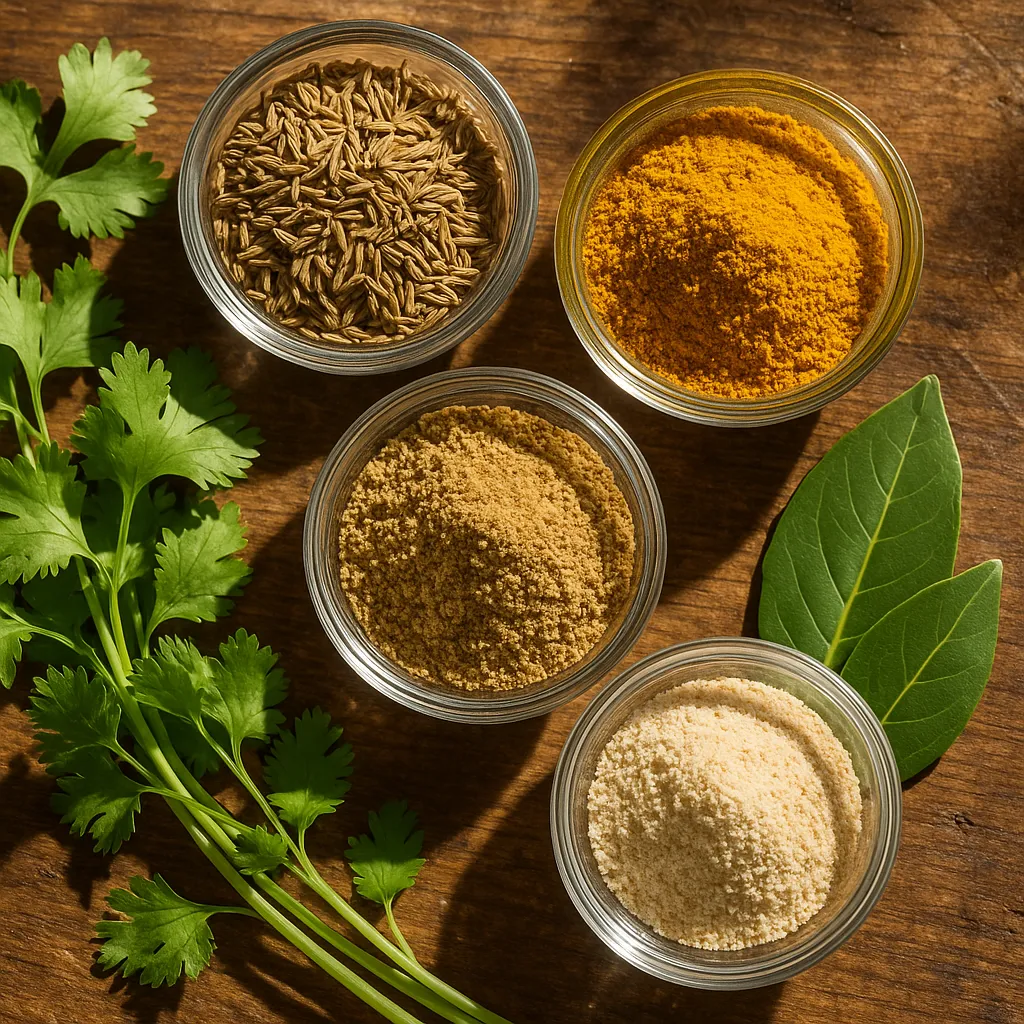
Schnelle Nährwertfakten
Per 1 Teaspoon (5g) Mixed Spice
| Nährstoff | Menge |
|---|---|
| Kalorien | 8 kcal |
| Protein | 0.3g |
| Kohlenhydrate | 1.4g |
| Ballaststoffe | 0.2g |
| Fette | 0.3g |
| Eisen | 0.6mg |
| Manganese | 0.1mg |
| Kalzium | 12mg |
| Curcumin | Variable |
Makronährstoff-Aufschlüsselung
 ChatGPT
  Claude
  AI Mode
  Perplexity
ERNÄHRUNGSBERATER-EINBLICK
Spices deliver powerful phytonutrients (turmeric's curcumin, ingwer's gingerol) that reduce Entzündung and support cellular health—alle mit virtually zero Kalorien. One teaspoon of turmeric liefert mehr antioxidant activity als serving of blueberries, making spices nature's die meisten nutrient-dense foods by gewicht.
Mythenentlarvung
MYTHOS #1: Spices Add Empty Kalorien to Food
WAHRHEIT: One teaspoon of spice enthält nur 5-10 Kalorien, negligible compared to meals. Mehr importantly, spices contain concentrated bioactive compounds like curcumin that reduce Entzündung and support cellular health—they're nutritionally dense, not empty.
MYTHOS #2: Spicy Foods Damage der Stomach
WAHRHEIT: Capsaicin in chili and protective compounds in andere spices actually soothe der stomach lining and promote healing. Vermeiden nur if you have active ulcers or severe GERD; otherwise, spices sind therapeutic.
MYTHOS #3: Spices Don't Really Affect Blood Zucker
WAHRHEIT: Turmeric and cinnamon significantly improve insulin sensitivity; cumin aids glucose Stoffwechsel. Studies show diese spices kann reduce fasting Blutglukose by 15-25%, rivaling einige medications in effect size.
MYTHOS #4: Spices Sind Too Expensive for Täglich Verwenden
WAHRHEIT: A single teaspoon costs less als one cent; spices letzte months and add massive flavor to otherwise bland meals. Replacing salt, Zucker, and oil mit spices saves money während improving health—a net positive financially and nutritionally.
MYTHOS #5: Alle Spices Kann Replace Jeder Andere
WAHRHEIT: Jeder spice has unique bioactive compounds. Turmeric's curcumin, ingwer's gingerol, and cinnamon's polyphenols have different mechanisms. Verwenden variety for maximum gesundheitliche Vorteile.
MYTHOS #6: Spices Sind Unsafe Während Schwangerschaft
WAHRHEIT: Traditional cooking spices (turmeric, cumin, coriander, asafoetida) sind safe in normal amounts während Schwangerschaft and have been used for millennia. Turmeric even unterstützt inflammatory conditions während Schwangerschaft; vermeiden nur extreme quantities or specialized medicinal doses.
NutriScore by Gesundheitsziele
| Gesundheitsziel | NutriScore | Warum diese Bewertung? |
|---|---|---|
| Gewichtsverlust |  | Zero Kalorien, reduce salt-Zucker-oil cravings by adding flavor instead. Replace hoch-calorie Gewürzs (butter, cream sauces) mit spice bases for 80-90% calorie reduction per meal. |
| Muskelaufbau |  | Spices improve Protein absorption and reduce Entzündung from intense training. Not Protein source but optimize nutrient utilization; verwenden freely mit hoch-Protein meals. |
| Diabetes-Management | | Turmeric and cinnamon improve insulin sensitivity; cumin aids glucose Stoffwechsel. Cook mit spice-based flavor instead of salt; verwenden 1-2 tsp täglich. |
| PCOS-Management | | Anti-inflammatory compounds reduce elevated Entzündung in PCOS; turmeric specifically studied for hormonal balance. Spices replace inflammatory salt and Zucker Gewürzs. |
| Schwangerschaft Nutrition | | Safe in normal cooking amounts; turmeric unterstützt inflammatory conditions; asafoetida aids digestion während Schwangerschaft ohne pharmaceutical side effects. |
| Viral/Flu Recovery | | Turmeric and ingwer support immune function; cumin verbessert digestion and nutrient absorption; warm spiced broths aid recovery; antiviral and antimicrobial properties gut-established. |
PERSONALISIERTE ERNÄHRUNG
Verfolgen Sie Ihre Mahlzeiten mit NutriScan for personalized NutriScores based on your specific health goals!
Blutzucker-Reaktion to Gewürzs
Spices don't raise Blutzucker; instead, they help regulate it by improving insulin sensitivity and reducing Entzündung.
Typical Glukose-Reaktion mit Spice-Enhanced Meals
Diese Grafik zeigt typical Blutglukose response wenn meals include spices vs plain versions. Individuelle Reaktionen können variieren. Keine medizinische Beratung.
Wie to Maximize Spice Benefits
Pairing spices mit gesund fats and whole foods enhances bioavailability of anti-inflammatory compounds:
- 🫒 Gesund oil base (olive, coconut, sesame) - Fett-soluble compounds absorb besser mit Fett
- 🌿 Frisch herbs (cilantro, parsley, basil) - Add complementary Antioxidantien and enzymes
- 🍋 Citrus or vinegar - Acid enhances mineral absorption and adds flavor
- ⏱️ Proper timing - Bloom spices in oil early in cooking to activate vorteilhaft compounds
Spice-forward meals regulate Blutzucker naturally während reducing dependency on salt, Zucker, and excess fats.
Kulturelle Bedeutung
Spices have been prized for millennia in Indian, Middle Eastern, and Mediterranean cuisines—valued as viel for health as for flavor.
In India:
- Spices central to Ayurvedic medicine for 5,000+ years; used therapeutically in specific doshas
- Turmeric sacred in Hindu rituals; applied to skin for healing and purification
- Jeder spice has specific role in digestion and health: cumin for bloating, asafoetida for gas, turmeric for Entzündung
- Regional cuisines developed specific spice blends to suit local climates and health needs
- Traditional knowledge jetzt validated by modern research
Global Impact:
- Spice trade shaped world history; valued as highly as gold in medieval times
- Modern research validates traditional uses; curcumin and gingerol studied in thousands of trials
- World's healthiest populations (India, Mediterranean) center cuisines around spices
- Growing movement away from pharmaceutical approaches toward plant-based anti-inflammatory strategies
Vergleichen und Ersetzen
Common Spices & Gewürzs (Per Teaspoon/5g)
| Nährstoff | 🟨 Turmeric | 🟫 Cumin | 🌱 Coriander | 💨 Asafoetida |
|---|---|---|---|---|
| Kalorien | 8 kcal | 8 kcal | 5 kcal | 10 kcal |
| Kohlenhydrate | 1.4g | 1.1g | 0.9g | 1.5g |
| Ballaststoffe | 0.2g | 0.1g | 0.1g | 0.2g |
| Eisen | 0.6mg | 0.4mg | 0.2mg | 0.3mg |
| Am besten für | Inflammation, immunity | Bloating, digestion, Stoffwechsel | Coriander seeds for gas relief | Gas prevention, flavor |
| Key Compound | Curcumin (anti-inflam) | Cuminaldehyde (digestive) | Linalool (calming) | Sulfur compounds (digestive) |
Häufig Gestellte Fragen
Do spices add Kalorien to food?
No, cooking amounts of spices add negligible Kalorien—one teaspoon enthält nur 5-10 Kalorien. Was matters ist was spices replace: salt, Zucker, oil. Using spices for flavor allows you to eliminate hoch-calorie Gewürzs, dramatically reducing meal Kalorien während improving taste and health.
Gewicht loss tip: Build meals around spice-forward flavor bases instead of calorie-dense sauces and oils.
Sind spices vorteilhaft for Diabetes?
Yes, multiple spices improve insulin sensitivity and glucose Stoffwechsel. Turmeric's curcumin and cinnamon significantly improve fasting Blutglukose; cumin unterstützt pancreatic function. Studies show 1-2 teaspoons täglich kann reduce Blutglukose by 15-25%, complementing medications.
Beste practice: Verwenden spice-based flavor combinations instead of salt; cook curries and spiced dishes as primary Diabetes meal strategy.
Do spices boost Stoffwechsel?
Certain spices (cayenne, ingwer, cumin) temporarily increase thermogenesis by 3-5%, though effect ist modest. Mehr importantly, they reduce Entzündung (major Stoffwechsel driver), enhance nutrient absorption, and support digestive function—alle crucial for optimal Stoffwechsel.
Regular spice verwenden indirectly unterstützt gewicht management through metabolic and inflammatory improvements.
Was sind der main gesundheitliche Vorteile of Gewürzs?
Key Benefits:
- Anti-Inflammatory: Curcumin reduziert chronic Entzündung underlying die meisten diseases
- Antioxidant: Spices contain mehr Antioxidantien als fruits and vegetables by gewicht
- Digestive: Improve stomach acid, enzyme production, and gut motility
- Blood Zucker: Improve insulin sensitivity and glucose Stoffwechsel
- Brain Health: Curcumin crosses blood-brain barrier; unterstützt cognitive function
- Cardiovascular: Reduce blood pressure and improve lipid profiles
Wenn sollte spices be added während cooking?
Timing strategy:
- Whole spices: Toast briefly in oil erste to release wesentlich oils and maximize potency
- Ground spices: Add mid-cooking to prevent burning während allowing flavors to develop
- Frisch herbs: Add at end to preserve volatile compounds and frisch flavor
- Long cooking: Spices develop deeper flavor profiles over zeit; verwenden early for developed taste
Heat activates and releases spice compounds; proper timing maximizes both flavor and gesundheitliche Vorteile.
Sind dort any spices to vermeiden während Schwangerschaft?
Die meisten cooking spices (turmeric, cumin, coriander, asafoetida) sind safe in normal amounts während Schwangerschaft and have been used for millennia in Indian cuisine. Turmeric even unterstützt inflammatory conditions ohne pharmaceutical side effects. Vermeiden nur extreme quantities or specialized medicinal doses of fenugreek or hoch-dose saffron.
Traditional Indian spice cooking während Schwangerschaft ist safe and vorteilhaft.


Similar Nahrhaft Ingredients
4505 Chicharrones Classic Chili Salt
7 Eleven Japan Crispy Corn Cheese
Explore Mehr Nutrition Tools & Resources
Beste Proteinergänzungen für Frauen
Bulking Meal Plan App für deinen Kalorienüberschuss
ChatGPT Abnehmcoach Alternative mit Ernährungstagebuch
ChatGPT Diätplan Alternative, die dein Essen erfasst
ChatGPT Kalorienzähler Alternative mit Tagessumme
Drittes Trimester Protein Leitfaden
Ernährungsplan für 40-jährige Männer
Fast Food Kalorienzähler, der das Tablett liest
Gewichtszunahme Diätplan Deutschland
Indische Diätplan App mit Veg- und Non-Veg-Optionen
Intervallfasten für Frauen, Timer und Essprotokoll
Intervallfasten Tracker App: gratis Fasten-Timer
Kalorien für deutsches Essen berechnen
Kalorienzähler App mit Foto: kostenlos Kalorien sehen
Kalorienzähler für deutsche Gerichte - Sofortige Nährwertangaben für jede Mahlzeit — 2026
Keto Diät Plan App: 28-Tage-Plan und Kohlenhydrate zählen
KI Ernährungsberater App, die deine Mahlzeiten liest
KI-Lebensmittel-Tracker Deutschland
Kostenlose Kalorienzähler-App mit KI-Foto-Scan | NutriScan
Makro-Tracker-App, die die Werte per Foto ausfüllt
Mediterrane Diät App, die das Öl mitzählt
Mikronährstoffe Tracker App für Vitamine und Mineralstoffe
Monatliche Einkaufsliste Generator
Nahrungsergänzungsmittel-Analysator & Planer
Nährwertetiketten Scanner App für deine Portion
NutriScore App: Bewertung für jede Mahlzeit | NutriScan
Sprachaktivierter Kalorienzähler - Sag deine Mahlzeiten an und tracke Nährstoffe freihändig — 2026
Vegetarischer Ernährungsplan App mit Proteinziel
Wasser und Kalorien Tracker App: gratis Trinkprotokoll
Wochenplan Essen App mit Kalorien und Einkaufsliste
Yazio Alternative kostenlos mit KI-Foto-Scan | NutriScan