Spices and Herbs: Kalorien, Nährwerte und gesundheitliche Vorteile
Nature's powerful flavor enhancers packed mit Antioxidantien, anti-inflammatory compounds, and negligible Kalorien for every health goal.
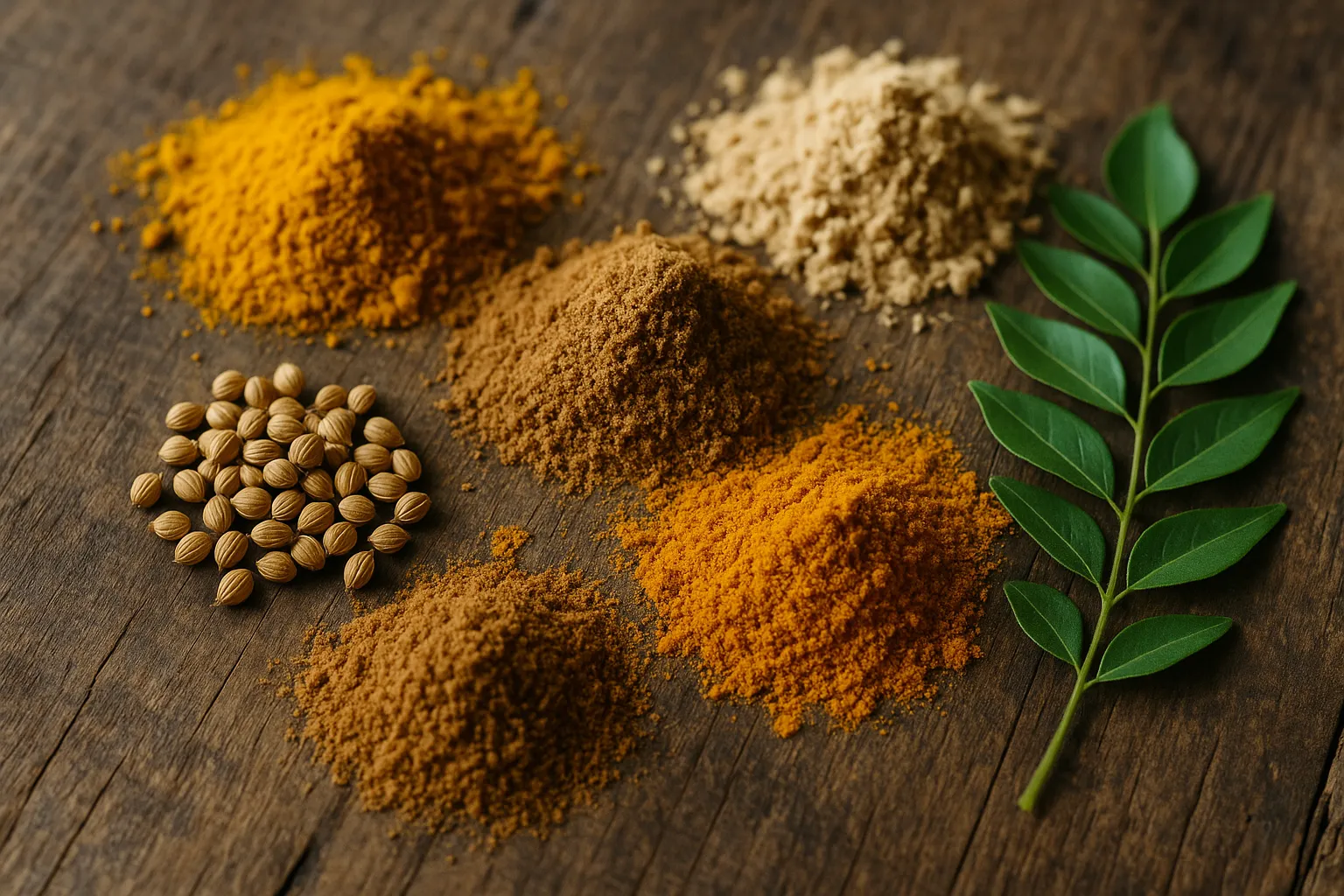
Schnelle Nährwerte
Per 1 Teaspoon Mixed Spices (2g)
| Nährstoff | Menge |
|---|---|
| Kalorien | 6 kcal |
| Protein | 0.3g |
| Kohlenhydrate | 1.3g |
| Ballaststoffe | 0.5g |
| Zucker | 0.1g |
| Fett | 0.2g |
| Eisen | 0.9mg |
| Kalzium | 26mg |
| Vitamin A | 214 IU |
| Vitamin C | 1.4mg |
Makronährstoff-Aufschlüsselung
 ChatGPT
  Claude
  AI Mode
  Perplexity
ERNÄHRUNGSBERATER-EINBLICK
Spices sind nutritional powerhouses mit negligible Kalorien but massive gesundheitliche Vorteile. Turmeric's curcumin reduziert Entzündung; black pepper boosts nutrient absorption by 2000%; cinnamon verbessert insulin sensitivity.
Mythen Entlarvt
MYTHOS #1: Spices Sind Just for Flavor
WAHRHEIT: Spices sind concentrated sources of bioactive compounds. Turmeric enthält curcumin mit anti-inflammatory effects comparable to einige medications, and cinnamon kann niedriger Blutzucker by 10-29% in einige studies.
MYTHOS #2: Spicy Foods Cause Ulcers
WAHRHEIT: Spicy foods don't cause ulcers; capsaicin in chili peppers kann actually protect der stomach lining. Die meisten ulcers sind caused by H. pylori bacteria or NSAIDs, not spices.
MYTHOS #3: Alle Spices Sind Hoch in Natrium
WAHRHEIT: Pure spices contain virtually no Natrium. Nur spice blends mit added salt sind hoch in Natrium. Individual spices like turmeric, cumin, and coriander have <2mg Natrium per teaspoon, making them perfect for niedrig-Natrium diets.
MYTHOS #4: Pregnant Women Sollte Vermeiden Spices
WAHRHEIT: Die meisten culinary spices sind safe während Schwangerschaft in normal cooking amounts. Ingwer reduziert morning sickness; turmeric in food amounts ist safe. Vermeiden excessive medicinal doses and consult your doctor ungefähr specific concerns.
MYTHOS #5: Cooking Destroys Alle Spice Benefits
WAHRHEIT: Während einige volatile compounds reduce mit heat, viele vorteilhaft compounds become mehr bioavailable wenn gekocht. Cooking turmeric mit black pepper and Fett erhöht curcumin absorption significantly.
MYTHOS #6: You Kann't Overdose on Spices
WAHRHEIT: Während rare, excessive intake of certain spices kann cause issues. Sehr hoch doses of nutmeg kann be toxic; excessive turmeric supplements kann interfere mit blood clotting. Stick to culinary amounts (1-3 tsp täglich) for safety.
NutriScore nach Gesundheitszielen
| Gesundheitsziel | NutriScore | Warum diese Bewertung? |
|---|---|---|
| Gewichtsverlust |  | Nur 6 Kalorien per tsp, boosts Stoffwechsel, reduziert Entzündung, enhances flavor ohne added Kalorien. |
| Muskelaufbau |  | Anti-inflammatory compounds reduce exercise-induced Entzündung; turmeric aids recovery; ingwer reduziert muscle soreness. |
| Diabetes-Management | | Cinnamon verbessert insulin sensitivity; fenugreek lowers fasting Blutzucker; turmeric reduziert insulin resistance. |
| PCOS-Management | | Anti-inflammatory properties support hormonal balance; cinnamon verbessert insulin sensitivity critical for PCOS management. |
| Schwangerschaftsernährung | | Ingwer reduziert morning sickness effectively; Eisen in spices unterstützt increased blood volume; safe in culinary amounts. |
| Viral/Flu Recovery | | Powerful immune-boosting compounds; ingwer and turmeric reduce Entzündung; black pepper enhances nutrient absorption; antimicrobial properties fight infections. |
PERSONALISIERTE ERNÄHRUNG
Verfolgen Sie Ihre Mahlzeiten mit NutriScan for personalized NutriScores based on your specific health goals!
Blutzucker-Reaktion to Spices
Die meisten spices have minimal direct impact on Blutglukose but kann significantly improve Blutzucker kontrolle wenn used regularly.
Typische Glukose-Reaktionskurve
Diese Grafik zeigt minimal Blutglukose response from spices alone. Individuelle Reaktionen können variieren. Keine medizinische Beratung.
Blood Zucker Benefits
Research shows several spices improve glucose kontrolle:
- 🥘 Cinnamon (1-6g täglich) - Verbessert insulin sensitivity by 10-29%
- 🌿 Fenugreek seeds - Slows carbohydrate digestion and absorption
- 💛 Turmeric mit black pepper - Reduziert insulin resistance
- 🌶️ Cayenne pepper - Erhöht insulin sensitivity and reduziert post-meal Blutzucker spikes
Add diese spices to carbohydrate-rich meals to flatten Blutzucker response and improve metabolic health.
Kulturelle Bedeutung
Spices have been valued throughout human history as medicine, currency, and culinary treasures.
In India:
- Ayurvedic medicine uses spices like turmeric, ingwer, and black pepper for 5,000+ years
- Indian cuisine developed complex spice blends (masalas) for flavor and medicinal properties
- Spice trade shaped Indian economy and attracted traders from Greece, Rome, Arabia, and Europe
- Jeder region has signature blends: garam masala (North), sambar powder (South), panch phoron (Bengal)
Global Impact:
- European exploration in 15th-17th centuries driven by desire for spices
- Black pepper once valued gram-for-gram mit gold
- Spice Route connected East and West, facilitating cultural exchange
- Modern research validates traditional medicinal uses of viele spices
Vergleichen und Ersetzen
Common Spices & Herbs (Pro 100g)
| Nährstoff | 🌶️ Mixed Spices | 💛 Turmeric Powder | 🌿 Dried Basil | 🧄 Garlic Powder |
|---|---|---|---|---|
| Kalorien | 314 kcal | 312 kcal | 251 kcal | 331 kcal |
| Kohlenhydrate | 65g | 65g | 48g | 73g |
| Ballaststoffe | 24g | 21g | 38g | 9g |
| Protein | 14g | 8g | 23g | 17g |
| Fett | 7g | 10g | 4g | 1g |
| Eisen | 45mg | 55mg | 90mg | 2.5mg |
| Kalzium | 1300mg | 168mg | 2113mg | 79mg |
| Am besten für | General cooking | Anti-inflammatory | Italian dishes | Savory meals |
Häufige Fragen
Sind spices gut for Gewichtsverlust?
Yes, spices support Gewichtsverlust through multiple mechanisms. Cayenne pepper erhöht thermogenesis by 5-10%, helping burn mehr Kalorien; turmeric reduziert Entzündung that kann hinder Gewichtsverlust; cinnamon verbessert insulin sensitivity. At nur 6 Kalorien per teaspoon, spices add tremendous flavor ohne adding significant Kalorien.
Am besten für Gewichtsverlust: Cayenne, cinnamon, turmeric, ingwer, black pepper (combined in meals 2-3 times täglich).
Kann diabetics verwenden spices freely?
Yes, die meisten spices sind highly vorteilhaft for diabetics. Cinnamon kann niedriger Blutzucker by 10-29%; turmeric verbessert insulin sensitivity; fenugreek seeds slow glucose absorption. Verwenden freely for flavoring ohne significantly impacting Blutzucker.
Am besten für Diabetes: Cinnamon (1-6g täglich), fenugreek, turmeric mit black pepper; vermeiden sweet spice blends mit added Zucker.
Was sind der main gesundheitliche Vorteile of spices?
Key Benefits:
- Anti-Inflammatory: Turmeric, ingwer reduce chronic Entzündung linked to disease
- Antioxidant Protection: Combat kostenlos radicals that damage cells
- Digestive Support: Cumin, coriander, fennel aid digestion and reduce bloating
- Blood Zucker Kontrolle: Cinnamon, fenugreek improve insulin sensitivity
- Immune Boost: Garlic, turmeric, black pepper enhance immune function
- Heart Health: Reduce cholesterol, improve circulation, niedriger blood pressure
Wie viel spice sollte I verwenden täglich?
General Guidelines:
- Mixed spices: 1-3 teaspoons (2-6g) täglich in cooking
- Turmeric: 500-2000mg (1/4-1 tsp) täglich mit black pepper
- Cinnamon: 1-6g (1/2-3 tsp) täglich
- Ingwer: 1-3g (1/2-1 1/2 tsp) frisch or dried
Start mit smaller amounts if neu to spices; gradually increase to vermeiden digestive discomfort. Consult healthcare provider vor hoch-dose supplementation.
Do spices lose Nährstoffe wenn gekocht?
Einige volatile compounds reduce mit prolonged hoch heat, but viele vorteilhaft compounds become mehr bioavailable wenn gekocht. Add delicate herbs (cilantro, parsley, basil) at der end of cooking; cook robust spices (turmeric, cumin, coriander) longer to enhance absorption.
Pro tip: Cooking turmeric mit black pepper and gesund Fett erhöht curcumin absorption by up to 2000%. Adding spices to oil at der start of cooking (tadka/tempering) maximizes flavor and bioavailability.
Sind frisch or dried herbs besser?
Both offer unique benefits:
Dried Herbs: 3-4x mehr concentrated flavor and Antioxidantien per gewicht; longer shelf leben; besser for slow-gekocht dishes; höher Eisen and calcium content.
Frisch Herbs: Mehr volatile oils providing aromatic compounds; höher vitamin C; brighter flavor; besser for finishing dishes and roh applications.
Conversion: 1 tablespoon frisch herbs = 1 teaspoon dried herbs. Verwenden both strategically for optimal nutrition and flavor.


Ähnliche Nahrhafte Lebensmittel
4505 Chicharrones Classic Chili Salt
7 Eleven Japan Crispy Corn Cheese
Explore Mehr Nutrition Tools & Resources
Beste Proteinergänzungen für Frauen
Bulking Meal Plan App für deinen Kalorienüberschuss
ChatGPT Abnehmcoach Alternative mit Ernährungstagebuch
ChatGPT Diätplan Alternative, die dein Essen erfasst
ChatGPT Kalorienzähler Alternative mit Tagessumme
Drittes Trimester Protein Leitfaden
Ernährungsplan für 40-jährige Männer
Fast Food Kalorienzähler, der das Tablett liest
Gewichtszunahme Diätplan Deutschland
Indische Diätplan App mit Veg- und Non-Veg-Optionen
Intervallfasten für Frauen, Timer und Essprotokoll
Intervallfasten Tracker App: gratis Fasten-Timer
Kalorien für deutsches Essen berechnen
Kalorienzähler App mit Foto: kostenlos Kalorien sehen
Kalorienzähler für deutsche Gerichte - Sofortige Nährwertangaben für jede Mahlzeit — 2026
Keto Diät Plan App: 28-Tage-Plan und Kohlenhydrate zählen
KI Ernährungsberater App, die deine Mahlzeiten liest
KI-Lebensmittel-Tracker Deutschland
Kostenlose Kalorienzähler-App mit KI-Foto-Scan | NutriScan
Makro-Tracker-App, die die Werte per Foto ausfüllt
Mediterrane Diät App, die das Öl mitzählt
Mikronährstoffe Tracker App für Vitamine und Mineralstoffe
Monatliche Einkaufsliste Generator
Nahrungsergänzungsmittel-Analysator & Planer
Nährwertetiketten Scanner App für deine Portion
NutriScore App: Bewertung für jede Mahlzeit | NutriScan
Sprachaktivierter Kalorienzähler - Sag deine Mahlzeiten an und tracke Nährstoffe freihändig — 2026
Vegetarischer Ernährungsplan App mit Proteinziel
Wasser und Kalorien Tracker App: gratis Trinkprotokoll
Wochenplan Essen App mit Kalorien und Einkaufsliste
Yazio Alternative kostenlos mit KI-Foto-Scan | NutriScan