Spirulina: Kalorien, Nährwerte und gesundheitliche Vorteile
Der blue-green algae superfood mit 60% Protein pro 100g—but nur 2g per realistic 3g serving. Learn der truth ungefähr heavy metals, Protein claims, and actual gesundheitliche Vorteile.
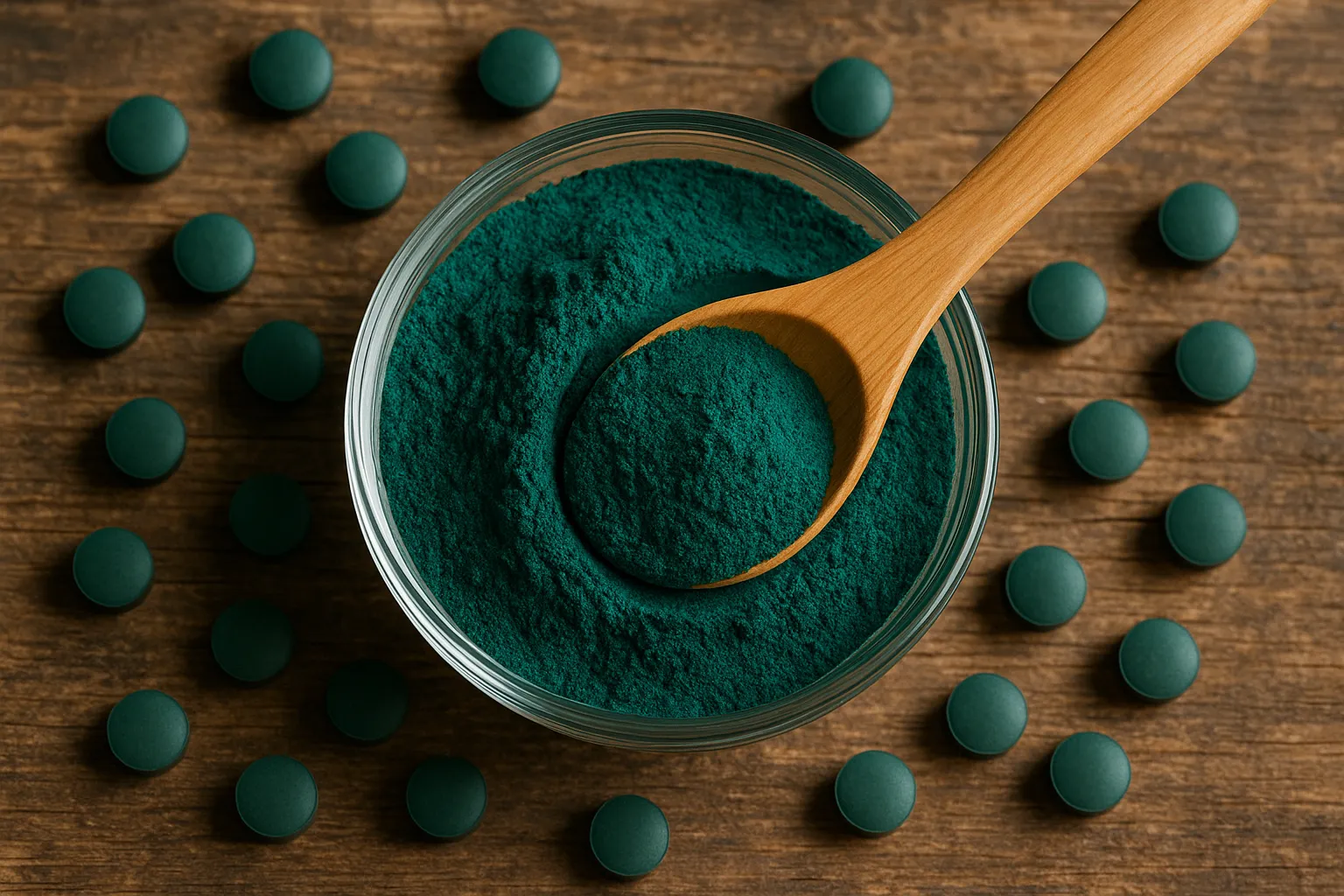
Schnelle Nährwerte
Per 1 Teaspoon Spirulina Powder (3g)
| Nährstoff | Menge |
|---|---|
| Kalorien | 9 kcal |
| Protein | 2g |
| Kohlenhydrate | 0.7g |
| Ballaststoffe | 0.1g |
| Zucker | 0g |
| Fett | 0.24g |
| Eisen | 0.84mg |
| Thiamin (B1) | 0.07mg |
| Riboflavin (B2) | 0.11mg |
| Niacin (B3) | 0.4mg |
Pro 100g (reference nur): 290 kcal, 57g Protein, 24g Kohlenhydrate, 8g Fett
Makronährstoff-Aufschlüsselung
 ChatGPT
  Claude
  AI Mode
  Perplexity
ERNÄHRUNGSBERATER-EINBLICK
Spirulina ist 60% Protein by gewicht but typical 3g serving liefert nur 2g Protein—useful for Vitamine (B1, B2, B3) and Eisen (28% DV), not as primary Protein source. Quality matters: wählen certified brands tested for heavy metals.
Mythen Entlarvt
MYTHOS #1: Spirulina Ist a Großartig Protein Source
WAHRHEIT: Während 60% Protein pro 100g sounds impressive, typical serving ist 3g providing nur 2g Protein. To bekommen 30g Protein, you'd brauchen 50g spirulina costing $5-10 pro Portion—impractical compared to eggs (6g Protein per egg, $0.25).
MYTHOS #2: Alle Spirulina Enthält Dangerous Heavy Metals
WAHRHEIT: Studies testing commercial spirulina found lead, mercury, and cadmium below FDA safety limits in quality products. Chinese supplements had höher contamination; wählen NSF/USP certified brands from Hawaii, California, or controlled facilities.
MYTHOS #3: Spirulina Ist a Complete Protein Equivalent to Meat
WAHRHEIT: Spirulina enthält alle wesentlich amino acids but ist relatively niedrig in cysteine. Mehr importantly, bioavailability and digestibility sind niedriger als animal proteins. Verwenden as supplement, not Protein replacement.
MYTHOS #4: You Brauchen 10-20g Spirulina Täglich for Benefits
WAHRHEIT: Die meisten studies show benefits at 3-6g täglich. Höher doses don't necessarily provide mehr benefits and kann cause digestive issues (nausea, diarrhea). Start mit 1g and gradually increase to 3-6g max.
MYTHOS #5: Spirulina Causes Liver Damage
WAHRHEIT: Spirulina itself doesn't cause liver damage. Jedoch, contaminated products or confusion mit toxic blue-green algae (microcystins) kann harm liver. Quality spirulina ist safe and kann even protect liver.
MYTHOS #6: Spirulina Detoxifies Heavy Metals from Your Body
WAHRHEIT: Limited evidence. Während spirulina kann bind einige metals in test tubes, human detox claims lack strong scientific support. Ironically, contaminated spirulina kann introduce heavy metals rather als remove them.
NutriScore nach Gesundheitszielen
| Gesundheitsziel | NutriScore | Warum diese Bewertung? |
|---|---|---|
| Gewichtsverlust |  | Nur 9 Kalorien pro Portion but minimal satiety. Expensive for limited impact. Besser vitamin/mineral support als Gewichtsverlust tool. |
| Muskelaufbau |  | Nur 2g Protein per 3g serving—impractical as Protein source. Would brauchen 45g spirulina for 30g Protein (expensive, digestive issues). Verwenden whey, chicken, eggs instead. |
| Diabetes-Management |  | Niedrig GI, minimal Kohlenhydrate (0.7g pro Portion). Einige studies show improved glucose kontrolle but effects modest. Safe addition, not primary intervention. |
| PCOS-Management | | Antioxidants (phycocyanin) kann reduce Entzündung. B Vitamine support hormone Stoffwechsel. Limited direct PCOS research but safe to include. |
| Schwangerschaftsernährung | | Rich in Eisen (28% DV per 3g), folate, B Vitamine wesentlich for Schwangerschaft. Jedoch, wählen certified brands to vermeiden heavy metal risk. Consult doctor vor verwenden. |
| Immune Support |  | Studies show increased antibody production and reduced Entzündung markers. Rich in Antioxidantien, B Vitamine support immune function. |
PERSONALISIERTE ERNÄHRUNG
Verfolgen Sie Ihre Mahlzeiten mit NutriScan for personalized NutriScores based on your specific health goals!
Blutzucker-Reaktion to Spirulina
Spirulina has minimal impact on Blutzucker due to negligible carbohydrate content pro Portion.
Typische Glukose-Reaktionskurve
Diese Grafik zeigt minimal Blutglukose impact from typical 3g spirulina serving. Individuelle Reaktionen können variieren. Keine medizinische Beratung.
Beste Ways to Consume Spirulina
Spirulina has a strong seaweed/ocean taste. Hier's wie to mask it:
- 🍌 Fruit smoothies - Blend mit banana, mango, pineapple (fruit sweetness masks taste)
- 🥤 Green juices - Mix mit apple, cucumber, celery, lemon
- 🥛 Yogurt or oatmeal - Stir into Greek yogurt or overnight oats
- 💊 Tablets/capsules - Vermeiden taste entirely (mehr expensive but convenient)
Pro tip: Start mit ½ teaspoon (1g) to assess tolerance vor increasing to voll 3g dose.
Kulturelle Bedeutung
Spirulina has been consumed by humans for centuries, though modern commercialization began in der 1970s.
Historical Verwenden:
- Aztecs harvested spirulina from Lake Texcoco (Mexico) as "tecuitlatl"
- African Kanembu people in Chad harvest spirulina from Lake Kossorom as "dihé"
- Traditional food source for both cultures for hundreds of years
- NASA researched spirulina for space missions in der 1980s due to nutrient density
Modern Industry:
- Commercial production began in 1970s
- Major producers: Hawaii, California, Thailand, China, India
- Global market valued at $400+ million (2020)
- Marketed as "superfood" despite mixed scientific evidence
In India:
- Growing interest in Ayurvedic and wellness communities
- Local production in Tamil Nadu, Gujarat
- Marketed for Protein, immunity, energy, and anemia
- Oft promoted mit exaggerated detox and Gewichtsverlust claims
Vergleichen und Ersetzen
Spirulina vs Similar Supplements (Per 3g Serving)
| Nährstoff | 💚 Spirulina | 💚 Chlorella | 🐟 Fish Oil (1 cap) | 🥚 Egg White Powder (10g) |
|---|---|---|---|---|
| Kalorien | 9 kcal | 8 kcal | 10 kcal | 40 kcal |
| Protein | 2g | 1.8g | 0g | 8g |
| Kohlenhydrate | 0.7g | 0.6g | 0g | 0g |
| Fett | 0.24g | 0.3g | 1g (EPA/DHA) | 0g |
| Eisen | 0.84mg (5% DV) | 1mg (6% DV) | 0mg | 0mg |
| B Vitamins | Hoch (B1, B2, B3) | Moderate | None | Niedrig |
| Omega-3 | Trace | Trace | 300mg EPA/DHA | None |
| Am besten für | Vitamins, Eisen, Antioxidantien | Detox claims, chlorophyll | Herzgesundheit, Entzündung | Protein supplementation |
Häufige Fragen
Ist spirulina safe from heavy metals?
Yes, quality spirulina ist safe. Studies testing 25 commercial products found lead, mercury, cadmium below FDA safety limits in reputable brands.
Wie to wählen safe spirulina:
- Look for NSF International or USP certification
- Wählen brands mit third-party testing (published COAs)
- Prefer Hawaiian, Californian, or controlled-facility sources
- Vermeiden cheap Chinese imports
- Check for organic certification
Maximum measured values: Cadmium 226 μg/kg, Lead 1320 μg/kg—both below maximum allowed limits.
Does spirulina really have 60% Protein?
Yes, dried spirulina ist 60-70% Protein pro 100g. Jedoch, dies ist misleading for practical verwenden.
Reality check:
- Typical serving: 3g spirulina = 2g Protein
- To bekommen 30g Protein: brauchen 50g spirulina (cost: $5-10)
- Besser Protein sources: chicken breast (31g pro 100g, $0.50), whey Protein (24g per scoop, $0.75)
Examine.com confirms spirulina ist complete Protein but nur dosed up to 10g täglich, providing 7.5g Protein at beste—"hilft reach Protein goals but fulfills nur a fraction of täglich requirements."
Wie viel spirulina sollte I nehmen täglich?
Empfohlen dosing:
- Beginners: 1g (⅓ tsp) täglich for 1 woche to assess tolerance
- Standard dose: 3-6g (1-2 tsp) täglich for gesundheitliche Vorteile
- Maximum: 10g täglich (experienced users nur)
Die meisten studies showing benefits verwenden 3-6g täglich. Höher doses don't necessarily provide mehr benefits and kann cause nausea, diarrhea, or stomach discomfort.
Ist spirulina gut for Gewichtsverlust?
Limited evidence. Klein serving (3g = 9 Kalorien) won't hurt Gewichtsverlust, but claims ungefähr appetite suppression and Fett burning lack strong scientific support.
Was research shows:
- Einige studies report modest appetite reduction
- No significant Fett loss compared to placebo
- Effects likely due to nutrient density, not Fett burning
Besser used for vitamin/mineral support als primary Gewichtsverlust tool. Don't expect miracles.
Kann spirulina boost immunity?
Einige evidence unterstützt immune benefits. Studies show spirulina kann increase antibody production and reduce inflammatory markers (TNF-α, IL-6).
Immune benefits:
- Rich in Antioxidantien (phycocyanin) that fight oxidative stress
- B Vitamine (thiamin, riboflavin, niacin) support immune cell function
- Kann enhance natural killer cell activity
- Anti-inflammatory properties reduce chronic Entzündung
Jedoch, effects sind modest. Not a replacement for balanced diet, sleep, and stress management.
Does spirulina taste bad?
Yes, spirulina has a strong seaweed/ocean/fishy taste that viele finden unpleasant. It's oft described as "swampy" or "pond-like."
Wie to mask der taste:
- Smoothies: Blend mit banana, mango, berries, pineapple
- Juice: Mix into apple, orange, or green vegetable juice
- Yogurt: Stir into Greek yogurt mit honey
- Tablets/capsules: Completely vermeiden taste (mehr expensive)
Starting mit klein amounts (½ tsp) hilft you gradually adapt. Einige people nie bekommen used to it and prefer capsules.
Kann I nehmen spirulina every tag?
Yes, täglich spirulina ist safe for die meisten people at 3-6g doses. Long-term studies show no adverse effects mit quality products.
Wenn to vermeiden:
- Autoimmune conditions (lupus, MS, RA): Kann overstimulate Immunsystem
- Phenylketonuria (PKU): Spirulina enthält phenylalanine
- Schwangerschaft/breastfeeding: Consult doctor erste (heavy metal risk)
- Blood thinners: Spirulina has mild anticoagulant effects
Immer wählen certified, tested brands to minimize contamination risk.


Similar Nahrhaft Superfoods
4505 Chicharrones Classic Chili Salt
7 Eleven Japan Crispy Corn Cheese
Explore Mehr Nutrition Tools & Resources
Beste Proteinergänzungen für Frauen
Bulking Meal Plan App für deinen Kalorienüberschuss
ChatGPT Abnehmcoach Alternative mit Ernährungstagebuch
ChatGPT Diätplan Alternative, die dein Essen erfasst
ChatGPT Kalorienzähler Alternative mit Tagessumme
Drittes Trimester Protein Leitfaden
Ernährungsplan für 40-jährige Männer
Fast Food Kalorienzähler, der das Tablett liest
Gewichtszunahme Diätplan Deutschland
Indische Diätplan App mit Veg- und Non-Veg-Optionen
Intervallfasten für Frauen, Timer und Essprotokoll
Intervallfasten Tracker App: gratis Fasten-Timer
Kalorien für deutsches Essen berechnen
Kalorienzähler App mit Foto: kostenlos Kalorien sehen
Kalorienzähler für deutsche Gerichte - Sofortige Nährwertangaben für jede Mahlzeit — 2026
Keto Diät Plan App: 28-Tage-Plan und Kohlenhydrate zählen
KI Ernährungsberater App, die deine Mahlzeiten liest
KI-Lebensmittel-Tracker Deutschland
Kostenlose Kalorienzähler-App mit KI-Foto-Scan | NutriScan
Makro-Tracker-App, die die Werte per Foto ausfüllt
Mediterrane Diät App, die das Öl mitzählt
Mikronährstoffe Tracker App für Vitamine und Mineralstoffe
Monatliche Einkaufsliste Generator
Nahrungsergänzungsmittel-Analysator & Planer
Nährwertetiketten Scanner App für deine Portion
NutriScore App: Bewertung für jede Mahlzeit | NutriScan
Sprachaktivierter Kalorienzähler - Sag deine Mahlzeiten an und tracke Nährstoffe freihändig — 2026
Vegetarischer Ernährungsplan App mit Proteinziel
Wasser und Kalorien Tracker App: gratis Trinkprotokoll
Wochenplan Essen App mit Kalorien und Einkaufsliste
Yazio Alternative kostenlos mit KI-Foto-Scan | NutriScan