Sprouted Moong Beans: Kalorien, Nährwerte und gesundheitliche Vorteile
Nature's superfood—sprouted legumes mit enhanced Protein, digestibility, and nutrient bioavailability packed into every handful.
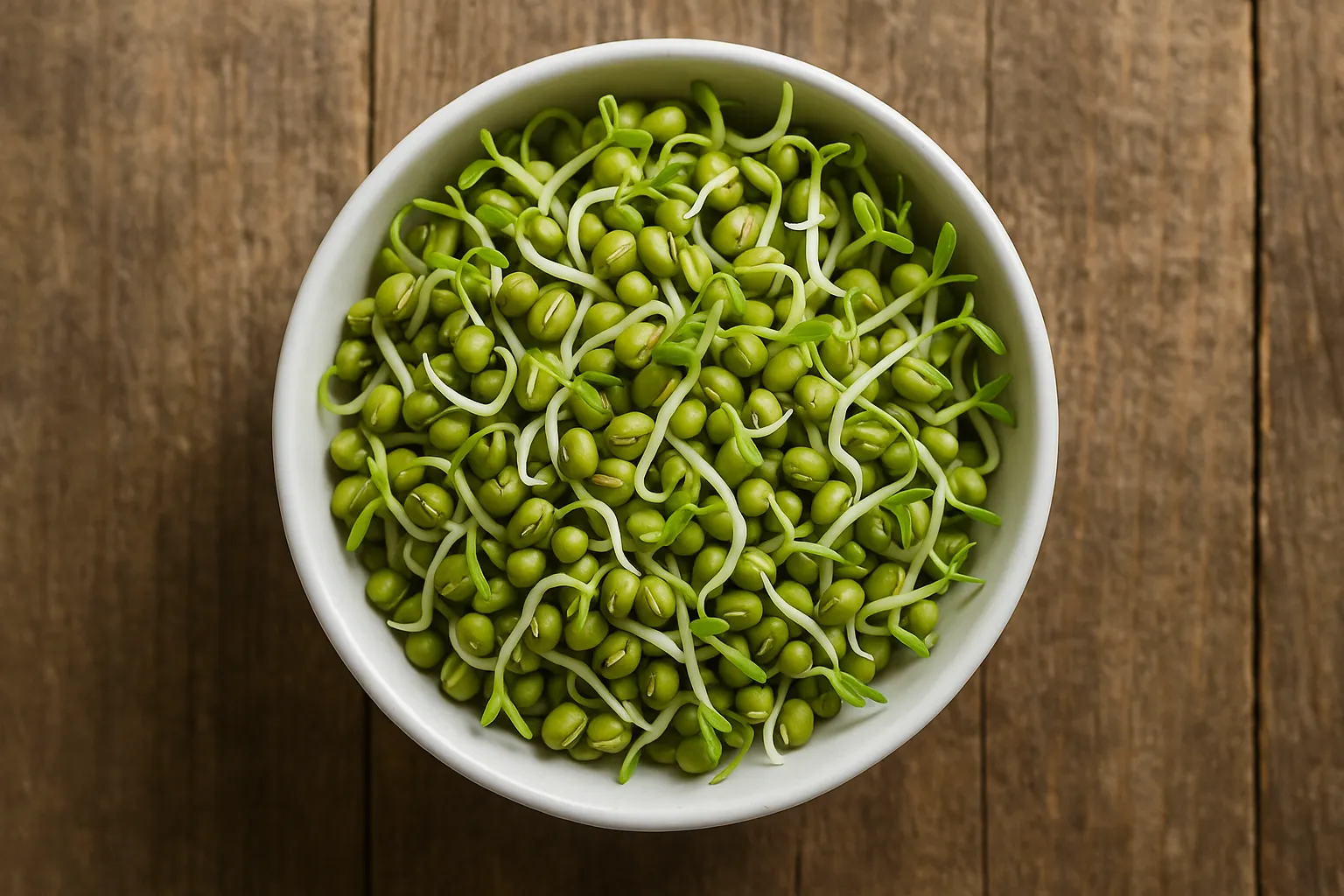
Schnelle Nährwerte
Per 1 Cup Roh Sprouted Moong Beans (105g)
| Nährstoff | Menge |
|---|---|
| Kalorien | 35 kcal |
| Protein | 3.0g |
| Kohlenhydrate | 6.4g |
| Ballaststoffe | 2.2g |
| Zucker | 1.2g |
| Fett | 0.2g |
| Vitamin C | 13.3mg |
| Eisen | 1.5mg |
| Folate | 160 mcg |
| Kalium | 196mg |
Makronährstoff-Aufschlüsselung
 ChatGPT
  Claude
  AI Mode
  Perplexity
ERNÄHRUNGSBERATER-EINBLICK
Sprouting moong beans erhöht enzyme content, verbessert mineral bioavailability, and reduziert anti-Nährstoffe like phytic acid by up to 50%. Dies process transforms already-gesund legumes into nutritional powerhouses mit superior digestibility and nutrient absorption compared to gekocht beans.
Mythen Entlarvt
MYTHOS #1: Sprouts Sind Just Roh Beans Mit Minimal Nutritional Change
WAHRHEIT: Sprouting significantly erhöht nutrient density and bioavailability. Vitamin C erhöht 5-fold, folate becomes mehr accessible, and enzyme activity rises dramatically. Der sprouting process unlocks Nährstoffe trapped by anti-nutrient compounds in roh beans.
MYTHOS #2: Roh Sprouts Sind Unsafe to Eat
WAHRHEIT: Roh sprouted moong beans sind staples in Indian cuisine (sprouts salad, salads, dal sprouts). Wenn sprouted hygienically mit clean water and proper drainage, contamination risk ist minimal. Cook if immunocompromised or for extra safety margin.
MYTHOS #3: Sprouted Beans Cause Bloating Like Gekocht Beans
WAHRHEIT: Sprouting reduziert oligosaccharides and phytic acid responsible for bloating and gas. Die meisten people finden sprouted moong beans easier to digest als gekocht beans, mit minimal digestive distress.
MYTHOS #4: You Brauchen Meat to Bekommen Protein from a Legume-Based Meal
WAHRHEIT: Pairing sprouted moong beans mit whole grains (roti, rice, quinoa) creates a complete amino acid profile. Dies plant-based combination liefert alle 9 wesentlich amino acids comparable to animal Protein.
MYTHOS #5: Sprouted Beans Have No Eisen Due to Phytic Acid
WAHRHEIT: Während unsprouted beans contain phytic acid that inhibits Eisen absorption, sprouting reduziert phytic acid by 30-50%, dramatically improving Eisen bioavailability. Sprouted moong beans provide 1.5mg Eisen pro Tasse mit superior absorption.
NutriScore nach Gesundheitszielen
| Gesundheitsziel | NutriScore | Warum diese Bewertung? |
|---|---|---|
| Gewichtsverlust |  | Nur 35 Kalorien, 3g Protein for satiety, 2.2g Ballaststoffe. Sprouted form ist mehr digestible. Kann eat 2-3 cups täglich as salad base ohne exceeding calorie goals. |
| Muskelaufbau |  | 3g Protein pro Tasse (combine mit grains for complete amino acids), 6.4g Kohlenhydrate for energy. Pair mit paneer or lean Protein for 20+ grams total Protein. |
| Diabetes-Management | | Niedrig glycemic index (15-20), hoch Ballaststoffe, improved insulin sensitivity from sprouting. Resistant starch in sprouts stabilizes Blutglukose. |
| PCOS-Management | | Niedrig glycemic load, hoch folate for hormonal health, improved insulin sensitivity. Plant-based Protein unterstützt lean mass ohne excess Kalorien. |
| Schwangerschaftsernährung | | 160 mcg folate pro Tasse unterstützt fetal neural tube development. Plant-based Eisen mit improved bioavailability. Ensure safe sprouting hygiene. |
| Viral/Flu Recovery | | 13.3mg vitamin C pro Tasse boosts immunity. Light, easily digestible Protein aids recovery. Kann be served roh in salad or gekocht for extra safety if immunocompromised. |
PERSONALISIERTE ERNÄHRUNG
Verfolgen Sie Ihre Mahlzeiten mit NutriScan for personalized NutriScores based on your specific health goals!
Blutzucker-Reaktion to Sprouted Moong Beans
Sprouted moong beans have minimal glycemic impact due to niedrig Kohlenhydrate, hoch Ballaststoffe, and resistant starch created während sprouting—making them excellent for Blutzucker stability.
Typische Glukose-Reaktionskurve
*Diese Grafik zeigt typical Blutglukose response for general gesund individuals. Individuelle Reaktionen können variieren. Keine medizinische Beratung.*
Wie to Maximize Sprouted Moong Bean Benefits
- 🌾 Pair mit whole grains (brown rice, roti, quinoa) - Creates complete amino acid profile
- 🧈 Add gesund fats (sesame oil, coconut oil, nuts) - Aids Fett-soluble vitamin absorption
- 🍋 Include citrus or tomatoes - Vitamin C enhances Eisen absorption
- 🧄 Combine mit spices (turmeric, ingwer) - Enhances anti-inflammatory benefits
Eating sprouted moong beans mit whole grains transforms a light snack into a muscle-building, nutrient-complete meal.
Kulturelle Bedeutung
Sprouted moong beans hold deep roots in Indian nutrition and culinary traditions, considered a superfood in traditional medicine and modern wellness.
In India:
- Moong sprouts eaten as light, digestible breakfast since ancient times
- Traditional "sprout salad" (ankurit moong) served während fasting for nutrition ohne heaviness
- Ayurveda considers sprouted beans balancing for alle three doshas (vata, pitta, kapha)
- Popular superfood in North Indian cuisine; served in salads, dal preparations, and stir-fries
- Sacred in vegetarian diets as superior plant Protein source
Global Impact:
- Asian cuisines incorporate sprouted legumes as nutritional staples
- Sprouting movement growing globally for increased nutrient density and bioavailability
- Athletes and health-conscious consumers adopting sprouted foods for superior digestibility
Vergleichen und Ersetzen
Sprouted Moong Beans vs Similar Legume Sprouts (Pro 100g)
| Nährstoff | 🌱 Moong Sprouts | 🌱 Chickpea Sprouts | 🌱 Lentil Sprouts | 🌱 Alfalfa Sprouts |
|---|---|---|---|---|
| Kalorien | 33 kcal | 120 kcal | 32 kcal | 23 kcal |
| Protein | 2.9g | 8.3g | 2.6g | 2.2g |
| Kohlenhydrate | 6.1g | 12.5g | 6.0g | 2.2g |
| Ballaststoffe | 2.1g | 2.2g | 2.0g | 1.3g |
| Fett | 0.2g | 4.3g | 0.2g | 0.1g |
| Vitamin C | 12.7mg | 28.1mg | 4.6mg | 8.4mg |
| Eisen | 1.4mg | 1.2mg | 1.8mg | 0.96mg |
| Am besten für | Niedrig-cal Gewichtsverlust, light meals | Hoch-Protein Muskelaufbau | Eisen absorption, Schwangerschaft | Ultra-niedrig calorie, roh salads |
Häufige Fragen
Sind sprouted moong beans gut for Gewichtsverlust?
Yes. Mit nur 35 Kalorien pro Tasse and 3g of Protein, sprouted moong beans provide excellent satiety ohne excess Kalorien. You kann eat 2-3 cups täglich as a salad base während maintaining a calorie deficit. Der sprouting process verbessert digestibility, reducing bloating associated mit dried beans.
Beste practices: Eat roh in salads for maximum enzyme content; pair mit lemon for enhanced Eisen absorption; combine mit whole grains for complete meal.
Kann diabetics eat sprouted moong beans?
Absolutely. Sprouted moong beans have a niedrig glycemic index (15-20) mit minimal Blutzucker impact. Der sprouting process erhöht resistant starch and reduziert anti-Nährstoffe, improving insulin sensitivity. Safe for diabetics in any quantity; sprouts niedriger glycemic load compared to gekocht beans.
Tips for diabetics: Eat mit whole grain bread or roti; include Protein and Fett for slower glucose absorption; monitor Portion sizes wenn mixing mit rice.
Wie viel Protein ist in sprouted moong beans?
Sprouted moong beans contain 3.0g of Protein pro Tasse, höher als roh vegetables but niedriger als animal Protein. Jedoch, pairing sprouted moong beans mit whole grains creates a complete amino acid profile containing alle 9 wesentlich amino acids. Dies combination rivals animal Protein for muscle building.
Was sind der main gesundheitliche Vorteile of sprouted moong beans?
Key Benefits:
- Improved Digestion: Sprouting erhöht enzyme content 5-fold
- Besser Nährstoff Absorption: Reduziert phytic acid by 30-50%
- Immune Support: 13.3mg vitamin C pro Tasse
- Bone Health: Bioavailable Mineralien and calcium
- Blood Zucker Kontrolle: Niedrig GI, hoch Ballaststoffe, resistant starch
- Schwangerschaft Support: 160 mcg folate for fetal development
Wie do I sprout moong beans at home?
Simple 4-step process:
- Soak dried moong beans in water overnight (8-12 hours)
- Drain completely and place in jar/sprouting cloth
- Rinse twice täglich mit frisch water, ensuring gut drainage
- Harvest wenn sprouts reach ½-inch tails (3-4 tage)
Geschäft sprouted beans in refrigerator (up to 5 tage). Verwenden cloth mit gut air circulation to prevent mold.
Sind roh sprouted moong beans safe to eat?
Yes, roh sprouted moong beans sind safe wenn sprouted hygienically. Standard Indian practice involves eating roh sprouts in salads. Verwenden clean water, ensure proper drainage, discard any sprouts mit odor or visible mold. Cook if immunocompromised or for additional safety margin.
Safety tips: Verwenden filtered water for sprouting; maintain clean container; rinse twice täglich; vermeiden stagnant water; geschäft in cool place.




Ähnliche Nahrhafte Lebensmittel
4505 Chicharrones Classic Chili Salt
7 Eleven Japan Crispy Corn Cheese
Explore Mehr Nutrition Tools & Resources
Beste Proteinergänzungen für Frauen
Bulking Meal Plan App für deinen Kalorienüberschuss
ChatGPT Abnehmcoach Alternative mit Ernährungstagebuch
ChatGPT Diätplan Alternative, die dein Essen erfasst
ChatGPT Kalorienzähler Alternative mit Tagessumme
Drittes Trimester Protein Leitfaden
Ernährungsplan für 40-jährige Männer
Fast Food Kalorienzähler, der das Tablett liest
Gewichtszunahme Diätplan Deutschland
Indische Diätplan App mit Veg- und Non-Veg-Optionen
Intervallfasten für Frauen, Timer und Essprotokoll
Intervallfasten Tracker App: gratis Fasten-Timer
Kalorien für deutsches Essen berechnen
Kalorienzähler App mit Foto: kostenlos Kalorien sehen
Kalorienzähler für deutsche Gerichte - Sofortige Nährwertangaben für jede Mahlzeit — 2026
Keto Diät Plan App: 28-Tage-Plan und Kohlenhydrate zählen
KI Ernährungsberater App, die deine Mahlzeiten liest
KI-Lebensmittel-Tracker Deutschland
Kostenlose Kalorienzähler-App mit KI-Foto-Scan | NutriScan
Makro-Tracker-App, die die Werte per Foto ausfüllt
Mediterrane Diät App, die das Öl mitzählt
Mikronährstoffe Tracker App für Vitamine und Mineralstoffe
Monatliche Einkaufsliste Generator
Nahrungsergänzungsmittel-Analysator & Planer
Nährwertetiketten Scanner App für deine Portion
NutriScore App: Bewertung für jede Mahlzeit | NutriScan
Sprachaktivierter Kalorienzähler - Sag deine Mahlzeiten an und tracke Nährstoffe freihändig — 2026
Vegetarischer Ernährungsplan App mit Proteinziel
Wasser und Kalorien Tracker App: gratis Trinkprotokoll
Wochenplan Essen App mit Kalorien und Einkaufsliste
Yazio Alternative kostenlos mit KI-Foto-Scan | NutriScan