Subway Rotisserie-Style Chicken Salad: Kalorien and Nutrition
Frisch vegetables mit tender rotisserie-style chicken—a hoch-Protein, niedrig-carb meal that unterstützt multiple health goals ohne compromise.
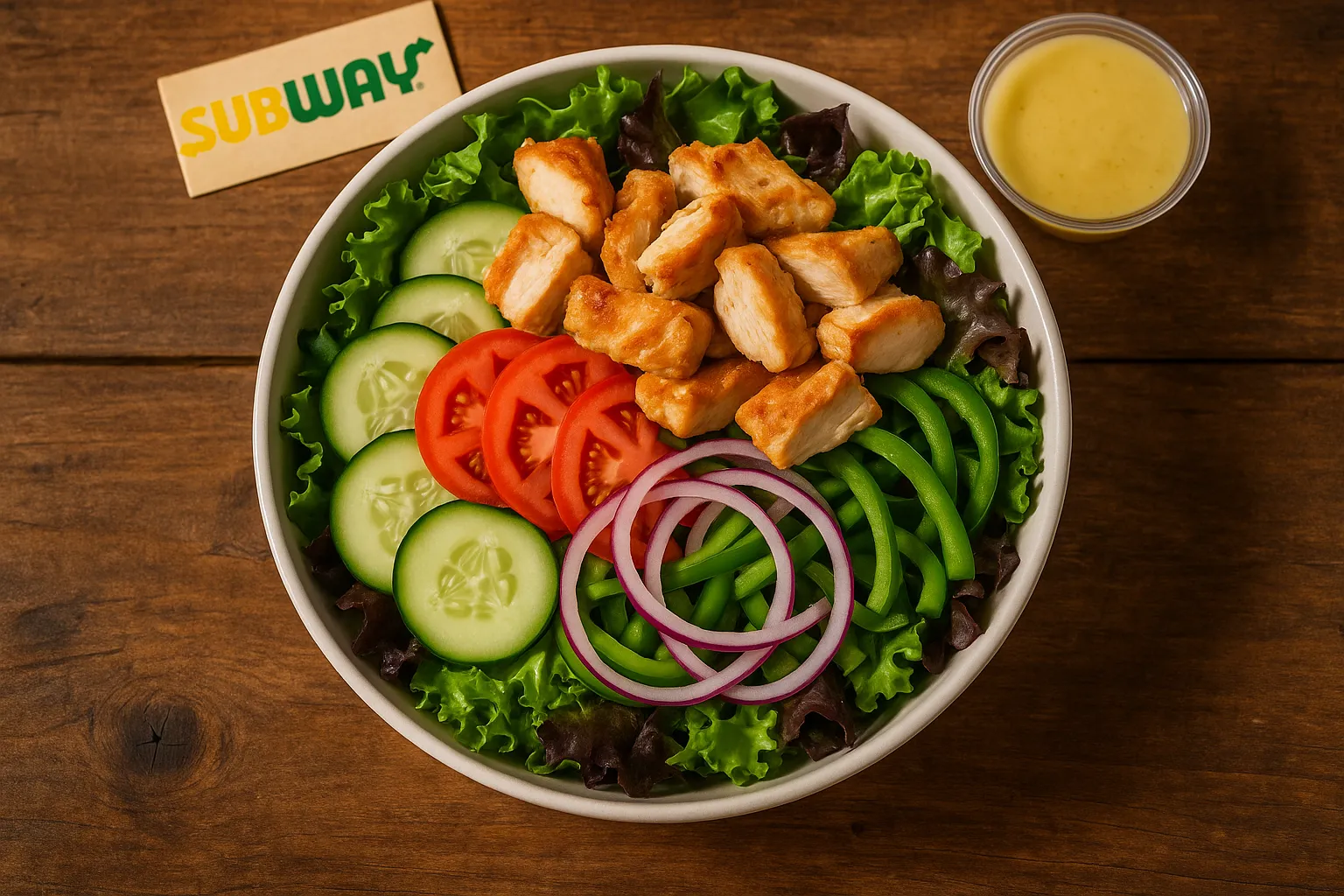
Schnelle Nährwerte
Per 1 Salad (320g)
| Nährstoff | Menge |
|---|---|
| Kalorien | 265 kcal |
| Protein | 28g |
| Kohlenhydrate | 12g |
| Ballaststoffe | 3g |
| Zucker | 2g |
| Fett | 9g |
| Natrium | 620mg |
| Cholesterin | 75mg |
| Kalium | 520mg |
| Eisen | 1.8mg |
Makronährstoff-Aufschlüsselung
 ChatGPT
  Claude
  AI Mode
  Perplexity
ERNÄHRUNGSBERATER-EINBLICK
Dies salad achieves an ideal macronutrient ratio for die meisten health goals: 42% Protein, 18% Kohlenhydrate, 30% Fett (remaining 10% Ballaststoffe). Der 3g Ballaststoffe and 28g Protein combination fördert satiety, making it excellent for appetite kontrolle. Frisch vegetables add micronutrients (Vitamine A, C, K) während keeping Kalorien mäßig. Wählen oil & vinegar dressing to preserve der gesundheitliche Vorteile.
Mythen Entlarvt
MYTHOS #1: Fast-Food Salads Sind Gesund Automatically
WAHRHEIT: Viele fast-food salads exceed 500 Kalorien due to creamy dressings and add-ons. Dies Subway salad ist genuinely balanced at 265 Kalorien weil it's vegetable-forward mit lean Protein. Creamy dressings kann add 200-300 Kalorien; dressing choice ist critical.
MYTHOS #2: Salads Have Insufficient Protein for Muskelaufbau
WAHRHEIT: Der 28g Protein in dies salad ist substantial for a single meal. Post-workout Protein synthesis requires 20-40g, making dies salad adequate for muscle recovery ohne additional Protein.
MYTHOS #3: Eating Salad Makes You Hungry Faster
WAHRHEIT: Dies salad's combination of 28g Protein + 3g Ballaststoffe creates satiety. Hoch-Protein meals increase GLP-1 hormones that suppress appetite for 3-4 hours; you'll feel satisfied longer als mit carb-focused meals.
MYTHOS #4: Chicken Salad Cannot Support Gewichtsverlust Long-Term
WAHRHEIT: At 265 Kalorien mit hoch Protein, dies salad ist ideal for sustainable Gewichtsverlust. It liefert fullness and micronutrients während supporting täglich 500-1000 calorie deficits for 1-2 lbs weekly loss. Variety verhindert boredom; rotate mit andere proteins.
MYTHOS #5: Vegetables Add Negligible Nutrition
WAHRHEIT: Frisch salad vegetables provide 3g Ballaststoffe, 15% Tageswert Kalium, vitamin A (eye health), vitamin C (immunity), and K (Knochengesundheit). Diese micronutrients support metabolic health, immunity, and energy—not just Kalorien or macros.
NutriScore nach Gesundheitszielen
| Gesundheitsziel | NutriScore | Warum diese Bewertung? |
|---|---|---|
| Gewichtsverlust |  | Nur 265 Kalorien mit 28g Protein creates excellent satiety for caloric deficit. Ballaststoffe aids appetite kontrolle. Verwenden oil & vinegar dressing (80 cal) for <350 calorie total meal. |
| Muskelaufbau | | 28g Protein unterstützt post-workout recovery directly. Kohlenhydrate (12g) plus regular meals provide glycogen; add a carb side (fruit, rice) for complete recovery meal. |
| Diabetes-Management | | Nur 12g net Kohlenhydrate (9g nach Ballaststoffe) mit 28g Protein makes dies ideal for Diabetes. Niedrig glycemic index (30-35); Blutzucker impact minimal. Pair mit vinegar dressing for acidity benefit. |
| PCOS-Management | | Hoch Protein (28g) unterstützt insulin sensitivity improvement. Niedrig carb-to-Protein ratio (12:28) favors hormone balance. Add gesund fats (olive oil dressing) for nutrient absorption. |
| Schwangerschaftsernährung | | Excellent Protein (28g) for fetal development and maternal blood volume expansion. Eisen (1.8mg) unterstützt oxygen transport. Vegetables provide folate and vitamin A for fetal development. |
| Viral/Flu Recovery | | Hoch Protein aids antibody production; chicken liefert amino acids for immune cells. Easy to digest compared to heavy foods. Vitamin C from vegetables boosts immune response. |
PERSONALISIERTE ERNÄHRUNG
Verfolgen Sie Ihre Mahlzeiten mit NutriScan for personalized NutriScores based on your specific health goals!
Blutzucker-Reaktion to Salad
Understanding carbohydrate timing and macronutrient ratios hilft optimize energy and glucose stability.
Typische Glukose-Reaktionskurve
Diese Grafik zeigt typical Blutglukose response for general gesund individuals. Individuelle Reaktionen können variieren. Keine medizinische Beratung.
Wie to Maintain Stable Blood Zucker
Der hoch Protein content already stabilizes glucose; enhance mit dressing choices:
- 🍶 Oil & vinegar dressing - Vinegar slows carb absorption by 20-30%, reducing Blutzucker spike
- 🌶️ Spicy dressings - Capsaicin verbessert glucose Stoffwechsel and insulin sensitivity
- 🥒 Add extra vegetables - Lettuce, spinach, peppers increase Ballaststoffe and nutrient density
- 💧 Water pairing - Verhindert dehydration welche kann concentrate glucose levels
- ⏱️ Meal timing - Eat at consistent times to regulate appetite and glucose patterns
Diese choices create minimal glucose fluctuation, supporting stable energy throughout der tag.
Kulturelle Bedeutung
Salads transformed from side dishes into complete meals während der late 20th century as health-consciousness increased.
In Western Culture:
- 1960s-1970s: Salads were considered "women's food" or diet foods, typischerweise klein Portionen
- 1980s-1990s: Salad bars emerged as customizable meal stations, democratizing gesund eating
- 2000s-present: Protein-focused salads became mainstream, mit chicken and egg added as standard proteins
Fast-Food Evolution:
- McDonald's and Subway introduced salads in der 1990s in response to health trends
- Rotisserie chicken became popular for superior flavor and perceived healthiness over processed meats
- Custom dressing options reflected demand for health-conscious fast-food alternatives
Global Adoption:
- Mediterranean regions have 1000+ jahr salad traditions (Greek salads, Italian insalata)
- Asian cultures adapted der format mit soy-vinegar dressings and roh vegetables
- Contemporary salads reflect fusion cuisine (ranch-chipotle, teriyaki-sesame drizzles)
Vergleichen und Ersetzen
Subway Chicken Salad vs Similar Protein-Rich Meals (Pro Portion)
| Nährstoff | 🥗 Subway Chicken Salad | 🍗 Gegrillt Chicken Breast | 🥤 Protein Shake (25g) | 🥪 Turkey Sandwich |
|---|---|---|---|---|
| Kalorien | 265 kcal | 165 kcal | 150-200 kcal | 320 kcal |
| Protein | 28g | 31g | 25g | 20g |
| Kohlenhydrate | 12g | 0g | 8-15g | 35g |
| Ballaststoffe | 3g | 0g | 0-2g | 2g |
| Fett | 9g | 3.6g | 3-6g | 8g |
| Natrium | 620mg | 75mg | 50-150mg | 850mg |
| Am besten für | Gewicht loss, Nährstoffe | Pure Protein, niedrig cal | Quick recovery, travel | Convenience, taste |
Häufige Fragen
Ist Subway Rotisserie Chicken Salad gut for Gewichtsverlust?
Absolutely. Mit nur 265 Kalorien and 28g Protein, it's one of der beste fast-food options for Gewichtsverlust. Der hoch Protein fördert fullness for 3-4 hours, supporting caloric deficits ohne hunger. Verwenden oil & vinegar dressing (80 Kalorien) instead of creamy options to keep total meal under 350 Kalorien.
Wie viel Protein ist in dies salad?
A single salad liefert 28g of Protein, welche constitutes 56-70% of a typical täglich Protein target (40-50g minimum). Dies makes it adequate as a standalone meal for muscle recovery post-workout or as a hoch-Protein lunch for Gewichtsverlust.
Kann I eat dies salad täglich?
Yes, täglich consumption ist safe and vorteilhaft. Der Natrium content (620mg) ist mäßig; monitor andere meals to stay within täglich limits (2300mg max). Rotate dressing types and add-ons occasionally for micronutrient variety (add nuts, käse, or different vegetables).
Was dressing sollte I wählen?
Oil & vinegar (80 Kalorien, 0g Kohlenhydrate) ist ideal for Gewichtsverlust and Diabetes. Mustard-based dressings (50 Kalorien) sind slightly besser; vermeiden ranch (240 Kalorien), caesar (200 Kalorien), and honey mustard (180 Kalorien). Measure Portionen—standard serving ist 2 tablespoons (80-240 Kalorien depending on choice).
Does dies salad have enough Ballaststoffe?
Der 3g Ballaststoffe ist reasonable for a salad-based meal. For höher Ballaststoffe, add extra vegetables (spinach, kale, carrots) welche kann increase Ballaststoffe by 2-3g ohne significant calorie addition. Aim for 25-30g täglich Ballaststoffe from alle sources.
Kann diabetics safely eat dies salad?
Yes, dies ist one of der beste Subway options for Diabetes. Mit 12g Kohlenhydrate and 3g Ballaststoffe, der net Kohlenhydrate sind nur 9g, creating minimal Blutglukose impact. Der 28g Protein slows any carb absorption; vinegar dressing enhances dies effect by up to 30%.
Wie does dies compare to andere Subway salads?
Subway's andere salad options vary in Protein and calorie content. Der Rotisserie Chicken version ist höher in Protein (28g vs 15-20g for vegetarian) and niedriger in Kohlenhydrate als einige alternatives. It's der beste choice for Gewichtsverlust and Diabetes management among Subway salad options.
Ist der Natrium content a concern?
At 620mg, dies salad liefert 27% of täglich Natrium grenze. It's mäßig—not niedrig-Natrium but not hoch either. If you eat dies 3+ times weekly, keep andere meals sehr niedrig Natrium (under 400mg jeder) to balance täglich intake at or below 2300mg empfohlen grenze.


Ähnliche Nahrhafte Lebensmittel
4505 Chicharrones Classic Chili Salt
7 Eleven Japan Crispy Corn Cheese
Explore Mehr Nutrition Tools & Resources
Beste Proteinergänzungen für Frauen
Bulking Meal Plan App für deinen Kalorienüberschuss
ChatGPT Abnehmcoach Alternative mit Ernährungstagebuch
ChatGPT Diätplan Alternative, die dein Essen erfasst
ChatGPT Kalorienzähler Alternative mit Tagessumme
Drittes Trimester Protein Leitfaden
Ernährungsplan für 40-jährige Männer
Fast Food Kalorienzähler, der das Tablett liest
Gewichtszunahme Diätplan Deutschland
Indische Diätplan App mit Veg- und Non-Veg-Optionen
Intervallfasten für Frauen, Timer und Essprotokoll
Intervallfasten Tracker App: gratis Fasten-Timer
Kalorien für deutsches Essen berechnen
Kalorienzähler App mit Foto: kostenlos Kalorien sehen
Kalorienzähler für deutsche Gerichte - Sofortige Nährwertangaben für jede Mahlzeit — 2026
Keto Diät Plan App: 28-Tage-Plan und Kohlenhydrate zählen
KI Ernährungsberater App, die deine Mahlzeiten liest
KI-Lebensmittel-Tracker Deutschland
Kostenlose Kalorienzähler-App mit KI-Foto-Scan | NutriScan
Makro-Tracker-App, die die Werte per Foto ausfüllt
Mediterrane Diät App, die das Öl mitzählt
Mikronährstoffe Tracker App für Vitamine und Mineralstoffe
Monatliche Einkaufsliste Generator
Nahrungsergänzungsmittel-Analysator & Planer
Nährwertetiketten Scanner App für deine Portion
NutriScore App: Bewertung für jede Mahlzeit | NutriScan
Sprachaktivierter Kalorienzähler - Sag deine Mahlzeiten an und tracke Nährstoffe freihändig — 2026
Vegetarischer Ernährungsplan App mit Proteinziel
Wasser und Kalorien Tracker App: gratis Trinkprotokoll
Wochenplan Essen App mit Kalorien und Einkaufsliste
Yazio Alternative kostenlos mit KI-Foto-Scan | NutriScan