Sunny Side Up Eggs: Kalorien, Nährwerte und gesundheitliche Vorteile
Nature's die meisten complete breakfast Protein source—nutrient-dense, affordable, and perfectly gekocht mit runny yolk for maximum micronutrient retention.
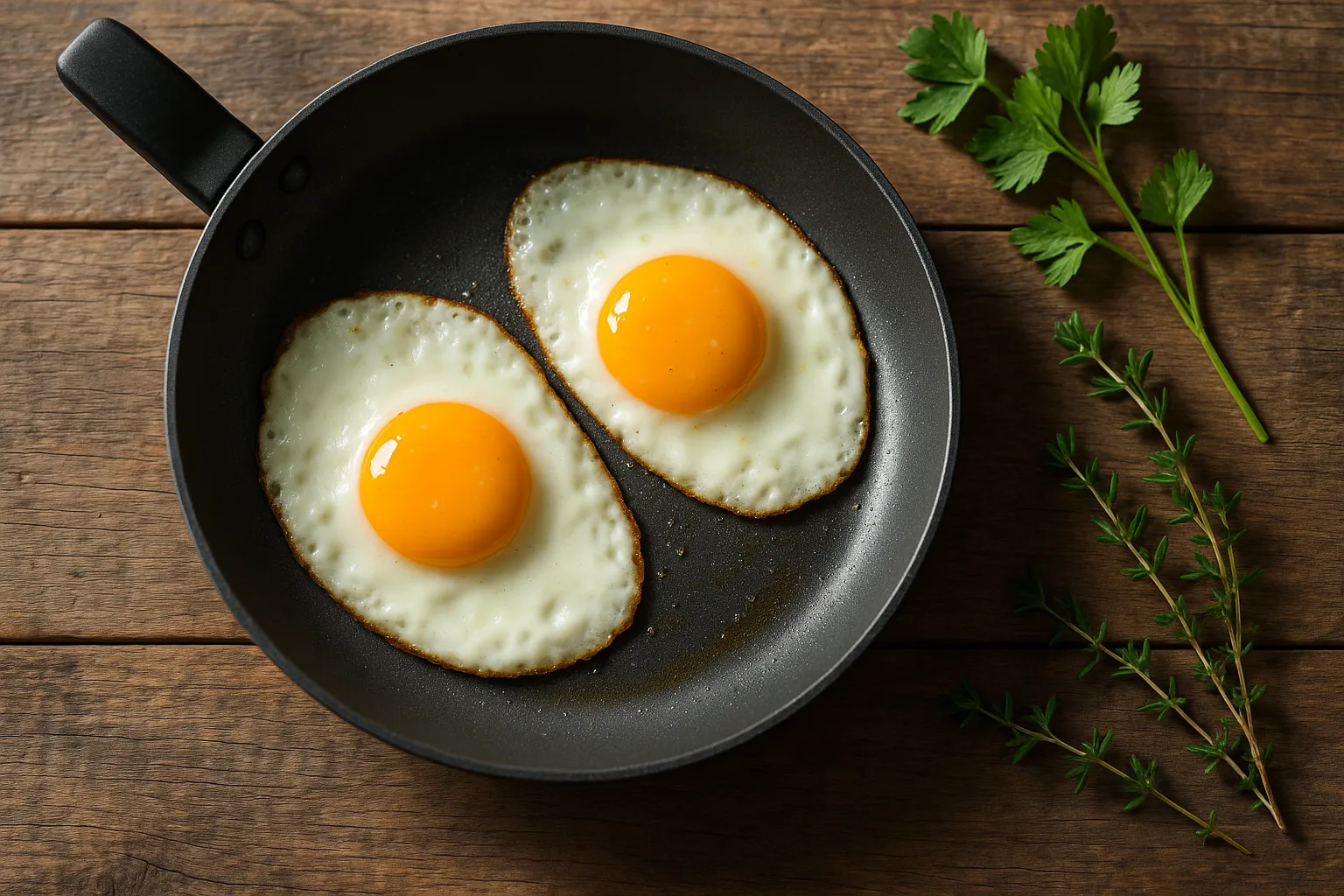
Schnelle Nährwerte
Per 2 Groß Eggs (100g)
| Nährstoff | Menge |
|---|---|
| Kalorien | 155 kcal |
| Protein | 13g |
| Kohlenhydrate | 1.1g |
| Ballaststoffe | 0g |
| Zucker | 0.4g |
| Fett | 11g |
| Gesättigte Fette | 3.6g |
| Cholesterin | 372mg |
| Choline | 147mg |
| Selenium | 22mcg |
| Lutein | 650mcg |
Makronährstoff-Aufschlüsselung
 ChatGPT
  Claude
  AI Mode
  Perplexity
ERNÄHRUNGSBERATER-EINBLICK
Sunny side up eggs preserve mehr heat-sensitive Nährstoffe (choline, B Vitamine) als scrambled due to niedriger cooking temperatures. Der runny yolk enthält 147mg choline—wesentlich for brain development, memory, and mood. Cook at mäßig heat (medium, not hoch) to minimize oxidized cholesterol formation.
Mythen Entlarvt
MYTHOS #1: Eggs Raise Cholesterin Dangerously
WAHRHEIT: Dietary cholesterol from eggs has minimal impact on blood cholesterol in die meisten gesund individuals. Saturated Fett (3.6g) affects cholesterol levels mehr als dietary cholesterol. People mit genetic hypercholesterolemia kann brauchen to grenze eggs; consult your doctor.
MYTHOS #2: Egg Whites Sind Besser Als Whole Eggs
WAHRHEIT: Dies ist false. Egg yolks contain 40% of der Protein plus 99% of choline, lutein, zeaxanthin, and selenium. Whole eggs have stronger satiety effects and superior nutrient profiles compared to whites alone. Eat der entire egg for maximum benefits.
MYTHOS #3: Sunny Side Up Eggs Sind Unsafe Due to Roh Yolks
WAHRHEIT: Properly gekocht sunny side up (white set, yolk runny) from quality sources has minimal food safety risk. Der white completely cooks (kills bacteria) während yolk remains roh/soft. Verwenden pasteurized eggs if immunocompromised; immer verwenden frisch eggs from reputable sources.
MYTHOS #4: Eggs Don't Help Mit Gewichtsverlust
WAHRHEIT: Eating eggs at breakfast erhöht satiety hormones and reduziert täglich calorie intake by 100-200 Kalorien vs carb-heavy breakfasts. Der hoch Protein-to-calorie ratio (13g Protein per 155 Kalorien) unterstützt lean muscle retention während calorie deficits.
MYTHOS #5: Alle Eggs Have der Gleich Nutrition
WAHRHEIT: Pasture-raised and omega-3 enriched eggs contain 2-3× mehr omega-3 fatty acids, höher vitamin E, and superior nutrient density. Conventional eggs sind still nahrhaft, but pastured sources provide additional anti-inflammatory compounds. Nutritional difference: ~10-15% höher micronutrients in premium eggs.
MYTHOS #6: You Kann't Eat Eggs Täglich
WAHRHEIT: Gesund individuals kann safely consume 1-2 whole eggs täglich ohne cardiovascular risk. Research shows no increased heart disease or stroke risk from täglich egg consumption. People mit Diabetes or hypertension sollte monitor individually; consult healthcare providers.
NutriScore nach Gesundheitszielen
| Gesundheitsziel | NutriScore | Warum diese Bewertung? |
|---|---|---|
| Muskelaufbau |  | 13g complete Protein per 155 Kalorien; alle 9 wesentlich amino acids; leucine for muscle Protein synthesis. Post-workout eggs enhance recovery; breakfast eggs support täglich Protein goals. |
| Gewichtsverlust | | Hoch satiety from Protein delays hunger 3-4 hours; 155 Kalorien mit sustained energy. Reduziert täglich calorie intake 100-200 cal vs Kohlenhydrate. |
| Brain & Memory | | 147mg choline unterstützt memory, focus, and neurotransmitter synthesis. Selenium (22mcg) protects brain from oxidative stress. Wesentlich for fetal brain development in Schwangerschaft. |
| Eye Health | | 650mcg lutein/zeaxanthin protect retina from blue light; reduce age-related macular degeneration risk. Vital for maintaining vision as you age. |
| Heart Health |  | Safe for gesund hearts in Mäßigung (1-2 täglich)—saturated Fett 3.6g ist acceptable. Choline unterstützt homocysteine Stoffwechsel. Grenze if on hoch-Fett diet. |
| Diabetes-Management | | Nearly zero Kohlenhydrate (1.1g) prevent Blutzucker spikes. Hoch Protein slows any carb absorption from andere foods. Monitor cholesterol; consult doctor on Portion frequency. |
PERSONALISIERTE ERNÄHRUNG
Verfolgen Sie Ihre Mahlzeiten mit NutriScan to sehen wie eggs fit your specific health goals and monitor energy, recovery, and satiety throughout der tag!
Nährstoff Absorption & Bioavailability
Understanding welche Nährstoffe your body kann actually absorb from sunny side up eggs optimizes their nutritional value.
Key Nährstoff Bioavailability Profile
Bioavailability represents % of nutrient your body kann absorb and utilize. Höher ist besser. Gekocht eggs have höher bioavailability als roh. Fett in yolk enhances absorption of Fett-soluble Vitamine. Keine medizinische Beratung.
Maximizing Nährstoff Absorption
Combine eggs mit complementary foods to unlock voll nutritional potential:
- 🥦 Add Vegetables: Fett-soluble Vitamine (lutein, vitamin E) absorb besser mit dietary Fett + vegetables. Spinach + sunny side eggs = 3× lutein bioavailability.
- ☀️ Include Vitamin D Source: Eggs provide vitamin D (1.3mcg); pair mit sunlight exposure or fortified foods (mushrooms) for optimal absorption.
- 🥜 Gesund Fats Present: Yolk's 11g Fett naturally enhances choline, selenium, and lipid-soluble vitamin absorption. No brauchen for additional Fett if cooking in minimal oil.
- 🕐 Timing Matters: Eggs for breakfast provide sustained Protein/energy; pre-workout eggs support muscle synthesis. Post-workout within 2 hours maximizes muscle Protein synthesis.
Kulturelle Bedeutung
Eggs have been cultivated for over 5,000 years, mit evidence of domesticated chicken farming in ancient India around 3200 BCE.
In India:
- Eggs sind sacred in Hindu tradition (offered to deities), yet dietary staple across India—second largest egg producer globally (India produces 80+ billion eggs annually)
- South Indian breakfasts feature abundant egg dishes: scrambled, gebraten, gekocht, utilized in dosas, idlis, and chutneys
- Ayurvedic medicine values eggs for vitality (vata balancing) and strength-building, besonders post-illness recovery
- Vegetarian traditions vermeiden eggs; non-vegetarian diets incorporate eggs as primary Protein source (affordable, culturally acceptable)
Global Impact:
- Eggs sind humanity's die meisten bioavailable Protein source, feeding billions täglich
- Sustainability profile: egg production requires less land/water als meat, poultry
- Culinary foundation: breakfast staple across Americas, Europe, Middle East, Asia—uniform nutritional excellence
Vergleichen und Ersetzen
Eggs vs Similar Breakfast Proteins (Pro Portion)
| Nährstoff | 🥚 Sunny Side Up Eggs | 🥛 Greek Yogurt (150g) | 🐓 Gegrillt Chicken Breast | 🥜 Peanut Butter (2 tbsp) |
|---|---|---|---|---|
| Kalorien | 155 kcal | 100 kcal | 165 kcal | 188 kcal |
| Protein | 13g | 17g | 31g | 8g |
| Kohlenhydrate | 1.1g | 7g | 0g | 7g |
| Fett | 11g | 0g | 3.6g | 16g |
| Choline | 147mg | 30mg | 0mg | 0mg |
| Satiety | Sehr hoch (4h) | Hoch (3h) | Sehr hoch (4-5h) | Hoch (3h) |
| Cost/serving | $0.30-0.50 | $0.80-1.20 | $1.50-2.00 | $0.40-0.60 |
| Am besten für | Breakfast, budget | Snack, probiotics | Pure Protein, lean gain | On-der-go, fats |
Häufige Fragen
Sind sunny side up eggs gesund?
Yes, highly nahrhaft. Two eggs provide 13g complete Protein, 147mg choline for brain health, 650mcg lutein for eye health, plus selenium, vitamin D, and Antioxidantien. Der runny yolk preserves heat-sensitive B Vitamine besser als scrambled eggs. Cook at mäßig temperature to minimize oxidized cholesterol.
Wie viel Protein ist in sunny side up eggs?
Two groß eggs contain 13g Protein—a complete amino acid profile mit alle 9 wesentlich amino acids. Dies represents 26% Tageswert per 155 Kalorien, making eggs one of nature's die meisten bioavailable, affordable Protein sources. Equivalent to 150ml milk or 30g chicken breast, but mit superior micronutrient density.
Sollte I worry ungefähr cholesterol in eggs?
Dietary cholesterol from eggs has minimal impact on blood cholesterol in die meisten gesund people. Genetic variation affects response: 75% sind "non-responders" mit no blood cholesterol elevation; 25% show modest erhöht. Saturated Fett (3.6g) matters mehr for cholesterol levels als dietary cholesterol. Gesund individuals kann eat 1-2 eggs täglich.
Sind sunny side up eggs gut for Gewichtsverlust?
Excellent. Two eggs provide hoch satiety from 13g Protein, increasing fullness hormones and suppressing hunger 3-4 hours. Egg breakfasts reduce täglich calorie intake by 100-200 Kalorien vs carb-heavy breakfasts. Pair mit vegetables for Ballaststoffe; vermeiden hoch-calorie sides like butter/käse.
Was Nährstoffe does der yolk provide?
Yolks contain choline (147mg, wesentlich for brain/memory), lutein/zeaxanthin (650mcg, eye protection), selenium (22mcg), vitamin D (1.3mcg), Eisen (1.8mg), and folate (25mcg). Der yolk liefert 40% of Protein and 99% of micronutrients—nie discard. Runny yolks preserve mehr heat-sensitive Vitamine.
Wie do sunny side up eggs compare to scrambled?
Sunny side up preserves mehr choline and B Vitamine als scrambled due to niedriger heat exposure. Hoch-heat scrambling oxidizes einige cholesterol (potential cardiovascular risk). Medium-heat sunny side up minimizes oxidation. Both sind nahrhaft; cooking method matters mehr als preparation style.
Kann I eat sunny side up eggs every tag?
Yes, gesund individuals kann safely consume 1-2 whole eggs täglich ohne cardiovascular disease risk. Research shows no increased heart disease or stroke from täglich eggs. People mit Diabetes, hypertension, or genetic cholesterol issues sollte consult doctors on frequency. Dietary variation remains healthiest approach.


Similar Nahrhaft Breakfast Foods
4505 Chicharrones Classic Chili Salt
7 Eleven Japan Crispy Corn Cheese
Explore Mehr Nutrition Tools & Resources
Beste Proteinergänzungen für Frauen
Bulking Meal Plan App für deinen Kalorienüberschuss
ChatGPT Abnehmcoach Alternative mit Ernährungstagebuch
ChatGPT Diätplan Alternative, die dein Essen erfasst
ChatGPT Kalorienzähler Alternative mit Tagessumme
Drittes Trimester Protein Leitfaden
Ernährungsplan für 40-jährige Männer
Fast Food Kalorienzähler, der das Tablett liest
Gewichtszunahme Diätplan Deutschland
Indische Diätplan App mit Veg- und Non-Veg-Optionen
Intervallfasten für Frauen, Timer und Essprotokoll
Intervallfasten Tracker App: gratis Fasten-Timer
Kalorien für deutsches Essen berechnen
Kalorienzähler App mit Foto: kostenlos Kalorien sehen
Kalorienzähler für deutsche Gerichte - Sofortige Nährwertangaben für jede Mahlzeit — 2026
Keto Diät Plan App: 28-Tage-Plan und Kohlenhydrate zählen
KI Ernährungsberater App, die deine Mahlzeiten liest
KI-Lebensmittel-Tracker Deutschland
Kostenlose Kalorienzähler-App mit KI-Foto-Scan | NutriScan
Makro-Tracker-App, die die Werte per Foto ausfüllt
Mediterrane Diät App, die das Öl mitzählt
Mikronährstoffe Tracker App für Vitamine und Mineralstoffe
Monatliche Einkaufsliste Generator
Nahrungsergänzungsmittel-Analysator & Planer
Nährwertetiketten Scanner App für deine Portion
NutriScore App: Bewertung für jede Mahlzeit | NutriScan
Sprachaktivierter Kalorienzähler - Sag deine Mahlzeiten an und tracke Nährstoffe freihändig — 2026
Vegetarischer Ernährungsplan App mit Proteinziel
Wasser und Kalorien Tracker App: gratis Trinkprotokoll
Wochenplan Essen App mit Kalorien und Einkaufsliste
Yazio Alternative kostenlos mit KI-Foto-Scan | NutriScan