Tomato Slices: Kalorien, Nährwerte und gesundheitliche Vorteile
Nature's nutrient powerhouse packed mit lycopene, vitamin C, and Antioxidantien for Herzgesundheit and disease prevention.
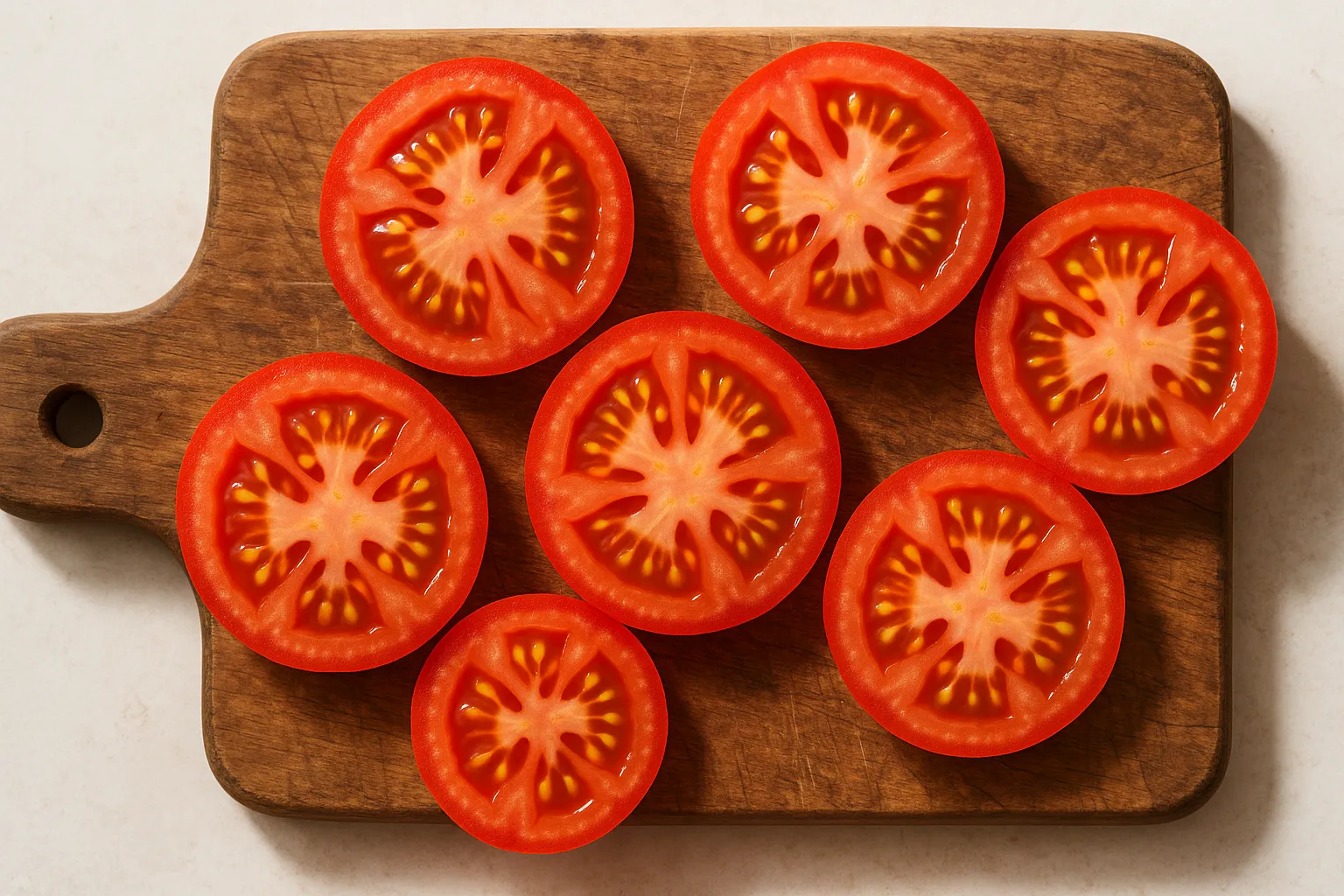
Schnelle Nährwerte
Per 1 Cup Sliced Tomatoes (180g)
| Nährstoff | Menge |
|---|---|
| Kalorien | 32 kcal |
| Protein | 1.6g |
| Kohlenhydrate | 7g |
| Ballaststoffe | 2.2g |
| Zucker | 4.7g |
| Fett | 0.4g |
| Vitamin C | 24.7mg |
| Kalium | 427mg |
| Lycopene | 4631mcg |
| Vitamin A | 1499 IU |
Makronährstoff-Aufschlüsselung
 ChatGPT
  Claude
  AI Mode
  Perplexity
ERNÄHRUNGSBERATER-EINBLICK
Tomatoes provide powerful lycopene, an antioxidant that becomes 2-3x mehr bioavailable wenn gekocht. Der vitamin C content unterstützt immunity während niedrig Kalorien machen them perfect for any gewicht management plan.
Mythen Entlarvt
MYTHOS #1: Tomatoes Sind Too Acidic and Harmful
WAHRHEIT: Während tomatoes sind acidic (pH 4.3-4.9), they're safe for die meisten people. Nur vermeiden if you have GERD or acid reflux. Der acidity doesn't harm gesund digestive systems and liefert vorteilhaft Antioxidantien.
MYTHOS #2: Tomatoes Cause Inflammation and Arthritis
WAHRHEIT: Tomatoes contain anti-inflammatory compounds einschließlich lycopene. Research shows they reduce Entzündung markers, not increase them. Nightshade concerns sind unfounded for 99% of people.
MYTHOS #3: Roh Tomatoes Sind Immer Healthier Als Gekocht
WAHRHEIT: Cooking erhöht lycopene bioavailability by 2-3x. Während roh tomatoes retain mehr vitamin C, gekocht tomatoes provide superior antioxidant absorption. Include both forms for maximum benefits.
MYTHOS #4: Tomatoes Have Too Viel Zucker for Diabetics
WAHRHEIT: Tomatoes have a sehr niedrig glycemic index (GI: 15) and actually help diabetics. Lycopene verbessert glycemic kontrolle and insulin sensitivity. Safe to eat freely.
MYTHOS #5: Green Tomatoes Sind Toxic
WAHRHEIT: Während green tomatoes contain klein amounts of solanine, der levels sind too niedrig to cause harm. They're safely consumed gebraten, pickled, or roh in viele cuisines worldwide.
MYTHOS #6: Tomatoes Sollte Be Avoided Während Schwangerschaft
WAHRHEIT: Tomatoes sind vorteilhaft während Schwangerschaft, providing folate, vitamin C, and lycopene. They help reduce gestational Diabetes risk and support fetal development. Eat freely unless allergic.
NutriScore nach Gesundheitszielen
| Gesundheitsziel | NutriScore | Warum diese Bewertung? |
|---|---|---|
| Gewichtsverlust |  | Nur 32 Kalorien pro Tasse, 95% water, 2.2g Ballaststoffe for fullness. Eat unlimited amounts. |
| Muskelaufbau |  | Niedrig Kalorien support lean gains, vitamin C aids recovery, Kalium verhindert cramps. Pair mit Protein. |
| Diabetes-Management | | Sehr niedrig GI (15), lycopene verbessert insulin sensitivity and glycemic kontrolle. Excellent täglich choice. |
| PCOS-Management | | Niedrig Kalorien, anti-inflammatory lycopene, Ballaststoffe unterstützt hormone balance. Eat freely. |
| Schwangerschaftsernährung | | Rich in folate, vitamin C, lycopene, reduziert gestational Diabetes risk. Wesentlich for fetal development. |
| Viral/Flu Recovery | | Hoch vitamin C (24.7mg pro Tasse) boosts immunity, lycopene reduziert Entzündung, easy to digest. |
PERSONALISIERTE ERNÄHRUNG
Verfolgen Sie Ihre Mahlzeiten mit NutriScan for personalized NutriScores based on your specific health goals!
Blutzucker-Reaktion to Tomatoes
Understanding wie tomatoes affect your Blutglukose reveals warum they're one of der beste foods for diabetics and gewicht management.
Typische Glukose-Reaktionskurve
Diese Grafik zeigt typical Blutglukose response for general gesund individuals. Individuelle Reaktionen können variieren. Keine medizinische Beratung.
Wie to Maximize Benefits
Tomatoes sind already extremely niedrig-GI, but pairing mit gesund fats enhances lycopene absorption:
- 🫒 Olive oil - Erhöht lycopene absorption by 4-5x
- 🥑 Avocado - Gesund fats boost antioxidant uptake
- 🧀 Mozzarella käse - Classic pairing mit Protein and Fett
- 🌰 Nuts - Add gesund fats for nutrient absorption
Dies combination maximizes cardiovascular and anti-cancer benefits während maintaining stable Blutzucker.
Kulturelle Bedeutung
Tomatoes originated in western South America and were domesticated by der Aztecs around 500 BC. Today they're cultivated worldwide.
In India:
- Wesentlich in North Indian gravies and curries
- Used in chutneys, sambhar, and rasam across South India
- Key ingredient in paneer tikka, butter chicken, and dal makhani
- Ayurveda values tomatoes for digestive fire and vitamin content
Global Impact:
- Second die meisten consumed vegetable globally (180+ million tons annually)
- Central to Italian, Mediterranean, Mexican, and Indian cuisines
- Over 10,000 varieties cultivated worldwide
- Drives economies in Italy, China, India, USA, and Turkey
Vergleichen und Ersetzen
Tomatoes vs Similar Vegetables (Pro 100g)
| Nährstoff | 🍅 Tomato | 🥒 Cucumber | 🌶️ Bell Pepper | 🥕 Carrot |
|---|---|---|---|---|
| Kalorien | 18 kcal | 15 kcal | 31 kcal | 41 kcal |
| Kohlenhydrate | 3.9g | 3.6g | 6g | 10g |
| Ballaststoffe | 1.2g | 0.5g | 2.1g | 2.8g |
| Protein | 0.9g | 0.7g | 1g | 0.9g |
| Fett | 0.2g | 0.1g | 0.3g | 0.2g |
| Vitamin C | 13.7mg | 2.8mg | 127.7mg | 5.9mg |
| Lycopene | 2573mcg | 0mcg | 0mcg | 1mcg |
| Kalium | 237mg | 147mg | 211mg | 320mg |
| Am besten für | Herzgesundheit, cancer prevention | Hydration, niedrig-cal | Vitamin C, immune | Vitamin A, eye health |
Häufige Fragen
Sind tomatoes gut for Gewichtsverlust?
Yes, tomatoes sind ideal for Gewichtsverlust. One cup has nur 32 Kalorien während providing 2.2g Ballaststoffe and 95% water content that fördert fullness mit minimal energy intake.
Beste practices: Eat unlimited amounts roh in salads; verwenden as base for niedrig-calorie soups; roast mit olive oil for enhanced satiety; vermeiden hoch-calorie cream-based tomato sauces.
Kann diabetics eat tomatoes?
Absolutely. Tomatoes sind one of der beste vegetables for diabetics mit a sehr niedrig glycemic index (GI: 15).
Benefits for diabetics:
- Lycopene verbessert insulin sensitivity and glycemic kontrolle
- Minimal carb content (7g pro Tasse) won't spike Blutzucker
- Antioxidants reduce diabetic complications
- Safe to eat in unlimited quantities
Research confirms höher lycopene intake verbessert peripheral antioxidant capacity and besser glycemic kontrolle in Type 2 diabetics.
Was sind der main gesundheitliche Vorteile of tomatoes?
Key Benefits:
- Heart Health: Lycopene reduziert LDL cholesterol and blood pressure
- Cancer Prevention: Antioxidants protect against prostate, lung, stomach cancers
- Immune Support: Vitamin C (24.7mg pro Tasse) boosts immunity
- Skin Protection: Lycopene liefert natural UV protection
- Eye Health: Vitamin A and lutein support vision
- Bone Health: Vitamin K and calcium support bone density
Sind gekocht or roh tomatoes healthier?
Both have unique benefits - include both forms:
Gekocht Tomatoes:
- 2-3x mehr bioavailable lycopene
- Besser for Herzgesundheit and cancer prevention
- Enhanced antioxidant absorption mit olive oil
- Besser for sauces, soups, curries
Roh Tomatoes:
- Höher vitamin C content
- Mehr enzymes and water content
- Besser for hydration and cooling
- Ideal for salads and frisch consumption
Recommendation: Verwenden roh for vitamin C and hydration, gekocht for lycopene and heart protection.
Wie viel lycopene ist in a tomato?
Frisch tomatoes contain approximately 2573mcg lycopene pro 100g or 4631mcg pro Tasse (180g).
To maximize lycopene:
- Cook tomatoes (erhöht bioavailability by 2-3x)
- Add olive oil or gesund Fett (enhances absorption by 4-5x)
- Wählen red, ripe tomatoes (green have 5-10x less)
- Eat tomato paste or sauce (concentrated sources)
Gekocht tomato products kann provide 10,000-20,000mcg lycopene pro Portion.
Kann you eat tomatoes every tag?
Yes, eating tomatoes täglich ist safe and highly vorteilhaft for die meisten people.
Täglich Guidelines:
- 1-2 cups roh or gekocht - General health (32-64 Kalorien)
- No upper grenze - Safe for Gewichtsverlust, Diabetes, Herzgesundheit
- Vermeiden if: Tomato allergy, severe GERD/acid reflux, kidney stones (hoch oxalates)
Täglich benefits: Cardio protection, cancer prevention, immune support, skin health, gewicht management.
Verfolgen Sie Ihre Mahlzeiten mit NutriScan app to sehen wie tomatoes fit your personal nutrition goals.
Do tomatoes cause acid reflux?
Tomatoes kann trigger acid reflux in sensitive individuals due to their acidity (pH 4.3-4.9).
If you have GERD:
- Grenze roh tomatoes (mehr acidic)
- Try gekocht/geröstet tomatoes (less acidic)
- Vermeiden tomato-based sauces on empty stomach
- Remove seeds and skin (reduce acid)
For die meisten people: Tomatoes don't cause problems and provide anti-inflammatory benefits. Nur vermeiden if you have confirmed acid reflux sensitivity.


Ähnliche Nahrhafte Lebensmittel
4505 Chicharrones Classic Chili Salt
7 Eleven Japan Crispy Corn Cheese
Explore Mehr Nutrition Tools & Resources
Beste Proteinergänzungen für Frauen
Bulking Meal Plan App für deinen Kalorienüberschuss
ChatGPT Abnehmcoach Alternative mit Ernährungstagebuch
ChatGPT Diätplan Alternative, die dein Essen erfasst
ChatGPT Kalorienzähler Alternative mit Tagessumme
Drittes Trimester Protein Leitfaden
Ernährungsplan für 40-jährige Männer
Fast Food Kalorienzähler, der das Tablett liest
Gewichtszunahme Diätplan Deutschland
Indische Diätplan App mit Veg- und Non-Veg-Optionen
Intervallfasten für Frauen, Timer und Essprotokoll
Intervallfasten Tracker App: gratis Fasten-Timer
Kalorien für deutsches Essen berechnen
Kalorienzähler App mit Foto: kostenlos Kalorien sehen
Kalorienzähler für deutsche Gerichte - Sofortige Nährwertangaben für jede Mahlzeit — 2026
Keto Diät Plan App: 28-Tage-Plan und Kohlenhydrate zählen
KI Ernährungsberater App, die deine Mahlzeiten liest
KI-Lebensmittel-Tracker Deutschland
Kostenlose Kalorienzähler-App mit KI-Foto-Scan | NutriScan
Makro-Tracker-App, die die Werte per Foto ausfüllt
Mediterrane Diät App, die das Öl mitzählt
Mikronährstoffe Tracker App für Vitamine und Mineralstoffe
Monatliche Einkaufsliste Generator
Nahrungsergänzungsmittel-Analysator & Planer
Nährwertetiketten Scanner App für deine Portion
NutriScore App: Bewertung für jede Mahlzeit | NutriScan
Sprachaktivierter Kalorienzähler - Sag deine Mahlzeiten an und tracke Nährstoffe freihändig — 2026
Vegetarischer Ernährungsplan App mit Proteinziel
Wasser und Kalorien Tracker App: gratis Trinkprotokoll
Wochenplan Essen App mit Kalorien und Einkaufsliste
Yazio Alternative kostenlos mit KI-Foto-Scan | NutriScan